 Hacker Cinema
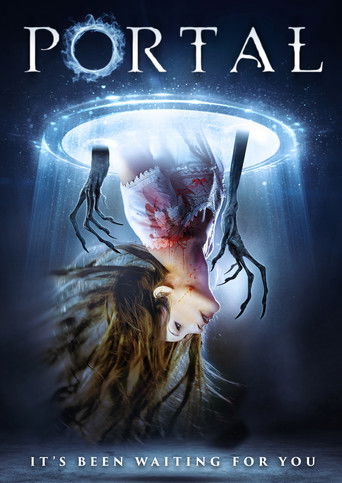
Portal
2019 · Film · 76 min
Directed by Dean Alioto
When an ambitious ghost hunter performs a risky ritual, opening a portal to "the other side", he and his team quickly find themselves way in over their heads in a fight for survival against an ancient demonic force.
4 positive1 mixed8 neutralfrom 13 commenters
Where to watch
No streaming data for this title.
13 comments on Hacker News
"Backrooms" don't just come from videogames. They are meant to represent liminal spaces like "endless" cubical farms and conference rooms and the back offices of movie studios or any other modern business. (Even the idea that on the backside of the cool theme park structure that seems so otherworldly is just a couple of boring janitor's closets and hallways for staff/crew to navigate between shifts.) The videogames building "unused" rooms like this were in part trying for verisimilitude to these sort of "just around the corner" spaces that exist in so many buildings. Often as a joke. It was a part of the humor of Duke Nukem. It was a key part to the humor of Portal. It was the entire basis of The Stanley Parable.
I think we can argue that real world places that inspired our fantasy Dungeons were similar liminal spaces: the creepy basement hallways that connected staff/crew (servants) access to other parts of the building(s) above. The multi-use spaces below that are most remembered in pop culture for such uses as torture and imprisonment, but were also often staging grounds for much more boring household logistics tasks (storage), and even equivalents to conference rooms, janitor closets, and "offices".
Video games actually helped me a lot. It is a nice simple distraction and depending on the game, I got a small sense of achievement from it. One of my all time favorites is the portal series. A documentary on netflix that challenged how I think was very nice in helping me use my brain without having to worry about getting charged emotions. HN is the most useful social media sites I use and helps me stay in touch with the current state of technology.
Making screen time a boogeyman is not a useful way to help yourself address underlying issues. People escape using screen time, and in moderation it's healthy. Taking a break isn't bad. Mental health issue cause a drive to escape using technology. It's not the other way around.
Most people in school are young enough where deficiencies aren't a major issue unless they are also restricting their diet due to finances or other issues. Restricting can cause malnutrition but it's far from common. Just having an, on average, well balanced diet is more than enough. If there's a reason to suspect an underlying health condition, talk with a doctor.
I agree that cardio is amazing but other from of sports and activity is great too. Resistance training and yoga are exceptional as well. Archery is one of my favorites. The important thing is time and consistency, so finding and doing a physical activity you like is all that matters.
Getting checked out with a mental healthcare specialist pre-emptively is important. People have a yearly physical, I'd argue a yearly mental health check should be strongly encouraged too.
Thanks for that perspective! I think about this all the time, and though my tastes are different I think you're exactly right.
I think of narrative as a combination of several elements: character, plot, world-building, execution (word choice, visual choices and performance for film or games), concepts and ideas. I tend to be drawn to strong characters first, but not always. Some examples off the top of my head:
Clerks: strong characters, mediocre almost everything else
Reservoir Dogs: strong characters, strong execution, minimal plot and world-building
Portal: strong characters, plot, world building, concepts, and execution
Brazil (the Terry Gilliam movie): strong world-building and execution, weak characters and plot
Lolita (the book): strong execution and characters
Harry Potter: strong characters, world-building, and concepts, goofy plot and execution
Primer: mind-bending concepts, good execution, weak characters and plot
Don’t know why, but I could go on and on thinking about it.
Edit: this list would imply I have pretty narrow tastes but really I like a little bit of everything; these are just some notable examples that came to mind as being particularly strong or weak in certain areas.
I’m very careful about the types of games I play. I like one-and-done experiences that lead me through a story. I avoid anything with xp/grinding mechanics, which I consider largely-exploitive.
Like movies and books, these games have a beginning and an end and a set duration between the two. Examples include Portal (1&2), Gris, Sayonara Wild Hearts, and Journey.
I think we really are at the beginning of video games as a medium, though I hope some of us will be alive long enough to see a real masterpiece. People watch movies made 60 years ago and appreciate them on their own merit; they rarely watch movies made 100 years ago, though, except to comment on their impact. The technology underlying games is still progressing rapidly, and hasn't hit the relative plateau that film did. A movie shot in 1975 may use different technology behind the lens, but its similar enough in form (colors, scenes cutting between each other, sound) that we can appreciate it even if we've grown up with the films of today, whereas when watching a jerky black-and-white silent film from 1923 we simply can't get into it.
No matter how good Ocarina of Time is, anyone playing it today can feel the lack of depth and poor graphics putting up a wall between themselves and enjoyment. Most games are still improving on a couple of simple models, and the only games that people really seem to revisit are ones so simple they can't be improved on (Tetris is a perfect game, if not a particularly deep piece of art) or truly different in a way that hasn't been met since (people are still getting into Portal a decade later.) The design of most video games means that more depth, points of interest, and complexity make the game more fun, which means more processing power will always improve the game. If nothing else, this is because most video games are simulations of reality, and reality is always more complex than the computer. I fully enjoyed the most recent Hitman, but still ran up against points where the game logic interfered with my intuition about how the world works, and the next iteration with better tech will inevitably improve on it. Not until gaming hardware and basic principles of game design reach a slower level of development will we see an enduring masterpiece.
Pick up The Orange Box (https://en.wikipedia.org/wiki/The_Orange_Box). It includes Half Life 2, (plus the two sequel episodes), and Portal. Portal is a fantastic game, with a surprising amount of story given the fact that it appears at first to be a fairly simple puzzle game. Half Life 2, is a great first person shooter, again with great story.
What I like about these games is that they're immersive, without being overly long or tedious. You can play through Portal in a few evenings, without feeling like you're missing out on hundreds of side quests. The gameplay is tight, fun and innovative.
Wow, I'm going to go try this! Portal runs "surprisinly well" (eg. great performance but it has occasional graphical glitches) on my machine (Arch x64, Intel HD 4000), so I'm curious to see how HL2 runs.
I understand Valve hasn't gotten the bugs out quite yet, but this is an excellent start.
Edit: Oh man, "Half-Life 2 (Beta)", "Half-Life 2: Episode One (Beta)", "Half-Life 2: Episode Two (Beta)", and "Half-Life 2: Lost Coast (Beta)" are all in my steam library. It's like Christmas all over again.
I am not a gamer but I love the resident evil movie series, very entertaining (have never even seen the game!)
Why the heck is JJ Abrams the only person Hollywood can go to though? That's crazy and I am kinda exhausted from his style.
Now if they can make a mystery movie based on portal, I'd watch that.
I thought silent hill was quite good, probably due to less rigid 'canon' allowing for flexibility in characters and story. Admittedly, this would make it the exception and not the rule. I also think this means that Half Life/Portal would not translate well into a movie.
When you're sitting in a theater watching the Portal movie, will you be able to see through the portals on the screen to see movies in the other theaters in the multiplex?
I'll take a thirty second stab at it - piracy is unsustainable. It costs money to create music, movies and games - movies like Transformers, and video games like Portal are unlikely to be created without a significant amount of funding. While piracy doesn't directly take money away from the creators, it can potentially subtract from their income.
I actually am pretty in-the-dark about the UX of the Kinect and how it works with the Xbox. I don't have a Kinect myself yet, for example. I have an Xbox but haven't turned it on in several months, mainly because it's so loud (like, helicopter loud. Are newer Xboxen quieter?). I'm not much of a gamer, other than Portal and Katamari a few years ago. I've yet to watch an episode of Oprah, either. :)
I do hope that the Kinect cost of materials is low enough that MSFT doesn't lose money on each Kinect they sell. But I have to think that the tinkerer/maker community is much smaller than the mass market for video gamers. My guess is that Kinect purchases for Linux will be a barely blip on MSFT's radar.
"It's not every gamer, it's a specific sort of gamer, but it's a prevalent sort of gamer. The kind that argues that Bioshock is as valuable a contribution to society as the works of Joyce or the movies of Hitchcock."
Oh, I know you! http://news.ycombinator.com/item?id=304895
You're still wrong about Bioshock, though I've changed my tune about Portal since that thread. Still, thanks for painting me (and I suspect barrkel) with a broad and inaccurate brush stroke.
The funny thing is, we probably agree on more than we disagree. I think the drive for longer games is ridiculous. I roll my eyes when people are upset at the idea of paying $20 for a 6 hour game on the principle that the game should be longer. Also, I got a college degree basically studying the aesthetics of games and have worked in the industry since then, so you could say that making good, interesting, beautiful games is important to me in that I've put my money (and life) where my mouth is.
I probably think a game you like is crap, and I know I like a game you think is crap, but the big difference is, I don't think that makes you "obnoxious and tasteless," I just think it means we have different tastes, or at worst, I think you're wrong.