 Hacker Cinema
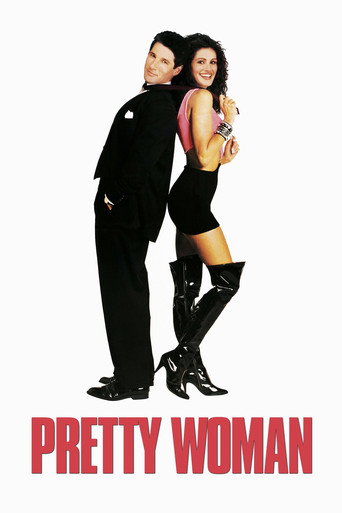
Pretty Woman
1990 · Film · 120 min
Directed by Garry Marshall
Vivian is a carefree, streetwise diamond in the rough when she meets sophisticated billionaire Edward in a chance encounter that turns into a week-long business arrangement. But Vivian's energetic spirit challenges Edward's no-nonsense approach to life, and soon they are teaching each other – and falling in love!
1 negative20 neutralfrom 21 commenters
Where to watch
No streaming data for this title.
21 comments on Hacker News
I'm sorry but WP-ENGINE lost my vote when they started quoting evangelizing and ambassadorship events as "contributions". Everyone knows that's a 50/50 self-marketing and brand outreach. I don't understand why people are taking WP ENGINE's side, in the past 5 years, the evils and exploits of VC investments have been widely documented. This is a clear and present danger/example of what is wrong with VC in America. Look at VC in other parts of the world, they are heavily regulated for this particular reason. This industry has taken the premise of the movie "pretty woman" and escalated to new hights of corporate GREED.
> workers confiding in customers they've built rapport with
Everything I've read about prostitution makes me think this never happens. Johns just don't help prostitutes. "Pretty Woman" isn't a documentary.
1988 Die Hard http://www.imdb.com/title/tt0095016
1988 Red Heat https://www.imdb.com/title/tt0095963/
1988 My Stepmother Is an Alien https://www.imdb.com/title/tt0095687/
1988 Twins https://www.imdb.com/title/tt0096320/
1989 Honey, I Shrunk the kids https://www.imdb.com/title/tt0097523/
1989 Indiana Jones and the Last Crusade https://www.imdb.com/title/tt0097576/
1989 Tango & Cash https://www.imdb.com/title/tt0098439/
1990 Edward Scissorhands https://www.imdb.com/title/tt0099487/
1990 Home Alone https://www.imdb.com/title/tt0099785/
1990 Pretty Woman https://www.imdb.com/title/tt0100405/
1991 Terminator 2 https://www.imdb.com/title/tt0103064/
1991 Silence of the Lambs https://www.imdb.com/title/tt0102926/
1991 The Last Boy Scout https://www.imdb.com/title/tt0102266/
> movie Pretty Woman.
You mean Pygmalion?
as shown in the documentary Pretty Woman
For the models it is still only a business relationship, except in very rare cases. By the same token, prostitution can also be a meaningful personal relationship, as shown in the movie Pretty Woman.
> Then there's "it's all remakes now"—but 1) it's not,
It really is, if by "remake" you mean all ways of leveraging existing IP. Here are the top ten box office films of 2020:
* Bad Boys for Life (sequel) * Sonic the Hedgehog (videogame) * Birds of Prey (comic book) * Dolittle (book) * The Invisible Man (book) * The Call of the Wild (book) * Onward (original) * The Croods: A New Age (sequel) * Tenet (original) * Wonder Woman 1984 (sequal, comic book)
Two originals. Now go back 20 years:
* Mission: Impossible 2 (sequel) * Gladiator (book) * Cast Away (original) * What Women Want (original) * Dinosaur (original) * How the Grinch Stole Christmas (book) * Meet the Parents (remake) * The Perfect Storm (book) * X-Men (comic book) * What Lies Beneath (original)
Four originals. Go back another 10 years:
* Ghost (original) * Home Alone (original) * Pretty Woman (original) * Dances with Wolves (book) * Total Recall (short story) * Back to the Future Part III (sequel) * Die Hard 2 (sequel) * Presumed Innocent (book) * Teenage Mutant Ninja Turtles (comic book) * Kindergarten Cop (original)
Five originals. Another ten years to 1980:
* The Empire Strikes Back (sequel) * 9 to 5 (original) * Stir Crazy (original) * Airplane! (original) * Any Which Way You Can (sequel) * Private Benjamin (original) * Coal Miner's Daughter (original) * Smokey and the Bandit II (sequel) * The Blue Lagoon (book) * The Blues Brothers (SNL sketch)
Five originals again. I'm going by top box-office gross here because I think that's a good proxy for what is successful. You can look at other years, but there is a very clear (but not overwhelming) trend towards movies based on familiar content. It's not clear whether studios are leading audiences or vice versa. Probably some iterative process of both.
There's also a clear trend away from dramas. I think that's because drama (and non-slapstick comedies) tend to rely heavily on specific cultural norms for their effect which makes them translate poorly. There is a very clear trend especially in the last decade or so of Hollywood focusing on movies that will also do well in China in particular.
I’m gonna just go on a limb and guess that this was downvoted into the greys by people who never saw the movie “Pretty Woman” where this was very nearly the exact plot as the news story here and therefore completely missed the irony:
It was a movie.
> Some time later Roxette is asked to make a song for low budget movie called Pretty Woman but they are absolutely swamped with work. They respond that they can't fit it into their schedule but offer the movie company a song that flopped in Germany - Listen to your heart.
Maybe you mistake 'Listen to your heart' for 'It must have been love'?
> Pretty Woman
Not "Listen To Your Heart", but "It Must Have Been Love", which had been released as "Christmas for the Broken-Hearted", but since the film doesn't play around Christmas, they had to rename it.
The lyrics stayed the same except for "and it's a hard Christmas day" --> "and it's a hard winter's day"; for some reason the winter here didn't matter.
There is a great story about how Roxette struggled before achieving international success. They made several attempts in the U.S. and in Japan. They even released Listen to your heart in Germany. But no one wanted to hear their songs outside of Sweden.
One day an American exchange student from Minneapolis moves back from Sweden and drops off his favorite Roxette album at the local radio station. The manager promises to play it but weeks go by and nothing happens.
The student goes back to the radio station to collect his record and the manager feels bad because he promised to play it. So he pops it into the record player. The Look receives great feedback from listeners who call in asking about the song. The manager makes a few copies on tape and distributes them to his colleagues in Miami and New York.
The record company finally realizes it has a hit on its' hands and officially releases the song in panic. Shortly afterwards it sits on the number 1 position of the Billboard Top 100.
Some time later Roxette is asked to make a song for low budget movie called Pretty Woman but they are absolutely swamped with work. They respond that they can't fit it into their schedule but offer the movie company a song that flopped in Germany - Listen to your heart.
I don't see the public interest angle here. This is merely entertainment. If even entertainment is something the government should be butting into because of unspecified "public interest" considerations, then what is outside the government's role?
Goodfellas, Dances with Wolves, Edward Scissorhands, Total Recall, Ghost, the Hunt for Red October, Back to the Future III, Pretty Woman, and the Godfather Part III were all released in 1990, 29 years ago. These were all created by a group of individuals, and studios spent millions of dollars paying those people to make those movies. The government had nothing to do with creating any of those movies. Why should the government be able to take those movies and release them for free?
I see your point, but is it even possible to build a study demonstrating what would happen if the pay gap disappeared at scale ?
Any study that would for instance focus on a microcosm where women earn as much as men wouldn’t be isolated by the rest of society’s effect on the individual’s value system or image of success.
What I mean is culture is influenced by reality, movies like Pretty Woman weren’t setup that way by pure imagination, the authors still wanted a somewhat realistic starting situation.
Same with parents raising their kids, the culture they foster depends on their experience of life. If for their whole existence women couldn’t build a family without their career getting in the way, they’ll hedge their bets when raising their daughters.
I don’t think the author’s proposition will easily pass in the current political climate, but I’d see the value in trying to change reality first, to have people acknowledge that the game has changed, and think for themselves better strategies for their life.
I’d compare it as how family values have changed in countries where elderly get government help. While for centuries they’d clinge to their kids as the primary source of retirement support, once a generation or two actualy saw that they could mostly get by by themselves, kids/parents relations changed, culture changed.
Pretty much the obvious answer, because the company died?
All you're doing is making Ha-Joon Chang's point for him!
Having not personally read "23 Things They Don't Tell You About Capitalism", I assume the argument is that companies should grow, not chase investor returns. Thus they contribute to the society and the eco-system of suppliers and employees they support. Investors don't depend on them, they can just move their capital elsewhere.
One might say that it's called "investing", not "extracting". If you want to move your capital elsewhere, because you think you can get better growth elsewhere, fab! That's capitalism at work and easy to do, sell your shares.
Which reminds me of all the films in the 80s about the company raiders (e.g. Pretty Woman) being bought and broken up, the pieces were worth more than the whole?
Destroying companies for short-term profit. I have no idea whether it's overall a net loss for an economy, but it destroys more than just the one company.
Buying a company with borrowed funds and using the company's cash flows or assets to repay the loan is known as a Leveraged Buy Out (LBO) [0]. It was very trendy in the 1980s but has recently made a comeback.
A good book to read on one of the most notorious examples of an LBO is Barbarians at the Gate [1][2] which dealt with the takeover of RJR Nabisco, a large American food and tobacco company.
For lighter fare, re-watch the 1990 movie Pretty Woman [3][4] but this time ignore the fluffy romance and focus on Richard Gere's character, Edward Lewis, as he goes about negotiating the LBO of a shipbuilding company. Edward Lewis was modeled on a real-life LBO guy, Reginald Lewis, who bought Beatrice International Foods from Beatrice Companies in 1987 in an LBO worth $985 million [5].
[0] https://en.wikipedia.org/wiki/Leveraged_buy_out
[1] https://en.wikipedia.org/wiki/Barbarians_at_the_Gate:_The_Fall_of_RJR_Nabisco
[2] http://amzn.com/0061655554
[3] https://en.wikipedia.org/wiki/Pretty_Woman
[4] http://www.imdb.com/title/tt0100405/
[5] https://en.wikipedia.org/wiki/Reginald_Lewis
> Perhaps you value novelty... > What might not be "adequate" for you...
It isn't about what he values versus what you value. What the author complains about are well known problems with recommendation engines. Take the naive reco algo - "You just bought a 50 inch Philips TV. You might also like - 50 inch Sony TV, 50 inch LG TV, 50 inch Samsung TV, 50 inch ..." - See the problem ? I already bought my fucking TV, you can't expect me to buy more & more of the same or similar goods.
Then there's the CF algorithm & its variants, with well known problems - namely, they don't actually match content to one's preferences. Typically, one POV dominates across the board due to the sparsity of the matrix, & getting the diversity required for the matrix to fill out takes a long long time and a very large number of people with diverse opinions. You mistakenly give a five star rating to Godfather & you are bombarded with mafia movies for a long time. You attempt to confuse the system by giving Pretty Woman five stars as well. Then the system tries to gamely proceed by suggesting "Those who watched Godfather AND Pretty Woman are more likely to watch - So I married an Axe murderer."
Can't win.
There are auto-complete screenplay software that basically make a composite of the top 100 best selling screenplays & do what in the industry is called a flip. Namely, change male to female, winner to loser, comedy to tragedy etc. These data-driven screenplay software might suggest that if you take the ladies from Thelma & Louise & replace them with grizzly old men, you get Unforgiven.
There are lyric generation software with the same flavor, umpteen loop generators & infinite jukeboxes, content recommendation systems along the same lines - since you just starred this code sample on angular, you will enjoy this github repo on react,...
Hopefully you see the downside.
The only possible reason this would sell is if the buyer stripped everything and kept the MIDI for an 8 bit game based on the movie "Pretty Woman." So, never.
"How does it not encourage creativity?"
Creativity comes in many forms. It can include a reinterpretation of existing material. Walt Disney films like Snow White were based on materials from the public domain. Were they uncreative for having not come up with a completely new story?
The book series "Wicked" is a very popular revisionist telling of the original Wizard of Oz books. The copyright for the books (but not the movie!) lapsed just months after L Frank Baum's literary estate had come out of copyright. (Gregory Maguire, the author of Wicked, had thought it was decades out of copyright when he started writing the book.)
It's impossible to tell a revisionist story without having some story to revise. Do you really believe that Maguire was less creative with Wicked than if he had written some other series entirely? If copyright were 10 years longer and so he needed to get a license from the estate, would you say he was less creative?
Similarly, a commercial parody like "Pretty Woman" requires something to parody, like "Oh, Pretty Woman", and it makes little sense to parody something that no one knows anything about.
That said, I did not entirely agree with them :)
I agree that Kickstarter is unlikely to raise 300 million dollars for the next Hobbit trilogy. I disagree that a huge blockbuster will never be crowdfunded. Transformers, Harry Potter, and Avatar all cost less than 300 million dollars. 30 million people pre-paying 10 dollars is not ridiculous, when you look at how many people use Google, and how many users Facebook claims to have.
Surprisingly, movie studios don't necessarily fund the projects that they profit from. Since you mentioned LotR universe:
"New Line made enough pre-sales in foreign markets, and there were enough subsidies to pretty much cover their costs. New Zealand was not the only subsidy. There was also the British Commonwealth subsidy and the German tax subsidy in those days. New Line didn't have to put up any cash to make that movie."
Also movie studios consistently claim to not make profits from their movies.
"However, New Line later produced accounts showing that instead of making a profit, the movies made "horrendous losses". According to Hubbard: "We found it surprising because it was one of the biggest box office success of all time.""
Other funding options: a company could start making short films and then transition into making larger, more expensive ones once it gains the trust of its audience. The films could be broken into "episodes" to reduce the amount of money that each chunk would cost. This all ignores patronage, another alternative funding mode.
Lastly, most movies aren't blockbusters. Even if everything I just said is a lie, the vast majority of movies will be just fine, because their budgets are laughably small. District 9 was shot for 30 million dollars. Primer was shot for 7000 dollars. When Harry Met Sally cost 16 million dollars. Citizen Kane cost 15 million. Pretty Woman cost 14 million. The government funded BBC has produced such things like The Office, Monty Python, and Billy Elliot on less than 5 million each.
http://www.nzherald.co.nz/business/news/article.cfm?c_id=3&objectid=10693123
http://en.wikipedia.org/wiki/Hollywood_accounting#Examples
There are many uses of "friggen" or the word that it is being substituted for, and in this case, it has nothing to do with denigrating the object.
By putting "friggen" into the middle of a word, you're verbally underlining / emphasizing it. Really emphasizing it, as is underlining it multiple times.
For instance, in the movie Pretty Woman, when one of the two friends is trying to figure out someone for whom a relationship worked out, she responds with "Cinder-friggen-rella". ( http://www.imdb.com/title/tt0100405/quotes?qt0466870 )
I know this is an overly-long response to a minor issue, but I just didn't want you thinking that someone was making fun of your country. Instead, I believe the person who originally said it was essentially trying to say "a really, really, really communist country" had a more appealing entry system than today's America.
The list of Portfolio's worst CEOs (http://www.cnbc.com/id/30502091?slide=1), Portfolio seems to have taken the list down.
OK, maybe I'm biased because I'm a geek, but when I look at this sorry excuses of CEOs in their suits and glazed expressions burnt in their faces from years of corporate climbing, I think I'll take people like Zuckerberg, Jobs, Brin&Page, etc. over these people any day. Yes, some of these people have egos or blunders to match the ones on the list, but at least they know (or had known at one point) how to create. This sorry bunch, on the other hand, just knows how to work the system and then brag about it in expensive steak houses while watching football on the screen or during their golf game.
It's sad to see that the crude stereotypes in movies like "Pretty Woman" are mostly true. Another case of life imitating movies.