 Hacker Cinema
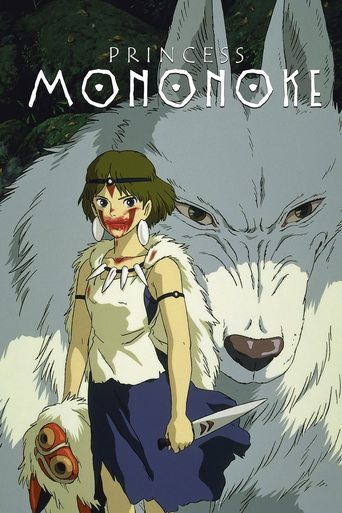
Princess Mononoke
もののけ姫
1997 · Film · 134 min
Directed by Hayao Miyazaki
Ashitaka, a prince of the disappearing Emishi people, is cursed by a demonized boar god and must journey to the west to find a cure. Along the way, he encounters San, a young human woman fighting to protect the forest, and Lady Eboshi, who is trying to destroy it. Ashitaka must find a way to bring balance to this conflict.
39 positive4 negative11 neutralfrom 54 commenters
Where to watch
No streaming data for this title.
63 comments on Hacker News
Nolan made "The Odyssey". It was his vision.
Hitchcock made "Psycho".
Miyazaki made "Princess Mononoke".
While you can say Roger Deakins shot "Blade Runner 2049" or Hans Zimmer scored "Interstellar", even these masters of their craft paired with directors to make their films. The film is still typically the work of the auteur director, and the director (usually) exercises control over all of these pieces.
You can tell when that doesn't happen. You can tell when the producers exercise outsized control. Or when the studio controls the editing table. And it's not like that's ever kept a secret - people talk about this openly and loudly when it happens.
Musk built his empire, and even if he bought his way in, he still used his unique methodology to turn it into what it is today. "Founder Mode", if you will. Same thing with Steve Jobs.
All of this hand-wringing about who painted the shed in "The Evil Dead" doesn't matter. It's Sam Raimi's. Everyone else on set dances to the beat of his drum.
Software can (and will) be like that too.
Game design, company formation, product development, you name it.
As for Princess mononoke it's a bit hard to write down everything. It's Miyazakis magnus opus. (not spirited away. That was explicitly to woo western audience with oriental mysticism)
It's a story of conflict and mistakes. Do you watch a history movie about WW1 and also get perplexed "and then they did WW2, What?". As said, it's not a story about linear start-end like theater. It's a snapshot of a historical event.
And the idea is not industrial revolution. The idea is that tatara village is a sanctuary for the outcast. The place is for prostitutes and slaves that fled. Eboshi, is presented as this opportunistic woman but also simultaneously presented as a savior that even accommodate lepers. During the story, the village is also attacked by Samurais; the outer world "lords" that shunned the outcasts, and now that they're successful, come to ask for tithe. Something the village shuns by shooting at the emissary. This leads to war. The Eboshi is desperate and contact the Buddhist monk and get a formar letter from the emperor to hunt for the god, to gain legitimacy and protection.
The nature, Shishigami, doesn't care. They explicitly say that in the end. It's the process of nature and doesn't choose sides. and really, for everyone to move on, in a harsh world, is to be "OK" with what happened. This is more realistic than some story of tragedy or revenge that have an "end of history" synonymous as "the end of the story". Life goes on.
Miyazaki have been anti industrial, pro nature all his life. But, he also admits that industry is helping humans. The tatara village is just that. They are "evil" from mononoke and forest spirits point of view, but they're the down trodden, desperate that finally built a place for them.
The point of the movie is that Ashitaka, the outsider, that comes from a dying tribe in Japan peninsula, realize that his deadly curse is not caused by monochrome "evil, selfish people" or "revengeful nature". But that everyone (except the samurai and monks) have their reasons for the actions, and that lead to conflict. That in the end, would lead to destruction and the only way to live is to coexist.
The story of coexistence START at the end of the movie. Which is ofc underwhelming to watcher if you want a definitive answer of "will it work? Is this happy ever after? Who won? Whose story is this". The anser is "we don't know, we don't know, and the story is the event that transpired".
Most ghibli stories (that are actually written by Miyazaki) follow similar patterns. History continues
As much as I love Spirited Away and Castle in the Sky, I've been so bummed Miyazaki hasn't returned to more adult storylines.
Princess Mononoke and Nausicaa are two of my top ten films. I'd do anything to have Miyazaki make one more.
I even bought Miramax's old marketing website and kept it online [1].
I was lucky enough to teach English in Hokkaido [2], which is where Ghibli animators drew inspiration for Princess Mononoke. It's such a beautiful place, and you can feel it in the film.
[1] http://www.princess-mononoke.com/ (I should get SSL certs but I haven't touched it in years.)
[2] https://news.ycombinator.com/item?id=46035689
Your friends might be overselling it. Even as an anime fan myself, most anime is mindless drivel with works that leave a lasting impression few and far between.
Hard to make a recommendation without knowing what genres you like but the recent "Frieren: Beyond Journey's End" was a very well done story told from the perspective of a member of a fantasy-style adventuring party who outlived her fellow party members that reveals its tale through her memories of her friends and the changes their party's travels left behind on the lives of ordinary folk.
Cowboy Bebop (the 1998 anime series, not the dreadful recent live-action movie) and Trigun are considered classics in the space western genre, with a solid mix of drama and occasional humor.
As others have mentioned, the movies from Studio Ghibli are rightly regarded as classics, although I would personally limit that to their pre-2002 movies; their later movies have somewhat of a more mixed reception. To western audiences, Princess Mononoke is probably the most well known. If you want something less fantastical, Kiki's Delivery Service might be worth looking at.
In terms of rom-coms, I'd suggest the less well known His and Her Circumstances, despite its incompleteness. A lot of its humor and drama is conveyed through energetic visuals that wouldn't really be feasible when filming human actors.
It's certainly his biggest world, and the themes of climate change and environmentalism are directly relevant.
I still am not sure which between Nausicaa the manga, Nausicaa the film, Princess Mononoke, or Spirited Away are his magnum opus. They are all spectacular.
I posted below about his manga, "Shuna's Journey". It's also exceedingly relevant.
Definitely. Lots of Ghibli films (and anime in general) aren't really targeting an age demographic the way the west would.
Kiki's Delivery Service, Totoro, Castle in the Sky, Arrietty, etc. are all watchable at any age.
Even the more mature films like Princess Mononoke would be unlikely to garner more than a PG rating.
> Mononoke is also my favorite film.
How are there that many of us? It really is a spectacular film.
> equally good both in sub and dub.
The dub has decent voice acting, but is plagued with changing the meaning of several scenes. Kaya is Ashitaka's little sister, not betrothed. They inserted fart jokes. Moro's voice is significantly different [1]. Also, Neil Gaiman was involved in the localization. I've never been a fan of his.
There was also a really great anecdote about Miyazaki winning out over Harvey Weinstein [2]. "No Cuts!"
Back when I was a kid, I bought Miramax's old Princess Mononoke marketing site [3]. I still have it floating around, I think.
[1] https://www.out.com/film/2022/8/24/meet-japanese-drag-queen-who-voiced-iconic-ghibli-character
[2] https://www.youtube.com/shorts/f4BgE1kdTGQ
[3] http://www.princess-mononoke.com/ (not SSL, whoops!)
It's either Totoro, Princess Mononoke, Spirited Away, Lauputa, or Kiki's Delivery Service for me. Depending on the phase of the moon.
But yeah, there are not many directors like Miyazaki or Kubrick left.
Maybe I could count Céline Sciamma to the same company. I wish she would make a new movie soon.
Well their top directorial talent is retired (and even if it's another fake retirement like his last two, he's too old to do too much more) or dead. Miyazaki's films seem to be more popular and well known than Takahata's (personally Grave of the Fireflies and The Cat Returns are the only Takahata films I've seen), but both men were the heart of the studio. Goro Miyazaki has improved since his debut but is still nowhere as talented nor as visionary as his father.
Also The Boy and the Heron was quite a letdown for me for Miyazaki's final film. I understood the point he was trying to make, that the films he made were his attempt at creating a perfect world, but the malice in his own heart made him unable to accomplish his vision. But the rest of the film didn't really seem to be built around that message, it seemed like an afterthought for the final scenes where the great-uncle is trying to pass the mantle on to him.
In any case, Princess Mononoke is my favorite film of all time, and the closest that Miyazaki (and Studio Ghibli) ever got to perfection. If you haven't seen it you should absolutely check it out.
I think Studio Ghibli's 'secret sauce' is the "Kishōtenketsu" or four act structure that makes Studio Ghibli special:
1. Ki (Introduction) - Sets up characters and situation.
2. Shō (Development) - Expands the characters and fleshes them out.
3. Ten (Twist) - Introduces a new element or change.
4. Ketsu (Conclusion) - Shows the outcome and connections between elements.
In contrast Western films usually follow a three act structure:
1. Setup - Introduces the hero, often stepping into the unknown, and establishes the initial conflict and sets the stage for the story.
2. Confrontation - The hero faces mounting challenges and conflicts, often involving threats to innocent people or community. Stakes are raised and the story progresses to a conclusion.
3. Resolution - The story culminates in a climatic confrontation between the hero and the villain. Some sacrifice is usually paid, the hero triumphs, justice is served and order returns to the community.
I grew up on Disney and the three act structure, so when I experienced Studio Ghibli for the first time with Princess Mononoke it felt very different, fresh and more mature. While I don't necessarily love all of Studio Ghibli's catalogue, I do treasure Princess Mononoke, Kiki's Delivery Service, and Porco Rosso.
In the case of Nausicaä of the Valley of the Wind, I highly recommend reading the manga over watching the Studio Ghibli anime.
If you have not seen "Princess Mononoke", I highly recommend it. I rewatched it recently and the people and creatures on both sides of the conflict are neither really good nor evil. Just two opposing forces with different goals.
It offers a level of subtlety I have not seen often in film, particularly since Star Wars.
It's in the article
> Once regarded as a notoriously hard company to work with, it has clearly learned its lessons. Increasingly, it’s partnering with others to boost revenue from its vast catalog of intellectual property, from Pokemon Go maker Niantic Inc., to Nintendo-themed areas at Universal Studios theme parks across the world.
This isn't entirely true though, many are aware of the terrible animated Zelda show in the 90s, and the Super Mario Super Show and original Super Mario Bros. movie.
I think this is probably a similar story to early Ghibli partnerships with western media — their early distributors didn't "get" movies like Princess Mononoke and tried to completely butcher the initial US release. This put Ghibli off of partnerships for a while, but they eventually re-approached and are doing wonderful dubbing work with Disney.
I don't really (honestly) understand this critique.
What's wrong in being honest?
Goro works are inferior to his father's works on many levels.
He's no amateur, that's for sure, but he's no master either.
Among the best Japanese animation artists, he's probably average.
He's no Takahata, Oshii, Otomo, Anno, Watanabe, Hosoda by a long shot.
Hayao worst rated works on Rotten Tomatoes are "The cat returns" and "The wind rises" and I completely agree on that, with a rating of 88%.
Goro worst is "Earwig and the Witch" that I have not watched with a 28%, "Tales From Earthsea" that I've seen and did not like much with 38% and the best is "From Up on Poppy Hill" with 87%, which was good, but not "Spirited Away", "Princess Mononoke" or "Nausicaä of the Valley of the Wind" good.
And Nausicaa itself is not as good as a movie as the manga, that is an order of magnitude better!
The dude has been saying latest-film will be his "last" film since, what? Spirited Away? Princess Mononoke.
Miyazaki is going to make movies until he dies. Full stop. His son is not as talented as he is, and I don't see him passing the torch anytime soon.
Princess Mononoke just has a slow gradual buildup. It builds the world and plays with plot tension and progression in interesting ways. Then saves the climax for the end of the film, with an after scene that gives a sense of finality.
It's easily one of my favourite films for these reasons.
> I think Princess Mononoke was an awful film with a navel gazing director who gets treated far too kindly because of a childish desire for "whimsy". Everytime I see a Ghibli pusher here, I laugh.
Mad respect for expressing a truly unpopular but ultimately harmless opinion. Yow!
Putting experience and expertise about a matter of taste on a pedestal is nonsense.
I don't share many values with movie critics. Here's an spicy example that will mark me as a philistine forever.
I think Princess Mononoke was an awful film with a navel gazing director who gets treated far too kindly because of a childish desire for "whimsy". Everytime I see a Ghibli pusher here, I laugh.
No movie critic will engage with such a perspective (because it is "wrong", the movie is "powerful", the art is "beautiful" and the characters are "strong" — every one of which is literally a matter of interpretation). Depending on critics is depending on people who have to satisfy their local equivalent of the Reddit front page. Why would you trust them except to know the current rightthink?
It's not the same as a scientist describing climate change or an engineer explaining the loads on a bridge.
I haven't gone super-super-deep into Ghibli but I feel confident saying either My Neighbor Totoro or Spirited Away.
Be careful to keep your expectations straight for any of the Ghibli films you watch after Spirited Away though, because it's possibly their best. I go back and forth on that or Princess Mononoke taking the crown.
If I had significant wealth, one of the things I'd do would be to try and commission Miyazaki to make another film in the same veins as Nausicaa of the Valley of the Wind or Princess Mononoke. Maybe adapting his earlier Shuna no Tabi manga, which was also great. I'd even settle for something more kid-friendly like Castle in the Sky or Spirited Away.
I know money probably wouldn't sway him, but a donation to something he cared about... maybe. It's just an unrealistic hope, anyway.
I can't stand that there's nothing else like Princess Mononoke or Nausicaa. The world needs more Miyazaki, and especially his adult-themed sci-fi and fantasy.
Miyazaki is a treasure. I'm going to miss having him.
I asked a frAInd what famous actors dubbed miyzazki movies:
"Spirited Away" (2001) - Daveigh Chase, Jason Marsden, and Susan Egan.
"Princess Mononoke" (1997) - Billy Crudup, Claire Danes, Minnie Driver, and Billy Bob Thornton.
"My Neighbor Totoro" (1988) - Dakota Fanning and Elle Fanning.
"Howl's Moving Castle" (2004) - Christian Bale, Emily Mortimer, Jean Simmons, and Billy Crystal.
"Ponyo" (2008) - Cate Blanchett, Matt Damon, Tina Fey, and Liam Neeson.
"The Wind Rises" (2013) - Joseph Gordon-Levitt, Emily Blunt, and Stanley Tucci.
"Porco Rosso" (1992) - Michael Keaton and Cary Elwes.
"Kiki's Delivery Service" (1989) - Kirsten Dunst, Phil Hartman, and Janeane Garofalo.
> Only Yesterday
Only Yesterday is a very good movie. A true anime for adults, not one that mistakes "adultness" for "naked people and/or gore".
Re: dubs. I haven't watched the English dub of too many Ghibli movies, mostly because if I watch a dub, I watch it in Spanish. Judging by the only one I've seen in English too -- Princess Mononoke -- I'd rate the English dub the worst, with flatter and less inspired voice acting. The Spanish version of Mononoke is actually tied in quality with the Japanese version in my mind.
I used to believe I could only detect bad acting in my native Spanish. Mononoke taught me that no, I can spot bad acting in English too! I don't know what the hell Billy Crudup, Claire Danes, Minnie Driver and all those well known actors were doing...
> A narrative with no villain or hero is incoherent: It doesn't have a point. Narratives must construct the bad guys and outgroup (the villains) in a dynamic with the good guys and ingroup (the heroes) to be complete. The friend-enemy distinction. Is there a reference frame outside of this dynamic?
I like how in Hayao Miyazaki's Princess Mononoke there were no actual bad guys. Just different groups trying to protect their own. I find it a much closer analogy for the real world than most films with clear-cut heroes and villains.
It's incredible to me that we can vilify our own neighbors as worse than Darth Vader, a fictitious child killer and mass murderer.
Manga Paint by Numbers is a fun and thrilling artistic endeavor that mixes the captivating world of manga with the therapeutic process of painting by numbers. This fascinating hobby allows manga fans to bring their favorite characters and storylines to life using a painstakingly crafted template divided into numbered sections. With a wide variety of popular manga themes to choose from, fans can immerse themselves in the world of manga, express their artistic flair, and create magnificent manga-inspired pieces to proudly showcase or share with fellow enthusiasts. If adventure on the high seas is more your style, embark on a painting journey with One Piece, the legendary manga series by Eiichiro Oda. Set sail with the Straw Hat Pirates and paint the rich colors of Monkey D. Luffy's distinctive straw hat, the beautiful landscapes of the Grand Line, or each member of the crew's unique designs. With One Piece paint by numbers, let your creativity flow as you recreate the sense of camaraderie and excitement that makes One Piece so beloved. And let's not forget about Studio Ghibli, the renowned animation studio responsible for enchanting films like Spirited Away, My Neighbor Totoro, and Princess Mononoke. With Studio Ghibli paint by numbers kits, you can capture the whimsical and imaginative worlds crafted by the studio's visionary director, Hayao Miyazaki. Moreover, you may bring to life the magic of flying with Haku and Chihiro, or create a breathtaking landscape inspired by the Catbus and Totoro. These kits allow you to blend Ghibli's charm into your artwork and transport yourself to a world of wonder. In conclusion, Paint by numbers is more than a creative pastime. It's a kind of leisure, a form of self-expression, and a gateway to artistic fulfillment. It allows people to express their creativity, discover the joy of painting, and create beautiful artworks to be proudly displayed or shared with others. So, whether you're seeking a new artistic adventure or simply looking for a relaxing pastime, give this concept a try.
Not to be pedantic, but aren't the Studio Ghibli movies painted as well? They use(used?) poster paint for most of their movies (spirited Away, Princess mononoke, etc).
This is neat anyhoot!
Neil Gaiman changed Kaya from Ashitaka's romantic partner to younger sister. He also inserted a fart joke into a moment that didn't deserve it.
The dub is above average, but the original with subs is the best way to watch the film.
Mononoke Hime is still in my top 25 films. If you haven't seen it, please treat yourself. I think it's far better than Sen to Chihiro / Spirited Away.
(FWIW, I bought the domain for Miramax's original marketing page and kept it online: http://princess-mononoke.com)
The movie that scarred me as a kid was Princess Mononoke. I remember my parents had a few friends over to watch it when it first released on DVD and they did this after my bedtime as I wasn't considered old enough to see but of course I snuck down to watch (I'm pretty sure they knew I was watching in retrospect).
The scene that I would relive in my nightmares repeatedly for years was the one where the protagonist's cursed arm comes to life in the middle of a pitched battle and everyone sets down their arms to watch as he pushes open a big gate or something. The music in this scene is foreboding, solemn, yet energetic, and the visual combined with the music evoked exactly the emotion I'm sure Miyzaki intended: dread at the vastness of the power of nature about which humans know naught, finally revealed in all its terrible horror. The prince's fate as a cursed person is supposed to feel worse than death and this was maybe my first time fully appreciating that concept in my short life, so it was doubly effective.
Glad to see Nausicaä mentioned. While I find it really hard to rate Miyazaki movies (usually the most recent rewatch becomes my favorite), the deep echoing philosophy of Nausicaä and Princess Mononoke is definitely underrated.
I love how one of the comments talks about Roger Ebert calling the lamp post a gift. The entirety of Studio Ghibli is a gift. The empowering characters and almost eternal, non-preachy, storylines are truly some of the greatest epics in modern times.
Princess Mononoke is my favorite film of all time. Whisper of the Heart is a close second.
A couple are quasi-picaresque, nearly plotless. I'm thinking of Kiki's Delivery Service. It feels cozy and injects little in the way of tension, compared to most animated family movies (that I've seen). Seems like an underrated approach but probably hard to pull off. In contrast, Princess Mononoke (admittedly, not for kids) has more going on and doesn't lack drama.
It's hard to define best, as someone who watched a lot of it as a kid.
For a pre-teen audience, Nausicaä of the valley of the wind, Castle in the Sky, Totoro, basically all the stuff before Princess Mononoke are great films.
I see Princess Mononoke to be a film for people coming of age, where it's time to realize the binary view of the world is overly simplistic.
Just don't bother with the dubs. Hollywood just couldn't get the right voice actors to act with the right voice to fit the setting and the theme. For example, the main characters dub for Castle in the Sky felt older than the original (or Cantonese dub, which was my first introduction). Pazu was supposed to be an orphan, a child worker in a frigging mine. While the film doesn't directly call attention to that much, it hints at it by having the original voice to be too young to even crack yet.
Seems like it was a producer that sent it. https://www.polygon.com/animation-cartoons/2020/5/26/21270413/princess-mononoke-hayao-miyazaki-movies-harvey-weinstein-katana-story-studio-ghibli
I've seen every Ghibli film except the Earthsea film, and I'd say the best are Spirited Away, Princess Mononoke, Princess Kaguya, and Totoro.
That said, I've liked pretty much every film they've made except Kiki's Delivery Service (I found it a bit dull) and Howl's Moving Castle (it just didn't work for me). They're pretty much all worth watching at least once.
Howl's Moving Castle really falls apart at the end, and it's a shame.
Nausicaa of the Valley of the Wind and Castle in the Sky are the most similar in feeling to Princess Mononoke. High fantasy, adventure, against all odds. (This is my favorite batch of Ghibli / Miyazaki / Takahata films.)
Spirited Away is an otherworldly coming of age treasure that cannot be missed. Totoro and Kiki's Delivery Service feel similar. Whisper of the Heart is this too, just aimed a little older. (And if you like that, check out Your Name by Shinkai or Wolf Children by Hosoda - not Ghibli films, but very deserving of a watch if you like this sort of film.)
Grave of the Fireflies is a very poignant anti-war film.
FWIW, I bought the old Miramax domain name for Princess Mononoke and kept the website online [1]. It's one of my favorite films. I wish Miyazaki made more films like Mononoke and Nausicaa - they're sublime.
[1] http://princess-mononoke.com
Princess Mononoke is one of my favorite movies of all time but Netflix is more or less straight up garbage. Even their flagship offerings like Stranger Things are creatively bankrupt references for bored millennial parents.
Is princess Mononoke the best movie from Studio Ghibli? It's the best anime I've ever whatched .
This was a nice read that I really wasn't expecting from BBC.
This explains why I, a kid in the US at the time, saw zero marketing for Princess Mononoke when it was released. It was only a few years later that I discovered it at the local Blockbuster. It's impact on my film preferences was immense.
I love studio Ghibli movies and Princess Mononoke is the best one I have seen. It is such a powerful, well done movie.
The film had a profound impact on my teenage years as well after watching it late one night on satellite HBO. I had the soundtrack on my pre-iPod Archos and torrented all of Ghibli's other films on 56k dialup.
It kept me involved in learning Japanese and eventually teaching English in Hokkaido. I even tried building a film and video startup contemporaneously with YouTube, but without the skills and VC connections.
I also made a bunch of dumb films with my friends that would embarrass me if I found them today. The memories are good, though.
I bought Miramax's (the US distributor) old marketing website for Princess Mononoke when they let it expire in 2002, and I kept it online (mostly) :
http://www.princess-mononoke.com
This year I find myself building a film-related startup yet again, but now with 15+ years of experience at my back and funds from an IPO exit. Maybe I'll succeed. If I do, I'll have to credit Miyazaki and Mononoke Hime in part for inspiring my journey.
Princess Mononoke changed my life. It was the first Ghibli film I saw, and I only saw it for the first time about a year ago (yes, I'm aware I'm rather late to the party). Every preconception I had about how a movie had to be made, or how stories ought to be told, was completely swept away. One of those moments where I can clearly delineate the person I was before watching from the person I was after.
Miyazaki is a master of his craft. I aspire to tell stories like him one day.
>Anime is not the dominant form of media in Japan, and is largely targeted at a relatively narrow age band
But it seems very popular, out of the top ten highest grossing films in Japan, 5 are anime (Spirited Away, Demon Slayer, Your Name, Princess Mononoke, Howl's Moving Castle), and the top two are Spirited Away and Demon Slayer.
In North America's top ten you will only find one animated feature, Incredibles 2, and it is at position ten.
Princess Mononoke is still in my top 5 movies of all time, and has been for many years.
Without spoiling too much, the basic premise is that a young man is cursed while defending his village from a demon, and must make a journey to understand his curse (and hopefully cure it) before it kills him. On his journey he ends up being forced to try and mediate a war between the ancient gods of the forest (representing nature) and a nearby town with an iron forge that wants to raze the forest to use the ore in the soil below (representing civilization and industry).
Despite being very environmentally themed, it's not hamfisted at all. Several of the characters on both sides (the humans and the forest gods) are very complex and multifaceted in their motivations.
Also the soundtrack is one of the most beautiful to ever accompany a film.
Cowboy Bebop is a great show with nothing else like it. I feel the same, but I still enjoy CB, Princess Mononoke, Grave of Fireflies etc. My immediate association with anime is a over sexualized cartoon with way to many episodes (knowing that's not true for the anime I have watched).
This is one of the reasons I love Hayao Miyazaki's movies. The characters are nuanced. Which is both more realistic and far more constructive.
Take Princess Mononoke for example. There's the antagonist, Lady Eboshi, who runs a mining town and is destroying nature. Generally this would be the complete character. That's the villain, easy to hate. Must be vanquished. End of story.
But then you learn she's empowering women and taking care of lepers, the most vulnerable. Her workers and the townspeople adore her.
Now you have mixed feelings. And the answer goes from "destroy" to "cooperate" and seeking a peaceful, win-win solution.
Does anyone else still torrent?
I rarely watch a tv show or a movie, but when I do I just torrent it. I've been doing this since Limewire (which was a lot of really shitty porn at the time).
Showed my boys Princess Mononoke the other day - will show them the Mandalorian tonight, a buddy told me its pretty good
Not sure about that. I remember that in the late '90s - early 2000s people were really hyped up about the animation movies of that era, and rightly so, we're talking about the early Pixar movies, Miyazaki's "Princess Mononoke" and "Spirited Away", Satoshi Kon's "Paranoia Agent" and "Perfect Blue" or about "Cowboy Bebop", people knew that they were contemporary with really, really great animation movies/series. Almost 20 years have passed since then and nothing similar is being done anymore, at least not in the mainstream.
Studio Ghibli movies shaped my childhood and I loved them. (My parents didn't even realise they were Anime until later, they assumed it was from Disney because they were so well made) Spirited Away was a favorite family movie for a long time.
I think Laputa - Castle in the Sky will remain my all-time favorite and Princess Mononoke second.
I agree that interesting stories don't have to adhere to this structure (and by all means, stories should break the rules!). But, the western market generally demands it for salable material, especially novels.
Even in this conflict structure, the best antagonists are the ones that believe they are doing good. It's not a trite good vs. evil construct. They have their own desires and a philosophy that can be a logical way to solve a problem (but in conflict with how the hero wants to solve it).
Ghibli films do this best. For example, in Princess Mononoke, the antagonist (Lady Eboshi) is initially presented as the evil forest destroyer, chopping down trees to make villages and industry. But then, you find out she does this to provide shelter and work for social outcasts. It's a moral dilemma with no clear right answer.
> it deals with Japanese stories and folklore that are foreign to the general western audience.
That is also true of Princess Mononoke, Spirited Away, My Neighbour Totoro... a lot of other Ghibli productions that did get lots of exposure.
I think the issue with that particular movie is that (IIRC) is a bit heavy on the ecological agenda, overall is not great (funny here and there though) and I don't think it was ever dubbed. The subtitles I've seen floating around are pretty terrible.
Someone should put together a Takahata retrospective with good subtitles.
Porco Rosso, Howl's Moving Castle, My Neighbor Totoro, and Princess Mononoke are good. In fact, they're arguably some of his best.
But my favorites will always be Kiki's Delivery Service, Castle in the Sky, and Whisper of the Heart. They may not be Miyzaki at his best, but they were the films that I loved the most.
The Wind Rises may also join the latter category. Either way, it's a really good film.
Finally, it should be noted that Kaze Ni Naru from The Cat Returns is possibly one of my favorite songs from any anime, ever. And I watch a lot of anime.
Suffice to say it's up on the list with A Cruel Angel's Thesis, and Tank. For you anime fans who know what that means, yes, it's that good, IMHO. YMMV.
The other peerless Miyazaki's are Princess Mononoke (the only other work with as much depth as Spirited Away) and My Neighbour Totoro (avowedly a children's film). Nearly all the others are also very very good.
And if that's your only exposure to anime then you should at the very least checkout Satoshi Kon's masterpiece Paprika.
though not sci-fi, but check out hiyao miyazaki's anime, really well done and he has this way of never portraying characters as bad, everyone is good, very consistent across all his movies, princess mononoke, porco rosso, my neighbor totoro, etc
The quote itself is somewhat vauge, but I think the movies exemplify more clearly the viewpoint.
Take The Lord Of the Rings - the good and the evil is very clearly defined. Sauron and the Orcs are objectively evil, and you can kill as many orcs as you want without feeling any remorse. Sarumans industrialization is pure evil. Aragorn is the rightfully ruler purely by virtue of being a "good guy" and having the right ancestors.
Now compare to Princess Mononoke. Obviously the corruption of the nature is an evil thing, but Eboshi is not "evil", she saves the outcasts of society, lepers and prostitutes and gives them life and dignity, but as part of her plan she upsets the balance of nature. This is much more complex conflict as in Tolkien, and the solution is not as easy, since you cannot just kill all the bad guys.
just watched princess mononoke last night. =)
> Definitely agreed, if you've got kids Totoro and Spirited Away are good excuses to become introduced to Miyazaki's work.
totoro and spirited away are my two favorite miyazaki movies. not that you're necessarily implying it, but these are not simply kid's cartoons. like a great poem, they're the kind of movie that has multiple layers of meaning and connects with people of all ages.
and i'd recommend watching them in the original japanese, with subtitles if you don't understand japanese (i don't). you lose the essential asianness & the original emotional nuance of the dialog when it's dubbed, just imho.
As an 80's anime kid, I remember when I first saw Castles in the Sky and My Neighbor Toro Toro. It left lasting impressions on my world views of flying robots and bus-shaped giant cats.
But Princess Mononoke straight out floored me. The surprising heaviness and violence felt like they backdoored a complex film for adults. In Japan it was the highest grossing film of ALL TIME until Titanic came along.
My growing years have been enriched beyond measure by the Ghibli/Miyazaki films. May my curiosity and joy of trekking hidden paths be the legacy of Studio Ghibli.
For anyone curious about the behind the scenes of the studio during production, especially surrounding the tireless work of Miyazaki, the Making of Princess Mononoke documentary [1] is a superb watch. The film was translated by a Youtuber, and missing a few parts but very much gave me a great appreciation for what goes into creating one of their films.
[1] http://ghiblicon.blogspot.com/2008/11/making-of-princess-mononoke-series-1.html
I enjoy Miyazaki films, a lot. My favourite is Nausicaä of the Valley of the Wind[1] but all of them are beatiful pieces of art. I also encourage people who do not know Miyazaki to see some of his works. Princess Mononoke is a good one to start with.
[1] http://en.wikipedia.org/wiki/Nausica%C3%A4_of_the_Valley_of_the_Wind_%28film%29
Princess Mononoke a film for children? I'd say it's a touch too bloody for most parents to deem it appropriate for their children.
Well, since the only thing I know about you is that you're on HN, and you haven't told us what you like or don't, or what you've already watched, you're going to get a load of essentially mainstream sci-fi. But that's your own fault.
Cypher - apparently unpopular with everyone except me, but I found it a very stylish, PKD-esque exploration of identity.
The Prestige - this one you'll probably hear elsewhere. It's mostly about the lengths to which someone is willing to go to be the very best at what they do - which obviously has some relevance for the HN crowd.
Watchmen - the only movie I watch again and again. It might be different for those who lived through it, but I love the way it can effortlessly evoke a very different era, cold-war paranoia, vietnam... a real sense of change.
Children of Men - arguably this shouldn't qualify as exceptional, and there's a lot less to say about it. What it is is some very good straight-up action, and then underlying that is a tale of how people respond to the inevitability of death. It's a simple film at heart, but I found it a very moving one.
Princess Mononoke - again, a real sense of the times changing, of conflicts that have to be resolved not by returning to the status quo but by moving forward somehow. Moral complexity everywhere, with no side being outright good or evil. And a beauty to it all even amidst the violence.
You totally can, with basically the same calls!
e.g. to find the film Triplets of Belleville: http://api.hunch.com/api/v1/get-results/?name=triplets%20of%20belleville&topic_ids=list_movie
id is hn_3575764, so then we can get movie recommendations for someone who likes Triplets of Belleville: http://api.hunch.com/api/v1/get-recommendations/?likes=hn_3575764&topic_ids=list_movie&limit=5&minimal=t
Seems pretty reasonable: Spirited Away, Princess Mononoke, and Dr. Strangelove
I think about this all the time. 2 boys 3 and 6 yrs old. I cringed a bit when I saw the title because it made me think of the term 'alterna-dad' and of a style of parenting in which children become accessories and 'buddies' to their extended adolescent parents. Sport matching mohawks, etc, etc.
But the article was nothing like that. It is short but the feeling I got was of true exploration and of forging a real relationship. (Another HN post of the past few days talked about how you have +/- 10 yrs to connect with yr kid). It also reminded me (as other posters noted) of that SouthPark where they all play WOW and meet Randy in game. Or the classic 'Chinpokemon'. Two really well done episodes - in both cases parents wade through unfamiliar territory to meet their kids and understand them better. Not simply ban the game.
There is danger in letting your chidren do certain things. The impulse to bubblewrap them is strong. I catch my breath everytime they do things like walk with me out on our balcony (17th floor), ride the scooter in the skatepark, climb on the rocks in the park across from our apartment, etc. But I consciously hold myself back - watching them but not rushing in to stop them. This week end my 3 yr old got punched full in the face by a 5 yr old. I held back for a count of 10 to let him deal with it as he wanted to and then comforted him a bit and broght him back so he could feel safe playing around this kid.
The point is to show them experientially that you trust them - and that you are in the background to help them if things get scary. I felt that vibe from this writer and applaud that.
In truth I have no idea of what I am doing. I use my intuition as a guide and hope I am right. What he says about the ESRB is spot on. If - as a parent - you need a school, govt agency or rating agency to tell you what is safe for your kid - then you are screwed. You need to go through it with your child and see for yourself.
You can get good advice from individuals - teachers, other parents, certain writers - but not from agencies and bureacracies.
As a parent dealing with impact of media in general is a challenge. For the past 2 yrs we went off cable tv and started to rely completely on the internet/ public library/ netflix for movies etc. I have held off on getting Wii/ x-box, etc in favor of PC based games. They have both watched tons of anime and comics (particularly stuff like Miyazaki Hayako (sp?) and the Avatar series). They both love Futurama - which might be too adult at times for them. I will have to explain 'death by snoo-snoo' one of these days.
My older son has learned to really enjoy some of the games that an Ubuntu distribution has to offer - things like Wormux, OpenSonic, BattleTanks. He has looked over my sholder as I have played some of the Doom emulations on the android or the Quake-like games on Ubuntu.
From hacker news I found out about the Wolfire free bundle and he fell in love with the Samorost series. He cried when it was done and drew a big picture of what he thought the next episode should be.
More recently on my wife's computer (WinXP) I downloaded Steam and setup the free version of Portal and bought a Tower Defense game to play.
Every time we take the subway or wait somewhere my wife and/or I whip out the gPhone and let the two of them play android games.
We try to limit this to certain times of the week etc. because of the vague fear that media will completely saturate their lives.
It is not the violence alone that gives me pause. I knwo experientially how absorbing a good game is (thinking of days past playing Half-Life or Diablo, etc).
I want them both to enjoy good media and I am loosely overlapping anime, movies and games because I feel like there is power in the imagery of soemthing like Half-Life or Miyazaki's "Princess Mononoke" which affects you deeply.
What often pisses me off are crappy movies in which the point is simply to sell a lifestyle. I hate movies like "Shark Tales" or "Madagascar" and I cant say exactly why. There are funny bit parts but the whole thing feels like it is in the service of what the philosopher Adorno referred to as the "Culture Industry". I find those movies more disturbing than somethign with more overt violence.
In a very interesting way I think this goes back to Plato and his fear of 'poetry' by which he included dramatic arts. It was the fear of the power of images. We have reached the point where video games and anime have reached a complexity and depth of imagery that they have a life of their own.
I know myself that these things affect me differently. I am trying to see through my sons' eyes to see how they are affected. At times it feels dangerous - like letting them speed ahead on their little bikes on the city sidewalk - but what this guy is doing is right. Watch them in the background, ready to bolt after them - let them know that you trust them and that you are there to help deal with the scary parts - let them experience it and learn from them as they reflect their experience back to you.
Plato on images: http://plato.stanford.edu/entries/plato-rhetoric/
Culture Industry: http://en.wikipedia.org/wiki/Culture_industry
It's interesting how truth can be revealed through empirical research and also art.
As someone who started out as purely a math, physics, hyper-rationalist type of person, I used to think truth could only be found in empirical studies like this one.
However, the results of this study became apparent to me several years ago, largely due to watching the film Princess Mononoke. Since then, I've lived a happier more fulfilling life.
@nazgulnarsil: I think both (the study and the film) have extremely applicable conclusions that make them worthwhile to pay attention to: Since there is a multiplier effect on all of your actions, don't do bad things and do do good things. Or more simply, Karma exists. Just because the conclusion is simple, doesn't mean it can't have powerful effects.
Yeah, Princess Mononoke is really a lovely film. I thought when Spirited Away came out and became popular that people would naturally go back and check out Mononoke, but it didn't happen that much. Definitely worth a watch.
As for Avatar -
My two biggest complaints:
1. It paints it as black and white, good vs. evil. This is such a common source of human misery and brainwashing that I thought we'd started to move past in cinema. Every leader worth anything tries to play the underdog card. Ask yourself about every cause you sincerely respect and believe in - do any of your leaders not paint it as you vs. the world? The New York Yankees are the only organization I can think of that don't try to play the underdog external evil enemies card. All the world religions do, all political parties do, all nations do, and so on.
2. My housemate had a great quote - he said, "They completed de-humanized the humans before doing all the violence to them." It's quite right - the evil military industrial capitalist marines have no family members, loved ones, passions, or good about them. They exist to be eaten by dinosaurs, shot by arrows, crushed, beaten, and shredded. There's no marine who signed on for a security job, got a little freaked out what's happening, and died due to the complex violent decisions of the leaders. Nope, all the marines are not even human or worth sympathizing with at all - destroy the expoiters, make violence on them, and they deserve all the hells we can visit upon them.
When you take "we're completely good and they're completely evil" and mix it with "our enemies aren't even human", you get a recipe for horrible atrocities. I watched a documentary of what the Imperial Japanese Army soldiers was thinking at Nanking. They regarded their cause as God's work, and their Chinese enemies as not human.
Never mind the specific politics. Do we really want our epic, landmark art to assert that there is in fact pure good, pure evil, and the people with different views than us are pure evil and aren't even human? I kept trying to think of if I had a kid, how I'd talk to him or her after watching that to understand that the "clear good and evil" thinking leads to very bad places.
He recommends Princess Mononoke.
It's that fact alone that makes me take his review into consideration. If you haven't seen Princess Mononoke, I'd highly recommend it. Actually, I'd recommend all the Studio Ghibli films. My wife and I have the entire collection, and are in the middle of watching the last one we haven't watched yet, Porco Rosso (which is so far, fantastic). "These" are the kinds of animations I, personally, want to watch.
- Visually stunning, without the need for CG.
- Not overwhelming, ie: Not too spastic or overwhelming, commercial-esque, scene switching.
- No overly annoying characters.
- Original content.
You can find the entire Studio Ghibli series online at your favorite Bay of Pirates, but, I'd recommend you actually buy them all, as they are simply amazing. (My Neighbor Totoro is the kid friendliest, and the others aren't necessarily). My apologies if this wasn't specific to Avatar, but I'm just about to finish all of Studio Ghibli's works, and am simply amazed at these films. Fantastic.