 Hacker Cinema
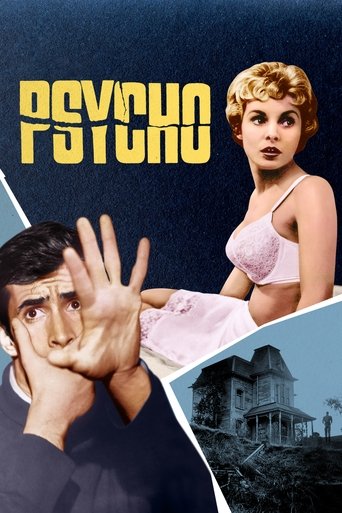
Psycho
1960 · Film · 109 min
Part of Psycho Collection
Directed by Alfred Hitchcock
When larcenous real estate clerk Marion Crane goes on the lam with a wad of cash and hopes of starting a new life, she ends up at the notorious Bates Motel, where manager Norman Bates cares for his housebound mother.
5 positive2 negative1 mixed25 neutralfrom 33 commenters
Where to watch
No streaming data for this title.
34 comments on Hacker News
I think it makes sense that historically American film focused on narrative based dramas and slow burn horror. Think of classic Hollywood hits such as Citizen Kane and Psycho. This is even apparent in the recent success of Obsession, which really follows strongly in the trend of Hitchcock, magical realism, human drama, psychological horror.
Compare this with historically successful Honk Kong films: Kung Fu Hustle, Police Story, Ip Man. I mean there are examples of Hong Kong films that are slow burn human dramas, like Chungking Express and Eat Drink Man Woman, and successful American action films like Diehard, but I think its clear that Hollywood film didn't start out with action movies, and Hong Kong film didn't start out with slow burn dramas, but adopted these genres afterwards; you could even claim that successful Hong Kong films like the Bruce Lee films of the 70s fueled the American appetite for action in the 80s, which was the most prominent era for that genre in the US.
As a corollary to this, it becomes clear that the Korean and Japanese film making industries are not as culturally distinct from Hollywood as Honk Kong film making is. For Korean film, the reason is obvious: Koreatown in Los Angeles is right next to Hollywood, in some respects is a part of Hollywood, and there are deep ties now between the Korean and American film making industries for that reason, and Korean-Americans have an overly high degree of representation in American media, and Korean productions often come to America to shoot (think of the end of Squid Games: it's almost certainly the case that they shot in LA because a producer has a cousin or something that works in Hollywood).
Nolan made "The Odyssey". It was his vision.
Hitchcock made "Psycho".
Miyazaki made "Princess Mononoke".
While you can say Roger Deakins shot "Blade Runner 2049" or Hans Zimmer scored "Interstellar", even these masters of their craft paired with directors to make their films. The film is still typically the work of the auteur director, and the director (usually) exercises control over all of these pieces.
You can tell when that doesn't happen. You can tell when the producers exercise outsized control. Or when the studio controls the editing table. And it's not like that's ever kept a secret - people talk about this openly and loudly when it happens.
Musk built his empire, and even if he bought his way in, he still used his unique methodology to turn it into what it is today. "Founder Mode", if you will. Same thing with Steve Jobs.
All of this hand-wringing about who painted the shed in "The Evil Dead" doesn't matter. It's Sam Raimi's. Everyone else on set dances to the beat of his drum.
Software can (and will) be like that too.
Game design, company formation, product development, you name it.
Thanks! Here's the full list: 2001: A Space Odyssey, 8½, Aguirre the Wrath of God, Ali: Fear Eats the Soul, All That Heaven Allows, Apocalypse Now, Ashes and Diamonds, A Woman Under the Influence, Barry Lyndon, Bicycle Thieves, Breathless, Casablanca, Céline and Julie Go Boating, Chinatown, Chinese Roulette, Citizen Kane, City Lights, City of Pirates, Contempt, Daisies, Damnation, Dishonored, Earth, Electra My Love, El Topo, Eraserhead, Eyes Wide Shut, Film Socialisme, Fitzcarraldo, Fuego en Castilla, Hiroshima Mon Amour, Holy Motors, Inauguration of the Pleasure Dome, In a Year with 13 Moons, India Song, Inland Empire, Irma Vep, Koyaanisqatsi, La Dolce Vita, La Jetée, Late Spring, L'Eau de la Seine, Le Voyage dans la Lune, Lolita, Los Olvidados, Lost Highway, Lucifer Rising, Man with a Movie Camera, Metropolis, Mirror, Mulholland Drive, Night Music, Ordet, Orpheus, Persona, Pickpocket, Playtime, Psycho, Rebecca, Rosemary's Baby, Rumble Fish, Scarface, Seven Samurai, Sherlock Jr., Singin' in the Rain, Stalker, Sunset Boulevard, Taste of Cherry, Taxi Driver, Testament of Orpheus, The 400 Blows, The Blood of a Poet, The Cabinet of Dr. Caligari, The Color of Pomegranates, The Green Ray, The Holy Mountain, The Isle, The Lady from Shanghai, The Night of the Hunter, The Passion of Joan of Arc, The Seventh Seal, The Spirit of the Beehive, The Tales of Hoffmann, The Tree of Life, The Turin Horse, Time of the Gypsies, Tokyo Story, Touch of Evil, Trans-Europ-Express, Ugetsu, Un Chien Andalou, Uncle Boonmee Who Can Recall His Past Lives, Vampyr, Videodrome, Wavelength, Werckmeister Harmonies, Wild Strawberries, Moonlight Sonata, Stellar, The Haunted House Biased toward European art cinema, experimental work, and directors who broke conventional narrative rules.
60s has so many good movies like 2001, psycho etc etc. it’s really the last 5-7 years where I feel the quality took a dive
> Think of it like a shower scene in a movie. More often than not, it has literally no relevance to the movie. It doesn’t further the plot. It’s not even part of the story. It’s just there so that it can be used as a clip in the movie trailer.
Depends on the movie. Once I studied films and film theory (just in undergrad, not trying to claim any special authority on the subject), I appreciated more how these interstitial scenes are meaningful. It's all part of mise-en-scène. It lets the scenes feel alive and lived in, and not just a 2D image flying by at 24ish FPS.
https://en.wikipedia.org/wiki/Mise-en-sc%C3%A8ne
> Mise-en-scène has been called film criticism's "grand undefined term". Ed Sikov has attempted to define it as "the totality of expressive content within the image". It has been criticized for its focus on the dramatic design aspects rather than the plot itself, as those who utilize mise-en-scène tend to look at what is "put before the camera" rather than the story. The use of mise-en-scène is significant as it allows the director to convey messages to the viewer through what is placed in the scene, not just the scripted lines spoken and acted in the scene. Mise-en-scène allows the director to not only convey their message but also implement their aesthetic; as such, each director has their own unique mise-en-scène. Mise-en-scène refers to everything in front of the camera, including the set design, lighting, and actors, and the ultimate way that this influences how the scene comes together for the audience.
If you've seen many horror movies, you know to expect a jump scare, but because the actual original scare in a shower scene[0] is so played-out by now, audiences expect it, so it has to be subverted.
[0] https://en.wikipedia.org/wiki/Psycho_(1960_film)
Edit:
Just was going over the thread again to see if there were any new posts, and I glanced over your comment again and wanted to reply to this point, because I agree with you and I think I didn't acknowledge this, and it really brings your point upthread home and validates it.
> For example, the suicide was very poorly handled.
I completely forgot about that part. Good call-out. Mental health issues and self-harm, especially imagery of it, are not plot devices to be used carelessly. Representation matters, and yet it's so hard to do well because those being represented need understanding also, not just seeing triggering stuff on TV and movies. That definitely didn't feel earned, and it didn't land well. I don't know how else it was supposed to feel though, considering the seriousness of the issue. It's a hard topic to put to film. Thanks for mentioning it.
I share your perspective; my guess is if it was copyrighted it probably would have had the same status. My guess is it would have been distributed relatively cheaply with the same outcome.
However, I also think it's reasonable to posit it might not have attained the same status had it not gone out of copyright. Easy access can really affect awareness and buzz around films, especially in certain genres like horror.
Horror films were already shifting in tone by 1968. Psycho was a 1960 release, for example, and The Birds was released in 1963. Carnival of Souls has a similar aesthetic as Night of the Living Dead and was released in 1962.
GPT-4o already one-shots Leetcode hard with just a screenshot. I know, it's trained on the answers. But it clicked in my head that if you give the LLM a very detailed specification + tests to the level of detail that Leetcode does, you might actually be able to one-shot any code you like.
Over the weekend, I made a game. It's heavily dialogue based. I wanted a screen and game content that centers around this gameplay. It's not a classic VN, more customized like Ace Attorney.
It's a free game so I need an intro that hooks people in the first 30 seconds. What examples are good for this? Since there's few games like this, I look into movies. I don't want that scene from Inglourious Basterds, that's too fresh. There's a lot of good stuff in classic film, before the 80s that nobody has seen. These movies had to carry themselves on content because they didn't have special effects.
And that's where DeepResearch comes in.
I'm looking for specific films that fit the tutorial of the game that I'm trying to build. Without going into details, there's 4 mechanics I want to squeeze into the tutorial level. I'm looking for specific scenes that capture these mechanics.
One intent is "How do I get players to not skip dialogue like they would with a VN?" AI's interpretation of this is "scripts that encourage impatience". I didn't even know what question to ask, and it helped to rephrase my intent into the right questions then find examples of those.
It wrote a 6000 word essay, plenty of citations, some with clips. I don't have to spend a couple nights watching Psycho or The Night of the Hunter. I can just jump straight to the clips I want. I can skim 24 different movies in the same two nights.
I saw "Psycho" probably over four decades ago. I think I came to it from its reputation — a terrifying film for its time, Hitchcock, apparently a scary shower scene... I would not have judged it when I was that age as to whether it was "self-actualizing art" or not (whatever that means).
My only recollection was that I found the ending shocking and unexpected.
Learning about it afterwards, I see how there were interesting aspects of "Psycho", particularly for its time, that went over my head when I was young: that the "protagonist" at the start of the film stole money and so should not have been sympathetic, that they switched protagonists half-way through.... It was a departure for sure for Hollywood.
I have been working through the "1001 Films to See Before You Die" for a few years now and so have come upon films like "Texas Chainsaw Massacre" at an age now where I seem to have lost my patience for depictions of cruelty.
I liked "A Clockwork Orange" when I was younger, like it less now.
Another example, I had heard about "Pink Flamingos" from its reputation but only saw it recently due to its being on "1001 Films". Hard pass on that film too (although I like some of John Waters later films).
I'm interested in whether you've seen like Hitchcock's Psycho, which is probably a lot less shocking in the way of Texas Chainsaw Massacre, and a lot more often considered a "classic movie" but similarly based on the horrific acts of Ed Gein.
If you have, did you feel the same way? If not, what was different about them for you?
My favorite Hopper painting (and comparatively little known as compared to things like "Nighthawks") is "House by the Railroad" (1925) -- a vaguely menacing Victorian style house which apparently inspired Norman Bates' house in Psycho, the Addams' house in the Addams Family, and the house in the James Dean movie Giant. https://en.wikipedia.org/wiki/House_by_the_Railroad
What you said did not make much sense, if it got poorly remade how can the local one be bad? that would mean the local one is better because the remake is worse.
Most horror remakes are seen as bad and a lot are forgotten, The mist, The Shining, Psycho. Shows imported from britain are bad, like The it crowd, a good deal of panel shows from britain crashed and burned.
Hollywood also has the capability of throwing away movies if they think are bad enough. "Release the snyder cut". There's plenty of bad remakes, I'm not young but a lot of things are remakes from the 50s 60s 70s 80s and we just don't know, apart from the adaptations of foreign movies and films.
What I don't understand about the movie business is the cost of making them. The most important ingredient to the success of a movie is the plot. We've all seen low budget movies that made lots of money - because of the plot. Casablanca, Psycho, Blair Witch Project, Cloverfield, Primer, ...
Star Trek TOS was a very low budget affair, and produced excellent results, because they hired the best scifi writers. When they threw money at the Star Trek movies, they were all terrible.
It's the plot that matters. Nothing else.
I agree with some other commenters; this is a lot of cherry picking. You could just as easily compare Nosferatu (1922) with Blade (1998) with Twilight (2008) and ask why culture gets happier and less serious as time goes on, “aren’t we all becoming like Brave New World???” Comparing Adam West’s Batman with today’s Batman is just lazy. They’re apples and oranges at this point: different genres, different climates (today the more “fun” stuff is Marvel), different film technology. And if we want to get into it, it’s not “depression” that’s trendy; it’s realism. 60’s Batman dealt with all the same “dark” themes as current Batman: mafia, crime, trauma and grief, etc. But the visual portrayal was different because it was a “comic book” before comic books adaptations were commonplace blockbusters. That doesn’t mean all of 1960s cinema is somehow a comic book movie. Hello: Psycho (1960), Dr. Strangelove (1964), The Good, The Bad, and the Ugly (1966).
Don't know -- I saw The Shining when I was 11 or 12 and it freaked me out pretty badly but I don't think it left any scars. It's a lot scarier than Psycho at any rate which mostly holds up but seems incredibly tame today.
11-12 is different than 6-7 but besides some nightmares, I don't think seeing scary movies have a negative impact on kids.
I recall something Stanley Kubrick said about Bambi being traumatizing:
I saw Mary Poppins three times, because of my children, and I like Julie Andrews so much that I enjoyed seeing it three times. I thought it was a charming film. I wouldn’t want to make it, but … Children’s films are an area that should not just be left to the Disney Studios, who I don’t think really make very good children’s films. I’m talking about his cartoon features, which always seemed to me to have shocking and brutal elements in them that really upset children. I could never understand why they were thought to be so suitable. When Bambi’s mother dies this has got to be one of the most traumatic experiences a five-year-old could encounter. I think that there should be censorship for children on films of violence. I mean, if I didn’t know what Psycho was, and my children went to see it when they were six or seven, thinking they were going to see a mystery story, I would have been very angry, and I think they’d have been terribly upset. I don’t see how this would interfere with freedom of artistic expression. If films are overly violent or shocking, children under twelve should not be allowed to see them. I think that would be a very useful form of censorship.
In my opinion you're absolutely right and I'm relatively young. (that is to say I'm born in the 90s and grew up in the 2000s).
One big argument in the thread is that mass culture was always mediocre but I think that's just wrong. If I look at the music I like it's to a large degree electronic, rock, popular music from the 60s to late 80s. Bowie, Daft Punk, Clash, Aphex Twin, dozens more.
Same with videogames. People need to take a look at what was released in a single year like 1998. Banjo Kazooie, Starcraft, Half Life, Metal Gear Solid, Ocarina of Time, etc. They still milk these franchises right now, and they've barely made any new ones since. They used to actually invent new genres of games every year.
No different with movies. My favorite movies like Strangelove, Alien, 2001, Psycho, Godfather, all ordinary mass culture stuff but great. Virtually everything in the cinemas right now is awful in comparison.
And I literally cannot be accused of nostalgia because I wasn't even born. Not just is everything homogenous but it's old. Science fiction now consists of Blade Runner remakes and Dune and Star Wars and Cyberpunk frozen in the aesthetics that are half a century old.
For people who disagree I have basically a simple question. Can they name something that is as new in form to us right now as Blade Runner was back then, or as punk and electronic music were in the 70s and 80s?
Will there be an Emacsmerse compatibility mode? ;)
But more seriously (but still on the spirit of Emacs), how will your 3D video player be scriptable and extensible at runtime?
I have some positive experience with extensible 3D panoramic stereo videos players, which I'd love to share with you:
I developed a system for JauntVR that enables cross-platform scripting of Unity3D applications in JavaScript, for Jaunt's 3D panoramic video player. It also greatly eases and accelerates development and debugging, which is otherwise extremely slow and tedious with Unity.
Unfortunately JauntVR ran out of money for that project and pivoted to other stuff before publishing it, but Arthur van Hoff generously let me open source the general purpose Unity/JavaScript scripting system I'd developed for it, which I call "UnityJS".
It's useful for all kinds of other things beyond scripting 3D videos, and it works quite nicely not just on mobile devices but also with WebGL, but scripting interactive 3D video was the problem I originally created it to solve.
I've used for several applications and integrated it with several libraries, including financial data visualization on WebGL, TextMeshPro in Unity, ARCore on Android, and ARKit on iOS.
UnityJS also makes developing and debugging scriptable Unity apps much easier and quicker (by orders of magnitude) because you can use the standard JavaScript debuggers (even on mobile devices) and just restart the app to reload new code in seconds, instead of waiting the 10-60 minutes it takes to totally rebuild the app in Unity.
By using the same standard built-in JavaScript engine of the web browser on each platform, you can implement cross-platform interfaces in JavaScript instead of re-tooling the interface for each platform in different languages, and incorporate standard up-to-date off-the-shelf JavaScript libraries.
I believe the 3D video player should be much more like an extensible scriptable browser (and like Emacs and NeWS!), instead of just a dumb fixed-function play/pause/rewind/fast-forward video player (like piping a text file through "more" on a VT100).
So you can download dynamic content and scripts that implement custom interfaces for 3D videos, like interactive titles and credits, custom menus, theater lobbies, even networked multi player environments for watching 3D videos together.
It's great fun to overlay live 3D graphics, text, physics simulation, interactive kinetic typography, particle systems, etc, into 3D videos.
It's extremely useful for selecting and navigating content, displaying interactive titles and credits, or anything else you might imagine, like games and applications embedded in and orchestrating 3D video.
And of course you can publish new content, hot updates, and extend the experience by downloading new code and data over the internet, instead of pushing out a new version of the app through the app store every time you want to improve the experience or publish a new video or series.
Some obvious and useful application for 3D videos is designing compelling opening and closing credits, captions, subtitles, pop-up notifications, pie menus, player controls, navigation, bookmarking, tagging, and any other kinds of user interfaces, that can adapt to the content and environment in whatever direction you're currently looking, so you don't miss them and they're not unusable, just because you were looking in the wrong direction at the wrong time.
3D videos suffer practically and creatively from hard-coded static title sequences and credits, because you might not be looking in the right direction at the right time to see them. It's like pointing a movie camera at a stage to film a play, instead of inventing a whole new expressive cinematic language appropriate for the new medium. And I'm not just talking 3D scrolling Star Wars credits!
Of course you could just build a dumb non-extensible 3D video player with just one hard-coded style of menus and scrolling credits, or burn the title sequence and credits into the 3D video itself, but that would be static, boring, and inflexible, because the title sequence itself is an important thematic art form, which should ideally be designed for each different video, collection or channel.
The point is to enable the infinite creative possibilities of interactive titles and credits that respond to the viewer's attention and interest: scrolling back and forth, revealing more information about the names you focus on in the credits, and all kinds of other cool innovations that run-time scripting, dynamic downloadable content, and interactive 3D graphics enable.
Saul Bass realized that 2D movie title sequences could be so much more than simply scrolling a list of names up the screen, and he designed the groundbreaking opening credits to movies by Hitchcock, Scorsese, Kubrick, and Preminger. Imagine how intense the interactive panoramic opening titles of a 3D film like Psycho or North by Northwest could be, to set the mood for the rest of the movie!
https://en.wikipedia.org/wiki/Saul_Bass
>During his 40-year career, Bass worked for some of Hollywood's most prominent filmmakers, including Alfred Hitchcock, Otto Preminger, Billy Wilder, Stanley Kubrick and Martin Scorsese. Among his best known title sequences are the animated paper cut-out of a heroin addict's arm for Preminger's The Man with the Golden Arm, the credits racing up and down what eventually becomes a high-angle shot of a skyscraper in Hitchcock's North by Northwest, and the disjointed text that races together and apart in Psycho.
Psycho's opening credits
https://www.youtube.com/watch?v=hwq1XHtJEHw
Saul Bass: North by Northwest (1959) title sequence
https://www.youtube.com/watch?v=1ON67uYwGaw
The Art of Movie Title Design | Saul Bass and Beyond
https://www.youtube.com/watch?v=Q_Mo0MqICXI
Saul Bass- Style is Substance
https://www.youtube.com/watch?v=frWLpyI3lXY
>"I have felt for some time that the audience involvement with the film should really begin with the first frame. You have to remember that until then, titles tended to be just some dull credits, mostly ignored, or used for popcorn time. So there seems to be a real opportunity to use titles in a new way. To actually create a climate for the story that was about to unfold." -Saul Bass
UnityJS is useful for other stuff too: Here's a great example of an interactive WebGL based business model and structured financial data visualization system that I developed with UnityJS for Jen van der Meer of Reason Street.
The lion's share of the code is written in JavaScript, plus a bunch of generic and bespoke modular Unity components and prefabs that JavaScript plugs together and orchestrates. On top of Unity's 3D graphics, it uses the canvas 2D API and D3 to draw the user interface, info overlay panels, and translucent pie menus with live tracking feedback, all written in JavaScript so it's easy to iteratively develop and debug!
It's totally data driven by JSON data and CSV spreadsheets. So Jen can just enter fresh data into google sheets, turn the crank, and play around with the interactive visualizations within seconds. And I can just as quickly and easily modify the code or data, then quickly run and debug the new version!
Amazon FY2018 Visualization:
https://www.youtube.com/watch?v=J8uOjelouUM
>"I created this tool as a way to kind of tell the story of how companies shift from e-commerce, and build these combinatorial, complex, technical system type business models. It's a little bit of an obsession of mine. If you're curious about this project you can find me in the links below. I'll be collaborating with my long time collaborators here to see how complex companies and ecosystems [work], and help us all better understand how to think about these technology business models, and how they so substantially shape our world." -Jen van der Meer
Apple Services Pivot:
https://www.youtube.com/watch?v=TR_4w7OCW4Y
Facebook FY 2018 Financials Visualization:
https://www.youtube.com/watch?v=cMQgjmj_mnQ
Here are some link to some doc, notes, and posts about UnityJS I've written. And if you're interested in using it, I have a more recent, modular, up-to-date version that I'm refactoring to use the Unity package system instead of git sub modules and symbolic links, and it also has some nice improvements for WebGL, and much better JSON.net<=>Unity integration:
https://github.com/SimHacker/UnityJS/blob/master/doc/Anatomy.txt
https://github.com/SimHacker/UnityJS/blob/master/notes/talk.txt
https://github.com/SimHacker/UnityJS/blob/master/notes/unity-js-integrations.txt
https://news.ycombinator.com/item?id=21932984
https://news.ycombinator.com/item?id=22689008
https://news.ycombinator.com/item?id=22691004
Say what you will about the Hays Code, but I would hardly consider Gone With the Wind, The Great Dictator, Casablanca, It's a Wonderful Life, Sunset Boulevard, The Ten Commandments, The Bridge on the River Kwai, Ben-Hur, Spartacus, Psycho, West Side Story, Lawrence of Arabia, To Kill a Mockingbird, Paths of Glory, It's a Mad, Mad, Mad, Mad World, Mary Poppins, The Sound of Music, or, you know, Citizen Kane to be especially "crappy" movies.
US popular culture is pretty milquetoast when it comes to celebrating violence and death and destruction. I mean, yeah, American Sniper glorified a guy who shot 255 people to death from a distance where they couldn't even see him, many of them women and children. But they're afraid to even show death, and constantly seek to airbrush out the cruelty and filth of war, with the objective of making it palatable to the public. The military (which negotiates extensive veto powers over Hollywood films that use US military locations and equipment) has learned only too well from Vietnam that civilians do not approve of the reality of war, and in the US the civilians are still in charge to a significant degree, for now.
Even movies like Hannibal, Psycho, and Schindler's List usually turn the camera the other way before blood starts splashing around, the stinking, grossly distorted, dismembered things that just stopped being human never even appear in the background. In fact, I bet American culture abhors violence so much that I'll get downvoted for telling the truth about violent death in my previous sentence instead of euphemizing it.
— ⁂ —
Contrast Iliad 6.37–71, in Murray's meticulous but annoyingly archaized 01924 translation:
But Adrastus did Menelaus, good at the warcry, take alive; for his two horses, coursing in terror over the plain, became entangled in a tamarisk bough, and breaking the curved car at the end of the pole, themselves went on toward the city whither the rest were fleeing in rout; but their master rolled from out the car beside the wheel headlong in the dust upon his face. And to his side came Menelaus, son of Atreus, bearing his far-shadowing spear.
Then Adrastus clasped him by the knees and besought him: “Take me alive, thou son of Atreus, and accept a worthy ransom; treasures full many lie stored in the palace of my wealthy father, bronze and gold and iron wrought with toil; thereof would my father grant thee ransom past counting, should he hear that I am alive at the ships of the Achaeans.”
So spake he, and sought to persuade the other's heart in his breast, and lo, Menelaus was about to give him to his squire to lead to the swift ships of the Achaeans, but Agamemnon came running to meet him, and spake a word of reproof, saying: “Soft-hearted Menelaus, why carest thou thus for the men? Hath then so great kindness been done thee in thy house by Trojans? Of them let not one escape sheer destruction and the might of our hands, nay, not the man-child whom his mother bears in her womb; let not even him escape, but let all perish together out of Ilios, unmourned and unmarked.”
So spake the warrior, and turned his brother's mind, for he counselled aright; so Menelaus with his hand thrust from him the warrior Adrastus, and lord Agamemnon smote him on the flank, and he fell backward; and the son of Atreus planted his heel on his chest, and drew forth the ashen spear. Then Nestor shouted aloud, and called to the Argives: “My friends, Danaan warriors, squires of Ares, let no man now abide behind in eager desire for spoil, that he may come to the ships bearing the greatest store; nay, let us slay the men; thereafter in peace shall ye strip the armour from the corpses that lie dead over the plain.”
— ⁂ —
In the original:
Ἄδρηστον δ᾽ ἄρ᾽ ἔπειτα βοὴν ἀγαθὸς Μενέλαος
ζωὸν ἕλ᾽: ἵππω γάρ οἱ ἀτυζομένω πεδίοιο
ὄζῳ ἔνι βλαφθέντε μυρικίνῳ ἀγκύλον ἅρμα
ἄξαντ᾽ ἐν πρώτῳ ῥυμῷ αὐτὼ μὲν ἐβήτην
πρὸς πόλιν, ᾗ περ οἱ ἄλλοι ἀτυζόμενοι φοβέοντο,
αὐτὸς δ᾽ ἐκ δίφροιο παρὰ τροχὸν ἐξεκυλίσθη
πρηνὴς ἐν κονίῃσιν ἐπὶ στόμα: πὰρ δέ οἱ ἔστη
Ἀτρεΐδης Μενέλαος ἔχων δολιχόσκιον ἔγχος.
Ἄδρηστος δ᾽ ἄρ᾽ ἔπειτα λαβὼν ἐλίσσετο γούνων:
‘ζώγρει Ἀτρέος υἱέ, σὺ δ᾽ ἄξια δέξαι ἄποινα:
πολλὰ δ᾽ ἐν ἀφνειοῦ πατρὸς κειμήλια κεῖται
χαλκός τε χρυσός τε πολύκμητός τε σίδηρος,
τῶν κέν τοι χαρίσαιτο πατὴρ ἀπερείσι᾽ ἄποινα
εἴ κεν ἐμὲ ζωὸν πεπύθοιτ᾽ ἐπὶ νηυσὶν Ἀχαιῶν.
ὣς φάτο, τῷ δ᾽ ἄρα θυμὸν ἐνὶ στήθεσσιν ἔπειθε:
καὶ δή μιν τάχ᾽ ἔμελλε θοὰς ἐπὶ νῆας Ἀχαιῶν
δώσειν ᾧ θεράποντι καταξέμεν: ἀλλ᾽ Ἀγαμέμνων
ἀντίος ἦλθε θέων, καὶ ὁμοκλήσας ἔπος ηὔδα:
ὦ πέπον ὦ Μενέλαε, τί ἢ δὲ σὺ κήδεαι οὕτως
ἀνδρῶν; ἦ σοὶ ἄριστα πεποίηται κατὰ οἶκον
πρὸς Τρώων; τῶν μή τις ὑπεκφύγοι αἰπὺν ὄλεθρον
χεῖράς θ᾽ ἡμετέρας, μηδ᾽ ὅν τινα γαστέρι μήτηρ
κοῦρον ἐόντα φέροι, μηδ᾽ ὃς φύγοι, ἀλλ᾽ ἅμα πάντες
Ἰλίου ἐξαπολοίατ᾽ ἀκήδεστοι καὶ ἄφαντοι.
ὣς εἰπὼν ἔτρεψεν ἀδελφειοῦ φρένας ἥρως
αἴσιμα παρειπών: ὃ δ᾽ ἀπὸ ἕθεν ὤσατο χειρὶ
ἥρω᾽ Ἄδρηστον: τὸν δὲ κρείων Ἀγαμέμνων
οὖτα κατὰ λαπάρην: ὃ δ᾽ ἀνετράπετ᾽, Ἀτρεΐδης δὲ
λὰξ ἐν στήθεσι βὰς ἐξέσπασε μείλινον ἔγχος.
Νέστωρ δ᾽ Ἀργείοισιν ἐκέκλετο μακρὸν ἀΰσας:
ὦ φίλοι ἥρωες Δαναοὶ θεράποντες Ἄρηος
μή τις νῦν ἐνάρων ἐπιβαλλόμενος μετόπισθε
μιμνέτω ὥς κε πλεῖστα φέρων ἐπὶ νῆας ἵκηται,
ἀλλ᾽ ἄνδρας κτείνωμεν: ἔπειτα δὲ καὶ τὰ ἕκηλοι
νεκροὺς ἂμ πεδίον συλήσετε τεθνηῶτας.
https://www.perseus.tufts.edu/hopper/text?doc=Perseus%3Atext%3A1999.01.0134%3Abook%3D6%3Acard%3D37
— ⁂ —
In Pope's more poetic but considerably less literal rendering:
Unbless’d Adrastus next at mercy lies
Beneath the Spartan spear, a living prize.
Scared with the din and tumult of the fight,
His headlong steeds, precipitate in flight,
Rush’d on a tamarisk’s strong trunk, and broke
The shatter’d chariot from the crooked yoke;
Wide o’er the field, resistless as the wind,
For Troy they fly, and leave their lord behind.
Prone on his face he sinks beside the wheel:
Atrides o’er him shakes his vengeful steel;
The fallen chief in suppliant posture press’d
The victor’s knees, and thus his prayer address’d:
“O spare my youth, and for the life I owe
Large gifts of price my father shall bestow.
When fame shall tell, that, not in battle slain,
Thy hollow ships his captive son detain:
Rich heaps of brass shall in thy tent be told,
And steel well-temper’d, and persuasive gold.”
He said: compassion touch’d the hero’s heart
He stood, suspended with the lifted dart:
As pity pleaded for his vanquish’d prize,
Stern Agamemnon swift to vengeance flies,
And, furious, thus: “Oh impotent of mind!
Shall these, shall these Atrides’ mercy find?
Well hast thou known proud Troy’s perfidious land,
And well her natives merit at thy hand!
Not one of all the race, nor sex, nor age,
Shall save a Trojan from our boundless rage:
Ilion shall perish whole, and bury all;
Her babes, her infants at the breast, shall fall;
A dreadful lesson of exampled fate,
To warn the nations, and to curb the great!”
The monarch spoke; the words, with warmth address’d,
To rigid justice steel’d his brother’s breast.
Fierce from his knees the hapless chief he thrust;
The monarch’s javelin stretch’d him in the dust,
Then pressing with his foot his panting heart,
Forth from the slain he tugg’d the reeking dart.
Old Nestor saw, and roused the warrior’s rage;
“Thus, heroes! thus the vigorous combat wage;
No son of Mars descend, for servile gains,
To touch the booty, while a foe remains.
Behold yon glittering host, your future spoil!
First gain the conquest, then reward the toil.”
Even Pope in 01899, anxious to flatter Victorian prejudices, is euphemizing and softpedaling this shit pretty hard here. "γαστέρι μήτηρ κοῦρον" means "boy in mother's belly" ("γαστέρι", like "gastroenterologist"), not "Her babes, her infants at the breast." "ἀλλ᾽ ἄνδρας κτείνωμεν" means "kill the other men", not "Behold yon glittering host". "ἕκηλοι νεκροὺς ἂμ πεδίον συλήσετε τεθνηῶτας" means "at ease among the corpses strip the dying", not "first gain the conquest, then reward the toil". Like, literally Nestor doesn't mention conquests, toil, or rewards here at all. (And obviously he doesn't mention Mars, who Pope has substituted for Ares.) "Ἀγαμέμνων οὖτα κατὰ λαπάρην" means "Agamemnon struck soft flesh", not "The monarch’s javelin stretch’d him in the dust", though Pope adds "Forth from the slain he tugg’d the reeking dart," while the Greek original doesn't say Adrestos was slain or anything about the smell of the spear of Agamemnon Atreides, just "λὰξ ἐν στήθεσι βὰς ἐξέσπασε μείλινον ἔγχος," which means "stepping on chest pulled the [ash-wood?] spear back out".
https://www.gutenberg.org/files/6130/6130-h/6130-h.htm#toc36
If you're really curious about this matter, film analysis YouTuber Lindsay Ellis has an excellent video on the history of depictions of trans people (primarily in film) and puts Rowling's work into that context, tracing it back to Psycho and beyond.
https://youtu.be/cHTMidTLO60
Basically, there's a long and sordid history of the Cross Dressing Predator as a literary and film trope and this has been used against trans people heavily.
> I also do not share your adoration for things that are super instantly accessible. There is much value in learning, and in struggling along the path to learning, that people think they don't want or need. Linguistic training (like learning to read written words) is a necessary skill for assimilating oneself to a new culture or in-group and language is one of the best methods for practicing that.
At its core, language is a tool. Its job is to allow people to communicate ideas with other people. You're arguing that there's value in not making a tool easier to use because it promotes learning, but I disagree with that point. Sure, there's value in overcoming challenges to benefit learning, but we shouldn't create artificial challenges (like not using emojis) just for that benefit to learning by doing things in a harder way. It's like saying we should use hammers to put in screws because using a screwdriver makes things too easy. I agree that there's much value in learning, but I think learning can be done in a much more efficient and productive way than by refraining from using emojis.
Also, you have to think of the costs associated with the inefficiencies of human language. One example: look at all the scientific work being done in English. Anyone that doesn't speak English fluently is automatically at a massive disadvantage in the scientific field. These non-English speaking scientists have to spend years simply learning English to contribute their work. That's an opportunity cost. All those years could have been spent on their actual scientific work, and those individuals and society as a whole have to live with that loss. I'm obviously not arguing that emojis fix this problem, but I'm saying that simplifying our language tool in some way could.
> Also, are emoji really so universally understood? Are the peach or eggplant really universally understood to stand in for genitalia? Like almost everything the simplest form of emoji are accessible but I do not think everyone in the world is on the same page about the finer points on how to use some symbols
That's an interesting point. There are differences in how emojis are interpreted, but this is no different from written or spoken language. Since the beginning of human communication, people have developed slang words and altered the rules of language. Some of these changes have spread and persisted while others died out or remained in use within specific groups of people. While the peach and eggplant emoji may not have the same interpretations across age groups, different cultures can likely still infer their meaning. For example, the see/hear/say-no-evil monkey emojis likely transcend many cultural and language barriers. Knife + scream + shower head emojis likely convey the shower scene from Psycho to anyone who's seen the movie regardless of culture or language.
Website overloaded... here's a cache.
http://webcache.googleusercontent.com/search?q=cache%3Ahttps%3A%2F%2Fweb.law.duke.edu%2Fcspd%2Fpublicdomainday%2F2017%2Fpre-1976
"What books would be entering the public domain if we had the pre-1978 copyright laws?"
Harper Lee, To Kill a Mockingbird John Updike, Rabbit, Run Joy Adamson, Born Free: A Lioness of Two Worlds William L. Shirer, The Rise and Fall of the Third Reich: A History of Nazi Germany Friedrich A. Hayek, The Constitution of Liberty Daniel Bell, The End of Ideology: On the Exhaustion of Political Ideas in the Fifties Arthur M. Schlesinger, Jr., The Politics of Upheaval: The Age of Roosevelt Dr. Seuss, Green Eggs and Ham and One Fish Two Fish Red Fish Blue Fish Scott O’Dell, Island of the Blue Dolphins John Barth, The Sot-Weed Factor Jean-Paul Sartre, Critique de la raison dialectique
"Consider the films and television shows from 1960 that would have become available this year."
The Time Machine Psycho Spartacus Exodus The Apartment Inherit the Wind The Magnificent Seven Ocean’s 11 The Alamo The Andy Griffith Show (first episodes) The Flintstones (first episodes)
Also listed: songs from 1960 (e.g. Elvis's "It's Now or Never"), and copyrighted scientific research from 1960 still behind paywalls (e.g. 1960 papers on the structure of hemoglobin and myoglobin).
Unlike most of his other movies, Psycho broke ground in horror filmmaking. For filmmakers you want the first instance of something.
http://www.enotes.com/homework-help/film-techniques-used-film-psycho-by-alfred-470093
It shouldn't be a list of good movies, but movies that were responsible for paradigm shifts.
>No Psycho by Hitchcock but 3 other movies by him?
Not like my opinion matters (nor does Mr. Lee's, in the grand scheme of things), but Psycho probably isn't in my top 3 Hitchcock films, either.
Vertigo, The Birds, Rear Window for me. Consider Notorious, North by Northwest, Strangers on a Train, Dial M for Murder...there are quite a few permutations, taste dependent.
Surprising lack of Citizen Kane. At the same time, a lot of social/cultural struggle films.
No Psycho by Hitchcock but 3 other movies by him?
Updated list completely different from the first list?
The programme goes back continuously to the 1940's. It's very well known in the UK. Unfortunately they only have occasional fragments for the early programmes, but for instance I just found clips from the Dave Brubeck and Alfred Hitchcock episodes, from 1959:
http://www.bbc.co.uk/programmes/p009y7kb
http://www.bbc.co.uk/programmes/p009y7js
Hitchcock mentions his upcoming production, a 'rather gentle horror picture' called Psycho!
Another version I've heard of this is with film censorship - apparently when Hitchcock made Psycho, the film censor (I think in the UK - the BBFC) wouldn't give the film a certificate because it was too extreme for the era - too much nudity, too much violence - and suggested a few cuts to just trim back some of the offending shots.
Hitchock said of course he would, took the film back, and sat on it for a couple of weeks. He later sent back the 'fixed' version, and the censor was much happier with the 'changes' and certified it for release.
I remember watching Psycho with my first girlfriend. She had what you'd call a sheltered upbringing. (If readers have had one too, SPOILERS FOLLOW.)
Janet Leigh gets in the shower. "Is...is this the film with the shower scene?", says my girlfriend.
Janet Leigh is attacked. "But she can't be dead - she's the main character!"
As a film student, I was grateful to see the initial 1960 reaction played out in my living room.
How many pop culture references to Cat's Cradle have you seen? Even that shower scene - I've seen references, jokes, even the scene but I have not seen the film and don't know who Janet Leigh is. And don't say everyone. There are people who have not even heard of Psycho and there are people who REALLY hate spoilers.
(Disclaimer: I am a current college student.)
I took a seminar on Film Studies my freshman year (all freshmen are required to take a seminar outside of their prospective major). We watched exactly one film -- Psycho -- which I greatly admired. That being said, I can't tell you much about the theory behind Psycho; but I can tell you pages upon pages about the evolution and use of 90mm film.
The results in the blog post speak for themselves; the final exam scores were phenomenal.
That being said, I feel the author didn't spend enough time dwelling on the repercussions of his approach to the course. If you're in a two- or three-credit class, you take that class with the implicit understanding course that the time commitment is going to be similar to that of other classes; if your students are spending all night working on an introductory class, then they might master that material -- but at the expense of other classes.
I took a Linear Algebra course last semester that I did well in. It was a conventional class. I definitely couldn't answer that final bonus question (and I bet I couldn't answer most of the questions on that exam) but is that an issue? Introductory courses are meant to be breadth-based, not depth-based; my class wasn't filled with Math majors but CS majors, Chem majors, Stats majors, etc. etc. -- I recognize the huge role tenets of L.A. play in programming, but I'd absolutely resent a professor who essentially uses false advertising in his course.
The metric for a successful college course, I'd argue, is not 'amount learned' but 'amount learned with respect to time and respect to the goals of the course.'
I did that with 'Psycho'. The publicity for the original release was full of pleas that people not give away the ending. By now, is there anyone in all of western civilization that doesn't know that Norman Bates was the killer? (If so, sorry about that.)
Yet I had fun watching it, seeing how Hitchcock let the audience _think_ that the movie was all about Janet Leigh's character, then slamming them into a narrative brick wall with the shower scene.
Spider Robinson once described having read a novel twice, once for the story itself, then again 'to admire the carpentry'. With a spoiler ending 'ruined', I tend to wind up doing that on the first pass.
It seems from some of the comments down the thread that the idea of writing over memory in C++ is new to many people. Let me introduce another couple of concepts.
You don't have to stop with writing over the variables. You can write over the return address of a function, which is stored on the same stack as the variables. If you write some user-supplied buffer to memory, and you didn't carefully make sure that the memory is allocated for this purpose, the (malicious) user can supply you with data that will set the function's return address to something in his buffer, and the function will go on executing his code. That's called a buffer overflow vulnerability, and it's been well known and exploited for decades; half the patches you see coming down the pipeline used to be for this.
Now, there are good ways to protect against buffer overflow vulnerabilities. If you make the stack and data non-executable, and the pages containing code non-modifiable, then seemingly there is no place for the attacker to place his code and get it to run. Modern processors support this in hardware.
Except that some people came up with something called return-oriented programming. This works by finding little pieces in your code that do something simple like increment a register or write a byte of data, followed by a "return" instruction. These tiny pieces of code are called "gadgets". You can usually find enough gadgets to make a Turing-complete language. Then you write a compiler which transforms your code into a stream of calls to the gadgets. Now all you need is one overwrite of the return address on the stack, and you can start playing the application like a piano, without ever executing data or modifying code. There are now tools to automate all this.
I don't want to reveal anything about where I work, but we write applications which need to be reliable and secure. We have regular meetings to discuss vulnerabilities and security techniques. At the meeting where we discussed return-oriented programming, when we asked what we could do to protect from it, the consensus answer was "You can't. Don't make any buffer overruns." The problem is it's not clear that anyone ever wrote a program free from those.
Since hotel analogies seem to be so popular, here you go: http://en.wikipedia.org/wiki/Psycho_(film)
It's a pity Ebert isn't here, but I wonder if he could be convinced by some crazy examples. Let's take a great film like, say, Psycho. Now let's add a single point of interactivity; Janet Leigh starts taking a shower and you can, playing as Norman Bates (uhh, sorry if I just spoiled the movie for anyone) click one box to go and stab her, in which case you see the rest of the movie, or click the other box to not stab her, in which case you see a title card that says "Marion finished her shower, had a good night's sleep, and escaped to Mexico, married a fisherman and lived happily ever after".
Now, that wouldn't be an improvement on the original (though now I've typed it I kinda want to play it) but is it enough to push it from "art" into "not art"? Let's assume this was the actual original form in which Hitchcock, in a fit of originality, decided to release Psycho in the first place.
Well Greek and Roman cultures exemplified plays and indeed still have some of the most revered plays to date, likely second only to Shakespeare. We also know that there was music played to accompany them, and I have little doubt that they would have understood the use of music to make the play.
Yet just like a silent film without a pianist, we'll never have a complete understanding of what was intended by the Greek and Roman play writes.
Anyone watched Psycho without music? It's crap.