 Hacker Cinema
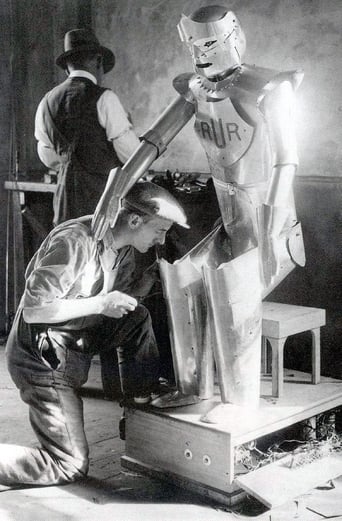
R.U.R.
1948 · Film · 60 min
Directed by Jan Bussell
A story of robots leading a revolution against their human creators. It explored dehumanization through technology and the failure of a technologically driven utopia.
2 neutralfrom 2 commenters
Where to watch
No streaming data for this title.





2 comments on Hacker News
> Unfortunately, they're blinded by their beliefs and can't think things through even one step further.
Which is particularly wild and frustrating given how many of their "textbooks" were about the consequences and how bad they can get. The very first tale to create the English word "robot" [1] was about the horrible consequences of building a new class of slave labor. Science fiction has been writing "Robot revolt" and "AI revolt" consequences for more than a century since.
A lot of these TESCREAL [2] types caught up in these religious views of AGI have ignored the actual plots of the books they claim to read for excitement and passion about their visions for the future. To be fair, not understanding your own source books seems pretty common across religions, but seems especially weird in this case how many of these "canon" "Don't Build the Torment Nexus" works are accessible to everyone, in a modern vernacular, have major film adaptations or films based on their themes, and plenty of good Wikipedia summaries of how building the thing destroyed civilization or the world or the galaxy.
[1] https://en.wikipedia.org/wiki/R.U.R.
[2] https://en.wikipedia.org/wiki/TESCREAL
There's a complete discussion of the evolution of ideas and the fact that the distinction between "androids" or "synthetic life" versus "robots" or "humanoids machines" arose after R.U.R.
But what makes us think R.U.R. is still about robots is that the play is explicit that the robots are assembled, not grown:
> His robots resemble more modern conceptions of man-made life forms, such as the Replicants in Blade Runner, the "hosts" in the Westworld TV series and the humanoid Cylons in the re-imagined Battlestar Galactica, but in Čapek's time there was no conception of modern genetic engineering (DNA's role in heredity was not confirmed until 1952). There are descriptions of kneading-troughs for robot skin, great vats for liver and brains, and a factory for producing bones. Nerve fibers, arteries, and intestines are spun on factory bobbins, while the robots themselves are assembled like automobiles. Čapek's robots are living biological beings, but they are still assembled, as opposed to grown or born.