Yeah, the rashomon effect was named after the movie. Actually I'm trying to update that particular article with data so check back again in a few weeks.
Also, as an artist, I love the domain name for your sites :)
It is not Rugby but American Football you are talking about.
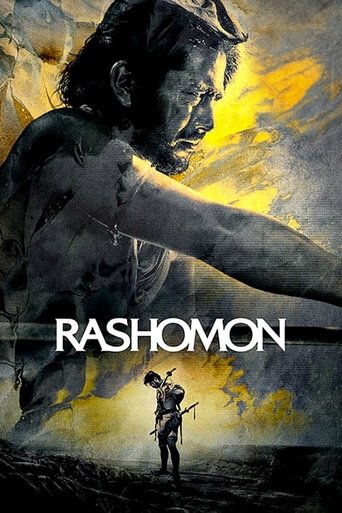
Rashomon is film by Akira Kurosawa from 1950 where the killing of a Samurai is told from various points of view. That is why the story telling you are talking about is called that.
I started the Cinema Club at Google, which is still going on, AFAIK. You can download the list of the 300 or so movies which I put on.
I really don't care about MCU, Harry Potter, Hollywood studios, AI, or Rotten Tomatoes. It's pointless to rage about it. Just offer an alternative. I'd rather show a great movie that no one comes to than a garbage one that attracts big crowds. Once in a while we had a film that was both: Chinatown, Rashomon.
Our reaction to anyone was, "You can start your own movie club. We'll help you; here are all the secrets." The big secret was just to ask the boss for the money; 10 in a row said Yes.
The most common thing people said to me was, "You guys show some great movies. But I have to leave to catch the shuttle!"
check out the movie ‘rashomon’ by kurosawa, one incident recalled from different folks and it is all colored by their own perspective, Truth, is hard to glean.
I was curious, since I have been watching the "100 Films To See before You Die" and so many older films seem to clock in under 90 minutes (to be sure there are plenty of exceptions).
A couple of days ago there was a job search for US PsyOps posted here on HN. What makes you think it is a specifically Russian strategy?
It also could be a general feature of war or people quarrelling that both parties have different versions of events. They could even both be right in a sense, even if from afar their positions seem to contradict each other.
I adore Last Year at Marienbad. Although I agree with Sofia Coppola that it's inevitably a movie where I doze off a little. That's alright since the entire film is like a weird dream. It's refreshing having a film that resists interpretation so intensely. It's utterly surreal, beautiful and tragic, yet without having a singular "correct" reading. Rashomon and Last Year at Marienbad would be an excellent double billing.
Hiroshima Mon Amour is another fantastic film. In both films Resnais is so brilliant in his editing, in its non-linearity, in its emotional effect. Frankly he might be one of my favorite directors of the Left Bank/New Wave generation.
There's a whole bunch of his films I'd put squarely in my all-time list. Ikiru, Ran, Seven Samurai, Yojimbo, High and Low, Dersu Uzala, Rashomon. It's one masterpiece after another. Try watching Seven Samurai and Ikiru back to back to really appreciate the genius of Takeshi Shimura as an actor.
I think a better analogy here might be Citizen Kane.
From a foreigner's perspective, Citizen Kane is a (very) good movie but really nothing special. I enjoyed Rashomon a lot more. However, Rashomon was clearly inspired by it. To really understand the appeal and significance of CK, you have to compare it to movies before it. The reason CK doesn't amaze many people anymore is because everyone now uses these cinematographic techniques! In similar vein, the first Half Life game was groundbreaking and pioneered new ways of story telling. But if you don't remember earlier games, you may be scratching your head.
Every now and then a programming language comes out that is a gamechanger. Such a language won't get out of fashion unless new programming languages start building upon it. I can't say if Rust is one of them.
I don't have a long career in programming, and I know only a few languages, but I'd say Python is one of the languages that managed to set the bar for others. It's still going strong, but it's no longer turning heads with its usability and clear syntax.
"Rashomon (羅生門, Rashōmon) is a 1950 Jidaigeki psychological thriller/crime film directed by Akira Kurosawa...
The film is known for a plot device that involves various characters providing subjective, alternative, self-serving, and contradictory versions of the same incident."
> One other modest mitigating factor should be mentioned. For many everyday crimes, like robbery, the presence of surveillance cameras in stores and buildings has made the police somewhat less dependent on eyewitness identification. The broader use of such surveillance cameras should therefore be encouraged.
Oy vey, the cure may be worse than the disease.
We’ve know this for over a century[0]. Plane crash investigators mostly ignore eye witness testimony using it only at best to guide the investigation[1]. Maybe this should be the standard for the legal system too: allow eye witness testimony to guide police investigation but not be used as courtroom evidence.
Also, this article doesn’t mention the cross or other race effect[2] which is yet another compounding factor.
The so-called "Rashomon effect" is mis-named. The point of the film was not that everyone has a different perception of the truth. It was that everybody lies to preserve their sense of self-righteousness, no matter who else it damns, even when they have nothing left to lose.
The article uses the term "Rashomon effect" without defining it. I hadn't heard of it before, and here's what I found:
The Rashomon effect occurs when an event is given contradictory interpretations by the individuals involved. The effect is named after Akira Kurosawa's 1950 film Rashomon, in which a murder is described in four contradictory ways by four witnesses.[1] The term addresses the motives, mechanism and occurrences of the reporting on the circumstance and addresses contested interpretations of events, the existence of disagreements regarding the evidence of events and subjectivity versus objectivity in human perception, memory and reporting.
I'm not sure I've ever gone through an interview process where it was just me and one interviewer. Well, there was one time, but that was an exceptionally weird one. Frequently I meet with the department head and someone from HR. Or the whole team. Or a bunch of department heads. Also, the last way I would ever describe an interview is as a "unity of experience". Every person has a different perspective (Rashomon comes to mind - maybe someone should make a movie like that about an interview) and while the interviewers may reconcile theirs among each other to some extent, the interviewee frequently does not see things their way at all.
Compare films made in the 1940's to those made in the 1910's, or earlier. Until the late 1910's, film was basically tech demo's. Brief shots of regular life, or maybe something a little titillating. No real plots or structure. By the 40's, most of the basics still in use today were established. Plot structure, as well as lots of little technical details, such as the 180 rule[1], were developed, and viewers instinctively rely on these even today.
However, film was not viewed as art in the 1940's. Stage was art. Film was just disposable mass entertainment. Studios churned out massive amounts of film and, in many cases, didn't bother to preserve anything. The idea that somebody would want to see Casablanca again in a few decades was alien. Even today, many films aren't seen as art. Somebody who says they're a lover of art films, especially Michael Bay's Transformer series, is going to be laughed at. However, nobody disputes the fact that films can be art today, thanks to classics like "Rashomon" or "Once Upon a Time in the West", and also thanks to more contemporary art films that challenge as much as they entertain, even if they may not prove to have lasting appeal.
Now take a look at the history of gaming. The early games of the 70's and 80's were, at first, basically tech demos. As the 80's wore on, game designers used challenging game mechanics to wring maximum engaged playtime out of extremely limited resources. Games like Pacman or Donkey Kong could certainly eat your time (and quarters), but they seldom provoked an emotional or intellectual response aside from frustration, not at all unlike a Michael Bay film.
We are entering an era in video gaming equivalent to film of the 1940's. The core mechanics are established and people know them. There now exist games that have appeal beyond the latest technology. If people are still playing Donkey Kong now, how long will games like the Stanley Parable hold up? Despite this, as for film in the 1940's, we still think of games as disposable and not as art. This is going to change, as it did for film, but slowly.
The important thing right now is for game producers to realize that their source code may be valuable in the future. Preserve that stuff!
[1]In many scenes with two participants, such as dialogue, duels in action scenes, etc., most film-makers avoid cutting back and forth between angles that exceed 180 degrees in difference. Breaking this rule usually confuses viewers, as it becomes unclear who is on which side.
I apologize, you're right that repeating stereotypes can be more harmful than useful. I don't blame the author completely for that, it was really just their personal perspective on the film as compared to their baseline experience of Japan. I'll certainly have to check out Kurosawa's earlier filmography around the 50s. (I've only seen Rashomon in that period)
Everyone thinks the message of that movie is "all truth is subjective", but it's not. It's more like "the stories we tell ourselves and others are distorted by our self-image and our interests".
At the end, the movie even explicitly rejects the theory that truth is unobtainable, and that everyone is corrupt. In the movie at least, disinterested third parties who have good intentions can reveal the truth.
You may believe in subjectivity, but Rashomon doesn't.
Avatar and TDK historic points in film. AKA Dancing with Smurfs, and The Movie With More Plot Holes Than The Titanic. Hum, I beg to disagree.
Overall, I got a good laugh from the list. Seriously, this list should be called "things white US kids (of my age, granted) like". Rather than a history of cinema, it belongs more in the "comedy generated by computer" genre. Exhibit one: City Lights isn't there. Exhibit two: Modern Times isn't there. No Le Voyage dans la Lune, no Man With Camera, no Great Train Robbery, Rashomon isn't cool enough to make the list, Vertigo is too weird, and Battleship Potemkin is, like, too commie, you know. The final straws would be Independence Day and It's a Wonderful Life making the list.
I mean, On the Waterfront looks like it's very good (I haven't seen it), but, but, it was released in the same year than motherfucking Seven Samurai!
I flipped out the first time I saw mplayer ascii rendering. I'm thinking of projecting Rashomon ASCII-version at an art show sometime. Or any classic film with deeply emotional topics, intricate facial expressions, reduced to 7-bit projections.
Yeah I got that from the movie too. It definitely illustrated that Mark had mixed motivations in creating Facebook, but generally it seemed to portray "building stuff" as an outlet to whatever more primordial drives (fear, angst, excitement, desire for power, status, etc.) were behind the action.
the movie wasn't about reality, it was about the exaggerated reality from court depositions, qualified by counter-arguments. Made me think of Rashomon.
I recommend the film Rashomon, one of my favorite explorations of the theme of fallible memory. Several observers all remember a scene completely differently, and the film shows each version in turn, without offering any way to tell whether any is more true than another.
Also, Memento is a great mind-bender, if you think writing things down makes anyone sure of anything.
I'll check some of these I haven't seen out. He's got a Hitchcock and Kurosawa film on there, and they're two of the finest directors of all time. Rashomon is actually one of my least favorite Kurosawa films, but it's still great - I just much more greatly like Ran (English: "Chaos", his best film), Ikiru ("Life", it drags towards the middle but the government council scene at the end is incredible), Kagemusha ("Shadow", wow what an incredible premise - really an overlooked masterpiece when looking at his career), and of course Seven Samurai. Then you've got Yojimbo which is an interesting story but kind of campy, and Rashomon which is a great piece of storytelling and a great piece of directing, but just isn't as satisfying of an experience as Ran, Ikiru, Kagemusha, or Seven Samurai. If I was recommending Kurosawa to a new viewer, I'd say watch them in that order, and then perhaps Rashomon.
I haven't seen all of Hitchcock's films, but it's something I've been meaning to do. The thing both of these directors (Kurosawa and Hitchcock) have in common - they're both absolutely obsessed with presentation. They don't waste a single scene in their movies. In their better films, Kurosawa and Hitchcock don't even waste a single shot - everything is perfectly constructed for a very specific reason. Really incredible experiences to watch them, and highly recommended for people who love movies, stories, or simply just art.
 Hacker Cinema
28 comments on Hacker News
Ran is such a good movie to watch in a theatre. I saw Rashomon for the first time in a theatre and it was a life-altering experience
Yeah, the rashomon effect was named after the movie. Actually I'm trying to update that particular article with data so check back again in a few weeks.
Also, as an artist, I love the domain name for your sites :)
Like the film Rashomon, had not heard of The Rashomon Effect.
It is not Rugby but American Football you are talking about.
Rashomon is film by Akira Kurosawa from 1950 where the killing of a Samurai is told from various points of view. That is why the story telling you are talking about is called that.
"samurai" movies:
- Seven Samurai
- Rashomon
- Ran
- Throne of Blood
- Kagemusha
non-samurai:
- High and Low
- Ikiru
I would say that the essentials are Seven Samurai, High and Low, Rashomon.
It's Shameless Self-Promotion Time again!
https://albertcory50.substack.com/p/culture-at-google-part-one-the-movies
I started the Cinema Club at Google, which is still going on, AFAIK. You can download the list of the 300 or so movies which I put on.
I really don't care about MCU, Harry Potter, Hollywood studios, AI, or Rotten Tomatoes. It's pointless to rage about it. Just offer an alternative. I'd rather show a great movie that no one comes to than a garbage one that attracts big crowds. Once in a while we had a film that was both: Chinatown, Rashomon.
Our reaction to anyone was, "You can start your own movie club. We'll help you; here are all the secrets." The big secret was just to ask the boss for the money; 10 in a row said Yes.
The most common thing people said to me was, "You guys show some great movies. But I have to leave to catch the shuttle!"
check out the movie ‘rashomon’ by kurosawa, one incident recalled from different folks and it is all colored by their own perspective, Truth, is hard to glean.
I was curious, since I have been watching the "100 Films To See before You Die" and so many older films seem to clock in under 90 minutes (to be sure there are plenty of exceptions).
Just a handful of films under 90 minutes:
"Toy Story", "High Noon", "Rashomon", "This is Spinal Tap", "Frankenstein" (and "Bride of"), "Umberto D", "My Neighbor Totoro", "Run Lola Run", "Duel", "Rope"...
A couple of days ago there was a job search for US PsyOps posted here on HN. What makes you think it is a specifically Russian strategy?
It also could be a general feature of war or people quarrelling that both parties have different versions of events. They could even both be right in a sense, even if from afar their positions seem to contradict each other.
Kurosawa's movie Rashomon comes to mind.
The name is pretty obviously an anagram of Rashomon, a 20th c. Japanese play and Kurosawa film.
I adore Last Year at Marienbad. Although I agree with Sofia Coppola that it's inevitably a movie where I doze off a little. That's alright since the entire film is like a weird dream. It's refreshing having a film that resists interpretation so intensely. It's utterly surreal, beautiful and tragic, yet without having a singular "correct" reading. Rashomon and Last Year at Marienbad would be an excellent double billing.
Hiroshima Mon Amour is another fantastic film. In both films Resnais is so brilliant in his editing, in its non-linearity, in its emotional effect. Frankly he might be one of my favorite directors of the Left Bank/New Wave generation.
There's a whole bunch of his films I'd put squarely in my all-time list. Ikiru, Ran, Seven Samurai, Yojimbo, High and Low, Dersu Uzala, Rashomon. It's one masterpiece after another. Try watching Seven Samurai and Ikiru back to back to really appreciate the genius of Takeshi Shimura as an actor.
I think a better analogy here might be Citizen Kane.
From a foreigner's perspective, Citizen Kane is a (very) good movie but really nothing special. I enjoyed Rashomon a lot more. However, Rashomon was clearly inspired by it. To really understand the appeal and significance of CK, you have to compare it to movies before it. The reason CK doesn't amaze many people anymore is because everyone now uses these cinematographic techniques! In similar vein, the first Half Life game was groundbreaking and pioneered new ways of story telling. But if you don't remember earlier games, you may be scratching your head.
Every now and then a programming language comes out that is a gamechanger. Such a language won't get out of fashion unless new programming languages start building upon it. I can't say if Rust is one of them.
I don't have a long career in programming, and I know only a few languages, but I'd say Python is one of the languages that managed to set the bar for others. It's still going strong, but it's no longer turning heads with its usability and clear syntax.
https://en.wikipedia.org/wiki/Rashomon
"Rashomon (羅生門, Rashōmon) is a 1950 Jidaigeki psychological thriller/crime film directed by Akira Kurosawa...
The film is known for a plot device that involves various characters providing subjective, alternative, self-serving, and contradictory versions of the same incident."
Now that is an esoteric reference!
>Also, this article doesn’t mention the cross or other race effect[2] which is yet another compounding factor.
The other race effect was explained in the fifth paragraph of the article. It's mentioned repeatedly.
As you see, we really cannot trust the testimony of our own eyes. We've known this for over a century. But we still do it.
Rashomon would have been shorter and simpler if they'd had surveillance cameras, though not an excellent movie anymore.
> One other modest mitigating factor should be mentioned. For many everyday crimes, like robbery, the presence of surveillance cameras in stores and buildings has made the police somewhat less dependent on eyewitness identification. The broader use of such surveillance cameras should therefore be encouraged.
Oy vey, the cure may be worse than the disease.
We’ve know this for over a century[0]. Plane crash investigators mostly ignore eye witness testimony using it only at best to guide the investigation[1]. Maybe this should be the standard for the legal system too: allow eye witness testimony to guide police investigation but not be used as courtroom evidence.
Also, this article doesn’t mention the cross or other race effect[2] which is yet another compounding factor.
Aside: Rashomon is still an excellent movie.
0. http://historyforensicpsych.umwblogs.org/eye-witness-accounts/
(The link above embeds a 60 minutes segment about the Ronald Cotton case mention in the submitted story.)
1. https://commons.erau.edu/cgi/viewcontent.cgi?article=1040&context=ijaaa
2. https://www.psychologytoday.com/us/blog/culture-conscious/201208/the-truth-about-they-all-look-alike-me
The so-called "Rashomon effect" is mis-named. The point of the film was not that everyone has a different perception of the truth. It was that everybody lies to preserve their sense of self-righteousness, no matter who else it damns, even when they have nothing left to lose.
It was a depiction of Hell.
The article uses the term "Rashomon effect" without defining it. I hadn't heard of it before, and here's what I found:
The Rashomon effect occurs when an event is given contradictory interpretations by the individuals involved. The effect is named after Akira Kurosawa's 1950 film Rashomon, in which a murder is described in four contradictory ways by four witnesses.[1] The term addresses the motives, mechanism and occurrences of the reporting on the circumstance and addresses contested interpretations of events, the existence of disagreements regarding the evidence of events and subjectivity versus objectivity in human perception, memory and reporting.
https://en.wikipedia.org/wiki/Rashomon_effect
And here's a short video summary of the film:
https://www.youtube.com/watch?v=BP2MhghDal4
I'm not sure I've ever gone through an interview process where it was just me and one interviewer. Well, there was one time, but that was an exceptionally weird one. Frequently I meet with the department head and someone from HR. Or the whole team. Or a bunch of department heads. Also, the last way I would ever describe an interview is as a "unity of experience". Every person has a different perspective (Rashomon comes to mind - maybe someone should make a movie like that about an interview) and while the interviewers may reconcile theirs among each other to some extent, the interviewee frequently does not see things their way at all.
Compare films made in the 1940's to those made in the 1910's, or earlier. Until the late 1910's, film was basically tech demo's. Brief shots of regular life, or maybe something a little titillating. No real plots or structure. By the 40's, most of the basics still in use today were established. Plot structure, as well as lots of little technical details, such as the 180 rule[1], were developed, and viewers instinctively rely on these even today.
However, film was not viewed as art in the 1940's. Stage was art. Film was just disposable mass entertainment. Studios churned out massive amounts of film and, in many cases, didn't bother to preserve anything. The idea that somebody would want to see Casablanca again in a few decades was alien. Even today, many films aren't seen as art. Somebody who says they're a lover of art films, especially Michael Bay's Transformer series, is going to be laughed at. However, nobody disputes the fact that films can be art today, thanks to classics like "Rashomon" or "Once Upon a Time in the West", and also thanks to more contemporary art films that challenge as much as they entertain, even if they may not prove to have lasting appeal.
Now take a look at the history of gaming. The early games of the 70's and 80's were, at first, basically tech demos. As the 80's wore on, game designers used challenging game mechanics to wring maximum engaged playtime out of extremely limited resources. Games like Pacman or Donkey Kong could certainly eat your time (and quarters), but they seldom provoked an emotional or intellectual response aside from frustration, not at all unlike a Michael Bay film.
We are entering an era in video gaming equivalent to film of the 1940's. The core mechanics are established and people know them. There now exist games that have appeal beyond the latest technology. If people are still playing Donkey Kong now, how long will games like the Stanley Parable hold up? Despite this, as for film in the 1940's, we still think of games as disposable and not as art. This is going to change, as it did for film, but slowly.
The important thing right now is for game producers to realize that their source code may be valuable in the future. Preserve that stuff!
[1]In many scenes with two participants, such as dialogue, duels in action scenes, etc., most film-makers avoid cutting back and forth between angles that exceed 180 degrees in difference. Breaking this rule usually confuses viewers, as it becomes unclear who is on which side.
I apologize, you're right that repeating stereotypes can be more harmful than useful. I don't blame the author completely for that, it was really just their personal perspective on the film as compared to their baseline experience of Japan. I'll certainly have to check out Kurosawa's earlier filmography around the 50s. (I've only seen Rashomon in that period)
Everyone thinks the message of that movie is "all truth is subjective", but it's not. It's more like "the stories we tell ourselves and others are distorted by our self-image and our interests".
At the end, the movie even explicitly rejects the theory that truth is unobtainable, and that everyone is corrupt. In the movie at least, disinterested third parties who have good intentions can reveal the truth.
You may believe in subjectivity, but Rashomon doesn't.
Avatar and TDK historic points in film. AKA Dancing with Smurfs, and The Movie With More Plot Holes Than The Titanic. Hum, I beg to disagree.
Overall, I got a good laugh from the list. Seriously, this list should be called "things white US kids (of my age, granted) like". Rather than a history of cinema, it belongs more in the "comedy generated by computer" genre. Exhibit one: City Lights isn't there. Exhibit two: Modern Times isn't there. No Le Voyage dans la Lune, no Man With Camera, no Great Train Robbery, Rashomon isn't cool enough to make the list, Vertigo is too weird, and Battleship Potemkin is, like, too commie, you know. The final straws would be Independence Day and It's a Wonderful Life making the list.
I mean, On the Waterfront looks like it's very good (I haven't seen it), but, but, it was released in the same year than motherfucking Seven Samurai!
This really needs to be the top comment.
Despite what you think you saw in that meeting, you really have no idea why they rejected you (see Rashomon[1]).
And while writing this kind of post can be cathartic, you're also leaving behind an artifact that will be there to remind you again in the future.
You're almost better off just writing a draft post to get it off your chest, then deleting a few days later.
[1] http://www.imdb.com/title/tt0042876/?ref_=sr_1
I flipped out the first time I saw mplayer ascii rendering. I'm thinking of projecting Rashomon ASCII-version at an art show sometime. Or any classic film with deeply emotional topics, intricate facial expressions, reduced to 7-bit projections.
Yeah I got that from the movie too. It definitely illustrated that Mark had mixed motivations in creating Facebook, but generally it seemed to portray "building stuff" as an outlet to whatever more primordial drives (fear, angst, excitement, desire for power, status, etc.) were behind the action.
the movie wasn't about reality, it was about the exaggerated reality from court depositions, qualified by counter-arguments. Made me think of Rashomon.
I recommend the film Rashomon, one of my favorite explorations of the theme of fallible memory. Several observers all remember a scene completely differently, and the film shows each version in turn, without offering any way to tell whether any is more true than another.
Also, Memento is a great mind-bender, if you think writing things down makes anyone sure of anything.
I'll check some of these I haven't seen out. He's got a Hitchcock and Kurosawa film on there, and they're two of the finest directors of all time. Rashomon is actually one of my least favorite Kurosawa films, but it's still great - I just much more greatly like Ran (English: "Chaos", his best film), Ikiru ("Life", it drags towards the middle but the government council scene at the end is incredible), Kagemusha ("Shadow", wow what an incredible premise - really an overlooked masterpiece when looking at his career), and of course Seven Samurai. Then you've got Yojimbo which is an interesting story but kind of campy, and Rashomon which is a great piece of storytelling and a great piece of directing, but just isn't as satisfying of an experience as Ran, Ikiru, Kagemusha, or Seven Samurai. If I was recommending Kurosawa to a new viewer, I'd say watch them in that order, and then perhaps Rashomon.
I haven't seen all of Hitchcock's films, but it's something I've been meaning to do. The thing both of these directors (Kurosawa and Hitchcock) have in common - they're both absolutely obsessed with presentation. They don't waste a single scene in their movies. In their better films, Kurosawa and Hitchcock don't even waste a single shot - everything is perfectly constructed for a very specific reason. Really incredible experiences to watch them, and highly recommended for people who love movies, stories, or simply just art.