 Hacker Cinema
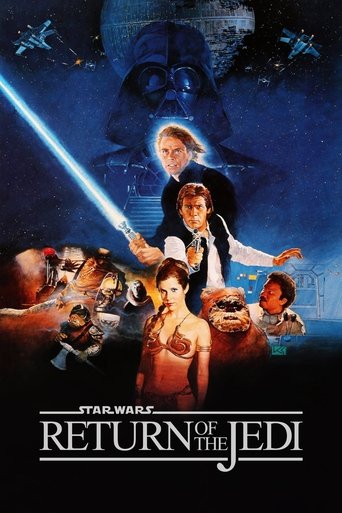
Return of the Jedi
1983 · Film · 132 min
Part of Star Wars Collection
Directed by Richard Marquand
AdventureActionScience Fiction
Luke Skywalker leads a mission to rescue his friend Han Solo from the clutches of Jabba the Hutt, the Emperor prepares to crush the Rebellion with a more powerful Death Star, and the Rebel fleet mounts a massive attack on the space station. Luke Skywalker confronts Darth Vader in a final climactic duel before the evil Emperor.
1 positive5 negative2 mixed33 neutralfrom 41 commenters
Where to watch
No streaming data for this title.
41 comments on Hacker News
Movies like Forrest Gump, Return of the Jedi, Men in Black or Harry Potter 5 all managed to lose money, according to "GAAP".
If that's not creative accounting, I don't know what is.
Haven't even considered the theater from when I was a kid... I was in a smaller town, and until I was about 13yo, there was a single theater with two screens. I remember waiting about 3 hours in line across two showings to see Return of The Jedi opening weekend. Aside, I also remember when you could get the movie, a small popcorn and a small drink for $5, and not being able to convince my dad to fork over the extra when the theater raised its prices... that's when my friends and I would stop at Walgreens on the way and buy candy there instead of at the theater.
Yeah, mall theaters are just kind of hellish... mostly because of the parking/organization... I know why they're laid out how they are, just really wish they'd switch it up to make the theater easier to access if that's all you want.
Am I the only one who thinks that the Coinbase [1] picture has been AI generated, or at least heavily AI-altered?
The movie posters behind look like garbage, and what's wrong with that Return of the Jedi poster? Why is there a random blob and a broken face at the top instead of Darth Vader?
And why is there a random Google+ logo on the left?
And why does Fred Ehrsam have a huge thumb and silky smooth legs?
[1] https://bookface-static.ycombinator.com/assets/ycdc/beforevsnow/coinbase-batch-1-d0d5c84104f9f9578d888d283099ee17b47731e6301304faf9d1109b38e4d177.jpg
The vast majority of CG is replicating stuff like set design or replacing a location shoot. We don’t usually call that an “effect” when it’s not done with a computer. And even then… it continues to deliver “bad matte painting” often enough that spotting such failures in the wild isn’t hard (nor was it hard with bad matte paintings!)
[edit] my point, anyway, isn’t that any given effect is better. It’s not even necessarily that the movies are better (The Passion of Joan of Arc barely had effects at all, and didn’t have synced sound, for god’s sake, an it’s incredible—of course CG-having movies can be great) but that I tend to find the overall effect of those movies better. Those “seamless” mundane CG effects shots of things like composited computer-generated rooms or streets rarely get the kind of attention a real set does, and the movies suffer for it. Nobody had to move around the space with their real body and think about it, and it usually (usually! Not every single time) shows, if not in anything wrong, exactly, then in the degree to which it’s perfectly forgettable and fails to contribute anything but filling screen space.
[edit edit] more to the point, peak practical wins at convincing effects in the Big Damn Action Moment. But only peak, and that was a tragically brief span. Point me to a CG sci-fantasy space fight that looks better and/or more like a real thing that’s happening than the battle above Endor in return of the Jedi (you’ll notice I didn’t pick the earlier two movies, as Jedi is where they really perfected it all—though even the first has some shots that are quite convincing!). Like truly if you know of one I’d love to see it. I never have. They all look plainly computer generated. I’m not saying every frame of those SFX shots in Jedi is perfect, but it looks overall more real than anything similar I’ve seen done in a computer. Like you’d think in about 40 years it’d have been surpassed multiple times, but no. They all look CG.
Or, like… put the best 50% of practical shots in Jurassic Park against the best 50% of CG-heavy dino action shots in any Jurassic Park from 3 on. They’re more convincing than any of the CG shots. (Some, from the field of all practical effects shots in the film, are not convincing! But a hell of a lot are, and not just better than the median CG effect in later JPs or something, but better than all). We struggle to touch the tippy-top peak of that craft with computer effects, still today.
The high sale price was due to the fact that this was a rare "REVENGE of the Jedi" rather than the normal "RETURN of the Jedi" poster. The back-story is that the movie title was originally going to be "Revenge..." but then there was pushback because Yoda had said "A Jedi craves not revenge" in the previous episode, so it got changed.
It's much, much more collaborative than that. The role of a producer can be limited to managing the financial side of the production. Or they can be involved with coordinating the production itself. The director has the most say over what is shot, how it's edited, what the score should be like. A good producer can help make a film excellent, but if you have a bad director, or the "wrong" director, then nothing the producer does will fix that issue.
Of course there are also Executive producers who are far far up the financial food chain of a movie, and sometimes these titles are also just vanity plates for the production.
As an example of the value of a good/great producer, look at Gary Kurtz. He was essential for both Star Wars and The Empire Strikes Back, but wasn't part of the team for Return of the Jedi. In my opinion, that's one of the reasons that ROTJ is the worst of the three films. Lucas didn't have someone pushing back against his worse tendencies.
For an example of the wrong director, look no further than Rogue One. While it's very difficult to sus out what was wrong with Gareth Edwards directing, Tony Gilroy was brought in to fix the film. Both are appropriately quiet about what the changes were, what was re-shot (simple professional courtesy), but the result is a film that (while I love it) is just slightly off.
Return of the Jedi does have the most important scene in all of Star Wars: the confrontation between Luke and the Emperor. The rest of the movie has plenty of shortcomings, but that scene more than redeems it.
That's basically how Hollywood accounting works, with some of the highest grossing films and franchises in history not paying a penny in tax due to showing a 'loss' on paper.
Harry Potter and the Order of the Phoenix (2007) ended up with a $167 million loss on paper after grossing nearly $1 billion. According to New Line's accounts, the LOTR trilogy made "horrendous losses" and no profit at all. Same as Forrest Gump, Men in Black, and Return of the Jedi.
The Music industry is far worse in its financial machinations.
With some minor exceptions, the companies involved in this are all American.
> (although Blade Runner wasn't a high budget movie)
Its budget was comparable to Return of The Jedi, released the year after. Both around $30 million. It wasn't a high grossing movie, it made its budget back and a bit more but did not become a box office hit.
A bit of context: Leigh Brackett was a sci-fi author and screenwriter that George Lucas hired to write the first draft of The Empire Strikes Back in 1977. She wrote it based on a story conference the two had but unfortunately passed away from cancer a month after submitting it in 1978. Lucas then wrote a few drafts himself but wasn't satisfied. Eventually, he brought on Lawrence Kasdan, who would also write Raiders of the Lost Ark and Return of the Jedi. This draft is a lot different from the movie that would eventually get made but you can still see hints of it in the final film. Both Kasdan and Brackett got a screenwriting credit for the film.
> I think the fans’ point is that what Disney is doing to Star Wars today is diminishing the entirety of Star Wars, the average of past + present
Lucas was at the helm for Return of the Jedi, Star Tours, and the three prequels. I think we can't lay the blame for the Holiday Special on him, but that certainly happened too. There's the Ewok tv movies too, which thankfully I've never seen.
Even if all the Disney Star Wars films are crap, they're just continuing the trend. I prefer to simply believe there are two Star Wars films, and let others believe what they want to believe.
I remember when I was a kid in Spain (in the late 80s, perhaps up to early 90s) cinemas where this was still possible. You could enter at any time, watch the movie, and even remain and watch it a second time if you want. It was also only advertised when the first pass started, but not any other one.
Available movies will be slightly older ones, like 6-months after premier or something like that. And they were a few particular theatres, that only run movies in that way.
I remember watching Return of the Jedi that way, arriving right before the fleet meets and they brief the Endor mission, so it was a good point to get into the movie anyway.
Box office across all three of the sequel trilogy moves. The same is the case for the three movies in the original trilogy btw, so I guess we should conclude that "Return of the Jedi" was the only Star Wars was movie people actually liked, since The Force Awakens is one of the most successful movies of all time?
In reality, sequels tend to be less successful than the original, but can expect a certain audience. Since only very successful movies get sequels, sequels are still safer investments than original movies.
Probably because they seem to have the most egregious examples based on works that seem to everyone else to be pretty successful?
"the Tolkien estate sued New Line, claiming that their contract entitled them to 7.5% of the gross receipts of the $6 billion hit.[23] According to New Line's accounts, the trilogy made "horrendous losses" and no profit at all."
I think most people would find it surprising that both Return of the Jedi and the Lord of the Rings movies failed to make a profit?
https://en.wikipedia.org/wiki/Hollywood_accounting
Nope, goes back way farther than that. Return of the Jedi is another movie that never made a profit supposedly, despite ~$400M on a $32M budget. David Prowse, the guy who played Darth Vader in the suit, apparently pretty much never got paid for Return of the Jedi because of that.
What are these midichorians you speak of? I saw all three Star Wars movies, A New Hope, Empire Strikes Back, and concluding with Return of the Jedi and there was never any mention of these mudichorians!
I see it as the battle between the jocks and the nerds. As frankly from my few decades in the industry, who becomes upper middle management are all the people who you dislike (or they you) in high school. It's just them trying to justify their value to those that truly built or are deemed to be responsible to build out a product/company for the benefit of the shareholders/investors.
This is the sort of environment that leads to [non]great ideas like 'swarming' resources on current 'fad/trend' projects (Mythical Man Month) or rapid development of features at a pace beyond what it took to deliver the 1.0 product (tech-debt inhibiting growth causing tech-death) which causes them to just "reinvent/reboot" the idea with yet another different spin.
You are seeing it in movies where even the scope of time they perform it is getting shorter and shorter. It's not like people are remaking Cyrano De Bergerac despite it's time being due (Roxanne with Steve Martin is my last recall) but they have to retread ideas from my own adulthood yet skip over others - like why reboot DeGrassi and not BJ and the Bear let alone Knight Rider or any of the dozens of other tech influence tv series of our youth.
The reason I think is mostly due to fear. Fear of risking what they didn't like before for something they felt was awesome but not influence by - like Sex in the City or even Return of the Jedi.
If it weren't for the amount of time that has gone by, I wouldn't be surprised if within the next 10 years there isn't an attempt to reboot Firefly with the hope that it hooks as much as people pine for it to have stayed on today.
We're told that most decisions are due to the investors wanting return on money invested - but if the employees are a large holder of the company shares, doesn't that mean that if they collectively feel willing to risk a different tact that it should be abided? Now-a-days it seems that those who are vocal and can pull it off become "king"... like Twitter.
Ok. I had no idea IMDb keeps notes like this. I dutifully checked Star Wars and hand is indeed mentioned[1]. Thank you!
[1]https://www.imdb.com/title/tt0086190/parentalguide?ref_=tt_stry_pg
Yes I did... Revell's Visible V8 Engine model kit is very well known among a special group of nerds: Those who build their own replicas of props from the original Star Wars movies. (I am one of those nerds ...)
Parts in the kit had been used as "greeblies", glued onto lots of different props in The Empire Strikes Back and The Return of the Jedi. This includes droids, helmets, rank badges and other applications on clothing, and "blasters" (guns): most popularly, the pistols used by the popular characters Han Solo, Luke Skywalker and Boba Fett.
Here's a list of parts and what they were used for, but I think it is far from complete: <http://partsofsw.com/v8parts.htm>
Not only are original model kit parts used, but prop replica enthusiasts also trade casts of them.
>> Fifty years ago, the cheapest way to keep your child quiet was to sit down and dredge up your memory of Rapunzel, Snow White or (in my grandmother’s case) the fairy tale-like plot of The Sound of Music.
Well, I got The Return of The Jedi. Only my mother didn't remember Luke Skywalker's name so I knew him as "the handsome prince" until I watched the movie X)
On the median day, major western news sources have zero articles I care about. Here are the current headlines from https://text.npr.org:
- The parents of the accused Michigan school shooter head to court again
- Experts crack the secret to last letter of Mary, Queen of Scots before her execution
- The Air Force discharges 27 service members for refusing to get a COVID vaccine
- Their lives were changed by gun violence, and now they're running for office
- The best and worst places to live if you care only about money
- To save lives, the overdose antidote naxalone should be sold over-the-counter, advocates argue
- Vaccine protection vs. omicron infection may drop to 30% but does cut severe disease
- The federal agency that measures racial diversity is led mostly by white people
- Rep. Liz Cheney read the text messages she says Mark Meadows got during the Jan. 6 siege
- Kentucky crews search painstakingly for 109 people missing after deadly tornadoes
- 'Return of the Jedi,' 'Selena' and 'Sounder' added to National Film Registry
- Pfizer data shows that its COVID-19 pill is effective against severe disease
- Saule Omarova gets candid: Banks sank her nomination to become a key regulator
- The Supreme Court again leaves a state vaccine mandate in place for health care workers
- Survivors of Nassar's abuse reach a $380 million deal with USA Gymnastics and the Olympic committee
- This year's Golden Globes nominations avoid obvious pitfalls, but won't restore the awards' luster
- More Black families are homeschooling their children, citing the pandemic and racism
- No U.S. troops behind a drone strike that killed Afghan civilians will be punished
- What dish is never missing from your holiday table? Tell us why you love it
- Elon Musk is Time's 2021 Person of the Year
I'd love an RSS feed that lets me know about Russian troops on the Ukranian border but not about any of those "stories." Actually reading the news is a frustrating experience because the signal-to-noise ratio is so poor.
Ah yes, Habbagock Froink. One of the sadly unheralded characters briefly spotted in Jabba's Throne Room in Return of the Jedi. Rumors continue to circulate about a possible return in season three of The Mandalorian.
Three movies were referenced in the comment I responded to: Return of the Jedi, Star Trek: Into Darkness, and 2001: A Space Odyssey. Two of those movies are definitely not focused on future technologies.
Many people call Star Wars "science fantasy", but I'm extremely confident that this is used less frequently than "science fiction" to describe it and I am absolutely confident that I'd be able to find marketing copy by LucasFilm or distributors describing it as science fiction, even if that aggravates people who are really into more cerebral sci-fi.
I think that is perfectly correct approach, it should not be allowed to steal someone's profit.
Although I am a bit surprised since this law also applies to movies that are not profitable. In such cases producers should be happy that someone wants to give access to them despite loosing money while doing it.
One notable example of such unprofitable movie is "Return of the Jedi", which, after 40 years, has not provided any net income. Not even one cent. I am really impressed by heroism of all those movie producers that keep working so hard even though they earn nothing.
Or maybe it is not true that those movies are not profitable, maybe, for some strange reason, law enforcement is able to track all those pesky pirates, fish them from New Zealand hideaways, but is and was not able to retrieve a single tax dollar from movie studios for the past 70 years.
That's a puzzle which is apparently somehow missed by venerable members of US Congress and Senate.
As the Disney+ versions gradually become the canonical releases of all Disney movies, I wouldn't be surprised if they retcon a number of their movies. There's already been blatant examples like adding Hayden Christensen to Return of the Jedi[1], but they've also changed movies like Lilo & Stitch, Toy Story 2, Splash, etc and I think it will only get more prevalent as time goes by (although I'm sure the changes will be similar to the ones mentioned in the article- removing some of the darker aspects of their stories, or ones that might offend more puritan viewers.)
[1]: I realize this change was pre-Disney+, but presumably Disney has the rights to previous cuts of Star Wars in addition to the "Special" ones
A New Hope was genuine. Empire, was an allegory for George Lucas turning to the dark side.
Return of the Jedi was full sell-out.
I-III seem to be designed to maximize spite against his rabid fanbase, while pandering to the children which made him his fortune. Seeing how he hated his hardcore fans, and had good reason to, makes those movies genuine in the same way punk music is.
I suppose, and you may be right. But I meant that the Half-Life series is a very cinematic (among the first games to embrace this, if I recall correctly), right from the intro. Playing just HL: Alyx would be like watching Return of the Jedi while skipping A New Hope and Empire Strikes Back -- I mean, you definitely can and still enjoy the movie, but you're missing something important.
Movies are an easy example: Do you want to watch the original ending of Return of the Jedi, the special edition ending, the revised ending post-prequels, the 4:3 edition or the widescreen edition? There are plenty of reasons to want to keep a copy of the version of the experience you enjoyed and want to experience again.
I stopped following GoT since S05E04 or around that so i did not see nor do i understand what's all this noise; but from the writing lessons i took years ago i learned that foreshadowing is NOT character development. If you use foreshadowing, especially if it's not subtle, you still have to "earn" your twist (see: Frodo if front of Mt Doom, Gollum).
You can only foreshadow and drop hints about a character changes if you do those change away from the action (the protagonist that will change is away from the limited narrator), or if the spectator do not know the character that well (he is one of the antagonist).
Let's compare to other "masterpieces" with a lot of public love. Does the character change feel as justified as Darth Vader's one in Return of the Jedi? Or even as Severus Rogue (Harry potter) change? Those change are not really well written imho (a bit too rushed for the 1rst one, a bit forced for the second, but that's only my opinion). If the character change in GOT is not at least on this level, i would understand why people are disapointed.
The error GoT have done for me is from way back. The first few seasons used realistic plot, few plothole, believable and clever characters, pretty realistic choices and political stuff. My suspension of credulity bar was set pretty low. Season 4 was weird regarding time and distance, but still mostly believable (and the dialogs were really good too). But S05 broke my suspension of credulity almost every 10 minutes and that made the show a bit boring (imo).
That's the issue for GoT: they did set the bar too high at first, then couldn't reach the same level again.
What is AR good for today? Almost nothing. What is it's potential? HUGE
Why do you need monitors if you have AR contact lens. Project as many monitors as you want where ever you want them. Sit in cafe and make it appear as if you have a 60 inch monitor on the table in front of you and a few tablets on the table.
In a conference room show a 3D model of building, bridge, or physical project and discuss it with the team pointing directly at parts of the model that appear simulated in the shared projection. Basically imagine any hologram scene in a Sci-fi movie like say showing the 2nd Death Star in Return of the Jedi. Those scenes assume some kind of magic 3D projector. Maybe that will be possible someday but it's nearly possible today if everyone is wearing AR glasses or contacts
Project data about people at a conference next to each person. Just like people at a conference wear badges except with AR badges they can be much larger with more info.
Have the AR point out the person you're looking for by putting a marker over their head or draw navigation prompts as you walk around.
Show virtual drawing surfaces allowing you to draw or annotate anything.
just a few ideas
The originals are full of plot holes too, and I'd argue Return of the Jedi is still the worst of the non-prequel movies. But it gets a pass because everyone saw it in their youth.
There are a number of places where the movie felt like the plot turned away from where it was heading.
Rey and Kylo unite? Nah. Leia dies? Nah. Luke overcomes pain and returns as a master? Nah. Finn does something impactful and important? Nah. Poe is a hero? Nah.
Like, imagine if instead of Admiral Holdo it were all Leia. It sure as hell felt like it was supposed to be Leia. Imagine Leia never went into a coma, but she was clearly terrified by her near death and experience with the Force and upset over the loss of the command staff. (I mean, Admiral Ackbar is dead!) What if it were Leia's sacrifice at the end? I can't help but feel it should have been, and not because of Carrie Fisher's loss.
The problems inherent to the narrative, like Luke Skywalker being completely without hope when he literally is the New Hope are just... weird, and it goes on a bit too long. Yoda should've shown up sooner. I get that Jedi masters are old and crusty and don't want to teach the ways of the Force anymore. I get that the Jedi were wrong to ignore all emotion. Qui Gon was wrong to take Anakin away from his mother and leave her behind. Obi Wan was wrong to hide Vader's identity from Luke. Yoda was wrong in Empire Strikes Back to tell Luke to let his friends die. Luke is wrong to tell Rey to leave. Luke was right about Vader in Return of the Jedi. Rey was right to go to Kylo (surprisingly, somewhat). What does Obi-Wan tell Luke in A New Hope? "Trust your feelings. Let go." It seems that Jedi only gain enlightenment in death.
What the Jedi have done out of fear of the Dark Side is eliminate all emotions and therefore all virtue. The Jedi are not good. They're neutral. They're safe.
But safety doesn't make heroes. Safety doesn't protect your friends. Safety doesn't overcome tyranny.
In the end, again, Luke does overcome his despair. Again he follows his feelings and helps his friends, even at the cost of his own life.
Say what you will about the end of TLJ, but Luke still died a hero.
Mon Mothma didn't appear until Return of the Jedi.
Think we'll see the side story that lead to the data she presented to the Rebels in that episode?
Going off of that, it'd be really cool to have a wiki for movie transcripts that covers multiple languages. I just searched real quick for a wiki for transcripts and found transcripts.wikia [0] but it doesn't seem to have transcripts translated in other languages. Would such a wiki for transcripts be legal anyway ?
[0] http://transcripts.wikia.com/wiki/Star_Wars_Episode_VI:_Return_of_the_Jedi
Even if they honor the contract she will get nothing besides being credited. Her contract states that she gets a percentage of the profits - and the movie will probably never make a profit.
Return of the Jedi never made a profit "despite having earned $475 million at the box-office against a budget of $32.5 million" (Wikipedia "Hollywood Accounting")
Very sad.
My first reaction to this news was: "there is one screenwriter who was involved in writing Raiders of the Lost Ark, Empire Strikes Back, and Return of the Jedi?"...and he's still alive? what the hell has he been doing all this time and how badly did he piss off George Lucas to not be involved in the most recent Star Wars and Indiana Jones movies? Both Raiders and ESB have such wild adventure and such respect for the audience's intelligence that watching them today is still a revelation, even after seeing them dozens of times. I recently watched Avengers for the first time and was shocked at just how such a dull movie could make so much money...are our standards just lower? Are special effects too relied on to gloss over poor imagination? Or am I just getting really old, even though the original Star Wars movies were before my time? I felt the same way during Avatar...I couldn't believe that the same guy who wrote the sparse but brilliantly quotable dialogue of "Aliens" was behind Avatar's groanworthy one liners.
I hope Kasdan brings back the magic and that the reason why we don't see movies like ESB and Raiders anymore is because their screenwriter simply stopped writing them.
While what you say is true, those people should not be rolled into the development costs of the game. Their costs are the burden of the company, not the the developers whether they are an internal group or external studio. Most developers, well I believe this still holds true, have projects that are financed by publishers. The money handed over to the developers is the true cost of development. There will be people in the development group that won't have a hand in the project directly but are paid for through such funds, there's no way around that.
But the people that work at a publisher that funds an external development project should not be included in any way in the credits of the game. That's stupid and deceiving, I consider it an insult to the people who actually worked on the game. Much like those never-ending credits at the end of a movie that lowers the value of having your name in the credits in the first place.
If a publisher is rolling all those costs into the reported development costs of a game then they are inflating that number for some reason and I'm willing to bet it benefits no one but the publisher. As I stated elsewhere, it heavily feels of the Hollywood tactic of claiming a project never makes money to avoid having to make payments based on profit required by contract. A developer never gets royalties if the game never makes money.
Remember, Return of the Jedi is yet to turn a profit.
With the exception of a few small/young divisions (e.g. early LucasArts), LucasFilm hasn't seemed like a place "where artistic creativity often trumped profits" for decades. Even Return of the Jedi compromised its script to include more characters for merchandising, and the prequel films were far worse.
That's just wrong. Overcraking (running the film through the camera faster than normal) slows motion down. Undercranking speeds it up.
Stop-motion doesn't slow things down; it's a technique where you expose one frame of film, move something (usually a model) slightly, and expose the next frame.
http://en.wikipedia.org/wiki/Stop_motion
Stop-motion animation examples include the original King Kong, Sinbad and all those other Ray Harryhausen films, the AT-ATs in Empire Strikes Back. (And there was also a technique called "Go motion" animation where the puppet was moved during the frame exposure, thus causing motion blur, and making for a much more realistic animation, which was used for the dragon in DragonSlayer and I think some of Return of the Jedi.)
If you want to get really pedantic, probably the best term for this jellybean video is "pixilation". I know we use that word differently nowadays, but before computer graphics were common, "pixilation" was the term for stop-motion animated real-world objects.
http://en.wikipedia.org/wiki/Pixilation
Thank you for letting my nearly pointless film degree not go entirely to waste.
Ah, I see your point. But those notices are where a plaintiff has already filed suit, a class has already been certified, and a settlement offered. You are being notified as a possible party to the settlement of your right to accept the settlement terms or opt out and bring a lawsuit of your own.
In keeping with the Star Wars example, suppose David Prowse sued on behalf of himself and all other costume-actors in Return of the Jedi - by 'costume actors' I mean people who appear on the screen but don't speak any lines. Darth Vader's lines are all spoken by James Earl Jones because David Prowse has a goofy accent that's not appropriate to the character; the Screen Actor's Guild mandates quite different royalty payments for actors who talk as against actors who merely appear. If a court agrees that 'costumed actors' constitutes a viable class of identifiable persons who are similarly situated (they probably would; they're listed in the credits, and many actors appear without having any lines to speak) then it may certify a class on the basis that it's more reasonable to wrap multiple plaintiff's claims into a single suit. A lot would depend on whether the court considered the suit to have any merit, which would require looking at industry employment agreements of the time. I don't know much about labor law so I couldn't tell you how likely that is. My gut feeling is 'not very' because these compensation practices are widespread. Anyway, say Prowse does a good enough case that he either wins, or Lucasfilm fears that defending the case will cost more than paying out and offers a settlement. Then everyone who played an Ewok/Stormtrooper/whatever but didn't have any lines will get a letter advising about rights arising from a class action.
Basically, if you are ever invited to appear in a big-budget film or TV show you need to remember three things: do you have a line (otherwise it's low-paid day labor with free lunch and some celebrity-spotting fun), SAG minimum (get hired in accordance with the Screen Actor's Guild deal, or Actor's Equity on a TV program), Taft-Hartley (in case the producer says you need to already be a member of the actor's union). If you have a line and come under an industry agreement, you get a residual payment every time the film/tv show/commercial is rebroadcast. This can add up to a tidy sum if you are lucky enough to work on something that becomes a hit. If you get hired as an extra, you can try talking during the scene you're in to get a speaking credit, but you'd better add enough value to the scene that the director is willing to stick up for you when a producer objects. That's the basic difference between acting and just having a particular look. David Prowse can't act, sad to say; he's what people in the industry call a 'movable prop.'
While I agree with you, the article is about Return of the Jedi which was released in 1983 - six years after the first Star Wars movie came out.
So by the time these contracts were being negotiated with David Prowse, the producers of the project knew that the movie was likely to be highly successful.