 Hacker Cinema
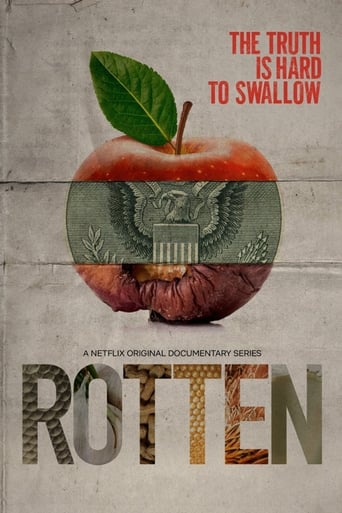
Rotten
2018 · TV series · documentary · 55 min episodes · 2 seasons
This docuseries travels deep into the heart of the food supply chain to reveal unsavory truths and expose hidden forces that shape what we eat.
11 positive1 negative1 mixed4 neutralfrom 17 commenters
Where to watch
No streaming data for this title.






19 comments on Hacker News
> If you really want to eliminate the cartels make recreational drugs legal.
Insufficient. Avocados are already legal in the US and yet the cartels have moved into that business. Cartels follow money. They are not going to just roll over when drug money dries up.
See the documentary series Rotten on Netflix or see https://www.npr.org/2022/02/19/1081948884/mexican-drug-cartels-are-getting-into-the-avocado-and-lime-business
Watch the episode of Rotten that features the avocado trade. What country's govt acts the "exact same?" One example would be kidnapping to extort farmers, causing them to lose their farm and livelihood
Avocados take 10 years to start producing. Strawberries are available that growing season. Any wild drop in avocado prices I'd imagine would have to be something changing in the economic playing field (unless it is just a ten year delay from a jump in tree planting).
The Mexican cartels have been squeezing avocado farmers, there is an episode on Rotten (Netflix, I think) about it. Any price swinging makes me wonder how the cartels may have been involved.
Rotten episode on Chocolate is really eye opening about the staggering amounts of slavery, child labor, and corruption in the chocolate industry. Basically every brand you can think of is in on it.
https://www.netflix.com/title/80146284
Personally I was very unimpressed with this documentary, especially the episode on avocado farming actually. It felt like they were trying to create a story out of nothing.
The fact is that crops take water to grow. All crops do. Avocados are on the higher side when looked at water used per pound (though not the highest), but they are still nowhere near the level of animal products. Avocados are also one of the most (if not the most) calorie-dense fruits, which means that their water per calorie is likely in line with most other fruit.
What exactly was the point Rotten was trying to make? That avocados are popular so now they are being grown more? who cares? You could say the same thing about literally every other fruit and vegetable on the planet.
I recommend Rotten on Netflix [1] that has an episode about Avocado farming. The whole series is super interesting anyway and explores modern day issues such as lack of water, climate change and globalisation.
[1] https://www.netflix.com/gb/title/80146284
Netflix series Rotten has a good episode on cocoa lifecycle and the problems involved: https://www.netflix.com/ee/title/80146284
Netflix show "Rotten", Season 1, Episode "Garlic Breath". It's been a hotly contested episode. I haven't seen any debate about the peeled garlic, though.
Yes. I have a small acreage farm and orchard. Lavender for essential oil and medicinal herbs. I used to grow produce but no margins as labour takes up everything.
I came here to apply for YC, didn’t get through but stayed..for small acreage farm automation.
+
Netflix series Rotten. Episode: Garlic. Garlic comes from China and peeled by Chinese prison labour according to the documentary. Gilroy Christopher Ranch disagrees. I wonder why we are having a shortage of garlic in our tiny country population of about 350 million then ..
I like the TV Series “Rotten” on netflix... it basically shows every food, fruit, meat, vegetable, you name it, is actually heavily controlled by cartels and mafias.
I had no idea there were mafia cartels that had wars about avocados.
Re:Nestlé : Is that because of the "Rotten" episode on bottled water on Netflix?
Without more evidence, I think we just have to agree to disagree. I believe everything you've listed is a second-order effect, and depending on the situation (such as sugar cane in Brazil) many of them do not even apply at all. The sugar cane example is so unique I'm not sure any of them apply, the only one I think might is #8. If you have Netflix and are interested, watch season 2 episode 3 of Rotten. There are other episodes on other industries as well involving what is essentially slave labor that I believe do not apply to many of your rules as well.
I am not saying slavery is always the best way to get an edge in a competitive market, but sometimes it is. Otherwise, why would people still be using it today? There are literally billions of dollars to be made every year in multiple industries if what you're saying is true.
Netflix documentary mini-series Rotten has a really great episode on this.
You might like this episode of rotten...
https://www.netflix.com/watch/80149707?trackId=13752289&tctx=0%2C2%2C02d309f0-3e2c-4053-9564-6b25c0688ba6-72952219%2C%2C
Split my time between documentaries that can be downloaded from Netflix, usually of middling quality, and whatever audiobook caught my attention in the days before flight.
Being a bigger guy, unless I get the upgrade I can’t do anything with a keyboard so doing much productive is out of the question.
Recent highlights have been Sour Grapes and the Rotten series on Netflix, and Ray Dalits Principles on Audible.
Yes it seems like that episode of Rotten covers this exact story?
At least from what I remember it was about a hive owner from Montana (?) who transported his bees to CA.
Rotten is such a fantastic docu-series. Are you aware of any other similar shows?
There is a documentary on netflix called rotten which I think you will find to be very interesting. It talks about corruption in the food industry. It is very easy to integrate unverified sourced food into the global food chain.
This was a big part of the honey trade between US/Russia/China from the Netflix documentary "Rotten". I forget if it was tariffs or bans they were evading.