 Hacker Cinema
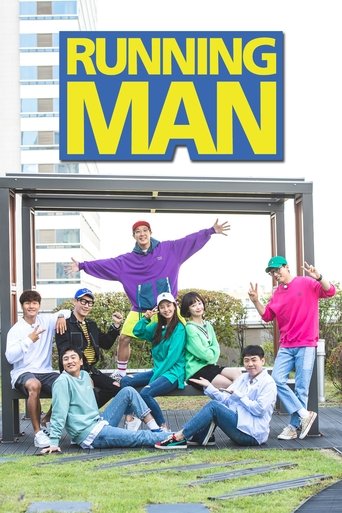
Running Man
런닝맨
2010 · TV series · 85 min episodes · 1 season
Created by Jo Hyo-jin, Kim Joo-hyung, Lim Hyung-taek, Jung Chul-min, Lee Hwan-jin, Choi Bo-pil, Choi Hyung-in, 강형선
These days, as variety shows are gradually disappearing, this is one of Korea’s representative variety shows that has been responsible for Sunday evenings for over 10 years. This program features numerous stars and members going around various places, playing games, and completing missions. In particular, among the many fun elements of variety shows, this one focuses solely on laughter. Open your eyes! Big fun is coming in! Open your mouth! Big laughter is coming in! Open your heart! Useful lessons are coming in!
1 positive1 negative2 neutralfrom 4 commenters
Where to watch
No streaming data for this title.





5 comments on Hacker News
I generally agree with your premises other than Asian movies (especially Japanese) have always been considered amazing and were a major part of supporting arthouse cinema from the 60s on, it's Korean movies that have caught on. Kung Fu Hustle was literally the highest grossing foreign film in the US in 2005. Korean movies caught on not because of some change in Western aesthetics, but because they got better; Park Chan-Wook led the way.
I deeply disagree with your conclusion, however. Westerners have had plenty of opportunities to like (e.g.) Running Man since K-Dramas became popular. Plenty do. It's not a new exposure to something different. Any show with subtitles operates at a disadvantage; shows that have constant titles appearing and disappearing on the screen and also have subtitled speech are an extremely tough sell, especially since (e.g.) Running Man is dumb and it's target audience is going to be people looking for a laugh.
edit: you could get people used to the stupid noises and canned laughter, but all that stuff is usually used to punctuate the appearance and disappearance of on-screen titles.
> Most of the Westerners who can stand that sort of thing are already watching it.
This is a matter of exposure and habituation.
I remember 6-7 years ago when I used sticker packs in KakaoTalk and Line, Western friends were baffled by all the silliness. Now they're all the rage on Telegram & co.
I remember when Western friends rejected Korean pop music as too artificial and commercial vs. the "more authentic" Western pop. Now Kpop concerts fill stadiums here.
I remember when friends rejected "Asian movies" as "bizarre and unrelatable". Now they win Academy Awards.
All those forms of entertainment proved a lot more portable than anticipated, over time. That said, sadly the golden era of entertaining Korean reality/variety shows (Running Man et all) is kind of over already, it died with the peak of broadcast TV. The Netflix crop of shows is already far more Westernized and MTV-style. There may not be much worth exporting there.
> 2 year olds aren't adults and shouldn't take on adult responsibilities.
While this is true, I think we often don't give kids enough credit either. Around that age they can be quite capable.
I think we've gone too far the other way and just don't push kids whatsoever, so now most 18 year olds are completely clueless as they head into college. This is compounded by USA's growing anti-intellectualism where we're proud to be bad at math, argue about having to study literature, and so on.
> It's shown in 180 countries worldwide and very popular internationally (Including Russia):
I can make this same argument about a Korean tv show called Running Man, which is indeed popular abroad... to niche audiences, like me. :-) I probably wouldn't argue with a Russian person about what shows are popular in their country, though.
Well, the good news is that its not impossibly difficult! Just very difficult. ;-) As the Koreans say, 화이팅! (Fighting!)
Korean isn't that different from other languages, really. It's difficult for English speakers because there aren't really any commonalities besides random loanwords. And it uses the SOV (subject object verb) pattern instead of SVO. Hangeul was designed to be easy to learn, so unlike Japanese, you'll always be able to read/pronounce any Korean text... even if you don't know what it means.
In some ways Korean is actually easier than, say, German (der/die/das tables, anyone?). The only thing I would say is make sure you focus on good pronunciation. Korean is very particular about mouth shapes and tongue positions. Many Americans especially come off with an accent because they neglect to put their tongue in the right spot. TalkToMeInKorean has a video course for ~$10, highly worth it.
Also, do not romanize! Only use 한글. For example, ㄱ is NOT g/k, it's simply ㄱ. Those are only meant as reference points for brand new learners. Romanizations will only impede your progress for pronunciation.
---
I would say I'm intermediate in speaking, high intermediate in writing/reading, low intermediate in listening. That is to say, I can converse in Korean somewhat easily for a few hours as long as the topics are relatively basic. Like my occupation, hobbies, what I like, and so on. Listening is still very difficult for "real" conversations, because of dialects, abbreviations/contractions, slang, etc. I can listen to textbook conversations and drama dialogues much more easily. I pretty much only text my friends in Korean.
---
There are 3 major players for korean learning resources right now, and a few smaller ones:
1) Go!Billy Korean. This guy is really good at korean and IMO is the best at explaining things in a clear manner. He has a youtube channel [0] as well as a website [1] with free PDFs of his lessons. He does a livestream every sunday, but he takes those ~2h videos and condenses them into shorter videos as well. He also has a textbook series which many people like.
2) HowToStudyKorean.com. This is mainly what I used when I started. This guy (over)explains sometimes but there is an incredible amount of material here. The only issue is the lesson order is kinda wack sometimes. I followed it linearly, but I read ahead if I wanted to learn that specific grammar point. I.e. how to say "because", etc.
3) TalkToMeInKorean.com. They have a youtube channel [2] and publish books. I have spent like $130+ on their books so feel free to ask a question about a particular one. The Beginner/Intermediate Korean Conversations books are really good.
Aside from these main resources, I recommend the Korean Grammar In Use textbooks. The beginner one has a good selection of grammar points. However, the main resources I mentioned pretty much cover the same beginner grammar points for free, so this book isn't strictly necessary. IMO the advanced one is worth it.
Other youtube channels I like: Dingo Story [11] has drama clips, around 10-15 minutes. WBKT Yujin [12] does lessons and listening practice, around intermediate+ level.
Apps: ignore duolingo/lingodeer, they have issues with spacing and teaching formality levels. Sejong Beginner Grammar (세종 문법 초급) is good, it has audio as well [3]. It supports android & ios.
---
Dictionaries: endic.naver.com and krdict.korean.go.kr are the main dictionaries. krdict is better but a bit slower.
There's also a hanja dictinoary at hanja.dict.naver.com, but as a beginner do not start studying that stuff. It'll only complicate things. Once you're at least intermediate or so, howtostudykorean also has a hanja course [17].
---
Vocab: use Anki [4]. Anki is a spaced repetition flashcards app. The pc/mac/android apps are free, the ios app is $20, which supports the developer. I cannot recommend anki enough for brute-forcing vocab acquisition. I have written about anki here [5] [6], but the manual [7] is also good.
Evita's Korean Deck [8] has almost 6k words, sorted by usage. I highly recommend using this deck, at least for the first ~5-6 months of study. The main issue with this deck is it starts to put multiple definitions on one card, which is a no-no for spaced repetition. There is also a grammar deck with sentences+audio [9], which may be of use once you study a bit more.
At some point you'll want to start maintaining your own deck, inputting vocabulary that you discover from Korean tv shows, books, webtoons, etc.
---
Native Media: there are plenty of korean dramas. These are recommended because the actors usually focus on clear pronunciation and standard language. There are a lot of comedy/variety shows like Running Man (런닝맨), Knowing Bros. (아는 형님), New Journey to the West (신서유기). Even if you can't follow along much, you can still watch them and write down words you see. I bet you probably know this but Korean tv shows put text on the screen about once per second, so its a good way to pick up random vocab words.
Webtoons [10] are also great, once you are around high intermediate / advanced. Webtoon authors frequently use nonstandard language, dialects, or make mistakes so I don't recommend it for beginners.
---
Practice: Hello Talk [13] is pretty good for finding people to talk to. However the real selling point is facebook-like posts: You can post longer stuff and Koreans can correct it! My Korean friends literally never correct my Korean (it gets awkward) so I have to use this to practice longer writing.
Just be mindful that some people do try to date on there. As a guy I don't really face that but some of my friends have to block people.
Tandem [14] also exists but I haven't tried it.
---
Tutoring: Many people recommend tutors from italki [15]. I'm going to try it soon. My friend has a tutor that types up transcripts of their conversations and points out errors, etc. I feel that at some point, you need a personal tutor to help you fix personal issues that you may not notice.
---
Language exchanges: They're not that good for actually practicing Korean, as most of them are not structured. So people just show up and just end up having conversations in English.
They are good for making korean friends, though. Just be mindful to communicate that you want to practice Korean specifically, and that might mean you guys swap from English (30 mins) to Korean (30 mins), etc.
I just text all my korean friends in Korean unless they specifically ask to split. ¯\_(ツ)_/¯
For Seoul specifically, there is a GREAT exchange near 이대역 called MingleCup [16]. This one is highly structured, and you can get 1-on-1 with a korean teacher for 1 hour! The tradeoff is after that hour, you speak English with different rotating groups of people. (The koreans are coming there to learn English, after all). Its a super fun way to meet people and make friends.
---
This is all I can think of off the top of my head. Feel free to email me with further questions. I'm also part of the Let's Learn Korean! discord: https://discord.gg/e3H9Pde
There are a lot of knowledgeable students and native speakers there, and its where I got most of these resources from.
I'm also working on a website that compiles all these resources + a grammar search tool into a one stop shop.
---
[0]: https://www.youtube.com/user/GoBillyKorean
[1]: https://gobillykorean.com/
[2]: https://www.youtube.com/user/talktomeinkorean
[3]: https://play.google.com/store/apps/details?id=air.org.kingsejong.grammarbasic&hl=ko
[4]: https://apps.ankiweb.net/ (Be careful, there is a copycat at https://www.ankiapp.com/ which is NOT the same).
[5]: https://andrewzah.com/posts/things-to-avoid-with-anki/
[6]: https://andrewzah.com/posts/better-anki-usage-guide-2019/
[7]: https://apps.ankiweb.net/docs/manual.html
[8]: https://ankiweb.net/shared/info/4066961604
[9]: https://ankiweb.net/shared/info/3614346923
[10]: https://comic.naver.com/index.nhn
[11]: https://www.youtube.com/user/moncastwebdong
[12]: https://www.youtube.com/channel/UC-SYbQJvveakVdU36w2kIcg
[13]: https://www.hellotalk.com/
[14]: https://www.tandem.net/
[15]: https://www.italki.com/
[16]: http://minglecup.com
[17]: https://www.howtostudykorean.com/hanja-unit-1-lessons-1-20/
> Korean TV shows like Running Man
I googled this and was relieved to see it isn't actually a TV show that involves gladiators hunting down and killing prisoners.