 Hacker Cinema
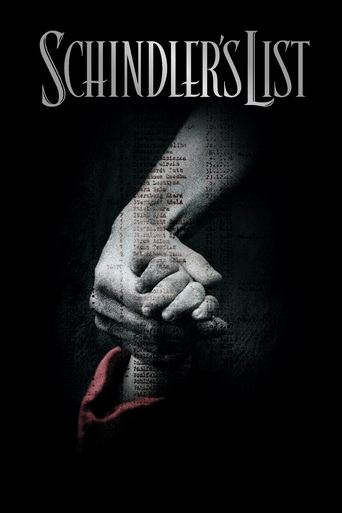
Schindler's List
1993 · Film · 195 min
Directed by Steven Spielberg
The true story of how businessman Oskar Schindler saved over a thousand Jewish lives from the Nazis while they worked as slaves in his factory during World War II.
24 positive5 negative46 neutralfrom 75 commenters
Where to watch
No streaming data for this title.
77 comments on Hacker News
I saw this movie. Schindler's List, was it? History really does repeat itself.
I'm curious of your take on one thing. Many of the sexuality oriented books (which your list is overwhelmingly composed of) tend to, unsurprisingly, have sexual content which is often rather explicit. Some of these books even have explicit artwork within them. I'm sure you'd agree that if books had ratings then many/all of these books would R, if not NC17, rated.
And even in high schools screening R-rated movies is generally heavily restricted. Where it is allowed, it generally requires a permission slip from the parents. And that's not like showing gratuitous films, but ones with historically relevant and educational context like e.g. Schindler's List.
So why is it unreasonable for parents (or other interested parties) to be against having such material in a children's library? In many ways its quite odd that a rating system was never adopted for books. And for one other question, do you even see a difference between these sort of books being restricted from schools, and other books whose content would be generally be rated appropriate for children, being banned on political/ideological basis? Because to me the difference is not only tremendous but the defining issue here.
Hard disagree about declarative "X is Y". It's a failure of weakening attention span. There are plenty of excellent long movies:
- Once Upon a Time in America (1984) 3:49
- Lawrence of Arabia (1962) 3:47
- The Irishman (2019) 3:29
- Malcolm X (1992) 3:22
- The Godfather Part II (1974) 3:22
- The Lord of the Rings: The Return of the King (2003) 3:21
- Schindler's List (1992) 3:15
- Gandhi (1982) 3:11
- The Green Mile (1999) 3:09
- The Deer Hunter (1978) 3:03
- The Lord of the Rings: The Two Towers (2002) 2:59
- The Lord of the Rings: The Fellowship of the Ring (2001) 2:58
- Casino (1995) 2:58
- Braveheart (1995) 2:58
- The Godfather (1972) 2:55
- Django Unchained (2012) 2:45
What I most object to is lazy storytelling for lazy, second-screen audiences lacking in style and subtlety having a robotic, spoon-fed, infantile, unnatural, expository narration quality in every character like it's a commercial for an antacid.
Not disagreeing with the economics behind it, but this movie-goer walked away decades ago when the "super hero" genre became Hollywood's focus.
Even before that though otherwise decent movies were starting to play heavy handed and treating their audiences for children that need lecturing — need "The Moral of the Story" spelled out for them. I disliked the "book-ending" that was popular when Titanic, Saving Private Ryan (and even Schindler's List) were released.
Music in film too has, for some time now, been telling us how to feel much too often. In romps or swashbuckling films it's probably an expected part of the genre. I just wish there were more quiet films where we are left to feel for ourselves.
Billy's death in The Last Picture Show (and as metaphor for the death of the town) is an excellent example of old-school film making where you just let the film do the talking. And then it is us, the viewers, who are left talking about it, thinking about it afterward.
Maybe the biggest tragedy of heavy-handed film making is it leaves nothing to really even ponder afterward. I kind of like films that leave you thinking about them much, much later.
While I remember seeing great films like Cool Hand Luke, Summer of '42 and The Last Picture Show, working through the "1001 Movies to See Before You Die" has been a real eye-opener to how much film can be art and how far we fallen from anything close to that.
Perhaps we'll get another "New Wave" of young filmmakers to break the corporate log-jam.
> the line in the Talmud that said "whoever saves a life, it is considered as if he saved an entire world." I am not Jewish but I learned about this phrase watching the film Schindler's List in high school. That phrase, and listening to Ben Kingsley's character say it, has lived, rent-free, in my mind for the last umpteen years.
People are free to have any reaction to a piece of art. That said, if someone watches Schindler's List and comes away feeling that it glorified war, then I think they deeply - perhaps willfully - misunderstood the movie.
> There's no such thing as an anti-war movie as Truffaut said.
This is an absurd statement, can you expand on this?
Have you never seen The Pianist, Schindler's List, Come and See, ..?
> Thanks again for continuing this conversation! I'm enjoying it. Also, can you recommend me a book or two to read on this subject? Thanks in advance.
Hey sorry for my late reply, I really didn't mean to waste your time, I just got super busy and spun a bit responding. Honestly I haven't read as much as I'd like to after discovering the internet around 1995, so this is mostly what I've picked up online.
To me, wokeism is fundamentally about stuff we can't unsee. It's like being friends with someone in an abusive relationship, where the other partner takes us aside and tells us that if we knew what they knew about our friend's behavior, we might not want to be friends with them anymore. The more we learn, the more that America's origin story becomes a twisted fable of revisionist history, written by the winners to cover centuries of oppression and violence. These stand out to me:
https://en.wikipedia.org/wiki/Tulsa_race_massacre
https://en.wikipedia.org/wiki/Thomas_Jefferson_and_slavery
https://en.wikipedia.org/wiki/Brooks_(1781_ship)#/media/File:Slaveshipposter.jpg
I went to South Carolina a few years ago and stood on a small plantation cotton field they keep preserved for tours. It was suffocatingly hot, felt like 100% humidity under intense sun, and not even the hottest time of the year. I just imagined people forced to pick cotton all day, every day, their entire lives. It was soul-crushing.
Then the tour guide called the Civil War the Northern War of Aggression and my eyebrows raised. Reality shifted and I suddenly saw the feelings from that time still running strong today.
Maybe I can relate my experience better through pop culture references..
I grew up on movies like To Kill a Mockingbird, The Color Purple, Do the Right Thing, Glory, Schindler's List and Amistad, to name a few. I never read Black Like Me and never saw Soul Man. I think I may start with these, regardless of if they aged well, to get an impression of where my head is at now vs then.
This search brought back a memory, that in Short Circuit (one of my all-time favorite movies), I didn't know that Fisher Stevens wore brownface to play Indian engineer Ben Jabituya until maybe the 2000s:
https://ew.com/movies/short-circuit-fisher-stevens-regrets-playing-indian-role/
This just goes to show how ignorant people were (including myself) as recently as a couple of decades ago. I think that the makeup in Soul Man is forgiveable because it's explicit and the subject of the film, much like Dustin Hoffman dressing as a woman in Tootsie. Whereas Short Circuit did it for convenience, without considering that it might be offensive.
I also grew up playing with the toy car with the rebel flag on it from the Dukes of Hazzard, completely oblivious to any racist connotations.
And sexual harrassment was so prevelant that we had never even heard of it until Anita Hill vs Clarance Thomas in 1991 before he was appointed to the Supreme Court. I remember that we were really appalled by that, because it was so obvious that he was guilty of the harrassment, even if that didn't bar him from being appointed. This was just after the Rodney King beating and LA riots, but a few years before the OJ Simpson case if I remember right. Racial tensions were running high, but also there was a feeling that minorities were being kept from positions of power, so there was a lot of cognitive dissonance. There was no Me Too movement and we didn't have a words like cancel culture yet. I didn't feel at the time that he should have been appointed, because he gave me creepster vibes. I think his decisions in the time since have shown that he is very, let's just say tempted by financial favors.
> This is sort of like the concept of "original sin", isn't it? The notion that certain people have a debt that is so big that it is impossible to ever be paid back, and so they must forever remain burdened with the guilt of the sin that their ancestors committed. The scale can never be zeroed. The guilt can never go away. The transgression can never be forgiven, because the effects linger down to our day.
Ya that's a good point, I hadn't considered that. It reminds me of how young people in post-WWI Germany felt that it was impossible to pay back the war debt that their elders faced when they lost the war. So they felt oppressed by who they viewed as Jewish elites in banking, eventually using them as scapegoats and starting WWII against the countries whose loans they were defaulting on.
Which has eerie similarities with the dissilusioned feelings of young men in America today, who due to wealth inequality can't earn the level of income needed to provide for a spouse or family, as they watch women and minorities rise without them. Blaming liberal and Hollywood elites, as well as immigrants, for bruising their egos instead of the real culprit, late-stage capitalist patriarchy.
I think what we're talking about is: how can the rights of individuals be upheld when our debts to previous generations are so high that we'd lose ourselves in an attempt to pay them back?
I guess my only counter to that is, if winners and losers resulted from the inequities of previous generations, leading to the vast wealth inequality we see today, then what would healing look like? Letting it go without making ammends, or going too far with violence as a result, both seem extreme.
I feel that affirmative action and taxing the wealthy are two solid approaches. But I don't feel that either have been tried to a degree nearly approaching reparations. Because if they had, then Congress might be 50% women, we wouldn't have such a large national debt or high poverty rate, etc.
> In the case of the LA fires, and for the additional reasons you've given, I agree, DEI was not to blame and is being used as a scapegoat. I wonder, if the fire chief were instead a straight white male, and if there was no firefighter that "looked like you" but instead, was capable of saving your life, would people still have blamed DEI, or would they instead shift their focus towards the "real problems" that you mentioned? Perhaps if these people weren't in these highly visible positions to begin with, DEI would not have been undermined as it was.
Ya, DEI probably wouldn't have been blamed had the people involved in the response fit prejudiced notions of what they should look like.
It seems that we both agree that DEI wasn't the cause of the fires. But maybe we should ask if putting such priority on DEI is undermining the cause of reaching equality. With so much political manipulation happening these days, it makes for an attractive scapegoat for those wishing to distract us from the real issues.
I don't know the answer, or if DEI should be put on hold temporarily. What I do know is that with controversial issues like gun control, we can find ourselves on hold indefinitely. So I am suspicious of calls to halt DEI when the problem of discrimination in hiring still exists. It feels too opportunistic IMHO.
> preface: I would like to think that everyone on the board has in mind the good of the entire company, and that the men don't just have in mind the considerations of men, and that the woman is not the only advocate for all the women of the company.
> Given the above, what injustice is there? Assuming that everyone earned their seat on the board fairly, without nepotism, sabotage, or shady backroom deals, why do you consider there to be an injustice happening here?
> The only way I can see there being an inherent injustice in a board room like this is if my initial assumptions aren't true, and that the men aren't advocating for the concerns of the women. But that would be to assume the worst of people. That sort of thinking is racist and sexist. That leads to tribal thinking, where people think that people from other demographics are similarly only looking out for "their own group".
Ya good point about the dangers of tribalism, since that is the single greatest threat facing the US today. We've grown so divided and provincial that we can't seem to work together, and that's undermining our credibility in the eyes of the world.
And I agree that people don't just work towards their own best interest, and that assuming they do is putting them in a box.
What concerns me though is that some people only respond to authority, not what society deems common decency. So without a law in place, they will return to discriminatory practices.
Trump just issued an executive order revoking Lyndon B. Johnson’s Executive Order 11246, promoting affirmative action in federal contracting:
https://www.washingtonpost.com/politics/2025/01/23/trump-revoked-equal-employment-opportunity-order/
Even though this move claims to encourage merit-based hiring, it will undoubtedly have the opposite effect. Because authoritarian-minded people will no longer be forced to practice nondescrimination. So they will hire candidates who appear to fit their own projections and stereotypes, causing them to overlook similarly-qualified candidates from other demographics.
When the laws aren't there, companies have a track record of accepting a certain level of human cost if it raises profits. Seatbelt laws, pollution laws, etc reflect the need for those regulations.
Now, we can argue whether the free market would take care of discrimination on its own. But in these times of little or no antitrust enforcement, often workers have few alternative employment options, so are at the mercy of employers. I'm not seeing politicans in favor of deregulation also calling for antitrust enforcement, so they are having their cake and eating it too, making this argument suspect.
-
Continues ->
I don't think Spielberg ever lost it. He's made a lot of exceptional films since E.T. or Raiders of the Lost Ark or whenever you could say he had power and money. Saving Pricate Ryan, Schindler's List, Jurrassic Park, etc. Even clunkers like Ready Player One show how great a director he really is.
It's a bit reminiscent of college dropout Steven Spielberg's returning to Cal State Long Beach in 2002 to finish his B.A. in Film and Electronic Arts: One of the degree requirements was to complete and submit a film project — so he submitted Schindler's List, which had won the Academy Award for Best Picture (and Spielberg the Oscar for Best Director).
> Tyranny does not begin with violence; it begins with the first gesture of collaboration. Its most enduring crime is drawing decent men and women into its siege of the truth
""" we often start a lesson with a clip from the opening scenes of Spielberg's Schindler's List (Spielberg, Zaillian, & Keneally, 1993). When asked about the film most people recall a scene of horror, of Nazis shooting children. But in fact, the first scene is a careful choice by the director. It is a mundane shot of a small, innocuous table with a bottle of ink, and an official asking a line of Jews, "Name please?!". """ [0]
[0] http://www.icicte.org/assets/icicte2019_5.4_farnell.pdf
I remember watching a student film society showing of Schindler's List, where about halfway through one of the reels came in upside down and backwards. They took a while to fix it and it was very immersion-breaking.
Schindler's list is pathetic. It was a good movie until the scene where Schindler leeds the people with a flag in its hands. This was desgusting.
La vita e bella - i have to rewatch it. My impression (20 years ago) was that tried to see some tragic moments with a comical note.
Pianist is ok.
Great idea. Add categories: is A a better Comedy than B? Romance? Mystery? Action?
Is Schindler's List a better Comedy than Gone With the Wind?
Is Schindler's List a better Romance than Gone With the Wind?
Is Schindler's List a better Documentary than Gone With the Wind?
> The video mentions an exception for educational content. Fine, but who decides what is educational? What about some of the truly horrific WW2 content. Is that educational? Hard to blame YouTube for being very cautious here.
Educational? Absolutely.
I'm a parent of teenagers and to be clear, when they were younger, I was careful about "truly horrific WW2 content." The goal is to educate, not present a child who is incapable of understanding/rationalizing those atrocities with the graphic reality of what took place in a manner that they're not going to understand but -- instead -- will likely cause psychological issues and irrational fear at a time when they're not capable of integrating that into their view of the world.
That said, I can't find a word strong enough for how I feel about censoring "the true nature of the evil that took place" or restricting access to this information in any way. I remember when Schindler's List was played -- completely uncensored -- on broadcast network television in the US (I believe it was NBC at the time). I can't think of another drama or content of any kind that received an MPAA "R" rating ever being aired to the general public without editing and little more than a regular warning about the sensitivity of the content. It's a tough movie to watch and certainly not meant for all ages but I think the broadcaster and the regulatory bodies rightly recognized that there were two choices: don't do it at all - or - do it completely.
My experience in this area is not one of "a child of Jewish parents who survived/were victims of the holocaust" but as "the kid who saw some truly horrific WW2 content" in middle school. My eighth-grade English teacher was Jewish. There is a Holocaust Memorial Center/Museum about an hour from our school. Our teacher set up transportation and granted students a few extra credit points for joining in on an after-school trip.
That experience changed my life and looking back on it, today, I'm so glad I had this teacher. She did this every year. It was not without controversy among the parents of students.
For the men[0] who attended public middle school in America, think back to 8th grade. Outside of a serious injury, an 8th grade boy does not cry ... EVER ... in front of classmates as doing so would basically destroy your life[1]. Now, imagine any experience that could cause every boy to not just "openly cry" but outright sob in a parking lot and then on and off for an hours-long drive home in a yellow school bus[2]. And then the stories throughout the school the next day none of us could help talking about the holocaust, the experience we had, and not one of us left out the bus-ride home.
By the way ... the kids who took advantage of the extra credit? A few good students and all of the bullies (some needed the points to avoid the dreaded "summer school"); including the one white redneck who called the only black kid in our school the "N-Word." Sobbing. I had a history class with the redneck in 11th grade. He talked about his experience, about how is parents are racist and about how that experience changed him.
It breaks you.
It's necessary.
[0] Maybe things are different, now, but where I attended middle school ... the girls were basically all crying at one point or another during any given week. It wasn't a pleasant place most of the time.
[1] We had a kid in school who cried in class. This poor kid was then beaten up weekly -- it would have been more frequently if both parties to any fight weren't "suspended for a week" regardless of who started the fight. He attended a private school the following year.
[2] The drive there was the typical 8th grade "herding cats", random "F-Bombs" and general misbehavior.
> My problem with your reasoning is that it relies on a literal interpretation of the words spoken in the book.
What? Now you are just desperately grasping at straws.
> The father says that "there are no other kids his age", yes, but remember...most of the book is told through the father's eyes.
And? So what? The kid also says so, not that it matters.
> There is no information technology anymore...
That's right. Before the internet and IT, nobody saw any children. This comment is the dumbest thing I've read in a long while.
> all he knows is that he has not seen any kids and that he hasn't heard of any kids. He is an unreliable narrator.
The kid also said so. And I don't think you know what "unreliable narrator" is. There has to be clues within the story to imply that he is unreliable ( psychologically, memorywise, etc ). Not that he doesn't have access to a smartphone.
> Have you ever picked up a six year old? They weigh practically nothing.
Yes. Not only that, I was six year old once. Long before I was 6 years old, my parents stopped carrying me around. And you are being intentionally sneaky here. Who said anything about picking up a 6 year old. I said carry a 6 year old how many miles they had to go.
> Perhaps if he gets off to the idea of betrayal, or if he really does think that having a kid follow him for 10 miles would be easier convincing him would be easier, but I have a hard time believing that.
Yes. It's easier to believe that in a starving world, a random kind couple is willing to take in someone else's child to feed. Something his own father struggled immensely to do. That is easier to believe.
It's obvious what happened. It's why you ignored every one of my points except the absolutely nonsense about "no more information technology..."
Let me guess, you are the type of person who watched the movie No Country for Old Men and believe that chigurh didn't kill the wife. Or that the girl in the red dress in schindler's list wasn't dead but playing dead because she was saved by some magical good nazis. At this point I hope you at pretending to be trolling to save yourself some embarrassment.
I'm so dumb. I forgot that before information technology, kids were invisible. Thank you.
I'll give a couple historical and current examples:
Star Trek was always woke, starting with its at the time quite "woke" black communications' officer and many plots with aliens as stand-ins for different races or nations. The initial show got cancelled (as is often the case with even successful sci-fi) but it gave birth to a giant franchise that continued to be at least somewhat "woke" by contemporary standards. Definitely not a flop.
The Apple TV series For All Mankind is going into season 4 and is relatively popular. I found it pretty good. It's full of "woke" stuff but is well written and is based on a really good premise. My favorite fan theory is that it's an unofficial prequel to The Expanse. Not sure I'd call The Expanse "woke" but it's also not not-woke and has a number of background elements like the popularity of polyamory and bisexual characters sure to trigger right-wingers.
Sci-fi in general has always been kind of on the woke side of things.
Films, lots of them. There's many films about civil rights and social justice struggles that are quite good and did not flop: Mississippi Burning, Schindler's List, 12 Years a Slave, Hidden Figures, etc. Disney has recently made a bunch of Pixar films that are pretty woke and didn't exactly flop.
IMHO the woke flops we're all familiar with are just bad writing. Boring plots, uninteresting characters, and shitty writing is gonna be crap regardless of whether it's "woke."
I've been thinking about this a bit. Some people believe that depictions of x behavior are supporting x. Not a super common belief but I've seen more people say it with a straight face over time (Eg a movie with a character who says racist things is inherently racist).
Which is patently ridiculous... Schindler's List depicts some of the worst acts of antisemitism ever, but the movie itself is obviosly not antisemitic. So what's the difference between Schindler's List and an actually antisemitic movie, like Hebrews To Negroes?
I think it comes down to the creator's intent. In Schindler's List, you're not supposed to agree with the antisemitic stuff that happens. It's bad and wrong. In Hebrews To Negroes, the antisemitisn is depicted as good and correct.
When you have a large language model creating your art, how do you make that determination of "intent"?
You know how they can't make new movies, comic books, video games or TV shows anymore and just lazily add black and gay characters to existing ones? Picture Schindler's List getting that treatment but it's real life.
"History never repeats itself, but it does often rhyme"
I'm only some ten years older. The films I spoke of were released before I was born. Yet most of my generation is familiar with some of them. Star Wars, then. Or Schindler's List. Maybe I'm Spielberg biased. The Exorcist.
My point is that there was such a thing -- a common film canon -- that people who were interested in film, could be expected to be somewhat familiar with. No longer true?
Yes. Lowest common denominator. Some common point of reference gives a common vocabulary. Even if it sucks.
Schindler's List is a fantastic film, but it's also the kind of film most people only want to watch once. That might explain it.
I think this kinds of research is just pants.
When you ask people these kind of vague aspiration goals. The answers don't change.
Same reason everyone rates Schindler's list 5/5 on Netflix and never watches it. (Paraquoting Reed Hastings).
The biggest factor imo is that these days people have better things to do than have kids. Mostly work at jobs they hate.
Similarly everyone prefers to watch an Adam Sandler movie they say they hate and not Schindler's list.
Similar to dithering, I believe film grain does help you resolve finer visual details. Having no texture would cause issues when trying to match things shot on different cameras as well. I agree with you that many movies and shows are guilty of adding so much grain it becomes distracting, but I was watching Schindler's List in UHD and loved how natural it looked. Things like clothing just felt more real and I didn't realize until the end that it was because of the expertly used film grain. The value of grain becomes obvious when you look at clips of that movie online.
https://www.audiocheck.net/audiotests_dithering.php
If Schindler's List was made today it would be best suited as a streaming mini-series.
> The article laments that things aren't right in the world when Steven Spielberg can't draw a theater crowd. Well, Steven Spielberg is an old, wealthy man now, and he is making movies for himself, not for the kind of audience that made Indiana Jones and Jurassic Park massive successes.
I sort of agree. I've enjoyed many of Spielberg's movies, but I have no interest in watching a fictionalized Spielberg biopic. West Side Story was meh, I tried watching it on Disney+, and gave up after 30 minutes or so. The music was dull and old-fashioned.
But the most obvious counter-argument to this is Schindler's List, a black-and-white Spielberg movie about the Holocaust (granted it has some 'feel-good' elements, but still). That movie made nearly $100M in the domestic box office in 1993. It's hard to imagine box office success for that kind of movie today.
I believe you hit the nail on the head with the whole problem of intent thing. I can enjoy reading antiquated works written in antiquated style, like Shakespeare, because I know that they were made in an effective way for the time. I get over it, I get used to it, I move on. Kind of similar to watching a black & white movie, for example Dr. Strangelove is one of my favorite movies of all time and it doesn't need to be colorized or remade. Even a movie made in B&W after color became standard, like Schindler's List, I can understand the effect the creators are going for. But if somebody came out with a movie where they did something wacky like invert all the colors for no apparent reason, I would find it annoying and distracting.
It does lead to a fun hypothetical. If Cormac McCarthy was a dead author from the nth century, and his writing style was the way everybody wrote in the nth century, I wouldn't hold it against him. I would probably be able to get used to it, and quit muttering "this son of a bitch" aloud every two pages. Although I still doubt I would be a huge fan, I likely would be more appreciative of his work than I am now. But it would be exactly the same work, the same letters on the page. Why should the context change make any difference at all?
So maybe that just makes me petty. But even if so, I can't argue myself into enjoying something I don't enjoy.
Racism certainly plays a big part in the frequency of such complaints, but it nonetheless raises some important questions.
Ultimately, nobody really, genuinely holds the opinion that an actor can be of any appearance for any role. There will always be exceptions that will break their immersion, because unlike with theatre there is the expectation that the movie is WYSIWYG.
To give an extreme example, would you be completely undisturbed if the main character in 12 years a Slave was portrayed by John Malkovich? Or if a Jewish camp inmate in Schindler's list was portrayed as a black person? I don't think either example would sit well with the vast majority of people, no matter how racist or not racist they might be.
That's why pointing out that black people did exist in Italy is correct but beaide the point. The real debate is around the acceptability of certain expectations, and what determines the criteria for this acceptability.
I had my spouse, who crys often at movies, watch it with me. I gave them fair waning that it was very sad and apparently very good. She agreed, and was also "I'm never watching that again". She enjoyed it. Can confirm, brutal and great. But like other amazing sad war movies like Schindler's List, I'm not going to watch it for fun.
Actually that's a good way to think of it, compress SL into a anime length movie and you have the emotional hit of Grave.
Grave of the Fireflies needs a warning label.
It's Schindler's List in a few important ways. 1) it's about WWII, 2) It's a gut punch, and 3) It's one of the greatest movies you only need to see once, and likely will only want to watch once.
I've told the kids they can only watch that movie once they're old enough to drink.
> I have seen perhaps hundreds other far more moving scenes in other WWII movies (everything from Schindler's List to Saving Private Ryan to Downfall) that I far more vividly remember.
It’s completely different. Schindler’s list is great, but reads like a documentary. Downfall is flashy, but lacks the spontaneity of Casablanca, which was filmed in the thick of it. Completely different atmospheres.
Also, if you are into this kind of films, the Pianist is an absolute must-see. I would put it at the same level than Schindler’s List, way above both Saving Private Ryan (which is way, way too much of a Hollywood action movie) and Downfall (which is fine, but really not in the same league).
As people pour in, it appears I am the only one left with contrarian view. I had watched this movie and didn't realize the scene was really all that special. I couldn't even recall it, let alone remember it forever. I have seen perhaps hundreds other far more moving scenes in other WWII movies (everything from Schindler's List to Saving Private Ryan to Downfall) that I far more vividly remember. It feels like one of those fallacies where someone will come up with why certain wine is best in the world and then crowd joins in to agree while everyone else wonders what was so special about it.
Help me out. Watch Schindler's List (famous movie) and after, let us know if you still feel that, and in what ways how, the US is welcoming the successor of Nazi ideology. I'm not seeing it. Not even at a glance.
US popular culture is pretty milquetoast when it comes to celebrating violence and death and destruction. I mean, yeah, American Sniper glorified a guy who shot 255 people to death from a distance where they couldn't even see him, many of them women and children. But they're afraid to even show death, and constantly seek to airbrush out the cruelty and filth of war, with the objective of making it palatable to the public. The military (which negotiates extensive veto powers over Hollywood films that use US military locations and equipment) has learned only too well from Vietnam that civilians do not approve of the reality of war, and in the US the civilians are still in charge to a significant degree, for now.
Even movies like Hannibal, Psycho, and Schindler's List usually turn the camera the other way before blood starts splashing around, the stinking, grossly distorted, dismembered things that just stopped being human never even appear in the background. In fact, I bet American culture abhors violence so much that I'll get downvoted for telling the truth about violent death in my previous sentence instead of euphemizing it.
— ⁂ —
Contrast Iliad 6.37–71, in Murray's meticulous but annoyingly archaized 01924 translation:
But Adrastus did Menelaus, good at the warcry, take alive; for his two horses, coursing in terror over the plain, became entangled in a tamarisk bough, and breaking the curved car at the end of the pole, themselves went on toward the city whither the rest were fleeing in rout; but their master rolled from out the car beside the wheel headlong in the dust upon his face. And to his side came Menelaus, son of Atreus, bearing his far-shadowing spear.
Then Adrastus clasped him by the knees and besought him: “Take me alive, thou son of Atreus, and accept a worthy ransom; treasures full many lie stored in the palace of my wealthy father, bronze and gold and iron wrought with toil; thereof would my father grant thee ransom past counting, should he hear that I am alive at the ships of the Achaeans.”
So spake he, and sought to persuade the other's heart in his breast, and lo, Menelaus was about to give him to his squire to lead to the swift ships of the Achaeans, but Agamemnon came running to meet him, and spake a word of reproof, saying: “Soft-hearted Menelaus, why carest thou thus for the men? Hath then so great kindness been done thee in thy house by Trojans? Of them let not one escape sheer destruction and the might of our hands, nay, not the man-child whom his mother bears in her womb; let not even him escape, but let all perish together out of Ilios, unmourned and unmarked.”
So spake the warrior, and turned his brother's mind, for he counselled aright; so Menelaus with his hand thrust from him the warrior Adrastus, and lord Agamemnon smote him on the flank, and he fell backward; and the son of Atreus planted his heel on his chest, and drew forth the ashen spear. Then Nestor shouted aloud, and called to the Argives: “My friends, Danaan warriors, squires of Ares, let no man now abide behind in eager desire for spoil, that he may come to the ships bearing the greatest store; nay, let us slay the men; thereafter in peace shall ye strip the armour from the corpses that lie dead over the plain.”
— ⁂ —
In the original:
Ἄδρηστον δ᾽ ἄρ᾽ ἔπειτα βοὴν ἀγαθὸς Μενέλαος
ζωὸν ἕλ᾽: ἵππω γάρ οἱ ἀτυζομένω πεδίοιο
ὄζῳ ἔνι βλαφθέντε μυρικίνῳ ἀγκύλον ἅρμα
ἄξαντ᾽ ἐν πρώτῳ ῥυμῷ αὐτὼ μὲν ἐβήτην
πρὸς πόλιν, ᾗ περ οἱ ἄλλοι ἀτυζόμενοι φοβέοντο,
αὐτὸς δ᾽ ἐκ δίφροιο παρὰ τροχὸν ἐξεκυλίσθη
πρηνὴς ἐν κονίῃσιν ἐπὶ στόμα: πὰρ δέ οἱ ἔστη
Ἀτρεΐδης Μενέλαος ἔχων δολιχόσκιον ἔγχος.
Ἄδρηστος δ᾽ ἄρ᾽ ἔπειτα λαβὼν ἐλίσσετο γούνων:
‘ζώγρει Ἀτρέος υἱέ, σὺ δ᾽ ἄξια δέξαι ἄποινα:
πολλὰ δ᾽ ἐν ἀφνειοῦ πατρὸς κειμήλια κεῖται
χαλκός τε χρυσός τε πολύκμητός τε σίδηρος,
τῶν κέν τοι χαρίσαιτο πατὴρ ἀπερείσι᾽ ἄποινα
εἴ κεν ἐμὲ ζωὸν πεπύθοιτ᾽ ἐπὶ νηυσὶν Ἀχαιῶν.
ὣς φάτο, τῷ δ᾽ ἄρα θυμὸν ἐνὶ στήθεσσιν ἔπειθε:
καὶ δή μιν τάχ᾽ ἔμελλε θοὰς ἐπὶ νῆας Ἀχαιῶν
δώσειν ᾧ θεράποντι καταξέμεν: ἀλλ᾽ Ἀγαμέμνων
ἀντίος ἦλθε θέων, καὶ ὁμοκλήσας ἔπος ηὔδα:
ὦ πέπον ὦ Μενέλαε, τί ἢ δὲ σὺ κήδεαι οὕτως
ἀνδρῶν; ἦ σοὶ ἄριστα πεποίηται κατὰ οἶκον
πρὸς Τρώων; τῶν μή τις ὑπεκφύγοι αἰπὺν ὄλεθρον
χεῖράς θ᾽ ἡμετέρας, μηδ᾽ ὅν τινα γαστέρι μήτηρ
κοῦρον ἐόντα φέροι, μηδ᾽ ὃς φύγοι, ἀλλ᾽ ἅμα πάντες
Ἰλίου ἐξαπολοίατ᾽ ἀκήδεστοι καὶ ἄφαντοι.
ὣς εἰπὼν ἔτρεψεν ἀδελφειοῦ φρένας ἥρως
αἴσιμα παρειπών: ὃ δ᾽ ἀπὸ ἕθεν ὤσατο χειρὶ
ἥρω᾽ Ἄδρηστον: τὸν δὲ κρείων Ἀγαμέμνων
οὖτα κατὰ λαπάρην: ὃ δ᾽ ἀνετράπετ᾽, Ἀτρεΐδης δὲ
λὰξ ἐν στήθεσι βὰς ἐξέσπασε μείλινον ἔγχος.
Νέστωρ δ᾽ Ἀργείοισιν ἐκέκλετο μακρὸν ἀΰσας:
ὦ φίλοι ἥρωες Δαναοὶ θεράποντες Ἄρηος
μή τις νῦν ἐνάρων ἐπιβαλλόμενος μετόπισθε
μιμνέτω ὥς κε πλεῖστα φέρων ἐπὶ νῆας ἵκηται,
ἀλλ᾽ ἄνδρας κτείνωμεν: ἔπειτα δὲ καὶ τὰ ἕκηλοι
νεκροὺς ἂμ πεδίον συλήσετε τεθνηῶτας.
https://www.perseus.tufts.edu/hopper/text?doc=Perseus%3Atext%3A1999.01.0134%3Abook%3D6%3Acard%3D37
— ⁂ —
In Pope's more poetic but considerably less literal rendering:
Unbless’d Adrastus next at mercy lies
Beneath the Spartan spear, a living prize.
Scared with the din and tumult of the fight,
His headlong steeds, precipitate in flight,
Rush’d on a tamarisk’s strong trunk, and broke
The shatter’d chariot from the crooked yoke;
Wide o’er the field, resistless as the wind,
For Troy they fly, and leave their lord behind.
Prone on his face he sinks beside the wheel:
Atrides o’er him shakes his vengeful steel;
The fallen chief in suppliant posture press’d
The victor’s knees, and thus his prayer address’d:
“O spare my youth, and for the life I owe
Large gifts of price my father shall bestow.
When fame shall tell, that, not in battle slain,
Thy hollow ships his captive son detain:
Rich heaps of brass shall in thy tent be told,
And steel well-temper’d, and persuasive gold.”
He said: compassion touch’d the hero’s heart
He stood, suspended with the lifted dart:
As pity pleaded for his vanquish’d prize,
Stern Agamemnon swift to vengeance flies,
And, furious, thus: “Oh impotent of mind!
Shall these, shall these Atrides’ mercy find?
Well hast thou known proud Troy’s perfidious land,
And well her natives merit at thy hand!
Not one of all the race, nor sex, nor age,
Shall save a Trojan from our boundless rage:
Ilion shall perish whole, and bury all;
Her babes, her infants at the breast, shall fall;
A dreadful lesson of exampled fate,
To warn the nations, and to curb the great!”
The monarch spoke; the words, with warmth address’d,
To rigid justice steel’d his brother’s breast.
Fierce from his knees the hapless chief he thrust;
The monarch’s javelin stretch’d him in the dust,
Then pressing with his foot his panting heart,
Forth from the slain he tugg’d the reeking dart.
Old Nestor saw, and roused the warrior’s rage;
“Thus, heroes! thus the vigorous combat wage;
No son of Mars descend, for servile gains,
To touch the booty, while a foe remains.
Behold yon glittering host, your future spoil!
First gain the conquest, then reward the toil.”
Even Pope in 01899, anxious to flatter Victorian prejudices, is euphemizing and softpedaling this shit pretty hard here. "γαστέρι μήτηρ κοῦρον" means "boy in mother's belly" ("γαστέρι", like "gastroenterologist"), not "Her babes, her infants at the breast." "ἀλλ᾽ ἄνδρας κτείνωμεν" means "kill the other men", not "Behold yon glittering host". "ἕκηλοι νεκροὺς ἂμ πεδίον συλήσετε τεθνηῶτας" means "at ease among the corpses strip the dying", not "first gain the conquest, then reward the toil". Like, literally Nestor doesn't mention conquests, toil, or rewards here at all. (And obviously he doesn't mention Mars, who Pope has substituted for Ares.) "Ἀγαμέμνων οὖτα κατὰ λαπάρην" means "Agamemnon struck soft flesh", not "The monarch’s javelin stretch’d him in the dust", though Pope adds "Forth from the slain he tugg’d the reeking dart," while the Greek original doesn't say Adrestos was slain or anything about the smell of the spear of Agamemnon Atreides, just "λὰξ ἐν στήθεσι βὰς ἐξέσπασε μείλινον ἔγχος," which means "stepping on chest pulled the [ash-wood?] spear back out".
https://www.gutenberg.org/files/6130/6130-h/6130-h.htm#toc36
There are movies that are worth that one watch, but you'll never watch them again. Schindler's List is one of these.
And then there are movies like A Serbian Filme, where just reading the Wikipedia synopsis[1] is enough to nope the F out.
[1] https://en.wikipedia.org/wiki/A_Serbian_Film
I'll go further than this, and say that this is practically the only use case I would have for a movie theater.
As-is, movies air in theaters for only a couple months, and then they're gone. Like, what the hell. Every time in recent memory that I've ever suggested to someone that we go see a movie, I've had to find out that the movie was no longer in theaters, or was even already available for streaming. That's basically a non-starter for people with jobs. Not that I haven't also gone to a theater with no particular movie in mind and just watched whatever was playing, but if anything that seems way more niche to me.
The last times I went to the movies were March 2019 and October 2017, and both of those were special cases (the latest installments in a series I was heavily invested in, Fate/stay night, each with a limited one-day release and a long expected wait before it would be available for illegal download via Blu-Ray rip). I haven't been to the movies with any kind of regularity since I was a teenager.
Anyway, point being, I think movie theaters would actually be more compelling for more people if they included a revolving door of well regarded classics, rather than only whatever films happen to be the latest releases. I'm unlikely to wander into a theater with no idea what's playing or whether any of it is worth watching*, but if I could rely on them also having one or two that were known great and/or on my bucket list (Citizen Kane, Fight Club, Matrix trilogy, Dark Knight trilogy, Star Wars, Pulp Fiction, Schindler's List, Shawshank Redemption, etc.) then I might just take the gamble that something playing will be worth the time.
*: I suspect that this is also a generational gap in play. Older folks who primarily watch traditional TV with ads probably have a much better idea of current and upcoming movies.
Unfortunately asking users doesn't usually work out well. My favorite example is from Netflix. They asked users, "What movie needs to be on the service for you to consider it a good service with good movies that you would want to see repeatedly". A lot of people answered "Schindler's list". But when you looked at those same user's actual viewing, they never once watched Schindler's list, but they watch Jackass multiple times. So what they really wanted was Jackass, but either were too ashamed to admit it, or didn't actually understand their own preferences.
"I re-watched Schindler's List..."
According to the movie the shells were all non-functional, so I'm not really sure why you brought that up.
"the way I delivered my — and my colleagues delivered their— preferences was not through laying down ultimatums but by having conversations..."
As a laborer, the greatest value you bring to the company is your labor. That's the only real thing that gives you leverage to negotiate the terms of your employment. At least, that's what I do when I'm looking for a new job, I'm not sure if you're just morally opposed to negotiating or something. It sounds like what happened here is this person spent a lot of time having these DEI discussions in which they did not feel heard, and that combined with an (allegedly) unprecedented change in the publication review process led to them concluding that these discussions weren't actually doing anything, so they tried to use their full leverage: the withdrawal of their labor.
It's neat that your discussions were always fruitful and you felt heard, but that isn't always the case.
I had never about Ruth Kluger before this article, and I think it is, in general, very hard to come by her viewpoint as a layperson, who is not European and/or Jewish, because the popular media (e.g. movies like Schindler's list) have "primed us for redemption". Overall, I think her opinions, though strong, make a lot of sense and urge one to consider our present treatment of survivors of tragedies, as a society.
This article was the first time I ever encountered the view that it is impertinent to ask the survivors of a tragedy to forgive because people generally want redemption and positivity. It also makes sense to me that as a society, we expect too much from survivors of tragedies; we expect them to be more moral but they have every reason to be less so.
Lots of nudity in film is of a sexual nature. Uncontrolled exposure to fictional depictions of sex could create unhealthy understanding of sex in children that parents want to avoid. Hence not family friendly. I'm not saying most in film violence is either, but that's the reason.
One film I think of in this regard is Schindler's List. I've seen both the original and the TV edit that Spielberg made to broadcast for teenagers to see. The primary edits I noticed were sex scenes and post-sex nudity. Those scenes weren't gratuitous(they showed something about the characters) or anything, but were edited(either cut or blacked out part of the frame). BUT there was still lots of nudity in the edited film. This was nudity of a different nature. People forced to strip down and paraded in the open for inspection.
Sometimes parents just want to take the easy path and consider all nudity as out of bounds for their kids. I think that's fine.
You could maybe compare it to putting the movie Schindler's List on a reading list.
(Text)books can only take one a certain depth into understanding these parts of history. Visual media helps making the unimaginable imaginable. Interactive media allows you to immerse and get a small grasp of the impossible choices and consequences surrounding of life in wartime.
Zimbardo, interpreted by a wannabe Kubrick.
Are we really talking about whether a story that can only be told by traumatizing the hell out of unwilling people is a story still worth telling? Why assume that the story can only be told that way, rather than that it takes an incompetent hack of a director to decide that the best way to tell a story is to just shoot a million feet of film and figure out the rest in the edit suite? That seems to me at least as likely as the other.
I mean, it's not like we don't know how to tell stories about evil without behaving evilly ourselves. It doesn't take a working extermination camp to make a Sophie's Choice or a Schindler's List. Even if it did, would you think about excusing that?
I thought you were making a Marathon Man or Schindler's List reference.
https://www.youtube.com/watch?v=nG2vlX5xUP8
https://movies.stackexchange.com/questions/47393/what-was-the-significance-of-the-diamond-swallowing-scene-in-schindlers-list
https://en.wikipedia.org/wiki/Irene_Zisblatt
Right, the existence of Friends doesn't make films like Schindler's List any less serious or meaningful.
But you'd be a bit frustrated about being taken seriously as a film critic if the only movies people in the mainstream had heard about were Adam Sandler comedies from 20 years ago, and you had to write about them.
Or at least, that's how I get to understanding how someone who writes about games doesn't "get" why people find Animal Crossing fun, finds it boring, and writes something like "it's actually political".
I think the trick is to watch a film you like that is also critically acclaimed. The elements of a film that don't need any education to be followed are screenplay, dialogues and music. Films like "The Godfather" or "Schindler's List" can be appreciated without much knowledge in film, but learning the technical know-how behind some of the shots can double the level of appreciation.
These are usually elements of cinematography like lighting, composition etc or element of direction (framing a shot, blocking the actors etc). Video essays such as "Every Frame a Painting" usually have comparisons where they pick up the same plot device from two different films, one shot normally and the other using the innovation, and delineate the difference between the two.
That's a good question. I'm not sure what the other poster had in mind, and I suspect it's not the same, but RT has a bunch of rating problems that would probably become far more egregious for news than they are for movies. (Leaving aside the tricky question of how to translate the formats: is a movie like a news story, or a news source? Does news really have an existing aggregation-worthy source like movie reviews?) RT provides percentage scores for both audience and critic reviews. Those percentages are not averaged scores, but percentage of positive reviews. There's good reason for this in both cases, but it causes a lot of weird side effects.
- For audience reviews, reviewers rate out of 5 stars, and the score is the percentage of reviews at least 3.5 stars.
The goal is to insulate scores from extreme opinions and odd voting patterns. On IMDB, which doesn't do this, a few low scores can destroy a movie's rating, and movies that invite careful analysis are effectively penalized. The Dark Knight ends up rated higher than Schindler's List, but the latter has lots of slightly-imperfect scores with incredibly positive review text.
The basic side effect is the loss of all meaningful score data. That punishes daring movies: 100 4-star reviews equals 100% while 50 3-star and 50 5-star reviews equals 50%, but I would much rather see the second movie. It also hides deep flaws: The Boondock Saints outscores 2001, but a look at the reviews shows that its "rotten" ratings are often 1 and 2-star reviews calling it garbage, while 2001 is full of 3-star reviews like "slow and confusing, but fascinating". Another problem here is that naive binary scores suffer from reviewer skew and vote-bombing campaigns. It's less bad than IMDB because extreme scores are 'softened', but still worse than systems which relate individual scores to the reviewer's other opinions. BeerAdvocate, of all things, takes on this problem with interesting meta-info like "reviewer's average distance from consensus".
- For critical reviews, each review is reduced to a binary opinion and the score is a weighted average of positive review count.
The goal there is to condense varied or absent rating schemes into an aggregation-friendly score and avoid reviewer skew. Metacritic, which doesn't do this, ends up systematically distorted by which outlets review things. Unscored reviews like Ars Technica's (on video games) are skipped, while sites with extremely skewed scores are included by some unspecified weighting system. As a result, Metacritic lists game reviews averaging 75-89 as "generally favorable", but there's a widespread understanding that any major-release product below 85 is terrible. (GameSpot once infamously fired a reviewer for scoring a game 6/10.) It's largely the same problem as Uber and Amazon ratings: does a perfect score mean "exceptional" or "nothing wrong"? RT tries to dodge the problem by saying "good" or "bad", with a weighting to accommodate a reviewer's 'signal strength'.
The side effect here is, again, the total loss of secondary data. RT sometimes gets reviews actively wrong; something like "despite lovely action sequences, this movie is a meandering waste of time" will get parsed as "lovely action sequences". That's probably an automation error, but lots of other reviews can't be clearly declared positive or negative even by humans. And within a categorization, there's a great deal more lost data. Ebert produces 'fresh' for The Avengers because "It provides its fans with exactly what they desire," but he produces 'fresh' for There Will Be Blood by declaring it "A force beyond categories."
- The reason all of this works alright for Rotten Tomatoes is that it's fundamentally answering one question: "will I enjoy watching this?" The Avengers isn't on par with There Will Be Blood, but if you like the description and it's rated fresh, you'll enjoy either one. If you see that critics hate The Boondock Saints and audiences don't, well, you probably know whether you're somebody who likes that kind of cult classic.
But what of news? People already shred Snopes whenever it tries to deal with assessments like "factually correct but misleading" or "incorrect statistic but the real number also supports the same thesis". The entire point of news reviews is to not rely on "will I enjoy this story?", so all the things RT quietly glosses over will become critical problems.
This is the process of eroticization, of making distasteful things appealing, seen a lot in film. Schindler's List does this with the Holocaust, Titanic sidesteps it by overlaying a love story, Irreversible confounds it by [spoiler] ending at the beginning of the story, and so on.
> Nobody is really looking into stuff like resource allocation during modern war like WW 1 and WW 2 on the level of military gear developed.
From a German perspective there is a lot of discussion on this, especially on WW2.
Lot's of debate on forced labor for military production (Spielberg even made a movie about this - Schindler's List), discussions on the role of women (who had to take over men's work in civilian areas to keep infrastructure running), lots of discussions in food supply and lots of debates about development of submarines and the V2 rocket. The impact of war on coal mining as well as factories and supply chain and being target for air strikes.
>> sabotaging his own wares
The movie implies that he did so:
"Stern, if this factory ever produces a shell that can actually be fired... I'll be very unhappy."
https://www.imsdb.com/scripts/Schindler's-List.html
Oskar Schindler was a Nazi party member who owned an ammunitions factory and saved 1200 Jewish people in Nazi Germany (the movie Schindler's List was based on his life story), but I couldn't find any mention of him sabotaging his own wares. I would imagine this would've led to more suspicion on his factory, where he secretly employed many Jewish workers illegally.
This can be done by leave-one-out cross-validation in a collaborative filtering system. If jane saw schindler's list and gave it 8/10, delete this from the database and use the rest of the data to predict it, then compare the predicted score with the score she gave. I did this for a movie recommendation system i developed: http://www.fmjlang.co.uk/morse/MORSE-Paper.html
I'm thinking a lot about your OP.
I'm still developing these thoughts, but I think the critical difference lays in the difference between "VR experience of Hiroshima bombing" and "watching Schindler's List."
A movie is a narrative. Otherwise it wouldn't be entertaining and nobody would watch it. Even documentaries have narratives. Narratives require good guys, bad guys, etc.
A VR "experience" is just that - one little slice of experience. I really don't think that can be biased (maybe, depending on the experience). It's just "putting yourself in someone's shoes." I don't see how anybody could be biased about how terrible a city being nuked was. It was terrible. Someone might argue that "it was for the greater good," but it was still terrible. Maybe it'll make it harder for a future (now child) president to make the decision to drop the bomb, good! Is that a biased viewpoint, to not want suffering of anybody? I guess maybe it is.
There's an argument that putting children through traumatizing simulated events has unclear psychological consequences. Western education at young ages goes surprisingly graphic when talking about certain historical atrocities (think seeing Schindler's List in grade schools). While this sort of shock-and-awe storytelling can be impactful, its consequences may not be all positive.
Another issue is that a stronger reliance on "empathetic/emotional" learning experiences can delve too far from education and too much into propaganda. Group A can produce material that hits deep at our psyches and highlights the evils of Group B, and vice versa. Whose side wins the popular debate isn't from the facts on the ground, but from which group has the tech/production skills to make their story grip the heartstrings. In that way it's like any other over-produced documentary, but VR can have the seductive appeal that it's "more real" and thus more objective.
The issue of "experiential VR learning" becomes harder and harder to do right the further back in time you go, because of the mistake we moderns make when trying to "relate" to the past. We often imagine time-traveling and dropping ourselves in a past environment, thinking that's what it would be to be, say, a medieval peasant. We too easily forget that our own mindsets and approaches would be fundamentally different in some ways.
I wish Kubrick had made the movie on Holocaust that he was planning, but changed his mind on watching Schindler's list. Similar thing happened with his Napoleon initiative.
I also wish he had created an epic crime drama like 'Once upon a time in America'.
Maus is pretty strongly anti-nazi of course because it's told from the perspective of a Holocaust survivor. It would be like banning Schindler's List from a list of films available to prisons. Maybe it is banned in some places.
> To have countries not repeat mistakes like this would need a new approach?
The old approach is the best approach. Novels and movies are a good way of passing this information in a way that appeals to our intelligence and to our feelings.
And I'm not only talking about "Schindler's List", but also on the topics in X-Men commercial movies.
What we can't experience ourselves, we can learn it from books and movies. Oral history did that for millennia, and it survived in myths and religion even beyond it was intended. Each time you recommend a good book that teaches a lesson, you are part of that chain of shared knowledge.
I really find the opposite in Star wars (before Rogue One). Most of the villains are bad and most of the good guys are good. There are only occasional flip-flops and they are all major plot points to clearly indicate the transition. They keep the morality so easy the average 7 year old can follow it. They go so far out of their way to make it easy as to color code good and evil (what color is uniform? The lightsabre?).
Compare this something like with actual moral issues like Schindler's List. The main character navigated a huge moral gray area. He couldn't make any proper kind of stand against the industrialization of evil in WWII Germany but he did what he to save what lives he could and that meant not saving some (to reduce suspicion). It also meant lying to all the people who accepted him as peers. He was a traitor all the Germans as he ran factories that hurt the war effort, He was an enemy of the allies because he ran a munitions factory. To the families of the people he saved he still might have been viewed poorly because his employees were functionally slaves. But the choice to enslave those people in safe working conditions and keep them alive and well fed saved them and to them he was a hero.
There are tons of other movies, books and stories where the good guys are not clearly good and the bad guys not clearly bad. Consider Worm (Web serial), the heroes are jerks who sacrifice the lives of others and the villains are often just looking out for their own. Who is really good and bad?
The grimmer your story, the smaller the market. Thus even though famines are often disastrous human events that can mean the death of millions and frequently alter the course of history, hardly anyone makes movies about them because watching people starve unnecessarily is hardly anyone's idea of a good time. At least in war stories someone gets to be winner, even if it's temporary. In a famine everything gets worse and the only people likely to profit are the people who were already winning at the outset, so there isn't really a story arc.
You can do movies like this (The Road, Schindler's List, Dallas Buyer's Club, Hotel Rwanda are all good examples) but if the world of the story is crushingly awful then you're basically reduced to one plot - moral individual risks/sacrifices self to provide glimmer of hope to others. Offhand I'd say you can only put out a truly grim a-list movie about once every 5 years.
A few years back I started watching Schindler's List and I decided I wanted to watch something a bit less depressing and stumbled onto an evening on Channel 4 that was showing The War Game, The Day After and then Threads.....
Edit: The War Game is worth watching - the BBC refused to show it as "the effect of the film has been judged by the BBC to be too horrifying for the medium of broadcasting":
https://en.wikipedia.org/wiki/The_War_Game
Both my grandparents survived the concentration camps of Nazi Germany. The only time my grandmother mentioned Nazi Germany to me was when Schindler's List was in theaters and she asked if I've seen it yet. Hitler didn't just start killing Jews and others. He slowly progressed to that. Of course, each step towards the final solution didn't seem like a large jump from the previous one. That is what I was told the power of the movie was, that it captured the slow progression. It started when Jews had to register all family members and had to move to ghettos in major cities or leave the country. Trump wants to start with step 1 with Muslims and Hispanic people. Trump is literally Hitler right now. What Trump wants is literally the first scene from Schindler's List. We are in 2016. We should be past this by now.
"Spielberg’s "Schindler's List" did not try to amend his movie to look more comfortable. The historical "Gettysburg" movie (1993) is still on iTunes."
It seems Apple has started down a slippery slope. Will they now remove any movie from iTunes that contains the image of a Confederate flag anywhere in the movie?
It begs the question, is there any "fair use" of a Confederate flag, anywhere? Or is it now fully taboo? If so, was this way overdue?
Not necessarily. Liam Neeson was the star of the 1993 film "Schindler's List." It won 7 Academy awards in 1994, including best picture.
I have never seen a still image that conveyed the horror of the Holocaust to me in the way that Elie Wiesel's Night did. I have seen a movie that did: Schindler's List, which was fiction, made with actors; and which was made at enormous expense because of the things people had said and written.
Beyond that, though, while images and movies are highly effective, if very expensive, ways of influencing people's feelings, they work just as well in the service of falsehood as in the service of truth. As such, they primarily work to amplify the influence of the powerful. Language allows you to share your thoughts instead of your feelings, and text in particular provides a much better way to gradually explore our way toward the truth. With language and text, mere power stands helpless before reason.
This actually supports my theory that the 90s were the greatest decade in popular culture history. It jibes so well with the (arguable) Golden Age of Rap/Hip-Hop music as well as the Seattle Grunge and Hard Rock renaissance.
Rap in the 90s had Biggie, Tupac, Wu-Tang, NWA, Nas, Outkast, De La Soul, Snoop Dogg, Jay-Z and a Tribe Called Quest.
Rock in the 90s had Nirvana, Pearl Jam, Soundgarden, Radiohead, the Smashing Pumpkins, Oasis, Weezer, Green Day, Nine Inch Nails, and Rage Against the Machine.
It also had some of the greatest movies of all time in the 90s as well: Goodfellas, Terminator 2, Trainspotting, Fight Club, the Matrix, Shawshank Redemption, Fargo, the Big Lebowski, Boogie Nights, Schindler's List, Rushmore, and Pulp Fiction.
Now, I may be looking through with rose-tinted glasses (and having my adolescence back then, how could I not?), but let's just make it official, and not only with just cartoons. It's almost empirical that the 90s were the greatest decade of American Popular Culture.
> more like an "Oh hey, this was done by John Williams" than something that best fits the film
Really? I would be tempted to argue the opposite. The theme for Jaws, for example, is instantly recognizable and well known precisely because it fit the movie so well. Star Wars is near-impossible to separate from its music - from the main theme, to the imperial march - and his use of choral music in Phantom Menace had a big impact in the years that followed, much the way the "Inception sound" has been showing up all over the place in the last few years.
And citing the bigger action-adventure movies doesn't really make a good point. Williams has done a wide variety of music for movies, all of which is very good (Hook, Schindler's List, ET, etc.)
I do think music has changed over time in how it's used in film, and that Zimmer has a more "modern" style, where the soundtrack ties more closely to the emotional ups and downs than Williams does. (Nothing wrong with that, I like them both.)
I mostly agree with what you are saying, and I don't feel like it is in conflict with anything that I said in my comment. One point about our trash - is it "simply thrown on a big pile", or is it "strategically centralized so that future people can effectively recycle it when it becomes economically feasible"? In a post apocalyptic wasteland, you will find me making runs to the "grocery store" that is the trash dump.
I think it appealed too much to "the masses" to be enjoyed by "sophisticated" people. And I think that the satire bits were much too sparing to really be absorbed by "unsophisticated" watchers. No one under the age of 18 that I talked with has any idea that this movie is a "withering criticism of where we are". Here's why:
I do agree with you that the movie had satiric elements, and I agree that it pointed out the specific issues that you say it pointed out. But if you watch the movie, these issues are only briefly mentioned, they are not explored or analyzed. If the film was pared down to the satire bits, it would be about 7 minutes long. The plot of the film was Luke Wilson the time traveler saving the world, the serious satire elements were the setting. Well if the plot doesn't get the message through, we can use the characters, right? Unfortunately, the low IQ people in the film were incapable of talking about their problems in a sympathetic way that most people can understand. Few people recognized that the characters were actually caricatures, because they were so dumb and happy about their lot in life. When you watch Schindler's List, do you relate to the characters that are unsympathetic oppressors or to the characters that are sympathetic and oppressed?
My friends and family were effected much more by the satire in Planet of the Apes, which is very similar movie to Idiocracy. The main thrust of both plots is "a hero saves the day," and the satire elements are mostly setting. PotA works as satire because some of the ape and human characters had problems that they were struggling with, just like you and I! None of the lower IQ people in Idiocracy was struggling with anything; the "dystopia" was NOT a nightmare for them, because they had IQs too low to express any anguish and garner any sympathy.
I think the movie would have made an excellent short film, and I think Luke Wilson would have been brilliant in it. It would have made a fantastic Family Guy episode for those that enjoy Family Guy. It failed as a feature length film which is disappointing from such an effective artist as Mike Judge.
The problem with these rankings (assuming they are from IMDB) is that they are more friendly to contemporary, Internet-age movies and TV. Anything older than about 30 years is significantly down further in the list.
As an example, I can't imagine a world where 'The Avengers' is better than 'Schindler's List', 'Godfather, Part 2', or 'Pulp Fiction' (just 3 examples).
A few stupid entries: #1721 'I Love Lucy' - easily considered by critics as the best TV comedy of all time yet barely in the top 20% of all tv and movies? I can't even find the MASH TV show, only the movie. Pretty weird considering that it's considered the 2nd best TV comedy of all time. #74 'Seinfeld' - considered the 3rd best TV comedy of all time. The internet is more friendly to this one. #15 'Game of Thrones (TV)' - fanboys strike again, or they just really like irrelevant nudity[1].
#1636 'The Constant Gardener' - it is an abomination that this is here, it's lower ranked than 'Super Troopers' (#1626), 'Iron Man 2' (#1610), and 'Soul Surfer' (#1599), just to name a few.
[1] http://gawker.com/5902076/snl-explains-the-nudity-in-game-of-thrones
High-rewatchability is a poor metric for a good film.
Examples of movies I would highly rate but would not want to rewatch: Schindler's List (1993), Hotel Rwanda (2004), Blindness (2008), Amistad (1997), etc...
Inception wasn't that big a risk. Nolan had proved he could do ideas (Memento), he'd proved he could do big budget (two Batman films) and he was willing to stick major stars in it (including arguably the biggest star on the planet). They then backed that up with a $100m advertising budget.
In many ways it was an art house sci-fi film but in many others it did everything by the book for a big budget movie (proven track record, stars, special effects and action then hype it to the hilt).
You're right that the pattern is towards the more conservative but I'm not sure that Inception was a massively out there move.
Requiem for a Dream is a completely different beast and shows the other way you can do it even now. That was a cheap film - £5m or so. Adjust for inflation and you get maybe double that, which is still less than 5% of the budget of the Avengers.
That sort of film can be funded by smaller production companies, by larger studios (often as vanity / credibility projects - Schindler's List was seen that way when it was signed off though I doubt the studio will admit that now) and in a host of other ways. I can certainly see large studios funding things like that almost as part of an incubator model - giving new directors who seem promising a stage to show what they can do before they let them loose on something larger.
"Schindler's List" would have made a lousy movie if he just told people to "Hang in There".
Speaking from personal experience of having watched Schindler's List in a high-school history class, it certainly is possible to see 'R' rated films in US schools if the teacher wants to show them. Not sure if that's specific to the state (VA) though and I have to believe it would be shown more if it was PG-13.
(incidentally, I'm glad we watched it and I think it was important to give perspective but I can see how some parents might have objected considering the brutality of the subject matter. I still remember the shock of seeing that red coat in that pile of bodies...)
Indeed. There is an opportunity for those kind of productions as evidenced by some movies already out there (Primer, Blairwitch Project, Paranormal activity), but not all of content is suited for those productions (2001: A Space Odyssey, Alien, Schindler's List... actually most aren't well suited).
But, you make an interesting point. Ultra low budget movies, character or story driven ideas could get funded and developed via kickstarter, but you still have most of productions which aren't suitable for low budgets no matter what.
I disagree with all three of the main points.
First, while the "heart" of Hollywood (whatever that is) may be in its aspiring stars, they have little control over what the executives do. Aspiring actors and directors know that there are many others waiting to take their role - if they don't agree to the terms (however terrible) there are plenty of others waiting to take their place. Hollywood is a monopsony. They are a cartel whose absolute control of the market makes it more difficult for "the heart and soul of Hollywood" to pursue their dreams. Breaking up the Hollywood cartel would make things easier for aspiring actors and directors.
Second, while "war may rarely be the solution", that doesn't mean that there is no place for war. If the other side is willing to do whatever it takes to destroy you, you have to fight back or be destroyed. SOPA/PIPA showed that music and movie industry have absolutely no sympathy for legitimate internet users. If it comes down to a choice between accepting the SOPA/PIPA and fighting the media industry with every tool at my disposal, I'll choose to fight any day of the week.
Finally, Ben Parr brings out the "what about the masterpieces?" argument. He misses the point that masterpieces like Schindler's List and Planet Earth exist despite Hollywood, not because of it. The movie industries are not interested in taking "unnecessary risks" on a movie that may turn into the next Citizen Kane. Remember, "masterpiece" movies are not often popular or profitable. It's much safer for studios to fund yet another proven, moneymaking sequel. Breaking up the Hollywood cartel would allow those with higher tastes for risk to enter the movie funding business, making it easier for future masterpieces to gain funding.
The story itself is moving, as heroism in a good cause will be. But making art requires more than such a story as its point of departure.
The movie has what I regard as Spielberg's usual flaws: a taste for cheap trick, the quick laugh, the tremendous visual sense without much behind it. I'm sure that anyone in occupied Poland who could afford to look like that, did. I gain no particular insights into what anyone in particular might have felt or thought. Watch Europa, Europa or The Pianist, and I think you will see much superior movies--though these are even more on the periphery of the true horrors than Schindler's List.
Indeed. Hollywood spends too damned much time trying to get period details right & omitting what matters. Steven Spielberg puts enormous effort into the visual details of films that are hollow at the center (Saving Private Ryan, Schindler's List).
Well, the story is a combination of typical archetypes retold with pretty pictures. That much I cannot argue about. And I think that what you are really saying by "the plot sucked" is "it's too archetype driven". I'm basing this on:
>I personally found the warmed over "Stupid White Man penetrates exotic closed society and rises to be leader of it, seducing the native woman" plot tiresome, repetitive and tedious
Sure the characters ranged from a bit 2-d (the Col.) to well fleshed out (Neytiri (watch it again if you don't believe me)) and the acting ranged from "will probably win an award it was so good" Saldana to "thanks for showing up and picking up your paycheck" Weaver. But that's nothing different than you'll find in almost every movie -- the principles are fleshed out and the supporting cast is flat.
Why can't we have more 'smart' movies like Erin Brockovich/Schindler's List/Fight Club/District 9/Oldboy/etc. (archetypes of David vs. Goliath, Greed and Bullies) or The Incredibly True Story of Two Teenagers In Love/Léon/American Beauty/Mississippi Masala/South Pacific/Moulin Rouge/West Side Story etc. (Forbidden Love) or Lawrence of Arabia/Dune/Hunt for Red October/etc. (Lovable Turncoat)... you ask? And I'd counter that all of those are as archetype driven as any other well known flick (archetype stories provided in parens).
You see where I'm going with this. Even if you don't agree with all my movie choices as being "good" or "smart" you'll at least have to agree that most movies that are at least reasonably well known are pretty much based on a dissection or aggregation of common archetypes. How many times has Romeo and Juliet been retold almost verbatim? And by and large the audience enjoys these things and says "oh the plot was so good" when really, they are just a rehash of old story ideas. We even group movies into archetype driven categories "love story", "ghost story", "suspense", etc.
So yes, I was being "cute" with my notional art-house flick. But if you want to find something not driven by archetypes, where the artists consciously try to avoid those things, you have to go there, or to France or Italy perhaps. Here, http://www.imdb.com/chart/top this is the top 250 movies on IMDB not by dollars but by rating. How many of these are "smart" movies meaning "not a rehash of archetypes"? Very few if any.
It's pretty simple really, if you don't want your intelligence to be insulted (meaning you don't want an archetype driven story), you end up with a movie about a vapid cowgirl/model with giant thumbs or a movie director that can't focus on making movies because he's too busy with all his mistresses (which is actually just a retelling of the "guy with too many girlfriends archetype"). And given that non-archetype driven movies are typically poorly rated and attended by the open public, either you are particularly "smart" or those movies tend to suck.
There maybe a lot of films that you can take the colour away from with relatively little cost to the viewer.
But some of the best films: Schindler's list, The Matrix, V for Vendetta, etc would lose a lot if the had to be entirely black and white. I would say that most films would lose quite a lot of humanness if they where to be presented in anything but colour.
Designers/film-makers use it a lot to draw attention to particular subject, such as the all B&W except the girl in red coat depicted in Schindler's list was perfect example.