 Hacker Cinema
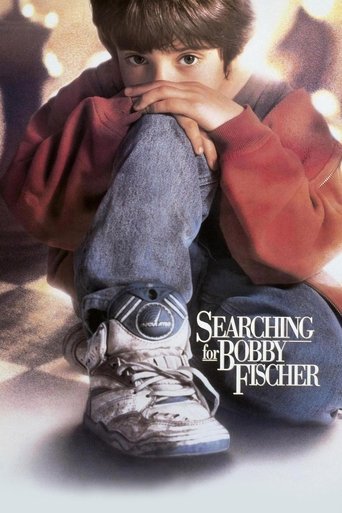
Searching for Bobby Fischer
1993 · Film · 110 min
Directed by Steven Zaillian
A seven-year-old chess prodigy refuses to harden himself in order to become a champion like the famous but unlikable Bobby Fischer.
1 positive5 neutralfrom 6 commenters
Where to watch
No streaming data for this title.




6 comments on Hacker News
He gave up chess because he couldn't make grandmaster. The original book written with his father, "searching for Bobby Fischer" is much better I think. It's not the same as the movie, which is mostly imaginary.
For those who might be unaware, the movie "Searching for Bobby Fischer" is about Josh Waitzkin.
This reminds me of a concept I've read about in different sources regarding learning; the art of 'deliberate practice', something akin to maintaining a flow / staying in a goldilocks zone while incrementally increasing the difficulty level.
Just recently I listened to a podcast with Josh Waitzkin (learning expert, chess prodigy and subject of the film 'Searching for Bobby Fischer'), where he is now learning to surf with the aid of something called an eFoil:
"What’s been interesting is opposed to having two to four minutes of wave time a session surfing, I’ll have 54 minutes or so of wave time at faster speeds. What’s interesting is it also opens up the ability to do deliberate practice in surfing. Similar to investing, you have to be really creative in how you create deliberate practice in the surf world because the ocean is so unpredictable. It’s really difficult to replicate sections, to hit the same thing 10, 15, 20 times. In martial arts, you can just say, “I’m going to drill this thing 30 times today,” or 100 times or 200 times. Whether it’s a throw, or a technique, a submission. And then you can try that in training."
It seems to me as a web developer that our deliberate practice is the todo app, or whipping up a server, or integrating a new technology into a small project that can be completed in a day or 2, then repeating with nuance until it becomes automatic. The key seems to be to focus on a skill and then build, review, repeat - not many people learn to play a sport just by reading about it.
In fact, competitive chess requires adapting a very merciless mindset and swapping empathy for "killer instinct".
In one interview - with Peter Thiel, by the way - current WC Magnus Carlsen was asked about Josh Waitzkin. (Waitzkin is a fairly well known and highly talented chess player, whose biography inspired the movie "Searching for Bobby Fischer". He's left chess for martial arts since.)
Carlsen half-jokingly said Waitzkin hadn't succeeded in high level chess due to his insufficient killer instinct, which apparently made him settle for a "more peaceful" sport :) https://youtu.be/ZBnSU-LX1ss?t=1h2m
Or to quote former world champion Karpov, "Botvinnik, Korchnoi and Kasparov had to hate the opponent to play successfully" (Botvinnik and Kasparov = other WCs, Korchnoi was a close contender for the title).
Is that something we should be encouraging the youth to be good at? ;)
Strongly recommend "Art of Learning" There is an interview with Waitkzkin (whose chess talents were chronicled in "Searching for Bobby Fischer" book and movie) in "Learning about Learning" http://www.sharpbrains.com/blog/2009/01/21/learning-about-learning-an-interview-with-joshua-waitzkin/ that gives you a good perspective of his ability to engage in self-debugging: I blogged about this in http://www.skmurphy.com/blog/2010/03/13/recurring-problems-have-both-technical-and-psychological-roots/
If anyone who read Four Hour Work Week came away feeling slightly dirty about Ferriss's route to success, I'd recommend reading "The Art of Learning" by Josh Waitzkin. Josh is the chess prodigy featured in the movie "Searching for Bobby Fischer" and later became a world champion in Tai Chi/Push Hands.
Where Ferriss finds ways to quickly exploit weaknesses in the system to win, Waitzkin wins by constantly analyzing _himself_ to find weaknesses and improving until he is truly the best at what he does.
Both books were good, and both strategies have their time and place, but "The Art of Learning" resonated with me a little more, and I suspect it might do the same with other folks here. It feels a little more "noble".
On a side note, I think "resourcefulness", the desirable trait in a startup founder, is probably a 50/50 split between the two: recognizing and exploiting weakness/opportunity, backed up by substance and hard work.