 Hacker Cinema
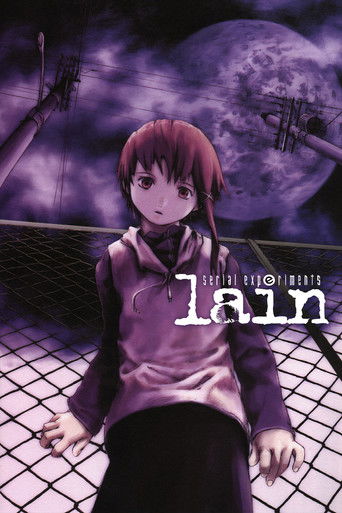
Serial Experiments Lain
serial experiments lain
1998 · TV series · 24 min episodes · 1 season
AnimationDramaScience FictionFantasyMystery
Lain—driven by the abrupt suicide of a classmate—logs on to the Wired and promptly loses herself in a twisted mass of hallucinations, memories, and interconnected-psyches.
12 positive2 mixed6 neutralfrom 20 commenters
Where to watch
No streaming data for this title.
20 comments on Hacker News
> The Wired can’t be allowed to interfere with the real world!
> No matter where you go, everyone’s connected.
https://youtu.be/24rPXmWWXek?si=QSn7ysb2OEm8OwzH
I know that HN culturally frowns on video links and unexplained references, so to be explicit:
The seeping of the internet into the real world is an important theme of the anime Serial Experiments Lain, which is excellent, and if you generally like anime and resonate with the kind of stuff that people are bringing up in this subthread, then I recommend giving it a watch.
I wonder if this motivates the recent interest in "cyberdecks", computers cobbled together out of bits and bobs designed to resemble futuristic computers cobbled together out of bits and bobs, replete with offset displays, displays with unusual aspect ratios, nonstandard ergonomics and form factors, etc. The design of these devices is definitely intended to inject style and pizzazz into a field largely dominated by gray rectangular slabs.
Upon reading (or rather, listening to) Neuromancer again, I get the feeling that the original "cyberspace deck" envisioned by Gibson was a plain, rectilinear device not at all like the greeble-encrusted gadgets you find on r/cyberdeck. It's very sparsely described, but we do know it has a built-in keyboard, "trodes" for the brain-computer interface to serve as a display, and with all this talk of "ROM constructs" and "slotting in" it accepts software via cartridge. In short—it probably resembled a 1980s home computer, like a TI-99/4A or an Atari 800XL. Gibson's technological world in his early cyberpunk works is very much informed by a cursory examination of the tech of the day, combined with a lot of imagination and guesswork.
Modern cyberdecks draw much more inspiration from all the cyberpunk stuff that emerged after Neuromancer: movies like Strange Days and The Matrix; video games like Cyberpunk 2077, Shin Megami Tensei, and even Wipeout; and anime like Ghost in the Shell or Serial Experiments Lain, all of which provide glimpses into a world in which technology might have evolved, visually and ergonomically, in a different direction from what it did. I find this sort of technofetishism fascinating for its role as a sort of roleplay of an imaginative alternate universe where modern-era tech was still cool and fun. A specific subgenre of this is the Amiga enthusiast community, where people soup up old Amiga hardware with modern, very expensive FPGA-based addons (the nearest a solo hobbyist can get to modern "custom chips") in an effort to show what computing might be like had Commodore not failed.
Spoilers for episode 1 of the anime Serial Experiments Lain:
This reminds me of Lain's friend sending her text messages after her self-inflicted demise via "the Wired" which is an in-universe stand-in for a future internet.
That series is recently celebrating its 25th anniversary [2023], and to celebrate, the production company created some kind of paid-access AI chatbot that lets you communicate with a voiced AI version of Lain, just like the company in OP...
https://www.youtube.com/watch?v=FaQLBae-3Yw
The best story telling in anime doesn't come from anything close to Ghibli - at least not modern Ghibli.
If you want high concept, good, unique stories, it's going to take you to some much more indie sutff. Serial Experiments Lain, The Tatami Galaxy, Perfect Blue (and everything that director made), Ghost in the Shell (the first movie), Akira, and a bunch of other weird 80s/90s anime films you likely wouldn't even consider.
There's been a few recommendations already for Serial Experiments Lain, but whilst I did enjoy it, for my money Texhnolyze by the same creator is absolutely incredible (and much less discussed). It's very slow going though, particularly at the start, but I still think about the last several episodes on an alarmingly regular basis (having watched it years ago).
I also recommend Now and Then, Here and There: a fish-out-of-water fantasy show in which the main character acts like a stereotypical comedy protagonist but the world he gets transported to is an absolute wasteland ravaged by war and environmental degradation. Unsurprisingly also not a light-hearted watch.
that's only a few elements away from a 'Serial Experiments: Lain' episode.
Edit: Movies, unsorted, from the top of my mind:
https://en.wikipedia.org/wiki/The_Limits_of_Control https://en.wikipedia.org/wiki/I_Origins https://en.wikipedia.org/wiki/The_East_(2013_film) https://en.wikipedia.org/wiki/Winter%27s_Bone https://en.wikipedia.org/wiki/Contagion_(2011_film) , seen before Covid, deemed to be realistic, and therefore better than stuff like https://en.wikipedia.org/wiki/The_Andromeda_Strain with https://en.wikipedia.org/wiki/Warning_Sign_(film) somewhere in between. https://en.wikipedia.org/wiki/Phase_IV_(1974_film) https://en.wikipedia.org/wiki/Wizards_(film) The remakes of the Planet of the Apes. https://en.wikipedia.org/wiki/28_Days_Later , https://en.wikipedia.org/wiki/28_Weeks_Later a little less so, though it had some great scenes of flying into London City Airport and the modern parts around that. Bladerunner in the original versions, the remake not so much. 2001: A Space Odyssey, the intro and first parts, spaceflight to the moon and such, the rest not. Too boring. I liked the sequel 2010: Odyssey Two better, actually. Avatar. Part one only. All of this https://en.wikipedia.org/wiki/Alien_(franchise) with the exception of the crossover stuff. https://en.wikipedia.org/wiki/Elysium_(film) for the almost cyberpunkish fuckedupness of it. https://en.wikipedia.org/wiki/Dracula_Untold https://en.wikipedia.org/wiki/The_Beach_(film) https://en.wikipedia.org/wiki/Harrison_Bergeron_(film) https://en.wikipedia.org/wiki/Idiocracy https://en.wikipedia.org/wiki/WALL-E https://en.wikipedia.org/wiki/The_Island_(2005_film) https://en.wikipedia.org/wiki/THX_1138 https://en.wikipedia.org/wiki/Logan%27s_Run_(film) https://en.wikipedia.org/wiki/Metropia_(film) https://en.wikipedia.org/wiki/Rollerball_(1975_film) https://en.wikipedia.org/wiki/Sleep_Dealer https://en.wikipedia.org/wiki/Southland_Tales https://en.wikipedia.org/wiki/They_Live https://en.wikipedia.org/wiki/Transcendence_(2014_film) https://en.wikipedia.org/wiki/V_for_Vendetta_(film) https://en.wikipedia.org/wiki/The_Puppet_Masters_(film) https://en.wikipedia.org/wiki/The_Survivalist_(2015_film) https://en.wikipedia.org/wiki/Supernova_(2000_film) https://en.wikipedia.org/wiki/Sunshine_(2007_film) https://en.wikipedia.org/wiki/The_Hidden_(1987_film) https://en.wikipedia.org/wiki/Patient_Zero_(film) https://en.wikipedia.org/wiki/Capricorn_One https://en.wikipedia.org/wiki/Hangar_18_(film) https://en.wikipedia.org/wiki/The_One_(2001_film) https://en.wikipedia.org/wiki/Timecop Ron Silverman Badass! https://en.wikipedia.org/wiki/Alternative_3 https://en.wikipedia.org/wiki/Lucy_(2014_film) https://en.wikipedia.org/wiki/Atomic_Blonde https://en.wikipedia.org/wiki/We_Are_the_Night_(film) https://en.wikipedia.org/wiki/Contact_(1997_American_film) https://en.wikipedia.org/wiki/The_Truman_Show https://en.wikipedia.org/wiki/Colombiana https://en.wikipedia.org/wiki/Knowing_(film) https://en.wikipedia.org/wiki/The_Dead_Zone_(film) https://en.wikipedia.org/wiki/Sphere_(1998_film) https://en.wikipedia.org/wiki/The_Adjustment_Bureau https://en.wikipedia.org/wiki/Arrival_(film) https://en.wikipedia.org/wiki/Lifeforce_(film) https://en.wikipedia.org/wiki/The_Fourth_Protocol_(film) https://en.wikipedia.org/wiki/The_Machine_(2013_film) https://en.wikipedia.org/wiki/Moon_(2009_film) https://en.wikipedia.org/wiki/The_Final_Countdown_(film) https://en.wikipedia.org/wiki/Firefox_(film) https://en.wikipedia.org/wiki/Paycheck_(film) https://en.wikipedia.org/wiki/Cypher_(film) https://en.wikipedia.org/wiki/Trigger_Point https://en.wikipedia.org/wiki/Echelon_Conspiracy https://en.wikipedia.org/wiki/The_Anderson_Tapes https://en.wikipedia.org/wiki/The_Parallax_View https://en.wikipedia.org/wiki/The_Last_Seduction
TV-Series: https://en.wikipedia.org/wiki/Survivors_(1975_TV_series) and the remake linked from there. https://en.wikipedia.org/wiki/The_Last_Train_(TV_series) https://en.wikipedia.org/wiki/Jericho_(2006_TV_series) https://en.wikipedia.org/wiki/The_Strain_(TV_series) https://en.wikipedia.org/wiki/Wayward_Pines https://en.wikipedia.org/wiki/Silo_(TV_series) https://en.wikipedia.org/wiki/Colony_(TV_series) https://en.wikipedia.org/wiki/For_All_Mankind_(TV_series) https://en.wikipedia.org/wiki/Yellowstone_(American_TV_series) and its prequel https://en.wikipedia.org/wiki/1883_(TV_series)
WESTWORLD!
https://en.wikipedia.org/wiki/Foundation_(TV_series) https://en.wikipedia.org/wiki/The_100_(TV_series) Praimfaya! Yeehaa! https://en.wikipedia.org/wiki/Counterpart_(TV_series) https://en.wikipedia.org/wiki/The_Ark_(TV_series) https://en.wikipedia.org/wiki/Altered_Carbon_(TV_series) All of Black Mirror! https://en.wikipedia.org/wiki/Serial_Experiments_Lain https://en.wikipedia.org/wiki/Travelers_(TV_series) https://en.wikipedia.org/wiki/Falling_Skies https://en.wikipedia.org/wiki/Devs_(TV_series) https://en.wikipedia.org/wiki/The_Peripheral_(TV_series) https://en.wikipedia.org/wiki/The_Expanse_(TV_series) https://en.wikipedia.org/wiki/Helix_(TV_series) https://en.wikipedia.org/wiki/Incorporated_(TV_series) https://en.wikipedia.org/wiki/Raised_by_Wolves_(American_TV_series) https://en.wikipedia.org/wiki/See_(TV_series) https://en.wikipedia.org/wiki/Tales_from_the_Loop https://en.wikipedia.org/wiki/Dark_(TV_series) https://en.wikipedia.org/wiki/Deutschland_83 and sequels. ÄXZÄLLÄNNT! JAWOLLJA! https://en.wikipedia.org/wiki/Humans_(TV_series) https://en.wikipedia.org/wiki/Into_the_Night_(TV_series) https://en.wikipedia.org/wiki/War_of_the_Worlds_(2019_TV_series) https://en.wikipedia.org/wiki/Terra_Nova_(TV_series) https://en.wikipedia.org/wiki/American_Gods_(TV_series) https://en.wikipedia.org/wiki/Ozark_(TV_series) https://en.wikipedia.org/wiki/The_Man_in_the_High_Castle_(TV_series) https://en.wikipedia.org/wiki/Ascension_(miniseries) https://en.wikipedia.org/wiki/Person_of_Interest_(TV_series) https://en.wikipedia.org/wiki/The_Event https://en.wikipedia.org/wiki/Origin_(TV_series) https://en.wikipedia.org/wiki/Pioneer_One https://en.wikipedia.org/wiki/Revolution_(TV_series) https://en.wikipedia.org/wiki/Resurrection_(American_TV_series) https://en.wikipedia.org/wiki/Salvation_(TV_series) https://en.wikipedia.org/wiki/Under_the_Dome_(TV_series) https://en.wikipedia.org/wiki/V_(2009_TV_series) https://en.wikipedia.org/wiki/Caprica
This all began about 2006 with https://en.wikipedia.org/wiki/Battlestar_Galactica_(2004_TV_series) after having abstained from possessing a TV, or watching that by other means (with some exceptions for news and documentaries) since 1996, and mostly no cinema either.
That stuff rehooked me in a binge-watching session. Shit happens :-)
Do yoo vanna häff fries wiff thät?
/nerdsnipe off
There's an 8 year old Psycho Pass movie you can probably watch cold. If you like it, you'd enjoy the series. There's also a new Psycho Pass movie that came out in July (not sure if it is streaming yet).
It's not new at all, and you've probably already heard about it or seen it, but I'd be remiss if I didn't suggest Serial Experiments Lain for fans of SF anime.
> Like, _why_ is that kid throwing a massive meltdown? Has anyone helped them to work out their triggers? Is it something as simple as: overhead fluorescent lighting, or the area is too busy with sounds?
I don't have a diagnosis now, but was diagnosed with ADHD as a child (and I actually think I might have mild autism), but this question here made me consider something in a new light. I have extremely acute hearing, even now as a middle-aged adult. Something I find highly annoying is the buzzing sound that some transformers make, and primarily flyback transformers which were common in CRT televisions. I always used to have worse experiences as a child when I was forced to be in the room with a TV and strongly preferred rooms with no TVs in them. I managed to use computers, but was very picky about monitors because of this (I would only own Sony Trinitron because they didn't buzz where I could hear them). It was so impactful that I avoided television as a rule and basically didn't watch TV growing up, and while I now own a TV as an adult, I still don't watch TV shows and I avoid the room that it's in unless I have a specific reason to be there.
I think it would have helped immensely if I could have gotten away from that as a child, but at the time I didn't know that was one of the things bothering me. I ended up naturally avoiding it, anyway, which is why I spent so much time in the library. As a side note, similarly, I am very sensitive to out of spec ballasts on fluorescent lighting because it buzzes as well. And I can hear the buzzing of transformers sometimes on power lines (maybe this is why I always liked Serial Experiments Lain).
Adding my yea to the mix.
For one, anime enables storytelling on a level and scope that would ordinarily be too expensive for real film production for most stories told. As an aside I think we're about to see a whole new level of mind-bending "realism" afforded to lower budget productions with tools like UE4/5.
You could argue that "animation" in general does this, but the particular (myriad) stylization choices in Japanese animation carry a fairly unique appeal. I think this was borne of a long-existing cultural tradition of prolifically illustrative literature.
For my part I had family that liked DBZ and similar ilk. The over-the-top-ness blinded me to the appeal as it just felt blah to me. It wasn't until I encountered more serious, darker themes in GITS, SEL, and others that I really grew attracted to the artistic potential of the medium.
I personally feel that art, in whatever form, is validated by making the observer feel something. Even if it makes them feel disgusted, annoyed, inspired, becalmed, horrified, and so forth. Given this, I value anime (or storytelling in general) that knocks me over the head with the emotional intent of the storyteller. It's really hard to get right without being heavy-handed (thus diluting the effect).
Two amazing examples come to mind: "Grave of the Fireflies" and "Ghost Hound"
Grave of the Fireflies is semi-autobiographical and will mess you up for days afterwards. Kind of like Bjork's "Dancer in the Dark". Both do an excellent job of forcing you to take a perspective that most will (fortunately) never have to endure in real life.
Ghost Hound touches on frankly f'ed up themes that an adolescent is trying to cope with. It engages supernatural elements that honestly at times practically noped me out for the imagery and setting alone. Of course this is animated fiction but the way the viewer is pulled in to the story with the protagonist was so well done that you can forget the medium to a degree. Highly recommended.
(Don't read/watch anything about these before watching if you can avoid doing so. Best to come in unopinionated.)
On a side note, I found SEL polarization to be very telling. Some people absolutely hated Serial Experiments Lain, while others like me were drawn to the bizarre reality of the story. I think the fact that this medium can be so polarizing validates my claim that this is art.
Here's a HN thread from four months ago about Serial Experiments Lain[0].
I had it on my list of "must watch" anime for years but only got around to it last year. It comes off as purposely obscurant and parts of it haven't aged well but for anyone interested in cyberpunk anime it's essential.
I'd also recommend Ghost in the Shell (the movie and Stand Alone Complex) and the first season of Psycho pass along those lines.
[0]https://news.ycombinator.com/item?id=26863490
Serial Experiments Lain is everything wonderful about anime. It is violent, dark, scary. In summary: ADULT.
Anime tells stories in a visual format that for years and years you simply could not get anywhere else. Adult genre fiction was not well represented in American media. Even today, adult American cartoons are almost entirely "sitcom" format. They don't want to ever end, and they do not want to tell a story, they want to make more episodes.
Today, people are spoiled with their options for genre fiction. Cowboy Bebop blew my mind as a kid. Berserk was also one of my favorites. I did not think anything could be cooler than Vampire Hunter D. This was before Game of Thrones or The Expanse or any number of other amazing science-fiction or fantasy media we have today. Coming from a small town, it felt like a secret that nobody else knew about and I loved immersing myself in this grim, beautiful, foreign worlds[0].
A lot of anime has a lot of gross "fan service" that objectifies their female protagonists, and that is something I was never a fan of. It was something you tolerated because there wasn't anywhere else to go.
Lain is a great example of all of this. Where else are you going to get a gorgeously rendered cyberpunk-horror series?
0: Probably at a younger age than I should have been allowed to. Though honestly I don't see myself censoring everything from my kids. Part of the draw was the adult nature and feeling like I was getting away with something.
The ones that come to mind first are Akira, Serial Experiments Lain, Patlabor (particularly the first movie), and Paprika.
I agree with you. I've watched a lot of anime but the first Mamoru Oshii GITS movie is definitely a singularity. It doesn't even "feel" like anime.
The only other (comparable) anime that jumps to mind and something I can definitely recommend to you, is Serial Experiments Lain.
Another anime series that asks big questions is Serial Experiments Lain.
It's about a young girl who gets into computers and learns about a parallel world of networked communication called the Wired. The Wired is like VR/AR/internet/chat rooms all in one.
It's only 13 episodes, so it's not a huge time investment, but really interesting. It covers computer hackers, Vannevar Bush's Memex, and more. It's also a bit like a David Lynch story, as it has its own dream logic that doesn't always correspond to what you expect.
https://en.wikipedia.org/wiki/Serial_Experiments_Lain
I remember enjoying Serial Experiments Lain back in the day, good to hear it still holds up.
If you (or anyone else reading this) enjoy cyberpunk anime, I can recommend checking out the UK dub of Cyber City Oedo 808. Very different from Lain, but has a classic 90s anime feel, and has more of an adult-oriented tone without being unnecessarily graphic. The UK dub has a different soundtrack from the Japanese release, has only been released on VHS, but luckily all three episodes are easy to find on YouTube.
https://m.youtube.com/watch?v=dwBXPsetOHM
https://m.youtube.com/watch?v=vCSTGjmRHps
https://m.youtube.com/watch?v=-NRb_7W0Ffc
It's definitely a stylistic thing in Serial Experiments Lain. The transformer hums are evocative of Lain's power within the Wired, and the power lines are explicitly everywhere to illustrate how everyone is now connected. It's a great series, and relatively short at 13 episodes, highly recommended as a series to binge sometime.
I appreciate the article--I spent about a year as kind of hikikomori.
Nevertheless I feel the need to make some minor critiques...I feel the author makes a number of small errors in trying to prove their point. For example, the author says:
"The Hikikomori phenomenon is now finding a form of narrative legitimacy in cinema, manga and pop culture. It is creating its own iconography. The novel Welcome to NHK (acronym for Nihon Hikikomori Kyōkai or The Japanese Hikikomori Association) plays with the name of Japan national broadcasting giant (NHK) and a story of a conspiracy to create the Hikikomori. The novel became a manga series and a twenty-four episodes anime series. Since then Hikikomori characters multiplied in anime and manga: Rozen Maiden, Serial Experiments Lain, Tatami Galaxy, Anohana: The Flower We Saw That Day, to name a few."
Welcome to the NHK is a novel from 2002, and the anime came out in 2006 iirc, so "now finding a form of narrative legitimacy" is maybe a bit disingenuous...and Serial Experiments Lain, which is from 1998, predated it and to my mind more properly fits alongside other cyberpunk meditations on technology and identity (interestingly, though, there is an 2channel-styled imageboard that has adopted Lain as its mascot). Similarly, I don't think someone would watch Tatami Galaxy or AnoHana and come away from those thinking that the "dominant theme" is about hikikomori-ness. At least, I didn't. You could certainly contest these points, though--the author's method of speeding through points that, if more properly explored, might not fit so cleanly into the essay's thrust, just left a bad taste in my mouth. Just my 2c.
It just crossed my mind that the American writer Tao Lin makes a number of explicit references to this lifestyle in his work; he has an ebook called "Hikikomori", which I haven't read, and his novels almost always have the main character spending days or months not really talking to anyone, feeling depressed, and just "doing things" on the internet. He has a book coming out in the future called "Leave Society".
If anyone knows of other American authors who treat this topic, would be interested. I feel like it has certainly come up in literature, just not under this name.
Look up Serial Experiments Lain on Youtube. If I remember correctly, it uses the "Whisper" voice that they're referring to when it announces the episode name.
This one is nice but a bit short and sometimes slow
https://en.wikipedia.org/wiki/Serial_Experiments_Lain
"Serial Experiments Lain (シリアルエクスペリメンツレイン Shiriaru Ekusuperimentsu Rein?) is an avant-garde anime series directed by Ryutaro Nakamura, with character design by Yoshitoshi ABe, screenplay written by Chiaki J. Konaka, and produced by Yasuyuki Ueda for Triangle Staff. It was broadcast on TV Tokyo from July to September 1998. The series is influenced by themes such as reality, identity, and communication,[1] and it demonstrates them by using philosophy, computer history, cyberpunk literature, and conspiracy theory."