 Hacker Cinema
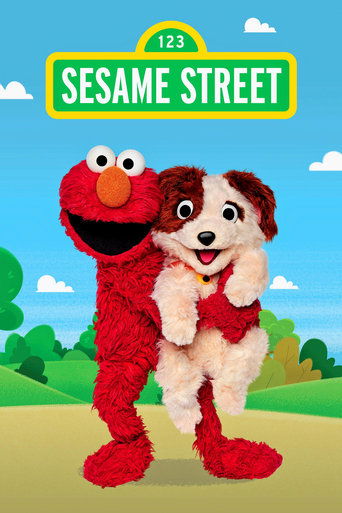
Sesame Street
1969 · TV series · 56 seasons
Created by Lloyd Morrisett, Joan Ganz Cooney, Jim Henson
On a special inner city street, the inhabitants—human and muppet—teach preschoolers basic educational and social concepts using comedy, cartoons, games, and songs.
20 positive11 negative5 mixed54 neutralfrom 90 commenters
Where to watch
No streaming data for this title.
103 comments on Hacker News
"In a fight, who would win, Pikachu or Spongebob Squarepants?
What is the best episode of Bluey?
What are the IRS' exact rules for claiming office space as a deduction on my tax return?
Where can I stream Sesame Street for free?"
Ah, ad dodging, the true 21st century gridiron.
I'm going to point this out as the hidden gem of the thread. I just gave etools.ch a test by feeding it a query I had repeated and refined on every other search engine many times over the past 20 years and never made headway, and it found it immediately.
So, now I have a nice video clip of "The Ballad of the S.S. Forgetful", which it turns out aired near the end of Sesame Street Episode 2130. :)
> I don't really worry. I watched TV basically my entire childhood growing up in the '80s, in the height of stranger danger where I largely was not allowed to go outside. It was a lot worse than this. I watched game shows, Hogans Heroes, Night Court. She's watching Ms. Rachel, Meekah, and Sesame Street.
For a long time our kid was only allowed to watch Mr. Rogers. That show is very gentle and slow paced (also: people, not brightly colored flashing cartoons), which I read somewhere is great for young kids.
Also, since I watched it as a kid, I kinda know what I'm getting. I don't really have the time to search for and vet TV shows. And I do not trust anything made for streaming economies, after reading about Cocomelon (https://www.nytimes.com/2022/05/05/arts/television/cocomelon-moonbug-entertainment.html) and seeing the stupid unimaginative wasteland that is Blippi (https://www.currentaffairs.org/news/2020/08/the-dead-world-of-blippi):
> In fact, the more I watch Blippi (and boy, have I watched Blippi), the more horrified I am by how thin and dull the Blippiverse is. Blippi does not seem to read books. He does not play make-believe, except to pretend he is doing the thing that the toy or playground object has been built for him to do with it. “Science” means dropping a piece of fruit in the pool and seeing if it floats. The interesting thing about an elephant is that it’s heavy. What about music? Art? History? Theater? The natural world? The wonders of outer space? Mr. Rogers had episodes about grandparents, about not wasting things, about being brave at the emergency room. On any given week he might introduce you to Yo-Yo Ma or Eric Carle of Very Hungry Caterpillar fame. Sesame Street met all the people in your neighborhood and talked about what they do and why it matters, rather than focusing on the trucks they drive.
I really wish someone had put in the effort to digitize the whole run of 321 Contact (all I've been able to find is a smattering of nth-generation re-encodes on YouTube).
Sesame Street is still putting out new episodes. Turns out the "learn to count" and "be nice to your neighbors" industry wields a lot more power than anyone thought.
Old skool "Sesame Street" was engineered to attract eyeballs, too. They had kids watch an episode and if their attention wandered, they changed the episode. It wasn't pablum, though, so I don't think one implies the other.
That "heavy hand" is precisely what makes things controversial or political. For instance Star Trek has pretty much always been 'woke.' My favorite series is Deep Space 9. The captain is black, the second in command (as well as the chief science officer) is a woman, the chief medical officer is Mideastern, and so on. And there were countless episodes that hit on all typical social justice themes, yet somehow these things were presented so 'naturally' that it all just felt very 'appropriate', for lack of a better term.
By contrast I was completely unable to watch things like Star Trek: Discovery (them choosing a title that would be acronymed as STD is already weird) because the identity politics were force fed so hard, to say nothing of 'Mary Sue'ism. It felt very unnatural and like a thinly veiled political rant. Back to PBS, Bert and Ernie - gay? I mean very possibly, if not likely. The creators say no, but they'd probably say no even if the answer was yes. And it's fine. It's introduced in a way that feels very natural, but when you suddenly start making such things overt, and one whose answer must be discussed and force-fed, it starts feeling much more like a political statement than just an inclusive context.
I'll certainly be letting my children watch old Sesame Street et al, but I think we'll be turning to things like Masha and the Bear for contemporary programming.
>The term goes back to the 1970s or the late 1960s, and was invented by the puppeteers on Sesame Street. It's documented.
Where, exactly, is this "documented?"
Perhaps my Google(well, DDG, actually)-Fu is deficient as I was unable to find any links to "analingus with a reach around" associated with Sesame Street. The only broadcast media references I could find were radio and movies references from the 2000-2010 period.
As such, please do let me know where to find this documentation. I'd really appreciate it. Thanks!
From Claude -> Notable Programs They Fund: Public television shows like Sesame Street, NOVA, PBS NewsHour, and Masterpiece, as well as NPR programming like Morning Edition and All Things Considered.
I like all of those. NPR: $300m budget / 42m listeners = $7.14/yr. Sounds like if I donate $5/mo to KQED and $5/mo to KCSM, I'm supporting them to cover myself and couple other citizens?
I don't get what I can do to support PBS - when I press donate on PBS site, it sort of wants to direct me to KQED/KCSM donations again.
Anyone here with a little more time to understand/explain it?
> In particular, their kids programming is the absolute best. Nothing flashy or exciting, but it's laser focused on education and has zero agenda.
I dunno, the Odd Squad has almost as much green screen as a Guardians of the Galaxy movie. If that's not flashy, I dunno. And Fetch! with Ruff Ruffman was pretty out there; a space ghost style host ordering kids around the streets of Boston.
Also, the reboot of CyberChase was pretty clearly on the Ag agenda, all about Organic this and that. Maybe that doesn't count as an Agenda because the department of agriculture was funding it.
Also, Sesame street has always been in the pocket of those letter and number sponsors.
Must see TV when I was little was Mr. Roger's Neighborhood and Sesame Street. As I grew and my interest in what makes the natural world work became more sophisticated, Nova was something I watched regularly. Every one of these programs was supported by the Corporation for Public Broadcasting. I am saddened by this loss.
I was going to call this anecdotal evidence based on it never appearing in the top 100 (or so) Nielson rated TV shows for a year, based on the lists for 1984-1995 here[0].
However, it looks like PBS never signed up for Nielson until 2009, so we have limited/no public data on viewership of The Joy of Painting (or Sesame Street, etc for that matter).
http://www.thetvratingsguide.com/2020/02/tvrg-ratings-history-update-20.html
> Outside of PBS
How much influence do you imagine PBS wields and how much money do you suppose is in these vast sums they are paid?
PBS is mostly known for Sesame Street and nature documentaries. Their government funding has been whittled down to almost nothing over years of relentless attack from the Republicans.
Here's some discussion from PBS itself on the topic:
https://www.pbs.org/newshour/show/a-look-at-the-history-of-public-media-in-the-u-s-as-republicans-target-federal-funding
A pull quote:
"The U.S. is almost literally off the chart for how little we allocate towards our public media. At the federal level, it comes out to a little over $1.50 per person per year. Compare that to the Brits, who spend roughly $100 per person per year for the BBC. Northern European countries spend well over $100 per person per year."
I have heard many stories of being a Sesame Street zombie once upon a time, so I doubt you were much more resistant to Mr Rogers gentle charms =).
There's a definitely a big gulf between the Mr Rogers / Daniel Tiger / Bluey energy and almost every other show. It's crazy now noticeable it is. Even modern Sesame Street is much more frenetic and lively than old episodes from the 80s and 90s. Which is not to say it's empty junk food like Cocomelon, it's just that those shows have raised the required addictiveness bar overall.
He was also Police Chief Thad Green in the Mathnet segments of Square One TV. He only appeared a few times, but was unmistakable when he did. He also participated in early test footage for what would become Sesame Street. Film footage of him reciting the alphabet, in trademark James Earl Jones diction, was one of the things they used to research young children's response to educational programming.
This is driving me oddly nuts:
> "I think there's an understanding that 'My twin isn't quite as capable of communicating in the way that they need to, so I'll help them with that,'" she says.
> That description fits Sam and John.
> When asked to name his favorite episode of Sesame Street, John blurts out a series of words: "Abby makes the seasons change." Sam understands immediately and quickly steps in to explain.
> "There's an episode with Abby Cadabby, Rosita and Zoe, where they dance around with the seasons changing," Sam says. "I think that's the one he's referring to."
I know that episode. It's actually called "Abby Makes Seasons Change", [1] so that "series of words" is the direct answer to the question. The point is probably true in general, but the example sucks.
[1] https://www.sesamestreetguide.com/2020/02/sesame-street-episode-4191-video.html
My plan for tv is to start with Season 1 of Sesame Street from the 1970s which is on HBO Max. Work up from there. But yah it’s going to be hard.
Sesame Street premiered when I was eleven years old, so I didn't ever watch any episodes. Me and my buds were outside kids and didn't have much time for TV. My children, however, loved it and I did too whenever I could watch it with them.
My grown children now all use streaming services, so their kids hardly ever see Sesame Street. How times change.
...And the new Sesame Street isn't the same. Older Sesame Street isn't available in the same episode format in high quality. The DVDs containing older Sesame Street have various clips.
Right, I meant to suggest there might be some "culture" bleed. Another commenter suggested it had more to do with key Pixar figures leaving for Disney, at which point Disney's own offerings improved and Pixar's suffered.
I'm not very good at articulating "feelings" so bear with me: Early Pixar movies (to me) are timeless, positive, almost fairy-tale like. They're centrist, middle-of-the-road films that don't offend or validate anyone, just faithfully follow the Hero's Journey as they try to resolve some issue in the ideal world where we're all in this together. Toy Story is the best example-- literally every single toy could not be more different, but the entire point of the movie is about all of them finding ways to leverage their differences to advance the journey for all of them, not exploiting their shortcomings to hold everyone else back. Finding Nemo, Monsters Inc, The Incredibles, all are the same pattern. Pixar's money printer used to be endless asset-swaps of "Diversity: The Movie" (the secret to Sesame Street as well), and it was a beautiful thing before the concept was perverted by the same children who grew up watching these movies.
I don't have kids' show equivalents to name from AppleTV, but I do get the same feeling ("Diversity: The Show") from their regular shows. Ted Lasso is the obvious frontrunner. For All Mankind, Invasion, Foundation (caveat: I was really high when I watched this one). All of these beautifully weave together the themes of diversity and unity into a shared journey.
Make your own.
There's PBS kids shows in spirit like Daniel Tiger, Tumble Leaf, Octonauts, Llama llama, Bluey, Puffin Rock, and many more.
I watch an episode first to make sure it is something educational and not too "entertaining". I'm personally in the camp that if something is too entertaining, you aren't learning much. i.e. Cocomelon, Sesame Street, etc.
Agree; it IS decades later right now. Thank you Sesame Street, thank you counter-culture alum that went on to dominate our media and children's programming (pun intended).
The diversity initiatives are misguided attempts by those raised to care about it to fast-track the process. Now they are adults and impatient to see more change that really only occurs generationally.
Not everyone came along for the ride though and they absolutely know what Sesame Street and friends did. Hence the attacks on PBS, schools, and etc.
People act like these are the worst times but great progress had been made.
Piers was on Real Time a few weeks back with his sky is falling schtick about free speech in the US. He is not dumb, but is he really not aware of how burning a flag would have gone over 60 years ago? A white man would have gotten his ass beat and a black man hung(maybe by the police in either case!). What about Elvis and rock-and-roll "smut"? Anyone remember X-rated films? We are relatively unbounded in 2022 lol.
A bonified Indian immigrant runs Microsoft.
I get it though. Was hoodwinked myself. Raised on Sesame Street and Fern Gully. Shocked that so many people were not on board with the social progress I took for granted. Parents who seemed progressive aged and now parrot Moon hoax and anti-vax talking points..
I'm impatient too. What can we change what can I do?! How can we see this promise fulfilled in my lifetime?!
Maybe we can't though. Bad policy is bad policy. Bottom-up has been the real progress. Starts with the children. Gay marriage? The children. People coming out; don't talk about my child/nephew/niece/sister/brother/friends child like that!
It's a journey like security and performance. You don't just "solve" security at a company; "Whelp we finished those tickets and now we have achieved security; our work here is done!".
MAGA? We are greater now than ever before. Ask a 70 year old black man from the south how great America was..
(Sorry for the double reply, but as it's on a separate subject, I think it will make for easier threading.)
I watched that witch episode (skipping through the non-story segments), and I'm not sure what to make of it. What an odd storyline.
Here's what I kept expecting to happen: the witch asks nicely for her broom back, the man says "well of course, since you asked so nicely", and they all live happily ever after.
In a way, that's exactly what happens, but in a bizarre fashion and minus the happily-ever-after part. The witch does ask nicely and the man does return her broom, but then the witch turns around and is like "aha, I tricked you" (through the power of appealing to his basic sense of decency?) and flies off—only to drop her broom again during the final moments of the episode. What?
One thing I appreciate about Sesame Street is that it generally doesn't talk down to kids too much, and perhaps this exchange is an example of that. Kids aren't stupid—they realize that not all misunderstandings are easy to resolve, or worth resolving.
But I still can't figure out what Sesame Street was hoping to teach here!
Oh cool, your first link answers my original question:
> As part of Sesame Street's 50th anniversary, it was announced that the Sesame Workshop would be donating almost 4,500 episodes across 49 seasons to be preserved by the American Archive of Public Broadcasting
The episodes are available to members of the public in-person at the Library of Congress or at WGBH Boston.
Yes, it would be much better if they could be streamed over the internet, but I'm really glad to learn they're publicly available in some form.
Do many adults watch old episodes of Sesame Street? I can't imagine the actual target demographic of Sesame Street caring that much (or even knowing) about whether there are a couple hundred episodes missing when there's still hundreds of episodes on there.
I can definitely see the appeal of watching those old episodes for nostalgia's sake, but presumably HBO weighed up viewership numbers on old vs new episodes and decided they weren't worth the licensing fees.
I wish there was an obvious solution for this kind of niche viewership stuff that isn't just "pirate it", because that's what I usually end up resorting to for older shows.
What streaming service is going to go through the effort of licensing every mildly popular 80s crime drama I want to check out after a wikipedia binge?
> Episode 0012
> Street Scenes — Mr. Hooper hands Js out to the kids
Early Sesame Street seems a lot more exciting
> And wow you weren’t wrong. Early seasons were producing a new episode nearly every weekday for half the year. 130+ episodes per year.
Though, if I remember Sesame Street correctly, those episodes heavily reused content between episodes (e.g. I probably saw this segment literally hundreds of times as a kid: https://www.youtube.com/watch?v=ZQ_MEFVx5jM), so that might be less work than it seems.
Sesame Street feels like a important piece of American culture. "Mr Rogers", too. Like, if there was a National Film Archive for TV... What preserves these shows, what guarantees access to these shows? The shows are of course also someone's private property. This action by HBO Max reduces them to nothing more than a means to extract marginal value from a market.
Sesame Workshop and HBO Max/WarnerMedia/Discovery+ could better serve the public and their markets by committing to metered access to the full library. Two episodes a day should be enough for anyone...
The age of downloading content to your device is largely dead mon frère!
It's sad, because things like the despecialized editions of certain "Disney" movies will never see large scale distribution.
The world of bit torrent + the world of copyright / residual payments doesn't seem to meld well.
If they made a player that was "legal" and any content you played would pay residuals back to the creator, they could just normalize views and make it fully "not for profit". Seeders would be purely altruistic. You would pay for the residuals you watched, and there would be no middle men making billions (NFLX making 1.5B per quarter).
Side note: Is sesame street highly pirated? Are you really looking forward to more seeders of sesame street? ... why???
> "Thousands of hours of historical Sesame Street" is exactly the type of content that streaming should be making economically viable for the first time.
Broadly, it does, but the countless historic episodes (of many things) are not sitting there as nicely encoded video files with cleared distribution rights.
Much work will not have been well-archived in the first place (if at all), nor catalogued well (if at all), and there will be performers and musicians and other contributors who may have various rights that need to be identified and negotiated before a legitimate streaming site can air it.
In all, it makes the per-item preparatory effort quite high and means that most old stuff will be left to volunteer, underground distribution for a very long time.
The Today, Explained podcast had an episode on Sesame Street a while ago, which got into how the show has been funded over the years and the compromises Children's Television Workshop has had to make. https://dcs.megaphone.fm/VMP1713252129.mp3
Apparently over 4500 episodes[1], some of which have gone missing[2]. This is what the Internet keeps telling me is the best source of information:
1. https://muppet.fandom.com/wiki/List_of_Sesame_Street_episodes
2. https://muppet.fandom.com/wiki/Lost_episodes_of_Sesame_Street
Someone, somewhere, probably has nearly every episode on slowly deteriorating VCR tape.
Why does it bother you? Part of the appeal of the streaming services is the long tail. That shows produced / funded by the service will remain indefinitely. That's become one of the expectations. When expectations are broken, people become unhappy.
In the case of Sesame Street, at least the missing episodes are available on Youtube. That mitigates things somewhat. But it's a shame the other shows were removed completely with no legal way to find them. I hope the resulting blowback is enough to keep streaming services from doing this again.
Sesame Street was developed by a 501c3 (Children’s Television Workshop renamed to Sesame Workshop) and sold to PBS. Episodes were licensed by a publicly funded organization, they weren’t produced by one.
I’m almost more disappointed to learn there were only 650 episodes available to begin with.
IIRC, Sesame Street has thousands of episodes. At some point when I was watching as a child, they would display the episode number on screen at the end of the intro song, and it was huge.
Where can someone access all of that cultural history?
You never watched Sesame Street did you? They've been explaining social issues to kids since the 1960's. Of course Mr. Rodger's first episode was explaining the Vietnam War. Kids shows are and have always been political if they're not pure fantasy (even then...)
"These days Sesame Street is paced and programmed to fit microscopic attention spans"
This was the first thing I noticed watching an old episode of Sesame Street back to back with a new episode. The pacing of the show was too fast. The camera kept cutting, the puppet jumped from location to location, there was no time to think. And educational shows need to give the audience time to think, otherwise it's just passive entertainment.
They are right. Shows are adjusting to capture the little attention spans we have left from the excess use of technology. My 4 y/o loves old episodes of Sesame Street, but the new ones are just visually busy and boring on topics.
I’ve noticed this with many more shows recently and personally don’t subscribe to it. I very much dislike how more shows include distracting visuals, sophomoric humor, and sexual innuendo as if it’s normal for younger kids. It’s not. Rewatching what I watched as a kid at these ages(Barney, Sesame Street, Gullah Gullah island) with my kids definitely shines a light on that.
So I’m very particular about what my daughter watches. She can only watch if she’s going to learn something. So I thought sesame street. My daughter likes the old stuff but not the new stuff. She loves the episodes about a number or letter.
But the new stuff she isn’t interested in.
But she loves Barney. And learns from it. In one episode they were learning about being kind and sharing. And we went to the park where she saw some kids arguing over toys. And she said “mummy those kids are not nice they are not sharing.” And she tries to share her toys now at school. (Tho there is often regret after sharing)
So far I think
Number blocks
Sesame Street (old stuff)
Barney
Are the best shows for kids to learn from.
I learned to read from sesame street. Old episodes featured a lot of letter stuff. The letter of the day would be mentioned several times and there would usually be skits and cartoon shorts. These are all gone from the 1/2hour episodes being made now, except for a prerecorded Letter of the Day song in every episode.
There's a TikTok creator who works at sesame street so I asked her about this. She said it's because they don't have time to do it and research shows that kids benefit more from the other stuff: socializing, conflict resolution, etc. Don't know if I agree, but I'm not research.
This article makes confident assertions one after another that are pure opinion and guesses masquerading as fact. He has no proof about how the show is formatted now vs then but makes assumptions left and right to justify his opinion. Luckily, if he hates how Sesame Street has tried adapting to modern tastes and ideas, he can always find the original episodes and show them to his kids instead.
If Kermit The Frog said it on an episode of Sesame Street, it would be reasonable. Maybe follow it up with "P is for Planet".
Sesame Street still includes their old sketches with corded phones. I'll bet other kids TV does too.
I've found the answer to pretty much every "how do they know that?" is "A TV show". Although now that the older one can read and is in-person school, the answer is increasingly "Books" or "Someone at school".
Ah gotcha, I didn't realize they were different shows. Did a little more digging, and here's the warning on Sesame Street: "These early Sesame Street episodes are intended for grownups and may not suit the needs of today's preschool child"
It sounds like it's about things that are no longer considered safe for kids, compared to the 60s:
>"We wouldn't have children on the set riding without a bicycle helmet," Rollins Westin says.
> And what's that little girl doing with that man?
> "In the very first episode, Gordon takes a little girl's hand who he's just met on the street, befriends her and takes her into his home to give her ice cream," Rollins Westin said. "That's something we wouldn't do on the show today."
Source: https://www.cbsnews.com/news/sesame-street-for-adults-only/
"These early ‘Sesame Street’ episodes are intended for grown-ups, and may not suit the needs of today’s preschool child.” Why? Cookie Monster carries a pipe in one recurring parody—and then eats it. Oscar the Grouch is too grouchy and mean. And in the first episode, a grown man—Gordon—asks a little girl to come home with him for milk and cookies… and she does! [1]
[1] https://consumerist.com/2007/11/19/early-sesame-street-dvds-have-adults-only-warnings/
I think it was aimed at adults who grew up on Howdy Doody and Mr. Rogers.
https://www.cbsnews.com/news/sesame-street-for-adults-only/
First season of Sesame Street got rated R. Back when Oscar was orange.
iCarly cuses in the reboot: https://comicbook.com/tv-shows/news/icarly-reboot-cursing-fans-react-new-episodes/
Sort of like Adult Swim it was meant for grown ups but the kids watch it too. Too young to get the jokes, the kids love it.
If I search for "Simpsons" in the TV app on my Apple TV 4K, the first option is "The Simpsons" TV show. I press that, I can then scroll through 32 seasons of the Simpsons and choose which episode I want to watch for $3.
If I search for "Sesame Street" in the TV app, the first option is "Sesame Street" TV show, which then leads to the HBO Max app from where I can watch all of the episodes.
If I search for the "The Office", the first option is the US series, which I can purchase for $3 each episode, and the second option is the UK series, which then leads me to HBO Max.
If I search for "Jaws", the first option is the first Jaws movie from 1975, which then opens up in HBO Max. Note that Apple does not ask me to purchase the Jaws movie, and instead offers to play it in HBO Max, since apparently HBO Max is currently streaming it.
According to IMDB, the top Bollywood Hindi movie of 2019 are these: https://www.imdb.com/list/ls025693373/
If I search for the top 3, I come up with nothing. The 4th, "Gully Boy" returns with an option to play on Amazon Prime.
Overall, I think as someone who was looking to watch something in the Hollywood/American universe, life is easier than it has ever been. There is probably room for improvement, especially in international titles, but I'm sure that is in the works.
There are kind of two questions in your comment so let me paraphrase and address them separately.
Why would the USGov want to support a show like Sesame Street, with its left-wing perspectives of collectivism/socialism/etc?
First, I would point out that while elements of "the government" are involved, this is not necessarily a government project per se that we are talking about. The Ford Foundation and Carnegie Corporation are private entities, but ones which exert a lot of influence including over the government in various ways.
In the specific example of Sesame Street, I think that espousing ostensibly left-wing viewpoints can still work to their advantage if it allows them to smuggle in other concepts which blunt any sort of revolutionary thinking. Hence, you had early season episodes which were about making peace with urban decay -- the cracks in your walls as imaginary friends, for example: https://www.youtube.com/watch?v=0y0ffj__R4g&feature=youtu.be
"Official opposition narrative": https://wikispooks.com/wiki/Official_opposition_narrative
Was Cooney a witting agent of the state/ruling-class or was she genuine but useful to them?
It's very difficult or impossible to tell really. Generally, the way things like the Congress of Cultural Freedom worked was by first filtering for artists with a particular voice or perspective, and then subtly promoting certain perspectives, themes, and techniques for them to use in their artwork. This allowed the application of a great deal of leverage over the cultural scene without going to people and explicitly saying "we want you to make art for the CIA" (although I'm sure there were also more than a few witting agents).
Terry Tao’s parents credit his early development with learning to read around age two. He learned to read from Sesame Street Season 9 - which happened to be when they were experimenting with an improved curriculum for “higher-order reading skills, such as verbal blending and letter sounds”.
Despite being publicly funded, these early seasons are now basically inaccessible to the public (except for curated clips). Why aren’t old seasons made freely available online? Instead they are locked up in the National Archives with strict access control.
If I knew how to peddle conspiracy theories this would be my favorite one: That "they" are suppressing Sesame Street Season 9 because it was making people too smart. Why are they keeping it under lock and key? Show us the tapes!!!
Also, HBO ruined sesame street. The pacing and noise is totally wrong for child comprehension. It used to be educational. Now it's just the same commercialized brain-scrambling bullshit as everything else "made for kids".
Newer Sesame Street episodes refer to social issues which were not on the forefront of the 70s, or wasn't deemed something kids should know about.
The South African Sesame Street now has an HIV-positive muppet, the US Sesame Street has an autistic muppet (Julia), Abby Cadabby was added ~10 years ago for better gender balance, and I feel in general newer Sesame Street does much more work in including hispanic immigrants/culture than older Sesame Street (might be bias).
Times change and Sesame Street needs to reflect that.
My guess is to keep the adults engaged. If an episode of Sesame Street has a cameo from a known actor or musical star, that's for the adults, not really the kids. (The Katy Perry/Elmo Stop and Go song is really catchy, for example.)
Sesame Street's big success came from convincing parents that they could virtuously and effortlessly teach their kids just by turning on the TV, so the parents could then take a nap or do something else.
The reality is it's probably the most inefficient teaching method ever devised. It takes what, about a 1000 hours of watching it to teach kids 26 letters and count to 10? I don't believe passive education is effective. Even in college, I didn't learn anything from lectures unless I took notes.
SS never progresses. Every episode starts over from the beginning. It's like Groundhog Day. There is no Sophomore SS: Long Division.
I learned the alphabet from singing the ABC song in school. Didn't take long.
I haven't watched Sesame Street for like thirty years, but my memory of it was that every episode had both new segments and best of segments.
I think more things would feel out of date than you'd think, though by now they probably do have enough evergreen segments to manage ~3 years of shows they would likely not cover the full range of desired topics.
Why do they still make Sesame Street episodes? There's 51 seasons of content, but the audience is realistically only going to spend a few years of their lives watching it. Kids these days should probably get a "best of" selection of episodes that aren't ridiculously out of date. Otherwise, most of it is evergreen.
I watched some of the new Sesame Street with my toddlers and it’s frankly just boring and cheap now. All the other characters have been sidelined for Elmo. The songs and themes are really repetitive too.
I mean I know it’s for infants, and it feels petty complaining, but the episodes from the 80s are like a million times better lol
>>IMO one of the big civil rights achievements was to get rid of that divide.
>This never happened.
Speaking as an American raised in the 1990s, the cultural programming of my childhood at least made progress in that direction. I was raised on popular TV shows like Sesame Street, Captain Planet, and Power Rangers, which showed people of all races coexisting in settings where race did not divide them. When the issue of racial prejudice did surface, it was clearly marked as a backwards and wrong-headed way of thinking.
These TV shows (and movies, books, etc.) were fiction, and did not change the reality of racial prejudice or de-facto segregated communities on the ground. However, they did set my and many childrens' expectations for how the world should be, and how people of different races should treat each other (i.e. as equals and as they would want to be treated). I see the then-mainstream prevalence of such messages, and absence of countervailing messages, as a tangible victory of the Civil Rights Movement.
I worry that today's mainstream cultural programming will have an opposite effect. Teaching children to focus on racial differences, and constantly drawing attention to race more generally, only teaches them to divide each other along racial lines. I believe a happy medium exists where concrete examples of racial prejudice get called out, but race is not otherwise constantly in focus.
Yep. ABC is less digitized and hides most full broadcast programs from the public (gotta be an employee for that). But https://www.abcnewsvsource.com/ is the Silverlight run site with everything. Someone should probably archive everything incase the Silverlight shutdown this year kills the site. Ripping it is mildly easy.
PBS/WGBH stores everything at https://americanarchive.org/ which for copyright reasons, some stuff can only be viewed at the LOC or WGBH. The physical only content includes a number of interesting items though like the few Mr. Rogers episodes not aired on Twitch, or around 2000 non-public but aired Sesame Street episodes.
I feel the same way. As a city kid, I always felt left out because almost everything in US culture is based on the big suburban 'American Dream' home or, less often, rural life. I remember only being able to relate with Sesame Street because, gasp, people lived in apartments and hung out on city blocks with other kids just like I did! Kids books were a mixed bag, but definitely had more city representation than TV or movies.
On a more practical and aesthetic level, drawing cobblestone streets, cozy neighborhood stores, hand carved sandstone facade apartment buildings, etc is a lot more glamourous than drawing tract suburban housing, so I can see the appeal of it aesthetically. Also from what I've read about some of these authors, they were city people as well, so they just drew what they knew. The migration of the middle class to the suburbs didn't happen until many of these authors were well retired, so if kids are reading the more classic books, they'll see a bit more city life than usual and almost exclusively NYC where so many budding creatives had access to NYC's incredible publishing industry.
Lastly, kids can't drive. So if you want a kid having an adventure where he meets various storekeeps, neighbors out running errands, friends, pet stores, schools, etc then a walkable city makes the most sense. Walkable areas are just more communal and neighborly than suburban life as well. Its more realistic if a kid goes on an adventure in a city than in the suburbs were the only practical way around is being driven around. Bikes, less so, when the nearest store is 5+ miles away and there's no bike lanes. I also imagine parents are more comfortable with books not encouraging little kids to ride bikes in the street. As a parent, my recollection is that a lot of the books exist in a weird nebulous middle ground unless they outright take place in NYC or London or Paris for narrative reasons. Kids can walk through a urban downtown area with stores and neighbors but also end up in big suburban houses on big suburban streets in the same book and without taking a bus or a cab between either. So its probably hard to really divide this into city vs suburban if we want to be fair about it. Authors will do whatever fits their narrative. The walkable city is appealing but so is the big home, so why not have both?
The article mentions this:
> AppleTV Plus plans to make the “Peanuts” specials free to stream for nonsubscribers during short windows around relevant holidays. But as with HBO allowing PBS to air “Sesame Street” episodes after a period in which they’re exclusive to HBO, Apple’s decision emphasizes the restriction, not the limited availability. It underscores that Americans now have different levels of access to some cultural touchstones, dividing kids whose parents can shell out for extra services from those who can’t.
The author's point is less that it is less accessible now and more that it is less shared now. Streaming has a plethora of benefits over broadcast television, but unity (in the sense of "broadly shared cultural moments") is not one.
If I remember correctly, babies learn to distinguish vowels from consonants from near birth when adults speak to them in that annoying high pitched "coochy coochy coo" dialect. After 6-12 months of life this starts to hold them back as they need to transition to hearing normal sounds and seeing the people mouthing them. The puppets with hinge-flap mouths, exaggerated and insanely high pitched accents in Sesame Street are ridiculous. I would strongly discourage letting your little ones watch this show.
Also Sesame Street is very New York. The rest of the world doesn't live like this. I recommend local kids TV shows with real humons performing. Some short cartoons are fun, many of them are terrible, but the sum total of TV is dose dependent. Turning it off straight after their favorite show might result in a little argument but you'll be pleasantly surprised when 5 minutes later you catch them doing something (anything) else. Usually something creative, social, and developing fine motor skills, if not simply running around outside. And subsequently you'll find them turning it off themselves.
You don't have to watch Peppa Pig. And if you do, you can (the first time through) curate episodes that are better (like the composting one) and just not repeat the really stupid ones.
Old school Sesame Street is a lot of fun for adults. The early Zelda games are great. Kiki, Ponyo, and Totoru are staples. I mean, like I said, this an incredible wealth of content from the past few decades; don't dwell on Peppa.
> I don’t have kids of my own yet, so I’m out of touch with how the show is being run these days, but if Elmo is the lead now, this definitely sounds like a step back in quality level.
There's a torrent of ancient Sesame Street episodes out there, I used to show them to my kid
Like others have pointed out they're still licensing from content creators to broadcast in the US.
This is why new Sesame Street episodes are now on HBO and not PBS
Impacts: American standup culture, the Apollo, Madison Square Garden, major sports town, U.S. Open, haute cuisine, hipster cuisine, disproportionately popular setting for American stories, Sesame Street, fashion, Brooklyn, hip hop, punk, architecture, historical sites, world class museums, ballet, opera, film festivals, The New York Times, the New Yorker, etc.
It's not hard to make a top twenty ranking of films set in NYC, regardless of what you pick in what order. Same for TV shows. How many cities get to say that?
But, yeah, other than that there is not much of a cultural impact.
I'm not making the case that it had the biggest or best cultural impact, but it's definitely important, even if you think it is a drag, which I guess you're allowed to think that, but it's subjective at best.
When I worked at Mashable, I got to meet Mr. Spinney in 2013. I was direct off a redeye and came straight from JFK to the office so I could meet him (it was a closed set and we were doing a collab with Sesame Street/Oscar the Grouch and Grumpy Cat, I was one of like 4 employees they let observe and I’m forever grateful for that opportunity). I cried like a a baby meeting him and thanking him for all he did for children all over the world.
As a kid, Sesame Street was extremely important to me. I loved it as much as I’ve ever loved anything and Big Bird was just so wonderful. The first movie I ever saw in the theater was Follow That Bird in 1985, and even at 2 years old, that experience left an indelible mark that influenced the rest of my life.
I think I loved Sesame Street and the muppets so much because it was a TV show and characters that felt like they understood what it was like to be a child. It educated without pandering and it encouraged creativity and learning.
Spinney said in interviews that he thought his success with Big Bird was because he never forgot what it was like to be a child. That came through with the work.
And Oscar, though not a character I loved as much as Big Bird, was always a favorite. He was mean and he liked nasty things, but he was always kind to children and his pets. It was proof all types of people can exist and be friends, even when they don’t have a lot in common.
The Museum of the Moving Image had a Jim Henson exhibit last year that was really fantastic - and seeing all the stuff from Sesame Street and beyond really made me grateful people like Henson and Spinney and Frank Oz and so many others existed.
Standards for what is socially considered appropriate for children has changed over time, at least in American society. For example, in one of the DVD re-releases of the late 1960s-early 1970s seasons of Sesame Street, a children's television program that airs on PBS, there is a disclaimer that says that these re-released episodes are intended for adults and not for children due to the changed social norms. And these changes have nothing to do with racism or cartoon violence; these changes have to do with other norms such as children talking to strangers.
This YouTube video has a segment of an interview that discusses this further:
https://www.youtube.com/watch?v=5Vow6p7uKVw
Adults don't need to watch TV, either. I think society at large undervalues appropriate use of TV for kids. Kids crave structure, repetition, and music. With proper restrictions, TV offers all of that without requiring adults to put on the same dog and pony show every day. While studies show it doesn't help with speech, it can help reinforce concepts they are learning in other mediums; animals, objects, movement, emotions. As an adult, there's so much collective culture from TV and movies I consumed as a teenager that come up when interacting with other people.
I already mentioned I would much prefer to purchase outright, but kids tend to get into very specific things and a lot of things available for streaming aren't sold on DVDs; discoverability and availability. Another problem with DVDs is that they're fragile and difficult for young kids to operate themselves--not to mention I don't have a DVD player. I've heard a lot of parents get very angry that expensive Disney DVDs got scratched or broken, whereas VHS was a lot more durable and straightforward for kids to operate themselves.
Kids, young adults, or even having more than a few people in a house it's hard to say, "You can't watch Sesame Street like you did yesterday because Game of Thrones is over."
> - Public television shows (PBS) stuff is so lovingly created and charming. You can really tell they had experts and creatives work side by side to craft positive stories. Even if it's not particularly exciting.
> - Colorful garbage. It's a lights and noise show, with huge focus on licensing. Cartoons of my era are particularly susceptible to this (Dragonball Z, Yu Gi Oh, Transformers, etc).
What PBS shows are you imagining? Clifford? Sesame Street? I never thought they were targeting the same demographics as the 'colorful garbage' like Yu-Gi-Oh (early elementary vs. late elementary/middle school). Also a lot of other popular shows (like Spongebob) seemed more like colorful garbage to me than things like Yu-Gi-Oh that you lumped in there.
And what about classics like Tom & Jerry, Roadrunner, etc.? There wasn't much particularly educational or colorful or really anything about them but man now I'm tempted to go watch them again.
Funny, as someone with the useless superpower of knowing an enormous number of TV Show themes, I could hear all sorts of riffs on such themes ranging from Magnum PI to Sesame Street.
Overall, IMO it wildly gyrates from the best I have ever heard all the way to the return of Microsoft's thematically lifeless Songsmith without warning...
https://en.wikipedia.org/wiki/Microsoft_Songsmith
new Sesame Street episodes are exclusive to HBO for six months[1], after which they become available on PBS.
I went with nine, based on Wikipedia. Not having kids, I don't know which is correct.
why should a child care if he/she is six months behind?
Because children have friends, and they talk to them, and no parent wants to have their kid be the one left out.
> If your kids want to watch new episodes of Sesame Street, you already have to pay an HBO tax (varies by geography).
You specified "new" so you're not wrong per se, but it's worth clarifying: new Sesame Street episodes are exclusive to HBO for six months[1], after which they become available on PBS.
I don't think this is a big deal. Sesame Street content isn't particularly timely, so why should a child care if he/she is six months behind? To be honest, I'm pretty surprised HBO agreed to it in the first place—it feels like they're getting the short end of the stick—although I of course don't know the financial details of the agreement.
[1] https://www.pbs.org/newshour/nation/sesame-street-will-now-premiere-hbo-fall
Side note - parents whose kids have Hulu also get to stream hundreds of episodes of old Sesame Street. I consider this format (streaming, rather than over-the-air HBO or PBS) an advantage, not a disadvantage.
There are no commercials, it can be started or paused on my kid's schedule, and the content is basically the same: there are still the same 26 letters in the alphabet, and The Count only uses 21 numbers, and the developmental subjects are largely the same for kids today as they were 10 or 20 years ago...no need to re-write the textbook each year. True, parents don't get to enjoy visits present-day celebrities, but on the other hand, they might prefer a bit of 90s nostalgia.
I agree that it would be far better if this streaming service were available to everyone for free just as broadcast TV is available.
I don't want to pay Amazon tax (additional $10 per month prime fees) to be able to use this service.
If your kids want to watch new episodes of Sesame Street, you already have to pay an HBO tax (varies by geography).
Since 2016, children whose parents can afford HBO get to watch current Sesame Street. Poor kids have to wait for nine months for sloppy seconds on their local PBS station.
Meanwhile, PBS and Sesame Workshop wonder why there are people who don't like how corporate "public" television has become.
PBS has new shows that seem pretty good, like Daniel Tiger's Neighborhood (cartoon spin-off of Mr. Rogers), Martha Speaks, Word Girl, Dinosaur Train. Others skew more toward the Nick Jr. school of shows, like Wild Krats, Curious George, etc.
Ironically it is kind of hard to find old school Sesame Street on PBS. It's not even really a PBS show anymore; its new episodes air first on HBO, which sends a shiver down my spine just to type.
We don't have cable, but basically never turn on the TV for the kids. All "TV time" for my kids starts with loading PBSKids.org or NickJr on the laptop. The content is all age-appropriate and the sites are navigable by a kid. (NickJr is way better in this regard.)
The only time my kids see YouTube is if I load up a specific video for them--then I close it. You're 100% right that it's not a safe place to let kids surf around.
I don't think kids watch sesame street anymore as they used to, at least from what I have seen with my kids, it is just another tv show among many others and not that influential.
The one I have here is from '69-'74, and note that it's still certified "U", it simply starts with a verbal notice that "these early Sesame Street episodes are intended for grownups and may not suit the needs of today's preschool child," so it's a pretty mild warning. Milder than I remembered actually.
I found an article talking about it. It's pretty mild stuff, but an interesting illustration of how what we consider appropriate changes in all kinds of small ways:
> What parent today would want their child to see kids running through a construction site or jumping on an old box spring? Scenes like the ones included on the new DVD would probably not make it into today's program now.
> "We wouldn't have children on the set riding without a bicycle helmet," Rollins Westin says.
> And what's that little girl doing with that man?
> "In the very first episode, Gordon takes a little girl's hand who he's just met on the street, befriends her and takes her into his home to give her ice cream," Rollins Westin said. "That's something we wouldn't do on the show today."
(From https://www.cbsnews.com/news/sesame-street-for-adults-only/ )
That's interesting, I had no idea. Nor can I possibly think of anything that might serve as an example of "adult" on Sesame Street. Though I watched it mostly in the early 90s so maybe some of the older stuff is what's at "fault" here? Perhaps some of the themes might seem inappropriate for children if you're living in a homogeneous, middle-class suburb or town as many episodes did deal with things that kids growing up in city like New York might encounter.
Why reinvent the wheel? There's lots of great, timeless kids content, like Sesame Street. There's tons of episodes spanning decades. The only problem to solve is getting it all in one conveniently accessed place.
Sounds suspiciously like a technique I saw on Sesame Street as a toddler. I'm 42 now and I still use it.
In the episode, Big Bird (I think) would say goodnight to each of his body parts...so "Goodnight toes, goodnight foot, goodnight leg, goodnight knees" and so on.
I think what ends up happening as you say goodnight to each body part, you subconsciously "relax" them, so to speak. And by the time you get to your upper torso...you're pretty much drowsy enough to nod off.
Thanks for the heads up on the movie. I didn't know it was out in theaters yet.
I grew up in the 90s watching PBS all the time. PBS was pure magic at that time with Ghostwriter, Carmen San Deigo, Sesame Street. Mr. Rogers was my favorite program overall. I always stopped to watch him. He just made you feel calm and collected.
I just recently watched an episode on YouTube and I ended up getting teary-eyed watching it. His simple little show was so impactful. So many great memories and morals I have learned from this show. So good.
I'm afraid to go to the movie. I feel I will be sobbing uncontrollably at the end.
Kids shows are pretty inane. Sesame Street (and Spongebob, if you can stand it) at least throw bones to the adult audience every now and then, but there's nothing in an episode of PJ Masks to keep me engaged.
That said, parents that unleash their kids on YouTube make about as much sense as encouraging them to go play in a dumpster. Its all fun and games until the obscenity surfaces and the feedback loop begins.
I never watched sesame street even thought it aired here. I watched Löwenzahn and a bit "Die Sendung mit der Maus" when I was young and I couldn't imagine who I would be today if I didn't watched this when I was young.
It's a bit sad (at least for me) to admit, but I think some programs helped shaped me into the person I'm today, for better or worse.
Today the TV hopefully hasn't got the impact on me that it used to have and I only watch selected programs and not the mainstream TV (I mean the broadcasted channels), but I guess series and movies are still a big part of my life that have a bigger impact on me than I would like to admit.
Anyway what I really wanted yo say is that I'm happy for content that tries to deliver good values and information without trying to manipulate.
Yeah, there are people who believe a lot of weird stuff. For instance, a small but significant group believes that fictional television shows are real, even ones with non-human characters (Sesame Street puppets, or cartoons, say).
Many actors have stories about meeting people who don't understand the difference between the actor and the character the actor plays. It happens all the time.
Nonetheless, we don't usually have "fact checkers" explaining to us that Kermit the Frog doesn't exist, nor do we generally have Facebook threatening a site because they've posted one of those popular "Kermit the Frog drinking tea" memes, and the "fact checkers" have pointed out that Kermit isn't a real frog, and that even real frogs generally don't drink tea.
What...?! This has nothing to do with monoculturalism or xenophobia. Probably not high work ethics either.
Here's a bit of US history to show how things have changed. The TV show "Sesame Street" started in the late 1960s as a way to provide pre-school education to low-income and disadvantaged families. See https://en.wikipedia.org/wiki/History_of_Sesame_Street .
One of the early clips is "Loaf of Bread, a container of milk, and a stick of butter" - https://www.youtube.com/watch?v=Im4GwUD1UY8 . In it, the mother sends her young daughter out, alone, to buy those three items from the local store.
That account takes place in New York in the 1970s, a diverse city with many immigrants. While fiction, it's meant to educate children about what they might be expected to do.
If you read books about children in NYC in the mid-1900s, you'll see that this was not uncommon. Kids, including young ones, would go on their own to Central Park, or the library, etc. Or on hot days just hop on an elevated line to enjoy the breeze.
Disney movies generally makes sense and have some logic rooted in the real world. Yes there are talking animals and magic but the stories ultimately relate to the human experience.
I think the problem with the crap the author finds is that – it is nonsensical. These videos addict kids by triggering their innate desire to seek out novel/scary situations and explore them. This instinct exists so kids learn about the real world around them, as quickly as possible. But when kids watch videos with no sense, no logic, and no relation to the real world, their brains learn and reinforce nonsense. It delays their development while reducing their attention for more wholesome – and more boring – exploration of the real world.
Kids' brains are amazingly plastic, they have amazing memories, and they ruminate sometimes for months on novel/strange concepts. Watching, say, Peppa the Pig eat her own father even once can have a profoundly negative effect on a young child.
Absolutely parents should not let YouTube babysit their children. But a child watching, say, Sesame Street, will tell you about how Oscar helped Elmo do such-and-such, or Grover had a bad day and Big Bird comforted him, and they'll apply that to their own life. A child watching Marvel character heads buried in sand will prattle on about random creatures' heads buried in things, and will fail to apply that lesson to anything in their real-life experience.
EDIT: Not to imply e.g. Disney is flawless – remember Dumbo's pink elephants?
Early episodes of Sesame Street now come with a warning: "These early Sesame Street episodes are intended for grownups and may not suit the needs of today's preschool child."[1]
This is episode 1.[2] This may terrify today's parents. Watch the first three minutes.
[1] http://www.cbsnews.com/news/sesame-street-for-adults-only/ [2] https://www.youtube.com/watch?v=zLEiZmPNguU
Sesame Street was created for two-year-olds
Nope. Watch some first season episodes (they're on Netflix) and even in the very first shows, where they clearly didn't know what they were doing yet and the characters were poorly defined and less funny, and it's clear that they were aiming for slightly older kids and to engage them intelligently. An obvious clue to this is to look at the age range of the children they had on the show, which was more clustered around the 4-5 year mark.
And I can see it with my boys. Elmo youtube videos taught my two-year-old the alphabet, his shapes, and counting to 10, which blows his daycare teachers away.
Sesame street (and the Electric Company) helped me with my early reading and numeric ability, long before Elmo showed up. You can watch classic episodes on Netflix and see that there was actually more of that stuff in the early years than there is today, with more elaborate animations and songs that made it easier for kids to remember.
I completely agree. I can not stand Elmo as a character. He lacks depth and is really annoying. However, observing my 1.5 year old niece when Elmo comes on, you can see why he is the popular Muppet. Kids love his annoying voice and silliness which is why Elmo will continue to be at the forefront of Sesame Street.
I saw the episode where they talked about Mr. Hooper's death. It was the saddest thing I had seen in a very long time. Very emotional and probably the most honest episode ever made.
I understood the documentary to say that Sesame Street noticed that their audience was getting younger. In response to this age shift they introduced Elmo; a character that resonated to this new growing demographic.
I dunno. I remember loving Sesame Street as a kid, but it never clicked with either of my children. Neither of them could stand to watch a whole episode. Elmo was briefly popular in our house, but only briefly. Kids mostly aren't stupid. And the smart ones in particular know when they're being pandered to.
The number of people who are quick to jump unquestioningly on this and say, "It was better before" are... well it bums me out.
Sesame Street's role in child development has changed radically as the general opinion on how TV should interact with kids has changed. These kids shows have been pushed down the age bracket, appealing to younger markets where demand is a lot greater for the content. Older kids shows? They exist in the spaces between cartoon network hot properties, and do a good job of confronting the complex issues kids will face from 4-12. The same is true of The Mr. Rogers->Daniel Tiger's Neighborhood. They're tuned for totally different age ranges and requirements.
I dunno how many of you are parents. I have a 15 month old daughter. A constant chime of the following information is reiterated by child care consulting, doctors, and developmental evaluators:
- Sensory experiences are more important than anything right now. - Emotional stability is more important than anything. - Disregard the advice about "no screen time." Screens shouldn't be a substitute for parenting, but kids can learn to use tablets startlingly early in life and interactive education is provably better than passive education. In some specific subjects, interactive solo play is superior even to parentally guided play.
Let's also not forget: This article is just false. The idea that no one ever corrects Elmo? Totally wrong. Elmo gets a lot of screen time, but over the last year we've seen a huge amount of investment in a lot of other characters. Cookie Monster, Abby's complexity, and most importantly a huge increase in the time humans spend on sesame street talking.
The idea that Seasme Street doesn't touch on tricky subjects is false. Just last week the PBS Kids app rotated the episode on "Minne Myna". It's a two-sided story. On the one hand, Big Bird makes a case to bird court that someone else can't steal his nest just because he left it. "Finders Keepers is a bad rule."
But it's also trying to talk to kids and say it is okay to be sad and that they SHOULD be sad if they lose their homes. The episode is delicately touching on the subject of home eviction. Someone who has never been evicted might not even notice, but anyone who has lost a home will immediately realize what Big Bird's singing about. Big Bird gets a happy ending, but the episode leaves reminding kids that many other birds didn't get their nests back and that it's okay to be sad.
I see so much of these kinds of articles. All I can do is despair as my generation begins to make the exact same mistake as our outrageous parents who had very similar things to say about childhood programming which we all wax nostalgically on now.
As a father I agree Elmo is essentially the never ending toddler who does too much on his own on Sesame street. He really does need someone a little more mature than him to help teach him lessons.
But having said that I've watched far too much Sesame street and yes Elmo usually gets more time than the rest but not always. The author paints a picture like Elmo always gets most of the time but the truth is he isn't played THAT much more than the others. Even in the hurricane episode that is cited in the article Big Bird was on screen longer than twice the time of any other monster.
So yes he needs to be downplayed a little bit but the article is over the top as well. In fact watching many of the episodes in the past 5 years and you'd think Abby was gunning for Elmo's spot; she gets quite a lot of screen time especially with fairy school.
I'd rather a million Elmo-centric Sesame Street episodes than even one episode of Barney or Caillou.
That said, every kid needs some old-school, Elmo-free Sesame Street and Mister Rogers. (No, "Daniel Tiger's Neighborhood" is not the same; it's insipid and dumb by comparison.)
Also, back in the day, Square One TV had a police-procedural parody called Mathnet that was still loads better than network TV's attempt at a mathematical-cop show for adults (Numb3rs).
It literally couldn't get any better for a kid than PBS in the 70s or 80s.
There is no substance on earth more addictive than Elmo is to a two year old.
In most television shows and movies what people are looking for is somebody that represents them - call it an "avatar" if you must. When kids watch Sesame Street they relate directly to Elmo.
He's younger, smaller, has an insatiable curiosity, and is in a permanent mode of questioning and discovery. He even has similar mannerisms to children - he laughs a lot, has lots of energy, and is frequently confused as to what's happening around him.
The reason the author doesn't like Elmo is because Elmo acts like a two year old. The reason two year olds love Elmo is because Elmo acts like a two year old.
Sesame Street was created for two-year-olds, not bitter Internet pundits.
Sesame Workshop gets more resources and episodes, PBS gets to stop paying for Sesame Street. I don't think it's all that bad. It's not like it's going off the air on PBS any time soon.
> In fact, those kids may even be too old by the time the episodes they would want to see get widely distributed.
I don't think kids around sesame street age care much about which particular episode they're watching. Probably not a lot of water cooler discussion the next day.
It's not just cord-cutting, however, this changes Sesame Street's relationship with PBS, and over-the-air broadcast service. The group Sesame Street needs to reach the most is not cord-cutters, it's people without an Internet connection. Low income and low literacy families are what Sesame Street was created to reach, that's why it's a show designed to appeal to both kids and adults. Certainly with a show like Sesame Street having the newest episodes is not necessarily critical (though they have done some good topical pieces in the past, the episode where a Hurricane hits Sesame Street comes to mind), so it's not a major issue in this case.
Needless to say I was happy to see that there would continue to be some relationship with PBS, and I can't emphasize enough how important I find over-the-air public programming (both TV and radio).
EDIT: To be clear, I do not necessarily think this is a bad deal. I think the STW produces great content and anything that helps them continue to produce quality non-commercial content is great. I just hope that content continues to be available for free on over-the-air broadcasts in the long term.
This is an interesting social class issue. 3 years ago, Mitt Romney said he wanted to defund PBS.
Today we see a show on public broadcast selling the exclusivity rights to HBO. Kids whose parents pay for HBO now get to see sesame street before the kids who cant afford it. In fact, those kids may even be too old by the time the episodes they would want to see get widely distributed.
Today's episode brought to you by the letters H B and O and PAYING viewers like you.
Especially noteworthy, given this:
>About two-thirds of children now watch “Sesame Street” on demand and do not tune in to PBS to watch the show.
Will the episodes be available for streaming anywhere other than HBO?
The news is not that they will have the exclusive rights for 9 months. After all, kids can watch the same episode over and over and not get tire of it. The important thing is this:
>The “Sesame Street” episodes now available on Amazon and Netflix will no longer be on those outlets because of the HBO deal.
>TV for kids just sucks these days.
You are clearly not watching excellent kids shows like Dinosaur Train, Sesame Street, or Word Girl. Of course, these are all PBS show... interesting. We don't get cable and only sometimes catch an episode of something else on Netflix, so maybe you're right, but PBS is still putting out top notch stuff.
Alright Apple, how in the hell are you going to get out of this one? You were awarded a trademark for "There's an app for that" ( http://mashable.com/2010/10/11/apple-trademark/ ). But, this is Sesame Street. However, Sesame Street will be selling this episode one day, in which case they will be making money off of a product with your trademark without compensating you. But if you force them to pull this skit, they would have to remove the whole episode (because otherwise it would be too short to show later), unless they replaced it with something or overdubbed with something else, which I'm sure they'd rather not do. But if you touch this at all, the public and media will be all over it. However, if you don't, then any other company can use Sesame Street as an example of fair use, if you claim it to be so, so... I believe that one of your lawyers is now having an aneurysm.
Lesson learned: Trademark your witty memorable lines from marketing material prior to or as soon as possible after release; if you don't, then don't trademark them at all, or you might risk the "Sesame Street Catch-22".
I experience this already with my six year old when he plays with the neighborhood kids. We have a TV, but we don't have cable, nor do we have bunny ears to get the local stations (not that we could get them in the future anyway). We don't bar them from watching TV (much like the friends and grandparents exception someone else mentioned), and we do all watch kids' movies at home once a week or so. The only bits of kids' culture that they know are Sesame Street (because of a few videos) and the various Pixar movies (Cars, Wall-E, etc).