 Hacker Cinema
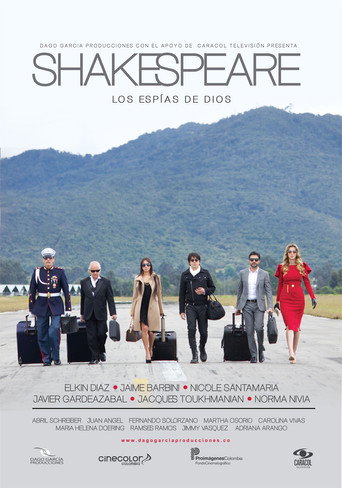
Shakespeare
2015 · Film · 80 min
Directed by Dago García
A man (Hamlet), a woman (Cleopatra), a young man (Romeo), a girl (Desdémona), a father (Lear) and a soldier (Macbeth) are the passenger of the 008 flight. They don’t know, but on land a conspiracy against them is being prepared. Inside the plane, an attempt of kidnapping, an electrical storm, the lose of destination and the need of one of them to jump into a vacuum; all of these take them to their limits. In the end, besides the man warnings, the characters end up with their inevitable destinies.
4 neutralfrom 4 commenters
Where to watch
No streaming data for this title.





4 comments on Hacker News
"The grammar of filmmaking has changed dramatically since then"
Yes, it has. But it's questionable if it's been for the better. A bad film from any era is just bad, but I'd contend that a well made one easily crosses the generations. Mention Casablanca for instance, I can honestly say I've never come across anyone who didn't enjoy it or say it's a bad film.
"Watching something from even the 1960s is super weird and kind of alienating."
One has to wonder what you actually like to watch. You likely didn't like Shakespeare at school because it too is dated.
Pity really, you'll have missed a lot.
_
Edit: I'm curious why you find say '60s films weird and alienating. (There's much to criticize but I've never heard that said before.)
That's one form of escape. But it's not necessarily meaningful to everyone. Many people have become jaded because all the beautiful sights have been turned into /r/EarthPorn posts or Netflix documentaries they've seen over and over.
As Orson Welles said, (paraphrased), "Now people only watch Shakespeare plays in order to hear the quotations."
Sure, many people still enjoy replicating existing postcard pictures and posting them to their Instagram/Facebook.
But those experiences are fairly limited compared to what's available if you look at VR's potential — meaningful shared experiences across unlimited varied universes and identities. To be fair, that argument could be made about gaming. But I think gaming and VR are on a pretty obvious collision course.
from the article
"The one other thing that people are really underestimating is the impact of entertainment-industry economics applied to education. Right now, with MOOCS,11 the production values are pretty low: You’ll film the professor in the classroom. But let’s just project forward. In ten years, what if we had Math 101 online, and what if it was well regarded and you got fully accredited and certified? What if we knew that we were going to have a million students per semester? And what if we knew that they were going to be paying $100 per student, right? What if we knew that we’d have $100 million of revenue from that course per semester? What production budget would we be willing to field in order to have that course?
You could hire James Cameron to do it.
You could literally hire James Cameron to make Math 101. Or how about, let’s study the wars of the Roman Empire by actually having a VR [virtual reality] experience walking around the battlefield, and then like flying above the battlefield. And actually the whole course is looking and saying, “Here’s all the maneuvering that took place.” Or how about re-creating original Shakespeare plays in the Globe Theatre?"
-------------------------------
So @pmarca why not fund James Cameron then?
That surprises me too. When I've heard that remark in the past, it's always been from someone I could dismiss as being a silly snob.
What's the core of the argument? Is it that fiction is not intellectual enough? What about Milton, Shakespeare, and the profound insights they offer into the way people think? Is it not more interesting (and even persuasive) in that form than as a straight essay? What about science fiction, and the thought experiments it offers regarding our social and political systems?
What about films? Does Mr. Fried also ignore films that tell fictitious stories, or are they acceptable due to the reduced time requirement?
Yeah, I don't know. But it's surprising.