 Hacker Cinema
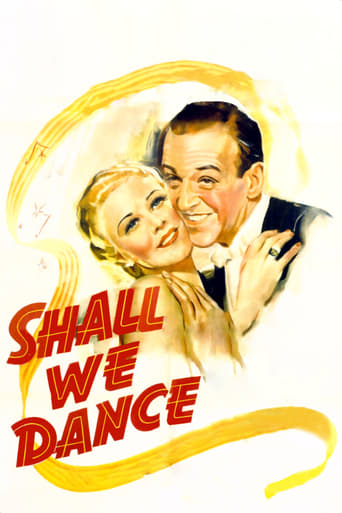
Shall We Dance
1937 · Film · 109 min
Directed by Mark Sandrich
Ballet star Petrov arranges to cross the Atlantic aboard the same ship as the dancer and musical star he's fallen for but barely knows. By the time the ocean liner reaches New York, a little white lie has churned through the rumour mill and turned into a hot gossip item—that the two celebrities are secretly married.
1 positive1 neutralfrom 2 commenters
Where to watch
No streaming data for this title.



2 comments on Hacker News
Great demo, but this is wrong:
"The phrase “potato, potahto” comes from a song titled “Let’s Call the Whole Thing Off”, written by George and Ira Gershwin for the 1937 film “Shall We Dance”, starring Fred Astaire and Ginger Rogers. The song humorously highlights regional differences in American English pronunciation. The lyrics go through a series of words with alternate pronunciations, like “tomato, tomahto” and “potato, potahto”. The idea is that, despite these differences, we should move past them, hence the line “let’s call the whole thing off”. Over time, the phrase has been adopted in everyday language to signify a minor disagreement or difference in opinion that isn’t worth arguing about."
It's comparing American and British pronunciations, not different regional American ones. Also, "let's call the whole thing off" suggests they should break up over their differences, with the bridge and later choruses then involving a change of heart ("let's call the calling off off").
Thanks for that! I count only about seventeen of those that I've seen, despite having seen old movies in the hundreds.
Funnily enough, my favourite old Hollywood genres are musicals and westerns.
I grew up only really being exposed to post 1960 movie musicals which I never really liked. About seven years ago I thought, "I've never really watched any old movie musicals", and just started watching them. It was a revelation to discover the (to me) amazing stuff from the 30s, 40s and 50s. My ideal movie musical was made in the 1930s, stars Fred Astaire, and has songs by the Gershwins, Cole Porter or Irving Berlin.
Some highlights for me would be:
42nd Street (1933) Not the first `backstage musical' but sets the template. One of the things I love about old movie musicals is that people don't randomly start singing and dancing: they sing and/or dance because they are singers or songwriters or dancers or choreographers creating or rehearsing or performing.
Gold Diggers of 1933 (1933) More Busby Berkeley.
Footlight Parade (1933) More Busby Berkeley. James Cagney stars.
On the Avenue (1937)
Shall we Dance (1937)
Lady be Good (1941)
You Were Never Lovelier (1942)
The Gang's All Here (1943)
Anchors Aweigh (1945)
The Pirate (1948) Don't listen to the naysayers, this film to me is pretty much perfect.
An American in Paris (1951) Contains the amazing sequence in which Oscar Levant is portrayed conducting, playing every instrument, and being the audience of Gershwin's Concerto in F for Piano and Orchestra (which I think is much better than the more famous Rhapsody in Blue).
The Band Wagon (1953)
Daddy Long Legs (1955)
High Society (1956)
Funny Face (1957)
Gypsy (1962)
And then a couple of years ago, I asked myself: which film genres have I never really watched? Westerns (and Horror, still haven't gone there) being my answer. Turns out I really love westerns.
Some favourites:
Destry Rides Again (1939)
Stagecoach (1939)
Fort Apache (1948) To me, this is the best of John Ford's `cavalry trilogy'
Red River (1948)
Winchester '73 (1950) My favourite of the Anthony Mann / James Stewart westerns.
Vera Cruz (1954) Action movies weren't invented in the 1980s.
The Man from Laramie (1955)
Seven Men from Now (1956) The best of the Budd Boetticher / Randolph Scott westerns.
Man of the West (1958)
The Horse Soldiers (1959)
Last Train from Gun Hill (1959)
Two Rode Together (1961)
The Man Who Shot Liberty Valance (1962)
El Dorado (1966) Rio Bravo gets all the love, but this is the more satisfying result for me.