 Hacker Cinema
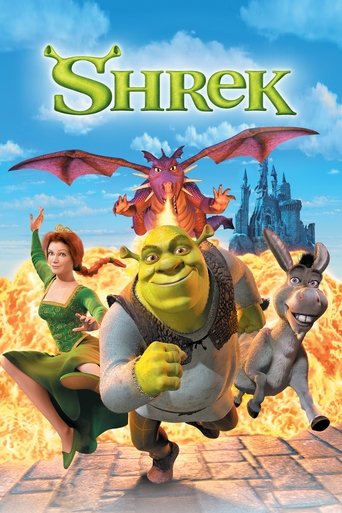
Shrek
2001 · Film · 90 min
Part of Shrek Collection
Directed by Andrew Adamson, Vicky Jenson
AnimationComedyFantasyAdventureFamily
It ain't easy bein' green -- especially if you're a likable (albeit smelly) ogre named Shrek. On a mission to retrieve a gorgeous princess from the clutches of a fire-breathing dragon, Shrek teams up with an unlikely compatriot -- a wisecracking donkey.
9 positive1 negative1 mixed75 neutralfrom 86 commenters
Where to watch
No streaming data for this title.
97 comments on Hacker News
>I don't think the lawsuit would've gone anywhere
That is not how copyright/trademark/contract laws treat similar works. Most LLM know about Disney Mickey Mouse, and LLM vector search space proximity results will gravitate more accurate reproductions of protected works regardless of granularity of data.
OpenAI simply canceled a popular service to avoid Disney wrath.
https://www.theglobeandmail.com/world/article-openai-sora-disney-chatgpt/
Also, trying to escape directly ripping off notable famous people with nonunion talent:
https://www.youtube.com/watch?v=YhgYMH6n004
I would say the "AI" firms will keep buying time with all that borrowed cash. Everything that could be scraped has already been stolen, and thus the problem should begin to self-correct. The Shrek movie release market correction history correlation is funny, and a new film is due 2027 in July. =3
Won't have to wait very long... as they are eating their own already.
https://www.youtube.com/watch?v=rE75WvOtcu8
The Shrek movie market correction correlation may be due again in July 2027. =3
Many are saying July 2027, as in the past these market corrections have correlated with Shrek movie releases.
Debt-backed investors have to pay up eventually. =3
Don't worry about it... I am more focused on the bizarre Shrek film timing phenomena, and pondering whether the pattern will hold again. =3
Patrick Boyle gives a summary of the situation, but not the underlying Shrek issue:
https://www.youtube.com/watch?v=nJtL9MBVj48
Given the price for a rack of bc-250 after the crypto hype cycle, the expected value of the hardware will be around 5% to 10% of the original retail price.
Without other market influences, that is a >90% expected discount when the over-provisioned market must inevitably self-correct.
If the Market follows what Samsung/SK Hynix did to the South Korean exchange this week, than the "AI" bubble will hit harder than the dot com crash.
I like the Shrek Movie correlation theory, as they always happen just before Debt-backed investors get hit hard... And the new film is due out in 2027. =3
"licensing usually cheapens the original creation by saturating a market with characters until readers are bored of seeing them" makes the most sense to me out of this. When I think of Shrek, I don't even think of the movies, I think of all the random stuff like Burger King that licensed it.
Also, now that I've read this, I'm kinda sad about the bootleg peeing Calvin truck decal.
Quantum field effects? You don't need these, IMHO, if you look at how highly parallel things seem to work in brains.
Marvin Minsky's theory of a "Society of Mind" describes a (highly) distributed model of the mind. Which BTW, always reminds me of the first Shrek movie, where the donkey jumps up and down, shouting "Take me! Take me!" to Shrek. That's similar to what I observe when I'm undecided but two instances of "sub-processes" (or agents as Minsky calls them) of my mind try to get attention.
Daniel Dennett similarly gives a distributed model of consciousness. Where many parallel "processes" are at work, competing and "observing" each other. And this parallelism is happening with a much, much higher degree than any of our computers parallelism.
The closest analogy is to a music producer sampling public domain audio. The composition will be protected by copyright but each individual sample will not.
Every single CGI rendered frame of Shrek is protected by copyright because it was human authored. It they used a diffuser to make Shrek 7, the individual frames would not be protected by copyright but their arrangement into a movie could be. That's a hugely different legal situation (for instance, if I chopped it up and made my own remix of it that would be protected).
This seems a great idea conceptually, but in practice, from mine one sample data, its ways to limiting and simple for a toddler.
My child just turned 3, she can already turn on the NVIDIA Shield, go into Jellyfin and put a movie playing.
The movie is always Shrek or Jungle Book though, so I still didn’t have to put parental restrictions. But she can already choose them from the favorites list.
Try watching the first Shrek movie to see how far we've progressed!
At minimum they have to incorporate new data every month or the models will fail to know how many Shrek movies there are and become increasingly wrong in a world that isn't static.
Why would anyone assume that these are frequently fraudulent, especially within a managed platform like Steam?
When Fandango at Home sells you the movie Shortbus is it more likely to be a fraudulent transaction than when they sell you Shrek?
Not a great example. The 5th (and most recent) Shrek movie has the highest RT of the franchise and is largely considered a masterpiece.
Not in the US... have you seen the first or second Shrek movie where a monster busts in on a Starbucks and all the scared customers run across the street to another Starbucks? Like a virus they're everywhere. Same thing for atm machines. Cash is doing just fine.
There was a thriving Chinese movie scene already, based in Hong Kong.
Hollywood needed several decades to break that. It was Shrek eventually.
Except American movies(and entertainment in general) haven't been good for about 10 years now, it's all slop based on established IP from 20-30 years ago.
When I was a kid growing up in the post communist 90-00s, we were going nearly weekly to the cinema to watch the latest American movies: Blade, Shrek, Toy Story, The Matrix trilogy, LotR trilogy, American Pie, Batman trilogy, Pirates of the Caribbean trilogy, Fast & Furious, X-Men, Spider-Man, Star Wars, Scary Movie, Rush Hour, etc
We couldn't get enough of US entertainment, while now everyone here avoids the new US releases like the plague since it's only cash grabs injected with $CURRENT_DAY identity politics, diversity box ticking based on focus group testing, resulting in sterile, predictable, zero-humor, zero-edge, zero-creativity slop that's not even worth pirating.
Americans have no idea how much soft power they lost worldwide by forcing their identity politics and ideologies in entertainment. Japanese anime and Koran movies and TV shows now run rings around the US entertainment industry.
Ah well pardon my ignorance then, thanks for filling me in -- I was afraid of something like that.
Shrek is long forgotten for me though I remember the web-based soundtrack player worked for quite a while longer than I expected after the movie website lost any real purpose. Many times it seemed scenes were written to tie in the popular music of the day, or maybe they just had a big licensing budget.
I have my watch list for movies, usually recommendations from friends, youtube channels, blogs, news and so on. The recommendation algorithms aren't fair with good movies that receive the same attention as bad movies. And, well, if I watch some sci-fi movies they think that I only like sci-fi and start recommending bad movies, when probably I would be more happy to just watch Shrek.
But something that I miss is just findings something at random. Lots of movies and bands that I like would never be recommended to me by those algorithms.
"Some of you may die, but it's a sacrifice I am willing to make." — Lord Farquaad, Shrek, https://www.imdb.com/title/tt0126029/characters/nm0001475?item=qt0398103
Great reference!
>Lord Farquaad's appearance [in the film Shrek] may be inspired by Michael Eisner, the then-CEO of The Walt Disney Company, owing to producer Jeffrey Katzenberg's animosity toward his former employer. Others had noticed a resemblance to Richard III of England. The name Farquaad is thought to be a way to get away with saying "fuckwad" in a family-friendly film. Farquaad happens to be similar to the surname of film animator Mark Farquhar. Some think Farquaad was based on the 7th US President, Andrew Jackson, as he forced a group from their land (Jackson signed the Indian Removal Act in 1830).
https://dreamworks.fandom.com/wiki/Lord_Farquaad
Shrek Retold https://www.youtube.com/watch?v=pM70TROZQsI is a similar fan-made reproduction, but it's way more polished. The movie is split into roughly 1min sections, with each one done by a different creator. The quality is all over the place, in a hilarious way. One minute it's produced by a professional animator nailing the scenes, then the next minute it's people goofing around in their backyard.
?? Shrek[0] option for GNU Poke[1] to highlight different onion layers ala pygments[2]/tree sitter[3] parse style ??
-----
[0] Shrek : https://www.dreamworks.com/movies/shrek
[1] GNU Poke : https://news.ycombinator.com/item?id=26274466
[2] Pygments, generic syntax highligher : https://news.ycombinator.com/item?id=41324901
[3] Treesitter : https://news.ycombinator.com/item?id=39408195
"Some of you may die, but that is a risk I am willing to take" - Lord Farquaad, Shrek (2001).
Fitting for a movie from a studio made out of spite for another future trillionaire empire.
You are straight up making incorrect assumptions
I doubt it.
about something I participated in first hand
Being in the room doesn't mean understanding every aspect of rendering and that is fine. Even people finishing shots don't need to worry about this stuff, it's not usually a big sticking point.
but you’re simply wrong
I'm not. Downvotes, name dropping and getting upset don't change math.
some people truly do not want a Gaussian
I'm sure that's true, but I'm saying that most people don't realize that by the time they widen a sharp filter with negative lobes to compensate, blur the image slightly somewhere or just have an image go through the whole pipeline, it just isn't gaining anything and it possibly introduces some aliasing. It doesn't mean people aren't out there doing it anyway.
You said yourself that people were fighting aliasing on shrek, although you haven't distinguished between edge aliasing, texture aliasing and shadow aliasing, which is a big red flag.
Historically and before 4K existed, resolutions were referred to vertically, from 240i to 480p to 720p to 1080p.
And before HD broadcast resolutions, 2k for film was something talked about all day every day.
I haven’t heard 2k much and it’s confusing next to 1080p
It wasn't confusing before 1080p (and 1080i), it was the standard and that was long before HD video. Where do you think the terms 4k and 8k come from?
Either way your blanket claim that resolution is referred to by the horizontal size is false.
This is just how it was and is in film. You're mixing in HD video resolutions which went in the other directions.
In any event, the whole point I was making was that even lower than 2k resolutions were still too sharp for film, so an extremely slight softening from the pixel filter doesn't matter. Exposure to 35mm film is WAY more softening.
I think you aren't absorbing this fact. 35mm film is soft, and whatever edge comes out of the renderer is essentially blurred again by going out to film. Because of this there is no way to just look at CG printed to film and just know what pixel filter was used, that information is long gone and pretending otherwise is a hallucination.
You haven’t corrected anything other than my dusty film processing terminology,
I corrected more than that and you keep getting caught up on resolution without acknowledging that there are different types of aliasing from different sources and that 35mm film means lots of detail is lost.
If someone was talking about running a marathon said "I like these sneakers, this shirt, these tires, these shorts.." you would start to think you aren't talking about the same thing and that they don't have perfect knowledge of a niche subject, which is fine.
Whoa what’s with the totally confrontational argumentative stance?!? I’m very confused by your reply. I thought we were having a nice conversation about filtering.
Lighters on Shrek were indeed not changing the pixel filter shot by shot. We did, however, multiple times, sit down to evaluate and compare various pixel filters built into the renderer, and when we did that, the pixel filter actually was changed for every shot, so they could be compared.
The filter mattered because it was set globally, and because the resolution was low, less than 1k pixels vertically. That is precisely why we spent time making sure we were using the filter we wanted.
I am in fact talking about different pixel filters, and the director and supes could tell the difference in short animated clips scanned to film, which is why it was so impressive to me. If you don’t believe me, I can only say that reflects on your experience and assumptions and not mine.
Both subtle high frequency sizzle as well as other symptoms of aliasing do occur when the pixel filter is slightly too sharp. I don’t know why you’re arguing that, but you seem to be making some bad assumptions.
Oh FWIW, the sessions I remember most vividly were for the first Shrek movie, which was printed to actual film, projected to a theater screen, and final render was at slightly lower than 1080p resolution. The digitizing to film does add a little blur, of course, but not a lot since the resolution was so low and the pixels so big. The filter did kinda matter, and the compositors did not add extra blur in this case. I was highly impressed with how sensitive the director and lighting/fx supes were to filter differences, and how quickly they could spot them in animated clips that were often less than one second long. The main thing they were doing was trying to avoid texture sizzle without overblurring.
From Wikipedia,
>Cale's version is used in the film Shrek (2001), but Rufus Wainwright's version appears on the soundtrack album.
https://en.wikipedia.org/wiki/Hallelujah_(Leonard_Cohen_song)
I definitely first heard John Cale’s version in Shrek.
Until today I thought it was Rufus Wainright’s version.
But for some reason the version in the film itself is Cale’s, and the version in the official soundtrack is Wainright’s!
> I don't think Harry Potter will stand the test of time that well. In the world of Harry Potter, there are no cell phones, no internet, no Google and no AI.
Books and stories that stand the test of time do so in spite of aging.
By that, I mean that $FOO is just so damn good that it captures the imagination completely and fully.
There were no television sets in Grimm fairy tales, and they're still being retold. There were no cellphones in Shrek, the last movie was made in 2019, and those ears are still recognisable to my child, born after 2019!
For books and stories to age well they don't need to be very relatable to the reader (although it helps), they need to be good!
A further argument is that, to be relatable, technology is not needed. There is not problem, right now, reading a book or a story written in 2024 that is set in (for example) 1960. Some very popular recent books/stories/movies/series were set in the 60s, 70s and 80s.
Being relatable is neither necessary nor sufficient to aging well.
I took Lion King to mean not to take your family for granted, and I'm fine with it. The other Disney prince/princess movies don't really have messages other than "you can have your cake and eat it too."
Like, whenever it's supposed to be about beauty being on the inside, the couple that ends up together is good-looking on the outside anyway. The writers for Shrek must've noticed this and done things differently.
There was this weird "meme" going around a few months ago about Dreamworks vs Disney that lined up extraordinarily hard with the release of "Ruby Gillman, Teenage Kraken" movie. (Release to theaters, I should say)
I can't say that I'm a distinguished memer, but I've consumed my fair number of memes. But a lot of this "meme" was about hating on Disney + talking about how Dreamworks movies were better.
--------
On the one hand: "memes" that sprung up organically about say, Shrek, have this raunchy quality to them that likely is toxic to advertising partners. (Gay sex, sex jokes, implied rape, etc. etc.). Meme culture is famously toxic, especially as it comes out of 4chan. So in a sense, the "raunchiness" is the proof that its likely not corporate.
But this "Teenage Kraken" meme was ... "tame" so to speak? A lot of "The Little Mermaid" hate, but nothing that matched my familiar memeing patterns. Sure, people hate on "The Little Mermaid" and had a ton of memes making fun of that movie, but... to see some memes pivot into what turned into a "Teenage Kraken" advertisement was so weird and offputting to me.
So I've always wondered if "Teenage Kraken vs Ariel" memes were Dreamworks guerilla marketing. Just me personally. Especially because "Teenage Kraken" wasn't a very popular movie, so its such a strange subject to "meme". Memes usually work the opposite way: the movie comes out and then months or years later, the memes take hold.
The timing was all wrong. The meme wasn't as raunchy or mean as normal memes. It lined up with (attempted) corporate profits to advertise a movie that was soon to be released in theaters. It was a relatively unpopular movie in the great scheme of things. Etc. etc. etc.
If I look at my (now old) DVD collection, I realise I've not watched them for... 10 years at least. There's only one movie that I get the urge to watch at least once a year, if not more, and for some unknown reason, it's Shrek. And I don't even own the DVD. I guess that one I should buy.
Yes, For a little while even it became a meme to compress all of shrek down to less then 8MiB using AV1 as that was the largest file you could host on discord without premium. It's not 'great' but considering many websites load more javascript then this entire 1.5 hour movie, It's impressive in it's own right.
https://www.reddit.com/r/AV1/comments/hb039t/8mib_shrek_is_back/
I liked the movie a lot. It felt like a fresh, original entry in the genre of comedy fantasy, next to beloved entries like The Princess Bride, Ladyhawk, A Knight's Tale, and Shrek. It was well-written and directed, even if some of the action sequences (e.g. the dragon cave) were a bit tropey.
They should have called it something else. There's clearly a market for fantasy, as has been seen with the popularity of Netflix's Witcher series (which treads very similar ground), but the Dungeons and Dragons brand has been thoroughly devalued over the years, and doesn't have the same kind of mass-market appeal.
There is a "8MB Shrek" meme in the AV1 Discord where users encode the entire Shrek 1 movie into a Discord attachment size as best as they can.
This would be kinda fun to do on Twitter... Just to add fuel to the fire. I wonder what codecs it accepts.
We play with tropes based on appearances within our culture.
Consider Shrek. The story is made to subvert the trope that the ugly person is the villain, as it was in Disney movies.
But the real point isn’t some Platonic view of Beauty. It is about expectations. Like how advertisers use people wearing lab coats to subliminally feed credibility into the words of actors.
You may wish to be free of such bias, and you may even work to raise your own awareness and strive to critically examine the message of people. And let us all work towards such a world. But we should not pretend such a world exists today, despite our desires. It is a world that may exist in the future once we mature as a species.
Until that day arrives, advertisers and political movements will use our biases against us.
My claim isn’t that yudkowski is ugly, it is that he represents a trope that is being used to bias his message.
If it was used in any of the Puss in Boots movies, then it was at least used in a Shrek spinoff...
Memes aside, this has actually never been used for a shrek film. The first film it was used for was How to Train Your Dragon 3.
That's a quote from Lord Farquad, the villain in the first Shrek film.
> where traditional school-based education becomes irrelevant, all-at-once
This is actually studied subject. Everyone needs general knowledge base before they even realise why they study at all. The whole point of university is to shape your thinking model.
Even your movie experience will be downgraded. If you don't know Western fairytales, you will find Shrek movie unfunny.
You are right. Also corporations don't care about "fairness" or people. My megacorp sees our AI has an upcoming "secret sauce"/"edge" for our platform. They have sued companies in the past just to stall them, while we work on competing features and I expect them to do the same again.
AI is going to be a major competitive edge for corporations, and lawfare between Winners and Losers will be intense. I say corporations because I don't think normal people will have the capital to train AI's or even run them.
The difference between midjourney and stable diffusion is great example to look at these days. Midjourney is making waves things like 80's movie shrek and skyrim.
Yup. Even if you only look within a relatively small category of films one per year can miss a bunch. For example, consider the category of animated feature length films released after 2000 in the US, and pick one per year by picking the winner of the Academy Award for Best Animated Feature.
In 2001 you'd miss Monsters, Inc. because of Shrek.
In 2002 you'd miss Lilo & Stitch because of Spirited Away.
In 2004 you'd miss Shrek 2 because of The Incredibles.
In 2005 you'd miss Howl's Moving Castle and Corpse Bride because of Wallace & Gromit: The Curse of the Were-Rabbit.
In 2008, no Kung Fu Panda because of WALL-E.
In 2009, no Coraline or Fantastic Mr. Fox because of Up.
In 2010 you'd miss How to Train Your Dragon because of Toy Story 3.
In 2011 no Kung Fu Panda 2 because of Rango.
In 2012 no Frankenweenie, ParaNorman, The Pirates! Band of Misfits, or Wreck-it Ralph because of Brave.
In 2014 no How to Train Your Dragon 2 because of Big Hero 6.
2015 no Shaun the Sheep Movie because of Inside Out.
2016 you miss Kubo and the Two Strings and Moana because of Zootopia.
2019 No How to Train Your Dragon: The Hidden World because of Toy Story 4.
2021 you'd miss Raya and the Last Dragon and Luca because of Encanto.
Most of the winners are good...but if you just put all the above mentioned films in a pool and asked most people to pick their top 14, most would have a lot of films on their list that were not among the winners of the aforementioned years.
So, interestingly IMDb has a pretty detailed parents guide. For example for Shrek: https://www.imdb.com/title/tt0126029/parentalguide
Oh they 100% do use a version control system.
Your standard "shot" will contain 10s or hundreds of versions of animation, lighting, texturing, modelling & lighting. Not to mentions compositing. They are often interdependent too.
A movie like shrek will have literal billions of versions of $things.
> Does anybody knows how that works?
This changes by company, but everyone tends to have an asset database. This is a thing that (should) give a UUID to each thing an artist is working on, and a unique location where it lives (that was/is an NFS file share, although covid might have changed that with WFH)
Where it differs from git et al is normally the folder tree is navigable by humans as well so the path for your "asset" will looks something like this:
/share/showname/shot_number/lighting/v33/
There are caveats, something like a model of a car, or anything else that gets re-used is put somewhere else in the "showname" folder.
Now, this is all very well, but how do artists(yes real non linux savvy artists) navigate and use this?
Thats where the "Pipeline" comes it. They will make use of the python API of the main programs that are used on the show. So when the coordinator assigns a shot to an artist, the artist presses a button saying "load shot" and the API will pull the correct paths, notify the coordination system (something like ftrack or shotgun) and open up the software they normally use (maya, zbrush, mari, nuke, etc etc) with the shot loaded.
Once the artist is happy, they'll hit publish.
The underlying system does the work of creating the new directory, copying the data and letting the rest of the artists know that there are new assets to be pulled into their scene as well.
Then there are backups. Again this is company dependent. Some places rely on hardware to figure it out. As in, they have a huge single isilon cluster, and they hook up the nearline and tape system to it and say: every hour sync changes to the nearline. every night, stream those to tape.
Others have wrapped /bin/rm to make sure that it just moves the directory, rather than actually deletes things.
Some companies have a massive nearline system that does a moving window type sync, so you have a 12 hourlys, 7 dailies and 1 monthly online at once. The rest is on tape. The bigger the company, the more often the fuckup, the better the backups are tested.
As a programmer I think that this is awesome. But... I'm also thinking that we may be missing opportunities.
For example, I prefer to see subtitled movies in their original language (I'm a Spanish native speaker). But there are some dubs that are awesome, even better than the original: for example, Shrek. I'm concerned that eventually studios may just throw the script through Google translate and call it a day.
Pinocchio was just fine in the Shrek movies, and I imagine Eisner wasn't happy that Universal of all people used him (as, only a few years prior, Universal poached a bunch of imagineers and made The Lost Continent, which copied a lot of elements of 'Beastly Kingdom', the original name for Animal Kingdom), so it must have took a lot of lawyers saying "this is a bad idea" when Eisner surely suggested they sue over using Pinocchio.
Good old Shrek. There was a large cardboard cutout of Shrek right outside of the entrance of the lighting department at the PDI [1] building in Redwood Shores. PDI animated the first version of Shrek after an attempted motion captured version by DreamWorks didn't meet expectations.
The cardboard Shrek was holding a bucket of cash and I would always laugh at the crassness of the image. Whenever times got tough at DreamWorks, it was time to for PDI to make another Shrek! Our punishment for making movies like Over the Hedge, Bee Movie or Monsters vs. Aliens was another Shrek movie to fill the coffers again. When the fourth installment of the Shrek franchise was announced, I remember Jeffrey Katzenberg stating "We decided that the Shrek story still has more to tell." What he really meant was that the bank account was empty, the stock price was low and Shrek could be counted on to bring in another decent box office result. Good times! How I miss PDI.
[1] https://en.wikipedia.org/wiki/Pacific_Data_Images
In addition to that, usually for animation movies they do the voices first and make the animation to match. For comedy headliners, one might be able to recognize the actor from animated facial expressions, timing etc.
I am in no position to judge if that is true for Shrek.
(BTW, the German word for fear is Schreck [not a perfect translation, but the same spirit], yet I never made the connection mentioned in the article. Cool!)
every time I read some in-depth article on shrek I have to laugh because I'm reminded of the quora post on the kid that memorized the entire movie
https://i.redd.it/ozcijbe1itt41.jpg
> How do you differentiate between these two things?
That's a contrived example because none of those lines could be protected by copyright, patents, etc. A better example might be if you started selling a 30 minute movie that was just the first 15 minutes of Toy Story spliced together with the last 15 minutes of Shrek. I'm not a lawyer, but I'm pretty sure that would qualify as a derivative work, meaning you're potentially infringing on someone's rights (unless they've given you permission/a license).
And to be clear, none of these problems are new. People have been fighting over copyright and it's philosophy in court for a very long time. The only thing that's different here is that it seems some people think it's ok to ignore copyright if you use Copilot as a proxy for the infringement.
> As an aside, your understanding of how the model works here is completely wrong. Like, just absolutely fundamentally completely wrong.
Of course I don't, it's a neural network. You don't know either. That example I posted could be exactly what it's doing, or not even close.
(although for the record, I wasn't trying to explain how copilot works in that comment. It was a hypothetical "AI" for the sake of discussion, not that it matters. My point about it being copyright infringement is the same even if that hypothetical implementation is wrong)
Wreck-it-Ralph kind of cheated, but... how many different styles of 3D animation did you see in that film alone? (Wreck-it-Ralph is sort of the "Who Framed Roger Rabbit" of this generation, so it makes sense. No one will say that Betty Boop has a similar drawing style to Woody Woodpecker, even if both are characters in "Who Framed Roger Rabbit")
------
Thanos (Avengers: Endgame), Shrek, Davy Jones (Pirates of the Caribbean), the Na'vi (Avatar), Spiderman (Into the Spiderverse), and the recreation of Princess Leia (Rogue One) are all 3d animation. Would you argue that they're the same style?
You are not allowed to create derivative works from another person's creation, regardless of whether you are making money from it. You can't go and make a Shrek III flick, for example, or write a book set in the Harry Potter universe. Likewise, you can't adapt music from a film (IANAL, there are things like fair use, but in general this holds).
https://www.copyright.gov/circs/circ14.pdf
It's amazing to compare this to animated movies before and after - it really paved the way for zanier, more off the wall humor in children's movies. I can't imagine Shrek being made without The Emperor's New Groove. Necessity breeds invention.
It's also amazing how many good principles you can learn from this process: the value of iterating often, working quickly but precisely, knowing when/how to pivot, etc.
The point is dreamworks animation was not a tech startup the way Quibi was.
Dreamworks had large Babe Ruth level swings and to some extent got very lucky with chance.
Mike Meyers was not the original voice of Shrek. It was Chris Farley, who played an entirely different character. Farley died and much of the film had to be redone. While Farley was a star, he wasn’t well and there’s no telling the movie would have been a hit like it was under Meyers. Without the early success of Shrek a moat would have been over-engineering.
Quibi looked like they thought it would operate under similar forces, runaway successful content made cheaply.
When in fact the medium of delivery and matching algorithms are more powerful than smash content. Worrying about and being good at the former is just not like what Dreamworks did.
Jeff Katzenberg, the co-founder, has been 'making content and selling to kids' for 40 years to the tune of literally Billions. Star Trek films, The Little Mermaid, The Lion King, Shrek, How to Train your Dragon etc. etc. - just huge, monster titles.
Whitman was the 'Business Person'.
That said, the content format is really quite different, and it's hard to predict how '5 minute bits' would work, and they spent possibly way too much money on it, it would have been better to 'start small', to find the format that works, and then spend a fortune - which is probably something that Meg should have understood given her background in the Valley.
So "Shrek" as "the Gulag" is real?
> "It was known as the Gulag,” one animator told author Nicole Laporte. “If you failed on ‘Prince of Egypt’ [a DreamWorks movie that later flopped], you were sent to the dungeons to work on ‘Shrek.’ ”
https://nypost.com/2010/05/16/ugly-green-montrous/
In the book analogy it's closer to transcribing an audio book.
In the film analogy, it's closer to Shrek Retold[1](ignoring parody).
[1] Shrek Retold https://www.youtube.com/watch?v=pM70TROZQsI
Prime and Crunchyroll have the same problem as Netflix: they don't own (much) of the content they offer. And are entirely at the mercy of the content hoarders like Disney and Warner Brothers.
Just checked. In Sweden the featured videos in Amazon Prime are: Shrek (2001), Red (2010), Twilight (2008), Top Gun (1986), Life of Pi (2012) etc. with a hodgepodge of Amazon's own content and recent-ish movies ranging from Madea's Farewell Tour to Amazon's Chemical Hearts to SCOOB!
Yeah, nah. I get the same crap with Netflix.
Jeferry Katzenberg is way way overrated.
I believed the shtick about him being behind Disney's animation success. I held Dreamworks Animation, admittedly the buyout was a fair price, but he got paid a ton of money for fairly mixed performance. Shrek, Kung Fu Panda definitely decent franchises but he piled the profit from these films into a ton of shit that didn't work (and his own pocket, somehow he is a billionaire).
But yeah, this had failure written all over it. I think the concept is basically fine...you don't know until you try it. But pouring a billion dollars into this was fucking lunacy (and the fact that Katzenberg invested too, shows that he is genuinely just not very good at his job). Like you prove the concept with far lower levels of capital...the issue was that the product was dogshit, not that you needed a billion dollars to make it work.
Isn’t there a gif of the entire first Shrek movie?
The kids movie Shrek was hate speech for making fun of the king being short? People were actually offended by that but you want the movie outlawed which is extreme.
That's great! I'll be sharing that site with my homestay family, who have kids aged 6 and 9. On Monday this week I asked the older one to read a Wikipedia list of Disney films and Dreamworks Animation movies and here's the list she made, which you can compare with the ones on your site:
Alice in Wonderland; Toy Story 3; Incredibles; Pinocchio; Lion King; The Tale of Despereaux; Winnie the Pooh; Maleficent; Cinderella; Frozen; Frozen II; Moana; The Santa Clause; Coco; Pirates of the Caribbean; The Princess and the Frog; Brave 2012; Beauty and the Beast; Born in China; The Boss Baby; Abominable; Trolls World Tour; Gift of the Night Fury; Shrek (all); The Grinch; Book of Dragons; Kung Fu Panda; Puss in Boots; Dawn of the Dragon Racers; Marooned ; Prince of Egypt; Peter Rabbit; Aladdin 1992; Aladdin 2019; Shark Tale; Wallace and Gromit; Chicken Run; Bee Movie; Turbo 2013; Home 2015; Captain Underpants; Tangled 2010; Harry Potter; Despicable Me; Despicable Me 2; Minions; The Secret Life of Pets; The Little Ghost; Waking Sleeping Beauty; Cleopatra in Space; My Neighbour Totoro
>> and Rufus Wainwright sings on the soundtrack for the animated film “Shrek”—that most people recognize.
And interestingly it's the John Cale version of Hallelujah used in the Shrek film :)
But due to licensing issues it was changed to Wainright's version on the soundtrack album! - https://en.wikipedia.org/wiki/List_of_songs_featured_in_Shrek#Background
Books, like movies, videogames and often software tools, aren't substitutable. If I like Photoshop, or want to use it because it's popular, I'm unlikely to accept GIMP as a free alternative. If I want to read or watch The Expanse, I'm 100% not going to read some random free e-book or dollar paperback, because that's a different book. You can't substitute Shrek for Star Wars, nor Slime Rancher for Call of Duty.
Commodities don't get pirated. Commodities get market competition.
Mirroring what the sibling comment said, studios often spend almost as much on advertising as they do production. I've often heard studios "borrowing" advertising budget to pay named actors for production.
Disney's old plan was to hire past their prime actors. Starting around the 90s when Robin Williams did well for Aladdin, they started courting celebrities who are parents and want to make movies their kids can watch. Also, voice work is considered "easy" (voice actors will fight that connotation). No odd call times, make up, wardrobe, or flying to locations and staying in a hotel (Shrek had Mike Myers record some last-minute dialog inside a limo).
This is a bummer. :-(.
I only had this happen a long time ago with a iTunes code-provided copy of Shrek. Every other movie I’ve purchased has worked across generations of devices and stuff since the first iPad. I’m curious if I’m just lucky?
I remember being shocked when I watched Shrek for the first time in English - all the jokes were different than how I remembered it(I watched it in Polish for the first time)! But well, thinking about it, that makes perfect sense - English jokes translated literally into Polish wouldn't have been anywhere near as funny - so the translators took a bit of a creative liberty and changed them to work with Polish audiences, even inserting some Polish pop-culture references where appropriate. And yeah, I remember it being incredibly funny and in comparison the English version is just....different(not to mention all the voices are just....wrong lol).
It brings up an interesting question though - do we care about the outcome(the film being funny) or about being "correct". After all, Polish translation of Shakespeare doesn't change the meaning just to be more relatable to Poles. But then again, books like Harry Potter had plenty of changes to work in Polish(like the Sphinx's riddle being completely different in Polish just so it would make any sense - I would argue that one was kind of necessary though).
Yeah. I avoid rating anything unless my feelings about the movie generally extend to the entire genre.
Like 'Shrek'? Enjoy recommendations for kids movies for the next 3 months.
Like 'Before Sunrise'? You're going to love The Tall Girl!
CG movies are created in 3D, they use 3D modeling software. There's nothing to "convert" to 3D unless they lose the original models and have to retrace them or something. Which apparently is a quite common occurrence, according to some articles on the 2D to 3D conversion of Toy Story and Shrek. So collateral damage from capitalism is the main explanation for old movies.
For new movies, where there is proper data, the 3D camera for each scene still requires more than "zero human labor"; you have to specify the inter-ocular distance, convergence plane, and tweak the scene a little for cinematic effect or 3D weirdness. And since there are thousands of shots, and the work is fairly tedious, it makes little sense to work on it in parallel with 2D during production when shots might just be cut entirely. So you end up with a bias towards 2D or 3D during the creation process.
Dreamsworks apparently has a made-for-3D animated movie division (https://animatedviews.com/2007/dreamworks-goes-3d/), where presumably they are flattened to 2D in post. Reviews of their movies (https://www.3dor2d.com/reviews/how-train-dragon-hidden-world-3d-3-d-movie-review) unsurprisingly say "great use of 3D". Since that's the goal of the division I'd expect them to continue doing 3D-first movies.
In contrast Pixar so far has stuck to a more 2D style. In this interview (https://www.youtube.com/watch?v=HepIGDJK98s) their stereo guy says they do 3D in post. The 3D in their movies is described as "well done but a minor aspect" (https://www.3dor2d.com/reviews/Toy-Story-4-3D-3-D-Movie-Review). In the interview the guy basically says that he could use more 3D but he's more concerned with keeping the director happy so he doesn't. Pixar is now focusing on originals so maybe one of their next films will be 3D oriented. But they're making tons of money anyway so who knows if the right director will come along.
The topic of grotesquely inappropriate kids videos on YouTube (aka "Elsagate" videos) comes up on HN and offline every so often. I've noticed that people's opinions on it tend to fall into one or two categories: they either get self-righteous about how their child doesn't have to see them because of their supreme parenting skills, or they start waxing philosophical about the limits of AI or importance of human curation in online communities or something like that.
What's missed in these discussions is the pure oddness of these videos. And I don't mean odd as in quirky and funny. I mean odd as in uncategorized - meaning that there's no conceivable way for some of these videos to emerge logically as a function of society. And the sheer effort put into them and endless variety seems to imply some sort of underground economy or industry behind them.
A lot of children's media is edgy and experimental in ways that adults deem inappropriate, and it's been that way for decades. Remember Ren and Stimpy? There's a lot in that that would make today's parents really uncomfortable. And nowadays, kids' movies (like Shrek) will usually have some inappropriate humor encoded in it to keep the adults happy. But it's all just entertainment and the themes are all familiar. You can kind of imagine how it played out. The writer of a kids' show had a slightly-edgier-than-usual idea for a gag and thought it would fly under the company's radar, and happened to be right that time.
Maybe I'm just naive about the state of video technology or the depravity of ordinary people, but I can't possibly imagine the type of mind that dreams this stuff up or the company that provides the resources and manpower for such a project. I get that they're done to farm clicks from 2-year-olds, but that doesn't explain the content of the videos. Stuff like Elsa becoming pregnant and receiving an abortion via Spiderman injecting her with a giant hypodermic needle, or Minnie Mouse blacking out after her friend spikes her cocktail with pills and waking up chained to a bed? The cruelty and inhumanity depicted in these videos using children's characters go way, way beyond the realm of goofy pranks and immature comedy. They indicate an intimate familiarity with the criminal world.
Exactly Cannes just became irrelevant IMO. I personally doubt any streaming service movie would win, but restricted rewards are meaningless. At the extreme, I can always offer an award that only I can win, but why would anyone care.
PS: Same thing IMO happened to the Emmys's when Shrek was prevented from winning 'best picture'. With one simple choice they became a joke.
The edit window has passed so I'll reply to my own comment with a nifty tidbit. The early days of animated films were particularly fun to watch as someone with a background in computer science, as it was a one upmanship competition between the major animation studios (Pixar and Dreamworks) on technology. Monster's Inc had hair. Shrek had a scene with physically-realistic caustic effects of poured milk (really, go watch it--there's an entirely gratuitous scene where a glass of milk is poured to show that they can. milk as a semi-translucent non-homogenous liquid is VERY hard to render as it turns out.) Finding Nemo had lots of water effects, etc.
The challenge of all of this was doing it using rasterization techniques, or integrating more realistic techniques using path tracing into a standard rasterization pipeline in a way that didn't kill performance. But now render farms a big enough and technology has advanced far enough that they can just path-trace everything.
> the longer ones (which includes all of the last few seasons) click in at 1 hour and 29 minutes, some of which are based on short stories, not novels.
What matters is how much content there is in the episode. People have gotten the idea from Peter Jackson's awful, awful Hobbit movies that pages of source material are a restriction on how much movie you can make. But the problem there was that the movies were terrible, not that The Hobbit was shorter than a three-book series. Shrek is a 90 minute movie based off of a children's book of just 1,150 words. Nobody ever complained about the quality of Shrek.
More IP movies like Bitmoji, and Fruit Ninja, more focus on little kids for the whole family sale and immunity from critical reception. After all, your kid doesn't see Shrek VII.V "The Shrekening" because it was rated 100% fresh.
DreamWorks Animation uses RHEL exclusively for production. That means all your favorite movies such as Kung Fu Panda, Madagascar, Shrek, How to Train Your Dragon were all made on Linux
Ninja edit to add high end software that runs on Linux that were used - Autodesk Maya, SideFX Houdini, Foundry {Mari,Nuke}, Pixologic ZBrush. This is in addition to the proprietary packages such as Premo (Animation) and Torch (Lighting)
These trends did not suddenly change from last year where a movie made twice the revenue. So, I don't think you can really blame trends. Not getting in the top 10 is completely reasonable for a given year, not getting 1/2 the revenue of 10th place is less so.
Every movie has some people that like it, but mass appeal takes more. Shrek I is rare, but this year had 15 significant misses and no big wins.
For additional seasons of their existing shows, they already have sunk costs for sets, props, and all that jazz. I don't know much about the economics of production, but I'm sure there's some sizable cost savings from leveraging those existing assets during subsequent seasons (same for movie sequels).
They've also been pumping out animated kids shows quite heavily. Those are almost certainly less expensive per hour than a lot of their blockbuster hits, and would easily allow for a 66% increase in content-hours with only a 20% budget increase. And, anecdotally, are the types of shows that keep subscriptions active long after parents stop actively watching things. Kids get attached to characters easily, can watch the same season repeat dozens and dozens of times, and benefit from consistency (i.e. not app hopping between Amazon Video, Netflix, Hulu, etc). And the value of Netflix during times like extended traveling and running errands is not to be underestimated.
My subscription would have gone long ago if my daughter weren't so attached to some of their Originals. They're really good at making spinoffs of popular movies (like the Puss in Boots spinoff from Shrek) and popular toys (like Ever After High, based on the Monster High dolls).
If you have seen Shrek or How to Train Your Dragon, you have seen some of the work the student produced after graduation.
See http://www.imdb.com/name/nm0996697/
Yes, there's quite a lot of it in fact. It's usually called "volumetric", as "voxel" tends to imply volumetric data that is represented by a regularly spaced 3D grid.
Volume rendering is an entire sub-field of computer graphics that deals with many representations of 3D data.
CG clouds are often volume rendered using continuous noise fields. CG haze and smoke are sometimes volume rendered using shape descriptions of the boundary, and 3D modulation functions.
Google "Volumetric siggraph" to find a ton of papers about other ways to do 3D volume rendering. Check the images tab for lots of examples of volume rendering.
*edit: btw I can tell you stories about volume rendering non-voxel data from CG production if you want. I used several non-voxel volumetric rendering techniques for fire, smoke and water on the Shrek and Madagascar movies.
A fun presentation I remember from siggraph was when Digital Domain presented their volume rendered they called "Voxel Bitch" and talked about rendering the avalanche sequence in the Vin Diesel "XXX" movie. IIRC, voxel bitch was a volume renderer, not limited to regular 3D voxel grids.
https://www.siggraph.org/conferences/reports/s2002/tech/filmprodtech.html
> I see Cars as a film that appeals to children primarily, while the others are "family" movies in the best sense.
They're not family movies, they're movies that parents want their kids to be interested in but the reality is kids prefer Cars, Frozen, Shrek and Minions.
10% seems high. From google: "Women Comprise 7% of Directors"
.93^87 = 0.0018
However, what's the ratio among films not just directors? (can't find)
How about women among top grossing films of all time? http://www.boxofficemojo.com/alltime/domestic.htm vs. http://www.thewrap.com/15-highest-grossing-movies-directed-by-women/13/ So: Frozen, Shrek, Twilight, Kung Fu Panda 2
.96^ 87 = 2.9%
Looking at the top grossing list for women you see a lot of chick flicks and kids films. Arguably that's bias, but not vs. the director.
Maybe and maybe not. Many cartoons' were made for an adult audience even if now they are watched by children. This is also seen in movies like Shrek. They have a two pronged approach at one level they are childish but at another they are adult-themed.
This one is not that different from Betty Boop. Many movies and cartoons had both childish and adult themes intermixed before the Hayes moral code kicked in.
I'm pretty sure Dreamworks was using something similar for hair simulation around the time of the original Shrek films.
The story is one more anecdote for a point adults need be keenly aware of: adults have (at least, we expect) a positive framework to establish negative experiences upon, while children faced with those negative experiences don't have such a positive framework - instead, the negative experiences become the framework, leading to long-term dysfunction. A key anecdote for this is the Shrek movies, overflowing with humorous satire - unaware that a good chunk of the audience doesn't know what's being satirized, and hence takes the stories as the foundation instead of the facade.
TL;DR - a child star of a Terry Gilliam film writes him, decades later, to describe the sheer terror she felt acting out the film and how that terror caused her social/emotional problems growing up; Gilliam responds in surprise/confusion/appreciation, lauding how solid an actor she was at age 9, and unaware of the effect it had on her.
I'm from the UK and loved my occasional childhood holidays in France or Portugal for a chance to buy Lucky Luke and Pink Panther comics. For some reason Asterix and Tintin were popular in the UK but other Franco-Belgian comics didn't take off. There were a few 70s prints of Lucky Luke and I have one translated 1970s Iznogoud but they went out of print quickly until Cinebook [0] started selling new translations about a decade ago, and the characters are much less well-known here than on the continent.
I think Gaston is still unavailable in English - I'm not such a fan of Spirou and Fantasio but I recently bought Cinebook's "The Marsupliami Thieves" as it was the only Franquin book available in English, sadly.
By the way, a recent HN thread on internationalization mentioned how few really well localized film translations there are and gave Shrek and Frozen as examples of good ones. The English translations of Asterix were brilliant and full of English-specific puns, presumably replacing original French puns (I have read some of them in French but my French is not really good enough for wordplay).
(edit: Although obviously the UK has its own tradition of kids-including-girls-friendly comics: Beano, Dandy, and many others. And for a modern equivalent I like the Phoenix comic [1]. But comic book shops here are mostly also very full of superhero comics and adult manga and not young-girl-friendly.)
[0] http://www.cinebook.co.uk [1] http://www.thephoenixcomic.co.uk/
All of this information comes from the teacher of a Spanish class I took (we watched the Latin American version of Shrek in the class). I wish I had some more tangible sources to cite.
EDIT: http://www.imdb.com/name/nm0220240/otherworks: "Jeffrey Katzenberg and Dreamworks allowed [Eugenio Derbez] not only to dub Donkey's voice, but to translate and adapt the script of "Shrek" and "Shrek 2" to make it more appealing to Latin America"
I also remember that the Gingerbread Man was one of the characters who was altered, but I don't remember the name of the Latin American replacement.
Nitpick: Shrek is a Dreamworks Animation movie.
Shrek version was better.
http://www.thx.com/consumer/movies/8286492
> Great films are often made from bad books
People never believe me when I bring up Shrek as an example of this.
One source of these "paper cuts" is that we live immersed in a highly sexual culture. "Booth babes" are provided for men to oggle at tech conferences, but the idealized female body is also used to sell beer, cars, and hamburgers to us on TV. Cleavage shots are common on highway billboards. "Dongle" jokes are on Family Guy, the Daily Show, HBO, CBS, NBC, and even PG movies (I remember a penis joke in "Shrek"). When guys make sexual comments, they are simply participating in the culture that they live in.
While tech has some attitudes that are undeniably sexist, comments that would happen in any industry are perceived as more threatening because the gender ratio is so out of whack. If females felt safer in tech, then they wouldn't notice as much the background noise of cultural hyper-sexuality.
It feels unfair or unreasonable to many men to check their American culture at the door in order to make females feel comfortable in tech, which is the source of the recent shitshow over PyCon. Most men are willing to fight blatantly sexist shit - the groping and nasty comments reported from tech conferences over the last few years. I am 100% on PyCon's side with the code of conduct and support resources for women.
But males in tech simply don't know how to have a conversation without "that's what she said". That's what they hear at night on "How I met your mother".
We have a sexually libertine culture. That is viewed as "progress" by some, including many feminists, but it is not without costs. And there is no easy way to silence it.
I think I agree with this. In my experience with my 4- and 5-year-olds, the concepts/images they retain are completely character/personality driven. E.g. they love individual characters, but the larger messages are completely lost. I don't think pop cultural references started appearing until the Shrek series, which included a bunch of funny, adult pop culture references. I think they did this for a really simple reason: to make it easier for parents to take kids to the movies, and still get some laughs. Throwing in pop culture references makes the parents laugh, but kids pay no attention--they love the animation, expressions, sounds, etc. And parents are more likely to sit through repeated viewings because of this.
My kids get their "bearings" from their Judeo/Christian upbringing, both at home and at school. That is their "culture", not the characters they see in Disney movies. Looking over the list of recent Disney movies, the themes I pick out are "individuality, loyalty, determination, perseverance." All of which are reflective of our culture, and all of which fly completely over the heads of small kids.
Cars and Cars 2 suffer from some of the same problems that Shrek 2 & 3 suffered from: creating a self-consistent universe based on adult puns based on characters of modern society.Unless it is done with restraint and real skill it soon behinds to feel insincere and contrived (see Sharks Tail, Chicken Run).
Toy Story & Shrek did something far cleverer. Shrek especially is smart, sophisticated humour for smart, sophisticated kids. The references are all from children's literature and culture. Kids know the references and are able to understand the clever puns.
Shreks 2&3 are dumb adult humour forced into the Shrek world. Many of the puns are above children's heads and are not sophisticated enough for the adult audience. Adding plot-lines about lawyers, unions etc just confuse small kids and leave adults slightly cringing.
Pixar and Dreamworks are at their best when they choose their target audience and focus on it. Toy Story & Nemo are for smart young kids; Ratatouille & The Incredibles are for smart older kids. Then enough is added for the rest of the family: everyone gets a clever joke every few minutes; the stories are understandable by all. Wall-E and Up are very adult in the big story (but full of great fun in the small story) I thought they were wonderful but I do understand your point (although they are I no way 'awful'—even if you are 5).
I'm not convinced that Pixar have mad a bad film yet. Cars grows on me the more I see it (and believe me if you have kids you end up seeing these films any times). Nemo (by far the funniest film Pixar have made) still makes me laugh despite having seen it 20+ times.
{I'm told that Cars 2 is relentless: too fast and too complicated for young kids, but as I haven't seen it I can't judge. The fact that I haven't seen it says something: I normally see every Pixar film the week it comes out.}
The problem that Pixar has had is that we have had to judge Pixar by Pixar standards as until recently no-one was making anything as good. This has now changed. Wonderfully for us Pixar now has serious competition. Dreamworks has made a number of films that are as good as Pixar's. Some of them are as good as Pixar's best: How to Train Your Dragon, Megamind, Kung Fu Panda. Walt Disney Animation Studios is back on form with Tangled (Monsters v Aliens wasn't bad either).
How to Train Your Dragon & Tangled are thankfully free of transfer-modern-society-into-cartoon-world puns. Instead you are given a detailed, self-consistent world that complements the story (rather than being the story). This is a very good thing—something I hope that Pixar will move back towards (although I don't hold out much hope for Monsters Inc 2).
I'm not telling anyone what kind of movies to produce. The Shrek movies made about a zillion dollars even though I didn't buy any tickets to see them. It was good business for them to ignore my preference.
Netflix arrived in Canada yesterday - but their selection is terrible.
The most entertaining thing about them is their suggestions:
Type in say "Sherlock Holmes" and it says - we don't have that but you might like "Miss Marple investigates", then underneath it says we don't have "Shrek" but you might like "cats and dogs - the rip off TV series".
So it somehow matches Sherlock with Shrek - then it actually suggests movies they don't stock - the whole thing is like the monty python (which they don't stock) cheese shop sketch
I think that the biggest difference between the two companies is that Dreamworks doesn't attempt to make lovable characters. Shrek in the original movie is an exception. They make identifiable characters, but rarely are their characters deep and human. Froo and I argued Kung Fu Panda versus Wall-E on IRC, if I recall correctly, and while I'm not nearly as knowledgeable about the animation world as he is, it's pretty hard to say that Jack Black in KFP is a more relatable character than Wall-E. Pixar makes people that you really feel like you know. Dreamworks is willing to make caricatures and as a result, their movies feel shallower from a story point of view. Even if Pixar follows a formula, it's a complex formula with deep permutations so that Mr. Incredible and Woody and Nemo's father and Wall-E are all very different people, even if the one recurring thread is that they all feel real to us.
This is actually the one problem I had with Annie Hall, which I saw recently for the first time: Woody Allen has a brilliant style, but the characters he made all seemed like caricatures, and so despite being a genius movie, I didn't love it. (I thought of this because back when I was a kid and there were two camps of children, the Ants kids and the Bug's Life kids, I was an Ants kid, thought Woody Allen in that was terrific, and thought the movie was stylistically and conceptually beyond Bug's Life, but going back to them I realize that Bug's Life, for all that, still has the more realistic characters, the ones that feel real, and so Ants's clever and detailed world falls apart at that one big seam.)
Seems like a serious concern would be protecting the kids in this virtual world, lord knows the other "Kid" playing the game may be a 30-year old creep in his mom's basement. (Of course I worry about this when I play WoW as an adult, lol!)
I'm sure you've thought about this in depth, but my first thought was, that if you could make it a game that a child could play WITH a parent, and both coud enjoy, then that would be something I would buy for my family!
Consider movies... everyone knows the highest grossing movies are the kids movies that ALSO appeal to parents, (Shrek, Bee Movie, Shrek II, Everything Pixar, anything with the word Shrek it in...)
...but the willingness to pay for it might. That's why we have sequel overload - rather than risk a new movie, they just copy one that people have always shown willingness to pay for (Shrek, Pirates, etc)