 Hacker Cinema
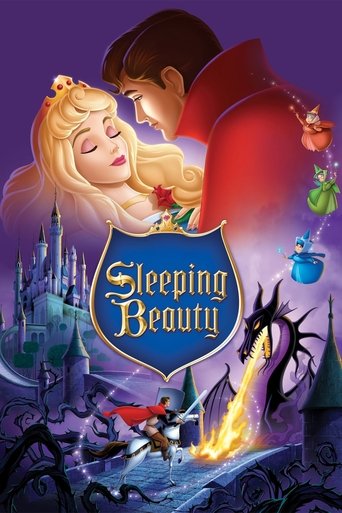
Sleeping Beauty
1959 · Film · 75 min
Directed by Clyde Geronimi
Cursed to die by the evil fairy Maleficent when she was a baby, Princess Aurora is sent into hiding under protection from three good fairies. As she grows up far away, Maleficent becomes increasingly determined to seal the princess's fate.
3 positive3 negative11 neutralfrom 17 commenters
Where to watch
No streaming data for this title.
21 comments on Hacker News
>What work of Disney (company, not the man per se...) is more influential on the modern American Psyche (today, in 2026) than Ironman, X-Men or Spiderman?
All of them. None of those MCU movies really did anything to the "american psyche", forgettable entertainment.
And even if they had done, the question was "in terms of how Americans see themselves and how people around the world sees us". Nobody sees Americans in in 2026 the way Stan Lee or MCU saw them. Not even themselves. How they have been seen in general wasn't determined in 2026 or 2020 or 2000, but in the 20th century. And even how they're seen and see themselves in 2026 is not defined by the MCU either.
Concerning the general view on US, Disney movies (especially including Pixar) have had much more influence. But I mentioned other even more important things: Hollywood in general (pre-MCU, from early film to John Ford, and to Copolla and Scorsese), the western and the idea of the west/'frontier', rock n' roll...
>Sleeping Beauty? That's French. Beauty and the Beast? Also French. Great Mouse Detective? British. Alice in Wonderland? British. Pinocchio? Italian.
In their Disney treatment they're 100% American.
What work of Disney is more influential on the modern American Psyche (today, in 2026) than Ironman, X-Men or Spiderman?
Moana? Sleeping Beauty? Mickey Mouse?
The only major "American identit" film I can think of was Princess and the Frog. Maybe Big Hero 6 (at least the San Francisco half).
I personally think that the lifetime of the author is a bit odd, since it reduces the rewards towards those who are old or infirm. I agree the length is way too long though.
Remember that Disney was a major factor in lobbying for the longer copyright terms, and their 1959 film Sleeping Beauty was made 80 years after Tchaikovsky's ballet (a major source for the Film's soundtrack).
If we thus take 79 years as our measuring stick (And I still think that's a bit too long) 18 more books from the list would be in the public domain.
Maybe if we take 25 as a typical beginning of career and 80 as a typical date of death for someone who lives to 25 we could settle on 55 years? That would leave only 13 items on the list as still under copyright, and I believe that includes all works by living authors too.
I noticed this when I watched "Raw" recently [0]. It was remarkable because it portrayed horny young students hazing each other and desiring each other and plenty of unselfconscious peer pressuring, which was itself depicted as covertly appreciated and desired by the girls, by way of a license to let go and have fun for a night (like how people often blame alcohol). I kept waiting for the turn or the emotional beat that called out these heinous, sexist, abusive behaviors, but it never came. I noticed something similar when watching Berlin Calling [1] where sex is used in several realistic ways, as both exciting transgression to expressing warmth, friendship and love. Raw is French; Berlin Calling German.
Americans still deal with a great deal of Puritanical shame around sex, I think, and as a very fat country (the fattest ever to exist) where huge numbers are on SSRIs (with sexual side-effects) plus a divisive political climate, you get Disney Marvel sexuality.
BTW if you think Disney doesn't do horny, think again. I mean, look at the "love story" in any classic animated picture. She looks at him, thinks he's hot, he looks at her, he thinks she's hot, and it's on. In at least two cases (Sleeping Beauty and Snow White) that's "love's first kiss" that's given non-consentually -- and his transgression literally saves her life. The older I get the more I realize that this naive notion of what love is actually is the core of truth; the rest of what we add is risk mitigation. In big budget American cinema, the surest way to eliminate risk is to do exactly what they've done. They aren't stupid.
0 - https://en.wikipedia.org/wiki/Raw_(film)
1 - https://en.wikipedia.org/wiki/Berlin_Calling
Sleeping Beauty actually looks really good: https://thismoviedoesnotexist.org/movie/sleeping-beauty
Edit:
Worst (best?) tone clash: https://thismoviedoesnotexist.org/movie/stalked-by-a-friend
Disney's Sleeping Beauty (1959) could not have been made until 1986[1] if the current rules were in effect (The ballet it was based on was from 1890, and copyright is 95 years).
That's my go-to example for why this entire "creators vs consumers" narrative is so bogus. Copyright today is no less of a lottery ticket than getting noticed by the Medici family was 100s of years ago.
1: In theory they could have licensed it, but I suspect a theoretical person in charge of maintaining the dignity of Tchaikovsky's works might have balked at giving Disney free reign to make a cartoon version and add lyrics for children to the instrumental music. Also, I don't think a ballet writer would feel particularly incentivized to know that someone would pay their estate to make a cartoon movie 60 years after they die.
I wouldn't say this applies as a rule. Both Snow White (Schneewittchen und die sieben Zwerge) and Sleeping Beauty (Dornröschen) kept their original titles in German. Cinderella is really the only exception which makes sense since it's more based on the Perrault version.
There's even a counter example. The 2010 film Tangled is called Rapunzel like the original fairy tale in German.
That's why Germans refuse to refer to Disney movies by the names of the original Grimm stories.
Disney/Hollywood version is always Cinderella, and German that closely adheres to the original is called Aschenputtel. The same goes for Snowwhite and Schneewitchen, Sleeping Beauty and Dornröschen.
I will say compared to Sleeping Beauty; it's at least watchable. SB was a triumph of the art department over any common sense. "Let's make a high modernist technicolor crazy angular art piece… about Sleeping Beauty." I can see how they talked themselves into it, but Walt should have talked them back out of it. That art style is fine for a short but can't hold a feature and conflicts with the goal of making a movie for children with resonant themes for adults.
Snow White and Sleeping Beauty are from an era of animation master pieces. The article describe the steps to make such films and how labor intensive it was. Hand drawn and hand painted, the difference in quality is remarkable compared to today's disposable computer-generated animation. In many ways, a lost art form, most likely there will never be another film produced in such a manner.
My favorite example of this hypocrisy is still that the Disney film sleeping beauty would have been illegal to make because Tchaikovsky's ballet would have still been under copyright had the rules that Disney themselves later lobbied for been in effect
> ...as people convince themselves digital theft is somehow not to be equated to physical theft.
Do you honestly thing the two are in any way equivalent? If I steal a physical item from you, you no longer have that item. If I download a copyrighted item that I never would have purchased, and you are entitled to royalties from then you lose nothing. If I download 100 items and I otherwise would have bought 5% of them, then you lose 5% of it.
Note also that libraries work similarly. I have checked out many hundreds of books out from the public library and read them. That also cost authors money, but we do not equate that to stealing. I have bought 100s of used CDs. I saved a lot of money and the record companies and artists collected no money for that either.
I also object to the concept that a creator has any moral right to monopolize their creations. There is no such moral right. The US provides for granting such a monopoly for a limited time in order to encourage people to create things. This has somehow morphed into the belief that someone creating something intangible has an indefinite monopoly on its use.
Such policy is actively harmful to the arts to the point of being detrimental to creators! Disney's Sleeping Beauty was a delightful film, if not a box office hit, but it would never had happened if the copyright laws (that Disney lobbied for!) we have today existed then, because Tchaikovsky's ballet would still have been under copyright.
If you think about it this came about through laziness and to lower budgets, same deal with great programmers, programmers shouldn't want to do repetitive lazy work but innovate it away. Tedious work becomes a pain on time and budgets, so you innovate to do it faster/better.
Animators didn't want to draw all the backgrounds slightly moving and this allowed re-use and new innovations to make movies faster. This allowed animators to focus on the character cels and making characters look better, the main focus.
The multiplane camera with movable layers for parallaxing directly led to some of the best early Disney movies (Snow White and the Seven Dwarfs, Pinocchio, Fantasia, Bambi, The Adventures of Ichabod and Mr. Toad, Cinderella, Alice in Wonderland, Peter Pan, Sleeping Beauty and The Jungle Book) and helped their budget as well as made them look better. Plus at the time, it was actually an improvement that animators welcomed to speed up their tedious work.
That was the predecessor not the multiplane aspect of it with moving layers, definitely inspired it. Lotte mostly just used it to swap out colored backgrounds on her silhouette cel style to adjust placement and color.
A predecessor to the multiplane camera was used by Lotte Reiniger for her animated feature The Adventures of Prince Achmed (1926). Berthold Bartosch, who worked with Reiniger, used a similar setup in his film L'Idee (1932).
Ub Iwerks invented the multiplane camera with movable layers to create parallax and zooming [1] which created immersive depth. It also saved on budgets, tedious background animation and allowed animators to focus more on the character cels, the star of the show.
The first multiplane camera, using movable layers of flat artwork before a horizontal camera, was invented by former Walt Disney Studios animator/director Ub Iwerks in 1933, using parts from an old Chevrolet automobile. His multiplane camera was used in a number of the Iwerks Studio's Willie Whopper and Comicolor cartoons of the mid-1930s.
Fleischer Studios (Popeye/Betty Boop) also made one or copied in 1934 [1]
The technicians at Fleischer Studios created a distantly related device, called the Stereoptical Camera or Setback, in 1934. Their apparatus used three-dimensional miniature sets built to the scale of the animation artwork. The animation cels were placed within the setup so that various objects could pass in front of and behind them, and the entire scene was shot using a horizontal camera. The Tabletop process was used to create distinctive results in Fleischer's Betty Boop, Popeye the Sailor, and Color Classics cartoons.
William Garrity took Ub Iwerks invention further and that iteration was used in many large successful movies they made [1]
The most famous multiplane camera was invented by William Garity for the Walt Disney Studios to be used in the production of Snow White and the Seven Dwarfs. The camera was completed in early 1937 and tested in a Silly Symphony called The Old Mill, which won the 1937 Academy Award for Animated Short Film. Disney's multiplane camera, which used up to seven layers of artwork (painted in oils on glass) shot under a vertical and moveable camera, allowed for more sophisticated uses than the Iwerks or Fleischer versions, and was used prominently in Disney films such as Pinocchio, Fantasia, Bambi, The Adventures of Ichabod and Mr. Toad, Cinderella, Alice in Wonderland, Peter Pan, Sleeping Beauty and The Jungle Book
[1] https://en.wikipedia.org/wiki/Multiplane_camera
I'm...not certain this is false.
When I was a kid, I watched Disney movies. I had this whole alternate "Disney" universe constructed in my head. Cinderalla, Aladdin, Peter Pan, Sleeping Beauty, etc.
But importantly, they only existed in my head---and of course, on the screen.
Then I got to visit Disneyland. Suddenly Sleeping Beauty's castle is a real place, and I've been there. I've taken a pull on the Sword in the Stone.
----------
A couple years ago, long on knowledge about monads and short on portfolio, I found myself in need of a job in the Bay Area. I started working for Zirx, an on-demand valet company. Basically my job was to run around SoMa and pick up people's cars, and later return them to them. The rest of the time, I wandered the streets, waiting for my company-issued phone to summon me.
Imagine my surprise one day when, running from parking a car near 2nd Street, I saw Github.
"Oh," I thought. "I guess that's where that is."
Or Hipmunk, which was recessed behind a grate. Or that building right by the freeway on the east side of 2nd, that has five floors and about ten startups.
So, I don't know. To me---to an extent---San Francisco really is where the Internet is.
The NPV of Disney selling copies of its early movies is tiny. Ignoring the things like Saludos Amigos, most kids today aren't really that interested in watching Dumbo.
But Disney needs to make sure that if you want to visit Sleeping Beauty's Castle, you need to go to Disneyland.
Copyright is a too-broad tool for this, but trade mark doesn't quite cover it.
I promise you the claims was to protect Steamboat Willie (which isn't even commercially exploited by Disney) but the goal was to protect Snow White, Sleeping Beauty, etc. they could still have protect the name under trademark, the argument about the film itself was just nostalgic subterfuge.
Disney's seminal film was not Sleeping Beauty and it was not in 1959. It was Snow White and The Seven Dwarves, twenty-two years earlier, in 1937.
Pirating Disney's works doesn't help anything much. It doesn't overcome the problem of not being able to use Disney works as the basis of new, derived works to expand and enrich our culture, which is the real loss where Disney films still being under copyright dozens of years later comes into play. I mean, if Sleeping Beauty was never made, the difference from a world where we aren't allowed to do anything interesting with it as inspiration for further works is not huge -- but the difference between living in that world where it exists but we can't really touch it and a world where we can create derived works to produce enduring culturally enriching works is tremendous.
Still . . . if people are going to acquire it anyway, it's better if they're not giving money to Disney eighty years after it was created thanks to copyright extension robbing us of our culture.
Well...
After listening a couple times, I'm pretty sure they're not actually the same set of notes. And even if they were, it's more likely coincidence than not: the musical effect Glass is going for relies on a particular progression which just happens to partially overlap a phrase Mahler once used.
Meanwhile, if you want soundtracks which shamelessly quote classical music...
* That awesome sequence in "The Matrix" where Neo's distracted by the woman in the red dress? The soundtrack gives you Rob D's "Clubbed to Death", but that's just the theme from Elgar's "Enigma" variations with a bass line.
* Listen to the score from "Gladiator". Then listen to "Mars" from Holst's "The Planets". In fact, this works with almost any action/war movie.
* Disney does it too: "Once Upon a Dream" from "Sleeping Beauty" is... well, a melody from "Sleeping Beauty" the ballet, by Tchaikovsky.
* A 1950's musical produced a hit song, "Stranger in Paradise". It's a melody from Alexander Borodin's opera "Prince Igor".
etc., etc.
>I know that Disney stops people from taking Walt's original concepts. But is that a bad thing? What concepts did Disney steal? None: he made his own. Other people can do that too.
This is completely wrong. Nearly every famous early work of Disney's was "stolen" from others. Among the more famous are Snow White (1937), Fantasia (1940), Pinocchio (1940), Dumbo (1941), Bambi (1942), /Song of the South (1946), Cinderella (1950), Alice in Wonderland (1951), /Robin Hood (1952), Peter Pan (1953), Lady and the Tramp (1955), Mulan (1998), Sleeping Beauty (1959), 101 Dalmatians (1961), The Sword in the Stone (1963), and The Jungle Book (1967).
The first iteration of Mickey Mouse, called "Steamboat Willie", was copied directly from Buster Keaton's "Steamboat Bill."
This is an excerpt from one of Lawrence Lessig's speeches about the topic: "It was a parody, a take-off; it was built upon Steamboat Bill. Steamboat Bill was produced in 1928, no [waiting] 14 years--just take it, rip, mix, and burn, as he did [laughter] to produce the Disney empire. This was his character. Walt always parroted feature-length mainstream films to produce the Disney empire, and we see the product of this. This is the Disney Corporation: taking works in the public domain, and not even in the public domain, and turning them into vastly greater, new creativity. They took the works of this guy, these guys, the Brothers Grimm, who you think are probably great authors on their own. They produce these horrible stories, these fairy tales, which anybody should keep their children far from because they're utterly bloody and moralistic stories, and are not the sort of thing that children should see, but they were retold for us by the Disney Corporation. Now the Disney Corporation could do this because that culture lived in a commons, an intellectual commons, a cultural commons, where people could freely take and build. It was a lawyer-free zone."
To address your second point, "the idea of capitalism" does not necessarily require giving anyone permanent, state-enforced monopolies of anything, no matter how well written it is. Any justification for copyright has to stem from a benefit to society. Strong arguments can be made for giving creators temporary monopolies of a limited scope, but permanent monopolies are bad for both innovation and the public.