 Hacker Cinema
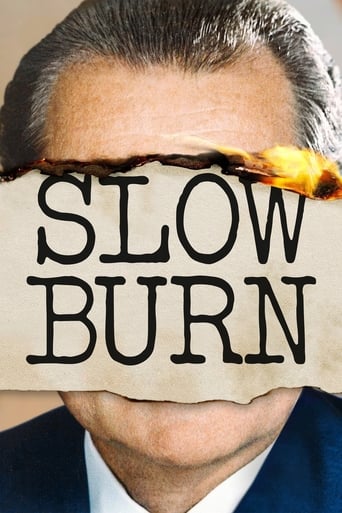
Slow Burn
2020 · TV series · documentary · 1 season
In this adaptation of the award-winning podcast, Slow Burn’s Leon Neyfakh excavates the strange subplots and forgotten characters of recent political history—and finds surprising parallels to the present.
2 positivefrom 2 commenters
Where to watch
No streaming data for this title.



2 comments on Hacker News
For tech, Kara Swisher's Recode Decode is excellent.
I've yet to find any good History podcasts that serves good to great episodes on a regular basis either. The BBC's history podcast stood out as vaguely better. But I was always left craving for something more in-depth, like some of the better History lectures you can find on YouTube. That being said, there are a few great shows from time to time, like Slate's Slow Burn (on Richard Nixon and Bill Clinton) and Standoff (on the Ruby Ridge incident) or MSNBC's Bag Man (on Spiro Agnew).
Regarding Watergate, there's a really fantastic podcast series entitled "Slow Burn" that just ended. It's 9 or 10 episodes long, and gives a great 'behind the scenes' look at the entire affair. I can't speak too much to the media's approach to Watergate.
> Basically, that is, we lost something in the shift from printed press to online/social.
This article from Harvard's Kennedy School of Government has some context on what happened: https://journalistsresource.org/studies/society/news-media/covering-america-journalism-professor-christopher-daly
One clipping from it:
One problem was the drive toward monopoly — or if not monopoly, then what economists call “concentration...” In the news business, this pattern threatens the very existence of diverse, and local, points of view. Clear Channel replaced more than one thousand individual owners, with different aspirations, different ideas about their civic roles, and different ideologies. The number of U.S. cities with healthy, competing daily newspapers, once in the hundreds, fell to about a dozen. By the year 2000, in American cities that had a daily newspaper, 99 percent had only one management in town. The fifteen biggest newspaper chains account for more than half the nation’s total circulation. In all, there were about 1,500 daily newspapers remaining in America. Of those, only about 350 were independently owned, and most of those were very small. The whole industry was heading in a direction that was at odds with the journalistic values of independence, localism, and competition.
The article also talks about the vast reduction in budgets for news outlets. This disadvantages organizations that do legitimate news gathering and reporting and advantages organizations that simply have an axe to grind (it's cheaper to spew your opinions than it is to put boots on the ground and see what's up).
There's more, but I'm probably getting excessively long for a comment.