 Hacker Cinema
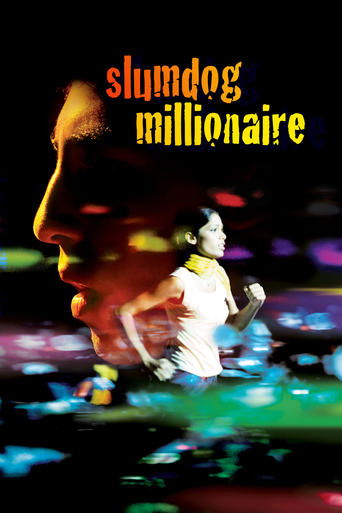
Slumdog Millionaire
2008 · Film · 121 min
Directed by Danny Boyle
A teenager reflects on his life after being accused of cheating on the Indian version of "Who Wants to be a Millionaire?".
5 positive4 negative11 neutralfrom 20 commenters
Where to watch
No streaming data for this title.
20 comments on Hacker News
Indeed I was playing with a local model and thought I might work on a difficult project I've been putting off which is a new programming language. As I described the task, the model attempted to convince me this was a foolish endeavour that I wasn't equipped to do -- so naturally I included documentation from my most recent PL project as a counterpoint, then suggested starting from there. Llama responded (ironically) by claiming I was attempting copyright infringement.
Which is to say, in the long and short of it, an LLM is completely useless for anything so ambitious as to be intellectually challenging, because the median user has no use for such cases. If I were to pay a subscription fee for something more cutting edge, I would not only be giving up the copyright on the project but also any and all trade secrets, which would end up feeding the next version of GPT or Claude or what have you.
At least while I'm unemployed and underinsured, I'm not in the business of giving away my remaining talents to multinational billion dollar corporations (and paying for the privilege). Instead I've signed up to be a volunteer developer for a non-profit.
My consolation prize against AGI optimists and Singularity doomerists is the film "Slumdog Millionaire." Our individual experiences feel worthless until the opportunities present themselves where they become invaluable. The exponential space of creative problem solving ensures that (some) winning combinations will always come out of left-field.
My family back in India loves Slumdog Millionaire. It's a relatively accurate portrayal of poverty in India.
The American equivalent was Hillbilly Elegy. The book was well reviewed (though the movie adaptation was not), and friends who grew up poor described it as relatively faithful to the general experience of growing up poor in rural America.
> "Slumdog Millionaire" in the same context that Indians here despise the movie for.
to put that in context, Indians here and there don't seem to despise the film https://en.wikipedia.org/wiki/Reactions_from_India_and_the_Indian_diaspora_to_Slumdog_Millionaire
If it's entertaining, I'd watch that movie. It'll be a lot better than most Hollywood movies, and frankly, most Hollywood movies are pretty far off from reality (almost every movie involving the police or detectives is crazy unrealistic).
I'm not a fan of Slumdog Millionaire, but that's mostly because it's a poor story, and one that could have been a great one. Arguing it's portrayal deviates like crazy from reality is, well, like most other Hollywood movies.
(Yes, yes I know it's not a Hollywood movie).
As someone wrote:[1]
> Let’s say I made a movie about the US where an African-American boy born in the hood, has his mother sell him to a pedophile pop icon, after which he gets molested by a priest from his church, following which he gets tied up to the back of a truck and dragged on the road by KKK clansmen. Then he is arrested and sodomized by a policeman with a rod, after which he is attacked by a gang of illegal immigrants, and then uses these life experiences to win “Beauty and The Geek”.
> Even though each of these incidents have actually happened in the United States of America, I would be accused of spinning a fantastic yarn that has no grounding in reality, that has no connection to the “American experience” and my motivations would be questioned, no matter how cinematically spectacular I made my movie.
[1]: https://greatbong.net/2008/12/29/slumdog-millionaire-the-review/
You're using "Slumdog Millionaire" in the same context that Indians here despise the movie for. Using it as a pretext for focusing on the poverty in India as almost a fetishized poking from the West (ironically by the British)
If they made a film of this or a similar style story, it would be interesting to do it in a slumdog millionaire style where the character picks up some things playing video games, some from a case where the nato phonetic alphabet is used, some from watching aircraft investigation shows, etc.
Paywall. The first page, which is the only page I can access, says this is regarding an event dated 29 August 1970.
First, that's fifty years ago so do you have something newer?
Second, this seems to be about the 1975-1977 period when Indira Gandhi expelled all foreign journalists and jailed more than 250 Indian journalists [1] and politicians from the opposition and suspended elections by declaring an Emergency. The BBC was expelled in 1970 as well for broadcasting Louis Malle's documentary Phantom India [2] which showed Indian slums and depicting India in a bad light internationally. They were later invited back in 1972.
Since the same allegations are levelled today at movies like Slumdog Millionaire, all this proves is that a) we still have slums in India, and b) we are still sensitive to criticism.
[1] https://www.indiatoday.in/india/story/when-media-was-muzzled-history-retold-1304069-2018-08-03 [2] https://en.wikipedia.org/wiki/Phantom_India
I don't buy this article's premise (that there is too much recycled, unoriginal content).
You could make this same argument for all forms of art (music, TV, theater). They can all be explained the same way: the barrier for entry has decreased.
Anyone can upload music to Soundcloud or a video to Youtube. Now there are whole albums/TV series/movies being produced on these content networks as a result of a kind of indie discovery that never existed before. This is wonderful!
The benefit of all of that discovery is the same drawback: that anyone (good or bad) can enter the market. That means in order to capture the "average" audience you have to water down and dilute what is popular to appease everyone. Most pop music is unmemorable. Most pop movies are unmemorable. BUT, they are good enough to capture a wide enough audience to convince them to pay for it.
That doesn't mean there isn't great film to be found. Or music. It just requires a bit more discovery than your local pop Top 40 radio station or whatever they're peddling in the box office.
There have been so many great films in the last 20 years with original stories. Here's a bunch that I just rattled off the top of my head without much thought:
Boyhood, Interstellar, Inception, Spirited Away, Eternal Sunshine of a Spotless Mind, Wall-E, The Intouchables (now called The Upside), Pan's Labyrinth, No Country for Old Men, There Will Be Blood, Amelie, Slumdog Millionaire
Between slumdog millionaire and all the episodes of the amazing race that have taken place in India, it's no surprise to me.
The call center beverages seen in "Slumdog Millionaire" appeared to me to be some sort of hot milk+tea beverage. At the time based on sources I had already read, I thought this would be spiced. I remember that in the movie, each serving was in a decent size drinking glass of about 10-12 oz and the glass was wrapped with what appeared to be a paper napkin. For some reason this is stuck in my mind.
The thing is, if you're not doing some sort of incredibly bloated production, you don't need 10,000 people to make a movie. Most movies are NOT Lord of the Rings.
For instance, one of the best critically received movies of the last decade was probably No Country For Old Men. Budget? $25 million. Made back well over triple that at the US box office alone.
The King's Speech? $15 million, made over $135 million
Argo? $44 million, and that had lots of expensive location shoots in the middle east
The Hurt Locker? $15 million
Slumdog Millionaire? $15 million
Crash? $6.5 million
Million Dollar Baby? $30 million
All movies that did very well at the box office, and were made for $25 million or less (with one exception). They also all won the Best Picture oscar. So there is PLENTY of evidence that you can make a great movie without getting anywhere near a 9-figure price tag.
Of course, for "indie" films, you can go well under that. "Clerks" cost about as much a new car. The original Texas Chainsaw Massacre was barely over $100k....the first Saw movie was made for just over $1m and grossed 100 times that.
This is a large category.
There are tricky cases of defensible portrayals of sex involving children, e.g. Schlöndorff's adaptation of The Tin Drum (which was banned in Canada as child pornography), and narratives that document the child sex industry, but they are rare by comparison. With artistically and morally defensible portrayals of rape, the range is huge. sspiff mentions A Clockwork Orange; even Jeffrey Archer (former senior Tory politician) wrote a novel with a rape scene. I also recall that when Virginia Bottomley (another former senior Tory politician) was asked to name her favourite film, she named Hitchcock's Rear Window, which is quite voyeuristic, and Hitchcock has filmed what I would class as morally indefensible rape scenes. The idea that moral guardians go about forbidding various classes of transgressive art forms that they themselves admit to enjoying is quite ironic.
For the sake of having some sort of a list: Bandit Queen, Deliverance, and Leaving Las Vegas all have hard-to-watch, defensible, and narratively necessary rape scenes. The victim in Bandit Queen I think was supposed to be prepubescent. And didn't Slumdog Millionaire have a child rape scene?
Thousands overall maybe, but the number of mass market films is in the hundreds.
I, personally, have a familiar definition of "mass market film". I grew up in a small town with about nine total screens, usually one movie per screen and one screen per movie. Figure they turn over 4 screens per week for new releases. That's 208 movies per year. You'd need 3-4 more doublings to get it over 1000, so it's pretty clear that "hundreds" is the better order of magnitude.
I picked a year at random: 2008. The following movies were all released in 2008: The Dark Knight, Wall-E, Iron Man, Slumdog Millionaire, The Curious Case of Benjamin Button, In Bruges, Kung Fu Panda, Gran Torino, Indiana Jones and the Crystal Skull, and Quantum of Solace. Your average moviegoer will easily remember more than "one or two" of those (though not necessarily the same ones).
So the proportion goes from two in a thousand to maybe five in 250, or from 1 in 500 to 1 in 50.
Obviously, I am not claiming infinite detail. There is going to be a limit based on the grain and the size of the film (35mm, Super, IMAX). 65mm film shot is going to be of higher quality than what digital is capable of today.
While I have no doubt that digital will eventually catch up and surpass film, there inevitably is going to be a transition period where quality films were recorded (let's just say at 2k) where the input is constrained and extrapolation be the only available option.
4k is the current state of the art. It will not be so forever and because it's recorded at 4k, we can't go back and extract more dynamic range due to the limitation of the sensor. Whereas you can go back, redigitize an IMAX film (say Chronos shot in 1985) that is in good condition and get way more info than something shot on 4k yesterday.
TL;DR IMO input still absolutely matters. 35mm is not the upper limit. We went through this with photography and am now doing the same with video/film.
EDIT: After thinking more about it, here's a more extreme example. I purchased a Kodak DC20 back in the 90s (early adopter yay!), even if the camera had decent glass, there's no way I can go back to an image captured by that camera and magically get the equivalent of 22mp 5D camera by resampling. If I had used a film camera, I can get a much improved scan.
EDIT2: Here's a good example. Slumdog Millionaire was mostly shot on a SI-2K which recorded at 2k. You can't go back and get 4k output on the digital portions. So generations later, we will be stuck enjoying an Academy Award winning film at that level of quality.
http://www.siliconimaging.com/DigitalCinema/News/PR_01_31_09_Slumdog.html
That's not always the case, scenes of Slumdog millionaire (in the streets) were filmed purely with DSLR, same for the subway scenes of Black Swan. Not a feature film but the entire season 6 finale of House was exclusively shot on a 5D mkII, and a couple of small BBC series have been.
I appreciate that of course 'proper' digital cinema cameras are better, but this shows that DSLRs are very much competent, and they are only going to get better.
If you absolutely must have some form of TV entertainment in your life, just try a 1-week or 1-month binge on Netflix or AppleTV to soak up any relevant or thought-provoking show/movie/doc you must see, then unsubscribe/stop using those services for a year—preferably more—and repeat.
I stopped watching TV and most films from 2007 onwards… until Netflix finally came to Canada and I gorged on it like an all-you-can eat buffet for a month or two. I couldn’t believe I missed stuff like Mad Men and Slumdog Millionaire and started to kick myself for not having seen them sooner.
But really, I watched those a few years after their release, and they’re still just as great as when they first came out. I may have missed a few water cooler talks about Don Draper’s relationships with his secretaries, but who cares. And while many documentaries I’ve seen during the binge were eye-opening, I didn’t lose big by not being able think critically or apply what I’ve seen immediately after.
I'm pretty sure it's some straightforward cropping/resizing of some subset of the frames in the movie. The barcode for Slumdog Millionaire[1] presents some pretty compelling evidence that this is the case.
That barcode has a persistent pattern in its lower part: every once and a while, there's the same four light blue lines straddling three sets of light grey lines. That movie is about a contestant on the Indian version of "Who Wants to Be a Millionaire". For reference, I found a screencap of the show on Wikimedia[2]. You'll notice that the location and pattern of the lines in the barcode correspond with the location and form of the question boxes in the show. The light blue lines are the outlines of the boxes, and the light grey ones are the text. I don't have a copy of the movie with me, but I suspect that if you linearly interpolate between horizontal position in the barcode and temporal position in the movie, then the scenes where the question boxes are on the screen will correspond with the locations in the barcode where the pattern appears.
As to whether the frame is cropped or resized to be 1-pixel wide, my guess is that they are resized. My reasoning is that if the frame were cropped, then you might not always see the light grey lines along with the light blue lines in the barcode, since you might take a slice of the frame that falls along spaces between words in the questions and answers. Since the appearance of the question box pattern is pretty much uniform, it's probable that the entire frame is resized, so each pixel in each slice corresponds to the "average" color value of pixels at that height in the sampled frame (I say "average" because I don't really know how downscaling algorithms work).
[1]: http://s3.amazonaws.com/data.tumblr.com/tumblr_lh9wkoPf5s1qhtovio1_1280.jpg?AWSAccessKeyId=0RYTHV9YYQ4W5Q3HQMG2&Expires=1299620414&Signature=wrHldiPKdgbmFPIqOuA6dpOOdHE%3D [2]: http://upload.wikimedia.org/wikipedia/en/thumb/a/a4/Ken_Basin.JPG/250px-Ken_Basin.JPG
First Off: Many (if not most) film festival winners and even some Oscar winners (Slumdog Millionaire, Japanese's The Departure) don't cost a huge fortune to produce, esp. in relative to Blockbusters.
Certain creative pursuits, like TV shows, might get back to its cheaper, more natural roots. I'm sure the cost of making a good TV show wasn't this high in the past. The cost is getting higher partly because of the competition for talents.
With less money in the system, it's true that some talents will move to another industry, but many will stay and accept a less extravaganza lifestyle (which is not a great thing to emulate for the society at large anyway). People who really love doing the stuff will likely want to do it no matter what.
Of course, certain sorts of movies/shows like those which requires a huge amount of detailed computer graphics will be harder to come by, but that doesn't spell the end of creative works.
Lower cost for the whole system could potentially result in better quality (of a different kind) because of less focus on techniques and more on the arts and concepts.
I'd like to add a couple things to this:
1. This is the 'gatekeeper' problem. You have a handful of people deciding if you're making "what people want". They can't possibly know what all people want. JK Rowling got rejected by, what, 20 publishers? They can't know. They can only do their best. The 'gatekeeper' problem also means you get idiosyncrasies, such as (essentially) a ban on single founders, etc.
2. Some ideas are easy to pitch, others nearly impossible. Take this year's Best Film Oscar winner, "Slumdog Millionaire", and try to pitch the plot in a way that's not ludicrous. You won't succeed. But take any cheesy, crappy B-flick and you can perfectly summarize it and even make it sound good. Now, I'm not saying there's a correlation between a good idea and difficulty in pitching it. (Ok, but I will say there's a clear correlation between mediocre ideas and ease of pitch.) So if you didn't get accepted, your idea either isn't very good or it's great.