 Hacker Cinema
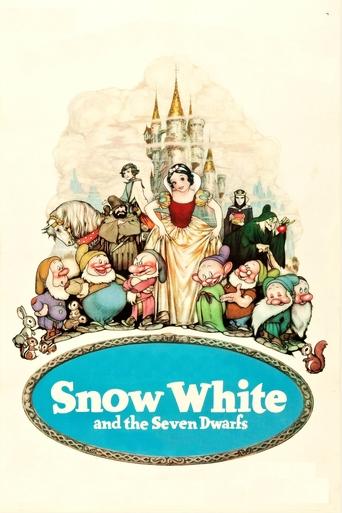
Snow White and the Seven Dwarfs
1938 · Film · 83 min
Directed by David Hand
A beautiful girl, Snow White, takes refuge in the forest in the house of seven dwarfs to hide from her stepmother, the wicked Queen. The Queen is jealous because she wants to be known as "the fairest in the land," and Snow White's beauty surpasses her own.
1 positive15 neutralfrom 16 commenters
Where to watch
No streaming data for this title.

17 comments on Hacker News
Pretty sure Youtube is constantly being sued for copyright violation by now.
The question is what will happen when "the platform" is a model downloaded on torrent sites and just generates movies from a prompt. On the plus side: excellent compression ratio. On the down side: discussion with your kids about how at the end Snow White did not transform into a gigantic mech and blew up the Evil Queen with rockets. Must be your old memory, dad!
First off, let’s not forget that you’re criticizing a movie that isn’t even out yet. For all we know it could be a critically acclaimed box office smash hit when it comes out. Not that I hold my breath for these remakes, but the possibility exists. And it’s wildly disingenuous to be a film critic of a film that isn’t out yet.
But anyway, this is funny to me. Snow White is a nearly 100 year old movie. It came out 22 years after Birth of a Nation. If you think a remake can work as a modern movie with zero changes that is kind of naive in itself isn’t it? It’s not like anyone is going to remake From Russia with Love and include the scenes where James Bond slaps women around.
And I mean, yeah, technically, the original Snow White is probably pretty offensive to people with dwarfism. They’re all heavily dehumanized as lesser people with more flaws than Snow White. Snow White has to come in and fix their life essentially, cook and clean for them, etc.
But anyway, I don’t think that’s the driving reason behind using animated dwarves, I think they couldn’t do some of the comedic elements as well with real actors as they can with exaggerated animation.
There also aren’t a lot of people with dwarfism who are lead-quality actors. You need seven of them for that movie. My guess is that test footage wasn’t working.
> even when Snow White and the Seven Dwarfs does finally come into public domain, I can't imagine it meaningfully affects their bottom line.
Given that Disney is infamous for its practice of rereleasing its older films periodically and otherwise making them completely unavailable (the "Disney Vault"), it seems that they have a business model which is fully predicated on copyright exclusivity.
1939? I suppose you have to pick a year and call that the cutoff.
But you're cutoff leaves to the "Dark Ages" the films Frankenstein (1931), Love Me Tonight (1931), 42nd Street (1933), Gold Diggers of 1933 (1933), King Kong (1933), It Happened One Night (1934), The Thin Man (1934), My Man Godfrey (1936), Stella Dallas (1937), Snow White and the Seven Dwarfs (1937) and The Adventures of Robin Hood (1938) to name a few.
> So, I guess it wasn’t till after World War Two that their feature films became profitable. They survived, so chances are the shorts brought in money.
According to Wikipedia [0], "The U.S. and Canadian governments commissioned the studio to produce training and propaganda films. By 1942, 90 percent of its 550 employees were working on war-related films." So, it seems they primarily survived by taking government contracts, not producing shorts. In fact, the next paragraph goes on to say, "With limited staff and little operating capital during and after the war, Disney's feature films during much of the 1940s were 'package films', or collections of shorts, [...] which performed poorly at the box office." So I wouldn't say their shorts were particular moneymakers during that time. After the war, they started releasing feature films again (Song of the South, etc).
Although it does seem that in the 20s and early 30s, prior to Snow White, animated shorts and comics (and potentially related merchandising?) were most of the company's revenue.
So, I think it's probably fair to say shorts financed the company through the release of Snow White, but not really any further.
[0] https://en.wikipedia.org/wiki/The_Walt_Disney_Company#1934%E2%80%931950:_Snow_White_and_the_Seven_Dwarfs,_World_War_II,_and_package_films
Back then, their feature films weren’t money makers, as they didn’t make them.
Their first feature film was very profitable, but it was from about 15 years later (https://en.wikipedia.org/wiki/Snow_White_and_the_Seven_Dwarfs_(1937_film)).
However, their next two movies (Pinocchio, Fantasia) cost them money because they were released during World War Two, when they couldn’t show them in large parts of the world.
They needed Dumbo to make up for that (https://en.wikipedia.org/wiki/Dumbo#Box_office), then Bambi wasn’t a huge success, either (https://en.wikipedia.org/wiki/Bambi#Box_office)
So, I guess it wasn’t till after World War Two that their feature films became profitable. They survived, so chances are the shorts brought in money.
> The first animated films to do this were the animated LOTR film and Fire and Ice shortly thereafter, both by the same director.
Although rotoscoping is a venerable technique, the results we're looking at with this service don't bear much stylistic resemblance to early works like Fire and Ice or Snow White and the Seven Dwarfs (or more recent rotoscoped works like The Little Mermaid either). If they did, I'd have given them a pass on the 'anime' claim, even though calling the Disney house style — or Bakshi's — 'anime' is still a stretch.
On the topic of ice cream trucks and monopolies, has anybody else seen the South Pico Armored Ice Cream Truck?
My best guess is that Los Angeles hands out its popsicle man contract to a single vendor with the caveat that they are required to serve the entire city, not just the profitable bits. That way every kid can get a fudgecicle on a sunny day.
That's the only way I can explain what I saw in the neighborhood south of Pico, near Little Ethiopia, where Mo' Betta Meaty Meat Burgers used to be.
Now if you don't know the area, there are a whole bunch of really cool houses dating back to around the time the movie Snow White came out, many with whimsical little turrets and minarets like little fairy tale castles. It's a pleasant neighborhood to walk around for an afternoon.
North of Pico, that is.
Immediately South, the lawns grow knee high, bars appear on windows, and the walkability declines... significantly. Mortally, perhaps. But there are houses there that could conceivably house children. So the Ice Cream must flow.
And one day in July, I saw what was clearly an Ice Cream truck, but with steel grill plates welded over all the windows with a little slot cut out with a torch that could theoretically be used to pass an ice cream sandwich through. That is, were it not weaving along at 45 miles an hour (playing its jolly tune as stipulated in the contract), then careening around a corner on two wheels to high tail it out of there.
It was the missing scene from Mad Max. The ice cream man of the apocolypse.
10 years later, I'm starting to doubt whether I really saw it.
But I did.
Disney has used the "vault" for theatrical showings since 1944, when they reissued Snow White and the Seven Dwarfs, though the last film actually re-released in theaters was The Lion King almost a decade ago. (Nowadays, a film is "released" from the vault to a reissue of home media (like Bluray).
Eisner was mostly responsible for changing vault releases to home media sales (like VHS or DVD) instead of theatrical releases.
> I believe Disney currently still have copyright on their adaptation of the 19th century fairly tale (as the "Snow White and the Seven Dwarfs" film came out in 1937). But as the original source material is in the public domain so you can take that original source material and adapt it for your own creation.
This is technically true, but in practice the effort necessary to avoid infringing on Disney's parts of things has a really clear chilling effect on derivative use of the original public domain work.
Really only other large corporations with deep pockets for ip lawyers can afford to even risk it.
If you think about it this came about through laziness and to lower budgets, same deal with great programmers, programmers shouldn't want to do repetitive lazy work but innovate it away. Tedious work becomes a pain on time and budgets, so you innovate to do it faster/better.
Animators didn't want to draw all the backgrounds slightly moving and this allowed re-use and new innovations to make movies faster. This allowed animators to focus on the character cels and making characters look better, the main focus.
The multiplane camera with movable layers for parallaxing directly led to some of the best early Disney movies (Snow White and the Seven Dwarfs, Pinocchio, Fantasia, Bambi, The Adventures of Ichabod and Mr. Toad, Cinderella, Alice in Wonderland, Peter Pan, Sleeping Beauty and The Jungle Book) and helped their budget as well as made them look better. Plus at the time, it was actually an improvement that animators welcomed to speed up their tedious work.
That was the predecessor not the multiplane aspect of it with moving layers, definitely inspired it. Lotte mostly just used it to swap out colored backgrounds on her silhouette cel style to adjust placement and color.
A predecessor to the multiplane camera was used by Lotte Reiniger for her animated feature The Adventures of Prince Achmed (1926). Berthold Bartosch, who worked with Reiniger, used a similar setup in his film L'Idee (1932).
Ub Iwerks invented the multiplane camera with movable layers to create parallax and zooming [1] which created immersive depth. It also saved on budgets, tedious background animation and allowed animators to focus more on the character cels, the star of the show.
The first multiplane camera, using movable layers of flat artwork before a horizontal camera, was invented by former Walt Disney Studios animator/director Ub Iwerks in 1933, using parts from an old Chevrolet automobile. His multiplane camera was used in a number of the Iwerks Studio's Willie Whopper and Comicolor cartoons of the mid-1930s.
Fleischer Studios (Popeye/Betty Boop) also made one or copied in 1934 [1]
The technicians at Fleischer Studios created a distantly related device, called the Stereoptical Camera or Setback, in 1934. Their apparatus used three-dimensional miniature sets built to the scale of the animation artwork. The animation cels were placed within the setup so that various objects could pass in front of and behind them, and the entire scene was shot using a horizontal camera. The Tabletop process was used to create distinctive results in Fleischer's Betty Boop, Popeye the Sailor, and Color Classics cartoons.
William Garrity took Ub Iwerks invention further and that iteration was used in many large successful movies they made [1]
The most famous multiplane camera was invented by William Garity for the Walt Disney Studios to be used in the production of Snow White and the Seven Dwarfs. The camera was completed in early 1937 and tested in a Silly Symphony called The Old Mill, which won the 1937 Academy Award for Animated Short Film. Disney's multiplane camera, which used up to seven layers of artwork (painted in oils on glass) shot under a vertical and moveable camera, allowed for more sophisticated uses than the Iwerks or Fleischer versions, and was used prominently in Disney films such as Pinocchio, Fantasia, Bambi, The Adventures of Ichabod and Mr. Toad, Cinderella, Alice in Wonderland, Peter Pan, Sleeping Beauty and The Jungle Book
[1] https://en.wikipedia.org/wiki/Multiplane_camera
That's reasonable, but again this is the #2 grossing film for the year in the US. #1, #4, #5, #7 where PG kids movies. #3, #8, #9, and #10 where comic book movies in a long string of comic book movies.
So, yes revenue was down, but the movies where also very derivative. The top grossing films adjusted for inflation are Gone with the Wind, Avatar, the first Star Wars, Titanic, The Sound of Music, E.T. the Extra-Terrestrial, The Ten Commandments, Doctor Zhivago, Jaws, Snow White and the Seven Dwarfs.
The Force Awakens might make #10 on that list while being the only franchise movie to do so. But, no movie from 2016 is even close.
I'm not sure I'm able to visualize this correctly. Let's say we have an array of strings containing the top 20 movies from Rotten Tomatoes:
The Wizard of Oz The Third Man Citizen Kane All About Eve Das Cabinet des Dr. Caligari. (The Cabinet of Dr. Caligari) Modern Times A Hard Day's Night The Godfather E.T. The Extra-Terrestrial Metropolis It Happened One Night Singin' in the Rain Laura The Adventures of Robin Hood Inside Out Repulsion Boyhood North by Northwest King Kong Snow White and the Seven Dwarfs
What would this data structure look like?
You can't use common words in a field as registered trademarks. They can be used as trademarks by a company. The purpose of a trademark is to indicate the origin of goods and services - thus sane trademark registration requires that a mark being registered meets certain basic requirements. One of those requirements is that a mark not be a common term in the field. A trademark has to be distinct.
Google is distinct in the field of search engines as it's both a neonym (ie neologism, made up word) and a word that is not especially pertinent to the particular field of commerce. That is why it's Google and not Googol, neologism's are better because it's far easier to establish uses that are infringing.
You /can/ use almost anything as a trademark but there are restrictions on what can be a registered trademark.
So back to Disney.
"Snow White" shouldn't be allowed as a trademark as it's a traditional term in the fields of story telling/movies/cartoons/fiction. Just as a fruit sellers can't have [the word mark] Apple as a registered trademark so too it is normal to reject marks that would prevent people from merely describing their goods (as opposed to indicating the origin of those goods [or services]).
Thus to my "wrong, wrong, wrong" statement - Snow White is a perfectly good mark outside the fields of fiction, eg for a hair care product. But allowing the registration of a mark for a Nice class in which that word is widely used descriptively is insane. "Snow White" can only practically indicate the origin of goods/services outside the field of fiction/media.
>Trade marks and copyright are totally separate beasts
Except in these instances they're not. Because trademarks don't expire (as long as you pay renewals and manage to avoid genericisation, etc.) then a common method of protecting copyright works as they pass in to the public domain is to use RTMs to bind as much as possible of the IP away from the public domain; eg getting RTMs on character names. This way it is more risky for firms to sell the now public works and the ability to create franchises and such is made far harder - you can create a new Snow White series and use "Snow White" descriptively but then you attempt to create merchandise and oh look Disney own the names of your central characters.
The last copyright extension might be the last Disney could push for. If they pushed it significantly further, they would lose the copyright of their older works to the Brothers Grimm.
Walt Disney's first animated film "Snow White and the Seven Dwarfs" was published in 1937, 74 years after the death of Jacob Grimm. The Mickey Mouse copyright extension is 70 years after the death of the longest surviving creator.
That said, they could lobby to increase copyright terms for post-1927 works only, or corporate works only and leave natural persons out in the cold. It's uncertain whether these moves would be too politically extreme for Disney.
I agree, the terms are insane, and I hope they don't keep extending them. I'm pretty sure every single person who worked on the original Disney movie Snow White is dead now, lets get that into public domain, the point of copyright isn't to have an income stream for one's family forever.