That list was incomplete. I added a recent Indian film about Ramanujan and a Soviet film about Sofia Kovalevskaya from the 1980s. FWIW, there's also an upcoming film "Dau" (in post-production) about the Russian mathematical physicist Lev Landau.
One difficulty is that the Wikipedia list does not include made for TV movies and documentaries, like 'Dangerous Knowledge' (2007) on Georg Cantor, Ludwig Boltzmann, Kurt Gödel and Alan Turing, or the BBC documentary 'Isaac Newton: The Last Magician' (2013), or the PBS documentary 'Newton's Dark Secrets' (2005), or "Breaking the Code" (1996), another biography of Turing, or "Freedom Man" (1989) about the black American mathematician Benjamin Banneker, or the 1973 Italian TV movie "Non ho tempo" about Galois, or Simon Singh's 1996 documentary "Fermat's Last Theorem", focusing on Andrew Wiles but including other mathematicians.
Or the BBC documentary "The Birth Of Calculus" (1986) on Leibniz, the four-part BBC series "The Story of Maths" (2008), the 2008 "Julia Robinson and Hilbert's Tenth Problem", or ... I think you get the picture that there are many TV movies about mathematicians, and most of them are white males. BTW, none of them are "average".
When "Moneyball" was turned into a movie, people asked how a book that dealt with statistics could be turned into a movie, since statistics alone isn't that interesting. What big screen movie is there to make out of Dirichlet's life? Of Riemann's? Of Wiles'?
So, of "regular white guy scientists or mathematicians we've mythologized in the past 20 years", where I'll define "mythologized" to mean "made a movie about them", and I'll limit it to feature length films based on lives of actual scientists:
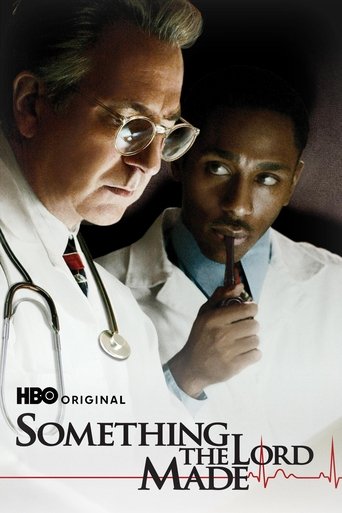
"Kinsey" (2004) on Kinsey, "Copenhagen" (2002, TV) on a meeting between Bohr and Heisenberg, "Creation" (2009) on Darwin, "Something the Lord Made" (2004) about heart surgeons (one of which was a white male), "Tim's Vermeer" (2013) though that's more an amateur scientist, "The Aviator" (2004) about Howard Hughes (aerospace engineer and inventor), "A Dangerous Method" (2011) concerning Jung, Freud, and Sabina Spielrein (the first two being white males), this fall the film "Experimenter" about Stanley Milgram will be released, "The Insider" (1999) is a drama based on the research scientist Jeffrey Wigand, and "The Strangest Dream" (2008) about the physicist Joseph Rotblat.
Those are movies about 10+ real scientists, all male, straight, and not disabled, plus a couple of others. (There were a few movies with other than white, male, straight characters, but certainly not this many.)
You for some reason switched to fictional scientists with Gravity (2013) and Interstellar (2014). Why is that? For that matter, you restricted me to scientists and mathematicians, while the protagonists of Gravity are engineers and astronauts - it's poor form to change your metric part-way through.
If I expand the list to include engineers, astronauts, and similar occupations, then "Captain Phillips" (2013) concerns the captain of the MV Maersk Alabama, which was hijacked by pirates, "The Wind Rises" (2013) about Jiro Horikoshi, the man who designed Japanese fighter planes during World War II ... oops ! Sory, not a white man, though he would have been an "honorary white" in apartheid South Africa, " Zvorykin-Muromets" (2010) about the Russian inventor of television, "Flash of Genius" (2008) about the Robert Kearns and his invention of the intermittent windshield wiper,
A problem with your list is it's easily interpreted as cherry picking. Jodie Foster was the protagonist of "Contact" (1997), a big budget sci-fi film. How does your choice now of "Gravity" indicate a changed pattern from nearly 20 years ago?
Another problem is that you haven't established what the baseline should be. Given the 12.2% of the US population is "Non-Hispanic Black or African American", what percentage of films with 'hero scientists' should have a "Non-Hispanic Black or African American" in that role? Given that 51% of the adult population in the US are women, how many hero scientist movies should have a women in that role? Perhaps it's more that these roles were previously underrepresented?
Is the pattern you see simply explained by the secular trend that people other than straight white males are becoming more frequent in science?
You ended by picking two items from a different context - postings to HN in the last month and 'male scientists who have been publicly disgraced in the past year', I think to establish a pattern. But you again lack the evidence needed to tell if your observations are really a pattern instead of cherry picking. What is the expected baseline?
If the ratio of men to women in science is 4:1, then we would expect a female scientist to be publicly disgraced with about the same ratio. (It's hard to give a good ratio since I think it's more likely that a senior researcher will be found out and reported in the international news. I believe there are more males in higher level positions than females. Also, "Japanese women account for only 10% of the researchers in Japan" and "only 12 percent of the science and engineering workforce in India was female in 2010", so the international ratio is probably more like 8:1.
Checking now, I searched "Retraction Watch" for all people described by the writers as being "disgraced". The complete list of male scientists in the last few years are: Naoki Mori, James H. Hunton, Dipak Das, Don Poldermans, Yoshitaka Fujii, Joachim Boldt, Diederik Stapel, and Woo-Suk Hwang.
The only disgraced female scientist mentioned is Bengu Sezen.
This 8:1 ratio is about what I expect from the percentage of women doing science in the world stage, and within the error bars for something with so few numbers.
What method did you use to count disgraced male and female scientists? I see you missed Haruko Obokata as another disgraced female scientist, so it doesn't seem like you've done a systematic search.
(A double-check search against sciencemag.org finds Jens Förster and Marc Hauser as additional 'disgraced' male researchers and no additional female researchers. Note that Science does not use the term 'disgraced' in articles about Haruko Obokata.)
Also, what do you use as the ratio for males in science vs. females in science? If it's 4:1 or higher then with 3 male disgraces you would expect less than a 50% chance of hearing about a female in the same situation, no?
Otherwise, if you're just making connections based on the latest hot gossip, then you'll be suffering from some serious bias error. You're not going to hear about Naoki Mori on HN.
Regarding postings to HN, what is your criteria? For example, "Alain Badiou Is Making a Movie About Plato with Brad Pitt and Sean Connery" from 7 days ago is a movie about a guy. Is it mythologizing a male? What about "Deep Web (2015 Documentary) – The Story of the Silk Road" from a month ago - does it mythologize Ross William Ulbricht? How do you define 'mythologizing' in such a way that it's at least roughly repeatable?
If you can't do that, then you don't really have a good metric.
It's very easy to see patterns which aren't present. We as humans are quite good at doing this. How might I confirm that this pattern is present?
To start, let's look at movies that deal with "Scientists, Engineers, Doctors, Researchers, Inventors, Explorers and People who do Amazing Things", from http://www.imdb.com/list/ls050940841/ . These include Apollo 13, Fat Man and Little Boy, Einstein and Eddington, Shackleton, Creation, Captain Cook: Obsession and Discovery, Gorillas in the Mist, Temple Grandin, Jobs, and Reach for the Sky.
Of the 31 films (though two are not biographies or based on real-life), 2 are about women (Gorillas in the Mist, Temple Grandin), and the rest are about men. Einstein is certainly high on the list of mythologized people, so mythologization is not limited to women. (Feynman would be another. Infinity (1996) is a biopic about Feynman, but it's not on the list.)
Women appears underrepresented in that list compared to their modern presence in STEM fields. To be fair, the movies include Pasteur from the 1800s, and Harrison from the 1700s. Women were often strongly restricted from doing research in STEM fields during that time.
I saw one non-white person on that list, Vivien Thomas, from the 2004 film "Something the Lord Made".
"Reach for the Sky" from 1956 is "The true story of airman Douglas Bader who overcame the loss of both legs in a 1931 flying accident", and Temple Grandin is autistic. However, since 1956 is rather a long time ago, it does point out the need for a baseline - if the percentage of movies about disabled people has been stable, then it's not a growing pattern. As another example of someone who 'received the mythology treatment', consider "Helen Keller in Her Story" from 1954.
(Howard Hughes, in 'The Aviator' (2004), may also fall into the mentally challenged category, due to his obsessive-compulsive disorder which was present already by the 1930s. I haven't seen the film to see if it touches on his mental illness.)
Films about gay people would have been restricted under the Motion Picture Production Code, so not really seen in films from the 1930s to 1968. That would make it hard to establish a long term pattern. Still, as about 2% of the US adult population (1.2 to 5.6 according to https://en.wikipedia.org/wiki/LGBT_demographics_of_the_United_States ) identifies as LGBT, then about 2% of the films about famous people in STEM should concern someone LGBT.
It should not be hard to come up with an evaluation technique, like "all biopics about people in STEM done as movies/made-for-TV movies in the US from 1970 to the present", and redo this same evaluation to see if there is a pattern.
The tricky part is to normalize it. If 2% of the population is homosexual, then what percentage should we expect to see portrayed as they are in movies? If 51% of the US population are women, and 27.9 percent of the PhDs in the physical sciences are women, what patterns should we expect to see in films?
Otherwise you might just be seeing the secular trend that more women are getting involved in STEM, that policies like the ADA make it easier for people with disabilities to get advanced educations, etc.
How have you done the analysis to determine if the patterns you see are due to the expected shift in population distribution of people in STEM, vs. any special sort of mythologization?
 Hacker Cinema




2 comments on Hacker News
That list was incomplete. I added a recent Indian film about Ramanujan and a Soviet film about Sofia Kovalevskaya from the 1980s. FWIW, there's also an upcoming film "Dau" (in post-production) about the Russian mathematical physicist Lev Landau.
One difficulty is that the Wikipedia list does not include made for TV movies and documentaries, like 'Dangerous Knowledge' (2007) on Georg Cantor, Ludwig Boltzmann, Kurt Gödel and Alan Turing, or the BBC documentary 'Isaac Newton: The Last Magician' (2013), or the PBS documentary 'Newton's Dark Secrets' (2005), or "Breaking the Code" (1996), another biography of Turing, or "Freedom Man" (1989) about the black American mathematician Benjamin Banneker, or the 1973 Italian TV movie "Non ho tempo" about Galois, or Simon Singh's 1996 documentary "Fermat's Last Theorem", focusing on Andrew Wiles but including other mathematicians.
Or the BBC documentary "The Birth Of Calculus" (1986) on Leibniz, the four-part BBC series "The Story of Maths" (2008), the 2008 "Julia Robinson and Hilbert's Tenth Problem", or ... I think you get the picture that there are many TV movies about mathematicians, and most of them are white males. BTW, none of them are "average".
When "Moneyball" was turned into a movie, people asked how a book that dealt with statistics could be turned into a movie, since statistics alone isn't that interesting. What big screen movie is there to make out of Dirichlet's life? Of Riemann's? Of Wiles'?
So, of "regular white guy scientists or mathematicians we've mythologized in the past 20 years", where I'll define "mythologized" to mean "made a movie about them", and I'll limit it to feature length films based on lives of actual scientists:
"Kinsey" (2004) on Kinsey, "Copenhagen" (2002, TV) on a meeting between Bohr and Heisenberg, "Creation" (2009) on Darwin, "Something the Lord Made" (2004) about heart surgeons (one of which was a white male), "Tim's Vermeer" (2013) though that's more an amateur scientist, "The Aviator" (2004) about Howard Hughes (aerospace engineer and inventor), "A Dangerous Method" (2011) concerning Jung, Freud, and Sabina Spielrein (the first two being white males), this fall the film "Experimenter" about Stanley Milgram will be released, "The Insider" (1999) is a drama based on the research scientist Jeffrey Wigand, and "The Strangest Dream" (2008) about the physicist Joseph Rotblat.
Those are movies about 10+ real scientists, all male, straight, and not disabled, plus a couple of others. (There were a few movies with other than white, male, straight characters, but certainly not this many.)
You for some reason switched to fictional scientists with Gravity (2013) and Interstellar (2014). Why is that? For that matter, you restricted me to scientists and mathematicians, while the protagonists of Gravity are engineers and astronauts - it's poor form to change your metric part-way through.
If I expand the list to include engineers, astronauts, and similar occupations, then "Captain Phillips" (2013) concerns the captain of the MV Maersk Alabama, which was hijacked by pirates, "The Wind Rises" (2013) about Jiro Horikoshi, the man who designed Japanese fighter planes during World War II ... oops ! Sory, not a white man, though he would have been an "honorary white" in apartheid South Africa, " Zvorykin-Muromets" (2010) about the Russian inventor of television, "Flash of Genius" (2008) about the Robert Kearns and his invention of the intermittent windshield wiper,
A problem with your list is it's easily interpreted as cherry picking. Jodie Foster was the protagonist of "Contact" (1997), a big budget sci-fi film. How does your choice now of "Gravity" indicate a changed pattern from nearly 20 years ago?
Another problem is that you haven't established what the baseline should be. Given the 12.2% of the US population is "Non-Hispanic Black or African American", what percentage of films with 'hero scientists' should have a "Non-Hispanic Black or African American" in that role? Given that 51% of the adult population in the US are women, how many hero scientist movies should have a women in that role? Perhaps it's more that these roles were previously underrepresented?
Is the pattern you see simply explained by the secular trend that people other than straight white males are becoming more frequent in science?
You ended by picking two items from a different context - postings to HN in the last month and 'male scientists who have been publicly disgraced in the past year', I think to establish a pattern. But you again lack the evidence needed to tell if your observations are really a pattern instead of cherry picking. What is the expected baseline?
If the ratio of men to women in science is 4:1, then we would expect a female scientist to be publicly disgraced with about the same ratio. (It's hard to give a good ratio since I think it's more likely that a senior researcher will be found out and reported in the international news. I believe there are more males in higher level positions than females. Also, "Japanese women account for only 10% of the researchers in Japan" and "only 12 percent of the science and engineering workforce in India was female in 2010", so the international ratio is probably more like 8:1.
Checking now, I searched "Retraction Watch" for all people described by the writers as being "disgraced". The complete list of male scientists in the last few years are: Naoki Mori, James H. Hunton, Dipak Das, Don Poldermans, Yoshitaka Fujii, Joachim Boldt, Diederik Stapel, and Woo-Suk Hwang.
The only disgraced female scientist mentioned is Bengu Sezen.
This 8:1 ratio is about what I expect from the percentage of women doing science in the world stage, and within the error bars for something with so few numbers.
What method did you use to count disgraced male and female scientists? I see you missed Haruko Obokata as another disgraced female scientist, so it doesn't seem like you've done a systematic search.
(A double-check search against sciencemag.org finds Jens Förster and Marc Hauser as additional 'disgraced' male researchers and no additional female researchers. Note that Science does not use the term 'disgraced' in articles about Haruko Obokata.)
Also, what do you use as the ratio for males in science vs. females in science? If it's 4:1 or higher then with 3 male disgraces you would expect less than a 50% chance of hearing about a female in the same situation, no?
Otherwise, if you're just making connections based on the latest hot gossip, then you'll be suffering from some serious bias error. You're not going to hear about Naoki Mori on HN.
Regarding postings to HN, what is your criteria? For example, "Alain Badiou Is Making a Movie About Plato with Brad Pitt and Sean Connery" from 7 days ago is a movie about a guy. Is it mythologizing a male? What about "Deep Web (2015 Documentary) – The Story of the Silk Road" from a month ago - does it mythologize Ross William Ulbricht? How do you define 'mythologizing' in such a way that it's at least roughly repeatable?
If you can't do that, then you don't really have a good metric.
It's very easy to see patterns which aren't present. We as humans are quite good at doing this. How might I confirm that this pattern is present?
To start, let's look at movies that deal with "Scientists, Engineers, Doctors, Researchers, Inventors, Explorers and People who do Amazing Things", from http://www.imdb.com/list/ls050940841/ . These include Apollo 13, Fat Man and Little Boy, Einstein and Eddington, Shackleton, Creation, Captain Cook: Obsession and Discovery, Gorillas in the Mist, Temple Grandin, Jobs, and Reach for the Sky.
Of the 31 films (though two are not biographies or based on real-life), 2 are about women (Gorillas in the Mist, Temple Grandin), and the rest are about men. Einstein is certainly high on the list of mythologized people, so mythologization is not limited to women. (Feynman would be another. Infinity (1996) is a biopic about Feynman, but it's not on the list.)
Women appears underrepresented in that list compared to their modern presence in STEM fields. To be fair, the movies include Pasteur from the 1800s, and Harrison from the 1700s. Women were often strongly restricted from doing research in STEM fields during that time.
I saw one non-white person on that list, Vivien Thomas, from the 2004 film "Something the Lord Made".
"Reach for the Sky" from 1956 is "The true story of airman Douglas Bader who overcame the loss of both legs in a 1931 flying accident", and Temple Grandin is autistic. However, since 1956 is rather a long time ago, it does point out the need for a baseline - if the percentage of movies about disabled people has been stable, then it's not a growing pattern. As another example of someone who 'received the mythology treatment', consider "Helen Keller in Her Story" from 1954.
(Howard Hughes, in 'The Aviator' (2004), may also fall into the mentally challenged category, due to his obsessive-compulsive disorder which was present already by the 1930s. I haven't seen the film to see if it touches on his mental illness.)
Films about gay people would have been restricted under the Motion Picture Production Code, so not really seen in films from the 1930s to 1968. That would make it hard to establish a long term pattern. Still, as about 2% of the US adult population (1.2 to 5.6 according to https://en.wikipedia.org/wiki/LGBT_demographics_of_the_United_States ) identifies as LGBT, then about 2% of the films about famous people in STEM should concern someone LGBT.
It should not be hard to come up with an evaluation technique, like "all biopics about people in STEM done as movies/made-for-TV movies in the US from 1970 to the present", and redo this same evaluation to see if there is a pattern.
The tricky part is to normalize it. If 2% of the population is homosexual, then what percentage should we expect to see portrayed as they are in movies? If 51% of the US population are women, and 27.9 percent of the PhDs in the physical sciences are women, what patterns should we expect to see in films?
Otherwise you might just be seeing the secular trend that more women are getting involved in STEM, that policies like the ADA make it easier for people with disabilities to get advanced educations, etc.
How have you done the analysis to determine if the patterns you see are due to the expected shift in population distribution of people in STEM, vs. any special sort of mythologization?