 Hacker Cinema
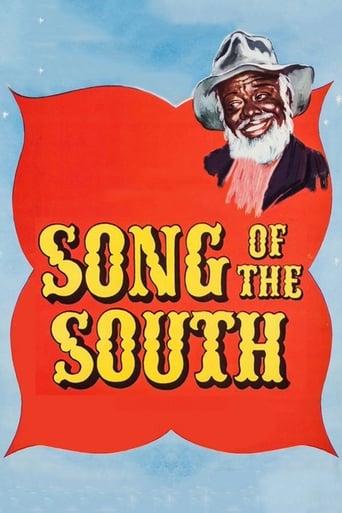
Song of the South
1946 · Film · 94 min
Directed by Harve Foster, Wilfred Jackson
Uncle Remus draws upon his tales of Br'er Rabbit to help little Johnny deal with his confusion over his parents' separation as well as his new life on the plantation.
3 positive7 negative1 mixed25 neutralfrom 36 commenters
Where to watch
No streaming data for this title.
39 comments on Hacker News
On my news feed today I saw a Newsweek story about how someone found a dvd of Birth of a Nation at Goodwill, not knowing what the plot was.
As far as I can tell the standard for a book being "banned" is just that the librarian or the bookseller is sympathetic to the book's message and thinks it should be more widely read while politicians or parents might think it's inappropriate or they disagree with the message.
If you put the shoe on the other foot and name a book that's out of print because publishers dislike the material or it's problematic in the eyes of librarians, I don't think it fits the standard. Birth of a Nation for example is not a "banned movie" and neither is Song of the South. So the standard is entirely set by teachers, librarians and booksellers.
> While not perfect
Yep, Disney was also a leading producer of racist tropes and content during Jim Crow. Historical clips of Mickey Mouse characters putting on minstrel shows with blackface alongside other racist stereotypes like crows can easily be found online[0]. Not to mention Song of the South[1], a film Disney produced based on Uncle Remus stories following slaves who happily live on a Georgia plantation. Disney has, of course, done their best to scrub these entries from history, but they played a major role in depicting racist tropes to kids for decades.
0: https://www.youtube.com/shorts/b5j4T9E8PuE
1: https://en.wikipedia.org/wiki/Song_of_the_South
They are choosing not to host a movie on their service, which I think is a bit different than say, Disney not allowing anyone to access Song of the South.
> Kodak designed and standardized its color film to represent Caucasian skin tones.
That may be an urban legend. There was a popular reference card that had a light-skinned woman, but that wasn't the problem. This is closer to the old Technicolor vs. Eastmancolor debate.
Here's the trailer for Disney's "Song of the South" (1946) [1] That's three-strip Technicolor. Good dynamic range, with each of three colors on its own strip of black and while film. Here's the trailer from "Shaft" (1971) [2]. That's single-strip Eastmancolor. Dynamic range is not as good, as you can see in the street scenes where lighting wasn't controlled. Eastmancolor took over in the 1950s because the cameras are much smaller and production is easier and cheaper.
NTSC Color TV really did have something to standardize skin tones. NTSC color TV transmits an intensity value and two vector components which determine the color. The color vector components are rather low bandwidth (only about 10 full range color changes across the width of the tube), and so some NTSC receivers had a gimmick which, when the vector is near the "skin tone line" for a standard skin tone, pulled it to a fixed value.[3] The effect was that all faces had roughly the same skin tone in UV color space, but intensity could vary.
[1] https://www.youtube.com/watch?v=NxwqH47Ne70
[2] https://www.youtube.com/watch?v=pFlsufZj9Fg
[3] https://bramstout.nl/en/webbooks/vectorscopes/#yiq-and-the-skin-tone-line
Walt Disney was repeatedly accused of racism during his lifetime, mostly because he kept putting dreadful racist stereotypes in his films. The defence given by his supporters is that he was essentially naive and conformist, that he just reflected the values of his time, that he viewed his work as harmless fun, that he wasn't really thinking about the message he sent when he made a film like Song of the South.
That defence is quite reasonable as a defence of the man, but it's also an indictment of his work. Do you really want your kids taking heavy-handed morality lessons from someone who didn't actually have a clear sense of morality?
I certainly do for certain film and tv series that have been banned or cancelled (e.g. Disney's Song of the South).
> Can you offer a full throated defense of why you feel it's okay to pirate media in 2023
-- NOT OP --
In the general case, no, but consider the cases of:
1. "Altered media" e.g. (1) Star Wars, (2) THX 1138.
2. "Remixed media" e.g. (1) Terminator 2 not having its theatrical CDS mix, (2) Earthquake not having its SENSURROUND mix
3. "Omitted media" e.g. (1) Halloween not having its original mono soundtrack, (2) The Exorcist not having its original mono soundtrack
4. "Missing media" e.g. (1) The Star Wars Holiday Special, (2) HBO's "Real Sex" documentary show
5. "Censored media" e.g. (1) Fantasia, (2) Song of the South
There are entire online communities dedicated to finding, restoring, and preserving items like the ones mentioned above.
So, is piracy OK in these cases? I emphatically believe it is.
Another thing you can look into, here's the secret words: Canción del sur.
The film went public domain in Spain. And surprise, there's some boutique resellers in Spain who do DVDs and Blu-rays... and add language tracks...
https://www.amazon.com/Song-South-Blu-Ray-Reg-Spain/dp/B09BDXRLNB/ref=sr_1_4?crid=1450QI0W3UBIW&keywords=song+of+the+south&qid=1673820490&s=movies-tv&sprefix=song+of+the+south%2Cmovies-tv%2C117&sr=1-4
“Song of the South” is a full-length Disney film and the first to mix live action with animation. One might think with that historic meaning, it would be preserved.
But it’s impossible to find. Even eBay has banned sale of the DVD.
Fortunately I have a copy my father ripped to DVD from some unknown source sometime in the 90s. It’s poor quality.
"The Birth of a Nation" and "The Song of the South" are fair with regard to American history. "The Birth of a Nation" because of the effect it had on the national dialog at the time when it was released. It looks like the only film with Lillian Gish in it on their list as well.
"The Song of the South" might be noteworthy simply for Disney's attempt to bury that film in the recent decades. I don't put it in the same category as "The Birth of a Nation" with regard to how offensive it is (although I am not in the demographic that would be personally offended by either). I'm a huge fan of Joel Chandler Harris' original stories — maybe Disney failed by trying to make Harris' works too "Disney".
Exactly. My parents bought a movie, "Song of the South" physically forever ago, and now its almost impossible to get your hands on it because it depicts slavery. Now they can watch it whenever they want, regardless of the fact that that movie will never end up on Disney+
Yes, some were.
But Pinocchio (the 1940 Disney movie) was based on the 1883 Italian children's novel "The Adventures of Pinocchio" by Carlo Collodi.
Disney released it just after the copyright expired. (Copyright then was a 28-year initial term with a 28-year renewal = 56 years.)
And "Song of the South" (the 1946 movie) is based the Uncle Remus stories by Joel Chandler Harris published in 1881, so entered the public domain about 8 years before the movie.
I'm perfectly fine with a 56 year limit on copyright.
Still got a while until Song of the South is freed. We should at least carve out exemptions for works of great cultural importance that are deliberately being kept under lock and key.
I know there are some sensitive race issues, but seriously, the film won an Oscar. It's easier to see the unabashedly hateful Birth of a Nation than it is to see Song of the South!
I have seen similar thoughts amongst friends who may or may not pirate (I never ask where they get their content), and I think of how my music consumption has changed over the last 20 years. When I got my first iPod, I felt rewarded for having ripped all of the few dozen CDs I owned to my iBook. The idea of having instant access to any song I owned was a feeling I loved, and one I've chased since then. It wasn't until streaming services hit a critical mass and I got back to a reasonable (then unlimited) data plan that I finally took my iPod Classic out of my car. My tastes aren't the same ten albums over and over - sometimes I want rock, sometimes pop, sometimes rap. Who knows.
Paying for content is getting really close to that, but I don't think it's there yet, in that I can't just decide to watch Papa's Delicate Condition [0] on Netflix or Disney+ or whatever service I subscribe to. There are a handful of random movies that I love, own on physical media, but can't just immediately consume when the mood hits. When things get there, I think piracy is in trouble. For many people, it's already there. For you, it may be close.
Streaming's biggest problems, to me, are that there are still so many, and the content libraries are incomplete. Disney+ is a great, well-stocked service, but there's some content that Disney has decided doesn't exist anymore (Song of the South - problematic as hell, for sure, but it existed), and for things like that, I wouldn't ever assume them to be available. Same for the unaltered versions of Star Wars. And if Netflix and Peloton have taught me anything, it's that content can go away over time (see my earlier argument about wanting access to content at random times). And of course, offline support - I fly on planes sometimes, or go places without Internet, and I'd like to take a little bit of content with me to be occupied.
0. https://en.wikipedia.org/wiki/Papa%27s_Delicate_Condition
I know Disney pretends that "Song of the South" never existed, but Joel Chandler Harris' "The Tales of Uncle Remus" etc., includes a few stories where the animals meet their ends. Disney passed on those tales of course (leaving them as well out of the Disney book that followed the film and included additional Harris tales).
Like the suggestion that "Bambi" is a parable, it has been also suggested that Brer Rabbit represents the slave of the Antebellum South surviving against the toothed and clawed Brer Fox and Brer Bear only by his wits (though in fact Brer Wolf meets his own end at the hands of Brer Rabbit's "wit" ... or boiling water in his specific case).
More examples: There is at least one Disney film that is not available anywhere (Song of the South; even eBay banned sale of used dvds. I saw this film as a child on I guess VHS).
There are other Disney films and WB cartoons with large sequences removed.
Nothing, it's just that if it's illegitimate to enforce copyright in this case, then copyright itself has no meaning. Consider Song of the South, a movie so controversial that Disney wants to bury it. As the copyright holder they have every right to do so to protect their reputation. Because copyright, especially in civil-law countries, is bound up with the broader concept of authors' rights, including your right to protect your reputation as an author, the right to completely cease any further publication of a protected work is intrinsic to copyright itself; without that right, the concept of copyright falls apart.
And if we abolish copyright because it's meaningless -- a move that would be curiously popular among programmers but unpopular among other creative professionals -- how are professionals in art, music, literature, etc. going to put food on the table? Do we just say "let them drive Uber and pursue their art as a hobby"?
They don't burn books, they just remove them. Those episodes happened, and removing them is a form of gaslighting. If they find the content objectionable then putting a disclaimer, if it is objectionable enough then removing the entire series from the platform could be an option, but it is lost history. In this case the artist doesn't care, and probably is happy to sweep those episodes under the rug. It is like how Disney wishes they hadn't made "Song of the South".
Except that it is impossible to find early Disney war cartoons or more importantly “Song of the South”. The absence of SOTS is truly sad as the movie created the song “zippity do da”. “Song of the South” is beyond the pale for today’s sensibility but I do think its availability should be preserved since its titular song is a cultural touchstone much like the music from “The Good, the Bad, and the Ugly” or the line ‘Here’s looking at you kid’ from “Casablanca”
Song of the South is a good movie especially for its time (Black representation in film) that Disney destroyed because of its aversion to controversy. Since actual Black people are unpopular in racist America, honest portrayals of Black people are considered offensive, effectively removing Black people and characters from mainstream culture unless they "act white".
Slavery is terrible, and since black people were enslaved, literature about Black American's lives from before 1865 is not acceptable. This is bad.
There isn't a smoking gun. That's not how dog whistles work. But the supporters who agree with this stuff feel heard and emboldened.
And there are lots of other data points to go with it. The singer of the national anthem on that stage, for instance, disagrees that Disney no longer sells "Song of the South", an explicitly racist film from their archives.
These things all work together to paint a clear picture.
Aladdin was obviously not intended to be racist and was probably made by people with good intentions. The same could be said of Uncle Tom’s Cabin and Song of the South. But 1992 was a dramatically more racist and reactionary era than 2021, and the 1992 film really is unacceptably racist to show to children.
It is impossible to ignore that Jasmine/Aladdin both have light skin, European faces, and American accents, whereas Jafar and all the hostile guards or street merchants are grotesque Arab caricatures. Seriously - the only Arab “accents” come from bad guys, they tend to have huge hooked or bulbous noses and very dark skin, and they’re all psychotically violent. Most of the references to Arab culture are superficial and rely on stereotypes for cheap laughs (watch the opening scene with the merchant again).
Why Blazing Saddles, and not something like, say, Song of the South? A lot of old movies are ...problematic - I'm just curious why you selected Blazing Saddles as your standard and not anything else that might be on either side of it on a spectrum.
I ignore anyone who puts "left" in scare quotes. It's an ad hominem distraction from the substance of the argument.
As for the claim that Borat is "nearly the most racist movie in history," that shows the author's ignorance of film history and the thousands of very racist films that have been made worldwide. One could argue that Borat is racist, and there would be plenty of points to debate, but there are many many more racist movies in American film history (Birth of a Nation, Song of the South, the entire blaxploitation genre) - not to mention plenty of racist non-American films.
It’s from the Disney movie - “Song of the South”.
I think the only movie that D+ won't touch is Song of the South (for understandable reasons) though yeah, some other changes might be good ideas or not
(though I don't mind so much the "updates" in the Star Wars movies)
Song of the South is a pretty good movie, and people should stop lying about it.
>It's too easy for some Internet comment in a few words to write off the serious, long...
I was referring to the official dissent of the NAACP, which I clearly specified. The official NAACP remarks are as follows:
"The National Association for the Advancement of Colored People recognizes in "Song of the South" remarkable artistic merit in the music and in the combination of living actors and the cartoon technique. It regrets, however, that in an effort neither to offend audiences in the north or south, the production helps to perpetuate a dangerously glorified picture of slavery. Making use of the beautiful Uncle Remus folklore, "Song of the South" unfortunately gives the impression of an idyllic master-slave relationship which is a distortion of the facts."
As you can see, the entire argument rests on the, as I stated, erroneous assumption that the movie is depicting slavery.
I did not say there were no valid criticisms as there obviously were and are. But that specific and most famous criticism is not.
I don't really have a comment on the rest of your history lesson on racism except that I agree and that this movie does not seem to apply. But good work with the virtue signaling.
I'll have a sit down with my African American wife (with whom I watched Song of the South) and explain to her why she should have been more offended.
> based on the erroneous assumption ...
It's too easy for some Internet comment in a few words to write off the serious, long-held concerns of millions of people, not to mention scholars and many others. Great numbers of people have suffered very great and real harm for generations. Perhaps we should be very concerned about what they have to say, so that that harm can stop. The response of ignoring concerns has a long history, as long as the blatant stereotypes in the movie, and have reliably achieve very poor results and great harm.
> idealic
Ideal for white people - that's always true; race relations have always been ideal (or much closer to it) for white-skinned people. Generally speaking, the predictive model of white-skinned people's view of race relations depends on whether the problems are kept out of sight: If people complain too much about racism, that gets a big backlash; white people become angry. The legal system's abuses, the poverty, the unfunded schools, the lack of services, and African-American people themselves are hidden in separate neighborhoods. As long as it's not bothering white-skinned people, then race relations are good!
Films like Song of the South fulfill many white-skinned people's ideal of African-Americans and of race relations. African-Americans have a long history of being defined by white-skinned people rather than by themselves (as do many excluded groups); almost every one you see is filtered through white screenwriters, journalists, researchers, political commentators, politicians, Hacker News commenters[0], etc. Notice the high proportion of African-Americans in fictional media who are criminals, who are poor, and who speak with a heavy urban slang. Believe it or not, those things are not true of the vast majority of African-Americans; most are ordinary people with ordinary jobs and lives, and speak standard English. Having lived in African-American neighborhoods, watching the portrayal on TV and films can be bizarre - it's an alternate reality written by people who have little experience and just toss in stereotypes.
Characters like Remus are objects, not people with their own priorities but things that exist to make white people happy and comfortable, both the fictional characters in the films and (especially, of course) the real people who buy tickets. Finally, in that film the long-repeated stereotypes are particularly obvious and overwhelming (IIRC, and many others agree). If the parent doesn't recognize them, I encourage them to learn about the issue.
[0] HN's lack of African-American voices is a serious impediment to discussion. It's very rare that any commenters can speak from that point of view. Note that African-Americans are almost always discussed int he third person - 'they' and 'them'.
Be sure to watch So Dear to My Heart if you get a chance. Made two years later, it's kind of a sister film to Song of the South: similar animation + live action techniques, some of the same actors, and a bit (but not so much) of the same racial controversy.
There are certainly things to be criticized about both movies, but I think much of the criticism came from people who never saw them.
Walter Francis White's NAACP statement (quoted in the Wikipedia article linked above) is a good example. White didn't see the movie himself, but commented on it based on reports from staff members. As you mentioned, he mistakenly assumed that the film was set during the era of slavery.
The thing that sticks in my mind about Song of the South is that Uncle Remus is the hero of the movie.
To me, the real tragedy of this film - which portrayed people of different races as friends and companions - was that James Baskett, who played Uncle Remus and voiced a couple of the animated characters, couldn't attend the premiere festivities in Atlanta because it was a segregated city. But how could Disney be to blame for that?
And right now I'm regretting having given away my old laserdiscs of Song of the South and So Dear to My Heart. :-(
What about it?
I watched Song of the South recently. And I have to say that aside from some racial stereotypes, that were not necessarily negative stereotypes, the movie seemed like an earnest effort to portray the black character (Uncle Remus) in a very positive light.
The movie did receive condemnation from the NAACP and others. But much of that was based on the erroneous assumption that the movie took place in the antebellum south and thus assumed Uncle Remus was a slave that was just cheerful and happy.
The movie does not explicitly identify the time period but the clothing and Disney themselves make it clear that it is post-civil war.
The only real controversy was that of a movie that portrayed rosy racial relations and some cliches in a time when racism was rampant and racial relations were poor.
But to me there are two schools of thought in regards to Hollywood portrayals like Song of the South. Some think you should tell only the truth and show how awful everything is so people will hopefully change. And others think you should show an idealic fiction that shows how things should be. I tend to think the latter is more effective.
Let us not forget the Song of the South movie:
https://en.m.wikipedia.org/wiki/Song_of_the_South
You mean like Disney's 1946 file, "Song of the South"? [1]
1: https://m.imdb.com/title/tt0038969/
What about this Disney movie?
https://en.m.wikipedia.org/wiki/Song_of_the_South
It's also about having a means for giving a legal smackdown on Holocaust denialists who are itching for the material to come out of copyright so they can chop it up to produce their own material.
That's also why Disney does everything they can to keep copyright on works they explicitly do not allow to be displayed outside their control. For example, "Song of the South" is a huge embarrassment for Disney, and the copyright means they can allow only scholars to exhibit the whole movie.
They're still wrong to do it, but it's not just about the money.
More disturbing is the refusal to make available movies that were incredibly significant culturally at the time of release but are now considered "offensive" to modern sensibilities. Disney's Song of the South is a prime example, despite the fact that James Baskett was awarded an Oscar for his portrayal of Uncle Remus... the first black man to receive an Oscar and only the second black person to do so (Hattie McDaniel won in 1939 for her portrayal of Mammy in Gone With the Wind.)
Try and encounter someone who doesn't know the song "Zip-a-Dee-Doo-Dah", then ask them the origin. Most people under 30 have never seen the movie, and those that have did so using unauthorized sources.
> Watch every Disney movie ever made...
Really now?
Even mostly forgotten features like Saludos Amigos and Make Mine Music?
Even Song of the South, which Disney jealously guards from prying eyes?
Alas, I'll probably never know, as I don't do that "Facebook Login" thing. But I'm curious.
You missed the point. Disney has always valued money over embarrassment in the past with regards to releasing movies, with the exception of Song of the South.
>I know that Disney stops people from taking Walt's original concepts. But is that a bad thing? What concepts did Disney steal? None: he made his own. Other people can do that too.
This is completely wrong. Nearly every famous early work of Disney's was "stolen" from others. Among the more famous are Snow White (1937), Fantasia (1940), Pinocchio (1940), Dumbo (1941), Bambi (1942), /Song of the South (1946), Cinderella (1950), Alice in Wonderland (1951), /Robin Hood (1952), Peter Pan (1953), Lady and the Tramp (1955), Mulan (1998), Sleeping Beauty (1959), 101 Dalmatians (1961), The Sword in the Stone (1963), and The Jungle Book (1967).
The first iteration of Mickey Mouse, called "Steamboat Willie", was copied directly from Buster Keaton's "Steamboat Bill."
This is an excerpt from one of Lawrence Lessig's speeches about the topic: "It was a parody, a take-off; it was built upon Steamboat Bill. Steamboat Bill was produced in 1928, no [waiting] 14 years--just take it, rip, mix, and burn, as he did [laughter] to produce the Disney empire. This was his character. Walt always parroted feature-length mainstream films to produce the Disney empire, and we see the product of this. This is the Disney Corporation: taking works in the public domain, and not even in the public domain, and turning them into vastly greater, new creativity. They took the works of this guy, these guys, the Brothers Grimm, who you think are probably great authors on their own. They produce these horrible stories, these fairy tales, which anybody should keep their children far from because they're utterly bloody and moralistic stories, and are not the sort of thing that children should see, but they were retold for us by the Disney Corporation. Now the Disney Corporation could do this because that culture lived in a commons, an intellectual commons, a cultural commons, where people could freely take and build. It was a lawyer-free zone."
To address your second point, "the idea of capitalism" does not necessarily require giving anyone permanent, state-enforced monopolies of anything, no matter how well written it is. Any justification for copyright has to stem from a benefit to society. Strong arguments can be made for giving creators temporary monopolies of a limited scope, but permanent monopolies are bad for both innovation and the public.