 Hacker Cinema
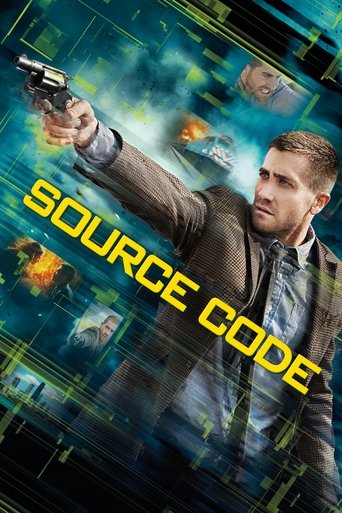
Source Code
2011 · Film · 93 min
Directed by Duncan Jones
ThrillerScience FictionMystery
When decorated soldier Captain Colter Stevens wakes up in the body of an unknown man, he discovers he's part of a mission to find the bomber of a Chicago commuter train.
6 positive1 negative9 neutralfrom 16 commenters
Where to watch
No streaming data for this title.



17 comments on Hacker News
This tech reminds me of that Source Code(2011) movie for some reason.
> seen a film or TV show
I've run through Source Code with Jake Gyllenhaal a few times; does that count?
https://en.wikipedia.org/wiki/Source_Code
I had an amazing conversation with Kamran Ahmed, the self-taught developer and entrepreneur behind Roadmap.sh, a platform guiding over 1.25 million developers through their learning journeys.
Kamran shares how he built this massive community while working full-time, and eventually transitioned it into a thriving business.
Takeaways
Roadmap.sh is a platform that provides learning paths for different skills and technologies, helping beginners and intermediate developers navigate their learning journey.
The platform offers free content and resources, making learning accessible to everyone.
Kamran started roadmap.sh as a side project to help students and developers find their career path, but it has grown into a successful business.
The decision to transition roadmap.sh into a business was prompted by the need to provide more features and support for the growing community.
The platform aims to be the go-to resource for learning, providing comprehensive roadmaps, courses, and projects for various roles and skills.
Roadmap.sh offers curated learning roadmaps for developers, with a focus on making learning accessible and generating revenue.
The team behind Roadmap.sh is lean, consisting of two full-time members and one part-time member.
The tech stack includes Astro, Node.js, MongoDB, Postgre, Redis, and is deployed on AWS with CloudFront for fast page loading.
The design of Roadmap.sh has gone through several iterations, with the founder continuously improving and experimenting with the design.
Having a good eye for design is important for indie hackers and developers
Building side projects is a great way to learn and gain experience
Persistence and consistency are key to success
Roadmap aims to integrate AI to make the user experience even better
Top movies: Pursuit of Happyness, Source Code, and Dark Matter
Top books: Designing Data-Intensive Applications, How to Fail at Almost Everything and Still Win Big, and Scott Adams
Top podcasts: Masters of Scale, Syntax FM, and Founders
This was an insightful and inspiring conversation!
Newsletter: https://lnkd.in/djg-GPWQ
YouTube: https://lnkd.in/d4qZV7dN
Very true. I can see that Edge of Tomorrow, Limitless, and Source Code are all PG-13, so he might want to start with those.
Edit: At the same time I feel like these suggestions (including the R-rated ones) are all wonderfully simple, understandable, yet though-provoking and constantly entertaining. Perfect for anyone that finds 2001 to be a slow and tedious movie. I would really want to trust that it's safe for anyone to watch these as long as they have an adult next to them, and someone they can talk about the movie with after.
First some that I don't see mentioned here yet:
Edge of Tomorrow (2014)
Limitless (2011)
Looper (2012)
Upgrade (2018)
Source Code (2011)
District 9 (2009)
Black Mirror S3E2: "Playtest", S4E1: "USS Callister"
The 7 minute YouTube video "Slaughterbots"[1]
The YouTube series The Backrooms[2]
If you are worried about your son hearing swear words and seeing blood, and not just whether or not he will be able to understand/appreciate the movie, then you probably want to wait with a couple of those.
And then I would also agree with those here that mention Inception, Interstellar, Back to the Future, The Martian, Men in Black, Minority Report, The Terminator, Terminator 2, and The Expanse. I also don't think he should have much of a problem following along with The Matrix.
[1]: https://youtu.be/O-2tpwW0kmU [2]: https://youtube.com/playlist?list=PLVAh-MgDVqvDUEq6qDXqORBioE4Yhol_z
- Anchorhead. "anchor.z8". Not libre software, but cool. And, one day, it might be. You need a Z-Machine interpreter, such as Frotz.
- Dungeon. That's Zork I-III, condensed. More pure to the original adventures than the Infocom's further changes. 70% of chances of being libre software in a very close future, few months of years.
- Spiritwrak. A Zorkian adventure, but libre software. Good to play.
- Spider and Web. "Tangle.z5". Like the movie "Memento", based on flashbacks on an interrogation. You must recall what you've done and how.
- Vicious Cycles. "Cycles.z5". Close to the movie "Source Code", but the game came earlier.
- All Things Devours. "Devours.z5". A time travelling puzzle. You can compile it from source: https://jxself.org/git/devours
- Slashem. Not text adventures, but a roguelike. Buuut... Slashem comes from Nethack and that from Hack until you arrive to Rogue as the origin, and that game it's basically Adventure+RPG concepts+a top down view. Also, objects matter a lot on a text adventure because of their interaction. The same happens in Slashem, combat and proper usage of objects are equally needed to win.
Most of what I remember from source code, the film, is the cringe worthy Bing product placement.
There's also 'Source Code' https://www.imdb.com/title/tt0945513/
Not fully virtual, though. Just the badly maimed torso and head of a victim of a terrorist attack on a train, brain wired to systems, stimulating the last working remains to replay the last 8 minutes over and over again. To gather information and reconstruct 'whodunnit'.
I get the sense that "real Connor" must have been extremely good at concisely explaining the situation and giving the interviewer exactly the information he needed to believe real Connor and understand the situation. It made me think of one of those movies like groundhog day or "source code" where someone has multiple tries and eventually comes up with the most efficient possible thing to say to get someone to trust them. Well done!
I am in Mid 40s with high BMI. I got Covid while waiting for my vaccination appointment. I did not have fever, cough, ache or anything but my brain was effected in strange ways. It was like flashbacks all the time, as if I perceived the now as a series of flashbacks. 6 days after testing positive, I was taken to a hospital by an ambulance, intubation and all. Have you seen the movie Source Code (2011). I felt like that guy in the ICU. Maybe also because of all the drugs they gave me, I had lots of hallucinations, I thought I was being experimented on. I was somewhat paranoid schizophrenic (this is my idea not a diagnosis) for a brief time. Then after 2 weeks I got better but could not walk. 1 month later I was discharged, my wife & mom helped me with my physical therapy at home. On the 15th day, I was able to stand up. Then, I got better and better. Now 8 months later, I fell OK...
You should totally watch Source Code, it's a much deeper dive on this subject. Great movie.
12 Monkeys - Travelling back in time to try and track the outbreak of a virus that wipes out most of humanity.
The Abyss - Survival and discovery on a deep water mining platform.
Apollo 13 - Look at the rescue efforts of this historical NASA moon mission. (Does it count as sci-fi?)
The Dish - Also not quite sci-fi, but a comedy about Australia's involvement in the first moon landing.
Battle for Terra - Surprisingly good animated movie about invading aliens.
District 9 - Alien refugee camp in Johannesburg.
Gravity - Astronaut stranded in orbit, trying to get back to Earth.
The Martian - Survival and rescue of a lone astronaut stranded on Mars.
Moon - After a serious accident, a solitary worker on the Moon discovers a conspiracy.
Oblivion - A veteran assigned to extract Earth's remaining resources begins to question what he knows about his mission and himself.
Predator - The classic that launched the franchise.
Predestination - Faithful adaptation of Heinlein's short story, "All You Zombies."
The Prestige - Some minor sci-fi elements. At the end of the Nineteenth Century in London, two stage magicians engage in a battle to create the ultimate illusion whilst sacrificing everything they have to outwit the other.
Source Code - Using limited time-travel to try and get information to stop a second, larger terrorist attack.
WALL E - In the distant future, a small waste-collecting robot inadvertently embarks on a space journey that will ultimately decide the fate of mankind.
It reminded me a lot of "Source Code" in so many ways. I thought both were decent movies.
The 16% score on Rotten Tomatoes suggests that he didn't. It's a shame because we could have had another movie as good as Source Code or Moon, the last two movies he directed. But instead it's this CGI waste of time that anyone could have made.
I live in UK, but currently in Denmark. Site detected that I am coming from Denmark, but I set it to look into UK Store. Now, when I click on movie, Source Code, the price presented to me is in dollars (and quite excessive being $39 for HD and $29 for SD). What happened to GBP? Now I click to rent it - I am landing in Denmark iTunes store. Not sure is it a problem of goodfil.ms or iTunes store.
So, Paul Carr isn't really thinking it through here with this comment:
Actually, Patricia, you only have two loyalties: one is to your readers and one is to the company that signs your paychecks. That’s it. You do not – emphatically do not – have a responsibility to “stay on good terms” with movie studios.
Just like Moviefone has to maintain good relationships with studios, Techcrunch has to maintain good relationships with tech companies, or else its access will be cut off and things will be made difficult for it in many ways. It can burn a source from time to time just for fun, but if that becomes a habit, then it just stops getting scoops and bad things start happening. For example, some hypotheticals:
- pg stops sending them new YC startup launches
- startups start actively avoiding Arrington and his reporters and seeking out more friendly outlets, e.g. Startup Foundry
- some smart startup guy with time on his hands does an investigative report on TechCrunch itself, showing how the post-AOL TechCrunch has SEO'd its headlines to the gills with Bieber and Gaga crap
And in addition to these sorts of perceptible consequences for burning sources (i.e. scoop decline = traffic decline = revenue decline), there is another dimension to this.
Put yourself in the position of the unfortunate PR person for Source Code. Their entire investment of time and effort -- getting the Techcrunch contact, arranging a screening, getting Alexia face time with a mercurial movie start like Gyllenhaal -- went up in smoke when Alexia trashed the Source Code game stuff. [Though you could argue that the movie sort of has higher awareness now as a center of "controversy", this was not the intended outcome.]
The thing is, PR guys are scared of talking to reporters because there are often very large sums at stake that can turn on the whim of the reporter. Anyone who has raised money in the Valley knows that deals can close -- or fall through -- on the basis of a single well timed adverb in a headline.
Reporters are only dimly aware of the economic consequences of their reporting, and their ability to create -- or utterly destroy -- wealth. It's like there is a river of money flowing by them, and they can either reroute it off a cliff or towards an even larger tributary, but cannot actually take a drink from the water.
I'm of course not saying that reporters shouldn't publish negative stories or takedowns, but rather that often they aren't aware of just how bad a negative story can be if it's the top hit on Google. For those who have built something, your heart is in your throat when talking to the first few people who are going to publicly evaluate it -- are they going to trash it to such an extent that you won't even get the resources to improve it? It's at least arguable that an alternative to the tabloidy approach of Techcrunch is the more builder-friendly approach of David Pogue and Walt Mossberg, who generally don't write about things if they're going to trash them (i.e. the sign that they don't consider something that good is a lack of coverage rather than an outright flame).
Finally, sometimes reporters are aware of the economics surrounding press coverage, but in the worst way. Think about what Gizmodo wrote about the stolen iPhone:
http://www.businessinsider.com/henry-blodget-gizmodo-editor-brian-lams-email-to-steve-jobs-raises-question-would-gizmodo-have-published-iphone-story-if-apple-hadnt-spurned-it-2010-5
Gizmodo lives and dies like many small companies do. We don't have access, or when we do, we get it taken away.
Make no mistake, access and credibility both have business value to any media company and need to be balanced. Access means good treatment of sources. Credibility means good treatment of readers. If you are only "credible", you are reporting yesterday's news. And if you only have access, you are only reporting airbrushed news. There is a balance, and Carr has to acknowledge that.
I'm don't think they really thought the title of this movie through. Might get programmers a few strange looks if they tell someone they work with source code after watching this.