 Hacker Cinema
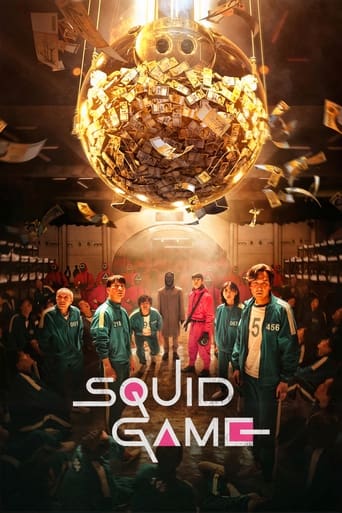
Squid Game
오징어 게임
2021 · TV series · 3 seasons
Created by Hwang Dong-hyuk
Hundreds of cash-strapped players accept a strange invitation to compete in children's games. Inside, a tempting prize awaits — with deadly high stakes.
22 positive11 negative1 mixed54 neutralfrom 88 commenters
Where to watch
No streaming data for this title.
93 comments on Hacker News
I think I've only seen the first Cube movie and enjoyed it. Fermat's Room is a similar type of escape room film which might appeal though I don't think it's a great film (I did enjoy it though).
I first watched Alice In Borderland when the first two seasons came out, but then when I heard that they were releasing a third season, I rewatched the first two seasons again as it had been a couple of years. I probably enjoyed it more the second time of watching, though the third season was a bit meh. I since started reading the manga which features some different games (and vice versa).
I think what elevates Alice in Borderland over Squid Game is the character development. My favourite character has to be Chishiya as he calmly watches and evaluates each situation and just aura farms whilst others panic (sometimes known as the Unbothered King).
Based on what culture exactly? Can you name a single Chinese worldwide hit movie or TV show from the last 12 months?
I can think of only Korean Squid Game and a few Japanese anime shows that are somewhat successful.
Do Chinese movies even get distributed into places like India, Africa, South America as US produced stuff does?
Lol I wrote Avengers instead of Defenders, not sure why the downvote, but it was a really good series of shows, it was highly recommended on Netflix at the time any time a new season came out. Disney just wanted to pull it into Disney Plus that much is obvious considering they've only just started to do that, with the same cast.
Not only this, but there's also Stranger Things, which imho had too many long breaks between seasons. Black Mirror was another one that was really popular. Squid Game as well.
Narcos is another and one of my personal favorite shows of all time, really captures a lot of details that I had no idea about as known by the DEA agents who went after some of the biggest drug lords of our time.
They also fund and produce some of the best high quality documentary series.
https://screenrant.com/marvel-netflix-tv-show-cancellations-response/
I realize this is about money, and it's 2025 right now, and I'm probably just old, but what will happen to quality? I actually laughed, twice, because they did this, twice:
> Beloved franchises, shows and movies such as [list of some of the greatest classics of all time] will join Netflix’s extensive portfolio including [list of laughable junk], creating an extraordinary entertainment offering for audiences worldwide.
And then just a few lines later (and I won't snarkily shorten this one):
> By combining Warner Bros.’ incredible library of shows and movies—from timeless classics like Casablanca and Citizen Kane to modern favorites like Harry Potter and Friends—with our culture-defining titles like Stranger Things, KPop Demon Hunters and Squid Game, we'll be able to do that even better.
Like did I really just see Citizen Kane in the same sentence as KPop Demon Hunters? Might as well add Ow, My Balls to the list, that's how jarring the contrast was for me.
Seriously?
The Crown, Stranger Things, Unbelievable, Russian Doll (wow, just wow), Orange Is The New Black, Narcos, Narcos: Mexico, GLOW, Daredevil, Jessica Jones, Ozark, Nobody Wants This, Altered Carbon, Dirk Gently, Mindhunters, The Queen's Gambit, Unbreakable Kimmy Schmidt.
And that's just what I can remember off the top of my head. And that's my taste, there's more not to my taste like Squid Game, Wednesday, Bridgerton, etc. And not including the films, documentaries, shorts, etc. they done like Love, Death and Robots.
I think you've got it backwards.
That was the hallmark of old TV, on networks. Since the start of TV in the 50's.
There are tons of modern TV shows that don't do anything you're talking about because they're made for streamers or paid TV without ads.
It sounds like you watch different shows than I do, but I watch a lot of TV and haven't seen what you're talking about in many, many years. Not with Squid Game or Stranger Things on Netflix, or Andor on Disney+, or White Lotus on HBO, or Severance on Apple TV+, or even something like Alien: Earth currently on FX/Hulu.
You might want to find better places for watching TV...
> Even if someone today builds a better version of what Netflix used to be, it wouldn't matter. They won’t have the rights and licenses to the shows and movies. That’s what keeps people from switching.
What, apart from Stranger Things and Squid Game, has been enough of a cultural touchstone that it keeps people on Netflix? Those aren't things you keep coming back to again and again.
Netflix doesn't own Friends, Seinfeld, The Office, Community, Parks and Rec, etc.
I'd argue Max (nee HBO) has better legacy titles and franchises. They have both enduring IP as well as the reputation of being "destination television".
The thing that keeps people from cancelling Netflix is that they have a better content slate of licensed classics paired with new originals. And they do it in the greatest volume of all the streamers, so there will be "something" on, even if it isn't particularly good.
They are starting to outcompete Hollywood on quality (see Godzilla minus one, Squid Game, Parasite, etc), they just don't have the hundred millions of dollars of marketing budget that Hollywood has to push and advertise their movies in foreign cinemas across the world, nor do Americans have a huge appetite of watching movies with subtitles, nor could they read even if they wanted to ("54% of adults have a literacy below sixth-grade level"[1]).
[1] https://www.crossrivertherapy.com/research/literacy-statistics#:~:text=Nationwide%2C%20on%20average%2C%2079%25,older%20are%20illiterate%20in%202022.
Protectionist polices can serve countries well. A lovely example is South Korea's entertainment industry (they prohibited displaying foreign cinema, and the resulting need to produce domestic cinema lead to them developing a strong and independent entertainment industry, examples: squid game, train to busan, etc...)
It looks to me like the countries in the pie charts are ones with protectionism (e.g., China), while you are seem to be implicitly advocating for the opposite...
That's a fair point. As an American, we kinda just expect English by the default. But for the rare movie or show worth watching, I can set that aside. I loved Squid Game. Shame they never made a second season(/s, don't remind me!)
That said most of the time I have the TV on I'm doing something else, and watch/listen in passing, so audio is really important. The dubbing on most movies is so, so bad. 60 year old gruff men sounding like a kid, everyone having the same weird enthusiastic tone, etc. The worst is the distancing, everyone sounds like they're talking directly into a mic despite where the camera is.
I really wish they'd invest more into the dubbing process, a well dubbed movie or show is completely watchable to me. And given the growing corpus of foreign content, I think it's a necessity. It's just so rare I usually don't even bother trying anymore.
battle royale is a masterpiece of filmmaking, acting, cinematography, entertainment and the last movie of a master of its craft. squid game is a fun tv show.
I've been waiting for someone to mention Liars' Game! When I started watching Squid Game that's the direction I hoped it was going in. Still good, and season 2 seems to be more in that vein than the first was. But in general I'm a huge fan of stuff that makes you wonder "how are they going to game their way out of it this time?"
> Squid Games is just Kaiji with better presentation.
The presentation comparison is apples to oranges. Kaiji just wouldn’t work as live action (although they tried with a movie) as it relays heavily on the affordances of anime/manga as a medium to present Kaiji’s inner world and show visual metaphors for his emotions. Without that you take away the substance. It’s fair to say Squid Game steals a lot of themes and ideas from Kaiji, but it’s certainly not just Kaiji with different wrapping (unless there is something I am missing having not read the manga).
> only real difference is the language
Kaiji is amount my favorite anime (I haven’t read the manga). It is very obvious the Squid Game creator borrowed heavily from Kaiji, and ripped off the overarching theme, but aside from the glass platform game was there really a lot else taken from Kaiji? Were there any other games or story arcs in the manga that were stolen?
(I haven’t seen season two of Squid Game yet btw).
You don't remember the first episodes of Squid Game then - it's very clearly explained to you. The main character has a gambling problem, lost his job and has taken money from loan sharks who threaten to take a kidney and eye to sell if he doesn't pay up. He also has a mum who is late stage diabetic who can't afford amputation surgery or treatment, particularly as he cancelled the insurance for gambling money.
The antihero used Futures and committed fraud in a company, with the police after him and significant debts to repay as well.
That's why contestants in squid game join - they're all in so much debt that theyve even signed away rights to their body. That's why the contestants can get in and choose to stay.
While the comment section seems hell bent on pointing out other deadly game themed shows and movies, let's just take a moment to appreaciate how great a movie this is.
The setup is absolutely bonkers: Something, something, things are going bad in the future so we have children battle each other - even a seemingly well functioning class.
But to hell with that. It is quickly forgotten, once the game starts. Why the kids starts killing each other is much better shown in Battle Royale than why contestants in squid game accept the game.
I always thought of Hunger Games as Battle Royale for children. The violence and darkness in general is so very stripped down. IMO that's what made Battle Royale and, as you point out, Squid Game interesting. I do think that's more common in Asian cinema and tv though.
Holy moly. I don’t think I’ve ever read an article so angry. Every paragraph has a sensational opinion or put down posing as fact.
There’s some fascinating industry trends here but the analysis in the article is overwhelmed by the cacophony of anecdotes about b movies and bland tv shows all encouraged by the corrupt and evil parent company. Not helpful.
My take on the quality of shows— there’s a huge volume of mediocre stuff but that’s always been the case with TV. (There’s literally hundreds of forgotten sitcoms on broadcast tv from the 70s to 90s). But there have been many gems in the past decade.
A random list of fantastic or innovative shows I saw first on NetFlix. - House of Cards, season 1 and 2 - Russian Doll - Squid Game - Queens Gambit - Ballad of Buster Scruggs - Arcane - Kaos
Only the first was mentioned in the article, and with negative comment.
Overall, a poorly written article and a waste of time to read it.
The conditions when filming their Squid Game episode weren't great for contestants: https://www.rollingstone.com/tv-movies/tv-movie-features/netflix-squid-game-reality-show-cruel-rigged-inhumane-contestants-say-1234672474/
I don't know what "cost us $500,000" refers to though.
The flavor of the cotent is a bit different, but all media is like that. Look at a horror film, or romance novel. It's very clear what human urges/interests are being targetted.
Part of his strategy is copying TV. He famously made a Squid Game episode.
> terrible shows being greenlit, homogeneity of camerawork, casting, identity-politics pandering that nobody asked for, oversaturation of the market with streaming services that is almost as bad as cable etc. … Binge-tv model is also not a good thing
None of this is unique to Netflix. Terrible shows have been greenlit since the dawn of television. Shows are incredibly homogenous because they’re largely produced by a select few people. If anything, Netflix has broken that homogeneity by allowing more indie film/tv creators to breakthrough (like squid game).
Casting and identity politics shenanigans are definitely not unique to Netflix and started way before Netflix started producing content. The oversaturation problem only became a problem when all the other networks wanted their own slice of the pie. It was actually great for awhile when Netflix was the only big player in town.
And finally, binge-tv has always been possible. My grandmother would sit in front of cable television sun-up to sun-down watching whatever was on. 24 hour marathons of mythbusters and other shows like that were very common. Reruns of all your favorite sitcoms play all night on all major cable channels. Bingeing isn’t a unique problem to Netflix. Netflix just allows you to do it with new shows instead of waiting arbitrary amounts of time.
Also, is binge-reading a novel unhealthy? I’ve had 8 hour reading sessions when I’m gripped by a great book, like the last book in the Wheel of Time series. If that’s acceptable, why isn’t watching a show for 8 hours acceptable? I don’t think the medium really has that much of a tangible effect. Now if you’re bingeing shows everyday, then it’s unhealthy. But once a quarter when a new show you like comes out? Idk, that seems fine to me.
They're keeping us a bit longer because the live action One Piece was a gateway drug into the anime, and they have a lot of it on there (just finished watching episode 316 today, a few more and we're done with the Water 7 arc).
But I was ready to cancel for the first time in years before that, as I realize I had barely touched it in almost a year, with the exception of Alice in Borderland and a handful of other things here and there.
Whenever we get through what they have of One Piece I'll probably cancel until season 2 of the live action comes out (or some other show we like comes back, like maybe Squid Game season 2).
The counter, and more optimistic, take on this would be that there would be higher demand for niche cinema because the audience would grow.
If the latest Czech drama or Estonian horror movie got into the zeitgeist because of international simultaneous release then that's a good thing no? The smaller markets would be able to compete more.
Take Squid Game as an example, a very weird and particularly South Korean creation got the reaction it did because of Netflix's release strategy.
Yeah, and Bewitched seems like a terrible example. You can currently buy the complete season on DVD, or watch it streaming. It's continuing to make money and in no danger of being lost.
Of course it's going to be taken off YouTube, the same as if Squid Game were uploaded.
Now if we're talking TV shows that were last place in viewership in the 1960's so nobody's bothered to sell/stream and haven't been syndicated in decades, then it's a totally different story...
Do you have actual evidence for that?
Because sure, if you've got Property Brothers on in the background while you do other stuff, that makes sense. You can go in and out.
But if you're watching Squid Game, or The Last of Us, or Yellowjackets, or even Wednesday -- you'd better be paying attention to every frame. Modern dramatic TV demands your full attention in a way that The Golden Girls didn't.
The idea that younger generations are binge-watching Yellowjackets while browsing TikTok doesn't make any sense.
Futurama is one examples. Ads usually kick in on a cliffhanger or to emphasize a punchline. This was a popular narrative technique back in the day. It might be why sitcoms worked fine for decades but never really carried over to the VOD era.
Not ads, but the best example of a dramatic interruption are the first two seasons of JoJo's Bizarre Adventure, where the hero is screwed and then it cuts out into the Roundabout song. This is a lot less dramatic when you can just binge watch things and don't have to wait a week for the next.
Whereas Netflix shows tend to fill it with fluff, things like side drama, background stories, and redundant plot elements. I know I can skip the ad, but I don't really know if I can skip story details. I end up watching something like Squid Game on 2x speed.
The author talks about both money and variety voices/exposure for more people.
Here’s what I think they miss:
Netflix went from being part of the long tail to becoming an incumbent. Netflix then tries to find more big hits to maintain big incumbent winnings. And incumbents have been in many cases doubling down. But that’s exactly because the long tail is eating the “medium tail” that incumbents used to profit off of alive.
But that doesn’t mean you can’t use the long tail to bring in money. Though a competitive long tail will restrict just how high your margins can be.
The long tail threatens Netflix now (if only to an extent: something like Squid Game becoming a hit in the US would blow the mind of someone in 2006 and seem like a perfect example of long tail content being able to not just be economically viable but potentially turn into a huge winner).
But it threatens Spotify much less! They thrive off of it! The music world isn’t a bunch of services with exclusives trying to be winner take all, most content is across services.
Similarly it threatens Amazon, AliExpress, Etsy, etc, much less than Netflix.
The money in a “produce content for a small niche” was never going to be big for an individual producer, the money in that was going to be in being a successful aggregator, but in a competitive market you can only squeeze that so far.
But if the long tail was dead in terms of people being able to get exposure and views and listens then the YouTube and Spotifys of the world and the big labels would be raking in cash like they used to. They’d have a product without much competition and they could charge more for it from all sides, and take more off the top from artists too. Instead they’re in a pickle because it’s hard to compete with free and the free long-tail is getting bigger and bigger and bigger in terms of popular appeal (like things like youtube videos of people playing video games, which simply didn’t used to take ANY viewership away from TV shows).
The biggest S Korean show in the “west” was Squid Game, which was nothing if not cynical.
The Oscar winning movie Parasite is also steeped with pessimism and cynicism.
It's weird making a divide between western and asian here, especially on an article based on South Korea. Asia is very diverse, and there's massive differences in the content produced across different countries. South Korea is essentially on-par with the US in terms of production quality, whereas live-action Japanese shows are b-films at best.
Also, I don't know what shows you're watching, but it's hard to understand what you're describing. A lot of anime (including some of the most popular) are full of cynicism and irony. Evangelion, attack on titan, ghost in the shell, etc.
Korean shows especially tend to have this. Squid game being a prime example, but also most of the revenge shows (itaewon class, the glory, etc).
Also, overacting is purposeful in Japanese shows (annoyingly), but less so in serious Korean dramas. Rom-coms everywhere purposely have overacting, because it's funny.
> The elephant in the room here is the obsession western TV now has with being woke.
The biggest Korean series on Netflix is absurdly "woke": I don't know how one could watch Squid Game and miss how critical it is of capitalism. I also find most movies by Bong Joon-ho to be similarly "woke" - not at the periphery, but as a central theme of the work - for instance Snowpiercer, Parasite and Okja, and they are hits in Korea and abroad.
Meta commentary: your appreciation for diverse types of movies (and not just the same-old bland Hollywood ones) is pretty woke too!
> They're now just padding numbers with cheap foreign content, mostly from eastern Europe, India, and Korea
Netflix gets reputation from good content, not the number of shows, the primary marketing has switched from size of library to range. 1000 TV shows mean less than one Seinfeld or The Office.
It's not padding just because you don't know the language they're speaking.
Also Dark, Casa de Papel and Squid Game were huge. I will agree on one point though, the dubbing is criminal.
> 3) The lack of global hits is very strange.
Yeah, this part of the article really struck me:
> what’s really interesting is there aren’t that many global hits, meaning that everyone in the world watches the same thing. Squid Game was very rare in that way. And Wednesday looks like one of those too, very rare in that way.
I have to wonder what the problem is. I've watched more foreign-language shows in the last 3 years than in the rest of my 51 years combined thanks to shows on Netflix, HBO Max, Apple TV+, etc. I'd love to see more of them, but they aren't surfacing in my searches and recommendations very frequently. I'd really like more variety in show selections. They don't even have to be big hits like Squid Games or Lupin. I'd be interested in any show that's good regardless of whether it's been a blockbuster hit.
On something like Hulu, there are tons of shows that mostly fall into Police/Medical procedural, Office-like sitcom, or Friends-like sitcom. Those are fine, and some are even pretty decent, but I'm really tired of those formats. Seeing shows about other cultures has been fascinating. And just having other types of stories is nice, too.
A few thoughts:
1) On the talk of saturation Netflix had somewhere around 230 mil subscribers last year. In theory the addressable market should be adults ~20 and up so somewhere around 5 bil. So not even close to saturation. Discounting say half of that imagine how much better the service could be with 10x the current subscriber base. They talk about increasing subscription price... At 10x you could half the subscription price and still increase content spending 5x which would be pretty incredible.
2) The article talks about old content not holding value as expected. I think a lot of this has to do with the near complete failure to invest in rewatchable content. They were clearly aware the value of shows like The Office and Friends in terms of rewatchability. Off the top of my head I can't even think of an attempt at original content in that lane from Netflix (Licensing and extra seasons of Arrested Development is the only thing that comes to mind). To be fair though utterly bizarrely nearly every service has failed at this kind of content for the past 5 years or so.
3) The lack of global hits is very strange. I was trying to lookup high budget tv productions in foreign countries and not sure if it is just a lack of data or they don't exist. I would think even if there is a cultural bias around kinds of shows people watch just in terms of production quality western shows would still be globally dominant. Are there any examples of international shows with 20 mil per episode budgets?
This one is definitely strange to me looking back on what I would have estimated for the world of streaming a decade ago. I would have expected a much more expected shared culture in terms of what is watched worldwide. Instead it seems if anything we have become increasingly isolated. It's crazy to think Netflix isn't even active in a country the size of China for example. I would have thought by now technology would lead to shows with viewerships counted in the billions not millions. Squid Game is apparently Netflix's most popular show ever but even that from brief research has under 200 mil views which in the context of total population still makes it incredibly unpopular. I.e. if you take 100 random humans and put them in a room almost none of them have seen it. I wonder if we will ever reach a point where anything is actually globally popular.
Let's not pretend that network television didn't have its fair share of shows being cancelled mid-stream.
It feels like the big difference is that Netflix is culturally bound to having very short seasons, which get pushed out at once but rarely (like, not even once per year). This has a bunch of effects, that make the cancelations more painful.
One is that the creators can't iterate and learn based on audience reactions. The classic network TV show pattern is a bunch of shaky episodes early on, until things click. If the first try didn't work well enough, too bad. You had your shot.
Another is that the creators get no warning for when the show will be over. The only thing they can do is plan for success. While a network TV show that's not doing well enough would often know "these are the numbers we need to hit in the early part of the season, or it's over". And then they can plan for wrapping things up. Sometimes this goes wrong, the ending gets rushed for a show that then miraculously finds another round of funding. But it is still better than the alternative.
The third is that shows have no time to build up word of mouth. When a new Netflix show drops, it is likely dead in the discourse two weeks later unless it was a once-per-year megahit like Stranger Things or Squid Game. When a once per week show drops, it'll get talked about weekly and (if the vibe is positive) pick up viewers. The most obvious case of this I remember recently is the utterly mediocre The Nevers. On the forum where I do my TV and movie discussion on, a Netflix show of similar quality dropping six episodes at once would warrant 5 messages in an omnibus thread, and then be forgotten. This got hundreds of messages of very engaged chat.
>and tracing is absolutely not "VERY common"
Paintover does not have to mean actual 'tracing', a LOT of artists use photos as direct references and paint over them in a separate layer, keeping the composition, poses, colors very close to the original while still changing details and style enought to make it transformative enough to be considered a 'new work'.
Here are two examples of artist Sam Yang using two still frames from the tv show Squid Game and painting over those, the results which he then sells as prints:
https://www.inprnt.com/gallery/samdoesarts/the-alleyway/ https://www.inprnt.com/gallery/samdoesarts/067/
That said, you could even get away with less transformation and still have it be considered original work, take Andy Warhol's 'Orange Marilyn' and 'Portrait of Mao', those are inked and flat color changes over photographs.
I just want to echo the recommendation for Alice in Borderland. If you liked Squid Game, this is just as good in its own way (I think I actually liked it better and find it a bit more rewatchable, even though I think Squid Game has a bit more visual style to it).
Season 2 just dropped as well so it's a good time to get into it. The full manga was told in those 2 seasons as well, apparently (haven't read it yet, just based on reading discussions on the show), so unlike a lot of Netflix shows, it tells a full story if it doesn't get renewed for another season.
I haven't seen any of the others you recommended yet, although Train to Busan was on my radar already.
In animation or anime, Japan is still the big player and is going to be for a long time. However, in live action, South Korea is easily has an upper hand. Movies like The Old Boy, Parasite, Train to Busan and show like Squid Game have an international appeal while rarely any live-action Japanese movie made that kind of impact.
> This is about the children from the wealthy people and how they are coping with the boredom of being able (afford) to do anything.
See also the excellent Korean documentary "Squid Game"!
Disney+'s marquee show is The Mandalorian which has been quite great so far but even that can't be stretched for too long. I don't see it going beyond a few more seasons. At least with its competitors like Netflix, it has a fantastic library of so many show like House of Cards, Stranger Things, Dark, Squid Game and a bunch of stuff for almost every demographic possible. HBO probably has an unparalleled library of shows and movies. Disney+ shows don't have the same kind of rewatchability. For example, they fumbled extremely hard with the Obi Wan show, which could have been another potential cultural zeitgeist like the Star Wars movies if they probably cut down the filler and did some more rewrites to improve the script and released it as a movie (either in theater or as a Disney+ exclusive)
Disney+'s marquee show is The Mandalorian which has been quite great so far but even that can't be stretched for too long. I don't see it going beyond a few more seasons. At least with its competitors like Netflix, it has a fantastic library of so many show like House of Cards, Stranger Things, Dark, Squid Game and a bunch of stuff for almost every demographic possible. HBO probably has an unparalleled library of shows and movies. Disney+ shows don't have the same kind of rewatchability.
I cannot eat dinner and read subtitles without needing to pause/rewind over and over. It takes focus, and also distracts from actor's expressions and the overall scene. At least for me.
Dubs can be done very well - see Squid Game. The voices matched the characters in both body/expression and situation. The mouths fairly closely matched the voices as well, and in some scenes you might even forget they're dubs you're listening too.
The problem is, Netflix seems to push poorly done foreign films with even more poorly done dubs way too often.
> Netflix caters to a global audience
The catalog you see is what is available for your country. Which means it's curated for your country and it's interests, and/or allowed licenses. I have no doubt the Korean version of Netflix is filled with native Korean shows/movies. For some reason though, Netflix is pushing French and Belgian movies onto the US audience, mostly with horrible dubbing coupled with already atrocious acting. It feels like a "these are cheap, stuff them into the catalog!" sort of thing... meanwhile US viewers can't watch shows they actually want, like Better Call Saul season 6...
I would argue that the problem is less due to franchise fatigue than it is to low quality and needlessly confrontational writing. Classic drama tends to have a universal quality to it that transcends any particular time, place and culture, and it's this quality that has been lacking in woke entertainments from the last five or so years.
Take Squid Game for example. I don't speak Korean and know next to nothing about Korean society, yet its core story about a group of people in desperate circumstances being forced to constantly reevaluate what they're willing to do to survive resonates with me just as well as if the show had been set in any other country.
Compare that with The Rings of Power, where Galadriel is portrayed as a perfect warrior woman whose biggest source of antagonism is the weak and unprincipled men around her. Or She-Hulk, who has to explain to Bruce Banner that men telling her how to do her job makes her a better Hulk than him.
Young progressives lap this stuff up but it leaves everyone else cold, including many women. In years to come, these stories are not going to be loved. These films and TV shows are not going to top any polls. The characters are rotten, unlikable and will not live on in anyone's hearts.
"I can think of no recent novel or film that provoked passionate debate."
How about the TV series Squid Game?
Another series, Extraordinary Attorney Woo, provoked considerable debate in South Korea, apparently.
> When the Netflix-produced Korean show Squid Game went viral and won awards worldwide, many Chinese netizens were asking on social media — when can a Chinese TV show be recognized in that way?
Fascinating. I mean, the answer is obvious to everyone else in the world, but it'll be interesting to watch them figure it out over the next few decades.
Is Squid Games even allowed in China?
This is true, but it fails to take into account back catalog the legacy media companies such as Paramount, Disney, NBC Comcast, and to some extent even HBO have to fall back on. They gain subscribers simply to watch the content they made 20+ years ago, and then on top of that, have in many cases just been running sequel and spinoff series on things they already know work. Sure, not every spinoff series works, but it's sort of like they're throwing darts at a known dartboard in a well lit room; Netflix is throwing darts in the general vicinity of where it believes a dartboard to be based on the sounds its heard from getting lucky in the past in a pitch black room. The consequence is that Netflix pays a lot more money finding its hits than its competitors do.
This isn't insurmountable, and Netflix has shown itself to be full of innovative means of handling this reality. But while the bulk of the last 10 years was just gathering subscribers to pay for other peoples' content (remember, until recently, The Office, Friends, Star Trek, and Disney movies were ALL on Netflix), the next 10 will require them to do more in the way of finding original content that works, and acquiring things from smaller/foreign studios (a la Squid Game). They've got practice, but they've lost their money printer.
No need for you to bashing netflix if you don't like their content.
Its $10 per month, 2 coffees.
I also do watch a lot of tv shows and movies for the last 15/20 years (also stuff besides mainstream) and there are pretty good tv shows on netflix. Stranger Things, The Umbrella Academy, Better Call Saul, Russian Doll, Love Death and Robots (the last season was weirder than usual though), Space force (super quirky, love it!), The Witcher, Arcane, Superstore, Squid Game
Squid Game's success is partially due to international mainstream audiences not being familiar with Korean overly dramatic narrative style. Once one has seen and gotten used to their melodrama style, they are in a rut just like US laugh track sitcoms.
I get your point, but it doesn't necessarily implicate that you should try to replicate precious hits? Why pretend you've found the formula when it's clear you have no idea?
It seems like every celebrity had their shot at a sitcom in the 90s for example. Is it like the saying about nobody getting fired for buying IBM? But then, risk-taking within that narrow space was limited. From the Seinfeld Wikipedia article:
'The pilot was first screened to a group of two dozen NBC executives in Burbank, California, in early 1989. It did not yield the explosion of laughter garnered by the pilots for the decade's previous NBC successes like The Cosby Show and The Golden Girls. Brandon Tartikoff was not convinced the show would work. A Jewish man from New York himself, Tartikoff characterized it as "Too New York, too Jewish".'
It was almost not even aired.
Squid Game seems to have been a gamble. I'd like to see more like that, but I'm afraid they'll over-fit to that success as well. US remake perhaps? Sequels, prequels, spin-offs. "The 100 must-see dystopian Korean horror shows on Netflix 2023“?
I don't know that I necessarily agree with this, some of the more mature shows are also simultaneously their most popular offerings. (Squid game, black mirror, the Witcher, etc.)
And I for one am glad when a show is rated TV-MA because it means that they can be more authentic and unfettered in terms of the vision for the show instead of watering it down to appeal to a broader demographic. "Television is for families" is purely your subjective anecdotal experience. There is a reason the expression is "Netflix and chill", not "Disney and chill".
Conversely, if you're not interested in yet another marvel show or movie, Star Wars or old animated movies, Disney+ is a desert.
I'm Curious if there's going to be a noticeable Stranger Things dropoff. Though there will probably be a big uptick for Squid Game season 2. Apparently season 1 was worth $1 billion dollars for Netflix.
> If you would get fancy, add sub title options to the mix.
Not sure if you're aware there are already subtitle options?
I think people are here confused why they get offered films in other languages as if it's a bug? It's not - in the UK for example almost everyone only speaks English but we still have a lot of Asian films and series in our catalogue - people just happily watch them with subtitles.
Some of the most popular shows in the UK Netflix are not in English, such as Squid Game.
Readers here love to crap all over Netflix, but it's still the service I use most. Yes, the movie selection is lackluster and yes, they make a lot of mediocre shows (though often for niches where fans of that content may have few other options). But they also make some of my favorite shows of all time like Bojack Horseman, Big Mouth and Sex Education. And they've revived some of my favorite content of all time like Arrested Development, W/ Bob & David and Wet Hot American Summer (with mixed results, but still). Not to mention a lot of fringy comedy that may have otherwise never been produced, like I Think You Should Leave, Aunty Donna and Middleditch and Schwartz.
And they've brought content into the mainstream (in the US) that we otherwise may have never seen, like Black Mirror and Squid Game.
Throw in some flagship nature documentaries, a ton of stand up specials and the occasional cultural phenomenon like Stranger Things and I still feel like Netflix is easily worth the cost. And just because they produce a lot of crap doesn't negate any of the above. There is no number of Adam Sandler movies that will change how much I loved Michael Bolton's Big, Sexy Valentine's Day Special.
Ozark, Stranger Things, Grace and Frankie are all wrapping up. Archive 51 was great and very well received and cancelled immediately.
Right now there's kind of a shortage of Netflix-unique good shows. I'm not spending money that I worked for in exchange for... a nature documentary narrated by Obama.
Derry Girls is great but you can watch it months in advance on All4 with a dirt cheap VPN. There is a similar situation for Bodyguard.
They are expecting people to actually sign up (instead of sharing passwords lmao) and watch ads for the off chance that in a year or two maybe Squid Game season 2 is as good as season 1, or that they need to not miss out on Red Notice 2 and 3. It feels like they are literally betting that people need forgettable Gal Gadot movies in the same way that they need cigarettes.
The West (specifically in my experience, the United States) have been buying up everything tech and auto South Korean for pushing over a decade now at this point. Kia and Hyundai automobiles are now running against the Japanese cars here. Samsung and LG electronics are highly popular, as the Japanese versions were a decade or three prior. It's now more Samsung, LG, etc here in the US than it is Sony, for example. Also in agreement with a poster above how the Korean cinema is just now taking off since around 2019. Prior to the movie Parasite, I can't even think of a popular South Korean film taking root here but most have seen Parasite and quite a few were into Squid Game. This is a relatively new thing.
That's an interesting perspective. The only thing I can relate to here is Squid Game, but it went mostly unnoticed as a "trend shift" by me, because it seems to just fit the trend of Korea having pretty good movies (Chingoo, Old Boy) for the niche audience that liked things like Japan's original Battle Royale.
Also, the trends of Korea seem to very much run in parallel with the trends of Japan - overworked business people tired of working all the time with a lack of meaning.
Pretty informative post, thank you.
We're talking in a pop culture context here, where even just in 2020-2022 Korea and Korean culture/heritage has had significant soft power success in a number of markets/media:
- Export of majorly successful pop music (e.g. BTS, Blackpink - those hits are often penned by Western composers however, so a bit murky on what product is flowing there)
- Ditto TV (e.g. Squid Game setting TV records with a lot rooted in Korean schoolyard games)
- Ditto cinema (Parasite, a story about social mobility woes in Korean society, winning all the Oscars)
- Ditto gaming (PUBG, other MMOs)
- Ditto literature (bestellers including "Kim Jiyoung, Born 1982", again on social issues in the country)
- Ditto cosmetics exports, beauty trends ("Korean Week" in malls, say), etc.
- Even some Western productions focussing specifically on Korean diaspora/ethnicity (e.g. most recently the expensive "Pachinko" on Apple TV+ (and the novel it's based on), or stuff like Kim's Convenience)
I think you can definitely make a case that Korea is the Asian-country-du-jour among the Western audience (and that's before you get into, say, Latin America, which is far deeper into Korean TV content, also bleeding over into Latin minorities in the USA).
> But financial analysts underestimate the risks Netflix took on when it decided to be self-sufficient, creating its own library of movies and TV shows. This huge and ongoing cash drain is a weakness, not a strength.
this is a terrible analysis. Netflix recognized early on that they need to start yesterday (years ago) before other streaming services came online. it's why they're still relevant today.
Otherwise I must confess: I was bearish on netflix, and still am overall. But their investments are thoughtful and strategic, squid game being a recent example. I don't love them, but they're the only service I'm paying for.
their weakness is the monthly cost for unlimited streaming. Once you're basically in every home, the only way you can extract more money is to raise the rates. When a hit show comes out, people may signup for a month to watch and then cancel, and they certainly honor that behavior. But they're also mindful of ads and the expectations of their current user base, and will have to get creative on generating new revenue. I give them 50/50 they find a way.
The budget of the film Cuties was under $1M, maybe a small bit more with Netflix's marketing involvement after the initial release (Netflix bought the rights to a worldwide release outside of France). Spotify just directly wiped tens of millions of dollars off their service and likely suffered more long-term lost subscriptions since people have already switched to YT Music or Apple Music; anyone that dropped Netflix had probably resubscribed by the time Squid Game was released.
> You could have the worst software and the best content and probably win
I definitely get where you're coming from. As a counter example, my parents aren't great with tech and have written off platforms with content they want because they find them annoying. For example, they find Amazon Video way too confusing. What's free? Why are there channels that aren't free that they already have somewhere else?
> I suppose the answer is to let the users write their own clients
Netflix definitely doesn't want this. They want people to turn on their TV and open Netflix. If people have a third-party client that can show Netflix content alongside content from HBO, Amazon, Apple, and Disney, people might start watching their competitors more.
Not only that, but Netflix wants to be able to push your viewing in certain ways. If everyone starts watching a show at the same time, it can create buzz. Netflix's big promotion of Squid Game got to that critical mass for buzz to happen.
If they're able to determine what comes up where in the UI, they can also prioritize shows that are cheap for them. Getting someone interested in an owned show is better than getting someone interested in a show that they're renting from a third party.
That said, there are third party UIs like JustWatch that allow you to integrate with multiple services. We also saw Movie of the Night (https://news.ycombinator.com/item?id=29862588) featured here a little while back offering an API and it does offer links to shows in Netflix.
I think the issue is that it takes work to build a third-party UI and it takes money to actually collect the data (or pay someone else for the data) while the streaming companies aren't totally happy about giving you that data.
Really, everyone is looking for an edge. Google wants their Android TV to serve you ads for shows. They want Hulu to pay them money for them to push Hulu shows in their UI even if you don't have Hulu. Roku wants to sell advertising space on their Home Screen. Every content provider would love to become your primary destination while you ignore the other apps on your system and forget that they have content too.
I watched Squid Game with subtitles and I... kinda agree but I'm pretty certain a lot of scenes have ADR, so even the "original performances" aren't the original performances, but people re-reading lines in a recording studio.
I mean there's some undeniable fact that the original text is the original thing, and low-quality translations often just remove entire parts of sentences or details just because it's "annoying", and you are missing out on lots of fun little details. Not super relevant in paint-by-numbers TV shows but for shows with a lot of flourish in the dialog...
I started watching Squid Game with my brothers' girlfriend and gently suggested that we should use subtitles and the original audio. It took a couple of episodes, but some of those dubbing performances are pretty rough and when she did decide to switch she immediately agreed how much better it was.
The only downside is you have to actually _watch_ the show rather that staring at your phone most of the time...
Respectfully, this is a lazy take. If you even slightly dig into the numbers the price increase makes complete sense. Netflix spent 17 billion dollars on content last year. They are outspending competitors 2 to 1 if not more. Their catalog is thriving - you have big names like DiCaprio, Jennifer Lawrence, Ryan Reynolds, Gal Gadot, The Rock etc signing on for movies. You have shows like Squid Game attracting ridiculous numbers. Netflix is, if anything, signaling how confident they are of their position by asserting their dominance over the market by raising rates. They know their offering is too good for subscribers to cancel. And most will gladly pay and keep paying if the Netflix content engine keeps churning.
I really hope Netflix proves everyone wrong. HBO and Disney+ may have a huge advantage but neither seems interested in the tech side. Disney+ may be OK now (it's been a while since I checked) but HBO Max seems to be extremely inconsistent when it comes to streaming quality. Even new, popular shows like Euphoria on HBO Max are only 1080p with a bitrate so low that the frequent, dimly lit scenes are a blocky mess. At the same time, AAA movies like Dune stream in nearly Bluray quality. Meanwhile even dumb reality shows on Netflix still stream with suburb quality.
IMO assuming Netflix doubles down on original content which seems to be the assumed direction, they have two strategies. Strategy one is to produce/distribute content that is developed outside the US where production is much cheaper and existing production companies have less of an advantage. Partnering with local, smaller production outfits is probably a good strategy.
Strategy two is to use their tech advantage to lower the cost of content production. I'm quite surprised that we haven't seen Netflix create a Holodeck-esque production method. The Mandalorian (Disney+/Holodeck) and The Witcher Season 1(Netflix) have somewhat similar production costs per episode at ~$15M and ~$10M respectively but The Mandalorian had significantly more and better CG then The Witcher so clearly the Holodeck method has a lot of benefits and cost savings.
That said Squid Game only had a total budget of ~$21M, although a lot lighter on CG, strategy one offers a more cost savings.
They have "Grace and Frankie", which is their longest running show at 7 seasons.
Netflix IMO tries to make shows that are very zeitgeist-y, instead of evergreen, like Friends and The Office. I think that will come back to bite them in the future because I don't see anybody wanting to license one-offs like Tiger King or Squid Game for syndication down the line.
Meanwhile, decades-old shows like Law and Order, Frasier and Two and a Half Men are still making bank because they have tons of episodes and are generalist enough to be popular across pretty much any cable network globally.
Did it take over the world? I've heard of one popular movie "Parasite" and one TV show "Squid Game." I saw Parasite and didn't see Squid Game. I've lived in Paris, Berlin, New York, LA, London, and Dubai... I see US TV taking over all those places... but I've seen WAY more people watching Japanese anime shows than people watching South Korean TV. On the other hand, SK music seems more popular than their TV, but even in that sense I wouldn't say SK music is "taking over the world." (note: my gf is Korean and even she doesn't watch SK TV or movies).
> SK TV are essentially Hollywood TV casted with SK people. If you watch Squid Game, and you think that SK people would think and behave like what the TV shows, then you would be wrong.
Can you clarify your thought here? American people don't think and behave like they do in Hollywood TV shows. There are exceptions of course, but most pop TV shows do not attempt to accurately portray real human relationships, emotions, actions etc.
Do you mean to say that there is something particularly American about Squid Game? When I, an American, watched it my biggest thought was that it seemed very much like an anime. Especially some of the early scenes like the chase by the loan sharks or the paper game played in the subway. It felt distinctly not like normal American television in that regard, though of course you can't create TV in 2020 without having some influence by Hollywood.
> SK TV are essentially Hollywood TV casted with SK people.
I'm not even sure what you want to claim, Hollywood has been long associated with the film industry and not the television industry.
Assuming you are referring to the general USA television: I don't feel so, especially being a South Korean and aware of SK television for decades [1]. For an easy example, the 2021 South Korean TV drama with the highest rating (17.37%) was Mr. Queen (철인왕후) from tvN, a drama cable TV channel, and it is a (Korean) medieval-themed fantasy drama based on a PRC drama Go Princess Go (太子妃升职记). Such dramas and films have been popular in SK and I'm not sure there is an equivalent in the States.
[1] I should clarify that television has been in decline like everywhere else and most audiences have switched to YouTube and OTT services by now.
Assuming you are referring to the Hollywood film industry: of course the influence exists, but the SK film industry directly competes with the Hollywood in the domestic market and if your claim is true the domestic industry would have had hard time, but it doesn't seem so at least for now. In fact this seems to be the real reason behind the current K-whatever trend; it has survived the Hollywood and is not well known until now so it is a fresh alternative to the Hollywood and other well-known film industries.
> If you watch Squid Game, and you think that SK people would think and behave like what the TV shows, then you would be wrong.
This applies to virtually every media.
I am not sure SK TV taking over the world signals much:
SK TV are essentially Hollywood TV casted with SK people. If you watch Squid Game, and you think that SK people would think and behave like what the TV shows, then you would be wrong.
This essentially is hollywood transfers its manufacturing capacity to SK, just like American industry transfers its manufacturing capacity to China.
It's not SK tv took over the world. It's SK tv production get integrated into Hollywood entertainment market.
This is amazing. I can't wait until this is used to dub TV shows, so we get the original actors' voices, especially for shows like Squid Game that had such terrible dubs.
The issue is their content is actually a very poor point in differentiation. I watch a larger amount of TV than I'd care to admit, and honestly Netflix is awful for content.
- Disney has Star Wars, Marvel, Pixar, and a long tail of childhood classic films. - HBO has Warner Brothers, DC, Cartoon Network (including a nostalgia back catalog), the best TV shows made in the 00s, and a long tail of adult films. - Netflix's largest successes in the last two years are Tiger King, Squid Game, The Witcher, and a long tail of shows cancelled after Season 1 and short-run miniseries.
At this point, Netflix is a last-resort source of entertainment for me, even after (ad-riddled) YouTube. I mostly only use it to watch their weird reality shows (Blown Away, Sugar Rush) and check out shows friends recommend. I suspect even Paramount+ has a larger selection of TV shows I'd like to watch compared to Netflix.
I actually didn't know that about Korea's film past. I'm pretty excited about the sudden burst and interest in Korean TV coming out now it feels like it's growing!
Parasite, Train to Busan, and Squid Game have really helped bring in a lot of eyes.
Netflix seems to be invested in growing Korean market, better yet if they can get more english language viewers of Korean language content! I just put Silent Sea on my list looks interesting.
I don't know what you are talking about. I can tell you the rough plot of Stranger Things, Squid Game, and Tiger King despite never having seen a single episode of those series.
Shows are still part of popular culture, it's just streaming instead of timed TV.
I lament this fact often. We no longer have a shared cultural experience around media. Very occasionally something pops up that everyone seems to know about, like Squid Game or The Mandalorian. But it isn't like the old days, when anyone would talked to saw the latest episode of I Love Lucy or Friends or Seinfeld.
There are so many choices and it's so fractured that there are no "big winners" anymore. But that's also a good thing, because the big winners weren't winners because they were good, they were winners because a network executive decided they would be winners.
I think many people don't reflect on the show's messaging beyond the surface level "catchy costumes and violence in a game show" aspect (which honestly wasn't even new when Arnold Schwarzenegger portrayed it in Running Man).
The social critique of Squid Game isn't the squid game. It's the world outside the game. It's why so many of the participants not only volunteer but also volunteer to come back after having already experienced it. The world outside the game show is portrayed as so bleak that hundreds of people would rather compete in a life-or-death "game" that promises fairness and a life-changing cash reward.
And the critical message of the show is that this world outside the game is not significantly different from ours. The game is a grotesque exaggeration of a get rich quick scheme but there are plenty of examples for people hoping to beat the odds or being willing to scam others for promises of great fortunes (look no further than the way the GameStock pump and dump was framed as a proletarian revolution until it was revealed most of the stock movement was the result of established investors jumping in to cash out on the gullible masses still tweeting "diamond hands" memes as the tide was starting to turn).
The cheap gore horror sells the show, but the implications of the story it tells, what people are willing to do to themselves and others for the promise of a carefree life, and how characters from all walks of life can end up in the gutter and devoid of hope, is why people dig their claws into it for more than just a few viral marketing memes. It speaks to the zeitgeist, especially during a pandemic that has repeatedly demonstrated failures of government and society, and economical interests being placed above the individual's well-being.
Before 2020 many people likely believed that their country would come together in a crisis like this, that people with power would forego their own interests for once an help out or that the wealthy wouldn't do less than even the bare minimum to contribute to the society that made them rich. In 2021 I don't think there are many people left having any such illusions about the systems they exist within.
So yeah, detached rich people betting on the dying and desperate like horses in a race strikes a chord with people right now. A show casually presenting a social reality in which poor people are willing to participate in such a "game" even more so. Note that this show's success on Netflix followed both The Platform and Snowpiercer (or the serialization thereof) as well as Parasite and Knives Out. There's a common thread between the themes of these films and Squid Game managed to strike the nerve.
> IIRC, the maker of Squid Game was quoted as being unable to contemplate what a season 2 would involve. Are you kidding? Just put a new bunch of characters through a new bunch of games, sprinkle a bit of extra plot on it and keep up the production values. People will watch an infinite amount of this
Even though you don't see it, I'm pretty sure the creator tried to tell a deeper story in this series. And from that perspective, it's quite obvious why a second season couldn't just be a repeat from season 1.
You picked the worst acting of the series as an example here. The previous episodes actually did have superb acting. One huge difference to American and British shows is that nobody tried to be cool in squid game. They were acting like humans would.
You get the same every time this is done: Hunger Games and Battle Royale were also hailed for much more than the competitive brutality idea they were built on, and really they had little else to offer but that. For some reason people seem to feel the need to say they enjoyed it for reasons other than just enjoying inventive, competitive death games (maybe they really do, I don't know).
Anyway, I loved Squid Game but I wouldn't call it remotely deep. It's a formula. You just need to come up with a few decent characters and it practically writes itself.
IIRC, the maker of Squid Game was quoted as being unable to contemplate what a season 2 would involve. Are you kidding? Just put a new bunch of characters through a new bunch of games, sprinkle a bit of extra plot on it and keep up the production values. People will watch an infinite amount of this.
<DerekJacobi>He will bring them death, and they will love him for it.</DerekJacobi>
To be completely honest I don't understand the appeal of Squid Game. It's a very thin metaphor around super shocking imagery --- and don't get me wrong, although it's not my thing, I can understand people liking slasher movies and the like, but I don't understand why this discourse that Squid Game is very deep (and anything other than cheap gore horror) became so popular.
Perhaps this explains the quirky TV shows like Squid game, which basically revolves around the misplaced idea that if one can't have wealth, they might as well be dead.
All the stuff from before you were born is curated for you by society. It's pre-filtered, the cruft has been removed and for the first few years of your life you have no control over the filter.
Then, as agency is attained, you get increasing exposure to the great unfiltered, and you find hidden treasure and trash and you learn what you actually like and dislike - in preparation for the filter you apply to your own children - which helps to define you, to yourself.
Then you get a job, partner, mortgage / rent, kids, and, just the requirements to being able to afford all that goes with that, removes the time required for 'agency' and so you're locked in a fairly tight decade-era of culture for the rest of your life unless you actively choose otherwise; seeking out the alternative, following rabbit holes, opening yourself to the full spectrum of colour that is within surprisingly easy reach, following threads that your natural tendency for the easy path would be to drop.
Most of my favourite music that I listen to now is recent. My old favourites are from when I hadn't heard my new favourites. Some of my new favourites are contextual around life stages and activities I hadn't reached or participated in earlier.
I missed Mad Men, tried to start it a couple of years ago, realised it's 92 hour-long episodes, and worked out that I didn't have the enthusiasm for it after getting through a few episodes because the combination of my friend-base and entertainment value I was getting from it didn't add up to being worth 92 hours of my time.
Recently watched Berserk upon the recommendation of a work colleague. Worth it.
Squid game, worth it. For me anyway.
Live action Cowboy Bebop, enjoying it a couple of episodes in, will continue.
Know when to hold 'em, know when to fold 'em. But first, you gotta know yourself.
Listen to music you don't like to better calibrate what you do like. Watch the occasional blockbuster movie to help your appreciation for real film.
Can't see, hear, taste, or do it all, find your own channel but make sure to rub up against the edges regularly enough to determine if you need to change channels but didn't realise it yet.
Culture is about stories from which life lessons are learnt, and there are a lot more TV shows, movies, and songs than there are life lessons, so as long as you check those edges occasionally, you'll be pretty well covered.
The Wire destroyed and rebuilt my view of the world, and work, and government, and leadership and morality. The song King Kong as covered by Tom Waits recalibrated my musical brain (which was already uniquely calibrated by Mr. Bungle in the late 90's), The Mighty Boosh and Rick and Morty have been journeys into imagination like I never dreamed.
No. There's not too much culture.
Well on the one side there are artists (e.g. Shakespeare) and on the other side is art (e.g. Squid Game).
I understand their reasoning in that classical auteur style works can be more culturally powerful, especially if they are old enough to serve as an example for their time periods. However, it’d be better to compare Michelangelo to any of the millions of sculptors who lived in the 500 years after him. Shakespeare can be compared to Broadway playwrights or movie screenwriters.
> High-quality, daring, more than superficially controversial, world-changing movies are another casualty of the rise of streaming.
Yes, but what has maybe replaced the movie is the high-quality, daring, world-changing series. Squid Game, Outlander, etc. Directors and consumers are now no longer limited to a 3 hour time in the theater, as far as the art of the motion picture is concerned.
The anticipation on the executives part is probably something like a total squeeze on consumers, where they have no other option but to pay for these services to be in the know with the times or whatever (like how Squid Game memes have popped up everywhere overnight).
The reality on the consumer end is that people are paying less money over all. Me personally I pay for like one service and have the logins from like six family and friends. I don't even know who is paying for the underlying account, someone's mother down the line I'm sure. I'm not alone with this either. As more services pop up, people become less likely to want to have yet another individual subscription, and its very common to hear about people sharing account info among friends and family.
However it's gotten to the point of annoyance where even I will just resort to piracy half the time, with access to every streaming service at my fingertips, because there are still some movies that for whatever reason are rented digitally for something like $4 for 72 hours as if we've stepped back in time and reverted to the brick and mortar blockbuster business model for the information age vs offering a sane alternative.
It really blows my mind how merciful the RIAA has been on the otherhand allowing Spotify and Apple Music to have such a vast and unsplintered catalog.
> That would mean 37% of the global Netflix subscriber base watched this movie in the first few days after release. That is literally unbelievable.
That was basically the estimate for Squid Game that I recall. Estimated about 1/3 of Netflix subscribers viewed it in the first month.
It may have something to do with age. I remember brushing off tv, computer violence like it was nothing ( partly because I did not think it was real ).
These days, I don't watch horror movies, I talk through my problems with NPCs rather than use violence.. overall I agree with you that basically I stay away unnecessary violence as much as possible, because it disturbs me. Squid game falls into that category.
Separately, I will also add that I did not buy the premise and didn't like the opening at all. I am clearly not the target demographic though based on its popularity.
It's fun to look at the numbers for Squid Game (under TV/Non-English) over time. The first week on September 13 was better than most English TV shows...and then the next few weeks nearly 10xed that first week performance. Even now, two months later, it beats most of the Top English TV shows.
I used to not understand why videos had dislikes even when they haven't premiered yet. But then one day, I realized that in order for YouTube to stop recommending me some channels, I had to press the dislike button.
YouTube recommendation is so bad. Even when you aren't interested in something, they keep on showing it until you click on it. For example, I watched a few Squid Game videos a few weeks ago. Suddenly, because Ben Shapiro did a video on Squid Game, it kept on showing me that thumbnail for days.
The algorithm should have realized that his channel was much more about right wing news than Squid Game and shouldn't have shown it every single day on my recommendation. I don't watch any politics on YouTube.
The worst part was if I clicked on the video, it would re-enforce the algorithm that I wanted right wing news. So the only option was to click the dislike button. It feel like I was force to click the button.
It's a continuum. You want content to go from idea(chat), to discussion(forum), to documentation(wiki). Most people should only have to read the wiki, if they have already read the wiki, they can drop down to the forums, and if they have read the forums and have an idea of their own they can do so within the chat. The problem is that pretty much no service has all three. Discord does fairly well because they do chat, and with their pins feature do a really bad job of being a wiki. So 1.5 is better than most services 1. StackOverflow is the only service I know that has all 3(Answers are wikis, the discussion underneath is a forum, then if there's enough messages they kick you into a chat).
I kinda see this as what happened to TV after we got DVR's and Netflix, where we went from episodic stores to serialized stories. That magnified the amount of nuance that TV shows were able to work through. As a result you get shows like The Wire, Breaking Bad, Squid Game - all shows that were fundamentally impossible before you knew that people who were watching episode 5 also watched episodes 1-4. Because no one can be sure that you have read all of the previous wiki content, forums are currently episodic in nature. They move very slowly. They need to repeat themselves many times. The bigger the forum, the slower it moves.
One of the worst features of Discord is that when you splinter conversations into different channels it becomes impossibly difficult to keep up with them. You need to click once for each channel you are tracking. Forums had this same issue. Reddit brilliantly solved this problem with their "an upvote pushes threads into the future, then we sort by most recent", but no other service(HN might? I'm not sure.) uses it to this day. I'm not sure why.
What I need on Discord is the ability to have multi-Discords like multi-Reddits where I see every message in a single interface, and clicking that message would allow me to send a message to that channel. So every message would look like this:
Server > Channel > Thread : Hi
AnotherServer > SomeChannel > GeneralThread : Some message
The big problem with chat is it quickly becomes useless as more people join the conversation, for example see Twitch chat, it scrolls so quickly you get an almost instant Eternal September effect of low quality content that reinforces itself. Even Reddit/HN falls over when you get over 1000 comments on a post. What you need is automatic sharding of users, an upvote system that would then push those certain users "up a level", and depending on the amount of users chatting in a channel there would be several levels of hierarchy involved. People who chat within your shard would then instantly reach you, but only high quality posts from other shards would reach you, but it would appear like a forum post, or be refined into a wiki.
I have a lot more thoughts on this topic, but I'll leave it here.
This seems pretty on-brand for a Squid Game themed token, honestly. I'm not sure what else buyers were expecting. (Were they expecting this to be like an episode of Oprah where the audience all get a free car?)
In the 30 seconds I spent looking for it, I couldn't find the direct interview that I read, but this one was illustrative enough.
But here: https://www.theguardian.com/tv-and-radio/2021/oct/26/squid-games-creator-rich-netflix-bonus-hwang-dong-hyuk
“It’s not profound! It’s very simple! I do believe that the overall global economic order is unequal and that around 90% of the people believe that it’s unfair. During the pandemic, poorer countries can’t get their people vaccinated. They’re contracting viruses on the streets and even dying. So I did try to convey a message about modern capitalism. As I said, it’s not profound.”
And here's another one: https://www.nytimes.com/2021/10/06/business/economy/squid-game-netflix-inequality.html
“The stories and the problems of the characters are extremely personalized but also reflect the problems and realities of Korean society,” Hwang Dong-hyuk, the show’s creator, said in an email. He wrote the script as a film in 2008, when many of these trends had become evident, but overhauled it to reflect new worries, including the impact of the coronavirus. (Minyoung Kim, the head of content for the Asia-Pacific region at Netflix, said the company was in talks with Mr. Hwang about producing a second season.)
I'm only two episode into squid game, but it's an add choice for an example of "just entertainment" since it is clearly a commentary on late stage capitalism.
Like everybody else here said, YouTube is the wild west with zero content curation and shit moderation. My 4 year old loved this gaming channel on my one smart TV with a YouTube app, I saw a few episodes with him and it was all normal gamer stuff with reactions. Now I banned him from watching YouTube because that channel started doing reviews of games inspired by Squid Game (if you haven't watched it, it's essentially violence porn)
I had the same problem with my elder kid, YouTube is to kids what Facebook is to the aging population and Tiktok is to teens, an uncurated poison. But kids lack the ability to filter their own content, and YouTube makes no effort to curate. He complains he can't watch it anymore but when I stream kid-appropriate content from the other streaming platforms he'll watch it without further complaint
Gambling addiction does seem to be a modern problem; not just unregulated forex and options trading, and not just in bitcoin, but also gatcha games and good old fashioned sports betting.
Perhaps this is why Netflix Korean lethal gambling TV series Squid Game is so resonant in the West.