 Hacker Cinema
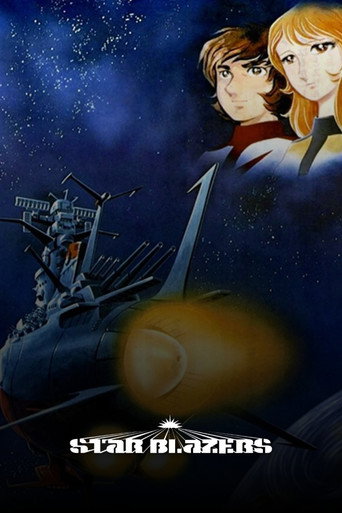
Star Blazers
1974 · TV series · 30 min episodes · 3 seasons
Created by Leiji Matsumoto
Science FictionFantasyActionAdventureDramaAnimation
Star Blazers is an American animated television series adaptation of the Japanese anime series, Space Battleship Yamato I, II, and III. Star Blazers was first broadcast in the United States in 1979. Significantly, it was the first popular English-translated anime that had an overarching plot and storyline that required the episodes to be shown in order. It dealt with somewhat more mature themes than other productions aimed at the same target audience at the time. As a result, it paved the way for future arc-based, plot-driven anime translations.
2 neutralfrom 2 commenters
Where to watch
No streaming data for this title.



3 comments on Hacker News
watching every single episode was a priority, because if you miss one, it could be years until you had another chance to see it.
Oh my god, yeah. The S1 and S2 finales of Star Blazers were huge annual events for me for a few years as a small kid.
Robotech was even tougher because there were so many episodes, since it was three totally different series stitched together hahaha. You miss one, you're waiting a looooong time.
Oh my god, this. There was a cartoon on air when I was young (Star Blazers) and it used a fully serial format.
There were about 52 episodes, but I could only watch them in the summer because of conflict with school time.
I knew when my favorite episodes were coming and it was really rough to miss one. Generally I had to wait until the next year to see it, which is effectively forever when you're like seven years old.
VCRs existed, of course, but were far from ubiquitous in the early 80s. They were still sort of a rich person toy at that point. Home video was expensive. Late 80s, early 90s is when video rental joints and cheap VCRs flourished and at that point you pretty much could assume every home had one.
Very few countries are successful in exporting culture at all.
For instance, the EU is requiring that 20% of content on Netflix be European in origin and considering the population size and economic weight of Europe that is more a guarantee that Europe doesn't get shut out instead of a level playing field.
India has a huge movie industry (which is unusual enough) but it gets almost no attention from outside India except by expats.
See https://en.wikipedia.org/wiki/The_Global_Trap
Another aspect is that Anime has developed a postmodernism that is very different from the navel-gazing postmodernism of Hollywood which could be characterized by the movie "Pulp Fiction" Anime is easy to relate to, if you are inclined to relate to it, is because it is about a very small world. When you see anime for the first time (for me some early inputs were "Star Blazers", "Urusei Yatsura" and "Nadia") it looks like a huge world. Nadia in particularly uses the trick of making it seem like the world gets bigger in every episode.
After you have seen enough anime you realize that Ataru Morobishi, Usagi Tsukino, and Haruhi Suzumiya all go to the same high school, that the monsters in "Nadia" and "Neon Genesis Evangelion" look the same, etc. It's not about a large universe, but it is really one of those closed spaces that Haruhi wants to move into.