 Hacker Cinema
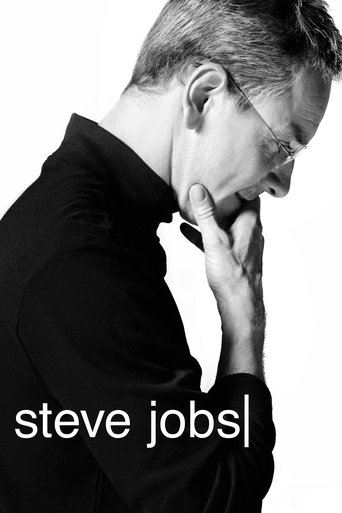
Steve Jobs
2015 · Film · 123 min
Directed by Danny Boyle
Set backstage at three iconic product launches and ending in 1998 with the unveiling of the iMac, Steve Jobs takes us behind the scenes of the digital revolution to paint an intimate portrait of the brilliant man at its epicenter.
9 positive17 negative28 neutralfrom 54 commenters
Where to watch
No streaming data for this title.
62 comments on Hacker News
There are biopic films about people who founded or transformed businesses like Steve Jobs, Roy Kroc, Mark Zuckerberg, the founders of Blackberry, etc. Might not be everyone's cup of tea but I wouldn't describe that genre as boring. Probably the bigger issue is getting people to see a biopic about someone who isn't already a household name.
I love the line they give Woz in the movie Steve Jobs. In the big final confrontation he says, "Your products are better than you are brother."
The movie is a fiction, but Woz apparently liked it a lot and thought that Seth Rogen did a phenomenal job playing him. So this attitude of his adds up.
Funny, another commenter posted both videos, Steve Jobs saying it and Steve Jobs the film. Steve Jobs says what you say. Hollywood says it the other way. I suppose it also wouldn't be surprising if Jobs rehearsed this Hollywood-style for his interview.
I haven't see the movie (only a few clips), but I enjoyed hearing this analogy from Steve Jobs himself in many of his interviews [0].
Just checked the part [1] of the movie where Michael Fassbender talks about the bicycle of the mind. He is a very good actor but it's hard to match the energy and the electric focus of Steve Jobs.
[0] https://www.youtube.com/watch?v=KmuP8gsgWb8
[1] https://youtu.be/BZYZlzIMVw8?si=u8X_mc4BX62ypRZw&t=98
Kind of reminds me of the quote from the Steve Jobs movie:
"The most efficient animal on the planet is a condor. The most inefficient animals on the planet are humans. But a human with a bicycle becomes the most efficient animal. And the right computer -- a friendly, easy computer that isn’t an eyesore but rather sits on your desk with the beauty of a tensor lamp -- the right computer will be a bicycle for the mind. A beautiful object -- perfect geometry, perfect finish, something you want to look at and have in your home. Flawless. And then a personal computer becomes an interpersonal computer. And what if instead of it being in the right hands, it was in everyone’s hands?"
Required viewing: https://en.wikipedia.org/wiki/Steve_Jobs_(film)
"Until finally back home, I do some research and figure out what's going on: A scourge of cheap "lightning" headphones and lightning accessories is flooding certain markets, unleashed by unscrupulous Chinese manufacturers who have discovered an unholy recipe: True Apple lightning devices are more expensive to make."
Why are they more expensive to make. Is it for the good of humanity?
Recommended viewing:
https://www.metacritic.com/movie/steve-jobs/
Computers as "art", according to preferences of one person, versus computers as machines for the benefit of everyone.
Closed systems to extract maximum profits for Apple versus open systems that can be modified and expanded to benefit everyone.
"I wish @Apple would devote an employee or two to cracking down on such a technological, psychological abomination as this."
How about lowering the cost of making "lightening" devices. How about offering the option to use a non-proprietary protocol?
"And I wish humanity would use its engineering prowess for good, and not opportunistic deception."
No doubt that's what people is rural Chile want, too. They do not mind paying higher prices. As long as the products are "Apple-certified". /s
This person tweeting seems to be having a hallucination where Apple is neither opportunistic nor deceptive. Nevermind its deliberate attempts to make its computers incompatible (preventing interoperability) and needlessly expensive.
https://www.metacritic.com/movie/steve-jobs/
According to this film, which Wozniak said was very accurate, Steve Jobs was a douchebag.
Android sucks, too. I only use it out of necessity, not choice.
Why do I use a TLS forward proxy.
Because I loathe using popular, so-called "modern" web browsers. I prefer using smaller, simpler clients.
And immediately shows the Steve Jobs documentary.
I was referring the the movie “Steve Jobs”:
Steve Jobs : It was the stylus, John.
John Sculley : What?
Steve Jobs : I killed the Newton because of the stylus. If you're holding a stylus, you can't use the other five that are attached to your wrist. [Holds up hand, smiles]
Steve Jobs : The things we could've done together. [Walks out of the room]
John Sculley : [as the door closes] God, the things we could've done.
The content-value mismatch is ok with me, given they distribute other studio's films that Apple's leadership has expressed issues with. I.e. Danny Boyle's "Steve Jobs".
They can be a consistently indulgent distributor, or a consistently selective content producer, but not consistent in both roles. I prefer the former.
(I found Boyle's movie brilliant, when interpreted as a serious comedic drug dream, subsequent to a marathon reading of Steve Jobs bios, articles and opinion pieces. Of varying questionability and authenticity. In random order. On a plane.)
Yeah, I am reminded of that scene in the Sorkin Steve Jobs movie, where Wozniak is excited to show Jobs his Nixie tube watch until Jobs points out that it looks like a detonator for a bomb
"Steve Jobs was always telling the truth as he saw it at the time."
I doubt it.
I'll offer two stories about it.
When Steve recruited me to work for NeXT, he spent an hour or two with me in a conference room, working on persuading me. The experience was fascinating.
One thing Michael Fassbender's portrayal in the film "Steve Jobs" missed was the hard, piercing quality of his gaze when he was pitching. People like to talk about "laser focus"; Steve's gaze is the best example of that I've ever seen in a real, person-to-person encounter. His eyes were hard, vigilant, analytical. He noticed everything.
He tried a series of pitches to get me on board. Now, I did end up going to work for NeXT for a while, but I wasn't buying any of Steve's pitches that day.
He detected my skepticism really quickly each time. He would start a pitch with all the passion and conviction you would expect if you've ever seen one of his keynote speeches or interviews, like his whole being was invested in the pitch. He would immediately detect that it wasn't working, and he'd just drop it, like it had never mattered. He'd move on to another pitch, something totally different, and he'd be just as committed and passionate as in the previous one--until he detected that it wasn't selling me.
It was like he was flipping channels, looking for anything that would work.
The second story is from a couple years later, after Steve returned to Apple and took over again. I was back at Apple, too. Steve held a town hall meeting for the whole company to introduce the new candy-colored iMac (which was basically just the old iMac in new candy-colored clothing). I attended with a good friend who was working on the system software.
Steve came out in full pitch mode, selling Apple's new product to its employees. My impression of his pitch was that it sure was a good thing that he went into selling products and not into politics. Before that, I had always been sort of baffled by the ability of history's great demogogues to move huge crowds to behavior that in retrospect was clearly ill-advised. Steve's internal pitch for the iMac was a sort of "Oooohhhhhh...now I get it" moment for me. He was just extremely good at reading a crowd's reactions, saying what it wanted to hear, moving it to the reactions he wanted it to have.
Walking out after the pitch, my friend was shaking his head, saying, "I believed him. I knew it was all lies. I mean, some of that stuff is my work, and yet I believed him."
My sense is that Steve's objective was always selling his vision. He preferred to tell the truth to accomplish it, but if the truth wasn't working, he was perfectly happy to change channels to anything else that would do the job.
Your mentor almost sounds black and white. There are plenty of interesting, genuine people at “boring” companies.
You don’t have to take risks and financial sacrifices to be interesting. And being an entrepreneur isn’t the end all solution to happiness, no matter how many Steve Jobs movies they crank out.
> Pirates of Silicon Valley
Haven't thought of that movie in years. Not bad by any means, and I'd say it's worth the watch. Broad strokes Microsoft and Apple development, and stays entertaining. Not as deep as the Steve Jobs films (I always mess up the titles from the good and the bad one) from a few years ago, but still enjoyable.
The “Steve Jobs” movie written by Soorkin does such a good job examining this question by having the two of them fight over the relative importance of their contributions. Since one of character-Woz’s strongest lines is “you can be decent and brilliant at the same time,” I assume you’ve seen it. If not, you should! Everybody here should, it’s a brilliant film.
One of the things that character-Jobs says is (something along the lines of) “you’d be the easiest A at Palo Alto highschool right now if it wasn’t for me.” What he’s getting at is that Woz didn’t know how to channel his engineering talent into successful ambition. This makes the question a lot more complex: it’s not “can you be talented & kind,” it’s “can you be talented & kind & successfully ambitious.” Character-Jobs is asserting that his ruthlessness, his faults, were a necessity for these things to happen with Apple.
The film probes at these questions from just about every angle. Perhaps not coincidentally, it portrays his greatest success at the time when character-Jobs is most able to be at peace with himself and work other people.
Another designer he couldn’t hire built the connection machine
http://www.tamikothiel.com/cm/index.html
> How the Connection Machine inspired Steve Jobs:
My old friend Joanna Hoffman was marketing manager for the first Macintosh and the NeXT computer, and Steve Jobs' "right hand," as depicted by Kate Winslet in the film "Steve Jobs." In 1986, when the Connection Machine came out, Jobs asked her to get its designer to create his new NeXT computer as well. To which Joanna replied, "Too late, Tamiko has gone to Europe to become an artist!" But the machine made a lasting impression on him, and from that point on, Jobs' designs were not merely useful - they were visually sublime.
See "CM-1/CM-2 Design Legacy" >>
Thanks, I had seen this one too (had even tried sharing it with HN in a parallel submission). It is made with a lot of care and tactfulness, and is one of the best documentaries about Steve Jobs I know.
Little warning: It totally brought me to tears. I knew he liked Japanese aesthetics, but wasn't aware it meant so much for him.
It is probably because competition is so commonly attributed to physical athletics. Physical strength or stamina exhibited on the playing field is competition.
Spelling bee competitors are seen positively, but also almost as a joke compared to quarterbacks. Mathlete? A joke in popular culture.
There is some evidence that this is changing, but there is also a lot of bad art. The Social Network, and Steve Jobs the film portray fierce nerds that basically no one wants to know.
The actual people?
Zuck and Dorsey just got through extracting maximum advertising value from the heart of US democracy.
Bezos hasn't done fierce nerds any favors with his squeezing of the lowest paid people in his organization.
Bill Gates' reputation is headed downhill right now faster than ever before.
Tim Cook has real potential. But the jury is still out. We do not know the calculus involved in compromising privacy values in China.
It is going to take a lot more well-known, rich, fierce nerds that also manage to round out their personality before we see mainstream positive portrayal and following of competitiveness in intellectual exercises.
That's OK because I assume that's the case for all movies "based on a true story". Take any biopic you want, it's mostly a bunch of mythology sprinkled with meme references about the person, if any.
Say this was especially egregious in the Steve Jobs biopic, which had almost nothing to do with reality, except being a "best hits" of various memes spread about the man throughout the years, combined with copious amount of Sorkinisms.
It's an interesting observation. Personally, when I look back at giants and read their biographies, I find the most interesting bits usually about how they were motivated, what drove them, how they overcame challenges and hopelessness, how they forged business relations - I think the least interesting part is their personal life and what they did to piss someone off or what they tweeted/told publicly. The latter is just typical soap opera of details that provide little value to me. The latest Steve Jobs movie primarily focused on the melodrama of his personal relationships and offered literally nothing about what made Apple succesful.
> incompetence by the state
"In the movie Steve Jobs, a character asks, “So how come 10 times in a day I read ‘Steve Jobs is a genius?’” The great man reputation that envelops Jobs is just part of a larger mythology of the role that Silicon Valley, and indeed the entire U.S. private sector, has played in technology innovation. We idolize tech entrepreneurs like Jobs, and credit them for most of the growth in our economy. But University of Sussex economist Mariana Mazzucato, who has just published a new U.S. edition of her book, The Entrepreneurial State: Debunking Public vs. Private Sector Myths, makes a timely argument that it is the government, not venture capitalists and tech visionaries, that have been heroic.
“Every major technological change in recent years traces most of its funding back to the state,” says Mazzucato. Even “early stage” private-sector VCs come in much later, after the big breakthroughs have been made. For example, she notes, “The National Institutes of Health have spent almost a trillion dollars since their founding on the research that created both the pharmaceutical and the biotech sectors–with venture capitalists only entering biotech once the red carpet was laid down in the 1980s. We pretend that the government was at best just in the background creating the basic conditions (skills, infrastructure, basic science). But the truth is that the involvement required massive risk taking along the entire innovation chain: basic research, applied research and early stage financing of companies themselves.” The Silicon Valley VC model, which has typically dictated that financiers exit within 5 years or so, simply isn’t patient enough to create game changing innovation."
Source: https://time.com/4089171/mariana-mazzucato/
> (employers!)
Oh please.
"In the movie Steve Jobs, a character asks, “So how come 10 times in a day I read ‘Steve Jobs is a genius?’” The great man reputation that envelops Jobs is just part of a larger mythology of the role that Silicon Valley, and indeed the entire U.S. private sector, has played in technology innovation. We idolize tech entrepreneurs like Jobs, and credit them for most of the growth in our economy. But University of Sussex economist Mariana Mazzucato, who has just published a new U.S. edition of her book, The Entrepreneurial State: Debunking Public vs. Private Sector Myths, makes a timely argument that it is the government, not venture capitalists and tech visionaries, that have been heroic.
“Every major technological change in recent years traces most of its funding back to the state,” says Mazzucato. Even “early stage” private-sector VCs come in much later, after the big breakthroughs have been made. For example, she notes, “The National Institutes of Health have spent almost a trillions dollars since their founding on the research that created both the pharmaceutical and the biotech sectors–with venture capitalists only entering biotech once the red carpet was laid down in the 1980s. We pretend that the government was at best just in the background creating the basic conditions (skills, infrastructure, basic science). But the truth is that the involvement required massive risk taking along the entire innovation chain: basic research, applied research and early stage financing of companies themselves.” The Silicon Valley VC model, which has typically dictated that financiers exit within 5 years or so, simply isn’t patient enough to create game changing innovation."
Source: https://time.com/4089171/mariana-mazzucato/
Thank you for sharing your experience.
> I believe guys like Tesla, Einstein and so many others did have this same capacity
Sometimes when reading quotes by people like them, I get a similar impression, like they were "connected to the source", or "enlightened", and they intuitively followed that connection towards their achievements.
It also reminds me of a part in a documentary about Steve Jobs when a friend of his says "Steve was enlightened, and he blew it", hinting at him using that connection or "power" for what she felt was the wrong purpose.
12 Angry Men. My Dinner with Andre. Steve Jobs (a stretch, but much more a play than a movie).
There's some play adaptations which have few characters and mostly dialogue: Carnage, Who's Afraid of Virginia Woolf, Glengarry Glen Ross
Linklater's "Before" trilogy is also heavily dialogue-based, but the there are multiple locations.
I'm not a fan of documentaries, but I liked this one (all three parts). It's Bill essentially saying "You know - this is what matters, the Microsoft stuff is secondary." And I respect that.
The Steve Jobs documentaries were more like "Hey, this guy was a douche, but people worship the cult he made from peddling computer stuff, and that is good, right?"
Definitely a difference in approach.
There is nothing wrong with having comfort, but if you seek to grow and fulfil your potential (either in career, as a person, spiritually, etc), comfort is a trap you can easily get stuck in.
Maybe you have a good job, but feel like your career isn't going anywhere, but rather than switching to a different role you stay where you are because you like it there. That's comfort.
Plus a lot of people over think what comfort they need and waste a lot of energy on it. Theres a photo of Steve Jobs from the 80s in an empty apartment with a few possessions, where apparently he is comfortable with living like that. I don't know exactly what the story is with the photo, and it's a bit of an extreme example, but imagine instead of working on building his company, he spent his sparetime assembling IKEA furniture, then buying a TV and VHS recorder, then renting movies from the movie store (and physically taking them back).
I find it hits a bit close to home, so much so as to ruin the comedy sometimes... it’d be funny if it weren’t so true, which is depressing.
Still watch it, and love it though. And super impressed that a Hollywood production finally understood Northern California. That never happens (see: The Social Network, Hackers, every Steve Jobs movie, etc.)
I have visited both and really enjoyed the trips, thanks for the recommendation!
A movie titled 'Steve Jobs' featured half a dozen Hollywood stars and was nominated for Best Actor and Best Actress at the Oscars - and that's not even the one that Ashton Kutcher starred in. I work in a children's book store and there is a 'Who is Steve Jobs?' book sitting next to 'Who is Barack Obama?'. I think you're wrong.
Having recently watched the Steve Jobs film, I am inclined to ignore his advice on this, like I will skip his advice on parenting.
The only piece of good advice for someone in the position of a young Steve Jobs is to find a friend like Woz who actually knows how to do something.
This guy pretends to be an intellectual but is the biggest wannabe I know. He tried to block the latest Steve Jobs film because it showed how much of an asshole Jobs was
The Social Network (2010) movie was superb. Yes Fincher as director and Sorkin as screenplay writer would be phenomenal. It would take a good book about Uber internals though. Unfortunately the former head of Sony Pictures in L.A. screwed the dream team over the Steve Jobs movie.
It's not perfect though. If you make a brochure full of quarter-inch holes, a customer still won't buy your bits.
I think in one of the two Steve Jobs movies the Pepsi guy explained it quite well: He shows how people open a Pepsi, drink it, and then feel whatever is important to them. What you need to do is actually present your features, but in a way that the customer believes he can achieve his benefits easily with it. Of course to be able to do that, you first need to understand the benefits the customer cares about.
1. present technical features -> be seen as weird nerd.
2. present benefits -> be seen as glitchy sales guy.
3. present features that let customer think about benefits -> sell products.
Adapt? Really? It doesn't seem so. They are in their own world, and don't care.
But no wonder when you read about the crazy head of Sony Pictures, the woman that got kicked because of the scandals that got made public (emails leaked). For example we can "thank" her for that the Steve Jobs movie lost the The Social Network director and is now such a boring piece of movie.
We don't need hundreds of super hero movies, such a mass is stupid. Where are the funny movies, the action movies, the adventure movies? We want less CGI and more real action, or CGI looking like real action.
We want movies not boring hour long series, we have no time to waste hours for a stretched story arc.
The Accountant, (second half of) Bourne 2016, Jack Reacher 2, Mission Impossible Rogue Nation ... were good movies. But it gets harder and harder to find a few movies per year that are watchable. The last two X-Men movies were so bad, so many CGI effects, so dark, so little content that made the previous X-Men movies great. Were are the Die Hard 1-2, Air Force One, first three Tom Clancy movies of this decade - right, directors and script writers forgot how to pace a movie, as constant action is just wrong, you need intense action then calm situations and then action again and a bit humour does't hurt (something almost completely forgotten). I just saw a 1968 action movie and it was so much better (Steven Spielberg mentioned it's his favourite movie he sees up to), this decades Hollywood is in a sad state.
Please don't. Our industry is already full enough of assholes who saw part of the Steve Jobs movie and started to think that management is all about berating or "negging" people so they do what you want.
Exactly this mass of comic super hero movies is so boring. And reboot after reboot with broken confusing story-line, with the reboot worse than the original. No wonder when idiots like the woman who was in charge at Sony Movie Pictures run such companies. The Steve Jobs move bombed big time. Instead of another superb movie in the style of Social Network we got the most boring movie ever.
Please focus on movies instead of hundreds of TV series - no one has time to watch that many series anyway - or do you want to create many niches with little viewers that ay little (Netflix, etc). How about full productions (not outsourced to Canada or Australia) without overusing CGI and spend some money on good scripts. Oh, and we don't need drama and slow spacing all the time. We need more humour and action, and often less story is better. Look at Kevin alone at home 1+2, Indiana Jones 1+3, Die Hard 1+2, Airforce One, the first two Tom Clancy movies, etc. fast pacing with slow elements, a short but good story, no fuss, very good music.
I watched the movie Steve Jobs on HBO.
If any of it true, I came away with these thoughts:
1. Steve wanted a closed system.
2. He cared too much about form. He was not a coder. He was not a hacker. It was Woz. Steve was the business guy.
3. I think the world would be better off if Woz was offered, and took the CEO position after Jobs demise. We might have some really great, open source computers.
4. I don't think I will buy another new Apple product. I will buy used until someone takes their place, because there's so much used stock on Ebay, and CL.
5. But then again, their products are beloved by so many people. I have a relative who bought a new Imac. A $2970 Imac-- that's still in the box. it's been a two months. I asked why he hasn't set it up. He blamed it on me. "You haven't had the time lately, so i am still using my old barely working Imac."
6. That's some pretty spectacular Marketing--Product likability. It will be some time until the average user realizes Apple might be slipping. The average user knows noting about the benefits of an open source computer.
Did they? It seems like people are only interested in the surface of tech, the sexy acquisitions, the new Steve Jobs movie, the new iPhone. And then I try to bring up why password requirements are security theatre and people's eyes gloss over. I've taken to telling people my job description of "works at tech company" and leave it at that.
that's why I mentioned it in the "PS". To take a corny line from the Steve Jobs movie, Elon Musk is the conductor. Without him, none of this is possible. Look at Apple after Steve Jobs. Still got the same hard-working people there. Do we still have the same inspirational products coming out? Not even close.
Sounds like a criticism that could be made of the Sorkin Steve Jobs movie.
Typical hollywood self-delusion.
> after Leonardo DiCaprio and Christian Bale passed on the title role, it lacked a major star, limiting its commercial prospects
> Having a DiCaprio or a Robert Downey Jr. in the title role may have broadened “Steve Jobs'” appeal.
Fassbender came out looking like Ed Harris. Audiences want to see Jobs in his prime, as Ashton Kutcher played it. Nothing to do with a "big name actor" and everything about sex appeal. Apple has always been about image and the movie is no different. The fact that the sexy version of Jobs was already done is why it failed and the hand wringing in this article looks idiotic. Everyone considers a 20$ ticket to the new Jobs a wasteful risk, despite hearing how existing mediocre fall films are doing. Quit putting out schlock and your art-film remakes might do better. They certainly won't be hits, either way.
I'm speaking out of my ass here:
1. What is the lesson to be learned?
I believe that the lesson to be learned isn't that drug use makes you better or worse. It's that people of all walks of life abuse drugs. Even people who are very successful. Despite the immense power of drugs. It is still the person, not the drug that determiness a person's life. Aaron Sorkin is a crack head. He's starring in that new Steve Jobs film, but has also worked on such successes as West Wing and The Social Network. Does crack make you successful? No.
2. All I've seen in drug users is wreckage and death. Maybe I haven't seen the whole picture.
Drug use is rampant in the United States. It's just hidden or is not considered drug use because a prescription is involved. Remember how out in the open alcoholism used to be? (Think Mad Men. Or talk to a grandparent about how things used to be.) Alcoholism didn't just go away. People just started keeping it to themselves.
3. Is there an upside to drug use? If there was a safe performance pill maybe I would try it.
Amephatimes, Speed, Aderall. All the same drug. All abused across the country by college kids. I really don't know what the long term dangers of amphetamines are. Not only college kids are abusing them, that's just where it's most obvious. People use them as smart pills. They apparently allow you to focus on working and studying for hours.
In closing, I think being smart and talented can also come with sadness and other mental issues. Sometimes drug use is a way for talented people to self-medicate. The talent and potential is still there. It's comes down to the individual whether drug use will inhibit them from their goals.
Great read! Take a peek too at The Hollywood Reporter's cover story today on 'Steve Jobs' movie and crazy saga to get to premiere:
http://www.hollywoodreporter.com/features/a-widows-threats-high-powered-829925?utm_source=Sailthru&utm_medium=email&utm_campaign=THR%20Breaking%20News_2015-10-07%2009:00:00_nstone&utm_term=hollywoodreporter_breakingnews
I was at two seminal Steve Jobs events- the introduction of the Apple I and the introduction of the NeXT. The 2nd is in the movie and I have to see if it is accurate. From videos, he was more polished in the 2000s than 1980s.
I don't think 'gorena's point should be rebuffed just like that, Steve Jobs was not the friend of us engineers, after all it was him who said things like: “If you hire a single one of these people, that means war”. Many of us might be getting paid were it not for him and his actions.
http://www.computerworld.com/article/2491016/it-personnel/steve-jobs-was--central-figure--in-silicon-valley-hiring-case--judge-says.html
I do wish this was touched in the movie somehow. (I'm presuming it wasn't, as that's what it seems like... I haven't seen it yet so can't say for sure)
edit: I'm getting down-voted. Indeed, I think I went over the top. Steve Jobs did go on to create exceptional products that have heightened a lot of people's productivity, so he was net good. Sorry for the comment - I'll leave it there anyway though.
"That said, I think it’s a fine movie, brilliantly written and performed and full of humor and feeling. It deviates from reality everywhere — almost nothing in it is like it really happened " Andy Hertzfeld, member of the mac team. He was consulted for the movie.
http://recode.net/2015/10/02/original-mac-team-member-andy-hertzfeld-talks-about-the-hollywood-steve-jobs-qa/
Well, the question is, apart from money, what is the motivation for the movie?
For sure, Woz would like to set some things straight and tell his perspective on things. I once stumbled about a comment from Woz regarding the Steve Jobs movie. He was not very pleased with the narrative of the Jobs film.
The comment is an interesting read, and it can be found at:
https://plus.google.com/+CarmsPerez/posts/GnVTvQNgvpf
I think a big reason why Steve Jobs has had a couple movies made was because the Mac has been used by creative professionals for many years. Apple almost died in the middle 90s. Now Apple is the most valuable company on Earth. It's an epic story. Plus, he was weird. Black turtle neck uniform? Ideologies formed in the 60s and yet transforming the modern era? This is great stuff and perfect for story telling.
Am I the only one confused by the fact Andrew Sorkin just released a documentary about Steve Jobs, but Aaron Sorkin is about to release a dramatic movie about Steve Jobs. Their names are very similar.
You might dismiss Sorkin but Wozniak's approval is significant: http://www.cnet.com/news/woz-aaron-sorkins-steve-jobs-movie-gets-it-right/#ftag=CAD590a51e
Update
I guess I'm guilty of not realizing there are two different people named Sorkin working on a Steve Jobs movie.
More importantly the Woz likes the movie: http://www.cnet.com/news/woz-aaron-sorkins-steve-jobs-movie-gets-it-right/#ftag=CAD590a51e
- Steve Jobs' biographer wrote a book last year called "Innovators" which I found to be one of the best works I have read: http://www.amazon.com/Innovators-Hackers-Geniuses-Created-Revolution/dp/147670869X
- Robert X. Cringely's book "Accidential Empires" is definitely dated but you can read most of the chapters on his blog here: http://www.cringely.com/tag/accidental-empires/
- Cringely also did a three part special back in the 90s that I like revisiting every once in a while. Again, pretty dated but entertaining nevertheless: https://www.youtube.com/watch?v=HuBXbvl1Sg4
- Skip the newer Steve Jobs movies and watch the history of Apple and Microsoft with Pirates of Silicon Valley. It's said to be mostly accurate: http://www.veoh.com/watch/v46093745wbEGkakh
- Kind of random but if you want a look back at what the 90s tech bubble was like then watch Startup.com: https://www.youtube.com/watch?v=ibuiUXOTE4M
I just hope they make it more real documentary style like "The Internet's Own Boy as opposed to stupid and dumbed down like the Steve Jobs movie. No matter where you fall on the legal/ethical spectrum, you have to admit it's an awesome story.
"Pirates of Silicon Valley" is such a great film. It's even funny and the true story is told in a nice way.
Cringely's "The Triumph of the Nerds" documentary is great too (which lead to the "Pirates of Silicon Valley" film).
The only other awesome documentary style film about the computer age (that I know of) is David Fincher's "The Social Network". Sony Pictures tried get David Fincher to direct a new "Steve Jobs" movie (http://www.imdb.com/title/tt2080374/) based on a screenplay written by Aaron Sorkin (same team as "The Social Network") but then something went terrible wrong (http://variety.com/2014/film/news/leaked-sony-emails-reveal-nasty-exchanges-and-insults-1201375511/). http://en.wikipedia.org/wiki/Steve_Jobs_(film)
This is the problem I am facing. Their recommendations are not even remotely related with Social Network movie and that is just one example. If they recommended Steve jobs movie or Black hat or Sword fish then it is understandable.
Thanks for your comment though.
Well, there's a more accurate movie about Jobs being planned, for which Woz is a consultant: http://appleinsider.com/articles/14/01/13/briefly-aaron-sorkin-reportedly-finishes-script-for-steve-jobs-biopic
Screenwriter is Aaron Sorkin - he also wrote the screenplay for The Social Network.
1. Why does this website feel slimy? 2. Maybe, I just I got used to the status quo? 3. I do think this website is a disaster waiting to happen? I hope not, but I see nothing but lawsuits down the line. 4. Taking money from people who understand the risks involved in start ups is fine, but taking the money from the average dude who was inspired by Steve Job's movie is Wrong. 5. To anyone who's rushing over to this site expecting to make money one your investment; Guy's like Steve Jobs and Mark Zuckerburg had a lot of luck on their sides too. Mark would have probably never started Facebook, without stealing the idea from the rich twins. And the god Steve; he got fired from his own company. 6. I wish start ups well, but be honest. Or, at least take money from the people who can afford to lose it. It's not cool to lose money from the middle class and poor. There might not be a God, but personal integrity is the one thing that money can't buy.
Is it really that hard to understand that people aren't going to spend millions, if not hundreds of millions, of dollars on a movie if no one is going to see it.
It's quite likely that given the reviews on this Steve Jobs movie, not many people are going to see it. Aaron Sorkin probably has a much more entertaining version in the works.
It was clear when it was announced that this was going to be the inaccurate, sexy, mainstream Hollywood version of a Jobs film. It stars Ashton Kutcher for god's sake.
I think everyone on HN is unanimously looking more forward to Aaron Sorkin's film. Most of the mainstream non-tech-world Hollywood-Ashton-Kutcher audience has not seen the actual product announcements nor do they even know they exist. For most people, the iPod announcement was word of mouth and TV ads. Meanwhile a lot of the type of people who read HN somewhat worship the Steve Jobs keynotes. I know I've watched nearly all of them.
In fact I'm sure there will be a spike in "everyone else" watching them for the first time if Sorkin's movie is popular and brings them to the mainstream. For now they've just been a total geek thing to indulge in. :)
Unrelated to this article but more based on what I've read elsewhere - to me, this movie just doesn't seem very innovative, unlike the subject. It feels like the producers wanted to cram Steve's whole life into a one and a half hour film without any compromise. On the other hand, I love the idea of Aaron Sorkin's movie, with three scenes of Steve getting ready for important product announcements. I think that's a great compromise and much more in the spirit of Steve Jobs's work ethic.
Of course, I have not seen the movie, just basing this off of articles I've read :)
The neatest part of this article is where Woz talks about Aaron Sorkin's upcoming Steve Jobs film, which he is consulting on and says will "play out in three extended scenes, shot in real time, that depict Jobs at three product rollouts: the Macintosh, Jobs' non-Apple product NeXT, and the iPod."
Now that's something to look forward to.
Worth watching if only to see Steve Jobs wearing a suit!