 Hacker Cinema
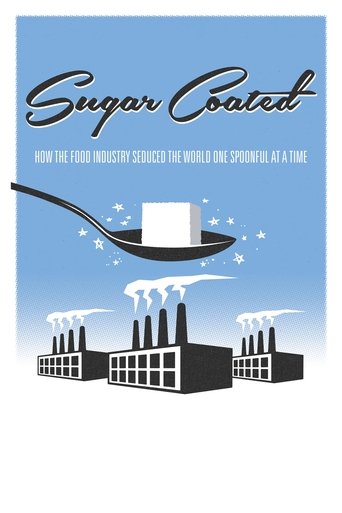
Sugar Coated
2015 · Film · documentary · 91 min
Directed by Michèle Hozer
The investigation and exposure of the US sugar industry’s systematic hijacking of scientific study to bury evidence that sugar is—in fact—toxic.
6 positive1 negative2 neutralfrom 9 commenters
Where to watch
No streaming data for this title.
Videos commenters linked
From YouTube links in the comments below. Most are clips and trailers; “Full” means the uploader says so.






17 comments on Hacker News
Soda has been on the downswing for… twenty years? As folks learned more about it. Maybe some didn’t get the memo.
The documentary “sugar coated” goes into the reasons. Surprise, the sugar industry was involved.
> The documentary "Sugar Coated" goes into the history regarding the pro-sugar/anti-fat industry lobbying aspect.
I strongly suggest you don't take the information from a documentary, which is focused on engaging story telling in order to make money, with a balanced and complete view of the situation.
The documentary "Sugar Coated" goes into the history regarding the pro-sugar/anti-fat industry lobbying aspect. The bad science was not a mistake—it was deliberate strategy. The same kind of FUD that "Big Tobacco" participated in. Most people are aware of the later but not the former.
https://en.wikipedia.org/wiki/Sugar_Coated
https://www.youtube.com/watch?v=esjTpaohQq4
The documentary “sugar coated” details this period when the sugar industry got everyone believing excessive sugar was fine and fat wasn’t healthy. Leading to a wave of low-fat sugar-fortified food in the late 70s on. Obesity exploded in response and related outcomes.
The documentary, “Sugar Coated” details this period, recommended. Was on Kanopy for “free” last I checked.
No particular order:
- Particle fever
- Sugar Coated
- The United States of Secrets (and anything Frontline)
- Citizen Four and related movie drama, name escapes me now.
- Cosmos (new and old)
- The Social Dillema
- WWII in HD, two docs on Netflix both good.
- Ken Burns *
Yes, the "Sugar Coated" documentary is a good place to start. Still on Kanopy, I believe. Lowfat craze hit in the 80s.
One of the interviews in the "Sugar Coated" documentary was about a pair of athletes that faced the same trouble.
Watch: "That Sugar Film", "Sugar Coated", "Fed Up".
Some great documentaries about this:
- That Sugar Film
- Fed Up (on netflix)
- Sugar Coated (on netflix)
> This is the common theory but it doesn't really hold up.
It's not really a 'theory' per sey. 2 independent scientists in UK and US ( I don't remember their names, see the documentary mentioned below) in the 70s came to conclude that Sugar is Toxic and causes fatty liver disease and Cancer. The Sugar Industry in US hired a PR firm comprised of a couple of well known Scientists in the US, and made these scientists who found out that Sugar is Toxic and causes diseases, looks like fools in the media. Then they (Sugar Industry) went 1 step further. The CEO of the Sugar Industry Association (or whatever that entity is called) got onto the FDA committee that was doing research into the toxicity of Sugar at that time, since it was all over the media that Sugar is deemed toxic and causes all kinds of diseases. And surprise, surprise, the committee declared that Sugar is 'GRAS approved by FDA'. GRAS = Generally Recommended as Safe, a label that makes the average consumer feel safe that Sugar is not bad. They (Sugar Industry) also simultaneously transferred the blamed for weight gain on excess consumption of fat * .
This is documented at length in the "Sugar Coated" documentary (available on Netflix) - http://sugarcoateddoc.com/
* Source: NPR: "50 Years Ago, Sugar Industry Quietly Paid Scientists To Point Blame At Fat" http://www.npr.org/sections/thetwo-way/2016/09/13/493739074/50-years-ago-sugar-industry-quietly-paid-scientists-to-point-blame-at-fat
The Okinawans got their carbohydrates primarily from vegetables with a low glycemic index, primarily the imo sweet potato (http://www.huffingtonpost.com/dan-buettner/okinawa-blue-zone_b_7012042.html). They also consumed a decent amount of Omega-3 fatty acides, since they ate fish three times a week; fish that was likely not contaminated with mercury or factory farmed. It's worth noting that once sugar and refined carbohydrates were introduced into their diet, they went from having the highest longevity out of 47 prefectures in Japan to the 26th (http://www.telegraph.co.uk/news/health/news/3342882/Japanese-get-a-taste-for-Western-food-and-fall-victim-to-obesity-and-early-death.html). That article came out 10 years ago, and the situation is worse now (haven't been able to find any written sources for this, but it's explained in the documentary 'Sugar Coated').
As a counter to the Okinawans, we can look at the Maasai people of northern Africa https://en.wikipedia.org/wiki/Maasai_people#Diet, who exclusively ate meat, milk and blood from cattle yet had no incidence of heart disease, cancer, tooth decay, or obesity.
I think the point here is that we haven't really honed in on what exact macronutrient composition is the perfect one for a human body. Humans appear to adapt well to any macronutrient composition, as shown above by the diets of different cultures (I think if you took a global survey in 1900 of what different societies were eating, you would find all manner of different diets but very low rates of disease in all or most of them). What we have identified is that we're seeing unprecedented levels of cancer, obesity, alzheimers and cardiovascular disease. So the question to ask is "What changed in the past 50 years?" I would say it's a few things (ordered by severity):
1. Sugar. We don't need sugar to survive, yet we eat mountains of it.
2. Refined, high GI carbohydrates.
3. Vegetable oils. Seed oils like canola, sunflower, or palm oil (not Olive/Avocado/Coconut oil) are high in pro-inflammatory Omega-6 fatty acids and polyunsaturated fats.
4. Factory farmed meats, also high in Omega-6 fatty acids.
You can find counterexamples to any macronutrient focused diet, as we did above, but there doesn't exist a society that consumes sugar, refined carbohydrates, or vegetable oils in abundance and still lives long, disease free lives. To date, there is no counterexample that says the modern western diet is in any way healthy.
Regarding the studies you mention, I don't doubt that heavily processed meats like bacon and sausages are bad for you, though it's because of the Omega-6 fatty acids in factory farmed meats which are known cause arterial inflammation and contribute to atherosclerosis (grass fed beef, pork, or pastured chicken does not have this problem). That said, I am heavily skeptical of any studies that show 'links' to cancer. Just because two things correlate doesn't mean that one causes the other. Nutritional studies are notoriously difficult to conduct accurately, and have been plagued with bad logic (correlation != causation), bad statistics, and perverse incentives (such as the incentive to reach an interesting conclusion or risk losing government funding) or conflicts of interest (being funded by the sugar industry or big pharma). You ask for a good source (not blogposts/youtube videos) on what the OP posted; in kind, could you link to the studies that you're talking about?
There have been several documentaries about this issue in the past few years:
- Sugar Coated (2015) - That Sugar Film (2014) - Fed Up (2014)
Some of the authorities who are found in these movies are:
Robert Lustig - Professor and pediatric endocrinologist at UCSF who speaks out against added dietary sugar. See: https://www.youtube.com/watch?v=dBnniua6-oM
Gary Taubes - journalist and author of Good Calories, Bad Calories: Challenging the Conventional Wisdom on Diet, Weight Control, and Disease and Why We Get Fat: And What to Do About It
Yoni Freedhoff - Medical doctor from Ottawa, Canada who criticizes the food industry's use of sugar. See: https://www.youtube.com/watch?v=-BdFkK-HufU
It seems like a case is building, much like the case against the tobacco industry. Maybe there will be class-action lawsuits against soft drink and processed food companies based on recent suppression of potentially life-saving research.
A great movie that features him and a lot of other credible people is Sugar Coated. It is on Netflix in Canada.
I think sugar is additive, like tobacco, and with lots of bad health outcomes and because it is additive that is why it is hard to cut it out. Watch the movie Sugar Coated for one take on this line of reasoning.
It likely is as easy as cutting sugar out, just like smokers should cut cigarettes out, it is just hard to do because of the additives qualities of the drugs.
And like cigarettes, cutting down isn't really as effective as cutting it out nearly entirely, because a little bit of an additive drugs primes you for more.
Accord to the movie Sugar Coated (on Netflix here in Canada) and Dr. Lustig there is no meaningful difference between HFCS and normal sugar -- they are equally quite bad for you. Switching from HFCS to cane sugar will achieve nothing I believe if you keep the sugar intake the same.
What I believe happened is that at the same time HFCS came on the market there was also a larger push to put sugar into a lot of things in place of fat.
Thus the introduction of HFCS seems to correlate with the North America weight problem but the North American weight problem also correlates with the increase in sugar in our diet -- and I understand from Sugar Coated and Dr. Lustig that is the causitive correlation.
There's a very revealing and entertaining documentation about the rise of sugar in our lives, drawing parallels between the tobacco lobby and the sugar lobby: Sugar Coated (2015). Highly recommended. It was streaming on tvo, but somehow the stream does not work anymore. I only found a german version on arte.
http://www.imdb.com/title/tt4425138/
http://www.arte.tv/guide/de/054774-000/die-grosse-zuckerluege
http://tvo.org/video/documentaries/sugar-coated (not working)
In some ways, sugar is even harder to control than tobacco. Smoking is a choice, but sugar is essential for living. It plays a big role in our society. Remember the last birthday party/christmas/anything without sugar overdose?... Me neither.. And its hard to prove that over-consumption is unhealthy.