 Hacker Cinema
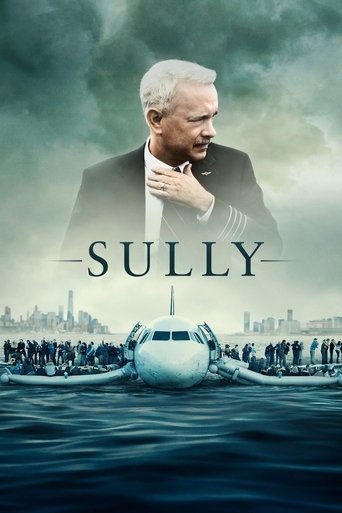
Sully
2016 · Film · 96 min
Directed by Clint Eastwood
On 15 January 2009, the world witnessed the 'Miracle on the Hudson' when Captain 'Sully' Sullenberger glided his disabled plane onto the Hudson River, saving the lives of all 155 souls aboard. However, even as Sully was being heralded by the public and the media for his unprecedented feat of aviation skill, an investigation was unfolding that threatened to destroy his reputation and career.
1 positive2 negative18 neutralfrom 21 commenters
Where to watch
No streaming data for this title.
23 comments on Hacker News
I'd actually put one in for Clint Eastwood.
Although most popular knowledge about him revolves around his earlier acting career (Westerns, Dirty Harry), you'll notice a distinct change in many of his films once he started directing.
* Play Misty for Me
* Breezy
* Unforgiven
* A Perfect World
* The Bridges of Madison County
* Midnight in the Garden of Good and Evil
* Mystic River
* Million Dollar Baby
* Changeling
* Gran Torino
* American Sniper
* Sully
* The Mule
Stand outside an engine test cell for a while and tell me that maintenance crews don't deal with emergencies. I'll bet they do so more often than pilots, we just don't hear about it because there are no passengers at risk. Nobody is going to make a 'Sully' like movie about the maintenance mechanic that spotted an issue with a part under test before it led to one or more catastrophic failures. They're more likely to make a lawyer the lead than the mechanic.
This is not just filling out reports and looking at stuff, they're in no way comparable to your local garage mechanic (and not to dump on them either: they too have to deal with out of the ordinary situations).
The responsibility issues are the same as with the pilots as well, they fuck up people die.
It needs a lot of enhancements to be useful. Firstly it should be a real time video like the simulations in the movie about Capt Sully's water landing in the Hudson. The aircraft lights need to be modeled accurately as well as views both with and without night vision equipment.
Maybe I was bored, and my mind wandered into something fanciful. No harm no foul, except it seems to have perturbed you. So I like to shoot short films and fun things with friends, and we're always chatting about random things from life that could be spun into a short story. It's habit. Never seemed to have bother anyone till now.
Are you the type that gets irritated when people call out "great name for a band" during normal conversations. Some people just catch onto things in conversation and the mind takes its own spin on it. It can make for great conversations. Unless you're just against having fun.
Edit: never mind the plot of China Syndrome was an industrial accident, yet a very compelling plot. Or "Sully", or the one where Denzel inverts the plane to avoid tragedy, or any of the other numerous plots involving industrial accidents like CHUD!!!
I'm doubtful I could succeed even in a simulator, but I'm more interested in whether seasoned professionals could succeed.
I have seen "Sully", but I don't recall where the issue of inverted controls came up, either in the movie or the actual incident.
Oh you could use any flight sim and just mess with the joystick wiring then! Or possibly even just the calibration.
I'm going to go with "pretty much no". I'm prepared to bet that you in your house with no pressure could probably more-or-less do it, because you know already what's going on and you're not going to die and you're not in a real plane with your primary instrument - the Mk1 Human Backside - being tossed around enough to knock it out of calibration.
Have you seen the film "Sully"? If not I won't spoil it for you, but it raises a similar issue.
The movie Sully [0] opened my eyes to the amazing glide ratio of a commercial passenger plane like the A320. (I'm assuming that the movie was pretty accurate in that regard.)
[0] https://en.wikipedia.org/wiki/Sully_(film)
When I buy new boots they're uncomfortable for at least a week or two. Replacing the boots wouldn't help at all, the boots adapt to your feet and your feet adapt to the boots, I don't have money to get tailor-made boots that would fit to the millimetre on day one if that's even a thing -- which I suspect in fact it is not (that is, people who could afford such boots don't actually spend hours every day walking and so probably wear shoes which are comfortable but less effective).
User experience matters, and actually just dropping dead in error cases makes for a better user model than many outcomes. The user has a model of what the machine does, which is always over-simplified and often plain wrong, but it's vital to try to get to a place where the user's model doesn't contradict how it's actually to be used. Undefined Behaviour is the enemy of this outcome. The user definitely does not have a correct model of what Undefined Behaviour will be, as we see many programmers don't either, whereas "If I do this particular dumb thing, it stops working and I need to unplug it and start over" fits in the user model relatively well.
Computers aren't special in this regard, watch "Sully" (Miracle on the Hudson), the cockpit dialog is roughly correct. What does their QRH tell them to do in the event of dual engine failure? Turn the engines off first and then try turning them back on again. Didn't work because their engines were trashed, but if even one engine had restarted, those QRH instructions mean there would be no film, just a scary incident some passengers tell stories about and an aviation safety file somewhere, the plane climbs (slowly) on one engine, they're still an emergency but they can put it back down on a runway at their leisure.
There’s a scene in the movie “Sully” that occurs right after the bird strikes that I’ve seen a few people in commercial aviation respond very positively to in its depiction of checklists during a crisis moment.
I had similar questions when it came to the film Sully. https://en.wikipedia.org/wiki/Sully_(film)
In that film they portray the NTSB investigators as trying to paint the pilot in a bad light during the investigation. According to the folks involved in the investigation, including the pilot, this never happened.
These are real people, they don't have the reach or voice of a movie, what happens when someone decides to portray them unfairly?
Legally I don't think there's anything to be done, there would be too many bizarre second order effects if you simply couldn't portray someone without their permission. At the same time it seems morally questionable to not involve them, specifically if their voice is so much smaller than the medium.
Anything big (like an airliner) isn't allowed to rely on radio altimeter alone for terrain avoidance for many years now. They're GPS augmented. Whenever it is confident where it is (which will be always or almost always) the plane is deciding whether it could hit something by continuing to move apparently forward and alerting the pilots about that.
When you hear "Obstacle Obstacle" announced in Sully, that's not a radio altimeter detecting the bridge, the computer has concluded that the plane's motion is uncomfortably close to the bridge tower based on GPS and a database of tall things you might fly a plane into (and thus it knows this is an "Obstacle" whereas a mountain is "Terrain").
In that movie there's not a damn thing they can do beyond avoiding the bridge itself, because they don't have any thrust - but ordinarily pilots should near instinctively try to ascend immediately for any of this group of warnings. The training is specific that this is not the time for diagnostics, if you aren't already absolutely sure why the computer thinks you're about to hit something you must assume the computer is correct and climb at best rate. This routinely saves lives when pilots become confused about where they are.
> economies of scale
Its interesting, there was a VFX company that was called Atomic Fiction, that worked on Looper, Sully and a few other big budget films. They were entirely cloud based.
in about 2014 it did look like everything was going to the cloud. Upgrading a render farm takes mega bucks($1-4 million for a large company) so converting that to a pay-and-go solution looked interesting financially.
A lot of high end "live" editing/colour correcting is done remotely, because the machines are too noisy to have in the same room. (obviously 10ms lag is trivial compared to 45 plus loss)
I think the thing that stopped the cloud rollout was how revisions are made. A scene in a film typically will be priced based on the number of people hours the company thinks it'll take +x%. However a film _producer_ will demand n number of revisions to change things. Those are normally not charged for.
So if you have your own compute, it only costs you staff and power. _but_ if you are pay and go, it also costs you CPU rental as well.
I think you are right, I suspect that at some point either Amazon, or more likely google are going to start giving away software with CPU time. (something like https://www.zyncrender.com/)
More recently the movie "Sully" portrayed the NTSB as being some conniving government organization that is out to get airline pilots for some reason. The real world Captain Sullenberger had to release a statement to correct this false injected dramatization of the investigation. There was no reason to do this other than to spice up the story, which is unfortunate especially given most of the people depicted in the movie are alive.
This was disproven. And is a major plot point in the movie about Flight 1549 (Sully).
From Wikipedia:
> The NTSB used flight simulators to test the possibility that the flight could have returned safely to LaGuardia or diverted to Teterboro; only seven of the thirteen simulated returns to La Guardia succeeded, and only one of the two to Teterboro.
> Furthermore, the NTSB report called these simulations unrealistic: "The immediate turn made by the pilots during the simulations did not reflect or account for real-world considerations, such as the time delay required to recognize the bird strike and decide on a course of action." A further simulation, in which a 35-second delay was inserted to allow for those, crashed.
I went to cinema with two friends tonight. The completion was something like we saw The Phantom Menace on TV, and Sully the time before.
Definitely this model doesn't understand the world. I wonder if multiple layers of neural networks will do. Maybe that's how our brain works, not with a single model, no matter how large.
I remember hearing about the US Airways flight that had an emergency landing in the Hudson river (the film 'Sully' is based on this). The plane sunk faster than it should have because the checklist item 'close the vents' was too far down to be completed before the water landing. In response, the checklist was edited and the item was moved further to the top.
Apologies for not finding an exact link, but here is the wikipedia article for the flight: https://www.wikiwand.com/en/US_Airways_Flight_1549
This "human" factor was also characterized in the movie Sully when it was apparent that just a few extra seconds for pilots to process the issue made all the difference between landing safely at a nearby airport vs. landing in the Hudson River.
There's been a video on yt about a real airline pilot reviewing the sully movie [0]. The comment section is filled with people from the field, pilots, turbine technicians, etc. Even Sully's Co-pilot Jeff Skiles HIMSELF commented on the video. While there are usually tons of low quality "upvote this comment if watching in 2019" things, this thread was wonderful. And I think if the comments were hosted on a different site e.g. some pilot specific website (there are probably such), or even twitter, I think I wouldn't have found those comments.
[0]: https://www.youtube.com/watch?v=hXfWU_ER3Mg
> It's frustrating to see that car companies see themselves as "partners" to the NTSB or other investigators.
That is how the NTSB "party" system is ran[0]. Contrary to what is shown in various movies eg. Flight(2012), Sully (2016), an NTSB investigation is not an adversarial process, and is not a criminal investigation. Additionally, NTSB determined cause (an opinion by the board) cannot be used as evidence in civil litigation.
Asiana 214 [2] is a good example of the NTSB being somewhat divided in the opinion of the 777 autopilot having a design flaw vs "pilot human performance" as the cause of the crash.
IMHO both the autopilot design and the pilot performance were causal factors in the crash. It is probable the NTSB will determine both the Tesla driver and the autopilot were causal factors in this crash.
[0] https://www.ntsb.gov/investigations/process/Pages/default.aspx
[1] https://www.ntsb.gov/legal/Documents/NTSB_Investigation_Party_Form.pdf
[2] https://en.wikipedia.org/wiki/Asiana_Airlines_Flight_214
The paywall prevents me from finding out the economist's theory, but I can put forth my own.
The two movies Sully and Deepwater Horizon, which both came out in 2016, are near mirror images of each other in many ways.
Sully is partly the story about a pilot who has spent his entire career landing failing airplanes, effectively training him to do it again with higher stakes, where its never happened before. But its also the story of all of the regulation that has prevented all commercial aviation disasters since 2001. Sully may stay calm under pressure, but he's standing on the shoulders of giants. The flight attendants stick to their training. The port authority and the captains of the boats that rescue all of the passengers stick to their training. The NTSB even sticks to their training in certain ways. Plans were set forth, and followed. Even at the end of the movie, it is made clear that the NTSB's flaw was to control for all of the time constraints Sullenberger faced, all of the stress, and hid the fact that it was something like the 20th attempt in the simulator that was the first successful landing.
Deepwater horizon is the story about a company that has successfully captured their regulatory framework. There was inadequate training, inadequate safety measures, inadequate equipment to properly measure the specifics of the well. And so when the shit hits the fan, does everyone stay calm and exercise the plan to effect their continued survival? Nope, they all panic, and they nearly all die.
Planes and Trains are far safer than automobiles because of ratio of humans to engines.
Don't worry Doc, your job is safe. Machines replacing high-touch specialized professions like doctors is not the risk here. The bigger immediate risk may be from machines making these jobs much much shittier, and then there's fallout. You won't get fired, but you may want to quit.
MDs are not factory workers. First you have the AMA protecting you. Second, there appears to be a very strong preference by humans for medical care to involve another human being there providing the care - in person.
There are other professions where machines are already much better than humans and the need for humans to even be there in person is debatable. Airline pilots for example. Of course, while a computer can fly a plane better than a human and planes can be flown remotely, it will take much longer for passengers to accept the idea and get on a plane without a human pilot in the cockpit.
The effect of machines for pilots already highlights risks to come. Humans still need to be there in person, but they almost never need to do anything but sit there. The job is to be a warm body and tell people to look out the window while they fly over the Rockies (seriously, take off to landing no human is really needed to fly anymore - pilots do nothing 95% of the time).
How did machines taking over the cockpit affect how the pay, benefits, competency and job satisfaction of pilots took a nosedive? Did you see the movie "Sully"? Where a human did step in over the machine, he almost got crucified even though it was the right move he only just barely was able to convince others of it.
Is it possible machines won't replace doctors very soon but could soon start to lead to lower pay, less trust, less prestige (here come the nurse practitioners at least), less need to use your brains at work and less meaningful interaction with patients...? And when a machine can't do something in those rare cases, will the doctor be ready for that? Think the best and brightest still will want to do this? Doctors already are not fans of that thing where patients come in having looked up their symptoms online, well they are about to do that 10x and be more right than you.
Total guess here: how likely is it that we see the best and brightest increasingly go into medical research instead of practice medicine? As the corporate pharma kickbacks you guys get can't make up for the low pay and shitty shit job conditions machines have created for doctors, while nurses and B-team quality doctors take over the actual physician working with patients stuff?
The Washington Post, is a national media institution who has had their press credentials revoked by Trump. Therefore the organization, by definition, at a disadvantage, when it comes to gaining CONTEXT about the subject of their reporting. Thus, The Washington Post is mired in CONTROVERSY. This is only natural.
People misinterpret each other's text messages and internet comments, often with CONTROVERSIAL outcomes, because the initiator of the message has failed to provide sufficient CONTEXT. This is only natural.
The entire aviation industry vilified Captain Sullenberger, even though he had just saved 155 peoples lives, because everyone investigating the incident lacked sufficient CONTEXT to explain to themselves, and each other how Sully was able to accomplish something that had never happened in the history of aviation. Captain Sullenberger did, in fact, possess sufficient CONTEXT, which he gained over a long career of landing other failing airplaines. This CONTEXT possessed by Sullenberger, at least as portrayed in the movie, is written all over Tom Hanks face in the form of a stiff upper lip. That guy was as cool as the other side of the pillow the whole time, before, during, and after his water landing. Once sufficient CONTEXT was provided, the CONTROVERSY immediately subsided. This is only natural.
The United States of America is at a fairly CONTROVERSIAL point in its history. I wonder, if American's sought out the true CONTEXT of the people they find the most CONTROVERSIAL, their political opponents, if said CONTROVERSY would naturally subside.
Find someone you disagree with, and see how long you can keep talking to them.
http://www.etymonline.com/index.php?term=controversy
http://www.etymonline.com/index.php?term=context
On a lighter note, I had a good chuckle when the article mentioned that the director deliberately avoided depiction of cellphones to avoid creating an unintentional period piece[0].
The last movie I watched in the treatre is Clint Eastwood's "Sully" and I distinctly remember the main character using a chronologically appropoaite Samsung flip phone and that single prop instantly dates the movie to the first decade of the 20th century. Just as much as Pulp Fiction is locked in the early 90s with Vincent Vega pulling the antenna out of his Motorola brick phone in one exaggerated motion, albeit these choices are probably intentional.
Some long running manga series take another approach by quietly giving its cast the latest gear despite the timeline moving at a much slower pace.[1] It works until you start revisiting the earlier episodes and get reminded of how old the series really is with its depiction of personal electronics.
[0]: http://tvtropes.org/pmwiki/pmwiki.php/Main/UnintentionalPeriodPiece
[1]: http://anime.stackexchange.com/questions/77/how-much-time-has-passed-in-universe-in-detective-conan