 Hacker Cinema
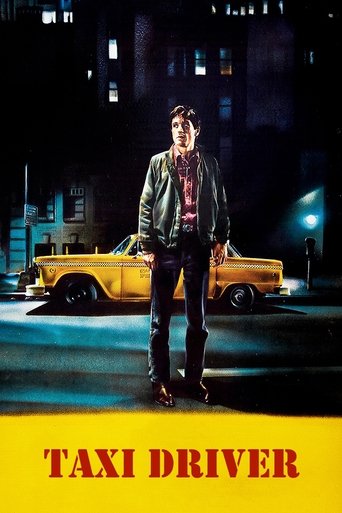
Taxi Driver
1976 · Film · 114 min
Directed by Martin Scorsese
Suffering from insomnia, disturbed loner Travis Bickle takes a job as a New York City cabbie, haunting the streets nightly, growing increasingly detached from reality as he dreams of cleaning up the filthy city.
11 positive3 negative30 neutralfrom 44 commenters
Where to watch
No streaming data for this title.
45 comments on Hacker News
TFA says he's using it for storyboarding. This doesn't seem like a huge deal, but film is a visual medium! The closer your pre-viz and storyboarding looks to reality, the more you're going to tend to stick to it when you're actually filming.
You want your rough drafts to have a roughness that conveys your level of confidence. If your AI first draft looks polished people may feel more pressure not to deviate.
I find these hand-drawn Taxi Drivers storyboards very charming even though they obviously don't map cleanly to shots in the film. This is what you're giving up if you just tell an AI "give me a close up of Travis Bickle's face"
https://boords.com/blog/martin-scorseses-hand-drawn-taxi-driver-storyboards-and-the-stories-behind
As a film fan I remember all of the outrage over his plan to colorize classic films. He was also a critic of the film "Taxi Driver" and complained about the film's values.
He was everywhere in the late 70s and early 80s. WTCG -- The Super Station.
Thanks! Here's the full list: 2001: A Space Odyssey, 8½, Aguirre the Wrath of God, Ali: Fear Eats the Soul, All That Heaven Allows, Apocalypse Now, Ashes and Diamonds, A Woman Under the Influence, Barry Lyndon, Bicycle Thieves, Breathless, Casablanca, Céline and Julie Go Boating, Chinatown, Chinese Roulette, Citizen Kane, City Lights, City of Pirates, Contempt, Daisies, Damnation, Dishonored, Earth, Electra My Love, El Topo, Eraserhead, Eyes Wide Shut, Film Socialisme, Fitzcarraldo, Fuego en Castilla, Hiroshima Mon Amour, Holy Motors, Inauguration of the Pleasure Dome, In a Year with 13 Moons, India Song, Inland Empire, Irma Vep, Koyaanisqatsi, La Dolce Vita, La Jetée, Late Spring, L'Eau de la Seine, Le Voyage dans la Lune, Lolita, Los Olvidados, Lost Highway, Lucifer Rising, Man with a Movie Camera, Metropolis, Mirror, Mulholland Drive, Night Music, Ordet, Orpheus, Persona, Pickpocket, Playtime, Psycho, Rebecca, Rosemary's Baby, Rumble Fish, Scarface, Seven Samurai, Sherlock Jr., Singin' in the Rain, Stalker, Sunset Boulevard, Taste of Cherry, Taxi Driver, Testament of Orpheus, The 400 Blows, The Blood of a Poet, The Cabinet of Dr. Caligari, The Color of Pomegranates, The Green Ray, The Holy Mountain, The Isle, The Lady from Shanghai, The Night of the Hunter, The Passion of Joan of Arc, The Seventh Seal, The Spirit of the Beehive, The Tales of Hoffmann, The Tree of Life, The Turin Horse, Time of the Gypsies, Tokyo Story, Touch of Evil, Trans-Europ-Express, Ugetsu, Un Chien Andalou, Uncle Boonmee Who Can Recall His Past Lives, Vampyr, Videodrome, Wavelength, Werckmeister Harmonies, Wild Strawberries, Moonlight Sonata, Stellar, The Haunted House Biased toward European art cinema, experimental work, and directors who broke conventional narrative rules.
I lost the post I meant to reply to, but here is the reply:
I tend to see literature, especially fiction, as a way to practice empathy. A lot of people mentally stagnate later in life, and books help break that. Empathy isn't some magical trait, it's something you can actually train. Think Do Androids Dream of Electric Sheep even if the animal is fake, the act of caring still has meaning. Practicing empathy like that helps you understand other people's worldviews. You don't have to agree with them, but if you want to function in life, you at least need to understand why people think the way they do. You can also take Paul Schrader's view that art is a vessel for emotion. It's a place to purge or process uncomfortable feelings. Watching Taxi Driver, for example, gives you a space to confront isolation, violence, and male nihilism. Instead of becoming Travis Bickle, the film lets you observe him and put those thoughts into words. That's Schrader's defense when people say the movie glorifies Bickle; the art itself is the safe space, not the man.
> If so, why even target the poor guy?
Crazy people murder all the time, hell he probably did it for a girl. See the movie Taxi Driver.
Ye it is really strange. Why is there like no "Top 52" rotating the cinema. Taxi Driver one week. Platoon the next. And so on.
Copyright troubles?
For anyone who's interested there's a BBC radio programme in which Glass speaks about his life in New York in the early 70s, driving a cab and finding his way to recognition as a composer. Lots of interesting colour about life in a city which was on the verge of bankruptcy and yet, partly because of that, had opportunities for the impecunious artist.
https://www.bbc.co.uk/sounds/play/b065tqz1?partner=uk.co.bbc&origin=share-mobile
My favourite bit is his, years later, encounter with Martin Scorsese who, on learning he used to drive a cab, was surprised to discover that Glass had never seen Scorsese's film "Taxi Driver". Glass replies that when "Taxi Driver" was released he drove a cab four nights a week and so, when he had time off, he hardly felt the need to go and watch a film about cab driving ;-)
Sadly, I don't really think the question at hand is complex enough to be more constructive than the single sentence I used. But let's try: could you reduce a movie like "Taxi Driver" to a single scene and keep all of its value? I categorically state "no", but you could probably with sitcoms-with-background-laugh-tracks ("probably", my experience with them isn't very extensive).
Basically, some music is made to be digested in small, radio/club-sized pieces and I argue that most of it does so not to fulfill an artistic vision. There are some exceptions, using this opportunity to maximize "streamlining" (I mean, I listen to some Eurobeat, so I fully understand that) and St Exupery's famous "Perfection is achieved, not when there is nothing more to add, but when there is nothing left to take away", but that's definitely not the rule.
Also, people already drew pretty good comparisons to opera and other stuff that loses too much by being listened on a single track basis.
We started to get a lot of the classic movies in the 70s (Taxi Driver, Godfather, Star Wars, Halloween, Blazing Saddles, Rocky, Alien, Clockwork Orange, Exorcist, Jaws, Apocalypse Now just to name a few) and the 80s went absolutely wild and - particularly - far more broad. The kids films from the 80s didn't really exist before then (outside of Disney).
In the 50s/60s there were less (but still some of per personal faves) and the dominant genres (Westerns particularly) have been out of fashion for at least 40 years now.
You're right, I explicitly went out of my way to find movies that are widely considered to be classics, but were not loved by critics. It's not an "analysis" of any kind, as I made clear in my post.
I think the critics are wrong about Joker. The fact that it's an homage to Taxi Driver and King of Comedy is completely intentional, to the point of casting Robert De Niro as the talk show host. I don't consider that a detraction from the film at all. Many critics also interpreted it as some kind of political document, which is totally off the mark. One of the big problems with criticism in the 21st century is that people have lost the ability to tell the difference between portraying something and endorsing it.
Really? A Clockwork Orange, Annie Hall, Taxi Driver, and Star Wars all feel the same to you?
I think Stanley Kubrick's films alone are more different to one another than half the Hollywood films made today.
He's generally overrated but Taxi Driver is not good cinema, it's great cinema.
Here are some of my favorite movies: The Graduate, Taxi Driver, The Fearless Vampire Killers, Badlands, Mars Attacks, The Grand Budapest Hotel.
Most of them don't really satisfy this formula, except for trivial points like the protagonists wants something and the protagonist has changed or if you're deliberately trying to fit them by being extremely vague.
The reason is that there are many different types of stories and these can have very different internal structure. For example, Space Opera in science fiction is often just a fight of good vs. evil set at many different interesting locations. Of course, some protagonist should develop, hence change, and it's good to have some kind of unexpected plot twist, but these are trivialities.
I seem to recall the guidelines here being against list-articles, but this is the NY Times so I guess it's a reputable source.
Anyhow, the items from his acting career are:
- Early headshot (picture) and type-written résumé
- A fedora (hat) from "Mean Streets"
- An actual taxi driver's license from preparing for "Taxi Driver"
- Dog tags from "Deer Hunter"
- "Raging Bull" annoted script
Cool items, and I guess a really nice move by him to donate personal stuff like that for future generations of film buffs to admire. :)
I object to your tone, and I don't understand why you're taking it with me, or wrongly assuming that I didn't see 'The Deer Hunter'; I did see it. I had heard rave reviews about 'The Deer Hunter' but as things happen, I only got around to seeing it ~15yrs after it was released. It was decent, De Niro and Cazale are standouts, but not as great as the accolades it had been showered with. I like most De Niro (Scorsese, Cimino, or other director), but for a slow-boiler character study of a man's descent into insanity, 'Taxi Driver' (or the little-known but superb Danish film trilogy 'Pusher' (1996-2004-2005)) are IMO far superior. Or maybe even Takeshi Kitano. As far as TDH goes, I think the last chapter suffers a break in coherence, and it doesn't advance the narrative to see De Niro unravel in slow-motion at the end. As far as anti-Vietnam war films go, Bogdanovich's 'Saint Jack' made the point more deftly; we don't necessarily need to see people literally blowing their brains out to get the point that they've been systematically dehumanized. Perhaps it's the Oscar hype machine rather than Cimino's directing that's responsible for the perpetual hype around 'The Deer Hunter', and the lack of hype around Nicolas Winding Refn. In any fair universe, foreign directors like Refn would have won an Oscar for his early work, regardless that it was in Danish; which is a Hollywood attitude that persisted until 'Parasite' (2019).
Be assured I've "watched old films" aplenty. (I referenced 'Alphaville' above, earlier; and the David Lynch 'Dune'. I was even gong to reference Tarkovsky). My comment wondering if Godard was ever considered to direct 'Dune' is obviously praise for his work.
Have you seen Pusher Trilogy? or Bogdanovich's 'Saint Jack'? How do you think they compare?
(Also, 'The Deer Hunter' running time is 3h3m, so the "you can't spend an hour just watching someone else's creation" misassumption is offbase for multiple reasons. Ask questions, rather than make wrong assumptions.)
It is hard to overstate how much Godard changed cinema, even in America. If you don’t believe me check for yourself. Open the best picture nominees between 55’-65’ and watch their trailers. Films like Marty/On the waterfront/12 angry men/To kill a mockingbird/The Caine Mutiny/Sweet smell of success is what movies were like in the late 50s.
The acting/writing was pompous, actors talked like reciting Shakespear. The movies were about heros of impeccable character doing heroic things and there always was a happy ending. Movie shots followed strict guidelines and the creative head of the movie was the producer while the director was akin to a contractor, someone hired to film the scenes.
Starting in the mid 60s there was a radical shift, topping the nominations we have films like Five Easy Pieces, The French Connection, The Godfather, One Flew Over the Cuckoo’s Nest, The Deer Hunter, Dog Day Afternoon, Taxi Driver etc. Actors would act and behave like normal everyday people facing everyday problems. The new Archetype is the Anti-Hero, someone with flaws/vices in their character, someone that viewers can relate to. We see the rise of the director as the auteur, the creative master of a film. Every known filmaking rule is being tested to it’s limits and broken by young experimenting directors.
The catalyst for this change was the French New Wave, a group of young filmmakers tired of the old style of cinema wanting to do films about their own life and experiences. The poster boy for the New Wave was Jean-Luc Godard starting this revolution with his 1960 film Breathless.
Blockbuster carried the latest movies from all the studios. Everything newest and most desirable. They had a smattering of classics and art house and older genre films, but mostly it was about everything latest and greatest.
Netflix streaming seemed like that at first, but better! Now, they have a tiny slice of content. And as a content-producer, they seem willing to throw money at anything B-list.
Meanwhile, the studios became more risk averse as people started preferring to watch at home. Then theaters shut down and studios became more risk averse. And Netflix and Amazon arose and started playing studio games and studios became even more risk averse.
That trajectory of fear is mirrored in the content. The 1970s were known for directorial freedom and risk-taking. The 70s gave us Apocalypse Now, Taxi Driver, The Godfather, Star Wars, Animal House, Annie Hall, Rocky, Halloween, Smokey and the Bandit, Deliverance, MASH, and more - not all high art but all complete gems. Every decade since, we've seen a gradual progression toward samey-ness.
I get what you're saying (I worked in fiom and tv for eons before switching out), but you can't really do it like that. Comparison needs to include both what the movie was built on, leading to it, and then also to consider directors own body of work leading to it. That takes into account period of work and release as well. What came after (not immediately) is not relevant to the work itself since it's out of period (in future). To even start talking in this direction you'd have to invoke, serially, works like Clockwork Orange, American Graffiti, Taxi Driver, and then Midnight Express to even start outlining the silhouette of what is to come.with Blade Runner.. and that's just a start since Ridley Scott's path is a bit unusual, and that movie's genesis especially so (see Legend he did sonce it's close to the period). That only covers the basics of the basics of discussing of what and specifically why this particular work is the way it is and why emulating the moves later (2049) didn't yield the same.
Edit: typing on mobile. Screw it, I hope it's at least somewhat readable.
I've heard it quipped that there's no such thing as anti-war movie. No matter how searing the criticism, no matter how horrifying the violence: war simply looks good on the screen, and the spikes of adrenaline we get during a war film excite us. The same could be said of films with any form of taboo sexuality, even when done in the spirit of satire or social criticism.
> I'm sure there are some snuff films with interesting character development too.
The criticism is absolutely worth considering, regarding the ethics of production. But it's worth contrasting like-with-like (not to shut down the argument, but to try to define the boundaries):
- Was the production of "The Professional" or "Taxi Driver" ethical? Both films sexualized young girls; and in the former case, Natalie Portman found the experience (particular the response and aftermath) moderately traumatic, and explicitly avoided roles with any sexuality until her late twenties.
- Was Kubrick's directorial process ethical, particularly in regard to The Shining, where he was blatantly abusive to Shelley Duvall (charitably, to elicit the best performance)? If that instance is over the line, exactly how hard are directors allowed to be on actors, and how much explicit prior consent should be necessary for "method directing"?
- To what extent is child labor in film-making ethical to begin with? We've converged on 14 as the minimum age for W-2 employment (notwithstanding family businesses, kids with apps, kids with YouTube channels, and "off-books" tasks for pocket money). If hiring a kid for a movie is fine, why can't that same kid sweep floors at a gas station? We could say "because there's no other way to make realistic movies"; but that's not that different from "there's no other way to tell a story about coming-of-age in a hyper-sexualized world".
- To what extent should such limitations be a product of individual ethical choices, vs social norms / taboos, vs "market ethics" (boycotts), vs public law and policy (either in the sense of labor laws, or indecency constraints on expression)?
Again, not saying that criticizing the production of Cuties isn't valid, or appealing to the status quo, and definitely not making some backdoor argument against child labor laws or age-of-consent; just that these questions are larger in scope, and don't have obvious answers.
this should be top comment
though honestly I was more influenced by movies than books, I guess strongest influence on hour I vote the world around me had Fight Club, Falling Down and American Beauty plus the car speech in Se7en and Collateral as well, Taxi Driver as well
Movie soundtracks are about as memorable as they've always been. Most producers cheap out when it comes to the music, so you get a "cookie cutter" soundtrack of the day:
* The tinny, mostly brass in the 50s and 60s.
* The mostly silent 70s, or faux disco.
* The primitive, nondescript synths of the 80s.
* The "nouveau orchestra" of the 90s.
* The "deep bass sound" of the 2000s.
etc etc.
You'd be hard pressed to tell the musical difference between "Treasure of the Sierra Madre" and "The Grapes of Wrath". "Taxi Driver" and "The French Connection". "Rain Man" and "Splash". "Sixth Sense" and "Seven".
It's always the same for music, tv, movies, etc: Every decade has its gems, but most of it is crap.
Maybe I'm just if ignorant about what it takes to make a movie.
But 25 million seems like a lot for a small film that's mainly script and acting.
Horror movies require a ton of special effects which I imagine is where huge budgets start to come into play.
But many of the best movies I've ever seen don't require tons of special effects.
Taxi driver, good will hunting, the godfather, moonlight, etc.
It's possible if the quality is there.
Sometimes I wonder if maybe there are enough movies. As in, we don't need to make anymore. This applies to music as well in some ways. Music in particular is relatively timeless, transmits well across history, and doesn't suffer technological obsolescence, which means that great music accretes over time. You can't listen to Beethoven and think "Not bad but it's woefully out of date." Old music is also remarkably accessible when you think about it, and one can ejoyably listen to the same music over and over again. Eventually there will be too much to listen to, if that is not the case already. At any rate, the proportion of music to which nobody listens is growing rapidly.
Movies are a bit different, so reaching saturation point will take longer. They depict the world and the world changes. It certainly is possible to watch an old movie and find the not so contemporary context quite jarring. I doubt the next generation will enjoy 1990s American sex comedies very much. Improving movie-making technologies also means that new movies can have something unique, but this seems to have had relatively little impact in the last 50 years and tends to be anti-correlated with quality. Another point arguing against reaching the saturation point is that old movies do become inaccessible. I wanted to watch Au Hasard Balthazar [1] recently and could not find it anywhere.
But the number of movies being made goes up all the time and the world isn't changing so fast anymore. Taxi Driver is nearly 50 years old now but the setting is almost completely familiar. It is in no way diminished by the fact that Travis Bickle doesn't have an iphone. Technology is also going to improve to the point of democratising movie making, where a small team or an individual can make (and even remake!) a feature length movie with relative ease, without leaving their bedroom. So perhaps we will reach the point where there is just too much to watch for people with average consumption rates.
[1] https://en.wikipedia.org/wiki/Au_Hasard_Balthazar
Andy Warhol and a million graphic designers might disagree :)
I maintain that art affects society. Scorsese makes Taxi Driver, some crazy guy watches it, decides to shoot Ronald Reagan to impress Jody Foster. Would crazy guy have done the same thing regardless of the movie? Maybe. Would he have done it on the same day, at the same time, in the exact same way? Probably not.
The world where Scorsese chose to make Taxi Driver is different than the one where the movie never existed; maybe the difference is trivial, but -some- effect is there. The remaining question is the extent of that effect.
The fact that when I imagine a cop, I imagine "Bad Boys" and "Law and Order", even when I haven't watched these shows for over a decade, is a testament to art's effects. Maybe this image was born out of the crime waves of the 70s-80s, but the image persists, affecting how people feel on topics of policing.
The movie Taxi Driver (not the Scorsese one) is a really good film about this
Showing these kind of things has always been against the ethical standards of journalism and exceptions to it used to be discussed intensively by editors - excluding the tabloid yellow press who make their living from this trash, of course. I guess some of the more recent American TV channels realized at some point, after they had gained fame for showing everything, that quotas are not everything and that relatives usually don't want the death of their beloved ones displayed all across the Internet without their consent.
Sites like Liveleaks are very hypocritical, they pretend to show videos for "freedom of speech" while instead their main purpose is simply to satisfy their viewers' voyeurism. Cheap thrills are the main reason for viewing this kind of material - and don't pretend to be someone better, you've looked up that kind of stuff yourself for precisely that reason just like I have. People who watch this material only want to satisfy their curiosity and get the thrills from it.
That's also why Truffault once said "There’s no such thing as an anti-war film." (There are exceptions, like "Taxi Driver", and perhaps also "Deer Hunter" and "Killing Fields", but these are rare.)
> Film was scary too at one point.
And there have been many film-inspired murders. the mass shooting inspired by the Dark Night. John Hinckley’s assassination attempt on Reagan ( inspired by Taxi Driver ).
John Lennon’s murder was inspired by The Catcher in the Rye!
Here’s a link to some:
https://www.newsweek.com/nine-horrible-real-life-crimes-were-inspired-movie-or-novel-583828
And remember, not all such incidents are famous. So doubtless there are more.
There are sick people in the world who are indeed influenced by all sorts of media.
this was the key idea behind A Clockwork Orange.
Whether such media influences “healthy” people is another question.
You ever see Taxi Driver? Apparently that movie's depiction of NYC in the 70s was not that far off from reality, and it's jarring.
Why does the permission of their parents matter, even in the slightest? Do parents have the right to marry away their pre-pubescent daughters in our society?
In addition, a large portion of sexual abuse is from family, and the parents of child actors don't exactly have the best reputation when it comes to not abusing their children, and show business in general doesn't have the best track record on this either. Remember Corey Feldman?
> You really think the actresses are traumatised after this?
Yes.
> Why?!?
I think children being told to perform sexually explicit dances while in revealing dress for the enjoyment of adults (the nuances of such enjoyment will be lost on the child) will likely have a negative effect on their mental health later in life and yes, is a traumatizing experience, because they are being coerced into performing a sexual act, the likes of which they cannot understand or consent to due to their age. It doesn't matter if the coerced sexual act is stated to be in opposition to coerced sexual acts: the child has no choice! I shouldn't have to explain this!
If Taxi Driver could make a movie about sexual exploitation of young women without forcing Jodie Foster to literally dance in undress I think we can hold other filmmakers to the same standard.
> Taxi Driver formed part of the delusional fantasy of John Hinckley Jr.[26] that triggered his attempted assassination of President Ronald Reagan in 1981, an act for which he was found not guilty by reason of insanity
Its great to be an optimist and think movies don't cause harm, clearly not everyone got the memo, there's some really crazy people out there.
https://en.m.wikipedia.org/wiki/Taxi_Driver#John_Hinckley_Jr.
Crime and Punishment is a wonderful deep dive into the mind of a really messed up person. If you like the film Taxi Driver, it is sort of similar, but with a lot more direct philosophical underpinnings. Raskolnikov has a whole philosophical framework on why he's allowed to murder the pawn shop owner* and he spends time explaining and discussing it.
The motif of the nihilistic, disaffected young man is something Fyodor gets a lot of mileage out of, but he's the master of that genre. Notes From Underground is similar, but a lot shorter. It's one of the few Dostoevsky novels I haven't read, so I can't say much more than that. Its opening is his most famous line: "I am a sick man. I am a spiteful man. I am an unpleasant man. I think my liver is diseased."
To go against the grain of most recommendations, I'll say that "Notes from a Dead House" (the name differs depending on translation) is a good place to start too. It's essentially his prison memoirs, slightly fictionalized to avoid censors. There are a lot of little details that stood out and affected me deeply. e.g: He recalls a small dog that was often abused by the other prisoners, and was so timid that it would "sink to the ground on all fours and start trembling all over" when he petted it. The book has so many small, human details that really show the personal history that influenced his later books. He has an eye for those details that most people would gloss over.
The thing to keep in mind is that, across Dostoyevsky's novels, there are a lot of scenes where people stand around discussing philosophy. It's great and engaging if you're into it, but it will kill your enjoyment if it's not your thing. The Brothers Karamazov and Demons are books to avoid for your first attempt; they include a lot of that. Fyodor is really preachy in general, but this increases over time in his career, so his earlier books are more plot-focused. And he's all about symbolism, like the hypothetical author in the famous "curtains are blue" meme.
Finally, don't worry too much about translation. Pevear and Volokhonsky are always the most recommended, but that is more due to current trends in translation than their objective superiority. That's not to say they're bad, but any modern translation is going to be fine. Constance Garnett is the only one who's not so great, but I had a fine experience with her translation of C&P as my first Dostoyesvky novel, so it's hardly unreadable.
*not a spoiler, this happens in the opening
Looks aesthetically nice I think with D* as a blog. B.t.w. Taxi Driver is a great movie :- ) (I recognized the avatar image) & Another World, I played it too all the way to the end.
I couldn't post a comment about eating vegan food, compared to meat (I'm a pescetarian b.t.w.), at: https://pod.storel.li/p/164706 — I was a bit confused about this: "meat requires much more fossil fuel to produce than vegetables and grains". Fossil fuel to produce food got me confused (my first thought was: "But humans and cows don't eat oil?") ... and apparently that's for transporting the food and maybe preparing it in food factories or maybe keeping it cold, etc. (?)
... Apparently one needs a D* account oneself, to post comments (?), https://wiki.diasporafoundation.org/FAQ_for_users#Who_can_comment_on.2C_reshare.2C_or_like_my_public_post.3F
Stand Blade Runner next to nearly any action, super hero, or "science fiction" movie made after 1999, and Blade Runner wins or ties, every time. For several reasons.
But it's not enough to just be better than the cotton candy fluff of recent movies, since that's not a real competition. It's a solid movie that stands on its own, even despite some quirky flaws in the delivery and editing of the performances.
It's not Rocky Horror Picture Show, where you and your friends have a party, and participate. It's more of a sleepy, quiet time movie like Taxi Driver. Like Taxi Driver, and any other classic movie, it gets better with repeated viewing, as more details tie together.
It's not a mind blowing movie, but for it's time, it dealt with a lot of new themes in extremely subtle ways, without excessive treatment. The future was cast as a recognizable, ordinary reality, taking on a tone that really only draws a cult following, but warrants substantial appreciation.
Movies like this don't get made anymore because risking a budget on cult appreciation doesn't land well in a pitch, especially amid the modern environment of implicit piracy, if it's fair to label shared viewing as such.
Whether it was the first movie to feel vaguely cyberpunk-ish or not, doesn't matter much anymore, but Blade Runner had a deep gravitational pull that influenced visual concepts of the near future well into the late nineties.
Without a sequel, all of the open-ended background trivia that was never elaborated upon, left open a whole universe to imagine, and this is where the cultural resonance ties in. The people who enjoyed the movie were left free to speculate about what really went on in the off world colonies, given the curiousities revealed by film.
I wish more movies were like Blade Runner. It's a rare item. It's not a movie you watch once. It's not a blockbuster. It's not a movie you turn off, when it finds it's way onto your TV, however that manages to happen.
TL;DR: watching the movie "Taxi Driver" you'll learn more about about human behavior than reading that article.
This bit made me laugh:
> It seemed kind of strange to me, but David Simon said he had heard about something like that before when he was [at] The Baltimore Sun. I mostly was excited that I was having an episode that I had more than two scenes in. Me and Domenick Lombardozzi referred to it as my Taxi Driver episode, because it’s my favorite movie.
I've read just about every book excerpt/oral history/etc I've been able to find about The Wire, and I've read about Gilliam's and Lombardozzi's and others' recollections on how they were frustrated at times about their scene/line counts. No matter how much I read these behind-the-scenes anecdotes I still have a moment of fourth-wall-breaking-wtf, because the thought of The Wire having the characteristics common to any other kind of entertainment, with writers' rooms and cut scenes and actors demanding more minutes, feels so alien. Of course it's that way, but my mild confusion/shock is a testament to how seamless and real the show and its content and its pacing feel.
This is reminiscent of auteur theory in film, which essentially says that the director is the author of the film. Similar to corporations, making a movie requires a lot of people with different skills/talent. The director overshadows everyone and is the person primarily credited with authoring a film, they even overshadow the writers of the screenplay. One of the leading arguments for auteur theory is that the director has the vision of the film and they set out to create it. This is the same narrative used in the startup world: the founders have the vision. So this extends to why we credit founders for the invention of products, just like how we credit directors for films.
Maybe 100 years from now we will say "Steve Jobs invented the iPhone/smartphone", just like how we say "Thomas Edison invented the light bulb" or "Martin Scorsese made Taxi Driver".
I'm sure you can find lots of bad and shallow movies released in 1976 (e.g. a rather bad remake of King Kong) though there were also a number of good films in addition to Network (All the President's Men, Taxi Driver, Rocky). Network was particularly good though and seems rather prescient today.
My interpretation is that it's very intentionally heavily based off of Fight Club in season 1, but that's just the setup. Now it's what happens after Fight Club. If it were a rip off, you wouldn't have so many Fight Club references and easter eggs. I think it's "sampling" and not "biting." Of course there's disputed gray area, but I think the self-awareness makes it clear that there's a respect for the material it's building off of. There's a lot of American Psycho, Taxi Driver, etc. in there too. It's basically an amalgam of all the mind-bending/character study plot techniques.
New development? Actually they have been doing that probably all around the world for years now.
A friend of mine in Germany also got such a letter once and wrote something back along the lines of "Wasn't me, don't know what you are talking about" and he never heard from them again.
They try to profit from the fear of everyday people who rather pay up front, because they don't want to risk that the case goes to court, no matter how unlikely this might be. And it's even understandable, ordinary folks probably really panic when they see such a letter and all the legal talk and underlying threats that are made.
It's as despicable as patent trolling.
First avoid such a situation:
-) use vpn if possible (check with their policies, whether they allow torrent traffic or maybe they ban it from certain servers, preferably use a provider that does not log)
-) quite simply never download newer material with big companies behind them from public trackers. most of the times these letters regard the newest Hollywood movies, a current album by a big pop star or the newest game everyone has been waiting for, not Taxi Driver, The Godfather Trilogy, Quake 3 or the weird Japanese pop band from the 80s you are into
and if you are in such a situation:
-) consult your lawyer or search on the Internet how to properly respond, do not just pay!
That was a quote from the movie Taxi Driver, as is all the italicized text in the article...
I need no movies to know what autism is.)
About movies, is Asperger-like behavior of De Niro's character Travis in Taxi Driver is explicitly described in the screenplay or was a side-effect of a good acting?) And that Jean Reno as Leon, you know.
At the time of The Godfather's release there was the same mountain of crap in cinemas that there is today. It's easy to look back on "the good old days" and conclude that the quality of modern filmmaking has decreased, but you'll be ignoring all the other junk that made it to the silver screen. Like any medium, 90% of what's produced commercially is garbage, but future generations will enjoy the films of P.T. Anderson, Tarantino, the Coen Brothers, and countless other artists working today and say "they just don't make 'em like they used to."
Also, since Taxi Driver by Martin Scorcese was mentioned, take a look at his latest film Hugo. I think you'll agree it's every bit as good as his earlier work.
> There would be no Godfather without Hollywood. No Apocalypse Now. (also no Taxi Driver, no Star Wars, no Indiana Jones, no MASH or Nashville) In the absence of Hollywood, you get movies like Youth Without Youth and Tetro - two wonderful oddities, but you'd be hard pressed to make the case for them against Coppola's early masterpieces.
Those movies you mentioned were a result of being within/outside Hollywood, not a function of Hollywood's existence.
I love FFC. I'm a current UCLA film student - Coppola's alma mater. One thing to think about: UCLA has always been the "indy, intellectual" film school. It's our rep, internally and (to an extent) externally. When Coppola left UCLA to work in Hollywood, he was branded a sell-out by his fellow students.
One thing to think about w/ this whole "crush Hollywood" thing is this: most of your favorite movies (assuming you've got a boner for the New Hollywood period like I do) were a result of an aging, out-of-touch entertainment monopoly making desperate, reactionary moves to save itself. The old system didn't work, the people in charge had no idea how to fix it, so they went crazy taking risks on young directors. FFC, Scorsese, Spielberg, Altman, de Palma, Lucas - all the really top-drawer American filmmakers, honestly - were a result of this period of blind desperation.
There would be no Godfather without Hollywood. No Apocalypse Now. (also no Taxi Driver, no Star Wars, no Indiana Jones, no MASH or Nashville) In the absence of Hollywood, you get movies like Youth Without Youth and Tetro - two wonderful oddities, but you'd be hard pressed to make the case for them against Coppola's early masterpieces.
The beautiful and horrible thing about Hollywood is that it's a system designed to throw huge stacks of cash at storytelling problems. It's fucking absurd, because money has never been capable of solving those kinds of problems - practice and gut instinct are what create good stories. But when strong storytellers are placed in an environment which supplies nearly unlimited resources, totally amazing things happen. Yes, we can all point to Heaven's Gate, New York New York, and Coppola's own One From the Heart, but flops like those are the inevitable flip side of the system I've just described: talented people can abuse unlimited resources just like anybody else.
I guess what I'm saying is: I'd be seriously depressed if Hollywood were to vanish. Yeah, it produces a lot of shit, but its high water marks have never really been replicated by any other mode of production.
Monetize? Maybe include a page of Charlie's best/worst films and some other great movies about crazy people. It won't make millions, but it might cover your bandwidth costs. Amazon referrals for Sheen classics like Ferris Beuller's Day Off, Men at Work and Major League, and movies about insanity like Taxi Driver and Apocalypse Now (w/ poppa Sheen).