There's a british comedy radio show called "I'm Sorry I Haven't A Clue" that plays a game called "Mornington Crescent", which can be viewed as a similar sort of game, but it only really works in the specific context of the radio show. In theory, it's just comedians listing off london tube stations until one says "Mornington Crescent", and then they "win". In practice, it's played as though there is a vastly complex rulebook of secret rules, and players will react as though the current player may have made a clever play or a mistake or something
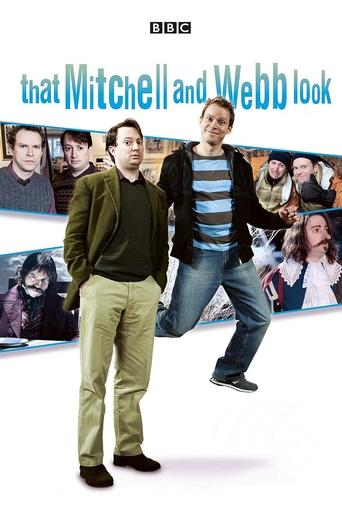
EDIT: I've also just remembered "Numberwang", which is a similar game with supposedly complex hidden rules from the comedy TV show "That Mitchell and Webb Look", where the players have to pick a number until they choose one that is "Numberwang"
I agree in principle, it's just that the level of expressed worry doesn't seem to match reality. Currently we have no reasonable path to 'scary AGI'. It's some yet newfangled tech we haven't discovered.
As an example, consider the invention of motion picture. People were totally bewildered that you can have moving things and people inside a picture. Scaremongers could start claiming "Pretty soon the moving things may come to life and take over the world! Before you know it, they'll run our factories from inside the movies and we'll be their slaves!" That's more or less what this 'scary AGI' hype sounds like to me right now.
Btw "That Mitchell and Webb Look" is a great show ;-)
Humour. We Brits have a fairly dark gallows humour anyway and we also genuinely have a cultural sense of 'grin and bear it', 'stiff upper lip', 'keep calm and carry on' also called 'blitz spirit'.
Today, after the UK generally and my office specifically required working from home, I made subtle references to this sketch [1] from TV show 'That Mitchell and Webb Look'. I make standups light and breezy; I add a lighter tone to emails.
The important thing for me is not to undermine the seriousness of the situation that we're in - in many ways I'd like to emphasise it and embolden it. On the other hand, I want to reduce the mental strain on people and to keep spirits high. High spirits, high productivity and everyone feels like they're being included and that everything is being taken care of.
Now is the time for managers to shine. We have the responsibilities of looking after our people, especially in a profession such as software engineering which could potentially be isolating and intimidating.
Thanks for writing that, Dan. It's important to clarify what we're arguing about.
Underneath "others are stupid" lies "my intelligence goes unrecognized"
Oh, but that's why it's good to check where this is coming from: It is precisely because I know what brilliant minds we have in this industry that I am disappointed. I am blown away by how much smarter others in this industry are than I am -- and that is one of the reasons it stings. Imagine you have a nephew who you know to be a prodigy and, sure enough, he ends up getting his PhD at MIT, and you're so proud of him. Then he tells you his dissertation is called 'Yo' and is 200 pages about sending 'Yo' to your friends, and how he expects will make him rich, rich, rich!
The disappointment stems from the expectation that he can do better.
underneath "others are undeservedly rich" lies "I deserve better"; and so on.
That's a very strange motivation to project on this situation that we're funding foolish endeavours and not funding truly interesting research.
[By the way, projecting jealousy is one of the last tools of defence in the box and one of the lowest. It's easy to use, hard to refute and is rarely germane. Please be careful.]
My comments were made because our industry is a ship driven by greed to foolish ends. We are abundant in potential but are squandering it like spoiled grandchildren. Joe Armstrong opened last year's StrangeLoop with "We can do better." I'm sure you've heard Alan Kay's talks since, what, 1997? He's... jealous? I don't think so. He, like many of us, would just like to see progress. But we've made little-to-no progress in the last 35 years.
So when we also see what projects are funded, it's not hard to frustrated. Can you imagine a time when chemistry is exploding and yet it's hard to get funding to do medical research but there is funding, plenty of it, if you want to create better fireworks? Go to a top conference on the most innovative projects and there's not an investor to be found, but stand near someone who just made Angry Birds and you might get a concussion from the stampede.
A much lighter way of hearing what I'm trying to say is this: try to find a TV show called "That Mitchell and Webb Look", Episode 4.1, wherein a chemist who thinks he finds a cure for a disease is told by the owner, M. Ganier, that this is his laboratoire and he demands new ways to make hair silky! I think you'll find it's hysterical and at the same time -- this is how many of us feel.
You're right that you hear emotion, but it's frustration, because it's not that we can't, it's that we don't.
 Hacker Cinema






4 comments on Hacker News
There's a british comedy radio show called "I'm Sorry I Haven't A Clue" that plays a game called "Mornington Crescent", which can be viewed as a similar sort of game, but it only really works in the specific context of the radio show. In theory, it's just comedians listing off london tube stations until one says "Mornington Crescent", and then they "win". In practice, it's played as though there is a vastly complex rulebook of secret rules, and players will react as though the current player may have made a clever play or a mistake or something
https://en.wikipedia.org/wiki/Mornington_Crescent_(game)
EDIT: I've also just remembered "Numberwang", which is a similar game with supposedly complex hidden rules from the comedy TV show "That Mitchell and Webb Look", where the players have to pick a number until they choose one that is "Numberwang"
I agree in principle, it's just that the level of expressed worry doesn't seem to match reality. Currently we have no reasonable path to 'scary AGI'. It's some yet newfangled tech we haven't discovered.
As an example, consider the invention of motion picture. People were totally bewildered that you can have moving things and people inside a picture. Scaremongers could start claiming "Pretty soon the moving things may come to life and take over the world! Before you know it, they'll run our factories from inside the movies and we'll be their slaves!" That's more or less what this 'scary AGI' hype sounds like to me right now.
Btw "That Mitchell and Webb Look" is a great show ;-)
Humour. We Brits have a fairly dark gallows humour anyway and we also genuinely have a cultural sense of 'grin and bear it', 'stiff upper lip', 'keep calm and carry on' also called 'blitz spirit'.
Today, after the UK generally and my office specifically required working from home, I made subtle references to this sketch [1] from TV show 'That Mitchell and Webb Look'. I make standups light and breezy; I add a lighter tone to emails.
The important thing for me is not to undermine the seriousness of the situation that we're in - in many ways I'd like to emphasise it and embolden it. On the other hand, I want to reduce the mental strain on people and to keep spirits high. High spirits, high productivity and everyone feels like they're being included and that everything is being taken care of.
Now is the time for managers to shine. We have the responsibilities of looking after our people, especially in a profession such as software engineering which could potentially be isolating and intimidating.
[1] https://www.youtube.com/watch?v=wnd1jKcfBRE
Thanks for writing that, Dan. It's important to clarify what we're arguing about.
Underneath "others are stupid" lies "my intelligence goes unrecognized"
Oh, but that's why it's good to check where this is coming from: It is precisely because I know what brilliant minds we have in this industry that I am disappointed. I am blown away by how much smarter others in this industry are than I am -- and that is one of the reasons it stings. Imagine you have a nephew who you know to be a prodigy and, sure enough, he ends up getting his PhD at MIT, and you're so proud of him. Then he tells you his dissertation is called 'Yo' and is 200 pages about sending 'Yo' to your friends, and how he expects will make him rich, rich, rich!
The disappointment stems from the expectation that he can do better.
underneath "others are undeservedly rich" lies "I deserve better"; and so on.
That's a very strange motivation to project on this situation that we're funding foolish endeavours and not funding truly interesting research. [By the way, projecting jealousy is one of the last tools of defence in the box and one of the lowest. It's easy to use, hard to refute and is rarely germane. Please be careful.]
My comments were made because our industry is a ship driven by greed to foolish ends. We are abundant in potential but are squandering it like spoiled grandchildren. Joe Armstrong opened last year's StrangeLoop with "We can do better." I'm sure you've heard Alan Kay's talks since, what, 1997? He's... jealous? I don't think so. He, like many of us, would just like to see progress. But we've made little-to-no progress in the last 35 years.
So when we also see what projects are funded, it's not hard to frustrated. Can you imagine a time when chemistry is exploding and yet it's hard to get funding to do medical research but there is funding, plenty of it, if you want to create better fireworks? Go to a top conference on the most innovative projects and there's not an investor to be found, but stand near someone who just made Angry Birds and you might get a concussion from the stampede.
A much lighter way of hearing what I'm trying to say is this: try to find a TV show called "That Mitchell and Webb Look", Episode 4.1, wherein a chemist who thinks he finds a cure for a disease is told by the owner, M. Ganier, that this is his laboratoire and he demands new ways to make hair silky! I think you'll find it's hysterical and at the same time -- this is how many of us feel.
You're right that you hear emotion, but it's frustration, because it's not that we can't, it's that we don't.