 Hacker Cinema
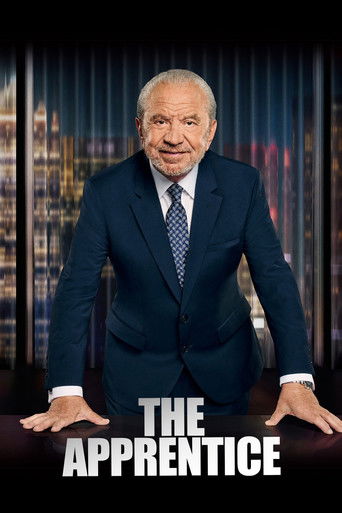
The Apprentice
2005 · TV series · 60 min episodes · 20 seasons
Created by Mark Burnett
British version of the reality competitions series that sees young entrepreneurs compete in several business tasks, attempting to survive the weekly firings in order to become the business partner of one of the most successful businessmen.
5 positive5 negative17 neutralfrom 27 commenters
Where to watch
No streaming data for this title.
27 comments on Hacker News
Remember back when he had a TV show and his catchphrase was the hilarious and creative "you're fired"? The entire concept of The Apprentice as it was pitched to him circled around Trump being the god of business. I wonder if having that kind of a personal brand, alongside the mountains of self-aggrandizing merch could in any way indicate a total unwillingness to exist alongside anyone but worshippers and yes-men...
I thought it looked like an episode of The Apprentice.
> (faster if Trump gets another term).
I didn't keep track and don't have a good list, but a guess is that Trump did push through a lot of regulatory changes. If the media would publish a well documented list ...!!
From all I've seen, I like Trump, but apparently a lot of people don't. I wonder where am I going wrong.
Why do some people not like him? A guess is the now old collection of video clips from the MSM (mainstream media) still at
https://youtu.be/f1ab6uxg908
Sooo, recently I watched several videos (still at YouTube) of episodes of Trump's old TV show The Apprentice. (1) From the business world I've seen, this guy was definitely, uh, different! In a way, tough to criticize since apparently he was very successful. (2) A surprise was the propensity of mess ups, in fighting of the apparently carefully selected candidates. When I think back, yup, I did see a lot of that but guessed it was incidental and would go away and wasn't too bad -- I was wrong, and Trump's TV show was closer to right. How Trump handled (2) was good to see, although maybe some of it was just "TV".
For American readers, the Amstrad was launched by the guy who hosted The Apprentice TV Show in the UK, who named it after himself (initials AMS). It'd be grossly unfair to call Lord Sugar the British Trump for a number of reasons (he didn't come from money, he's a billionaire, etc), but still:
https://en.wikipedia.org/wiki/Alan_Sugar
https://en.wikipedia.org/wiki/Amstrad
You can just about see one in an early episode of The Apprentice here: https://youtu.be/5xwW0TWO9nY?t=3345 . Anyone know when they ditched the emailer from The Apprentice?
I must have seen it ~20 years ago on FOX I think.
It was certainly a “made for TV” / theatrical way of making a point. But the point stuck with me as it was pretty diametrically opposed to the other Apprentice show which rewarded people for following instructions.
Looks like it was Victoria Falls: https://youtu.be/BrA__e6s1kg
Clip starts at 4:38
> you know you're on a TV show where the utmost care is taken by a whole team of professionals
I think that’s kind of the point though, is if you’re saying you’re capable of being President of Virgin (the prize I believe), then there is little to no safety net. You are the professional in charge responsible for everyone else’s safety. If you just assume that Branson’s prepared and thought of everything already then you’re not adding the value he’s looking for. He wants people that are skeptical of every detail and proposition (even his).
But granted it’s not the actual way he’d vet for this quality. It was spiced up for TV. I just found it impactful that he valued that skeptic quality in his team.
I saw a fraction of an episode of Richard Branson’s “The Apprentice” and was struck by the fact that (unlike a different host of the US The Apprentice) he considered the act of firing someone very painful.
It was an existence proof that billionaires do not have to be heartless psychopaths - even though media consistently gives us this impression.
And - predictably - his version of the show did not rate very well, and was fundamentally less entertaining. It was soon cancelled I believe.
(I am not saying that he is a wonderful person— I don’t know him. I just know that he doesn’t outwardly celebrate the cult of cruelty that is popularly believed to be necessary for being a billionaire.)
Lmao Stavros we should share a laptop or something or just speak over the phone the way we run in to each other so often.
Its different reading it at the time because it factors in the context of the community at the time as well as the lived experience of what it was like at the time to be a member or participant in given discussions. With that contrast, you can then get an idea of the intent of those comments beyond just the words, as they are often (and in this case) reinterpreted through the lens of current day contexts.
Example: ask what people think of the hit TV show The Apprentice today in the present, then hop in a delorean and ask someone before the trump presidency or candidacy what they think of the show.
I think one of the things going on has to do with a decade or so of 'reality' TV being a primary source of entertainment for many (most?) people. And in particular one aspect: the 'sob story'.
On any TV show, and in the media in general, there are a few different competition formats (a la Bake Off, The Apprentice, BGT, etc.) but all include a 'sob story' element, particularly near the end as we get to know more about the contestants. Every single person selected by the producers for these shows has some factor in their life that they've overcome to get this far.
Individually, this makes for an engaging TV show, we warm to the characters because they have a good story, but overall the effect is damaging, I think. The effect is to create a system that only allows people to feel successful if they've overcome some terrible adversity. It's not enough to come from a comfortable, middle class background, do well in school and then lead a moderately successful life. What have you really achieved if you've done this?
Most people in the UK live reasonably comfortable, stable lives (modulo class). Since—according to my theory—people need to feel like they have something to overcome in order to be allowed to feel successful, people will overstate hardships, and focus on and amplify negative events and circumstances in their lives in order to feel validated.
> Why did Ukraine vote in a TV comedian for president, at such as precarious time?
Yes I remember his "the apprentice" TV show, it wasn't very funny.
You can break it down to the proverbial lemonade stand. Set one up and let the kids run it. Or when the kids run a bake sale to raise money for the dance - there's a good opportunity to impart this information.
Using real money will pique their interest.
Probably the best episode of "The Apprentice" was the very first, where the teams had to each set up and run a lemonade stand for a day.
British shows mostly go the other way. All the classics seem to be one or two series where you wish they'd made one or two more, and series are often 6 or 8 episodes rather than the 10, 12 or "bleeding ridiculous" US series love. As our tv has got more American in style and business we've gained series that just won't die, even though so far past expiry date the corpse is rotting. (Big Brother? Apprentice? Celebrity anything...
The only downside to the shorter seasons is book adaptations often go at breakneck pace and take too many liberties.
As example, The Last Kingdom: First two series were BBC America and 8 episodes that covered 2 books a series. Pretty damn good adaption, pretty faithful to the books even with the brutal fast pace compression, and kept the real historical basis Cornwell is famous for. Maybe a bit tame and a little too "worthy" in places. It's King Alfred christianising early England and killing many heathen Danes, some "worthy" was unavoidable. :)
Third season is Netflix and no BBC, so instant 10 episodes a series, and it's unbelievably fucking shit. The gore, the dialogue, budget and plot all got turned up to 11, all the characters got entirely new personalities and the basis on the books got thrown out the window. Yet it drags and drags, because the highlights are constant now, so no contrast any more. Cornwell's famous historical basis laughed at and pissed on. Shark jumped multiple times. In wanting to make it more showy and mass market they killed any interest of the people who did watch it.
Another reason to think my Netflix sub is nearing its end.
I would suggest that flirting probably works more effectively for women. While not salary negotiations, it certainly seemed to work during the TV show the apprentice for other negotiations. I never saw any men use that tactic.
My ranking of Dragons Den series:
Canada (Kevin/Robert from Shark Tank are in some seasons) UK Ireland
You can also watch the UK version of The Apprentice and Young Apprentice (teens). The US versions of the traditional The Apprentice are a bit old and the Celebrity Apprentice is not worth watching.
Its like the "Survivor" TV show. Or "The Apprentice" - hey who was the host of that?
Think about Master Chef and Hell's Kitchen. Who would really want to see people cook something that they won't be able to taste? Viewers need to rely on the judges' opinions about the food and that's it. And yet a lot of people watch those shows, not only for the food, but for the 'process' involved in cooking. It's really the drama and emotions involved in the episodes that people crave and keep those shows alive.
How about America's Next Top Model? Or The Apprentice? Most viewers of these shows are neither models nor managers. Perhaps when coding has become as ubiquitous as cooking, business, or fashion (which will happen most likely), coding as a spectator sport will make more sense.
Love Linus's answer - "fake civility" in the workplace.
Before anybody takes umbrage at Linus's response, watch a couple of episodes of The Apprentice - either the Donald Trump (USA) or Alan Sugar (UK) versions. Whilst they don't drop F-bombs, their language is pretty "vigorous".
Board rooms, like kitchens are .... "If you can't stand the heat ..."
Might be better to focus on how not to raise the ire of the BDFL!
I'm guessing that the majority of HN readers fall into three categories (note I say "majority").
a) Younger business guys
b) Younger hackers
c) Older hackers
I am also guessing that among the "c" group most are not that familiar with Trump back in the late 70's when he got his start all the way through to now (Apprentice days). I've followed him for many years so I have a different perspective. I can tell from the comments here that many people take a view of Trump based on their limited exposure to him in the last few years. (I'm sure even PG hasn't been following Trump since his start or thought much about him at all. PG didn't become a "business guy" afaik till the mid 90's, right?). As someone who graduated Wharton and has followed business for close to 35 years I can assure you that despite your impression of him now he does well deserve the attention that he receives and he has earned it. Yes, he is a showman and yes people make fun of him. Guess what? His TV show, The Apprentice was very very successful and helped him make plenty of money. He earned that and did something very few business people are able to do. But people tend to throw bricks at many people who gain success and Steve Jobs was certainly no wall flower either. He used his celebrity to achieve and further his goals.
Hackers tend to be less outgoing and more humble at least that's my impression. That's not a feature, it's a bug in achieving the success you deserve, like any "artist". Don't knock others especially people who are known world wide, have TV shows and command premium prices for their name and image.
The problem with turning something into a reality TV show is that it normally introduces the element of decisions being made based on their entertainment value. If people watch it, they expect drama, suspense, romance, action, etc. All the sorts of things a good story involves.
Look at The Apprentice. It's a reality TV show/competition focused on the lives of business people as they try to impress an investor (Alan Sugar/Donald Trump) and there's a lot of big talk, a lot of back-stabbing and general crapness. But it is still entertainment, and it really isn't about the business acumen or creativity of the contestants, it's about how many stupid things they can say and do for our amusement.
What I'm saying is, turning YC into a reality TV show would cheapen it. Nuff said.
Actually the BBC had it's remit massively widened by the last government so that it had to fill sections of DAB, a large amount of Radio channels, Freeview, set up iPlayer and run a whole load of channels that aren't even targeted at the UK (such as BBC Persian), largely to meet the FCO's propaganda needs. Additionally, the dodgy dossier episode has emasculated and distorted large chunks of the BBC's programming leading to some completely bizarre side effects[1].
The BBC still does produce a large amount of quality progamming, but budgets and purposes have been affected. Top Gear for example used to be about cars but is now an entertainment show - a wildly successful entertainment show, but no longer something you'd seriously watch to get an idea of what cars to buy and what to avoid. The BBC is also responsible for the One Show, which one day will be recognised by the UN as a crime against humanity. There's also been considerable dumbing down of shows like the Apprentice and Dragon's Den over time, eschewing quality in favour of personalities and entertainment. The natural history unit still put out good documentaries, but even they're not entirely untarnished[2].
The quality of news has also suffered, particularly thanks to spin doctors in previous administrations, the simon gilligan dodgy dossier affair and other stresses on the BBC. When was the last time you saw a proper debate? The other week I saw Alastair Campbell jogging around forests, talking up the end of civilisation through alcoholic poisoning brought on by drinking at home, demanding minimum pricing as the only way out but completely ignoring the impact of the smoking ban as a factor in home drinking increases. It was a terrible attempt at a documentary and a case study in what's wrong with the BBC at the moment.
I do apologise for getting on my soap box about this, you didn't deserve it for pointing out the good stuff. Still, the BBC is not a perfect organisation and the amount of media it has to produce combined with political interference has meant that quality has dropped, perhaps not as much considering the volume of material it puts out, but it isn't immune.
[1] - http://www.guardian.co.uk/commentisfree/2011/jun/08/today-programme-the-ladykillers-graham-linehan
[2] - http://www.telegraph.co.uk/culture/tvandradio/bbc/8950070/Frozen-Planet-BBC-faked-polar-bear-birth.html
I feel they should create a single business brand and market the shit out of it, make it a well known name.
If I say "I have a thinkpad", people know what I mean. If I say "I have a latitude" or "a vostro", most people don't. And if I say "I have a Dell", it's such a wide range that it doesn't really say much about what laptop I have.
The other reason for this is confusion. When anyone asks me what Dell laptop I would recomend, I never have a clue. What's the difference between a Vostro and a Lattitude? Fuck knows, until you've actually looked at the different models. I'm a geek, I happen to own a Dell laptop, and I've worked on Dell marketing campaigns. If I can't get my head around their many ranges...
Then they need something destinctive, memorable. Hey, you know thinkpads? Oh you know, the ones with the red nipple. Yeah, those ones. And by something distinctive, I mean something small, and something that doesn't detract from the overall design. I don't mean "we can put a cool pattern on the lid".
Then they need product placement. Good product placement. In the UK, the millionairs on "Dragon's Den" and Alan Sugar on "The Apprentice" (two big TV shows) should use stylish dell laptops. Same in the US. I've been a Blackberry fan for years, and I'm familiar enough with most marketing ideas not to get sucked in by them, but I'll be honest, a small part of me loves the fact that Obama has the same phone as me. I hate myself for caring, but the fact of the matter is that people do care.
And the logic behind product placement works at lower levels too. People used to see a boss with a thinkpad and aspire to have it as a status symbol. (Just like used to be the case for blackberries, before they stopped being "just a phone for businessment".) That's what they need to bring back. It needs to become a status symbol in offices around the world.
I don't know how much the above ideas would help. I'm not sure what other things they should do. The one thing I'm completely sure of is that what they have been doing hasn't been working as well as it could have.
Confirms my thoughts about every episode I saw of The Apprentice (UK version).
It's interesting that in the UK TV series of the Apprentice, the candidate who came second lost for having this as their business plan. TaskRabbit have a better set of suggested tasks than she did though, and a better demographic/channel (SV intetnet) compared to a UK-wide phone service.
Link: http://www.bbc.co.uk/apprentice/series7/helen-louise-milligan.shtml#ta-person-content
You can see this sort of thing play out in every episode of the BBC's Apprentice. The prevailing strategy is to blame the someone for messing up their part of the task, rather than to accept that the strategy which everyone agreed upon or which they were forced to adopt was the source of most of the problems. Since they're FORCED to name someone to fire anyway, not doing so from the start just makes them look indecisive or dishonest.
It limits his options, for sure, but might broaden his scope of influence either.
Whatever evil he is protesting, as a product of university, presumably there are others that feel the same. He might very well have endeared himself to them, making it easier to find a job.
Further, while he might be seen as difficult by some, he might be seen as a champion by others.
If nothing else, it might just have assured him that the place he finds employ will be a better fit than before. Those biased against him or his cause won't entertain the idea of employing him, while those that do are likely to better align with his ideals.
In practice, you may be right -- he might have a difficult time, but now that he's (in)famous, I think those doors will open.
Omarosa (of "The Apprentice" fame) has found gainful employ after repeatedly portraying herself as an indignant, hard-to-deal-with bitch on a number of reality television shows.
This is what Jack Welch did at GE in the 80s, firing 10% of management every year. It's not universally derided as an HR/Management policy. I mean, it's pretty much the entire premise of the TV show "The Apprentice," no?
Pro: http://www.cogmap.com/blog/2009/11/12/force-ranking-to-fire-employees-every-year/
Con: http://www.missionmindedmanagement.com/where-jack-welch-got-it-wrong-the-mandatory-annual-low-performer-cut
Add a few staged infights and you pretty much have Hacker Big Brother meets Shattered (reality TV show where participants didn't sleep for a week), with a dash of Apprentice (you'd have to throw out a coder after each week), Dragons' Den (have nice closeups of bad feature pitches) & even Startup.com.
God, Channel 4'd be all over this. I'd best pitch the idea to them quick!