 Hacker Cinema
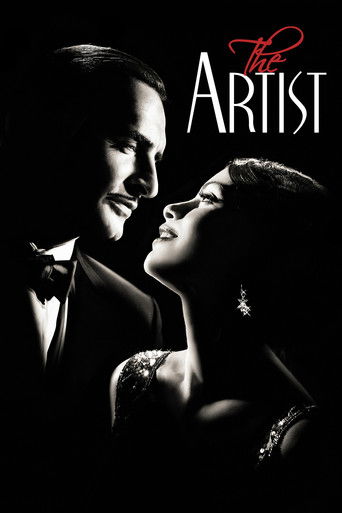
The Artist
2011 · Film · 100 min
Directed by Michel Hazanavicius
Hollywood, 1927: As silent movie star George Valentin wonders if the arrival of talking pictures will cause him to fade into oblivion, he sparks with Peppy Miller, a young dancer set for a big break.
2 positive5 neutralfrom 7 commenters
Where to watch
No streaming data for this title.


9 comments on Hacker News
> In cases of TV shows
Can you give me some examples of those guerilla remaster ? I know of the various Star Wars projects (Harmy and the likes) and the remaster from "La Classe Américaine", but I don't know any others.
A French movie that bungle together several excerpt from classic Warner movie to tell its own humorous story. A cult classic for French millennials. The director later on went on to make The Artist to universal acclaim.
> is what kills an art form.
This is how art has always worked though? The humanism of the renaissance is a direct conversation with the christian art of decades prior. When paint became cheaper and non kings could get portraits, rich people got still lifes to show they had fresh fruit and stuff other's couldn't. Almost every art movement can be traced directly to the people, the time, the wealth or the previous art movement. This is not a modern art problem.
> Even without context, you can get something out of looking at Michaelangelo's Pieta
I have had a panic attack in front of a Rothko. Even without context about him selling those paintings to the Tate before committing suicide the emotion on them is insane and I say this as someone who spent years mocking Rothko as a dumb rich person experiment of how much BS sothebys and christies can sell.
> which so far have not taken that hermetic turn to the same extent.
I think this is incredibly easy to refute, considering the amount of movies related to making movies. Due to the specialisation from capitalism, now the experts in making movies, only know how to make movies and go further and further into making movies like The Fablemans about their own industry. (This is not a one off; once upon a time in hollywood, a star is born, the artist, hugo, hail Cesar, tropic thunder...) They are even making movies about focus groups like Air about how they managed to make people design by comittee the greatest basketball shoe ever.
Their viability as comercial products, focus testing, and appreciability with little to no movie experience is hurting the art, not enhancing it. Movies are dumbed down nowadays because the aim is having as many people as possible understand them. Movies where metaphor is heavily used are usually not blockbusters. See Anihillation, a great lovecraftian horror dealing with cancer, change, loss. And whose entire conversation online was about "aliens" despite the movie being super in your face about what it was really about.
> then everything becomes a game of relying on what experts say
You are allowed to like or dislike "high" art without expert opinions. A lot fo it isn't that high anyway. I love conceptual art, absolutely love it. But it also takes seconds to make. I think the piece Perfect Lovers which is just two wall clocks next to each other is brilliant, but I see why many don't like it. (The piece was made after the artist found out his bf had AIDS and the piece is just two clocks ticking away, knowing the battery of one will run out sooner than the other, and at some point you have one clock ticking and the other stopped before both run out and they replace the bateries).
Every era is an era of horrible films. That’s Sturgeon’s law for you.
Looking at the 2010s as a whole, we got to watch some amazing films.
We got great hard sci-fi like Gravity, Arrival, Ex Machina. The coming of age genre saw entries like Ladybird, Eighth Grade and Booksmart. Animation reached new heights with films like Inside Out, Spider-Man into the Spiderverse, and Kubo and the Two Strings.
We got comedies like The Artist, Grand Budapest Hotel, Death of Stalin, and Jojo Rabbit. Dramas like Moonlight, Fences, Spotlight, Parasite, Blue Jasmine.
Even in the ever-popular comic book genre, we got Logan and Joker playing at a very different level.
But also, it was the decade of the MCU. Let’s not underestimate what Disney has achieved with that — one big overarching story spanning over twenty films, bringing much deeper character development and more serious themes than what we’d gotten used to from blockbusters.
These may be a bit far afield, but they are fun to watch anyway:
The movies Singin' in the Rain (1952) and The Artist (2011) are both about response to technological change: the introduction of sound into the movies. The classic noir Sunset Boulevard (1950) touches on a dark side of that.
The musical My Fair Lady (1956) is about education, science, and technology for personal and social transformation. The movie version (1964) shows some early sound recording technology to comic effect.
Death of Stalin, Booksmart, Jojo Rabbit are definitely smaller independent comedies, but compare:
The Artist: $130M gross, $15M budget Knives Out: $311M gross, $40M budget Birdman: $100M gross, $18M budget Grand Budapest: $173M gross, $25M budget Midnight in Paris: $154M gross, $17M budget Superbad: $170M gross, $20M budget
All of those are in the same rough ballpark, but Superbad had 70% of its box office revenue in the US+Canada.
Compare Grand Budapest and Birdman, which only saw 40% of their takings in NA. Midnight in Paris comes in at 37%, and, as a European production, The Artist saw only 35%-ish of its revenue in NA. Even Knives Out, the most hollywood-y of the lot, came in at 53% revenue from NA.
Superbad is a Hollywood movie with Hollywood sensibilities, so it obviously performed best in the US, and it's obviously become a cultual touchstone there — but I personally only even heard about it relatively recently. All the other films performed much better elsewhere so obviously don't seem to have had as much of a cultural impact from a US-centric perspective.
Comedies have most certainly not died. They've just changed in tone.
A few highlights from the last decade — Booksmart is a very different take on the teenage buddy comedy. Jojo Rabbit and The Death of Stalin are some of the darkest black comedies I've ever watched, which would never have gotten made in the 90s. Birdman is completely surreal. The Grand Budapest Hotel is one of most joyous films to watch I know of, and The Artist is a comedic love letter to the silent era.
Realistically Opera suffers from two problems: 1- the economics are terrible, 2- the niche it filled has been filled by something else. Opera, an in particular opera buffa, was spectacle: the Marvel film of its age. Well now many more people can see a Marvel film and while it costs more to produce than Aïda does, it's CAPEX not OPEX. And the Marvel films have better special effects than Lohengrin.
The same thing happened to silent movies: the technology moved on and the remnants remained as the domain of enthusiasts ("Battleship Potempkin" or "The Artist"). That's not a tragedy, it's simply the nature of things.
Downvotes for this?
I personally think that many who use the "cultural invasion" angle fail to realize that it often ends up being a two way street. In the US, not many people make a big deal when, say, a French film wins a US Academy Award (example: The Artist) or a French artist tops the US pop charts (example: Daft Punk). It's a global world, after all.
Perhaps there is some scope for protecting the uniqueness of individual cultures that might get lost in the global shuffle. But a lot of people happily stand up for this cause on their own, without any sort of political angle.
Now, the NSA snooping angle with American tech emphasized in the article, that's another story -- I see this as a legitimate concern for any foreign firm. America's spy agencies probably underestimate how much they've hurt American companies in this global world.
It's a video camera that only shoots in black and white.
The reason you would want to shoot in black and white (rather than converting to B&W in post) is because it gives a sharper image, because it allows every pixel to be used for luminosity data rather than trying in interpolate. Read on [1][2] in the announcement thread for more details.
It's expensive because of the market it's aimed at, because it isn't hugely expensive for them. It doesn't cost much more than the colour version of that camera. Spending tens of thousands on bodies, and similar amounts on lenses is more or less the norm for very high end video. If it existed a couple of years ago, it might have been used to film The Artist.
1. http://www.reduser.net/forum/showthread.php?85214-EPIC-M-Monochrome&p=1061850&viewfull=1#post1061850 2. http://www.reduser.net/forum/showthread.php?85214-EPIC-M-Monochrome&p=1061865&viewfull=1#post1061865