 Hacker Cinema
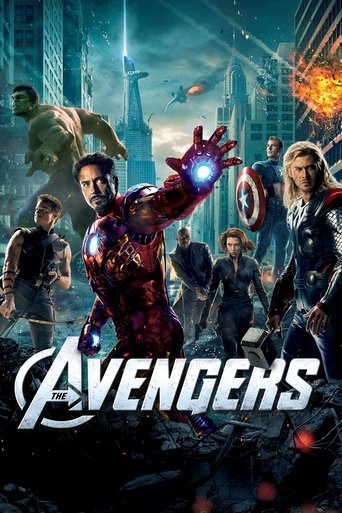
The Avengers
2012 · Film · 143 min
Part of The Avengers Collection
Directed by Joss Whedon
Science FictionActionAdventure
When an unexpected enemy emerges and threatens global safety and security, Nick Fury, director of the international peacekeeping agency known as S.H.I.E.L.D., finds himself in need of a team to pull the world back from the brink of disaster. Spanning the globe, a daring recruitment effort begins!
38 positive65 negative8 mixed192 neutralfrom 303 commenters
Where to watch
No streaming data for this title.
329 comments on Hacker News
There’s a clear thread of human effort and presence from The Muppets to Space Jam to Dune that this Odyssey movie’s creators understood. People want Amelié, not Avengers. It’s fine to use so much CGI that your film can’t be re-exported in 4K (yes, that’s why) so long as you have people wearing stuff and standing in front of other stuff. It’s not fine to film your entire movie with mocap bodysuits on green backgrounds and having them perform to a tennis ball as co-actor that will be AI-generated from a dead actor later. I probably won’t watch the Odyssey but I will absolutely celebrate this aspect of it to others now that I know.
There's a spectrum of copyright infringement
At one end you've got things which you are literally unable to buy, or someone who wants to listen to his legally owned CD audio book on his phone
It progresses through like a broke kid who's already seen the latest avengers flick 3 times at the cinema but wants to see it a 4th as he's writing an essay on it
At the other end are the plants stamping out thousands of copies of dvds and flogging them commercially, and multi-trillion dollar companies which take the material and use it to sell to others
Lets not pretend its the same thing
I was young. My experience of it is much more positive than any other Avengers movie since :)
The biggest competition for movies is actually from Youtube.
While the streaming business led to a growth of the movie industry, pre Covid and pre strikes at least, it's difficult to compete when millions of people can produce good content for low prices.
On top of that, it doesn't help that movies stopped innovating, 2025 box office was entirely dominated by prequels and sequels.
I don't care about avengers, I really don't, the first bored me enough.
These people treat geopolitics as if they are watching an avengers movie.
I don't even care anymore. There have been so few TV shows or movies that I've wanted to watch in the past decade. Books, podcasts, YouTube, music, and older movies for me. I got sick of the Marvel movies somewhere around the first Avengers movie. I don't think anything currently on TV interests me other than Bob's Burgers
I definitely draw a distinction between like... famous medieval leaders and generals being well known versus what we do with people like Michael Jackson, Madonna, Kim Kardashian etc. I am sure they had local celebrities back then but there is no way they extended much beyond a small region or a single nation.
In my ideal world generating content becomes so easy that it loses all value unless you have some relation to the creator. Who cares about the new Avengers movie, Rick from down the street also made an action movie that we are gonna check out. Local celebrities return. Global figures are generated because why would Coke pay 100m for Lebron to dunk a can of coke on camera or some dumb shit when his image has been absolutely trashed by floods of gen content.
What genuine connections are you making waiting in line to get movie tickets and popcorn?
Why not just walk to the theater to your seats and actually get excited for the movie? That ticket seller is doing their job and Gtfo.
I think people are so doom and gloom about this stuff.
Isn’t it better to just like go sit at the seats with your family or friends and enjoy the trailers and talk about the movie before it starts? Idk. That’s actual connection building.
I saw Avengers in Japan and my friends and I were talking to Japanese people about the movie at our seats.. using google translate. Actual connection building.
I don’t think anyone goes to the movies to enjoy waiting in line to ask some college student who doesn’t give a shit for 4 tickets to Dune.
I keep thinking about the first Avengers movie, when Loki is standing above everyone going "See, is this not your natural state?". There's some perverse security in not getting a choice, and these rationalist frameworks, based in logic, can lead in all kinds of crazy arbitrary directions - powered by nothing more than a refusal to suffer any kind of ambiguity.
Yup. Hence why we went from too much patriotism post-9/11 to too dark after Nolan Batman to too quippy after the Marvel takeover.
I remember first watching The Avengers and finding it refreshing. "This is fun! Why aren't more action movies fun? They're always so gritty and violent and serious, even though the protagonists are functionally superhuman, they're always so mean-spirited and the dialogue is is always so aggressively masculine and primitive and angry." And then that was everything for the next few decades.
Funny thing is that in more than one of the iron man movies the suits end up being bad robots. Even the ai iron man made shows up to ruin the day in the avengers movie. So it’s a little in the nose that they’d try to pitch it this way.
Your pedantry probably requires a rewatch.
I also think "masterpiece" is a heavy term to throw around but the emotional impact of the this series and the complexity of its narrative as it catalogs a hero's journey from reluctant participant to true believer with an epic story arc can be held up next to most film and historical epics like Laurence of Arabia, Ben Hur, The Matrix, the Original Star Wars trilogy, Dune, Kingdom of Heaven, Gladiator, The Handmaid's Tale (series), The Odyssey (epic poem). His personal journey which leads to his persecution and enslavement, his role in leading a slave uprising, rescuing his friends from the aftermath of a rebel uprising, building the foundations of a rebel army, risking his life countless times and ultimately sacrificing himself to prevent his enemy from having an insurmountable edge.
The series makes the very popular "Avengers" film series look like trite dogshit and does the same for most of the "Star Wars" sequels and prequels so I don't fault people for using the term "masterpiece".
The US military directly sponsors or promotes Hollywood movies with the benefit of gaining fairly good control of the overall messaging surrounding the military in the film.
Zero Dark Thirty is perhaps the most egregious example of this, with the CIA consulting and the film depicting that the information leading to Osama Bin Laden's location was extracted under torture from an inmate (it was not).
Many American films are not even casually not propaganda. The way you think about the US military is shaped and influenced by the influence the US military gets from fronting money, consulting and equipment appearances to appear in Hollywood films (with sometimes some weird consequences - for example they refused to back The Avengers because they felt SHIELD undermined the portrayal of the US, but were happy to back The Winter Soldier because in that SHIELD isn't the US DoD and goes down).[1]
[1] https://gamerant.com/marvel-military-propaganda-explained/
No one in Asia wants to visit nyc because of friends, sienfeld or sex and the city. These shows to them are mostly raw garbage. The reason is because these shows are culturally focused. Its catered exclusively to the type of American humor and values that most people in Asia do not give two shits about.
They want to visit Hollywood because they want to see the technology that built these blockbusters because internationally everyone understands heroism, sacrifice and special effects. Additionally these movies aren’t watered down. The writing and the effects have gone through years of development to get to that point. It just doesn’t cater to your sensibilities. The term is snobbish.
The writing for Seinfeld and friends and sex and the city took years to get where they are. These aren’t inborn cultural talents. You can easily compare stories from past American movies to see how cheesy and stupid they are. It takes development for stories to come to where they are today and it’s a back and forth between the audience and writers. As writers write more stories audience members learn and become more sophisticated and twists and humor that worked in the past become cliche. Why do you think you’re too snobbish to appreciate something like avengers? You think someone in the 50s wouldn’t appreciate it? Fuck honestly if the whole mcu up till end game came out in the 50s that whole thing would win a Nobel peace prize.
China is 100% going through this learning process right now. The audiences sophistication and the writers as a result are growing at a breakneck pace. I think movies from China that might appeal to who you are is crouching tiger hidden dragon or Hero as these movies share the more universally appreciated parts of Chinese culture and since that is what you’re interested in, I recommend them to you.
Our kids, both teens, are beloved by everyone they meet. I'm not exaggerating.
Our oldest, our daughter, has had a few jobs working in her craftland, and both loved it and was loved by her fellow employees and customers.
Our son is an open chess champion who is beloved by his chess club compariots. When he played out of his mind and won the open tournament, the cool part was that his chess club mates were really happy that he won, and a parent of one of his friends excitedly told me how happy they were. Even thought his son was much younger, my son's friendliness and kindness really endeared him to that young Indian boy.
The question is, "Why?"
First off, we're not particularly religious at home. We sometimes pray before meals, but we tend to eat when we're hungry, i.e. not all together, always. We rarely pray together because I feel strongly that religion is a personal affair. I also do not pray in front of them, to prevent putting any kind of pressure on them towards my preference. We Sufis feel there is no superiority in one form of religion over others, and I manifest that most deeply by letting them know that their path is theirs to choose. I'm only here to love them and teach them how to be lovingly kind and respectful to others.
Second, and probably most importantly: they have never had unfettered access to the Internet and we have no TV of any kind, and they do not have or use smartphones or social media of any kind (except our daughter is a good navigator in the car).
We did have Hulu for a minute, but mainly for the powerful "Summer of Soul". We have also watched some Tubi for, for example, "Death on the Nile" and a few select others. And the old Jeremy Brett Sherlock Holmes series are a mainstay, as well as a few select movies, such as the Avengers series and "Knives Out", but it is very minimal, nothing too sexy, and nothing at all too violent.
And ZERO internet or social media. Sure, we might look some stuff up, we watch some stuff like Tosh Show (after I pre-screen it), but stuff more like Veritasium (that they love), and some random YT videos we find interesing. Plus, we watch a fair bit of NHKOnline for Design Stories, 72 Hours, and, of course, Grand Sumo Highlights (just for how entirely foreign and intense that sport is) for maybe a decade now. They have their favorite EPL and Serie A teams, plus Champion's League, as they like to knock the ball around at the park. My son and I follow the NBA through a few pods (while he chesses online on his computer, which is in the living room with this one, our "media computer") and the occasional highlight.
My point here is that I keep their media appetites satiated with interesting, curated content, but they're spared the titilating fiction that I grew up on. The only horror movie they've seen (multiple times) is Jordan Peele's fantastic "Nope". But absolutely no gratuitous sex stuff, whatsoever, not that we don't have the occasional conversation about such stuff. And we watch a bit of comedy, with three of Tom Papa's stand-up specials on Tubi being a big recent hit.
The important thing is that we human beings have a part of us that gravitates towards the lewd and lascivious, and our media is naturally permeated with it, and they just don't need it, and my approach has worked. They help the family around the house because they understand that they're valuable parts of the team and that doing good work is good for everyone. And when they do catch wind of something gross (usually said by a comedian), they appreciate that we'll talk about it but that we screen off that part of the world for them.
I was exposed to porn at a young age (6th grade recycling dumpster "Oui" magazines) and then Playboy Channel and HBO in my early teens. No teenager needs Animal House or Porky's in their lives. Being homeschooled (our daughter's choice because middle school orientation was brutal, and our son to play more chess), they're also not socialized by kids with smartphones who watch "Game of Thrones" rapescenes and whatnot.
My daughter has listened to and/or read half of my favorite author William Gibson's novels, plus Anna Karenina and lots and lots of other literature plus Langston Hughes' own poetry collection plus the biographies of some famous women. We all together listened to 2018ish's Pullitzer Prize-winning 900pg biography of Frederick Douglass (5-6 hours/day for 2-3 weeks, weekends off), so they know how brutal America is to Black folks, and how talented and capable they are. And my son and I have listened to Stephen E. Ambrose's "D-Day" and "Citizen Soldier" multiple times, and we all love his book and Tom Hanks' miniseries "Band of Brothers". My son and I have also listened to a lot of the excellent podcast "Fall of Civilizations".
They understand the importance of love and they know enough of history to understand how brutal most of this world has been and still is, to some extent. We watched Jan6's debacle unfold live on CNN's live website, to our shared horror. That this orange bastard pardoned those fuckers is truly evil, and my kids understand that full-well. We hold no ethnic animus, or consider ourselves superior in any way to others, except perhaps in our worldview that centers on universal compassion, kindness, and mutual respect.
They have NEVER -- and I mean NEVER -- had an ill word said against them by anyone, ever, and that's no exaggeration. A teacher of our daughter's cried on their last day when she pulled me aside to tell me how much she will miss our daughter, and our son was chosen to be in the 4th grade class that spent part of the day mainstreaming ASD kids; he was chosen for his kindness. We love and care for each other, without even having to ask. We enjoy hanging out and we laugh a LOT, with each other, at each other, and, most importantly, at ourselves.
So, when I say that nothing in the universe is more important than we human beings choosing compassion, for one and all, I mean it, and I have the fucking proof. And when I say we're living in a world full of purblind fools who are destroying this world with their ignorant selfishness, I know what I'm talking about.
Wake up to compassion, my friends. Both your and our collective happiness is at stake.
"There's still time to change the road you're on." --Stairway to Heaven
And I've always sworn around the kids and let them swear freely (but only in the house), because that's the only way to learn the difference between profane and vulgar. Fucking is a very useful word, so long as it's not the verb form, but even that rule was broken when, at the end of Bale's Batman trilogy, Ras al Ghoul's daugher betrays him, after having slept with him, my wife asked why she did both those things, our daughter replied,
"She fucked him before she fucked him."
I couldn't be prouder that she both understands that truth and knows enough to not say it in public.
> Every other fantasy-type movie in a modern setting I cannot take seriously...Avengers, Harry Potter, Star Wars, etc.
> Like, just use a gun. Whatever you were going to attack with, put that in a gun, and attack at 45rpm, 3000 ft/s.
This is one of the many reasons why I like the Dresden Files universe. Wizards wield incredible power, but a wizard can still be brought down by a sniper.
Force-field was innovative.
Every other fantasy-type movie in a modern setting I cannot take seriously...Avengers, Harry Potter, Star Wars, etc.
Like, just use a gun. Whatever you were going to attack with, put that in a gun, and attack at 45rpm, 3000 ft/s.
> in recent years, content has become preachy instead of focusing on being entertaining
I'm not sure I feel this? From my perspective, the Marvel films feel like a counter example, where they only care about the "entertainment" (arguably the opening weekend!), and there's no lasting quality to them. Each one individually is a reasonable way to pass 2 hours, but they feel like junk food films, I don't feel better for having watched them.
The alternative is things like A24's output, which one may call "preachy", but while I might not enjoy them in the same way as turning my mind off in front of Avengers 8: Avenge Harder-er, they have a much bigger impact on my life and satisfy me much more as a viewer.
Copyright and patent are legal privileges (specifically a time limited monopoly on a work or invention), not natural rights.
The US Constitution proposes them as a way to “promote progress in the useful arts” and specifically calls out their time-limited nature. I think that “authors life + 95 years” arguably stretches “limited time” beyond reasonableness, but I digress.
There is a real cost, both to the society the law serves, and in the operation of law enforcement and judicial infrastructure needed to support copyright and patent enforcement.
Even if you 100% believe in copyright and patent, it seems like a reasonable thing for the direct benefactors of copyrights and patents to substantially bear the cost of enforcement. A one-time filing fee (for patents) and nothing (for copyright) seems low.
There is also a societal cost in suppression of innovation by allowing these to last long periods of time, so it seems reasonable that the cost structure should be (1) related to the value of the work to the creator/inventor, and (2) incentivize shorter times, especially if the values involved are low.
I don’t fully grok Harberger taxes but it seems to me that they try to satisfy both my proposed criteria, but are flawed in that the value is stated by the inventor/author without proof. Maybe I’m misinterpreting but I see other comments to that effect.
My proposal is to make the fee structure impute the value, by increasing over time. For example, we could require a fee of $1000 for issuance of a copyright or patent (separate from the application fee). The term would be for one year. The patent/copyright holder can extend for as many years as they want, but the cost goes up 10x each year. If it’s a valuable asset, you’ll keep paying until the cost of extension exceeds your perceived value. Now the value is established by the most informed party in the market.
This is my proposal. You can of course tinker with lengths and amounts and increase factors.
In sum the idea is that for valuable works (a Marvel Avengers movie or the patent on the RSA algorithm or a cancer drug) the copyright/patent holder will keep paying for many years until it’s not profitable anymore. For works that have little market value, they would fall into the public domain quickly and be able to help improve other works or inventions, and inhibit rent seeking. It practically eliminates the incentive for patent trolling, or for suing an artist decades later for having a beat similar to a song 40 years ago, or for establishing huge defensive patent portfolios. The economics aren’t there anymore.
I don’t fully agree with putting down “fun” movies like the Avengers, but at the same time “serious” art is not primarily for plain entertainment.
People might find “serious” art meaningful and it might spark feelings in them, but that’s not the same as getting an adrenaline rush from exploding cars in an action scene.
Of course there are also cases where the boundary between “fun” and “serious art” is not so clear, there are always exceptions to any attempt to define what makes something “serious art”. Art can also be subversive and run counter to traditional expectations of what art “should” be. But I don’t think the Avengers is an example of that.
"Movies and music are made to be entertaining"
In your opinion, perhaps. Other films are made to be provocative-- to make you think or reflect. Certainly, a lot of the "arthouse cinematic masterpieces" aim for that as a goal rather than purely entertainment.
You're arguing against a strawman here... nobody is saying making an avengers movie is low effort. Certain aspects of an avengers movie though require less effort.
> your "arthouse cinematic masterpiece that nobody likes
You're reading way too much into my comment. Any block buster from the 80/90s absolutely shits on 90% of block busters released today. I'm not talking about obscure 1950s czechoslovak cinema here...
> ignore the sheet manpower that goes into making a movie like that.
A lot of work doesn't make something good, especially when cgi quality actually gets worse year after year. FYI the entire LOTR trilogy had 30% less budget and 4x the runtime of the last avenger movie... And they actually filmed things outside of a Hollywood studio
The only lazy thing here are the scenarists and the directors shitting out the blandest movies ever. But then again if all we care about is raw entertainment then sure, it's perfect, very easy to digest, lots of colors and not too much to think about, the cinematic equivalent of fast food. You can even buy avengers branded toilet paper and bottle water, that really shows how much they care about movies!
I don't understand the logic of calling superhero movies lesser/unserious like this, it's very snobby. Movies and music are made to be entertaining, the avengers is more entertaining than your "arthouse cinematic masterpiece that nobody likes but it's just because they aren't smart enough to understand it". It's also lazy and ignorant to ignore the sheer manpower that goes into making a movie like that.
Comics have a huge impact on pop culture. They form the basis for some of the biggest budget TV shows and movies which last for a long time in our collective consciousness: The Dark Knight series, Watchmen, the Avengers, etc.
Several just on their own are huge cultural juggernauts: Calvin and Hobbes, Peanuts, XKCD, Penny Arcade, etc.
I don't know why you think comics are. Trojan Horse for ESG/activism. Like all media, they seek to reach wider and wider audiences, for a good chunk of time, the best perceived way to do that was to diversify those offerings. Even if that didn't end up working (assuming your POV in good faith), that doesn't mean it was a "Trojan horse for activism" anymore than the rise and fall of the shonen genre in manga was a subversive attempt to inject masculinity into the populace.
What you term as ESG and all is not a shadowy cabal to force people to think a certain way. It's just companies trying to do what sells. You forget that in the beginning it did work, which is why it caught on.
I would say that "narrow" mathematics (finding a proof of a given statement that we suspect has a proof using a formal language) is much easier that "generally" laying brick or cutting hair.
But I cannot see how consistently doing general mathematics (as in finding interesting and useful statements to proof, and then finding the proofs) is easier than consistently cutting hair/driving a car.
We might get LLM level mathematics, but not Human level mathematics, in the same way that we can get LLM level films (something like Avengers, or the final season of GoT), but we are not going to get Human level films.
I suspect that there are no general level mathematics without the geometric experience of humans, so for general level mathematics one has to go through perceptions and interactions with reality first. In that case, general mathematics is one level over "laying bricks or cutting hair", so more complex. And the paradox is only a paradox for superficial reasoning.
> In the movie The Avengers
I think this author has a problem writing hooks (but doesn't know it?)
To the point of the rest of the piece, they do a good job outlining the relationship but don't want to go the extra mile and provide real examples. It's like they're egging on your imagination to provide all sorts of modern case studies, but even among America's most liberal candidates I'm not sure if I see it.
On the contrary, I think liberal leaders are extremely self-conscious of authoritarian image. The biggest socialist disasters a-la Pol Pot happened because of authoritarian policy that superseded logic. The political science crowd has researched this for decades and is well aware of it's looming specter in the background. The left, by-and-large, is more aware of these optics in America than the right is. Whether or not they intend to attempt the same tone-deaf leadership varies on a case-by-case basis, but that goes for all candidates. The nature of liberal change responding to populist opinion isn't authoritarian but expressly democratic. The only authoritarian policy is to obstruct change and attempt to divert or prevent the due process of democracy.
Here, I'll call it like it is. This is pretty clearly a right-wing fluff-piece covering up for the conservative frontman claiming, and I quote, “Get out and vote just this time. You won’t have to do it anymore. Four more years it will be fixed. It’ll be fine. You won’t have to vote anymore, my beautiful Christians,” verbatim at a rally. I give the author a 4/5 stars on political theory and a 2/5 on execution.
> We’ve tacitly raised a generation of liberals who think that it’s normal for Disney to fire actress Gina Carano for having a political opinion that some people don’t like, and yet also think they aren’t authoritarian for doing so.
Is that apathy towards government, or apathy towards business? It's unclear who the "they" is that's being authoritarian, and I think that kinda says everything you need to know about this article. Is "The Left" in the room with you, right now?
No, the answers aren't just "plausible", they are correct the vast majority of the time. You can try this for yourself or look at any benchmark, leaderboard or even just listen to the millions of people using them every day. I fact check constantly when I use any LLM, and I can attest to you that I don't just believe that the answers I'm getting are correct, but that they actually are just that.
But they apparently actually don't get better even though every metric tells us they do, because they can't? How about making an actual argument? Why is correctness "not a property of LLMs"? Do you have a point here that I'm missing? Whether or not Kahneman thinks that there are two different systems of thinking in the human mind has absolutely no relevance here. Factualness isn't some magical circuit in the brain.
> No such thing can exist.
In the same way there can exist no piece of clothing, piece of tech, piece of furniture, book, toothpick or paperclip that is environmentally friendly; yes. In any common usage, "environmentally friendly" simply means reduced impact, which is absolutely possible with LLMs, as is demonstrated by bigger models being distilled into smaller more efficient ones.
Discussing the environmental impact of LLMs has always been silly, given that we regularly blow more CO2 into the atmosphere to produce and render the newest Avengers movie or to spend one week in some marginally more comfortable climate.
Standard marketing language, used especially in the features and series film industry. The Avengers is MCU tentpole IP.
What is the actual threat of AI?
Job loss? Tech already did that, the little old ladies that opened your envelope at sears and roebuck got replace by computers a long time ago...
Deepfakes? Are we talking the moon landing? Avengers movies?
AGI taking over the world? Does no one realize that without people going out every day and doing work the world ends in a week... Does no one remember when we had the spate of transformer shootings? A rifle or a bucket of water ends AGI threats.
Where is the threat from ML that doesn't already exist and is an ACTUAL threat to 8billion of us?
Looking at the page, it seems like there's nothing other than art installations in the Showcase. https://visualprogramming.net/#Showcase Is there something about the software the predisposes it being used only for art installations? Or just the community it attracts? It "looks" capable.
It seems weird that out of all the showcases, there's not anything like normal industry projects. No games, no movies, no television shows. Lots of museum displays, AI scultures, art walls.
Take Blender instead https://www.blender.org/features/ and its almost entirely "industry production pipeline" and "award winning shorts and films". Or Maya, which is pretty much nothing other than "used in Hogwarts, used in Avengers, used in Dune." Notably, not very many art walls or digi-scultures.
Usually its a chicken and egg thing, like nobody uses it, because nobody famous has used it yet, except vvvv looks like it has plenty of users.
The question was "doesn't that [quality, to be able to stay with you and change you] apply to every film?"
And my answer is: not exactly, it applies best to movies that are not "mainstream blockbuster trash".
I'm pretty sure we can find some people for which some of the 200 movies in the Avengers franchize resonated with them and changed their life. Especially since billions saw them (and unprobable events will tend to happen as the sample size grows). After all, Hallmark movies also resonate with many people. And in the right conditions, say our dog just died, they can make even the more cynical of us cry.
But generally, better movies have that quality more. This is what makes the better in the first place: touching on some essential aspect of humanity in a non-trite way. Doesn't have to be classics as in "old movies favored by critics", just generally movies made with more vision, integrity, and core message than "look 2 hours of explosions and fancy effects mixed with reshased cookie cutter dialog", or "look at these two cute young people fall in love, have a falling out, and getting back again") will tend to resonate with people more deeply and in more nuanced ways.
I said YouTube isn't a net negative. Even then you have to think globally, what about children who grew up consuming AI generated abomination animations made with 0 oversight of even its greedy creators?
Netflix was the cause for current slate of tax writeoff cancellations (no Netflix no overinvestment by Warner etc and no clumsy Zaslav cleanup), terrible shows being greenlit, homogeneity of camerawork, casting, identity-politics pandering that nobody asked for, oversaturation of the market with streaming services that is almost as bad as cable etc. It's basically a cancer overgrowth, good short-term and terrible long-term. Binge-tv model is also not a good thing, in terms of how much time it takes up, how little it brings in terms of pleasure and validates our growing impatience. I could go on and on. Does anyone even remember Mank or The Killer? Imagine Poor Things being Netflix-only release. Nobody would even say a single peep about it outside of niche film twitter accounts.
Generally speaking, if you've read "Seeing Like a State", then you can apply the same logic to companies and the entire industries, or really any aspirations of "man". We crave control and fear uncertainty, so we make environments far more deterministic, which brings more short-term profit but ruins the environment (be it nature or film itself). Look at Disney, Iger created the superhero movie boom (by making it super deterministic and boring: every movie is part of a giant puzzle so that each piece brings money) but in the process killed Star vehicles, killed experimentation (by directors, actors), and now Scorsese and Coppola need to throw around their weight to reverse the course. Sure, A24 exists, but before this all movies were A24 movies essentially. Now a major star being in a horror movie is an "Event". (Who is even a star anymore? DiCaprio, Cruise? These people were around since 80s. You think Chris Evans will have the same longevity?) Yeah, there were similar periods of dominance (80s action movies) but they weren't so precisely fine-tuned and featured greater directorial freedom and less emphasis on being non-offensive.
I guarantee you none of you will quote Avengers (Ultron onwards) in next 20 years. People still quote Terminator 2 or Predator or Lethal Weapon, despite them also being brainless flicks (some not so brainless actually). Look at Dr Strange 2, they forced Raimi to stop being Raimi basically (the first movie has some good moments), and made him fall in line with the "agenda", because the plan™ is too important to compromise on. In reality the plan™ is the money perputuum mobile lol. Sure, these people were always greedy, but stochasticity of the system allowed for good stuff to pass through their Eyes of Sauron lmao.
Tbh I don't even know why I'm responding a "throwaway" account.
Disney hasn't been doing so well content wise so I don't think such a partnership would matter much. After the last Avengers movie and the unsuccessful star wars trilogy, no-one really cares about disney IP anymore.
Just some more detail about this.
Reid Southen has been testing out Midjourney V6. He quickly found out that you could easily generate images of Thanos that are direct copies of images from the Avengers films. https://twitter.com/Rahll/status/1738286342390374882
In response to his and more discoveries like his, Midjourney updated their ToS to place the blame on users for infringing copyright. https://twitter.com/Rahll/status/1739155446726791470
Reid Southen had all his content erased without permission for his grievous transgression of showing just how easily it is to make copyright infringing material using Midjourney V6. This is after they update their ToS to persecute him and people like him, who are posting this kind of imagery on X. https://twitter.com/Rahll/status/1738408490543054949
He (and others) moved on and made more examples, using the film Joker: https://twitter.com/Rahll/status/1739331983992406508 And the film Dune: https://twitter.com/Rahll/status/1739003201221718466 And Star Wars Rogue One: https://twitter.com/KatieConradKS/status/1739765791996711034
A new account has also showed up that's collecting examples of this called Ai Piracy https://twitter.com/ai_piracy
Ed Newton Rex, a former Stability AI employee, has chimed in here https://twitter.com/ednewtonrex/status/1738141349172453785
>How do you stand on the idea that someone desperately poor, who cannot afford a text book that would be transformative to their life, pirates said book. Is that still immoral?
immoral, no. Unethical, yes.
That said, I'm glad libraries of all kinds (lending, little free, bookstore giveaways) help give more ethical access to such resources. You don't need the latest and greatest textbook to obtain knowledge.
With all that said, were talking about deluxe media, not foundational knowledge. why does the topic always shift to hyperole when talking about a song/movie/game being pirated? Are we really comparing pirating The Avengers (2012) to finding a way to learn arithmetic?
I mean, I'm just making an educated guess based on how society has historically been quite good at changing its norms based on new technology. We didn't have cars, and then we did, and within a generation it became extremely normal and expected for people to drive. Digital cameras were a big deal when they were invented, but for people like me who grew up in the early 2000s, they have never felt that unusual because I've been exposed to videos of myself as a baby for as long as I can remember. When The Avengers was released, it caused a huge amount of hype and hubbub. Now, Marvel produces a dozen superhero movies a year and nobody cares anymore.
Do I think that society will transform its views on nude images overnight? No, obviously not. Do I think that every person in society will go with the flow and adopt new assumptions about nude images? Also no. But it seems entirely logical to me to imagine that once the average person notices "hey, I am being inundated with 1000x the number of fake nudes that I used to," they will eventually reach the conclusion that "I should start assuming all nudes are fake by default."
The most popular movie today is not ten years old. They have made movies since The Avengers. (Notably, Avengers: Endgame, but less facetiously, a Super Mario movie and James Cameron's Avatar sequel were pretty popular.) I'm not asking for something inventive and genre-defying, just a game that is not literally ten years old.
I don't trust anyone to review a film, but I still read/watch reviews. Over the years I've learned to read between the lines a bit and I usually have a gut feeling for how a reviewer and the film in question 'match up'.
People that 'hate' art movies are usually wrong. People that 'love' popcorn movies are too. Art movies are nuanced and delicate, so hating it with a 1 star review is too broad of a brush to paint your opinion with. If you don't like art and connecting with humanity, don't watch art movies (peasant). Similarly, popcorn movies are trash (<3) and love is too strong a word. Have fun, be entertained, but if you love The Avengers with all 5 stars you are paper thin.
I speak strongly with a smile and fully accept that film is a subjective medium, open to interpretation, and you can go ahead and hate The Royal Tenenbaums if you want, and love The Avengers if you want, but I will take your review with a large grain of salt and you deserve to not to be taken too seriously.
So let’s say in 10 years they have the processing power to generate full movies on demand. OpenAI trains its model on all movies from IMDB. Then I ask ChatGPT to produce a movie « like » avengers but with the faces of all my friends. And I just pay the 20$ fee (or 200$ by then) to OpenAI and watch my movie. Then I can ask to tweak some parts of the story and update the movie in real time. And this for any movie. Given the budget of 220 millions for the one movie I quoted, OpenAI will never give back anything money to them. Or to any movie producer.
Does that seems ok to you ? Today it’s the books and pictures but later it’s going to be anything.
I mean to produce anything it requires time, effort, money. They steal the end result, and produce any variation possible and make money out of it.
Your point would only be valid if OpenAI would be 100% free. It’s not
Part of this, I think, is also the shift to dialogue-based scripts. It reminds me of this excellent Every Frame a Painting video that compares Kurosawa’s effective use of movement with the barely-moving, dialogue-driven Avengers films. A huge percentage of films/shows today are what Hitchcock called, “photographs of people talking” and aren’t actually cinematic. If they were more cinematic, hearing every line of dialogue wouldn’t be as important to understanding the story.
Start at about 4:25:
https://youtu.be/doaQC-S8de8
The reason for this is that content creation is no longer about the content per se, and I say this as a content creator myself. Content created today serves two functions beyond actually producing something that another person will appreciate for its artistic beauty:
(1) It serves as a place where other people gather to interact. People gather in such ways now more than ever because of the loneliness created by advanced technology. Therefore, being trendy is more important than being artistic. That's why total garbage like the Avengers movies is so successful: it's because it panders to the lowest common denominator and therefore is an ideal gathering place for the lost souls stranded by technology.
(2) If content is not a place for people to gather, then it is simply content that teaches other people to produce more content. In fact, some of the most successful content on YouTube is simply content designed to help people produce other content that no one will watch most of the time.
While both these functions were active to some extent in humanity's past, it is only now that they function to their full extent. They are magnified by modern technology and other reasons for art are being minimized.
Such a large amount of scenes in many big movies are CGI now, I don't see what the difference is. I'm convinced that the Avengers movies, the actors weren't even filming on the same set. They all did their parts green screened individually.
The Avengers films did exactly that. They filmed characters with random costumes because they hadn't done the designs yet. Then replaced the costumes with CG later.
To extend on your point, and to brain dump something that went through my mind about the parent comment:
I can tell you the name of (most of) the characters of the Avengers movies. I can also tell you the name of some of the actors who play those characters. I have absolutely no idea who directed them (nor do I really care that much). I can't tell you the names of anyone involved in the production (art/music/cgi etc). I can tell you it came from Marvell Studios via Disney.
I can tell you the names of the characters of HalfLife series. I can't tell you the names of the voice actors (apart from the fact nobody voiced Gordon (lol)). I can't tell you the name of the guy who wrote the story, other than he left Valve and published a story outline for HalfLife 3. I can't tell you the name of a single programmer, visual or level designer, artist, musician etc. I can tell you Valve made it.
So yeah, unless your character also shares your name, and as you point out, unless the game is titled "John Smith presents a John Smith game directed by and starring John Smith: JOHN SMITH THE GAME" you can all but forget about me knowing your name.
Yeah, they are the apex of cheesy action-led movies.
The first Avengers is so perfect that even Marvel had to change their theme after it. What then changed to light-comedy action-led movies.
Was Logan Marvel Studios, though, or Fox? (I know I could easily look this up, I'm just making conversation).
In the 00s I really liked the Marvel movies. Then came Marvel Studios to ruin everything. But even in the beginning, the first couple of films were really good: Iron Man, Captain America and Thor. But once they started to expand the "MCU" I quickly lost interest in the films. I like character driven stories that focus on the person behind the power. Batman is interesting because of Bruce Wayne, Spider-Man is interesting because of Peter Parker etc. When you start doing these big mash-ups and team stories, like Guardians of the Galaxy and Avengers, you lose focus on the individuals and it becomes lots of long, drawn-out & boring action sequences.
But if I remember correctly, Fox held the film rights to the X-Men property. So when Marvel Studios got off the ground, they did everything but X-Men. I don't know if that ever changed.
In any case, I agree. Logan was really good. And it was really good, in my opinion, because it was character-driven and not just 13 hours of drawn out, boring as hell, CGI "porn" action sequences. And I figure it was like that because it wasn't made by Marvel Studio.
> Plus there are no talkers or texters at home.
This is one thing theaters will never be able to compete with home viewing. Catch a matinee on a weekday while kids are in school, and you have a shot at being the only one in a showing, but it's not a reliable experience. I've done this before, I think for one of the avengers movies while I had a few weeks off between jobs and it was a great experience. Choice of seats and no one to spoil the experience.
Other people is the main reason I don't like going to the movies.
Capitalism causes some contradictions, this is one of those: you need a complicated/expensive scheme to lawfully defend the rights of content creators because the only possible incentive for producing content is monetary return from selling artificially scarce copies of this content.
In a world where content producers were financed anyway, because we understood as a society that this is valuable, this waste wouldn’t be necessary and we probably would have less “Avengers Nth the movie”. That was the norm and how the likes of Da Vinci and others got to do their work that are now so much appreciated, so I don’t think it’s that utopian.
You have no idea how good the Avengers movies are in the timeline where the US issues Internet bans for piracy and does a comprehensive job of protecting the rights of creators in other countries as well. Our IP situation is anarchy compared to theirs, and our comic book movies are embarrasments.
In that timeline there's a comment chain:
>> So this dev lost his job because he couldn't work during covid after getting Internet banned for pirating some movie. Doesn't that seem excessive?
> Okay, yes, maybe a little. But let me ask you this: How could Disney-XBox Studios have afforded the $2.3T Iron Man vs. Master Chief sequel if they weren't able to protect their investment? I just don't see how that movie gets made without strong IP law.
The Benedict Cumberbatch from their side could probably transport you over, if you want. They're pretty accepting of immigrants, as long as you're willing to get The Implant.
> The movies with the best writing are pretty much never the ones with huge effects budgets.
The contrast was highlighted on a recent flight I took. I watched Zoolander while the guy next to me watched some Avengers movie starring Thanos. Not only were the colors more vibrant in Zoolander, the camera was always in focus. Even with $200mil on VFX, it was still blurry and soft-focus.
Yeah. I especially find it interesting when Netflix says something you couldn't pay me to watch is a 92% match with my profile (or however they phrase it).
But part of the problem the algorithm has is that content is of very uneven quality. I look at very recent things that, a few years ago, I would have wanted to see, and scroll on by. The first Avengers movie? Kind of rushed but acceptable. Thor Love and Thunder? Garbage. (Not Netflix examples, just examples)
We want to see new content but have learned from recent experience that it's not worth the trouble. The algorithm simply can't understand that.
> Ultimately, they're a sampling of Hollywood insiders' opinions of which films were the most "Oscar" of the previous year's pick of Hollywood films, publicized to promote those films, the general idea that Hollywood is still relevant in the film industry, and the even more nebulous idea that what Hollywood defines as films are relevant in our culture.
So why does Avengers make $2B per movie - mostly overseas - if it's irrelevant? Why are more people watching Hollywood movies (and spending more money to do so) than ever before if Hollywood is irrelevant?
Just because you have different tastes than Hollywood doesn't mean Hollywood is in decline. Maybe you think the quality is. That's subjective. Someone's always going to think that.
But it's hard to argue the relevance is... Objectively, it just doesn't seem to be the case.
Are the numbers fake?
How do you define "relevant" other than people watching content in an industry defined by... people watching content?!
In the US we have Avengers protecting us and/or endangering us.
You shouldn't get your "news" from entertainment TV shows.
Pretty much any movie with a larger cast will typically only follow some version of this pattern for one character. For example, in Lord of the Rings, only Frodo fits this trope decently (and even for him, I would argue it fits quite poorly, especially since the "loses something important" step happens at the very end of the story). But Aragorn, Sam, Legolas, Merry and Pippin - their own journeys diverge quite a bit.
Or, look at The Avengers - how does this apply to The Hulk,for example?
Anyone else remember that very short Galaga scene in the first Avengers movie? Good times!
I was actually trying to point out the irony of the idea that artists and programmers should get used to being displaced by AI, while this author won't?
But that being said, I could see a world where the language model AI generates new Avengers scripts, while the deep fake AI and the CGI AI generate the movie. The reviewer AI tailors the review to the reader, on demand, so the reader is assured that their choice of entertainment is awesome! Then the blogger language model AI goes into all the possible plot twists and easter eggs that may have been in there, generating endless YouTube fan videos.
We may, one day, live in a world where fandom gets 1 minute of new content every 30 seconds. Maybe completely on-demand so that, yes, the real hero is a hypertensive, 42 year old, who was pivotal to helping the super-hero hero out! And as long as it's canon and pretty much like the other stuff that same hypertensive, 42 year old likes, it's great! Did you know it's Canon that Aquaman is on Lipitor and drives a Buick? I should totally ask my doctor about a Buick... or is it the Lipitor?
Any story need have start, middle end. Halo me played maybe back in 2001? It now over twenty year later story should ended long ago. but they focus on make more money even if it no purpose.
many company do this. was big fan of avengers and infinity movies. very nice build up and conclusion. then they throw water on it all and because of multiverse it make everything cheap.
these companys no passion or respect. do what it take to make some more dollars. very sad.
Sanderson's books appeal to a certain reader who is extremely invested in world building and "hard" magic systems. I would say his plots and characters usually play second fiddle to those things, and he infamously has his writing tics. I think the majority of his books would be vastly improved with a better editor, frankly (especially the last Stormlight one, jesus). But I'm generally in the minority in that respect. He has extremely devoted fans. I would set your expectations for the books at about Avengers movie quality, which for some people sounds amazing and that's exactly what they are looking for. Personally, I enjoyed the core Malazan books far more as fantasy with very intense world building sensibilities and a more mature edge. But I don't go to Sanderson looking for fantasy with literary sensibilities.
Russia went from being the “evil empire” to having Starbucks and McDonalds within ten years of ticking just a couple of those boxes. If your nation is still on the international naughty list it’s because of your behavior.
Americans would much rather be selling you cheeseburgers and blue jeans and Avengers movies than fighting with you.
I liked the earlier movies, but to me the biggest problem is that they are now all connected and thus all required to watch. I skipped a bunch of them and had no idea what was happening in the latest Avengers. There were so many characters popping up that i had no knowledge of and weird sideplots that i hadn't seen. It just ended up confusing and frustrating.
> That the protagonist is a woman doesn’t mean it’s for girls btw.
Yeah, I didn't really mean that the show is "for girls", but just that here was a new female-protagonist show. Ms. Marvel was fantastic, by the way (for many reasons).
I didn't notice the TV-14 on She Hulk at first, but did catch on pretty quick that the series leaned more mature. Still, the Avengers movies dropped all the overt sexual references after Iron Man 2 and became more "kiddie-friendly", so I find it odd (and frustrating) to have the maturity level vary within the same set of characters. That is my problem. In the other mega-franchise brands (Star Wars, Pixar, Disney) you know the maturity and sensibility to expect.
> Many people don't care about web culture; they only care about consuming. Just like many people don't become screenwriters or directors because they love TV or movies (though this is definitely a bigger pipeline than tech); they just want The Avengers or Real Housewives or whatever.
Is it what they want, or is that only what the market is willing to give them that's profitable? And how much of it is the result of manufactured consent?
If this were true, SquareSpace would be trading way higher than they are now, Twitter wouldn't exist, and Facebook would look a lot like MySpace.
My take: people created websites back then because there was no other choice. People RUSHED into MySpace when it got hot partly because of this.
Many people don't care about web culture; they only care about consuming. Just like many people don't become screenwriters or directors because they love TV or movies (though this is definitely a bigger pipeline than tech); they just want The Avengers or Real Housewives or whatever.
I don't think this is necessarily a bad thing. Most people have non-computery interests, and that's fine.
That brings to mind Instagram influencers, many who do not explicitly call out they are being paid to influence by certain organizations (in the fashion or luxury market area).
This also brings to mind the movies like ‘the avengers’ which gets lots of military support to drive recruiting.
In fact it's the opposite: I'm a staunch intellectual, snob Frenchman. I can't stand brain-damaged Hollywood entertainment (I'd rather stand 2 hours under the rain than watching any Avengers movie). The cultural gap may require time and effort to cross to be able to appreciate Godard (or Bergman, or Rohmer, ...) when you're into mass culture.
I'm sorry, but the top US movies any better? Between Star Wars and Avengers, there's not much left in the way of believability. It's better when they don't take themselves as seriously.
I annoyed my friends at an Avengers premiere by pointing out all the iconic Cleveland buildings in the New York scenes after the movie.
FS articles are deep in a shallow way, kinda like if Aristotle directed the "Avengers" (movie)... hehehe.
I was once on a flight watching Zoolander while a guy next to me watched some Avengers movie. The contrast in color grading between the two was shocking. Zoolander had crisp differentiated colors/objects, while the Avengers film was a morass of soft-focus muted purple and brown.
Gotcha.
Any predictions on when AI can generate an entire movie like Avengers? :)
That'd put Netflix out of business.
Most hilariously (to me) is the vast difference in 'powers' between superheroes. There are the 'Gods' - some literal, like Thor, or godlike otherwise - and the 'normals'. Gods can fly, shoot lasers from their eyes, or call down lightning. Normals can, well, shoot bows or kick really well.
So in the ensemble movies (like Avengers) you get teams where some of the members are in no danger at all - the Gods - while the others are very much in danger! Except of course, the viewer knows that none of the good guys are really at risk of serious injury.
I'm sure directors try to avoid or work around this, but fundamentally if the big bad guy can knock out the strongest god (eg Thanos vs Hulk) then if they so much as strike one of the normals, they should really be dead.
Finally, it's very funny to me that Scorsese got criticised for expressing an opinion on movies. I mean, I've watched a lot of these crappy superheor movies, and they are enjoyable enough at times, but it's not great cinema ...
If you’re including Marvel in the scope of Disney movies, you might need to bump that runtime up to 120 minutes minimum, and all the way up to 150 minutes in many cases.
There was a post a little while back arguing that Avengers isn’t even a kids franchise anyway, so your observation still stands.
There's so many hands in the pudding of avengers between SE, Crystal, Marvel, and Disney, and so many industry fluctuations that there's probably no one party at blame. These were dealings happening right at the crux of when Games as a Service was hitting full swing, during production Infinity War became a cultural phenomenon on top of the already existing cultural phenomenon, the fan reaction to the initial avenger faces, a revolving door of talent during production, And ofc some COVID to throw everything in disarray in the 11th hour, but still needing _something_ to take advantadge of the software surge as the movies were being delayed.
it's a perfect storm of business meddling and plain ol' unfortunate circumstance. At this point, I'm just baffled by how lucky Insomiac was to basically time everything just right while under 80% of the same conditions.
I wonder how it works psychologically. Even in Avengers, the "good people" turning into dust clearly affected the audience much more than "the bad people" being killed in various ways during the movie.
or, why are you excited about the release of this new Wong Kar Wai movie, when there’s a new Avengers flick and the ticket is only a dollar more
You are missing so much more.
Ecommerce: "Timed" offers or "low/limited" stock for FOMO, fake customer reviews for validation - outright made up (Shopify) or from another product (Amazon), real-time "purchases" ticker, priming, etc.
[1] Dark patterns list: https://news.ycombinator.com/item?id=27328863
Below is an example of Disney using priming for deceptive marketing - these are used in ecommerce in a diff. manner
If you watched the movie, you know that it has nothing to do with the other Avengers, yet this ad makes imprints Avenger's images at the start to increase the probability of people watching the film. PS: The end was just to gather interest for a sequel
[2] Shang-Chi promo: https://www.youtube.com/watch?v=8pgdfDDdYpo
[3] Priming: https://en.wikipedia.org/wiki/Priming_(psychology)
I think the '90s had a bit more variety than the '10s and (for now) '20s. E.g. we seem to have lost good legal procedurals, thrillers, weird fiction, and "small scale" sci-fi.
Fo example, what are the'10s equivalents of "A Few Good Men", "Seven", "Dark City" and "The 13th Floor"?
There is _some_ stuff, but less than before, replaced by a massive amount of super hero movies or long-running franchises.
As a support clue, I invite you to consider the winners of the MTV Movie Awards, which are more "popular" than other Awards:
92 Terminator 2: Judgment Day 93 A Few Good Men 94 Menace II Society 95 Pulp Fiction 96 Seven 97 Scream 98 Titanic 99 There's Something About Mary 00 The Matrix (bonus: not 90s)
compare with the 10s
10 The Twilight Saga: New Moon 11 The Twilight Saga: Eclipse 12 The Twilight Saga: Breaking Dawn – Part 1 13 Marvel's The Avengers 14 The Hunger Games: Catching Fire 15 The Fault In Our Stars 16 Star Wars: The Force Awakens 17 Beauty and the Beast 18 Black Panther 19 Avengers: Endgame
I have the feeling most "risky" movies, for lack of a better word, have moved to streaming services.
1. Most art is like the example given, not just video games. For the avengers, you can watch the movies at the theatre but you need to pay another $10/mo for Disney+ to watch their tv series. Art, NFTs. Etc.
2. There are many games that aren’t loot box-esque. To say “video games have become this” is very unfair.
I think this is slightly askew. A network of a sort is important, but slightly different.
In Detroit, cars made a lot of money in the mid 20th century. Cars would roll through an assembly line, the parts of which might be $1500 or so in 1960, and be sold for more at a dealer.
Nowadays you have teams building the iOS and Android app and web interface for Facebook and Google, which also have backends, SREs, UX etc. The Facebook Android app is written by a team, and once a version hits production, it is distributed around the world almost instantly, and almost for free (from Facebook's perspective). The costs are in building the first one, the costs of the next billion are much lower ( The Facebook Android app has been installed over 5 billion times https://play.google.com/store/apps/details?id=com.facebook.katana , according to Google Play)
Same with Avengers movies. Final cut costs over $100 million, next to that, worldwide distribution to millions of people costs next to nothing. It goes into Netflix and onto my screen.
This is what is changing. A lot of money goes into perfecting a piece of digital property, and then worldwide distribution to billions of people has negligible cost. Different than an automobile going through an assembly line decades ago, where each car made cost Ford over $1000 to produce.
I think we're sort of aggressively agreeing with each other. It's not the CGI (or lack thereof) that makes the modern superhero films bad (except as a sort of demoscene-with-infinite-budget visual spectacle where they're great). It's the writing. To a lesser extent the cinematography is poor, which makes it hard to really feel what's going on. There's lots of unnecessary camera movement, frenetic jump cuts during fights, and all the colors are dull and muted.
Every Frame a Painting has a good video on Kurosawa's use of movement in his films, and actually uses The Avengers as a contrasting example and how the cinematography & direction makes the scene in question feel meaningless.[1]
So I agree that it's not the CGI that's the problem. It's the writing, the direction, the cinematography, the editing, the music[2] (though they improved since the linked video came out, directly in response to it), etc. The films are bad in many ways, but the CGI isn't really one of them.
[1] https://www.youtube.com/watch?v=doaQC-S8de8
[2] https://www.youtube.com/watch?v=7vfqkvwW2fs
I hear that metric a lot - dollars per entertainment-hour. It's an interesting metric - but it's also important to remember the 1.5 hour Marvel film almost certainly took more human hours in the input side than virtually any video game. At least, my 10k hours in StarCraft took far far far fewer human hours to produce than my 1.5 hours watching the Avengers.
Sort of a "labor theory of value" for entertainment pricing, I guess.
Not an advertisement, and I have no other relationship except as a satisfied customer: Consider getting a TV Speaker from ZVOX that has the 'output leveling' feature. It really works, and keeps those of us who are 'aural'-sensitive from being whacked on the side of the head by crazy audio. Also works to fix bad Movie mixes (avengers... black widow...). This seems to be the cheapest unit with the 'Output Leveling' feature: https://zvox.com/collections/accuvoice/products/av100-accuvoice-speaker
>I feel CGI has contributed to a drop in quality. Especially in action films
This is a logistics issue not a technology issue of the major players who make action movies these days. Your average Avengers film has the action sequences already pencilled out and being created and finished before the rest of the plot is even really figured out and the connective tissue of these scenes is filmed later which is why the action scenes all feel like just random set pieces that are sometimes tonally different and also often don't really have any plot development or repercussions to the rest of the movie because they're just set pieces the director is slipping their story between.
I would comment as follows.
Iron Man - sort novel for setting marvel tone but mostly banal action movie
Iron Man 2 - banal action movie
Thor - banal action movie
Captain America: The First Avenger - particularly banal action movie
Marvel's The Avengers - banal action movie
Iron Man 3 - banal action movie, sort of interesting to see protagonist suffering PTSD anxiety from being a superhero
Thor: The Dark World - banal action movie
Captain America: The Winter Soldier - first interesting take. Patriotism is not the same as government obedience. Real fight choreography approaching a soft john wick.
Guardians of the Galaxy - Early rock and roll aesthetic pretty interesting
Avengers: Age of Ultron - banal action movie, perhaps mcu lowpoint
Ant-Man - superhero heist movie, literally deconstructs larger than life superhero tropes. I think thumbs up
Captain America: Civil War - by this point doing the mcu's own thing, which is novel, but probably not interesting outside
Doctor Strange - banal action movie
Guardians of the Galaxy Vol. 2 - aesthetic still feels mostly fresh.
Spider-Man: Homecoming - super down to earth high school drama, frustrated working class villains suffering the fallout of superheroes, seems interesting to me
Thor: Ragnarok - great film, very genre savvy. Rare achievement to make godly strength brutes feel really engaging to watch. Taika Waititi is a genius.
Black Panther - pretty good. interesting aesthetic. directly addressing racial tensions.
Avengers: Infinity War & Endgame - Mostly fan service and not too surprising but honestly still novel.
Ant-Man and the Wasp - Ehhh I really don't remember
Captain Marvel - Beginning had some great hard sci fi imo. Thought the ending message of newly apotheosizied female not needing to prove herself to her evil male mentor was a solid take, whereas a classic "mano a mano" kind of showdown would be so typical of the genre
Spider-Man: Far From Home - Villain emphasizing themes of the power of deceptive media? heck yeah.
Wandavision - Really bizarre and interesting start. Unfortunately non-self-aware conclusion
Falcon and Winter Soldier - Active discussions of race and the problematic nature of superheroes being supremacists? Very good.
Loki - kind of a super cliche topic (time cops) that is also somehow really rare? eh.
honorable mentions for Logan and Deadpool for being just great; and the Amazing Spiderman for its excellent aesthetics despite terrible writing.
> It didn't have that Avengers style light hearted, not-taking yourself too seriously and intentionally over the top vibe
And I couldn't have asked for more. This movie was like a small island of refuge from the desolation of cultural genocide Marvel has caused over the past decade
Music was the worst part of the movie for me.
A lot of things were so over the top that it felt distasteful. It didn't have that Avengers style light hearted, not-taking yourself too seriously and intentionally over the top vibe - it tried to take itself seriously and yet had a bunch of blockbuster cliche moments.
And the dramatic music braaping every time someone does anything stood out the most in this regard.
I have seen Iron Man 2, both Guardians of the Galaxy, the fist Captain America and the second Avengers movie. So it's actually five movies (one more than I thought).I might have seen part of the first Hulk on TV but I'm not entirely sure, could have been any of the other ones. I stand by my opinion.
When you consider that Hollywood produced movies like The Deer Hunter, Chinatown or even the first Jurassic Park if you want to talk about blockbusters (not the new ones they could be Marvel movies), it makes me a bit sad.
I mean, don't get me wrong. I enjoy going from McDonald's from time to time. Nothing like a bunch nuggets when you had too much to drink. I just don't go around pretending it's good food.
Just to talk in concrete terms, Jon Favreau only directed Iron Man 1 and 2. He was executive producer on Iron Man 3, and Avengers 1-3. Plus acting credits in MCU Spider-Man films.
He deserves plenty of credit for his work on Iron Man and launching the MCU (and the MCU's film making formula). Favreau has contributed to the MCU's continued market success with the Avengers films.
In my view Favreau's contribution ends there: the MCU is far more than just the Iron Man character, and Kevin Feige seems to me to be the one who has been pushing the MCU forward and keep it relevant.
I watched a ton of the earlier Marvel films including the first two avengers movies and you can call me closed-minded all you like it doesn't change the fact that they are mostly the same.
I no longer watch that dreck.
Speaking of the 'how' (given the article is just a brief rundown of the box office numbers), Marvel made enough good movies in phase one (with Iron Man 1 & 2, Captain America, The Avengers) for people to be intrigued about the idea of multiple characters coming together to fight a common enemy. Once you have people invested, getting them to watch the next movie or the next TV show is easier with the promise of familiar faces showing up to connect events together.
Yes, I lead a very content and happy life.
I have the best SO, caring friends (< 5), better than average relationship with parents with no social rivalry.
I just don't buy into the popular culture- soulless movies like Avengers, sports, celebs, TikTok awfullery, virtue signalling, covert racism, keyboard activism, and so on.
I am content with the social media that I use.
I happen to be a good organizer. I organize religious ceremonies despite being irreligious, I organize other socio-cultural activities and actively take part in them.
As I have grown old, I have learned that it is in my best interest to not show my full self by default- I had gotten judged for not conforming to shallow social norms, being an atheist, etc.
And while on social media, I get to be close to my true self.
For people who don't conform with social norms, either for individual traits or other reasons, social media is simply hellish in nature.
I remember when the first Avengers movie came out, a lot of my industry friends repeated some nonsense line about how we need to see Blockbusters so that the money can trickle down to independent filmmakers and riskier ideas. 10 years later and the market is saturated with super hero films, the independent directors are all directing Disney blockbusters, and the riskier ideas only get a spotlight during Oscar season (unchanged).
That is the plot of at least 3 Avengers movies.
The ”premiere” fee for streaming the new Avengers movie was over 20 dollars, supposedly due to ”exclusive” access.
And you don’t even get to keep a copy.
I don't think digital itself is the problem. Rather, much like the music industry, the knowledge of how to monetize most efficiently has killed creativity to a great extent in mainstream culture. You can make a hundred Eyes Wide Shuts and you wouldn't get the profit of The Avengers.
I'd also note that a passion for film has been culled out of the Hollywood management class almost entirely. They are running corporations, not film studios, unlike some older generations. Not to say that profit wasn't an important motivator ever since film began, but it was never the sole reason for funding movies across the industry like it is today.
It's also very sad that taste in movies will be fundamentally altered by this period. Taste for complex movies needs to be formed - in a world of Marvel movies, it's very hard to even understand what is good about a film like A Clockwork Orange or Birdman.
Movies in the 90s and early 2000's were much better than the garbage we get today.
From T2, to Jurassic Park, to the Matrix, Lord of the Rings, Pulp Fiction, Eyes Wide Shut, Fight Club, Cruel Intentions, Mean Girls, 5th Element, Independence Day, etc.. etc..
Something happened after 2007-2008, perhaps it was the shift to digital, where filmmakers started relying more and more on special effects, and less on good acting and storytelling.
The first Iron Man and Avengers were great, but then the formula got very repetitive. None of the DC movies were good, Fast and the Furious are the same story on repeat, both comedies and romantic movies became dumber/more simplistic etc.. etc..
Movies became more like a circus show of forgettable digital effects and less about a good story that teaches something or leaves an impression.
I think streaming might be part of the problem (just lots of churn of a large quantity of low quality movies), but also the box industry started revolving too much around few large franchises, and everything else became a low budget niche.
I think there were still few good movies (Interstellar, Gone Girl, Midsommar, and Parasite), but still much fewer than the previous generation (91-2007), which I think it was a golden time for the movies.
I don't think this is anywhere near as obvious as you make out. Film is an odd example, given that the films that lay claim to being great works of art (e.g, Koyaanisqatsi, Wild Strawberries, The Battle of Algiers) are rarely the most popular and highest-grossing films (e.g., Transformers, Avengers, Toy Story). We usually mean something by 'greatness' quite different from 'popular'.
Even if we just focus on popularity (i.e., first-order preference satisfaction), money is a very rough proxy for it:
1. Lots of profitable activities, once you price-in their externalised social costs, are net negative. Given the scale of the climate and ecological crisis, that is very far from a marginal phenomenon. Ecological economists like Herman Daly argue that once ecological costs are included in the national accounts, we are running a GDP loss.
2. Some commodities are instrumentally necessary but intrinsically negative. Many people acknowledge that social media is a net negative, but use it anyway because it helps build their profile and career. Market dynamics often transform intrinsically positive activities into merely instrumentally necessary activities, e.g., the marketisation of academia means researchers spend their whole career optimising for maximum articles and grants, not great work.
3. Market demand reflects the stratified incomes of people around the world. Markets are therefore heavily skewed in favour of the interests of the rich.
4. Market exchanges which are mutually beneficial for the transacting parties often have unintended effects in the aggregate, sometimes negative, e.g., no one wants Facebook to be a monopoly, and no individual makes it so, but it is the aggregate consequence of people joining Facebook.
By that measure Coca-Cola is the best drink ever made, and pablum like the Avengers is the best movie ever made.
> Meanwhile movies with terrible writing rake in huge numbers at the box office just because they have big name actors and top-of-the-line production quality (ex: the Avengers)
You sure it's just that? All the DC superhero movies also have big name actors, top-of-the-line production quality, heavy marketing and merchandise tie-ins. Yet those movies have been largely duds. They don't have the same resonance in contemporary popular culture as the Marvel movies. Or ratings by moviegoers and film critics. They're generally considered dour, stodgy, weirdly paced, illogical, or lacking soul.
The scripts for the MCU movies won't win any film awards with the "ivory tower film snob"-type of moviegoer. But they're outstanding examples of the craft of screenwriting for their genre. And I'm speaking as someone who generally finds superhero movies and comic books, including the Marvel ones, kinda tedious. I don't listen to pop music either.
The MCU movies have wit, humor, sentiment, perfect pacing, and a tone appropriate to the characters (Guardians of the Galaxy movies are silly and playful, Captain America movies are more serious, Thor movies have an epic/Shakespearean feel). They do a good job of staying faithful to the source material while still being comprehensible to casual watchers. You think elves do all that? It takes serious writing skill, and every screenwriter isn't capable of it.
> A movie filmed by amateur videographers with no editing experience, no acting talent, and no marketing is not going to achieve mainstream success no matter how good the writing is.
"Professional movie-making requires multiple specialists" is not breaking news to anyone. The topic of discussion here is one of the specialists don't want to share credit with people who weren't involved in their work. Would it be OK if an actor demanded a makeup artist credit because they ran a comb through their own hair on set once?
That's not an equivalent analogy. It's the exact opposite in fact. The equivalent analogies would be:
Why don't screenwriters just film their own movies? Why don't composers just form their own orchestras? Why don't architects just build their own skyscrapers?
The screenwriter example should make it obvious why these song-writers' complaints are baseless. A movie filmed by amateur videographers with no editing experience, no acting talent, and no marketing is not going to achieve mainstream success no matter how good the writing is. Meanwhile movies with terrible writing rake in huge numbers at the box office just because they have big name actors and top-of-the-line production quality (ex: the Avengers). This is because the script isn't particularly important to the success of the movie. Hence why the script writer doesn't get paid a large percentage of royalties.
If the quality of song-writing was a key determinant in the success of a song, the song-writers would have leverage to negotiate better royalties. But it isn't, so they don't. If you don't like it, stop listening to pop music. There are plenty of struggling artists playing their own compositions in dive bars on friday nights that would love your support.
Hmm, how do you figure this narrative is fiction? I'm not exactly sure one can be objective about this sort of thing, as obviously the success of a film is hugely multivariate. But I think a good place to start is box office from the new trilogy and subsequent films.
SW VII (2015) – $2,068,223,624
SW VIII (2017) – $1,332,539,889 <-- loud complaints by "YouTubers"
SW IX (2019) – $1,074,144,248
The downward trend is honestly pretty extreme. Of course you can blame this on fatigue, yet if you do the same analysis with the Marvel Avengers films (which have not had the same "too PC" criticism directed at them), you will see the opposite trend towards the story's climax.
You can also look at the Star Wars films that are not part of the new trilogy: Rogue One and Solo.
Rogue One came out in 2016, after VII and before VIII. VIII was widely considered (especially by the YouTubers you refer to) to be the most egregious re-writing of Star Wars lore, establishing (as the argument goes) the main character as a clear "Mary Sue" (ridiculously over-powered character with no flaws) and otherwise shitting all over established canon in the name of "subverting expectations" (in the director's own words). Meanwhile, Solo came out after Episode VIII, and focused on (I would say) the male-favorite character in all of Star Wars, devilish rogue Han Solo. So I think the reasonable expectation before the release of either film was that Solo would be the more likely to succeed. But again, Solo came out fresh off the heels of Episode VIII, the main film that received most of the backlash you claim is "fake". I will let their respective Box Office numbers speak for themselves.
Rogue One (2016): $1,056,057,273
Solo (2018): $393,151,347
To me the desexualization of mainstream movies is a wonderful trend. If I want to be sexually stimulated I'll watch porn. The "sex" in older movies has no payoff. Its like if they stopped Avengers to spend ten minutes showing Tony Stark filling out insurance forms for damage to Stark Tower. Sure it's in the story but why the hell would I want to look at it?
> readily available game reviews tell me basically exactly what to expect.
this is why I actively avoid reviews for any media I might be interested in watching. I don't want any influence on my experience at all. I don't even let my friends tell me why they like a movie: if they recommend it, that's the most I want to know. It's awesome! I can pick something up like Nier or the first Avengers movie, and it's a completely immersive experience. I don't think it's difficult; it's not like reviews are some core part of life that can't be lived without. And I can't speak for you, but for me, not having reviews is part of the magic of gaming that I experienced as a kid: blindly choosing games to try based on cover art, the name, the studio, the console, etc. Building up my own idea of what the game will be like, making sense of the game as I experience it with no expectations, and finally forming my own opinion of it makes gaming feel like it did when I was a kid.
The exception is for games that I just never would have heard of. There are literally thousands of games out there, and if it's not modern, it's probably not going to be talked about. So I'll watch stuff like Ross's Game Dungeon or Civvie 11 to get a taste of older things that would be harder for me to stumble upon, and just keep a distant finger on the pulse of what's hot today, like Among Us or Fall Guys.
There's also minor stuff that I think people underestimate. When I play games, I don't have a second monitor with discord/netflix/youtube, I don't constantly text people. I just play and if I get bored, I take that as a sign that I need to work harder to figure the game out or just play a different game, like kids do. If you get stuck, try to find a PDF of the strategy guide instead of looking up youtube walkthroughs.
In my experience, gaming has always, continuously changed. There's some magic that older games have that new ones just don't, but there's also magic to newer games that older ones just don't. And there's also the player's ability to immerse themselves into the games. I try to be mindful and actively fine-tune the way I game and it's had great results for me whether I'm playing my childhood classics, experiencing old games for the first time, or jumping on the bandwagon of what's shiny and new.
The mobile industry tries to make addictive "games" but I've a friend who asked Valve to remove Civilization VI from his account. Thats an addicitve game -- just like Scorcese dismisses the avengers as "Theme Parks or Rollercoasters" and not cinema. I'd dismiss many mobile games as "games" and more like digital slot machines.
It doesn't help that the gambling industry chooses to use the euphemeism "gaming" as in "gaming laws".
> Do we have any such examples with 50 different angles of the same UFO event?
Are you asking for known-fictions or claimed-genuine-UFOs?
Because for the former, the average Avengers film.
> Imagine being pinned down by a squad of these things for "only" 60 minutes. Or being pursued through the forest or an urban environment.
Given the current state of these machines, both these environments would favour humans. Even a fairly untrained average Jane or Joe would have no problems outrunning these things in forests or urban environments, let alone a trained soldier. Not to mention the lack of autonomy.
Everything you see in these promotional videos is carefully choreographed, prepared and pre-programmed in advance for days, and edited:
"There were definitely some failures in the hardware that required maintenance, and our robots stumbled and fell down sometimes." - they shot the first part several times and kept the one that worked best. That's not something you can do in the field outside of a controlled environment.
These robots are still long ways away from posing more of a thread to a soldier than much simpler solution, e.g. a Humvee with a mounted machine gun.
> For a glimpse of this, check out the videogame Generation Zero
The game is based on fiction, not fact, though. The required autonomy just isn't there yet and the video game robots clearly run on magic, not electricity or petrol. They never overheat, they are maintenance free, and they move faster than is currently possible w.r.t. motion planning and image recognition.
It's your typical AM/FM affair: BD is actual machines - pre-programmed or remote controlled, very limited endurance and still impractical for most military applications.
The robots in video games and cinema on the other hand are for the most part in the domain of fucking magic - capable of "120 years of continuous operation on a single power cell" like the Cyberdyne Systems series 800 v2.4 (Terminator), turning themselves from "autonomous swords" into screaming humans (Screamers), are nearly indestructible like Vision (Marvel's Avengers) or strange spiky flying thingamabobs like the Sentinels (Matrix trilogy).
Well, from all appearances Warner Brothers saw the wild success of Avengers and decided they needed a big superhero mashup, thus the disastrous rush to create a Justice League movie without the gradual build-up of story lines and characters that the Marvel films produced.
Apple takes the Marvel approach to their technologies: releases features (of varying initial quality, admittedly) that gradually improve and are incorporated into bigger and better products.
Siri has never been best-in-class for anything, but has been a big part of making Apple Watch and AirPods so successful.
Apple invested in their own CPU designs for more than a decade before finally unveiling the M1 lineup.
Apple chose to shrink the Mac operating system to fit the iPhone, instead of porting the iPod OS, which gave them a unified set of APIs, and has made it practical to have Catalyst as a (still somewhat raw as I understand it) toolkit for writing software across iPhone, iPad, and macOS, plus of course iPhone and iPad apps can run natively on M1.
Most of Apple's competitors lack the freedom or the desire to bet the company on a specific direction; Microsoft of course has released Windows for ARM but has not, and cannot, tell their partners they have two years to switch or get left behind, for example.
Apple can set long-term strategic goals and follow through on them.
These are not fair comparisons. Eminem and the Avengers have already established identities. Music cannot even compare to movies due to the sheer quantity of modern musicians. There are plenty of fantastic (IMO) bands out there that release music without advertising and they get nowhere.
As for movies, Avengers got to where they are today through lots and lots of advertising.
So the movie was bad, and people didn't go see it? Doesn't seem related to advertising.
Eminem released his last two albums without even announcing them. Word of mouth got them both to #1 on the charts.
If you tried that same movie experiment with something like Avengers, I bet the results would look a lot closer to Kamikaze than Delgo.
I can't reply to all of this but I will say - I paid to go see the Avengers finale movies - despite seeing none of the preceding films - purely because I felt a kind of social obligation. Like it or not, Avengers was part of the zeitgeist and I just felt compelled to go see both of them. Part of the shared cultural experience or something.
The movies were just ludicrous but I don't regret it. snap
Agreed. I don't watch movies or TV shows anymore except for the occasional trip to the big screen (last movie was Avengers, next movie I'll go will be Tenet).
Not to mention I don't have a credit card and can't pay for stuff even if I wanted (last tv show I watched was HBO's Westworld will probably skip next season though).
Only thing I pay for is Spotify through a family plan, relative has a credit card of course.
> Great line of thinking. But I think the idea of earning income from a creative work throughout one's life also has value.
I agree with you, at least in parts. I was addressing only the issue of copyright with digital copies, where people watch. play or listen free of charge after a given period.
But still after the artist, crew, studio or company cashed from their success, they could still make copyright grants to people that want to reproduce their content.
For instance, the free extension would only cover private listening, viewing or playing. But if you want to play the movie in your theater and make some bucks out of it, them you would have to pay for the copyright with the 'extended period rule'.
If you are musician and want to sing the song in your show, you would have to pay for copyright.
The logic here goes to anyone that might sell others people labor while getting it for free. This should be protected by the copyright law, more or less the way it is now.
But for private consumption, just giving enough time that would not be reasonable to just "wait for when its free" for people that otherwise would be buying is enough.
If your kids want to watch the new Avengers movies that cost just 10 bucks, who would wait 3 years for such a small value?
The problem is the whole industry is still stuck in the 20th century where products were all physical goods.
The digital realm and copies are here to stay, they are fighting against the tide, and one day they will wake up that its a lost battle.
> A compromise is to retain the existing copyright periods (after which works go to the public domain),but after 5-10 years of creation, works would become free for non commercial distribution. So Netflix would still have to pay for movies in their catalog. But me torrenting it from people freely sharing it and playing it on VLC would be legal.
Yes, that's basically it. But 10 years is too much and unnecessary. Within 3 to 4 years anything stop being fresh. People that buy things when they are fresh are no longer interested, and its enough time to make it if your piece had a bad first launch, but by virtue started to catch-up and make some bucks to the creators.
The key is to define a period of time where the piece might stop trending until very few people pay for them. Analitics might help to get a reasonable period for each media.
Yes, I don't understand how people don't see that all this "progress" is mainly towards building surveillance states that commit war crimes around the world, deny people basic human rights at home and abroad, destroy our environmental support systems, etc. etc.
But hey, they made a 15th iphone too and a 30th avengers film, so I guess it's all good...
I don't think it's too unlikely that the cost of producing the CGI for a film like "The Avengers" could go from ~1e7 USD to ~1e3 USD over the next ~10 years. Seems like that could have some creative uses.
Would Harry Potter still have been written if copyright was only 20 years? Is there any book written where the author is thinking "Hmm, copyright. It's not worth it for me to write this where I only get paid for 20 years. But 70 years' royalties? Yeah, that's enough to make it worth the effort."
Does anyone think that way? They shouldn't, because for almost all books, the income past 20 years is zero.
Now, corporations are a bit different, and if you're Disney making a movie, the revenue past 20 years is actually something you consider. Still... would the Avengers movies, say, not get made without 95 year copyright? I doubt it. They made enough money in the first year that they would still have been made even if copyright was quite short.
So I can't buy this argument that "almost-forever" copyright incentivizes creation. I mean, it does, to some degree. But with the current duration, we are ridiculously far past the law of diminishing returns.
There are many contexts where that's not a good market strategy. Movie theaters don't charge double for the opening night of Avengers movies, for example.
I think canceling your digital subscription makes sense and doesn't really feel like cancel culture to me.
I'm not a fan of cancel culture, but I am a fan of canceling. I've got similar feelings about boycotts.
If you want to tell someone about how a company is bad, then do that. If you don't want to give money to someone who does things you disagree with, then don't give them money. There are a lot of other options for your time and money.
Where I think it gets a little ridiculous is when you (uh, not you, but like the general person) tell other people that you canceled something because it's bad. You're trying to make yourself look like the good guy/hero when all you did was decide to spend your time and money elsewhere.
And it gets really ridiculous when you go right back to what was canceled when they provide some other thing that you like OR when it turns out nobody else cares about your virtuous canceling and you want to fit back in with the group.
"Hey, we're all going to go see Avengers 10! It will be a huge party and it's going to be great. Oh, hey Josh, I forgot that you swore a blood oath to never see another movie owned by Disney after Walt Disney's zombie ate your dog."
"Uh, I guess it's okay. It was kind of a silly blood oath anyway. And fluffy had a good life I guess. I suppose I can come."
Of course you might also write a letter explaining why you canceled your subscription and say that you'll come back on the condition that they don't continue to pull shenanigans like this and that they take responsibility and apologize. Who knows it might actually change their policy if they see enough of this sort of thing.
I do not think we are particularly influenced by American culture, mostly breveté we belive that ours is truly extraordinary and should radiate on the whole world :)
We do watch US movies and series, but probably less the ones that decpit US everyday life and more the well known ones (say, Westworld - but not to start to live like them. Or Avengers).
One of the huge successes of the past was Dallas. Everyone was watching it but there was zero influence on normal life, it was a tale of aliens on another planet.
So no culture overload for us.
I find it useful and illuminating to just come up with some common large spaces and make a few estimates…
- remember the last time you were at the movies? Three people dropped dead during your screening of Avengers.
- two people dying per subway car on your morning rush hour commute into the city
- seven of the kids in your child’s high school graduating class die. he probably knew at least a couple by name.
… but the points this author makes about problems the survivors face even more striking, so, yeah.
> where publishers outright steal (in true meaning of the world) revenue from YouTube content creators because there might be a sound that's similar to some song written 30+ years ago?
Conversely for every one of these there are easily 1000 YouTube videos that shamelessly steal IP outside the bounds of fair use and nobody does anything. If pewdiepie posts a 30 second meme clip from the latest avengers people think it’s funny but if Disney used 30 seconds of pewdiepie in a movie without permission the internet would go nuts and lawyers would be lining up. Should copyright treat them so differently?
I know this article is about Alexa/Echo, but I wish a feature like this is built into TVs :)
I have a young kid now and she's in bed by 8:30. I'd like to watch TV in the living room in the evening after her bed time. I want to watch a movie like say, Avengers. I want to listen to the dialogue instead of/in addition to reading subtitles. The problem is in most movies, you have low volume dialogues, and then there's explosions and stuff with high volume (intended effect; which is nice at the theater, but not nice with a kid sleeping in the next room). I don't want to wear headphones. So I end up with a remote in hand, keep adjusting the volume high or low on reaction as quickly as my reflex allows me to.
On a recent flight I decided to check what movies were available, and out of curiosity I selected the "Audio Description" option for Avengers.
It basically means the movie's audio track is kept as is, while an additional voice is added. The voice explains the scene, what the characters do, and the general gist of what's happening. These guys have to be really creative and it impressed me quite a bit.
In fact, it turns out the voice actor for Avengers is Christian Simpson and he's also known for running his own YouTube show about retro computing called Perifractic's Retro Recipes. Worth checking out if you're into that kind of thing.
6 million pages! A quick look at their distribution:
3.6M of these pages got less than 10 views during December. 4.3M pages got less than 100 views each. 2.3M got less than 1000 views. That's the long tail. On the other side 680K pages got more than 1,000 views, 111K pages got more than 10k views, only 6k pages got more than 100k views, and 90 pages were able to gather more than 1M views (Star Wars, The Mandalorian, The Witcher...).
In summary: The top 7.2% of Wikipedia pages earn 87% of all the monthly views.
Yesterday I posted a deeper analysis on how these pages get their daily views:
- https://towardsdatascience.com/interactive-the-top-2019-wikipedia-pages-d3b96335b6ae
Apparently the most popular pages are all related to movies (Avengers, Joker, ...), series (Ted Bundy, Chernobyl, Game of Thrones), and deaths.
Entertainment. I guarantee anybody in your average household is a fan of something Disney outright bought the rights to. Whether its Marvel (if I hear about another reboot of X-Men or another Avengers movie imma pull my hair, OTOH I did like Guardians... Yikes even I am falling for it!) then theres Star Wars which has a huge following of people from all ages. The typical Disney public domain rip offs as well. The insane amount of music they own the rights to.
Here in Florida its scary how much power Disney has. They also own the media to a point and you find it hard to see anybody speak badly of them within the media. The amount of things I see covered up that never winds up in the media genuinely scares me. How is it possible the media keeps specific things quiet for Disney.
That seems to be the trend these days. Videos are cut for emotional effect mainly. A lot of videos about race cars are like that. Quick cut here, quick cut there, cool sound, it sort of implies that something cool is happening but you never really see it. Same with the latest Marvel superhero movies. I watched Avengers and I couldn't even tell what's going on in the fight scenes.
Perhaps. But I just decided to look at Google Play Movies for the first time in years, and to watching some Avengers movie on there is 18 SGD (approx. 12 EUR). For one movie.
I'm not saying their Games strategy will mirror the one taken for Movies, but I'd advice waiting to see what will happen.
> I have a theory that this obsession with superheros is part of a greater obsession with continuity. Whether it's TV shows or cinematic universes, people crave a sense of continuity in their narrative.
I have a strong suspicion this part is correct, but that most are unaware of it. Kind of a "you don't miss what you never had" situation. Not so sure about the rest.
Aside from realizing it about myself several years ago, here's some evidence:
* Up above, someone mentioned a couple of failed cinematic universes [0]: Warner/DC and Universal's Monster Universe.
* No one has mentioned a second successful one: The Conjuring Universe.
* The Conjuring Universe did one of the exact same things that the MCU did, that the failed ones did not: Separate films drawn together.
* The MCU's first films were completely standalone, just sharing things like Coulson and Fury as easter eggs, and only later drawn together into the same universe. Until Avengers, it was entirely possible for the casual moviegoer to miss this, creating a low barrier to entry - you didn't have to know the previous film, as you would a sequel. Iron Man, Thor, and Captain America could each draw in a different audience.
* The first "universe" film in the Conjuring, Annabelle, was designed to work standalone instead of as a sequel, same as the first MCU films. Like the MCU, they included callbacks that fans could catch, but nothing important that broke the movie's flow. Again, low barrier to entry for moviegoers who are used to standalone films and don't want to commit themselves to a longer series.
* On the flipside, DC and Monster both announced up front they were creating a cinematic universe, before the first movies were even out. This created a high barrier to entry for casual moviegoers - they knew up front they'd have to see further movies to get the full story.
I think that's the big key, capturing the casual moviegoers with seemingly standalone films, then holding their attention with extended continuity only after they're invested. It's really easy to go see a second movie if you'd already seen the first. Conjuring and MCU both did that well, without creating an initial commitment by announcing multiple films.
[0] https://news.ycombinator.com/item?id=21577536
I'm not advocating for any sort of prescriptive definition of art, obviously. There are certainly lots of ways to talk about art, and in many respects the Marvel movies meet the definition.
But just as it would be absurd to be totalitarian about the definition art, it would be absurd to suggest that The Avengers 12 or whatever is identical to, for instance, Cinema Paradiso, and that there isn't something in the latter film that is missing from the former.
From there its not a leap to ask broader questions about what sorts of films dominate popular culture and whether that state of affairs is good or not.
This is a discussion of art, and thus the human condition. We're unlikely to find anything like a concrete conclusion. But its note futile either.
>Really? What cultural affinity is there for Avengers? For Force Awakens?
The Avengers is a part of a comic franchise that is almost 50 years old, and Star Wars basically invented the science fiction movie blockbuster over 40 years ago. Both have been deeply influential on generations of people and on the way their respective genres have been portrayed in all media.
To question whether there is cultural affinity for either is to fundamentally misunderstand modern Western pop culture, because these properties are more influential to it than the Bible and Shakespeare.
> Yet none of those things enter conversations about cultural affinity in the same way movies do.
Really? What cultural affinity is there for Avengers? For Force Awakens?
I would argue movies have built an establishment of critics around itself, the disclosure surrounding it does appear to be more sophisticated and intellectual. But that doesn't mean the it is shaping the audience's perception the same way.
Eh, we're in legalese grey area here. "Entitlement" is a loaded word.
Personally, I believe that if I am walking down the street and someone is playing The Avengers on a screen, I'm very much entitled to stick around and watch the movie. The internet, to me, is the same thing as walking down that street - public space. Feel free to disagree though - the CCP does. Not to get into politics, but it's fundamentally similar.
If I torrented a movie and then went to resell it in the public market, feel free to pursue legal charges.
If I click a link and the movie downloads onto my computer, look for the person who uploaded it if you want someone to charge. Don't come at me for using the internet.
The internet is a free market, or at least ought to be, if we're discussing what ought to be.
Are people downloading things that they believe the copyright should have already expired on? (Under the original copyright act it was 14+14. So stuff older than 1991). Or are they downloading the latest Avengers movie?
I'm still waiting for the content. I had the free subscription, and it was dismal, certainly for someone who doesn't like Marvel. Producing a few chapters of a Star Wars spinoff or another "Beyond Infinity Avengers War Universe" isn't going to bind many people.
Their streaming isn't great either. The two times we watched a movie, playback was regularly interrupted, one of which proved impossible to continue that same evening. And no, that never happens when watching Netflix.
My own resentment with superhero movies started with "The Avengers" (2012). Joss Whedon made the excellent space adventure Firefly and the even better "Dollhouse". Both series were intriguing, leaving you something to think about.
"Joker" was good however, and "Black Panther" was fun (there may be a few others I haven't seen).
Tony Stark in the first "Avengers" movie had a pretty good plan B: "If we can't protected the Earth, then you can be damn well sure we'll avenge it".
No. What I call "working similarly" is the following:
- I type "fili.cc" in my Firefox on Android
- I don't like anything currently in suggestions, so I tap on the search box, type in "Avengers", and press Search
- I tap the first result, as it is the movie I'm looking for
- On the move page, I tap on one of the players listed
- A video box loads, I press its Play button, then Full Screen button, and watch the movie
It's literally one tap more than Netflix; since this is a site curating pirated streaming sources, I have to pick one of the "players" (each representing a movie source with a bundled JS player).
fili.cc is one of many of such sites; different people I know have their own favorites.
And I just did that for Avengers on my iPad. The first result takes me to:
- 5Movies4Free -- which then redirects me
- mobilevpn.download -- and then when I click on "Install and Register Now". It redirects me to
-"app.appsflyer.com" which then
- redirects me to the app store
- and then it just hangs
Is that really the user experience that people want as opposed to just paying $8 a month and they can stream movies to 4 devices, download on mobile so they don't have to worry about poor connectivity and they can stream to almost any device?
Not to mention your solution not only requires them to wade through shady sites, but they also would have to have a computer connected to their TV.
In the US, Apple has close to half the mobile phone market and a much larger share of the market of middle and upper income households. Do you think that people who are willing to pay Apple prices for hardware will even blink at signing up for Disney+ and Netflix instead of going through all of these contortions?
Edit: I forgot to mention that every major cellular carrier and MetroPCS (a sub brand of T-mobile) is bundling at least one streaming option as part of their family plan - except for Verizon.
Edit 2: I would have never gone through the entire process on my computer, too much of a risk of drive by downloads. I knew that it probably wouldn't do too much damage on iOS.
Why spend money to watch it in the theater, if you can legally get a copy of it online? Without IP protections, any theater employee could legally create a copy of the film (not to mention the audience) and distribute it.
There's no audience participation in Avengers, and with today's home AV setups, there's little benefit to the theater environment; there's no incentive to pay to watch something that will be freely and legally available in a day or two (at most).
Your Avengers example is terrible. Those movies made all of their money from theater ticket sales, not Blu-Rays after the fact.
Consumers spent money on the theater experience because it was the best way to see the movie when they wanted to see it.
Timed releases for content are fine, but if I buy a disk after the fact, I want to be able to copy it freely without DRM and jumping through stupid hurdles.
> There is no evidence that intellectual property is necessary for innovation or creative endeavors.
Just ask yourself if Avengers - if the entire franchise of Marvel movies - would have been made if not for IP protections that allowed the costs of making those movies to be recouped; that allowed those movies to be profitable for the investors.
Ask yourself if we would have all the books we currently have from Steven King (or George R.R. Martin, or Stan Lee, or any other commercially popular author) if copyright (a form of IP protection) did not exist.
The answer is "No".
There are a few options for people to put their work up for free online, but if you've read or watched those, you realize that the quality is nowhere near a professionally written and edited novel or a movie with millions of post-production work budget.
Humans can determine the size of objects because we look for references in the scene and we understand the context.
If a person is standing next to a bush then we roughly know their height since we know the range of sizes that a bush could grow to. Likewise the size of someone like Thanos from Avengers would look odd in a documentary but because its a superhero movie we assume that's normal.
Self driving cars to my knowledge do none of this.
Given how "Hollywood accounting" became a popular thing, I'm not even sure if the published cost of new movies is close to reality. And how much was the movie production vs paying the popular actors.
There are just too may weird data points for popular film costs. For example each of Friends got ~$1M per episode in the last season, so that's $108M ($146M with inflation adjustment) just for main cast in season 10, vs $220M for "the Avengers". So the mission cost less than main characters in later seasons is Friends.
Yes thank god for the Avengers movie, that will really help further society.
Why do people keep producing loads of different movies when they could collaborate and just make one massive movie and then we wouldn't have to bother any more?
Think about what you're saying here. Doesn't this fact just make the Avengers movie seem COMPLETELY ridiculous in terms of cost? I think it's a perfectly valid comparison.
You know when people spend 300 grand plus on a car, and people say, "Think what else could be done with that money". It's like that
It took 11 and a half years from when this deal was signed to launch. How long did it take the Avengers movie to be made? For comparison, America decided to send humans to the moon in September 1962, and successfully did it in July 1969, after creating the technology and process to do this. Also using humans, not machines.
America's Surveyor program, which successfully soft landed 5 probes on the moon from 1966-1968, had a total cost of $469 million, again inventing the technology and processes to do this. That comes out to 93.8 million per successful launch or 67 million per launch.
What point are you making exactly?
https://en.wikipedia.org/wiki/Surveyor_program
It's really not... it's comparing dollars to dollars. If anything, the only thing you should modify is maybe to consider how much the Avengers would have cost to produce in India. But in any case, it's certainly relevant to consider how much cash was invested and what was the return on that investment. Both ventures produce some common returns, such as cultural heritage, jobs/economic stimulus, pollution, etc. On the other hand, some of the returns are quite dissimilar; the space mission produces a considerable amount of scientific and technological benefits, while the movie put some cash back in investor's pockets.
The latest Avengers movie made box office record. I'm starting to think all these moon/mars missions by various countries a waste of money and resources. Why don't they cooperate and avoid making their own wheels?
There's a lot an individual can do to minimize their own impact (but sadly, unless we get a significant percentage of the population to change, it isn't going to matter much). Here are a few off the top of my head:
- Give up meat. If you don't want to give up meat, chicken = far less greenhouse gasses than beef per measure of meat (Beef requires "around 28 times more land than the other options, 11 times more water and resulted in 5 times more greenhouse gas emissions" https://www.iflscience.com/environment/new-study-says-beef-10x-more-damaging-environment-chicken-pork-or-dairy-foods/ ).
- Try and buy local
- Try and buy with minimal packaging, buying bulk can help a lot with this. 50lb bag of rice instead of 1lb, 10lb bag of beans instead of 1lb, etc.
- Find fun things to do locally instead of deciding you just HAVE to fly to Antarctica to see the penguins because your buddy Greg and his girlfriend did.
- Turn off lights when you aren't in a room, unplug stuff with phantom loads when you aren't using it, when appliances die replace with energy efficient models
- Make fewer trips to the store, don't order something on Amazon every day or multiple times a day as it is going to increase the chances you'll be getting multiple packages from multiple delivers and try and limit yourself to once a week or better - never.
- Instead of going to see the 376th Avengers film in the cavernous air conditioned theater with Dolby THX Rumble Bumble Ultra Eardrum-rupture Super Sound TM, watch it at home. ("figure out the energy costs, let's reference a 2011 Slate article that compares the energy costs of watching a DVD at home versus going to the theater.6 The technology at commercial cinemas eats up lots more energy than your puny flat screen. The precise amount can vary by projection bulb and by how brightly the cinema chooses to screen the film. Usually, it falls between 3.1 and 10.5 kilowatts. A typical machine projecting at a medium brightness for the running time of Green Lantern would consume about 9.6 kWh." https://business.directenergy.com/blog/2018/february/how-much-energy-does-it-take-to-fuel-valentines-day then of course factor in driving all of those speakers, the air conditioning/heating for that cavernous room etc)
- Waste less, "food loss at the retail and consumer levels, corresponded to approximately 133 billion pounds and $161 billion worth of food in 2010" https://www.usda.gov/foodwaste/faqs.
About The Wandering Earth, I didn't watch the film except the trailer, but many years ago one of my classmate in school read the book, so I still vaguely remember the story.
In my memory, it's an epic, big, huge and vast story, and Cool. But it's just that, cool and empty. The story itself I think is targeting high schoolers, so the storyline does not run very deep and logical. And it's very hard to build an inspiring story on such shallow background.
I'm expecting this movie at the same level with something like The Avengers: A fine movie, but in the end, nothing new. No new thinking, no enlightenment, you'll probably learn nothing from it if you're already a Scifi fan. Good for time killing, not a good for sink yourself in.
However, Scifi in China is really a dead desert, the level of success Liu has reached as a Chinese scifi author could inspire other authors to create better stories in the future. Maybe himself could write some better stories when he's world view got deeper[0].
[0] https://www.newyorker.com/magazine/2019/06/24/liu-cixins-war-of-the-worlds
It also does a very good job of flowing from one character moment to another. A fried of mine noticed something I hadn't, recently: "this is just a scene of some Avengers doing team-up stuff in some combination, then one of a single Avenger personally beating Loki, repeat until every Avenger has beaten Loki, culminating in the Hulk".
That could be dull but, crucially, each of these differs from the others, whether by significantly varying the setting, or the way the characters fight, or the sort of bad guy they're fighting. It's also excellent at both short and long term setup and payoff, at least in minor ways, several times completing such an arc in a single scene—which is what you're supposed to do in just about any scene if you can swing it, of course, but many filmmakers seem to forget that, especially once the CGI explosions start. It may be paint by numbers but at least they, you know, actually paint every number, as if they are, if nothing else, very good and professional number-painters.
Contrast, say, Man of Steel, where it's mostly just one or the other of two dudes getting smashed or laser-blasted through/onto something hard, over, and over, and over. Or Age of Ultron, which has more variety and setup/payoff than Man of Steel (not a high bar to top), but is still way worse—clumsier and more slapdash, might be a good way to put it—than Avengers.
[EDIT] and yes of course you're very much correct, the pacing of the final fight in Avengers is part of the variety that keeps it from becoming a slog. The plotting and editing work on that whole sequence is damn impressive. It could probably be the main subject of a whole class on modern action storytelling in film—if you for some reason can't just use the entirety of Mad Max: Fury Road as your key work instead.
> The first Avengers film is notable for having precisely that sort of scene but being engaging nearly the entire time.
It's because it's interrupted. It has 30s of that, then it stops, have a minute of slower scenes, and then go for another 30s of action. It's probably cheaper too.
I'd think Ragnarok doesn't work too well unless you've at least got the gist of several of the other films, like the first two Thors (which... ugh, especially 2), probably the first two Avengers, Civil War AKA Avengers 2.5 which in turn drags in the first two Captain America movies (you'd think it should drag in Iron Man 3 too, at least, but they just kinda ignored what happened in that movie for some reason, so it doesn't). Especially lots of the jokes, but also much of the character development. Could be wrong about that.
Age of Ultron's probably the worst offender in the series for—call it the Man of Steel effect, where there's a 20-minute (or longer...) "final fight" and I just wanted to take a nap by maybe the 5min mark. Almost all of them do it a little, though, even Guardians 2. The first Avengers film is notable for having precisely that sort of scene but being engaging nearly the entire time.
Rogue One was a frustrating near-miss. Leaning into genre tropes adjacent to those that were such a part of Star Wars (the original gigantic genre-pastiche film) was such a good idea, and man, it almost worked. I think they just didn't quite have enough confidence in that idea and hedged their bets too much, and of course couldn't resist doing the Interminably Long Gigantic Big Explosions Action Scene. That aside, the fleet arriving and immediate aftermath of that is maybe the only time any of the new movies have given me childlike "Star Wars Feels" like several of the moments in the original trilogy do, so there's that.
The past few years I am finding the Avengers, Star Wars and James Bond movies hard to sit through. I really don't need 3 hours of over stimulation of all my senses. There are better things to do in life.
By accepting that event cinema is the only thing the movie industry has left in its favour right now. As they say in the article itself, many people watch maybe four films a year, and usually stick to those with the highest profile.
So I think that's really what film as a medium is going to be in future. It's going to be the place you watch the next Avengers or Star Wars or James Bond or what not. The place for big picture films with million dollar budgets and rosters brimming with A listers, and nothing else beneath that.
Or okay, maybe indie cinema may exist on the fringes or something. But fact is, the industry has probably got to accept that low/medium budget films are pretty much history, and they've been replaced entirely by streaming services and sites like YouTube.
Still, it's not all bad news. No, if you want bad news, that's probably the future of television. That's on the way out right now, is probably going to completely supplanted by streaming services like Netflix in future, and as a format has pretty much no advantages over the internet whatsoever. Seriously, could you imagine trying to selling the experience of watching TV in a society that already has the internet? You couldn't. It objectively be a worse solution for most people.
So yeah, I think film is probably gonna be reduced a bunch of blockbuster films by large studios mixed with some arthouse works, and TV is probably just going to be completely replaced by streaming services and video sharing platforms.
We like to see big movies (Avengers, Star Wars, etc) on the big screen. Everything else, we much prefer at home.
But, I don't disagree with OP. Movies are either Nth in a series are a remake of a remake or just meh.
Explosions are fun on the big screen, but that's about all.
I wish that Hollywood still made movies for the the 30+ non-geek audience of which I am a part of, I almost literally fell asleep during the last Avengers movie. There are some gems here and there (the last two Peele movies) but they are getting really far and few between.
> cinema is having its most successful years ever, so clearly many people are enjoying the films Hollywood is putting out.
Is that really true or is it just films like "Avengers" who make Hollywood's balance sheet look better than ever?
I'm not entirely convinced that the film industry can survive without giant blockbusters like that.
You might say that there's always been blockbusters, but although I don't have any data on this I imagine the proportion of $ that these films make up has only grown over time. Maybe leading to a reliance on a few big hits.
I consider this one of the reasons we've seen a proliferation of super-hero/comic adaptions (an endless supply of material here) and other giant movies tapping into an existing fanbase (Star Wars, Fast/Furious, etc).
Good points - but Hollywood did not survive because of 'hindsight'.
They are dysfunctional, and their playbook was simply 'DRM everything' and 'cross their fingers'.
They really didn't do anything fundamental. They just pushed hard on the value chain for DRM.
They are not sophisticated or coordinated to do anything really.
They survived because the game is simply different - how and when we consume content. The investment scale etc..
It doesn't matter that 'the Avengers' isn't exactly historical, people want it, and stuff like that - and of course, there are great films made at that scale.
If you can _absolutely_ better models, then you should share. Remind yourself that industries and consumer behaviours are hard to break, and that if people can 'easily' view 'free stuff' they will even if it's copyrighted.
Ultimately, someone has to pay, or there have to be ads.
There are just only so many ways you can configure that equation.
Be it Hollywood, Netflix, Network TV, Public Broadcasting - most of the models are tried.
Making even a $20M investment in a film is very risk - even with DRM and copyright - most films fail. It's a treacherous business.
I personally do not think anything will change: video will be DRM'd, big pirates will be aggressively pursued, small time stuff will be fairly common, but most people will end up paying for video one way or another.
Music is going to be very cheap from here on in.
I upvoted your comments because even though I don't agree with everything you're saying, I think the discussion is valuable, especially the comparison of the music and movie industries.
You noted that music artists have a tough time making money in the modern, digital model. I would point out that this was true with the old model as well. Most artists I know who have experienced both models will say that they both suck because exposure is controlled by large distributors who are able to control where the lion's share of the money goes, but at least in the modern model they can connect with their fans directly over the Internet and there are some opportunities in that.
To compare this to the movie industry. Because music files are smaller and bandwidth used to be more limited, Hollywood watched music go digital first, it watched the old music business models and companies implode, and it took notes. Hollywood was consequently able to do a much better job of preserving their business model through DRM and legal action. Now we have $300M Avengers movies marketed worldwide.
I liked Avengers. It was not bad. It also wasn't some amazing pinnacle of human creativity that needs to be preserved. I don't see anything about this model that is inevitable, best, or essential to keep around. In fact most people will agree that Hollywood movies, designed around the "Four Quadrants" audience theory, are rather bland and mindless, because the goal of the studios is to go as huge as possible and get as many people in the theater as possible.
I can _absolutely_ imagine other models, quite possibly yielding better entertainment, smaller productions that are more tailored to specific audiences, and are more enjoyable than the typical Hollywood blockbuster, and I would have zero issues with watching Hollywood implode in the process, just like the old music industry did.
tl;dr Hollywood only survived because they had the benefit of hindsight, their product isn't that special and just like Thanos they're not as inevitable as they want you to believe.
.responding to jedberg
1) "Look at Portugal"
Ahh, yes, the Portugal example.
I'm sorry but selling drugs is illegal in Portugal.
Do you think that you can import a ton of heroin willy nilly and 'it's call cool'?
The 'example of Portugal' continues to prove my point!
Portugal has taken some nice steps towards how to handle addicts etc, but fundamentally - Portugal continues it's 'war on drugs' with a slightly different tool set.
By the way: weed is still illegal in Portugal.
2) Music.
The music industry as we know it almost vanished, and it's taken on a completely different form.
The same has not happened in video content production.
Madonna (and others) abandoned trying to make money from sales, and they moved to 'touring' instead - because of privacy.
Do you see Brad Pitt at your local theatre 'because he can't make money in film or TV'?
No.
So 'DRM' is working in video, the industry is alive - the obvious reasons have to do with the nature of how we consume music, vs. how we consume video.
And it's not a happy story for content-creators in music. 'Making a living' in music is really hard, and they've been pushed into all sorts of commercial activities.
Thankfully - music production is not hugely expensive. A 'great album' can theoretically be made very cheaply - so we'll continue to get great music.
'Avengers' will cost $300M to make there is no way around it.
The level of cognitive dissonance on this issue is stupefying.
Again - I understand that there's elements of issues of freedom, and there are also many studio execs who are deluded, some are greedy - but there are real factors at play here that cannot be denied.
"They wouldn't sign contracts without DRM, because for some reason they think DRM works"
DRM absolutely works, just like the 'war on drugs' actually works.
If Netflix allowed mp4's of content to be downloaded, and there were 'no DRM' in the world, there'd be an explosion of 'piracy' (or pick a nicer word). 'Not paying for anything' would be absolutely normative. Netflix would not have a business model, neither would the creators who make stuff for Netflix. Just as if opioids were freely available, your mother who just had jaw surgery and took '3 pills' might want a few more, and a few more, and a few more ... and most of your little cousins at Uni would experiment, and probably one of them would become addicted to the 'Heroin Cola' or 'Heroin Cigarettes' or 'Heroin Vape' or 'Heroin Cookies' that are available every corner store and advertised heavily. Everyone, at some time in their lives would be victim to opioids, it'd cause problems. So they are illegal, and controlled, and you need a prescription in some cases, and the availability is very narrow for most people, they don't have ready access, the legal consequences are rough, and so 'most people' never bother.
The game of 'DRM' (and hard drugs) is not to 'stop all' so-called piracy, it's to keep a limit on it.
This is a game of Supply and Demand, not a game of absolutes.
As it stands, in 2019 - if you want to watch films, you pretty much have to pay HBO, Netflix, Cable, iTunes for most high quality stuff.
'Bit Torrent' for example, is a fairly ugly experiential barrier for consumers, and it helps prove that DRM works - not the other way around. 'Bit Torrent' is way beyond most people's material capability, moreover, you kind of have to really look for stuff, know where to find it, possibly wait forever for stuff to download, you expose yourself to all sorts of creepy stuff and spyware - it's a 'bad experience'.
The state of DRM today is that it's not exactly easy or convenient for regular people to get a copy of the latest Avengers in decent quality - the evidence for this is easy: because they are paying for it (otherwise they would not).
Of course, the economic realities of that system can't be ignored either: if there is no money, there is very little content.
Podcasts and a lot of decent music would survive, but anything that required production wouldn't.
As for Google, Netflix et. al. - they are 'all in on it'. We can't point the finger at one point in the value chain.
Google does things because entities like Netflix will need it.
Netflix does it because content producers need it.
Content creators need it because they have to pay writers, directors, actors, set designers, and of course take a big risk every time as most content that's made flubs.
I understand ideals such as 'freedom of information' etc., this is fine, we should always be talking about DRM, but the level of cognitive dissonance on this issue is painful.
It's very expensive, and very risky to make such content, and frankly, there are very few making huge money from it. If we want that stuff, we have to pay for it. There's no way around that.
Edit: I worked with the music industry in developing a content delivery system (it didn't work out). Yes, it was shocking the level naivte and lack of understanding going on there, which is partly why we dropped the project. There were (and continue to be) some really difficult things about that industry that made it ready for destruction (among other things). Specifically how the unions have worked out their 'rev-share' agreements with respect to minimum revenue per song, etc.. Instead of % rev-share, they have hard minimums like 15-25 cents for certain entities (i.e. writers/composers - this was 10 years ago I fail to remember the group). This poses some ugly realities on price points, but also 'bundling' of music. I suggest that the 'real market value' of most songs, even in a 'fully DRM'd world' is much less than $1. Because of those 'ancient' pacts written by the Moses's of Music Industry, which nobody seems to have enough leverage to influence - it's nary impossible to sell or distribute music cheaply back in the day. If the labels, writers, composers, performers had of 'adapted their model' it's possible they may not have been wiped out, granted, as I noted below, music is different than video.
We have to look at Google's decision in the context of the entire value chain: points of consumption, distributors, producers, and the various creators etc..
> Why would Disney/Marvel go to the effort of creating the Avengers movies when those movies could be shown freely by movie theaters?
Maybe we could wait a bit for cool movies when technology advances to the point where they can be made by few dedicated people with off the shelf hardware instead hundred million budget that needs to be propped up with additional millions to trump up the hype so it can be earned back?
So many things made possible by copyright that we are accustomed to look like severe pathology when you look at them with fresh eye.
This is true if you only consider the first order effect of copyright.
However, the second order effects would lead to, for example, significant decrease in investment of the creation of any work that has marginal production of near $0. Why would Disney/Marvel go to the effort of creating the Avengers movies when those movies could be shown freely by movie theaters? They, of course, would not as there would be no way to recoup their investments. Now the millions of "the many" who have freely exchanged their dollars for movie tickets are worse off. Nobody wins, not the few and not the many.
Why would GRRM write the next two works in ASOIAF if ANY publisher could take the text, print it and sell it without remuneration to GRRM? At best he would because he's already rich but would he ever have in the first place?
The winners in your world may very well be Amazon and others with the easiest/best distribution platforms at the cost of the creators and in turn at the cost of all as the creators no longer create.
One that doesn't make the MPAA cartel filthy rich. I'd love to pay creators directly for content, but the model is set up to pay the boardroom enormous sums of cash vs. what the people actively working on the production recieve.
Very very rarely does a movie not make money. Even flops make money years after release. The latest avengers movie cost 356m to make, including everyone's salary on the film. It made the studios 2.63 billion. There is no investment in the world that can give you that kind of return. Was that 2.3b in profit split among the cast and crew? Absolutely not. It was feasted upon by the executives of walt disney, those poor deserving souls.
Well, sure, thats all well and good in theory. How do you deal with existing laws though? Its hypocritical to tell someone to not "steal" GPL code, when you're downloading the latest Avengers movie yourself. I'm all for changing the law, but I don't agree with the approach that copyright law can only be fixed via civil disobedience.
Have you paid attention to what your thoughts are at night?
I've had similar issues before and I've noticed that if I think about work, projects, my day, etc. I could go on for a long time without falling asleep. I began to notice that if I think about generally fiction/stories, I can fall asleep much more quickly. In my case I think about plots of movies I've recently watched (or a long time ago), whether it's Avengers or Dragon Ball etc. Perhaps you could give that a try.
Playdate is not in the same market as the 2DS, or really anywhere near it. It's not trying to compete on any of the games-industry metrics, nor could it.
It's like comparing the latest Avengers movie with a niche YouTube show. You can compare the price of a movie ticket with a Patreon subscription, but what are you even comparing?
Facebook cares about “your” data, but that doesn’t really mean your painstakingly edited review of the new avengers movie. It’s more what you spend time looking at, what you click on, etc.
The new Avengers movie is already #5 (inflation adjusted) and it's only been out for a little over three weeks.
I don't think AXE (whichever company owns the brand) paid a bucketload of $$$$$$ for the product placement unless their research had shown that this will make back the investment X5.
On the other side of that paycheck, if producers "just" wanted to make a joke they would simple have a line such as "you are wearing lavender perfume..?" (or something equally silly).
And let's of course not forget them beautiful Audis that I remember well, are 'starring' in every Avengers movie. I wonder when that contract will run out... I searched (duckduckgo) but I didn't get any hits with the information.
Lots of things follow a Pareto distribution (which is what the author is describing). This is the default distribution for anything that relies on network effects and competes in a market with limited availability.
Famously, word usage follows this pattern (Zipf's law). But other things such as wealth accumulation, product usage, celebrity fame, upvotes on Reddit, etc all have this distribution. It's not possible for every person to read every post, evaluate every possible drink, or watch every movie, so they settle on one of the most immediately available options. So they drink a Coke while watching The Avengers and upvote the top-rated comment on Reddit about it.
You could extend this criticism to all small talk. It’s the same with the dinner table (or card game or water cooler) conversations about the latest Sportsball game and which team sportsed really good last night and which athlete’s stats are getting better and so on. Or how great the latest Game Of Thrones was or how awesome the Avengers movie was. Zero value besides the shared interest/connection.
conspiracy hat: I wouldn't have heard or noticed that the amazing, silent Audi e-tron is in the new Avengers movie if they hadn't incorrectly added noise.
Looking at the problem broadly, the issue is that we, as an entire species, are unable to commit to a single goal and execute. One of the externalities of this fact is we behave in such a way that makes our environment less inhabitable. This is one of the ways we need to reinterpret the problem. Global warming is a HUGE THREAT, but we can't solve it directly. Us being able to solve it directly means we can get the whole planet to agree.
We can't agree because of psychology (sorry for the rhyme). This immediately leads us to shadow work (Jungian depth psychology). As a human race, I think we all can agree, we have a VERY DARK shadow.
So I think our only hope to save the planet is to "save ourselves". Just think about it logically. Within 2 years, just in the USA, we have rolled back 8 years or more worth of efforts to stop global warming. The reasons are ultimately because of business, which is linked to consumers; who are consuming (mostly) because of.... psychology (be it from the consumer end/ or the producer end that jacks up prices). Unless the entire planet can agree on the course of action, we are going to have a bunch of great things get cancelled out by not so great things.
My hope in this comment is to get the conversation moved in that direction. How can we get the entire human race to commit to a goal that will take 10, 100, 1000 years to execute? And as daunting as that seems, it has to be WAY EASIER than figuring out the weather... and it should speak VOLUMES to all of us that we are more willing to figure out quantum physics, machine learning, AI, complex weather dynamics; but very few of us are willing to tackle this human condition that keeps the world going the way that it does. It's not enough to solve for scientific solutions; we have to develop solutions that appease our mental lives in ways that don't cause harm to ourselves or our planet.
I believe much of this come down to us developing a common mythos that makes us all feel (sorry for a lack of better words/terminology) like Marvel Superheroes; like Avengers. My case in point, look at how many people came out to see this comic book movie. If we felt the same way about our individual lives, we wouldn't feel the need to escape into movies or the numerous other outlets of consumerism that ultimately lead to global warming. This comes right up against our concepts and uses of religion, politics and anything else that we still consider sacred.
I remember that avengers movie too
That's a good question. I'm not sure what the other poster had in mind, and I suspect it's not the same, but RT has a bunch of rating problems that would probably become far more egregious for news than they are for movies. (Leaving aside the tricky question of how to translate the formats: is a movie like a news story, or a news source? Does news really have an existing aggregation-worthy source like movie reviews?) RT provides percentage scores for both audience and critic reviews. Those percentages are not averaged scores, but percentage of positive reviews. There's good reason for this in both cases, but it causes a lot of weird side effects.
- For audience reviews, reviewers rate out of 5 stars, and the score is the percentage of reviews at least 3.5 stars.
The goal is to insulate scores from extreme opinions and odd voting patterns. On IMDB, which doesn't do this, a few low scores can destroy a movie's rating, and movies that invite careful analysis are effectively penalized. The Dark Knight ends up rated higher than Schindler's List, but the latter has lots of slightly-imperfect scores with incredibly positive review text.
The basic side effect is the loss of all meaningful score data. That punishes daring movies: 100 4-star reviews equals 100% while 50 3-star and 50 5-star reviews equals 50%, but I would much rather see the second movie. It also hides deep flaws: The Boondock Saints outscores 2001, but a look at the reviews shows that its "rotten" ratings are often 1 and 2-star reviews calling it garbage, while 2001 is full of 3-star reviews like "slow and confusing, but fascinating". Another problem here is that naive binary scores suffer from reviewer skew and vote-bombing campaigns. It's less bad than IMDB because extreme scores are 'softened', but still worse than systems which relate individual scores to the reviewer's other opinions. BeerAdvocate, of all things, takes on this problem with interesting meta-info like "reviewer's average distance from consensus".
- For critical reviews, each review is reduced to a binary opinion and the score is a weighted average of positive review count.
The goal there is to condense varied or absent rating schemes into an aggregation-friendly score and avoid reviewer skew. Metacritic, which doesn't do this, ends up systematically distorted by which outlets review things. Unscored reviews like Ars Technica's (on video games) are skipped, while sites with extremely skewed scores are included by some unspecified weighting system. As a result, Metacritic lists game reviews averaging 75-89 as "generally favorable", but there's a widespread understanding that any major-release product below 85 is terrible. (GameSpot once infamously fired a reviewer for scoring a game 6/10.) It's largely the same problem as Uber and Amazon ratings: does a perfect score mean "exceptional" or "nothing wrong"? RT tries to dodge the problem by saying "good" or "bad", with a weighting to accommodate a reviewer's 'signal strength'.
The side effect here is, again, the total loss of secondary data. RT sometimes gets reviews actively wrong; something like "despite lovely action sequences, this movie is a meandering waste of time" will get parsed as "lovely action sequences". That's probably an automation error, but lots of other reviews can't be clearly declared positive or negative even by humans. And within a categorization, there's a great deal more lost data. Ebert produces 'fresh' for The Avengers because "It provides its fans with exactly what they desire," but he produces 'fresh' for There Will Be Blood by declaring it "A force beyond categories."
- The reason all of this works alright for Rotten Tomatoes is that it's fundamentally answering one question: "will I enjoy watching this?" The Avengers isn't on par with There Will Be Blood, but if you like the description and it's rated fresh, you'll enjoy either one. If you see that critics hate The Boondock Saints and audiences don't, well, you probably know whether you're somebody who likes that kind of cult classic.
But what of news? People already shred Snopes whenever it tries to deal with assessments like "factually correct but misleading" or "incorrect statistic but the real number also supports the same thesis". The entire point of news reviews is to not rely on "will I enjoy this story?", so all the things RT quietly glosses over will become critical problems.
It's really funny. Even in my country where there aren't enough literate peoples, you find a hobo telling you what happened in movies such as Matrix, Avengers, Inception from what he heard the translator (VJs, video Jokers) saying.
But you know where all of this started ? In 90's with movies of Jackie Chan and Jet Li. We grew up not understanding what those "Chinese" were talking about but we (still) enjoyed it. We didn't know why they would start fighting ( unless it's about saving a girl, revenging a murdered parent...) but we enjoyed. At that time some cool guys started translating those movies to us with their "knowledge" of Chinese ... Lol.
Isn't blockchain/cryptocurrency popular enough that it should be in summer blockbusters / James Bond / Avengers movies alreadh?
That wouldn't be The Avengers, would it? That movie was so bad that I've blocked out all memory of it, other than to remember how bad it was. It does tend to confuse people though when I tell them the worst movie I've ever seen was The Avengers.
I'm french, we have one of the weakest offer in the netflix world. It's still way, way more content I could (sanely) consume in my entire life.
I think the problem comes from something else.
Regularly I watch movies with friends: they can't appreciate many good movies anymore. They need fast attention catching stuff. Otherwise they get bored, they loose focus (even watch their phone), and it snowballs since they miss pieces of the movie used to construct it that eventually gives it life.
I see plenty of netflix watchers that do it on the side, while browsing the web, in the background of a social activity, or even watching another movie (!).
You cannot taste "Scott Pilgrim", "The Shawshank redemption", "12 monkeys", "Forest Gump", "Pain and Gain" and "Life is beautiful" if you watch them the way you gulp "Rogue 1", get drunk on "Avengers" or skim "Transformers". Just like you don't eat a burger and osters the same way if you want to enjoy both of them.
In fact, you can't appreciate anything special that way. The problem here is not netflix. It's that the way many people consume things now will always leave them unsatisfied.
Also, there is a quantity effect. You can now watch more than you should, and many do. But it will make you numb.
And to finish on a more positive note, the fact we have watched so many things now also educated us more to what's quality and what is not. It's fair we have now higher expectations.
"Best" these days is all about sensory stimulation to the max. Over-stimulation till you feel like you need to go sit some where quiet to calm yourself down.
So if I know you are going to feel pain/love/respect/fear/doubt based on certain triggers and I am competing against others who are triggering you the same way what are my options?
Turn the dials up on all the triggers. Maximize stimulation as much as possible. This is happening from porn to sports to politics to news to games. To TV.
But when everyone is doing it you start seeing the patterns. There aren't that many. The dictionary of all possible patterns is more or less complete.
The cancellation is for the same reason, they can't really keep making more Star Wars or Avengers or Harry Potter movies for too much longer because they have exhausted all possible ways in which one guy can kill another guy. The audience has seen it all.
They just have to start again with a new different looking slate to produce the same stimulation.
You misunderstand what the internet connection is for. Right now most machine learning models run on server farms and your voice snppet is sent to the server, where the model processes it. They then send the interpretation back
"Local model" means the voice snippet is processed on your device. Never beamed off to a server farm.
The interpretation might be:
Action: internetSearch QueryString: movie times for "Avengers" [near me || {userPreferences.movieTheater}] UseLocation: true
Which then kicks off whatever process Siri has for handling internet search actions
Time viewed is not a vanity metric for a brand awareness campaign (fyi those a 'real things'), or even an indirect campaign say for a movie launch where a 3 second view is not the same as a 25 second view.
If you're launching a big film like Avengers, a 25 second view is a like a 'soft lead' and you can correlate that to how many tickets you're going to sell.
Brand awareness is much more intangible, but they are in the end real things.
But yes, the softer metrics are massively abused by agencies, and in-house marketing teams trying to justify spend, hires etc..
Weirdly, so much of the 'conversion' stuff is utter crap, like ads for 'photos of Jet Fighters' or 'actresses with and without makeup' where they jam 40 ads on the screen each time. It's this kind of crap that really ruins the internet.
It's hard to fathom a moral system that thinks you have a greater obligation to a monopolistic company and a multimillionaire singer than any random poor guy. According to your attitude, someone is a bad person if they don't pay for the latest Avengers film, but I doubt you would condemn someone who doesn't give to charity with the same vehemence.
Searched for "Avengers" on the Apple TV Amazon Prime Video app. Scroll to right through results, after the movies it turns into user videos from amazon product reviews for Avenger merch.
But they won’t find Musk when watching Iron Man or Avengers.
To find him in film they have to watch the Greatest Showman.
Monopolies on content don't really matter because media properties aren't fungible. It's not like you can shop around for the best Avengers movie or that Justice League is a substitute.
I agree with you about distribution but it's hard to argue that there aren't lots of competing distribution channels for content.
Do you have anything at all to back up your claims? Because I could just as easily say:
"Let me get this out there first. If they don't already allow custom images to be displayed, they will. They will then display gifs and moving images. They will also get wifi and LTE connections. Eventually, full movies will be streamed on these license plates, making it even harder for me to avoid spoilers for the avengers."
Are multiplex cinemas really completely filled so often? We always just show up 15 minutes before the film starts and never had any trouble. I mean, we are sad when we can’t find a row with no one directly in front of or behind us …
Obviously you shouldn’t watch the new Avengers movie during the first couple of weeks, but I wouldn’t watch it during those weeks even if I had no flat rate. Cinemas full of people are awful. (Also, I think I can even order online, but in practice that was never necessary and I do want to sit next to my friends.)
If you consider yourself having more sophisticated, artistic taste in movies, you may reserve the term 'film' for those. For the movie snob, Casablanca is a film, Spiderman 4 is a movie. Nothing too wrong with making that separation in my mind.
I agree with the sentiment that Avengers may not be the most sophisticated movie out there. Most people know this and would agree. But randomly calling attention to it to make sure people notice that you have a sophisticated taste is a little pretentious.
There are a handful of movies that are not surprises, but just fun to watch.
Avengers, TLJ, Black Panther, Greatest Showman are all movies that someone can enjoy watching more than once.
I like my movie pass, and it has gotten me to the theatre more than I would have in the past... I aim for at least 1 movie a month, because a movie ticket costs 20 cents more than my movie pass subscription.
If I go twice in a month I can skip a month and not feel bad.
I don't buy concessions though, so theres no money to be made there.
Only being able to see a feature film once, not something I am entirely happy about because I'd have liked to see the new Avengers twice, but I can live with it. It does allow me to go to a movie I wouldn't usually see just because it's "free".
I've seen 3 movies in theaters in the past year - Star Wars, Greatest Showman, and Avengers.
My wife, a Moviepass subscriber, has been to the movies some 60 times since December. She typically goes 30-40 times a year, it's one of her and her friends' favorite hobbies. You might go to coffee or the bar, I might go to the park or the gym, she and her friends love going to the movies. It's just a thing to do for a couple hours on a weeknight.
There was no 'abuse' in the sense of sharing her pass among friends, or buying tickets and not going to the movie. She does like a frozen coke sith her movie, and she buys the $35 free refill popcorn bucket 3 times a year, so there was quite a bit of profit for the theater, but she was not profitable to Moviepass and they might feel that normal use for her was abuse.
She would not be profitable unless (a) Moviepass can negotiate <50-cent tickets with the theater with kickbacks for concessions, or (b) she convinced enough people close to her (like me) to buy a moviepass and buy fewer tickets than the subscription costs.
The problem is, it's super easy to do the math on whether or not you would have spent more on tickets than moviepass.
The category you land in is "Hot" which represents items that are new and popular. They generally end up being movies/tv series that are soon to be released.
If watch enough or click "Browse", you can start watching things based on what VOD you have (Netflix, Hulu, etc), what genre you're interested in, general rating, and more.
We thought that new-comers to the site would be more interested in seeing a trailer for Venom, Avengers, or Deadpool than seeing a trailer for Jaws or Scarface.
You can definitely browse the VOD, newly added, genres, etc to find something for right now at home... but you can also learn what's coming out, what's out now, and what was recently released (soon to be on DVD).
Theater owners are both extremely powerful and extremely weak: they have put their foot down on any improvements to the film distribution process out of existential fear of losing their early film run monopoly. The studios still need the distribution power of the theaters so they comply.
In the uk all of the chains have a movie pass subscription deal. The problem is that it is per-chain and nobody cares which theater shows the avengers. And films that you don't care about the spectacle of don't need a 30' screen.
The rise of fake IMAX and 3d is basically desperation moves to add value. Nobody likes the shitty experience of crap food and drinks (so smaller, high end chains with good food and experience are doing fine) but the big multiplex experience is a uniform and really expensive cartel.
RISE visual effects studios | Midlevel/Senior Pipeline Developer | Python, QT, SQLAlchemy | Berlin, Stuttgart, Munich - Germany
RISE was founded 10 years ago on the idea of an artist driven visual effects company, creating the highest possible standard for cinema and television. To date we have contributed visual effects to some of the most successful movie franchises including Avengers, Captain America, Iron Man, Guardians of the Galaxy and Harry Potter. And we are moving forward ...
For the pipeline developer position, your responsibilities will include developing, maintaining and troubleshooting VFX pipeline tools to assist the production team. Your focus will be on improving existing features and extend the feature set of our inhouse database frontend for managing projects, shots and tasks into scheduling and reporting. You will work closely with the Head of Pipeline and other tools developers to bring our VFX management system to the next level and also integrate it with standard software packages.
Your skillset should include:
Very good knowledge of Python and QT
Good UI/UX design sense for none technical users
Experience using databases, preferably with SQLAlchemy
Expert problem-solving and troubleshooting skills
Experience with Houdini, Maya and Nuke a plus
Communication & Time management skills
This is an ONSITE position. You will be free to choose between Berlin, Stuttgart and Munich as were we may set up your desk. We are mainly looking for EU citizens. If you are the perfect candidate, we will assist you with the blue card VISA process.
Please apply through jobs@risefx.com
I use an Ad blocker and I kinda regret it sometimes. Most of the time the blocker keeps me from seeing annoying, repetitive ads for things I have zero interest in learning about (trucks, loans, cash back, etc.)
However, I have realized that by blocking all Ads I am missing out on some cultural things, events that I want to know about. Movie information (Avengers, Hellboy, etc.) is one thing that I don't get informed of anymore. I didn't even see the latest Spiderman Homecoming movie in theaters because I had no idea it was even out until it was too late. I'm sure there are other things that I'm missing out on, but it's hard to know what you don't know.
Anyway, I think Ads are not evil or bad but they do need to be targeted better. If the Ad companies can figure out how to tell me about things I care about, or will possibly care about in the near future, then I'm OK with being exposed to them. If anyone should be able to do this it would be Google (they know everything about me). So I turned of uBlock Origin and started using Chrome's built-in blocker. So far it's been terrible; I'm seeing all kinds of Ads for things I just don't care about. I think I'm going back to my blocker. :/
> the fact that Whedon wrote the screenplay for "Alien: Resurrection" tells me that Whedon is not world-class
I think that's a bit unfair. Joss wrote the original screenplay, but it was butchered en route to the screen. He's still pretty narked about having a story credit: "There is always going to be a shitty Alien movie out there. A shitty Alien movie with my name on it."
I liked the original Avengers, and I think it did a great job handling a sprawling and convoluted brief (there's a 17-part breakdown out there if you're really keen [1]), but TV was his natural medium. Firefly, obviously, but there are moments in Buffy that I'd honestly defend as the best TV ever made.
Not going to argue about JJ Abrams, though. Possibly the most overrated director ever, with a perfect reverse-Midas track record when it comes to franchises.
[1] http://www.toddalcott.com/the-avengers-part-1.html
Many of the works that have received the most cultural success have been science fiction.
Of the five top grossing films, Avatar and Jurassic World are very clearly science fiction, Star Wars and The Avengers are arguably science fiction. It's only Titanic that couldn't be claimed to be science fiction.
The situation is probably similar for TV Series too.
The status problems of science fiction are arguably related to its extreme popularity.
We might get Wolverine at the Avengers movies like in the cartoon series.
"absolutely nothing to say" is a bit extreme. The Winter Soldier had a very clear political message, Guardians has always been about artificial family, every origin story movie is an individual overcoming some relatable human flaw. They aren't complicated, but they aren't Transformers/BvS.
The victory lap movies tend to fall into your categorization at least (Avengers, Civil War, maybe Thor 3).
I feel the Avengers movie comparison isn't fair. That's part of a larger context and might be more likened to a capstone in an arch (the other stones being the other movies in that 'phase').
Comparing an entire phase (like a book in a series), or maybe the previous movies (chapters) focusing mostly on one character might be fair.
The title of the article is actually the very first sentence in the book.
It's not a spoiler to say the Avengers movie is about a bunch of superheroes fighting evil.
And I'll state my opinion that The Avengers movies are objectively good.
You obviously disagree. What now?
We seem to have reached an impasse.
Critics review a movie against its own genre. And for the 'blockbuster superhero' genre The Avengers movies are generally pretty good. Not everything needs to be deep, a bit of occasional shallow fun can be just as fine :)
Method Studios | Frontend Dev | Full time | Vancouver | VISA
Ever thought about working in the visual effects industry? Making movies like Spiderman, Avengers, OKJA, Fantastic Beasts come to life?
We are looking for a frontend developer to help us building amazing products for our artists!
Ideally the person would have
- 3+ years of experience developing frontend tools;
- Strong Javascript / CSS skills;
- Experience with modern javascript frameworks like Angular, Vue or React (we use mostly react!)
- Experience with webpack and npm;
- UX design.
Contact me at andre.prado [@] methodstudios [.] com
Method Studios | Core Developer | Vancouver
Method Studios is an award-winning international visual effects group with facilities in Los Angeles, Vancouver, New York, Chicago, Detroit, Atlanta, London, Sydney and Melbourne. We service high-end feature film, commercial, television, games and motion graphics clients in the global marketplace. Some of our last work includes Dr Strange, Avengers and Fantastic Beasts.
We are hiring for a Core Developer position in the pipeline, as a core developer you will work in the backend dealing with asset management systems, render farms and a lot of other fun stuff!
Our stack includes:
- Python
- Elasticsearch / Logstash / Kibana
- Redis
- PostgreSQL
- RabbitMQ
- Jenkins
If you have experience with some of the above and want to work in an amazing company drop me a line at andre.prado@methodstudios.com and I will make sure it gets in the right hands.
Really? Being a Star Wars fan who was very impressed by VII, I was shocked to find out how astonishingly bad Rogue One was. Almost like abysmal Avengers (once again: long time Marvel fan), it tried to push in so many unsignificant and inconsequential plot details that the movie got cramped and boring at the same time. All different McGuffins, buttons and objectives of the final battle looked like a series of mindless quest objectives for a video game, while offering nothing in terms of actual character development.
IMO, it was not only the worst Star Wars movie so far, but one of the worst blockbuster movies ever made.
Method Studios | Core Developer | Vancouver
Method Studios is an award-winning international visual effects group with facilities in Los Angeles, Vancouver, New York, Chicago, Detroit, Atlanta, London, Sydney and Melbourne. We service high-end feature film, commercial, television, games and motion graphics clients in the global marketplace. Some of our last work includes Dr Strange, Avengers and Fantastic Beasts.
We are hiring for a Core Developer position in the pipeline, as a core developer you will work in the backend dealing with asset management systems, render farms and a lot of other fun stuff!
Our stack includes:
- Python
- Elasticsearch / Logstash / Kibana
- Redis
- PostgreSQL
- RabbitMQ
- Jenkins
If you have experience with some of the above and want to work in an amazing company drop me a line at andre.prado@methodstudios.com and I will make sure it gets in the right hands.
> I don't see any fundamental change in scarcity in the last few years.
I do. There have always been economies of scale, but the first shipment of Call of Duty costs tens of millions of dollars. Shipments #2 to #1000000 over the wire cost next to nothing.
A movie like The Avengers exhibits the same behavior.
Sixty years ago, a new car rolling off an assembly line of a Detroit factory was the epitome of the world economy, technology and engineering. Which was not all that different from the process of a weave rolling off a flying shuttle in 1740. This is a new thing, where piece #1 of a piece of IP is very costly, but the next few million pieces are cheap to produce.
To have a focus on the old thing of a scarcity of materials as this goes on seems to be missing the boat on what is happening. Not that I put much creedence in the scarcity focus before, but it has just become completely ridiculous.
I've watched Buffy, Angel, and Firefly several times all the way through (Firefly the most often, by far). Certainly, some of the magic of Buffy is gone when watching it as a middle aged man (I was an adult when watching it the first time, but just barely), but it's still enjoyable.
It was definitely a show that got better in the later seasons, but it was always funny and fun pop horror/fantasy, and the cast was excellent (except Michelle Trachtenberg's Dawn, who was just annoying). I think maybe Whedon's greatest talent back then was picking a good cast with great chemistry, which may be why Dollhouse failed so miserably, for me. So much of that cast was just wooden and utterly forgettable (I almost said "unlikable", but I can't remember anyone from the show other than Amy Acker and Eliza Dushku, so I can't even say I disliked the cast). Now that he's working with huge names, and the cast is already mostly set in stone, I'm not inclined to go see his films. I watched the first Avengers and remember it being funny, but not really anything else about it. The second was a snore.
Anyway, Angel was maybe more adult-friendly; at least it was intended to be, since no one could pretend David Boreanaz was young enough to be messing around with high school girls anymore. Though Buffy was always funnier.
But, Firefly is the best of them all. Surprisingly so, since all other Whedon shows are widely regarded as being best after they've had a season or so to find their rhythm. It seems reasonable to assume Firefly would have actually gotten better; the film hints at that potential. Though Serenity was rushed, it was still excellent, and would have made a top-notch series of episodes for the show if it'd been presented in that form.
> or if the movies fail as stand-alones (like Ultron).
Ultron was the seventh highest grossing film in history ($1.4b gross; budget of $316 million) and the second highest grossing Marvel movie (after The Avengers).
I'd love a failure like that.
If you're protecting movies that each cost $300 million to produce and made $1 billion in box office takes (just checking the latest Avengers movie for that number), then spending $10 million on a copy protection scheme looks like it makes sense.
Iron man is a jerk. He is the embodiment of all that is wrong with our economy. But that is why the Marvel movies work. That's what I like about them. The characters are human enough for me to actually care. Superman? He is too flat for me to have any opinion.
For all the bluster, the MCU is full of metaphor and leveled humor. My favorite is the 1-minute WWII skit in Avengers (The old jewish man about to be killed by the german, saved by the soldier who then needs the scientist to force a surrender ... that's the american story of WWII.) It isn't historically accurate, but it's fun. You don't see stuff like that in the DC movies. They have no metaphor, no depth. That requires writers and crews who both care about the work and aren't afraid for their jobs.
I think this might just come down to a difference in directors. A few years ago, when Aaron Sorkin and Joss Whedon were making blockbusters, no-one would have complained about the lack of dialogue.
Certainly I can remember lines from Whedon's Avengers film, such as:
"Puny God"
and
"That's my secret, Cap. I'm always angry."
and of course:
"It's good to meet you, Dr. Banner. Your work on anti-electron collisions is unparalleled. And I'm a huge fan of the way you lose control and turn into an enormous green rage monster."
More here: https://en.wikiquote.org/wiki/The_Avengers_(2012_film)
> They are very far from being even imperfect substitutes. If I am somehow able to keep the latest Avengers film excludable then very few will be willing to accept the "substitute" of a knock-off rom com with C-list actors.
This goes too far. There are clearly better movies and worse movies, but if you have the choice between two movies of the same quality, they are basically fungible. If one of them is on the streaming service I subscribe to and the other one isn't, I know which one I'm going to watch and which one I'm not going to get around to.
> do you think them advertising exclusiveness is something people care about?
I absolutely do. Lucasfilm, Disney, Pixar, and Marvel are probably top of the list for studios with actual (and powerful) brand recognition. (By contrast, most movie goers probably couldn't tell you which specific movies Miramax or Universal or whatever make).
People see this and it translates as "if I want to stream The Avengers or Frozen or Star Wars or Iron Man or [etc], I better get Netflix". It's hard to think of a set of movies with better brand recognition.
You're confusing a good being fungible with it being non-rivalrous and non-excludable.
Without legal protection, you're absolutely correct that a film cannot be excluded from consumption by non-payers and infinite reproducibility makes it non-rivalrous.
That doesn't make films fungible though. They are very far from being even imperfect substitutes. If I am somehow able to keep the latest Avengers film excludable then very few will be willing to accept the "substitute" of a knock-off rom com with C-list actors.
In markets, profits flow to whoever owns a monopoly.
Yea, I was hoping for the same.
Specifically I came in curious as to how it knows to "start paying attention" at the prompt Alexa. I assume it must be integral to the local system although I was under the impression most of these artificial intelligence systems did a lot of their speech processing back home and not locally.
Otherwise Amazon would A) be processing a lot of irrelevant conversation and B) be eavesdropping.
So my guess was that the Alexa aspect must be local.
Very neat, even with the kind of weak article I did put myself in the place of "Alexa, call me an Uber please, I'd like to go to the movies" which is pretty neat. Especially since you could work through, "what's playing nearby Alexa?" ..."okay, in 25 minutes call me an Uber for the Avengers Alexa"
I assume you have to say Alexa everytime? But maybe once you're conversing it will keep talking with you? Can you say Alexa at the end? Does it keep track of the last five seconds or so of audial information at any given point for parsing questions?
Lots of interesting challenges.
> Are people so desperate to see a movie they can't wait for it to reach Netflix or Amazon for "free", or pay $20 to own it on Bluray? I'm skeptical.
Plenty of movies I want to see will never see Amazon or Netflix (Where can I stream The Avengers?), and plenty of people have no interest in cluttering up their house or apartment with BlueRay copies of movies they only want to see once.
Yeah we noticed that we had access to a several Pixar movies and other interesting shows when in Brazil.
I see that the newer Avengers movie is available in Canada also, sucks.
Eh, anyone here by chance who knows how to watch the Avengers movies and the Men in Black movies in Germany? They don't appear in the catalog, but searching shows "Based on The Avengers" and the other MCU films, for example.
Everybody talks mostly about the content. I started using Netflix (Germany + US), because of the technology. I don't want to move to my next apartment with thousands of discs, and when I want to watch something I don't want to search for days before i find the disc. Streaming is the way to go and at least in Europe Netflix is the only one who does it right. (Youtube of course as well, but youtube has no interesting movies/tv shows with licenses and high quality)
What I'm really missing is the option to pay for single premium movies like the newest Avengers movie like I could on Amazon or Google. I don't understand why they don't offer the content that may be too expensive to them for general access at least for extra pay.
Well according to that Vox article about that liberal prof who got censored (and links therein) linked by the parent comment, the following things:
1. works of Edward Said
2. works of Mark Twain
3. works of Upton Sinclar
4. works of Maureen Tkacik
5. Ovid's Metamorphoses
6. The movie Avengers
7. Debates about abortion
8. Some "Afrobeat" band that had too many white people in it
9. Some male professor who was "creepy" at a conference
10. Asking harassment victims for proof
And if I recall correctly from pop culture several months back:
11. The comedic act of Jerry Seinfeld
12. The comedic act of Chris Rock
Very interesting project. I got curious why you decided to use a one-level namespace.
A multi-level namespace guarantees that if I manage to build a strong brand, I can continue to use it, creating sub-domains. The alternative being people buying up names to sell them later.
Example:
lbry://avengers
The first movie come out, makes a lot of success. A brand is built. One year later, I make Avengers II: lbry://avengers.ageofultron and so on.
But with one-level namespace, when avengers make success, people will buy all variants of it.
TL:DR Just let people buy namespace levels and do whatever they want with it.
But I liked the Avengers movies, even though you would certainly call them "commercialized crap".
In a world where they hadn't been created, I would be strictly worse off. Even if I could enjoy low-budget "artsy" movies.
Probably in Hungarian without subtitles, for maximum authenticity.
RT's Tomatometer or Metacritic's Metascore are not measures of film worth as a kind of "atomic weight." Tomatometer, in particular, is a statement about how many reviewers gave a positive review, without regard to each reviewer's depth of feeling.
Imagine three movies:
First: 90% of reviewers gave 5/5, 10% of reviewers gave 1/5. Second: 90% of reviewers gave 3/5, 10% of reviewers gave 2/5. Third: 80% of reviewers gave 5/5, 20% of reviewers gave 1/5.
First movie: Almost all reviewers raved about the movie - it's probably good. Second movie: Not a single reviewer loved or hated it; it's probably pretty bland. Third movie: vast majority of reviewers loved it, and the rest hated it. It's not as sure a bet as the first, but all of the reviewers reacted strongly to it.
Would you rather see the second or third movie? I'd rather see the third. For example, is The Avengers (92%)[1] really a better executed, more worthwhile film than Cloud Atlas (66%)[2]?
Metacritic handles this a little better, because the reviewer score is weighted, not just a +1 or -1. However, it still has the problem of 90%/10% and 60%/40% both averaging to 50%.
No number-crunching, but I have a suspicion that studios are getting better and better about shotgunning out enough chum to different types of reviewers to effectively game those numbers, which is how you arrive at RT scores like those you present.
[1] http://www.rottentomatoes.com/m/marvels_the_avengers/
[2] http://www.rottentomatoes.com/m/cloud_atlas_2012/
Roger Ebert wrote about Cloud Atlas: "Surely this is one of the most ambitious films ever made. ... Anywhere you go where movie people gather, it will be discussed."
I think you're dramatically overestimating the number of people who don't want to see demo reels in the cinema. In our tight technical circles, sure, I agree that most people don't. But our tech circles are such a small percentage of the audience of hollywood films. There are plenty of movies that aren't drowning in VFX released every year, yet the numbers don't lie. Avengers, Harry Potter, Avatar, Pirates of the carribean (see http://en.wikipedia.org/wiki/List_of_highest-grossing_films for more)style films blow others out of the water. It's extrememly clear that people want films that are knee deep in VFX. If they didn't, then they'd stop spending 1.5 billion dollars on going to see the avengers, and see something else instead.
In the promo pics for the Avengers movie, Hawkeye was wearing double arm guards. As I understand it, they are only worn by n00bs who haven't learned to rotate their elbow to the right instead of down. (Try it. You will see what I mean.)
http://www.blastr.com/sites/blastr/files/HawkeyeRenner1.jpg
> You wouldn't catch many 20 and 30 years old dead in something like Comic-Con 30 years ago.
BayCon has been around for 30 years. Before that, the niche interests just change -- my dad and his friends have been dressing up in 20s garb and driving 20s cars to period events since the 60s. There are Civil War re-enactments and sex clubs and costume parties and all sorts of things.
And anyway, making those things into an indictment of society at large is silly, especially when there are so many trivially easy indictments of society (like the way everyone always thinks this generation is worse than the ones before it).
> Something like "The Searchers" is an order of magnitude more poignant and challenging than Iron Man or Avengers.
Are you being disingenuous, or did you not realize you're cherry-picking here? Spaghetti Westerns and shoot-em-ups and grindhouse films and silent comedies have all occupied a place as entertainment alongside more serious films, and "serious" films, if that's what you're into, are still alive and well.
Try comparing Laurel and Hardy's "A Perfect Day" to The Avengers while comparing The Searchers to, I dunno, Gran Torino or Million Dollar Baby or Interstellar or whatever your poison.
> Just that those kind of movies (and even more naive "action" movies) are prevalent today with the 20-40 demographic, something which wasn't the case in decades past.
And my point is that he's wrong, and history proves it.
This is just a classic rose-colored glasses problem, that's all. People are imagining history as they prefer to imagine it, not as it was.
This page has a picture of the nonexistent 20-40 year olds turning out to see Stan Laurel in 1947: http://www.nwemail.co.uk/memories/stan-at-queen-s-first-royal-variety-show-1.1015949
"When one goes, as I did recently, to a city like Chicago and finds on the South Side, a district equivalent to New York’s Harlem, a two-million-dollar building of a magnificence housing nothing but photoplays, and sees over four thousand people packed in, watching and listening and obviously amused and thrilled, he asks what all this means, and admits, unless he is a Dumbkopf, the coming in of a new order. Particularly is he amazed and bewildered when, in the same city, he witnesses a brilliant spoken farce-comedy, deftly played by distinguished actors, given before half-empty benches – yet in the very heart of the town. What is one to say in the light of such over-whelming evidence? Simply that something has entered the world, suddenly, which grips the people, appeals to them, rivets their attention, and drives them out of the old established theatres."
That was written in 1921.
Context at https://nenaghsilentfilmfestival.wordpress.com/category/friday-facts/
>Wait, seriously how? Who? How many of them?
Too many, all arounds us. You wouldn't catch many 20 and 30 years old dead in something like Comic-Con 30 years ago.
>Charlie Chaplin. Laurel and Hardy. Buster Keaton. John Wayne.
Not sure how Chaplin, Keaton and John Wayne are in any way a counter-argument about films being "challenging, emotional journeys".
Something like "The Searchers" is an order of magnitude more poignant and challenging than Iron Man or Avengers. As for Chaplin, there's a reason he is taught in film school, and that is not because he was merely popular and funny.
>Die Hard. Lethal Weapon. Airplane.
Only his point wasn't that there weren't slapstick or action movies back in the day, mostly for mindless fun. Just that those kind of movies (and even more naive "action" movies) are prevalent today with the 20-40 demographic, something which wasn't the case in decades past.
> If the algorithms are actually any good, they should lead to more, not less, diversity. The algorithms would be able to detect that enough people want to watch a Kung-Fu thriller set in medieval South India starring Summer Glau to be viable
They don't want "viable", they want blockbuster.
When a film in a series makes only half a billion it's seen as a failure and people are called in to make the next one a success.
http://uk.ign.com/articles/2015/05/19/simon-pegg-says-original-star-trek-3-script-was-too-star-trek-y
> “They had a script for Star Trek that wasn’t really working for them,” [Simon Pegg] told magazine Radio Times (via The Guardian). “I think the studio was worried that it might have been a little too Star Trek-y.
> “Avengers Assemble, which is a pretty nerdy, comic-book, supposedly niche thing, made $1.5bn. Star Trek: Into Darkness made half a billion, which is still brilliant. But it means that, according to the studio, there’s still $1bn worth of box office that don’t go and see Star Trek. And they want to know why.”
> He further explained “People don’t see it being a fun, brightly coloured, Saturday night entertainment like the Avengers,” adding that the solution was to “make a Western or a thriller or a heist movie, then populate that with Star Trek characters so it’s more inclusive to an audience that might be a little bit reticent.”
The solution to that is the one I offered - actually talking to the people who are on the other side, and asking them sincerely what is going on and what to do about it.
So if, say, someone is getting called out on "rape culture" language for demanding "full disclosure" from someone talking about sexism... instead of retreating into the comforting arms of "victim culture" and "1984" references, try asking some women what they think. Don't tell, don't lecture, just ask.
Have you heard of the Bechdel Test? It's a simple feminist film critique. In a movie, is there at least one scene where two women who have actual names and roles have a conversation that is not about men and what the men in the movie are doing? It's shocking how few movies pass that test (as Playboy just pointed out, The Avengers doesn't pass Bechdel Test, and a lot of the sexist language directed at Black Widow can be traced to that).
I think there's a corollary to Bechdel somewhere... does a man have multiple female friends with whom he can openly and honestly discuss their experiences of sexism as women? I'll bet a lot of men don't have that at all. Their opinion of women's experiences is formed almost entirely from their own experiences, and the observations of other men. No wonder they don't get it.
I don't feel like writing an essay about it now (it's late and I have other stuff that needs writing) but I'm very optimistic about AI.
I think there's some selection pressure to be gloomy on the internet; optimistic people who turn out to be wrong look stupid, while pessimistic people who turn out to be wrong merely look cautious. And then remember the old proverb 'misery loves company' - people assuage their anxiety about things by kvetching. Everyone does this some of the time (it'd be a bit unnatural if one didn't) but some people interact on line like this almost all the time - I don't know if it's depression or some sort of dopamine rush from getting angry about things or what, but I've terminated my accounts in several online communities over in recent years because I just got so sick of the sarcasm, endless negativity, and obsession with insider coding (straining to always make hip references or recycle cool quotes). It's interesting from a sociological perspective - you can see very similar group dynamics in interest groups that would be horrified to be told they had anything in common with each other - but I think it's very corrosive to participate in.
Philosopher Rene Girard has built a whole theory about this; he thinks there's a fundamental tendency towards scapegoating in human society and that people are never happy unless they have someone to project their negative feelings onto. With the advent of AI, perhaps we're unwittingly trying to automate that too. If this is so then some sort of scary AI is inevitable because we'll invent in order to have a reliably hostile enemy that's guaranteed not to vex us with diplomatic initiatives or socioeconomic guilt trips. I have a suspicion that this is the basic plot of the new Avengers movie.
Ah, this model works very well for that use case, and you should definitely read this: http://www.buzzfeed.com/adambvary/joss-whedon-on-kickstarter-and-firefly#.ybAg0R8EmX
It is easier to do a feature film and a whole TV series, because while your props, costumes, sets etc. can be reused and things do speed up a bit with familiarity you're still looking at spending maybe $200,000/week in salaries and overhead. Drop me a line if you really want to know more about the production side. I'm thinking of writing up an e-book or something, partly in anticipation of the SEC opening up proper investment-style crowdfunding and partly to put together cash money for a film I want to do.
On smaller films, yes and no. What you'll see is more of a bimodal distribution - the big megastar films like the Avengers or anything with an A-list cast (eg 2 big stars and a few small ones) are not going away - those people know what they are doing in terms of story, production, marketing and so on and the people that work on them are the cream of the industry. Even when the results feel forced (eg some of the Star Wars prequels) they still make their money back many many times over.
And there will still be lots of small budget films, partly because it's more accessible due to technology, partly because people need some way to get onto the industry ladder, and partly because it's addictive. But times are tough budgetarily; to quote on industry exec overheard at the last Sundance, 'what used to be a $10m film is now $5m, what used to be $5m is now $3m, $1m is the new $3m....').
It's important to remember that costs don't scale linearly, but they go up in fits and starts, depending on which guilds and unions the production company has signed contracts with. So if I'm doing my first feature film, I can pay some writer a few thousand for a screenplay, or better, write it myself. But if I want a budget above a certain size I'd be better off with a Writer's Guild of America member (not least to tempt investors, who don't actually know from reading a script and a budget whether a film is going to be any good), and the minimum price for a WGA to turn in a feature script is $92,000. That's even if you write it yourself, eg Quentin Tarantino gets paid to write the script, direct the film, and produce the movie (as he should, because each of those is a full-time job in its own way). So when you make films in the tens or hundreds of thousands budget range, it's OK to ask people to work for free or pay minimum wage and buy worker's comp insurance, but once your budget is over a million your crew costs jump substantially because now the unions want a piece. And while I'm not that big a fan of unions it's mainly because they bring a lot of extra administrative bullshit and some obstructive work rules. The jump in expenses because of extra pay is just what people deserve, because of the inherently unsteady nature of the work, the very long hours and elevated physical risks, and the fact that virtually everyone in the industry does a huge amount of work for free or stupid cheap.
The basic problem from internet distribution, legal and illegal, is not so much the actual downloads in many cases as the fact that it makes revenue very unpredictable for producers and investors, and so the lower end of the market faces constant economic pressure because investors are understandably wary. I expect this to stabilize a bit as Netflix, Amazon, and others start doing more global buys, and equity crowdfunding is finally allowed to take place. But the practical reality for people in the industry has been that internet distribution and the culture of working for free that goes with it have broken a lot of the lower rungs on the ladder. I expect to see demographics within the film industry skew a bit older over the next decade because of this.
I'd rather support artists who aren't using the copyright empire in order to monetize their art.
I think any adult should be able to give up The Avengers for moral reasons.
You don't need movie franchises that much.
My family was always a bit mystified with my preoccupation with comic books when I was younger. I always gravitated toward the Marvel characters back then. It's incredibly gratifying to see how popular the movies, based on my childhood heroes (Iron Man, the Avengers), have become. Of course the X Men and Spiderman franchises have done well, it's good to see the other parts do well. I do not have much hope for the Fantastic Four reboot, however.
Apperently in Germany there is a boycott of the newest Avengers movies because Disney demands a too high margin of the ticket price for smaller cinemas to be sustainable: http://www.dw.de/german-cinemas-boycott-avengers/a-18402619
I noticed the same in the last Avengers and Superman movies. After a while I had no idea what was going. I am not sure if the action scenes are just some cool looking scenes added to arouse as much emotion as possible without making sense.
People love candy and ice cream, but that's not a good reason to stop eating vegetables. You're overlooking the fact that it's quite easy to condition people's wants, and there's a compelling economic incentive to feed people the cultural equivalent of refined sugar regardless of how it affects their long-term health.
I don't think all this sort of stuff is bad. I'm looking forward to the next Avengers movie, in fact I love a good superhero yarn. At the same time, it's a sad fact that big-budget sequels crowd out investment in small ($10 million or less) indie movies, and there's general downward pressure on budgets at the low end of the market.
Not to mention the Avengers movies.
He explains why himself: Birdman opened in the United States on October 17. It is not, financially, a consequential movie; it was released by Fox Searchlight, the prestige, indie-ish subdivision of 20th Century Fox; it has made decent money (nearly $21 million domestic) for the kind of film it is; it will win a bunch of awards over the next three months and lose a bunch of others. It is a good movie, but the type of good movie it is has nothing to do with what the movie industry is about.
Typically a film like this loses some money at the box office once all the costs are taken into account (even though Birdman got a lot of great advance PR on the late night TV circuit and so on); the theatrical release is essentially a giant advertisement for the DVD/rental/streaming/broadcast windows.
What can you do? The market for franchises or blockbuster films (most of which either have franchise potential or big ancillary tie-in potential, like Titanic) is huge because that's what most people like - an amazing, larger-than-life spectacle. Same reason Shakespeare built so many stories around exotic locations and courtly intrigue, same reason Dickens leveraged class distinctions to ratchet up the drama between his characters. I find these complaints a bit odd considering that many of the big franchises originate in the comics world, which was the dungeon of literary publishing for decades. these franchises are successful not just because of spectacular elements but because of the highly refined storytelling skills of the creative teams. To a large extent they're building meta-narratives of multiple interconnected stories that draw on a common fictional world and are designed to reinforce each other, for both economic and aesthetic reasons - a modern panthetistic mythos that lays out a different worldview from the singular ideological perspective that was a cultural staple of the past (while also containing its own ideology, of course).
Incidentally, it's off that the piece doesn't address how Josh Whedon went from directing The Avengers in 2011 to shooting a modern adaptation of Shakespeare's Much Ado about Nothing in his own house/backyard, featuring several of the same actors (eg Clark Gregg, who plays Agent Colson in the Marvel superhero 'world').
Today we have a different model: The modern studio chief loves business, success, replication, and reliability, and nobody expects him to offer even the most cursory nod to anything that smacks of ideals that relate to content;
That's because the modern 'studio' is just the crown jewel in a business conglomerate, and development now happens within production companies. It's been going this way ever since Uncle Sam busted the studios' vertical market and forbade them from owning theaters or signing stars to highly restrictive contracts. There's a good albeit somewhat tendentious history of the motion picture business here: http://www.law.nyu.edu/sites/default/files/ECM_PRO_060965.pdf
fairy godmothership of independent producer Megan Ellison. The grace of billionaires is not a great business model on which to hang the hopes of an art form
Megan wants to make money as much as any other producer and just has a different strategy for doing so (and I don't mean that as a criticism). Look, the film industry is a bit like the restaurant industry: you have a few megacorporations at the top, like McDonalds, Burger King, Starbucks - everyone knows their food is of low overall quality but it remains popular. Then you have other fast food providers that do the same sort of thing but slightly better in some ways and worse in others, for a slightly smaller audience. Then you have some specialty fast food outlets like Chipotle that make pretty nice food for more money and are very successful but an order of magnitude smaller than megacorporations. Then you have smaller chains (often family owned or closely held), then a wide variety of regular restaurants, and scrappy disruptive food trucks on the outside. It's your typical power-law distribution.
If you're running some sort of artisinal restaurant, you're in competition with McDonalds insofar as they also sell food and dollars spent there are not winding up in your register. But in another sense you're not, because you don't want to make your living selling $5 meals off plastic trays, you want a more intimate relationship with your customers, you like having little boozy gourmet parties with the wait staff after the customers have left, and you like starting work at 11am instead of 5am.
MARK HARRIS is the author of Pictures at a Revolution: Five Movies and the Birth of the New Hollywood and Five Came Back: A Story of Hollywood and the Second World War.
Gee, sounds like Mr Harris is trying to put together a little franchise of his own. If you're planning to write pop film criticism you'd probably do well to pick some other number of films to analyze besides five.
Hilarious. As a comic fan as a kid, I always wanted to see my X-men, Avengers, Stark, et. al. on the big screen. I had no idea how nightmarish it would turn out. A lot of it has to do with growing up, but as I sit with my kids through these movies I can't help but think: Every one of these movies is nothing but a goddamned Mighty Morphin Power Rangers episode.
If you want to see more of it in video, it's also where the opening scene to "The Avengers" was filmed.
It's appeared in a lot of movies, "Futureworld" (1973) being one of the first.
That's where the nuclear rocket upper stage for Apollo was supposed to be tested.
I watched most of the Marvel movies and I have the same opinion, Avengers was one of the worst IMO, I enjoyed most of the X-Men ones, "First class" in particular.
My favorites super hero movies are not Marvel, I would put The Dark Knight at number 1) and Watchmen at number 2).
I'm not into comics but still saw The Avengers anyway and thought it was... OK? It passed the time on a flight but I honestly don't understand the excitement over it. I actually found the X-Men movies far more interesting because they deal with topics like prejudice, segregation, etc., while still having the explosions and action pieces you expect from a summer blockbuster.
Edit: and the recent Batman trilogy. Untouchable by comparison.
I'm predicting an entire X-men reboot done more in the style of the Avengers movies. To date, the effects, casting and story for the X-men movies, while fine for the time, have been a big downgrade from the entire Avengers line-up.
> hype and fan expectations make Avengers 2 an inevitable let-down
I'm hoping it isn't. The second Captain America movie was a huge upgrade over the first IMHO, and I thought Thor 2 was at least as good as the first one. The Iron Man movies have been relatively good as well (sure they're going down a bit, but they're at least entertaining).
If the 80s were the action star decade, the 2010s are the Marvel movie decade.
Watched GotG yesterday; I'd rate it an 8.5-9/10. It is easily the funniest one of the Marvel franchise so far in a laugh out loud way, but yet the characters are often subtle making snarky comments rather than outlandish humour (although there is some of that too).
I didn't find the CGI distracting, nor is Rocket treated like Jar Jar Binks (he is actually one of the more "serious" characters). Although I will admit that Groot (the tree) has some Jar Jar Binks style moments, but it isn't as distracting/jarring as Episode 1.
The last movie I laughed this hard at was The Avengers. However much like The Avengers this too might have weak re-watch value as you'll know the jokes are coming.
I am looking forward to the sequel and want to watch it again as soon as it is out on DVD/digital.
It has like 90% on Rotten Tomatoes and 9/10 on IMDB. Safe to say this is another smash hit and another feather in Marvel's cap.
Eh, I'm pretty apathetic to superheros have a dislike (possibly disdain) for comic books. I still enjoyed those of those movies that I have seen. (I liked the first Iron Man the most; and thought that The Avengers was quite good but nevertheless incredibly overrated).
Unless I'm misreading the article, I don't think it says that Thor: The Dark World was a prequel to The Avengers. Rather, it says that the Thor movies were planned as part of the "Avengers initiative." The confusion arises from the phrase "set the stage for The Avengers." I think what the writer means is that all of these movies, including their sequels, were set into development as part of a single initiative, meant to culminate in the Avengers franchise.
Yes, the events of the second Thor movie take place after the events of The Avengers. But that may have been planned well in advance.
From my understanding, these boxes are basically local copies of the entire Netflix online catalog - a catalog that frequently changes. How do these ~15,000 machines pick up new content? I assume they synchronize with the Netflix mothership every once in a while.
My question (without any intent to trivialize what Netflix is doing) is, isn't that just a good-old caching system?
But it makes me wonder if it would be possible to create a distributed, localized caching system? For example, if I watch The Avengers, my machine could be configured to cache a part (or all) of the movie. The more people watch it, the more it is distributed. Since Netflix can correlate location data with what movies are watched, they can target certain areas to cache certain movies more aggressively. When the next person in my neighborhood watches The Avengers, they would pull part of the movie from me (maybe the beginning until the rest buffers) and cache another part of it themselves for the next person in line. That way all the people in my neighborhood or adjacent neighborhoods don't have to pull the entire movie across the internet every time - instead, we help each other watch movies with higher quality.
On second thought, this may not be cheap considering the amount of development that may be required (and, at the end of the day, someone has to pay for this storage - although Netflix could, for example, offer personal mini-caching boxes in exchange for a monthly discount), but it's fun to dream about a sanctioned, decentralized, peer-to-peer movie service.
The Avengers was particularly egregious. It was in the top 250 movies of all time for opening weekend. A huge % of ticket sales occur in the opening weekend. There is not a doubt in my mind that these ratings are thoroughly manipulated by the corrupt studios. At least IMDB now shows the metacritic score which is more accurate. A lot of Disney/Marvel movies seem to follow this trend.
If I had unlimited time and money I would create a new movie review site that fights corruption. I would have a phone app for doing the reviews and it would require taking a photograph of your ticket stub at the theater and uploading it for proof (w GPS tag). It is far too easy and anonymous to participate in these online movie ratings sites that have a large impact on people's decision making. I have more ideas for the review site if anyone wanted to discuss it further.
Fans of The Avengers fans are probably the ones most likely to pirate the movie after a minute's worth of inconvenience.
Meanwhile, Disney can take away a purchased movie from Amazon because the parents probably (a) already have the Disney channel, and (b) are willing to pay for it. https://news.ycombinator.com/item?id=6911944
Maybe they made plenty off of it, and wanted to promote their other movies (hint: Thor 2). I personally contributed $20 in movie tickets to the Avengers (saw it twice). I also went and saw Thor 2.
Virtual reality is going to boom over the rest of this decade. The gaming industry will drive it into the consumer space over the next few years, to wide adoption. That'll dramatically increase the money being put toward the industry, leading to an ever faster cycle of improvement.
Hollywood will follow the gaming industry on this technology wise. I'd predict that within 10 to 15 years, we'll see movies attempting to build out virtual reality experiences in theaters. For $30, they'll put you into an immersive VR version of the Avengers sequel that exists at the time.
That's the exact reason why I love the movie theater: no one has any control at all outside of walking out, so everyone pushes their ADHD to the side and commits to the movie for two hours. Once the movie is over, you might still think it was shitty and a waste of time, but at least you gave it a fair shot.
Try watching a slow movie like Gattaca at home, with a dozen devices and apps competing to take your attention away, and see how many people drift off and watch it from the corner of an eye or don't even finish it at all. Does the movie deserve that? Maybe; if only short-form content or frenetic Avengers-like action can hold people's attention from start to finish, then that's how it is. But I, for one, appreciate immensely when people commit fully to something, the way it was intended to, for better or for worse.
And that's why I love the movie theater.
> In fact, I'm having a hard time coming up with an example of a "because X" clause that has complimentary implications.
I added bacon to my milkshake because delicious.
I don't normally like superhero movies, but I went to see the Avengers, because Joss Whedon.
I think that you completely missed my point. I understand that India makes the most films. What I'm saying is that they should diversify into the American (or global) market and make another couple billion a year.
Animation is probably the logical place. It's not the quantity of films, but the quality.
Bollywood does makes some great movies, of course: http://en.wikipedia.org/wiki/3_Idiots
Here's what Hollywood makes:
http://www.informationisbeautiful.net/2012/how-much-does-hollywood-earn/
It looks like they get around $10 billion US and $25-$30 billion internationally.
So, in the big scheme of things, a billion dollars is less than the Avengers made at the box office.
My first reaction to this news was: "there is one screenwriter who was involved in writing Raiders of the Lost Ark, Empire Strikes Back, and Return of the Jedi?"...and he's still alive? what the hell has he been doing all this time and how badly did he piss off George Lucas to not be involved in the most recent Star Wars and Indiana Jones movies? Both Raiders and ESB have such wild adventure and such respect for the audience's intelligence that watching them today is still a revelation, even after seeing them dozens of times. I recently watched Avengers for the first time and was shocked at just how such a dull movie could make so much money...are our standards just lower? Are special effects too relied on to gloss over poor imagination? Or am I just getting really old, even though the original Star Wars movies were before my time? I felt the same way during Avatar...I couldn't believe that the same guy who wrote the sparse but brilliantly quotable dialogue of "Aliens" was behind Avatar's groanworthy one liners.
I hope Kasdan brings back the magic and that the reason why we don't see movies like ESB and Raiders anymore is because their screenwriter simply stopped writing them.
"Iron Man originally used to be about fighting communism, now it is about fighting terrorism"
Uh? Let's look at the villains in the recent movies:
Iron Man 1: Terrorists, later revealed to be puppets of a corrupt American military contractor.
Iron Man 2: A Russian scientist with a personal grudge, later teams up with a corrupt American military contractor.
Iron Man 3: Terrorists, turn out to have been entirely made up by a corrupt American military contractor.
In every movie the real villain is a representative of the military-industrial complex. In two of the three, cutting-edge American military technology is publicly and embarrassingly subverted and used against American citizens. In the related Avengers movie, American military authorities order a nuclear attack on New York City.
There is a lot of American propoganda in American movies (oh God, Battleship), but Iron Man is a pretty poor example.
Of course there is (or atleast was) a difference between a RED and a DSLR, my question wasn't really about that, it was about the dof claim. Note that Canon 5D has been used in number of feature films, even The Avengers[1].
1. https://en.wikipedia.org/wiki/Canon_EOS_5D_Mark_II#Independent_film_and_television
> You’re Not Even Trying Anymore
That's not true, Hollywood is trying -- they're trying to make the stockholders happy. Sequels of movies that did well in the box office, predictable plot outlines that have been proven to appeal to moviegoers, dozens of nearly identical films based on what has worked in the past -- this is good business.
Remember, film-making is not primarily an art form, it's a business. The highest-paid, most respected producers and directors are those who stay within budget and create commercially successful films.
Want to change things? Stop paying to see typical Hollywood films. Go to small art theaters, or rent or buy small, well-reviewed independent films that won't be displayed at your local multiplex. Don't patronize mass-market theaters, instead acquire and see the sort of films only seen on college campuses and art houses.
Example -- do you want to see Scarlett Johansson in "The Avengers" or in "Lost in Translation"? "Lost in Translation", a small-budget project written and directed by Sofia Coppola (Francis Ford Coppola's daughter), is an absolutely terrific film, well worth your time. "The Avengers" is pure eye candy, and a pretty good film as major action-film productions go, but it just can't compare to "Lost in Translation".
My point? You have choices. Vote with your feet.
The sports stats on ESPN / Politics on ABC angle is hard to argue against. I like to think though that corporate parent Disney is really looking at the bigger picture here; how Silver fits into its Marvel and Star Wars acquisitions.
Setting aside all creative considerations, the Avengers remains one of Hollywood's most impressive acts of longterm chutzpah, building individual franchises out of B-string characters helmed by way outta left-field director choices and bringing them all together in one film years down the line.
They could, of course, rest on their laurels and churn out a triptych of Avengers movies, each with their orbiting solo films. But Disney thinks bigger than that. Picture the scene in Avengers 3 (after the credits, natch) where Galactus looms into view over Mos Eisley, Hans Solo all wtf. Turns out the next three Star Wars films have all been building to an Avengers/Star Wars merger, dragging in its wake 15 tv series, 45 ancillary films and a trail of comics so large that collectors turn collectivists in order to purchase vast communal warehouses to store their collections.
As the credits roll on Star Wars/Avengers 3, we'd probably forgive Disney if the final card announced that they were following billg into philanthropy. They now account for 10% of US GDP and President Cory Booker is terrified that the gravy train is about to come off the rails and plunge the US economy into recession. BOOM. Audiences gasp. It's a post credits sequence. The camera tracks slowly through a darkened office, over a minimalist, uncluttered desk, towards a high-backed chair that's facing the wall. The phone rings. A hand reaches out to put it on speaker phone. We hear an efficient sounding secretary: "Connecting Mr Fett" and then a pause, the sound of breathing perhaps before Fett says "I'm sorry I failed you". The tension is palpable, as the chair slowly begins to rotate towards the camera. OMG. It's Nate Silver, wizard. "No no, Boba, it's all exactly as I planned it."
Cue the incorporation of 538 into the Star Wars/Avengers franchise, a development freighted so subtly in the accumulated oeuvre to date that only Nate Silver's super algorithm can track and maintain a consistent canon, further fuelling a blog empire.
> challenging the eroticisation of violence against women and girls
I wonder what the legal tests for that are here? Non-consensual fantasies are very popular among women who don't actually want to be victims of crimes. Will they ban romance novels?
Then next they could go after the female fandoms for Loki from the Avengers movie, yandere characters, and those girls who write love letters to serial killers. Okay, maybe the last ones could use some help.
> Recent films have started focusing more on the roller coster ride of the visuals, and will do any distortion of the story necessary to motivate a visceral impact on the audience. Good storytelling takes a second seat to putting the audience into the most intense situations possible.
I thought that all of the movies listed (Star Trek Into Darkness, Battleship, The Dark Knight, The Avengers, Skyfall, Star Trek Into Darkness, Olympus Has Fallen, Oblivion, 21 Jump Street, Fast & Furious 6) had awful plots, but for some of those movies the visual spectacle made them tolerable.
None of the movies listed (well, I haven't seen 21 Jump Street) obeyed the rules of physics, which is a huge turn-off for me because it breaks the suspense. The best suspenseful movies they tease you into thinking that you can predict what is going to happen next, as if they were a puzzle.
I'm not saying that I don't enjoy every movie that can't be taken literally; I just don't like movies that are logically inconsistent. Star Wars doesn't follow the rules of physics, but at least it does so consistently; you understand the capabilities of the technologies that they use and can reason about how the characters might use them. I find movies that violate the rules of physics inconsistently to be intolerable; if you don't know what behavior characters are capable of, you lose your sense of immersion because you can't relate to the characters, and can't predict what they are going to do at all.
That's just my opinion, though, and obviously enough people don't agree with me because those movies (listed in article) made lots of money.
Er, Avengers was pulled off pretty well.
I'm not sure that you should auto write-off comic movies...
>>>Indeed, the kind of content that is protected by DRM is mostly entertainment, and not very much culture.
Did you ever go see a Batman movie? A Superman movie? Iron Man? The Avengers movie? Those weren't considered "culture" as recently as the 1970s. Stop.
I'm not sure that he would go this route. Based on what he's said in interviews, I get the sense that although he loves the Firefly characters as much as us, he DID get a chance to make the movie (Serenity) to wrap it up. VM fans/Rob Thomas didn't get that chance, hence this Kickstarter.
Also with the huge success of Avengers, Joss is going to be busy directing big budget sci-fi/fantasy/awesome movies for a while.
All due to piracy? If you look at the 10 top grossing films of 2012, we have: 3 comic book movies (The Avengers, The Dark Knight Rises, and The Amazing Spiderman) where the characters have already had several movies, 3 movies that are either the 3rd or 4th in an original series (Madagascar, Ice Age, and MiB), and 4 based on books (Twilight, Skyfall, The Hobbit, and Hunger Games). Maybe people are tired of rehashes of the same IP over and over again, especially when they spread one story over several movies, just to get more money out of you? (I'm looking at you, The Hobbit)
This year seems to be the year of really really brilliant cinematography.
Skyfall was breathtakingly beautiful in terms of cinematography. It had a solid story too, unlike Prometheus, which while beautiful, falls short on story.
The Dark Knight Rises concludes the series very well. It was well shot, and barring a few continuity issues, it was by all means a very good movie.
Argo was fine as a story, also very well made and I liked it.
One surprise this year which I absolutely loved was Pitch Perfect. My partner had dragged me into an early viewing of the movie, and I didn't know much about it. So yeah, good surprise.
As for the rest, meh. I mean Spiderman and Avengers were fun, but it is not as memorable as the ones I mentioned above. So was Looper
I suppose it says something that Argo and Moonrise Kingdom are the only movies that I can remember really liking in 2012. Flight was also memorable, if you're into character dramas. I've also heard really good things about Searching for Sugar Man, but I didn't get a chance to see it in theaters.
Avengers was solid entertainment, but I wouldn't make a special trip to see it. Most of the other big releases with nerd draw were disappointments: Lincoln was overhyped Oscar-bait, Brave was forgettable, and the last Dark Knight movie was just bad (below average for summer movies, which is a low bar).
These are some of the movies that I watched and liked in 2012:
The Grey
Prometheus
The Avengers
The Dark Knight Rises
Skyfall
The Hobbit
And these are some of the good ones I would like to watch:
Argo
Lincoln
Looper
Life of Pi
Zero Dark Thirty
How do you define quality? Cheesiness (or lack thereof)? Intellectual depth? Emotional depth? Ease of consumption (the opposite of intellectual depth)? Visual effects?
There are lots of popular movies that many would say have low quality, but score highly in some of the aforementioned categories. Many people I know really liked The Avengers, and loved the scene where The Hulk was tossing around Loki. They can't understand why I disliked the movie, or why was my least favorite scene in the entire show.
The assertion that new movies exist and are watched because they are higher tier than older movies seems completely ridiculous. There are movies made before the 70s with absolutely amazing cinematography on beautifully detailed film stock; "Lawrence of Arabia" comes to mind as one that stands up quite well, perhaps with the exception of modern pacing. Do you really think people watch "The Hangover," "The Hobbit," or "The Avengers" because they are higher tier entertainment or more realistic than "Lawrence of Arabia?" I'd also counter that "The Bicycle Thief" feels more heartbreakingly realistic than anything I've seen recently from a major studio. Of course there's no multi-million dollar ad campaign/media blitz or major studio release for it.
Hopefully this deal will also include more recent films like the Pixar movies, Tangled, etc. There's little that's more frustrating that having your kids scratch up their movies, rendering them unwatchable. Fortunately, I've made iTunes copies of many movies, but they get new movies faster than I can keep up. And my oldest, 5, stepped on the Avengers less than a week after buying it, and cracked the disc. Fortunately, I had already ripped it, so I burned it back to DVD.
I'll add something else for balance here: I went to see The Avengers after studiously avoiding any marketing for the film. I wanted my mind free to experience every scene for the very first time, like a pledge-ring wearing co-ed looking forward to her wedding night. I didn't even know that Loki was the villain, that's how innocent I was.
My friends and I arrived at the cinema early, secured great middle seats and sat back to endure endless local commercials (Annie got it done no less than four times.) Then it was time for the very last advert before the trailers started: Lego. A Lego set featuring the Avengers. An animated Lego set where the various characters recapitulated the plot of the film in thirty seconds. Many, many angry voices cried out, to the general tune of, "That better f-ing not be in the movie." It all was.
It tainted our experience pretty badly. Even if the advert had featured a completely different story we'd still have been looking out for similarities. This was a few days after opening weekend, too!
I still love Lego, but she's given me my first disappointment. I guess I'm growing up.
>Considering that you have to pay anywhere from $10 - $20 a month for Usenet access, people buy into this service not because they want "free" movies/music, they're paying for the ability to download virtually any movie/album they want... at any time they please.
Dunno about that.
I'd wager that "free" is a pretty damn big part of it, bigger than the size of the catalog for many folks.
The most prolific Usenet users I know aren't using it for convenience or access to rare content. They're amassing a hoard of utterly mainstream movies (Avengers...) and video games that could be enjoyed conveniently for a reasonable price from any number of sources.
Personally, if I cared to watch Avengers I'd have paid $5 to start streaming it on my Roku from Amazon immediately.
A while back I was at a friend's house when we decided to watch a movie. My friend mentioned that he could stream The Avengers from his Netflix account, so taking his word on it I was like "Ok awesome"!
It turns out he was wrong. A Netflix search showed that the movie was only available via mail-in DVD, not Instant Watch. I joked that I was impatient and didn't want to wait a couple of days for a DVD to be mailed.
"Not a problem" he said; my friend just hopped onto Usenet and downloaded a Blu-ray copy of the film in about 45-50 minutes, in about the time it took to cook some BBQ for the both of us.
My argument is not about the legality of this scenario; it's that rather decentralized, open networks are doing a better job at distributing high quality content than the very corporations producing and selling this content. Considering that you have to pay anywhere from $10 - $20 a month for Usenet access, people buy into this service not because they want "free" movies/music, they're paying for the ability to download virtually any movie/album they want... at any time they please. It's like Netflix Instant Watch on steroids, at a more affordable price.
VLC struggles with DVD playback. In fact most DVDs this year will simply not play at all in VLC due to the menus causing it to crash.
Some random examples: Thor, The Dictator, The Avengers Assemble, (essentially everything published by "Walt Disney Studios Home Entertainment", and many things published by "Paramount Home Entertainment")
Now one might say to "just disable menus!" but unfortunately that is ineffective as they have put a bunch of fake tracks on the disc which cause you to bounce around the movie out-of-order.
Playback works fine on Windows Media Player, PowerDVD, and most hardware players. Only VLC and the DVD extraction software seem to crash. Unfortunately there are likely things in the spec' which allow this.
I'm hopeful that through Disney the series will get an awesome reboot. Look how good the Marvel Comics movies have been since the Disney acquisition in 2009.
(Iron Man 2, Captain America, The Avengers all awesome)
Remember that Disney owns Marvel, who made Avengers. SW7-9 might be more of a popcorn movie, but I think they'll steer clear of outright stupidity.
Wow. It's finally clear. Content creators are against phase-shifting because it threatens their distribution mechanisms. Consumers want phase-shifting because it makes consuming media an order of magnitude better.
The ideal solution would be for content creators to offer a DRM-free copy of their wares, and for consumers to not abuse this open-ness. But, it seems that consumers will abuse it: given a choice between a $30 BluRay of "The Avengers" and torrenting it for $0, lots choose the later (not the least of which is to avoid the pain of ripping the movie later).
I wonder, though, how bad the abuse would be if the service was really easy to use, and priced correctly? Why would I bother with bittorent if I had a really nice service that let me stream/download movies for a few bucks apiece?
Additionally, I personally wouldn't mind one bit if a subset of the data was encrypted with my public key, making it hard (but not impossible, of course) to share it. Combined with a some creative steganography to identify the targeted user, you have about a secure, enforceable system as is humanly possible.
There is a privacy concern here, of course - the seller can individually identify people who've bought their movie. But that's going to be a problem whenever information is bought and sold. Note that this privacy protection is relatively easy to get around even today, as law-enforcement can request credit card records and itemized purchase information from the retailer. The difference is that now you would require a target and to make effort to get at this data, whereas in this new system, it's right there. If this worries you, either don't purchase data or purchase it in person with cash.
Hello,
Funny stuff from John Cleese - The way i understand it, Compaq was competing with IBM purely on speed (the same, but faster), not dissimilar from how some folks are trying to create next-gen supercomputers nowadays. Is it possible to create a computer that beats the competition based on beauty and elegance instead (like how the Spanish soccer team plays on the world stage) ? A few months ago, I watched the Marvel Avengers Movie and in it, Iron Man Tony Stark had this little device where he flicked his fingers at a screen and this wonderful little 3d hologram of a computer popped up which he manipulated with his fingers. Anyone has any good ideas to engineer something like that ? I would love to hear and work with you on something like this - there could be other imaginative and original solutions I would guess.
Thanks a lot.
GengYang
I'm saying you are clearly seeing a generational and tech savvy bias to the rankings. For Avengers to be so high shows it's good movie, and it is. But the fanboyism of the comic-reading, tech savvy audience is skewing the metric way higher than it should be.
The same thing is happening with Game of Thrones. It's excellent but I've seen many, many TV dramas that are just as good if not better.
Comedy is a terrible example to criticize due to it tending to be very cross-generational. MASH, Seinfeld, and I Love Lucy are still shown on TV today. MASH and I Love Lucy on more obscure cable channels, but Seinfeld still is on in reruns for an hour before primetime TV on our CBS affiliate.
Avengers - http://www.imdb.com/title/tt0848228/
IMDB rating is 8.5 only for Avengers. That will place it outside the top 30 here.
I wanted to raise a point here, on the Internets (and I'm sure this will get downvoted into oblivion, but since I am a huge movie watcher [self-assessment based on large amounts of cash spent in theatres + Netflix], I will engage in this conversation anyway).
While some movies are transcendent, they are also highly subjective to their viewers tastes. As tastes change, so does the opinion of each generation and, thus, the ratings of those movies. As each generation disappears, why shouldn't the charts change, as that would be a reflection of the fact that each generation is different from the next one?
For example, I didn't think Star Wars was a great movie, even though I am a huge Sci-Fi fan! Most people would find this contradictory, but I can't argue with my tastes: I watched all of the episodes in 2009 and I said: "meh". Now, I am aware that at the time it had revolutionary graphics and it had a great impact on the film industry (which is why I dedicated the time to watch it in the first place). I can appreciate the impact it had in 1977, but in terms of absolute value it brought to me in 2009 - I can't justify the decision to vote for it as one of the top 10 best movies.
I noticed there is a strong bias coming from people who have watched Star Wars decades ago and only remember how awesome that movie made them feel at the time. I understand, I'm the same about the first 2 Terminator movies (since I'm in my late 20s) - there will always be a special place in my heart for them, but, realistically speaking, if I'd rewatch Terminator 1 or 2 right now, I wouldn't be as impressed with them as I was back then.
Obviously, it is unfair to compare movies from the 70s and 80s with the movies of today, but these charts do exactly this when they place The Godfather on 2nd place. Now the problem is that the placement suggests that Godfather 2 will be more enjoyable _today_ than The Avengers. Well, why should that be the case? My personal experience taught me otherwise.
Another example: the parent post mentions "I Love Lucy" as "the best TV comedy of all time", according to the critics. I'm constantly in search of good comedies and I watched the trailer to assess how much enjoyment I might get out it. I have to say - the IMDB trailer shows a primitive comedy and it didn't resonate with me, even though I'm not opposed to watching old comedies (Noises Off (1992) is one of my favorite "old" comedies). So I probably won't watch it, despite the fact that it was so highly acclaimed. Which then makes me wonder: how accurate are the ratings of the "critics"? If they're all in their 40s,50s and 60s (because it takes time to build a reputation as a critic), why would my generation listen to them and expect an accurate assessment of how enjoyable an old movie would be today ?
In conclusion, I'd like to suggest that maybe some movies naturally die out (in terms of rating) as a fact of life, just as old basketball players have to make room for new players, as they simply can't compete with the young ones. Perhaps there is a similar trend with movies, where modern technology coupled with a great plot simply creates a more immersive experience than old movies can, solely with their plot. If it is so, then we shouldn't disregard these charts just because "epic movie X from 100 years ago" ended up as #XXXXX.
Thanks for reading!
P.S.: Parent post should be Zimahl's "The problem with these rankings ... "
Citizen Kane is famous for a bunch of different reasons, including advancing the state of the art of cinema and being basically a flawless masterpiece. But probably the thing that stands out the most today is its psychological depth, in that to this day it's arguably still the best character study ever done.
Firefly doesn't have that sort of psychological depth, but it does have a lot of moral ambiguity, something that's virtually non-existant in CK. That's something that would have gone a lot deeper had the show gotten another two or three seasons, but they never got that chance. It also has some of the most clever writing of any TV show, up there with only Arrested Development really. Cleverness might not be as prized by critics as authentic character writing, but it's still at the top of its form nonetheless. The main downside of the show was that it was already starting to get a bit formulaic toward the end of season one when they canceled it. In any event, I don't think you could ever put Firefly above Citizen Kane, but certainly I think it pushed the boundaries of its genre in a way that is rare.
The Avengers, on the other hand, has virtually no redeeming value whatsoever except for Joss Whedon's clever writing during the second half and the amazing effects during the NYC fight scene.
I think you could at least make an argument that Firefly is comparable to Citizen Kane. It makes a lot more sense than saying that The Avengers is the third best movie of all time.
Am I the only geek in the world who wasn't THAT impressed with Avengers? It was a fine superhero film, great ensemble cast, good script and all, but I didn't find it revolutionary. #3 "best" film ever? Come on!
>"I seriously doubt that."
I think you'd be surprised. Though, I also think you'd be hard-pressed to find people who have watched both films (I've only seen one, and it isn't The Avengers). And there's a reason for that: most people don't want to watch a three-hour, epic drama from 1972. Ask people who haven't seen either film which they'd rather see, tonight, and I'll bet they choose The Avengers. Why? Because if you haven't seen GF2 by now, it probably doesn't interest you. So on some level, these rankings speak to the current Zeitgeist.
I can't understand the vitriol directed at these rankings. Sure, there is a definite bias towards modern films in the imdb rankings, but it is what it is. I don't think that it's any different than some crotchety old movie critic telling me which films I should like best.
The fact of the matter is, there is no objective measure of "best". Scan these comments. I can find examples to agree with and disagree with in nearly every single one. But they are all saying the same thing: "This list is wrong!" Based on that, I don't think you or I would have any more success curating a list of movies. This list is as good as any.
Anyway, great tool.
Giving more importance to the average rating in RT, rather than the tomatometer, would give a very different ranking. Avengers has more than a 10% lower average ranking than any other movie in the top 10.
> That's the mass taste.
I seriously doubt that. Just because it's what the available data show doesn't mean that that's the popular taste. If you surveyed 100 people who have seen both The Avengers and Godfather Part 2, I highly doubt a majority will regard the former as a better film than the latter. People are in different moods when they rate films, older films don't get rated as often, the scale with which an individual rates different films may be wildly non-normalized...
Website idea[0]: show two random movies, ask them if they've seen both, and if they have, ask the user which one's better without prescribing what "better" means. Repeat 1 trillion times. I'd be much more willing to trust differential data like this.
[0] - not going to call it a startup idea, because I have no idea how it would make money.
The Avengers has the highest average rating on Rotten Tomatoes, and I can understand it. This movie has a very good script in my opinion, but de gustibus...
Maybe it's interesting technically, but what's the use of this site, if the movies are rated by retards? I mean, any ranking that puts Avengers in the first 1000 best movies is obviously deeply flawed.
At first I thought this was an awful list, but then I filtered it by date up to 1995 and I felt that the list made a lot more sense. Is this an issue that it takes 15 to 20 years to get settle on what is truly worthy? Or is it an issue with the dawning of the Internet Age?
There are plenty of films made after 1995 that I think are highly deserving. But in 20 years from now, will we look and say Return of the King out ranks Star Wars? Or The Avengers is better than 12 Angry Men? (The Avengers was decent popcorn fun, but what was the plot?)
The problem with these rankings (assuming they are from IMDB) is that they are more friendly to contemporary, Internet-age movies and TV. Anything older than about 30 years is significantly down further in the list.
As an example, I can't imagine a world where 'The Avengers' is better than 'Schindler's List', 'Godfather, Part 2', or 'Pulp Fiction' (just 3 examples).
A few stupid entries: #1721 'I Love Lucy' - easily considered by critics as the best TV comedy of all time yet barely in the top 20% of all tv and movies? I can't even find the MASH TV show, only the movie. Pretty weird considering that it's considered the 2nd best TV comedy of all time. #74 'Seinfeld' - considered the 3rd best TV comedy of all time. The internet is more friendly to this one. #15 'Game of Thrones (TV)' - fanboys strike again, or they just really like irrelevant nudity[1].
#1636 'The Constant Gardener' - it is an abomination that this is here, it's lower ranked than 'Super Troopers' (#1626), 'Iron Man 2' (#1610), and 'Soul Surfer' (#1599), just to name a few.
[1] http://gawker.com/5902076/snl-explains-the-nudity-in-game-of-thrones
Even if you view them by genre, it makes little sense. Like in sci-fi, Avengers is #1 (which I thought was a boring movie full of cliches), whereas the brilliant Watchmen is ranked #1780.
WTF?
Argentina's government has taken a hard left turn, and has gotten the nationalization bug. This isn't the first time, either. This is a contrast to Chile- the government in Chile has been rather stable since Pinochet was voted out.
Santiago is a great cosmopolitan urban city, and it has quite the concentration of startups-- Startup Chile brings in 100 new startups three times a year, and that's on top of the startups that were already here (though Chile is not as entrepreneurial as the government would like it to be, Chileans seem to be very attuned to world pop culture -- anime, american bands, etc. This includes a subculture of startups that was blown up by Startup Chile.)
And Startup Chile is just one of the government programs. There are many of them, of a wide variety of types.
One bonus about Chile- some big summer movies premier here first. For instance, I saw The Avengers a week before you guys did. And usually they are in english with spanish subtitles. (I suspect the Chileans would not like the cheap acting of the spanish voiceovers that many movies get.)
But this isn't a "live on $500 a month" situation- cost of living is about what it was on the west coast of the USA. But then, I suspect dubai isn't either (but I cant' comment on Dubai having not been there.)
Over Usenet? Very unlikely that a casual leecher will get caught unless your ISP is doing deep packet inspection. Consuming Terabytes of data a month might arouse suspicion at your ISP, but that's regardless of Usenet or Bittorrent. 90% of good newsgroup providers offer SSL transfers these days anyways, but if someone is sniffing your line and inspecting your data, you have bigger problems than how to download the new Avengers movie securely.
As a huge fan of many big-budget TV shows and movies, I am not inclined to gloat about the death of the content industry until there's a viable replacement business model.
It's easy to criticize the content industry for their abusive practices and outdated business model, and point to something like the direct sales approach, which has had encouraging successes in books and music. But it's wholly unproven on the budgetary scale of, say, Game of Thrones, Lost, or The Avengers. And if content is distributed freely (through lending or otherwise), then it may be that the creators cannot recoup their costs, and this content simply won't be made.
It's possible that a Kickstarter-like model will emerge, but that's far from guaranteed, and I observe that Kickstarter projects themselves operate on a "scarcity emulator." For example, projects often provide artificially exclusive digital content at certain funding levels.
It may come down to a conscious choice to accept some limitations on our personal digital property rights in order to enable something we can all enjoy. We make that same tradeoff in the meat world all the time: you cannot block a river, sunlight, a view, a storm drain, etc. even though they're on your property. I would prefer limiting my property rights to that content over that content disappearing altogether.
Lastly, pirates are no allies of personal property rights. Pirates distribute unambiguously stolen content (for example, the X-Men Origins workprint) just as readily as merely copyrighted content.
* Spoiler *
So - I had no issues with most of the criticisms in the article, and, I could put down the odd behavior by the scientists and the scary snake alien, as more human failing than anything else. Indeed, most of the scientists contacts said they'd do pretty much what the scientists in the movie did - maybe a bit more cautiously, but what kind of movie would that make.
The one issue that _did_ drive me crazy, to the point of distracting me from the entire movie - was the suggestion that Human DNA descended from some random alien who jumped into a waterfall. Forget about "Ignoring Darwinism for 200 years" (as they tried to address this gaping lot hole in the movie) - How do you account for an almost flawless Genetic Tree that shows the relationship between Humans and basically all other animals on the planet?
The worst part, is they could have handled it with a bit of care (I.E. In the way that the "slab" in 2001 provided the spark of intellect for the apes, jumpstarting humanity) - they could have shown Apes (or some other hominid) interacting with the DNA and being altered.
Anyways - I still think it's probably the best SciFi movie of the year, so far. (Not that there was a lot of Competition - MIB? Avengers? Cabin in the woods? I have hopes for "Safety not guaranteed")
The Oatmeal's content is owned by the creator and is made freely available. FunnyJunk did not even credit Inman, they were effectively stealing his copyright, not merely pirating content.
"Most other copyright holders" -- this is much too general a claim.
Do people really complain if a south park episode is taken down from youtube? No, they don't. South Park episodes can easily be viewed at South Park studios.
Do people really complain that their bootlegged copy of Avengers got taken down from a filesharing site? Yes, but not from a vigilante-style moral high ground. What people really complain about is when invasive DRM-schemes are deployed that prevent normal people from, say, making a single copy of a movie they paid for.
Do people complain when a short youtube clip is taken down (eg, a highlight from a sports game)? Yes. Why? When the clip is not available anyhwere else and it kills the conversation. People linked that video in articles and forums and emails and discussions and now it's gone.
Do people complain when mashups involving copyrighted content are taken down? Yes, because mashups are believed to be fair use.
Do people complain when a home video gets taken down because for several seconds you can hear a copyrighted movie playing in the background? Yes, because that's just fucking ridiculous and I'm sure you agree.
I think you can now see some distinctions between what internet vigilantes tend to complain about and what actually happened with TheOatmeal, and the contradction only appears because you've abstracted and stereotyped way too much.
Yeah, right. Now tell me how I can legally download Pinky&Brain, or "28 days later" from Poland.
I know that from U.S. perspective it's all fine & dandy, with Hulu & Netflix letting you access movies, but most of the world has no reasonable access to a fair share of media.
Secondly, without piracy pushing for easier access, even U.S. wouldn't have legal means of downloading the movies. Hence the positive sentiment. It's sites like Movies.io that are pushing for easier access to the movies on the Internet.
Finally, the copyright establishment doesn't look at what's moral (see their support for SOPA/ACTA), they only look at what's legal. Any reason we shouldn't do the same?
Also, notice that while a sentiment towards sharing "Avengers" is "yay", a sentiment towards sharing indie artists' drm-free creations is "no" (Louis C.K case).
The interesting thing about black/gray markets is that they crop up when demand isn't otherwise being met. So yeah, the Avengers gets pirated for one of two reasons:
1) It's not available where people want to watch it
2) It's not available for a price they want to pay
It's a fascinating problem, really. I doubt movie studios will ever be able to meet the "free" demand, but piracy in general has put all sorts of pressure on them to get movies into peoples' hands quicker. The Hunger Games was a huge hit and will be on BluRay within about 5 months of its theatrical release. It'll be out on iTunes at the same time.
Historically, this is a vast improvement. Titanic took about 10 months to go from theater to VHS. This was back in the day when places like Blockbuster had exclusive rental windows for a while too, so it was more like a year before non-pirates could purchase it for home use.
If people could reliably pirate high fidelity copies of movies between the theater and DVD releases, I suspect that timing would shrink even further.
Avengers made money so piracy is OK in this case? Why don't you want to pay for the movie? Is the price too high? You don't like theaters? Piracy is not a good solution to this problem. Movies cost money to make and a lot of it, production through distribution. Yeah some make a lot money back but many don't make any. Working with movies I know that when you put little money into a project your chances of getting something good out of it are slim.
It's clear there is a problem with the business model and someone needs to start coming up with a better solution, other than piracy. The solution needs one goal ... to make money for those that create the movies.
Jeremy Renner, who plays Clint Barton ("Hawkeye") in the Avengers, claims he undertook extensive archery training in preparation for his role. Then, on set, they had him do things that "looked cool" rather than "were right" so it didn't really translate as he had expected.
He also said he sustained an archery related injury while filming which A) shouldn't happen if he'd had the proper training and B) would also affect his ability to use proper form while shooting.
I've been working to make a conscious effort over the past decade to willingly suspend my disbelief at the movies and just enjoy the entertainment for what it is trying to be, rather than what it is failing at. I've enjoyed movies much more the times I've been successful at it. Other times, like the "I guess we'll just make the new OS free since a copy of it leaked on the internet" scene in the new Tron, I couldn't get over, and I let it completely ruin the movie for me. (I found later that if I just start about 20 minutes into the movie and enjoy it as an awesome Daft Punk music video then I really love Tron: Legacy).
The stupidest little nitpick that I have, which shows up in nearly every movie and television show, is that someone makes an outgoing call, gets hung up on, and then the foley team adds in a new dial tone. I don't know why I continue to let it bug me, but I do. Joss Whedon complained in one of his commentaries (Joss Whedon does the best commentary tracks, by the way, check them out sometimes if you care about this stuff at all) that he always has to go back and cut out about 70% of what the foley artists try to add to every scene. Sounds exhausting, for everyone.
I remember hearing the same thing about TiVo. They had so much interesting information on what people were interested in that pundits predicted that they'd soon be giving away the boxes for free.
For all of Facebook's data collection, they don't seem to be able to do anything with it. To put it in perspective, I just logged onto facebook and got an ad from a company hiring coal miners. I'm asthmatic, despise big coal, currently employed, have cerebral palsy, and live three states away from this company. I could have targeted that ad better by randomly pulling a name from the phone book.
Other ads include:
* Beer - I don't drink
* Tickets to the Avengers - Okay, I do want to see that movie.
* Getting my Bachelor's Degree Online - I already have a master's degree. Facebook knows this
* Bait - While they get partial credit, since I enjoy camping, I'm not into hunting or fishing.
* Tequila - See above
* Lawn Fertilizer - I live in an apartment
* Airfare from Chicago to Oklahoma City - I don't live in Illinois or Oklahoma. Facebook knows this.
* Hunting Rifles - See above
* Vodka - See above
Conversely, Facebook should know that I'm attending a conference in DC next month, but there hasn't been any comments on restaurants or attractions in that area.
I don't deny that they have a lot of data. However, I think they're in the TiVo situation where the data simply isn't that interesting.
No it isn't that at all:
Piracy: "here is a free copy of the avengers"
Plagarism: "here, I made you a movie, I call it the avengers"
One about replicas, one is about credit. There is a difference. Quit being disingenuous about them being the same.
"everything in their power to make file-sharing as inconvenient as possible" != a lot
Their power is very limited, so really all they've been doing is nipping around the edges. Their goal is to expand that power technologically and legally in order to both stop piracy and make absolutely no concessions to consumer convenience, maintaining maximum flexibility in their choices when bringing sights and sounds to market.
All profits being held equal, the studios would prefer to charge $100 million a ticket and have you watch it in a closet in some LA office. The industry creates films that it doesn't care if anybody sees, and creates music that it doesn't care if anybody hears. That's the problem, and that's why we're surrounded by crap.
I'll tell you what kind of convenience I want: if I watch a movie that turns out to be deceptively marketed garbage, I don't want to have paid any more than those two hours of my life for the chance. I also want an easily streamlined, audited, and publicly supported way for me to support the artists that I want to encourage to create more things that I want to see. I don't want to be marketed to, I want to be asked, and I want honest recommendations from people who know my tastes enough to think I may like something.
I don't want glorified distributors being able to hold both the artists and the consumers over the barrel to move a product that doesn't even need to be distributed any more. I don't want my culture to be a patchwork of ownership, like the land became. If I hear a song, I can sing a song.
So, basically, I wouldn't happily pay $10 for The Avengers on my television, and at best that would be a partial solution for the industry IMO.
For some movies i dont mind doing what you recommend, but for avengers theres no way i will settle with watching it at home. The same thing happened with Drive last year (its only out NOW in Japan) and that really pisses me off.
> Most obvious blockbusters are now globally released
Not true. Avengers is not even out in Japan yet. It wont be out until later summer (August). I can't believe they are delaying it for so long. And Japan is a BIG market for movies.
Japan still lags behind the US for most big-ticket films. Avengers won't open here until 2012/08/17, more than three months after the US release date. [1] That's a month ahead of the projected blu-ray release of the film though.
It's really hit and miss, but most of the more major films lag by two to three months.
1 - http://ja.wikipedia.org/wiki/%E3%82%A2%E3%83%99%E3%83%B3%E3%82%B8%E3%83%A3%E3%83%BC%E3%82%BA_(2012%E5%B9%B4%E3%81%AE%E6%98%A0%E7%94%BB)
At the avengers screening I saw at midnight, it was like an oven in the theatre. That's not the best idea with a room full of comic book nerds. In theory, as long as the lamp is as bright as the movie it would make the movies really dim for anybody recording it.
Entire article? He didn't even read the bold teaser, evidently. That was, indeed, the entire point of the article.
There are a few sites that tptacek will insta-contrarian on HN. Torrentfreak is one of them. You know the xkcd comic about someone is wrong on the internet? Substitute "being wrong" for "generating rageviews with libertarian nerds" and that is tptacek.
"Despite the widespread availability of pirated releases, The Avengers just scored a record-breaking $200 million opening weekend at the box office. While some are baffled to see that piracy failed to crush the movie’s profits, it’s really not that surprising. Claiming a camcorded copy of a movie seriously impacts box office attendance is the same as arguing that concert bootlegs stop people from seeing artists on stage."
Fatuous.
A cam'd version of The Avengers is not a market substitute for seeing the movie in a theater. Of the movies you could possibly consider this way, The Avengers is among the least amenable to substitution via cam'd copies.
All the widely-available torrents of The Avengers are cam'd or equivalent. There aren't screeners circulating.
A DVD rip is a near-perfect substitute for a DVD (or a streamed version of the movie, or whatever).
Nearly 50% of the revenue from motion pictures happens after the theater release, most of it DVDs.
Think what you want to think about torrenting movies, but it should bother you when sites like Torrentfreak insult your intelligence.
Also for a movie like Avengers, which relies a lot on special visual and sound effects for its success, its easier to get such box office returns. But if same thing happens to a movie like Carnage[1], then it might be affect its returns drastically.
Carnage - http://www.imdb.com/title/tt1692486/
I believe pirating does affect ticket sales but really only for the lower budget/less anticipated movies. I tend to bucket all the movies I want to watch into 3 categories: go the movies, dollar theater, and download. The less I truly want to see the movie the lower down the bucket list it goes.
So yeah a movie like the Avengers which for me and probably most others will definitely be in the top bucket won't be affected much by pirating. Can't say the same for say Madagascar 3.
To each their own. I enjoy a large assortment of films. The Avengers and Batman Begins - or 12 Monkeys and The Usual Suspects - or The Triplettes of Bellville and The Lives of Others - or 12 Angry Men and The Seventh Seal. Hardly fair to say that someone who would 'enjoy' 'cinema' would 'rather pluck their eyes out' than 'watch' a 'film' like this 'anywhere'.
Interestingly, you used the term 'Film' to describe The Avengers, which some people would jump down YOUR throat for - since this was an almost All-Digital release.
I watched the CAM recording over the weekend(before this I had no desire at all to see the Avengers) and decided it was worth actually seeing in a theater. I think that's what a lot of people use CAM recordings for. To sample a movie before spending the money to see it in theaters.
I am perplexed by your comment about overseas release dates. There has been an absolutely massive compression in release dates in the past 5 years. Most obvious blockbusters are now globally released, and the spread for smaller films has also been contracting.
Avengers was released overseas prior to the US release. A film like The Descendants was released 4 weeks early in NY/LA, and then foreign releases were only 6 weeks after the US release. That is insanely fast for a movie that could potentially have never made it out of NY/LA.
> you knew it was going to be great in 3D
Quick off-topic question. Is the 3d version worth it here? Usually most 3d films is 3d just because, but make no real good use of it. But being 3d just adds an extra unnecessary eye strain.
This is why I watched the Avengers on 2d. But is this one of those rare movies (like avatar) where the 3d version is actually better? If so, I might go back and watch it again.
A thing to note is that it was a CAM recording of the film that was leaked.
I have only ever watched one cam recording of a movie before. I think it was 'The Illusionist.' I was at a friends house, he slapped it on. The color saturation was wrong, the sound was like mono and the camera appeared slightly off so the very top or bottom of the screen was cut off. It wasn't completely unwatchable but it spoiled the movie. Its like watching a film through a neighbours window.. crap.
Piracy has far more effect on DVD sales. This is for 4 reasons. The price of DVD's, the inconvenience of going out and getting the DVD, the bullshit adverts and unskipable junk before the film and the menu which takes 20 seconds to display before you can press PLAY.
If there was a DVD quality recording of the avengers I think it would have easily had 5x more downloads, probably 10x. However, realistically the cinema is an experience. If you enjoy the cinema you are going to watch a film like this at the cinema - then maybe download it. I am firmly of the opinion that if you make a blockbuster film, whether it leaks or not it will do well.
For me it usually comes down to the 'is it worth it?' Avengers was worth it - you knew it was going to be great in 3D, explosions, cinema sound, Iron Man, etc. Whilst I begrudged paying £16 (~$26 US) for me and the girlfriend (before even thinking about drinks / popcorn) we were always going to see it in the cinema.
Compare that to a film that doesn't excite me (or most of the general population), and all of a sudden I'd rather wait for the movie on Netflix or whatever, because then £16 is better spent on a takeaway and watching from home.
I know films are different strokes for different folks, but the cinema is really overpriced if you're in the 'shall we / shan't we' category, so I can understand people just thinking - I'll pirate it and save the money (or spend it on dinner) and watch from the comfort of my home - the risk to reward is so much lower.
I'm not saying that's right - just with the cost as it is you need a great (or mass appeal) product to get bums on seats. Or you have lower the cost in cinemas and make going to the cinema the experience ("we can choose a film when we get there") rather than people just going to see something in particular.
EDIT: Regardless, great article on TF ;-)
The people that should be scared by piracy are those that aren't making really high quality, possible cult films. If you're making the next Jennifer Aniston movie, which replicates tens of others then people won't be motivated to go to the cinema, some may pirate it and others may buy it on DVD just for something to watch but you can't dedicate a huge following to go watch it in the cinema.
The Avengers got people to go in mass groups and those people told other friends to watch it.
I agree. If the movie industry focused more on making great movies I would generally assume that CAMs wouldn't be an issue like they seem. In another sense I do believe bootlegs do give consumers a preview if the movie is worth seeing the theatrical release. I did watch The Avengers in the theaters and I can say I personally believe it was well worth my dollar.
The Internet should not replace the 1995 solution. You should always use a hybrid approach.
If a friend recommends Avengers Assemble, I go see it. If I end up at the cinema out of boredem, I'll let imdb help me.
I want some website to come along which solves this for me, and neither Facebook nor Hunch nor IMDB do really.
I just see a Hollywood that ran out of ideas a long time ago and is desperate for a fresh story. The big movie pushes I've seen this year are John Carter, based on a character that first appeared a hundred years ago, and the Hunger Games, based on a book series that first appeared less than four years ago. Then I see a new Three Stooges film coming out that, among other crazy things, features an appearance of several Jersey Shore cast members. Many other big budget films this year are sequels: Wrath of the Titans, The Avengers, Men In Black 3, etc.
And here, Prufrock451 is a lucky one. Hollywood is starving for ideas, but even when innovative writers come up with a good idea, Hollywood prefers to go with established money-makers and often red-lights obscure ideas. I think they're so willing to go with Prufrock451's story because it got so popular on reddit. There's lower risk. They see that this story can attract a lot of eyeballs, and are hoping that those eyeballs will translate to box office success.
Hollywood likes to blame its decline on pirating, but in reality there are very few new ideas coming out of Hollywood anymore, and they expect to make money repackaging old ideas, putting them in 3D and charging a premium. Hopefully stories like Prufrock451's become more common and we get to see more original ideas make it to the big screen. I certainly don't want to see more movies with the old stooges and the new Jersey stooges.
My only real concern with this is that Disney will decide that the more adult titles don't align with their core values.
Disney is a media company, and will make money any which way they can. They will only put mouse ear logos on family friendly stuff, but the worst that'll happen to Marvel properties is that The Avengers will be a Miramax film. (Miramax, virtually synonymous with hard-R movies like Kill Bill, is also a Disney subsidiary.)