 Hacker Cinema
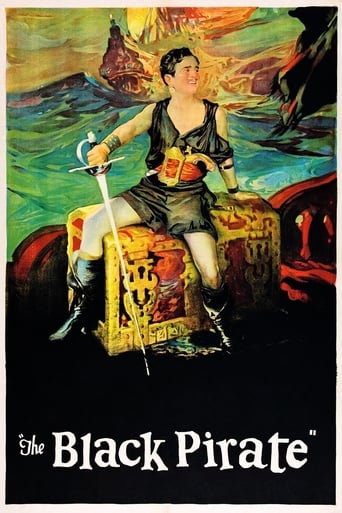
The Black Pirate
1926 · Film · 94 min
Directed by Albert Parker
A nobleman vows to avenge the death of his father by the hands of pirates. To this end, he infiltrates the pirate band; Acting in character, he single-handedly captures a merchant vessel, but things are complicated when he finds that there is a beautiful young woman of royal blood aboard.
2 neutralfrom 2 commenters
Where to watch
No streaming data for this title.

2 comments on Hacker News
There's a fabulous amount of information in a single 35 mm frame of film. Do we have the technology to capture it all yet? What resolution is sufficient? It's not easy to answer this.
Perhaps the first complication worthy of notice is that not all film is alike. During the first half of the twentieth century, film evolved rapidly. First, there was the struggle to make B&W film more sensitive to light without massively increasing the size of grain. Early film required a lot of light to capture a high quality image. It was costly and difficult (not to mention unpleasant for workers/actors) to use the amount of light necessary to get a high quality B&W image with fine-grained film stock. Color film initially amplified these problems as well as introducing it's own, which is why B&W film lived on for lower budget productions long past the broad adoption of color film.
Color film was there from the very start of cinema but, at first, it took the form of tinted stock, hand-colored film, and a variety of other labor intensive processes. Technicolor had a 2-strip color process by the 20's that captured flesh tones to a certain degree (e.g. "The Black Pirate" (1926)), but the three strip process of the late 30's and 40's is what most of us think of as the first real color film, and it heaped even more demands on film makers. Technicolor 3-strip film only produced good results on certain limited ranges of colors, and Technicolor provided consultants to help film makers meet the stringent requirements of using this film. There was a scene in "The adventures of Robin Hood" (1938) where the grass was, famously, not the right shade of green to come out well and was therefore spray-painted the right shade of green!
Finally, it's worth noting that editing, special effects, etc. and copying from this era were all done optically, typically resulting in significant image quality degradation by the final product. Theatrical prints typically had substantially less detail than the camera negatives. Today, we often go back to camera negatives, interpositives, answer prints, internegatives, etc. when transferring a film to digital to get the extra quality. This obviously makes life more difficult for film restorers than if they simply dumped a theatrical print to digital. There are occasionally unintended side-effects of this practice too. For example, "The Thief of Bagdad" (1940) features scenes with a flying carpet suspended by wires. In the theatrical prints, the grain size was large enough to hide their presence. However, standard definition DVD transfers from the internegative made them show up easily. As surprising as it may seem if you're used to the fabulous detail in well-projected modern 35 mm film, sometimes DVD video quality surpassed the 35 mm theatrical prints of the classic era!
Given how videophiles now view standard definition DVD's, it really is surprising that, for some titles at least, DVD's showed more detail than audiences would have seen when the film debuted in theaters. Digital technology has come a long way since then, but how much higher do resolutions need to climb if we're already past the point of revealing some flaws that film-makers never intended us to see?
An interesting parallel to this is the recent trend towards hidef remasters of TV shows. A great example is Star Trek: The Next Generation. The detail in 1080p bluray is far beyond what anyone could have had in mind when creating this series for TV in the 80's and 90's. It's a fascinating show to watch in hidef. Many of the costumes and sets are fantastically detailed and finely textured. Others clearly relied on the limited resolution of broadcast video to hide their short-comings.
Film deteriorates with time, so it makes sense to use the best technology available to create digital backups. Perhaps we're at the point where films, once scanned, will never need to be scanned again. Perhaps we're not. However, it seems we've passed the point where some judgement needs to be used when deciding how much detail to present to audiences. Perhaps sometimes, less can be more.
The technology associated with film-making has evolved incrementally ever since its inception: from the 1890's Edison Kinetoscope shorts that could be watched by only one person at a time to the 2-reeler comedy shorts circa 1915 to D.W. Griffith's breakthrough with silent feature-length films in Birth of a Nation to the first talkies with 1927's The Jazz Singer to the introduction of color in select 1920's movies such as The Black Pirate (eventually evolving into beautiful technicolor productions) to Disney's feature animations in the 1930's to the first experimentation with 3-D in the 1950's with The Blue Lagoon and other gimmick films featuring knives and other assorted objects being hurled gratuitously at the audience to the widescreen film techniques of the 1950's featuring elongated landscapes that made one dizzy watching them to the modern digital special effects movies featuring CGI in a leading role.
Throughout this history, film-makers have continually experimented with different camera techniques and different types of cameras.
This item relating to Mr. Cameron appears to be another incremental step in this long process. It looks to be interesting and possibly intriguing.
What is being lost in the modern film innovations, however, is what I would call the essence of film-making, which is a play-acted script featuring real people but presented as human drama/comedy/satire/etc. using the recognized camera techniques that distinguish cinema from a live play - rapid cutting, point-of-view camera angles, etc. As things go increasingly digital, and become more and more subject to manipulation of images bearing less and less connection with our real world experiences, we get more and more a sense of watching a cartoon as opposed to real people. It is no coincidence that, in this context, many of the modern plots are drawn from cartoon sources (Batman, Spider Man, many others). As this emphasis on special effects has increased, what has become increasingly lost is the quality scripts (with their corresponding wit, drama, fantasy) that once could be taken for granted in quality film-making. The result is an increasingly artificial experience to which it becomes harder and harder to relate.
Over the centuries, it is the great stories that have moved us, from epic poems to the great novels and, yes, even to the cinema of old warhorses such as Gone with the Wind. Today, technology has become as much a substitute for story-telling as anything else. Yes, it constitutes progress in a real sense (incremental though it may be) but, insofar as it has detracted from inspiring story-telling by serving as a tin-hat means of attracting audiences without the need to develop a great story, it has brought a net loss. Just watch a silent movie like Sunrise (1927) and tell me that CGI and other gimmicks have brought a net improvement to what truly can be inspiring about film.
It is, of course, possible to combine great new technology with great stories but not when the technology itself is being featured as the primary attraction.