 Hacker Cinema
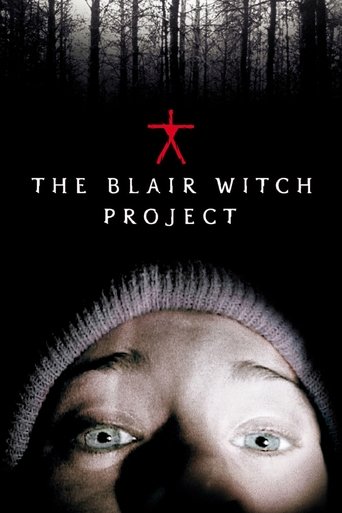
The Blair Witch Project
1999 · Film · 81 min
Part of Blair Witch Collection
Directed by Daniel Myrick, Eduardo Sánchez
In October of 1994 three student filmmakers disappeared in the woods near Burkittsville, Maryland, while shooting a documentary. A year later their footage was found.
8 positive2 negative3 mixed42 neutralfrom 55 commenters
Where to watch
No streaming data for this title.
56 comments on Hacker News
When I was younger, I went into some places that I shouldn't have (legally). For myself, something scarier is walking through offices and tunnels that look completely deserted, and then coming upon an office or room where it's clear someone has recently been there. Whether it was someone homeless looking for a place to stay, or an employee that's still on the payroll, both would freak me out far more than a completely empty space.
I started House of Leaves a couple times, but I always end up spending more time online than reading fiction. I need to actually sit down and read it. I used to read lots of fiction before my addiction to technology. Every five years or so, I go back and read Herman Hesse's Steppenwolf, but it's a fairly small book to get through. I bought the House of Leaves version that has color coding and bizarre layout (not sure if that was always in every version). I suppose I spend enough time watching horror movies and playing odd games that I could afford the time to read House of Leaves.
I do watch a lot of amateur found footage films on YouTube, along with analog horror. I remember when Blair Witch Project first came out, and it reminded me of strange dreams and nightmares I've had, and I think that's part of where the attraction to liminal spaces comes from. It's something humans can relate to, but it's harder to put a specific label on the feeling you get when consuming this type of content.
I was thinking of House of Leaves reading the other comments here, mostly because something like an infinitely long tunnel to nowhere hidden in the walls of your house would actually be scary to me, whereas normally occupied spaces being empty and long winding indoor hallways are far more mundane. My wife has gotten into backrooms lore quite a bit in the past few years and it's always struck me as a strange thing to find eery. I've been an early morning runner for much of my life, worked overnight shifts at a theme park, closing at a mall, been in the tunnels beneath Disneyland and downtown Dallas. Worked in stores that hadn't opened yet and had nothing in them. There was nothing scary or eery about any of those things. It seems like an effect of the photographs and presentation more than the reality of the physical places. House of Leaves is scary specifically because it can't be real. Another example is something like the wormhole to 1987 and 1954 at the end of a cave in Dark. Yeah, that's scary, because nothing like that exists and you have no idea what to expect going into it.
Ironically enough, I first read this book when I worked at Disneyland, at an attraction with tunnel access, that no longer exists, and I no longer have the book because I loaned it to a girl I worked with there who never gave it back. She and I hung out in those tunnels during breaks.
Also interesting to me seeing other responses about found footage, given the guy who first recommended this book to me was a friend from college who covered his dorm room in bizarre free-form prose that switched between play style and novel style during a manic episode, then tore it all down later, set it on fire, and pieced together what survived as the strangest pseudo-poetry that somehow still had a lot of real words in it, kind of nature's "found poem." This book was probably written around the same time Blair Witch Project first came out and this guy also lived next to the real Greenway Trail in Burkittsville, which was also not particularly scary to see in person. I kind of doubt that was really the first example of a found footage film but it's the first I'm aware of. Wikipedia is saying The Connection from 1961 is the first.
You make a fair point about cultural conversation being important. I think that conversation is happening, but the focal point shifts from one generation of creatives to the next. It's an important part of cultural dialogue, not just reaching the same targets as previous works, but finding new targets, new mediums and methods of expression.
We saw the shift toward a more fractured landscape happen in music long before movies. If you grew up hearing the Beatles on mainstream radio, listening today might feel like a cultural low point. And that feeling isn't baseless. But treating the Top 40 as the whole of music ends up missing the new developments happening outside that narrow slice.
We're seeing similar shifts in film. The Blair Witch Project and Once Upon a Time in Mexico heralded the age of accessible digital filmmaking, leading to an indie boom that's still rippling out. Everything, Everywhere, All At Once showed that ambitious, effects-heavy filmmaking is no longer tethered to the traditional studio system. Those are the high profile bellwethers -- indie bands that sneak in a radio hit -- but I think they reflect the wider landscape of passionate creatives better than, say, the new Jurassic World.
So yes, blockbusters aren't what they used to be. But judging the health of the entire medium by looking at those is like judging transportation by looking at horse-drawn carriages after the arrival of cars. It focuses on what's leaving instead of what's emerging.
Indeed. I read that movies like "The Blair Witch Project" and "Napoleon Dynamite" got their break at Sundance.
Very few movies were shot on tape, and those that were did it deliberately for the effect of looking awful (Blair Witch Project).
For TV shows made in the US, they were still generally recorded on film, but then editing on tape became common in the late 80s. (In the UK, recording on tape was a lot more common. Not sure about other countries.) If there was enough interest in the show (and the company hadn’t destroyed the film), it would be possible to go back and reconstruct the show from the filmed footage. Unfortunately, I only know of one case where that happened, and reportedly disc sales weren’t enough to turn a profit.
Yes.
A more obvious example is The Blair Witch Project, which cost less than a million dollars even after all the marketing was done (and cost essentially nothing to make).
The original Halloween was a very low-budget movie considering how long it took to shoot.
Vin Diesel's career was established by his own movie, Strays, which cost less than $50K. Which is zero budget, essentially, for a film that opened at Sundance.
Away from films there are many, many examples of massively popular albums and songs that were made essentially for nothing off the back of simple constraints and creativity.
In the long run, the only way artists will use AI effectively is by deciding on constraints that limit its use.
Because as soon as you don't limit its use, anyone can do what you can do.
So I tend towards thinking that AI won't really move the needle in terms of human creativity. It may reframe it. But nobody is going to be liberated creatively by it.
Tech people, I suspect, tend to assume that AI brings "full creative freedom" to artists the same way a patron does when they say "you can have full creative freedom".
It's not the same kind of freedom.
This take feels off to me.
Not denying it was an emotional reaction by people working in the games industry at the time, but it doesn't feel grounded in reality. It's like the makers of The Matrix feeling like they should give up because of The Blair Witch Project.
Minecraft and Blair Witch caught gold dust. You could make a thousand similar low budget movies or games - of equal quality - without ever replicating their success.
By contrast, if you make a movie or a game that's any way good with a 100 million budget and another 100 million to market it, you can be fairly sure of making profit. It's a different market. A Marvel movie, a Matrix movie, or a Fallout game, has to be actively terrible to fail to turn a profit.
I get that the real issue isn't just YouTube, but that no other horror film, or otherwise, has really matched Blair Witch Project's combination of impact, marketing success, micro-budget, and cultural phenomenon.
I just speculate that if Blair Witch Project were made today, it would likely debut on a platform like YouTube before gaining wider recognition.
There hasn't really been a Blair Witch Project movie happening on Youtube yet...
I don't think you're wrong, and I got the same feeling while watching the 'found footage' style of horror movie ; Blair Witch Project, Paranormal Activity, Cloverfield, etc.
It feels like weak writing to fall back into a narrative first-person account for the entirety, but I can't place my finger on why.
Maybe it just seems like it's the easiest 'fiction' to write because it is so predicated on the fantasy being narrated by a perspective that is entrenched in a normal reality?
Some of the best content I've encountered is exactly this. A good example is "High Maintenance", which started as a Vimeo web series and cost $1000 / episode to produce. [1] Another example is Christopher Nolan's first film, "Following", which cost $6,000 to produce. "El Mariachi" by Robert Rodriguez famously had a $7,000 budget.
They could also pool their money, crowdfund, or otherwise shoot for a bigger budget, in which case they could mimic the first Coen Brothers movie, "Blood Simple", which had a $1.5 million budget. There's also "The Blair Witch Project" ($200k), "Clerks" ($230k), "Paranormal Activity" ($15k), etc. [3]
I truly hope this latest labor dispute causes an industry shift in the direction of creatives taking more control over production and distribution of their content. Musician Anton Newcombe said this about the recording industry, and I think it applies equally well to film studios:
"...it’s a mafia. And until they can write the letter that I’m writing, they are the postman, and I am the letter writer. Period. End of discussion."
1. https://en.wikipedia.org/wiki/High_Maintenance
2. https://en.wikipedia.org/wiki/Following
3. https://collider.com/movies-with-smallest-budgets/
Bruegel was perhaps the first realist. By which I mean he painted people in the costume of the day and not in classical robes. I explain realism to my students as one of the primary 'atom bombs' of visual art: an idea that permenently disrupted visual language. The realism effect can be seen in the shaker cam effect of movies like clover field and the Blair witch project. I see no problem at all with genealogically relating these movies with Bruegels paintings.
What I don't understand about the movie business is the cost of making them. The most important ingredient to the success of a movie is the plot. We've all seen low budget movies that made lots of money - because of the plot. Casablanca, Psycho, Blair Witch Project, Cloverfield, Primer, ...
Star Trek TOS was a very low budget affair, and produced excellent results, because they hired the best scifi writers. When they threw money at the Star Trek movies, they were all terrible.
It's the plot that matters. Nothing else.
What I suspect, and we’re starting to see a bit, is that they need to massively cut budgets. Hundred million dollar budgets per movie don’t seem like they make sense. Instead, I think we’ll see more movies made on a shoestring budget. Some good, some bad.
Disney has started to go this direction by building expensive technology they can reuse, like the set of Mandalorian. I just saw a trailer that the set has now been used in a new movie (but I don’t recall which). If you haven’t seen the set, go find it on YouTube. Pretty interesting tech. It’s expensive but will probably reduce budgets long term.
Anyway, I think cheaper productions is the only thing that will work with so many options today. Cheaper movies like The Blair Witch Project are what I expect to see more of.
I, personally, prefer paying for all the independent services I care to watch. I can pay for one or I can pay for 10 and have a cable like bill. But, I get to choose.
The worst thing about The Blair Witch Project was its viral marketing campaign.
Because as someone that has first seen it just a couple years ago, it's my #1 favourite horror movie bar none. A true masterpiece of the underrated found footage genre.
Few horror movies can truly get under your skin you without ever showing the "monster", so they rely on cheap jumpscares and CGI.
If you've never seen it and want to be unnerved from start to finish, go watch it.
While it wasn't a creepypasta, The Blair Witch Project tried really hard to convince movie-goers that it was found footage and wasn't a scripted movie. I think it was certainly a product of its time and a similar effort today wouldn't be nearly as successful.
Shakycam is the worst. Casino Royale (2006) was loaded with it. It was so bad I couldn't parse what was going on in an action scene. In a James Bond film, which is supposed to ride on its action scenes.
The shakycam trope can probably be traced back to The Blair Witch Project, but for the action/thriller genre it really comes from the Bourne series. It's an easy way to add verisimilitude to a fight/chase and lets you skimp on the fight choreography because the fighters can't be seen very well. But personally I find it disorienting, and it took me right out of what everybody says was an excellent Bond film (and might've been if they committed to smooth reasonable action shots rather than shakycam).
This type of discussion comes up every once in a while and there are always a couple points that circulate in the discussion:
1. "It's not the tools, it's the artist."
2. "But tools matter."
I would love it if we could skip rehashing the obvious stuff. Yes, obviously, tools matter. However, there are a lot of loud people online (and lout people you meet in person) who spend hours hashing out the pros and cons of different tools, why tool X is awful, why tool Y is underrated, why "pros" use tool Z, tool W is overpriced and outdated, and tool Q is missing features A and B which should really be considered "standard" nowadays.
These discussions are valuable because tools matter, but people will also lose sight of the fact that tools are only one part of the picture. Novices, especially, sometimes focus on getting better tools or working on their tools instead of working on their craft. It's nice to see examples of very successful projects made with simple tools on a low budget to remind us that we can work that way too, and remind us that our low-end tools aren't really holding us back--that much.
Some examples of films shot on small budgets:
- Blair Witch Project ($60k)
- Clerks ($28k) (B&W not because the film is cheaper, but so they don't have to get lighting equipment)
- Primer ($7k)
I'm just hoping we can skip the "tools don't matter" "yes they do" back-and-forth. Nobody really believes that tools don't matter at all, people just get caught up in arguing about how much tools matter, or what the right way to communicate that is.
Same thing also happens with photography. I recently saw a photography exhibit where all of the photos were shot on an iPhone. Same thing happens with music. Some famous artist recorded an album with a Telecaster and a Supro because they were cheap and sounded decent. Some of your favorite songs were recorded out of the back of a van.
Quality is subjective. What you presumably mean is "fewer, but more expensive" originals.
You have to remember that a lot of cheap TV makes money. Sure, not many people may watch it, but that doesn't matter if it's cheap enough to make. That's the premise of a lot of the terrible reality TV you see.
The same principle applies to movies. The ideal film isn't another Star Wars or Avatar; it's the Blair Witch Project. It cost tens of thousands to make, but grossed almost $250 million globally.
You may notice that Netflix has a bunch of zombie movies and things. Horror films are generally cheap to make, and horror fans are a reliable audience.
So yeah, software is different to houses. Software needs huge [1] upfront spend in time and/or money. This means risk, and high risk comes with potential high reward.
By contrast building houses, even at scale, is pretty low risk, but since its low risk the upside is constrained.
In many ways software is a lot more like making movies. You have to do the whole thing before you see any revenue. Risk is high, most lose money, but a few make the big bucks.
This model does favour those who can take on more risk - ie companies with deep pockets. Even there risk is mitigated - formulas are followed, safe casting choices, sequels etc.
Smaller indie movies can still be wildly profitable, just on a smaller budget. Don't make Lord of the Rings, make The Blair Witch Project.
For me, we started out mitigating risk by writing customized software others paid for. When we had no work we worked on our own stuff. Over time our own stuff paid enough so we stopped doing custom stuff.
With every new project though we evaluate risk, try and keep it down, and so on. Mostly we mitigate risk by doing what we know, to our established market, (aka sequels).
5 years ago we had the opportunity and ability to enter a new market space and we discovered something new. 30 years ago we were selling the idea of computerising. We were competing literally with paper and pen. We often had to supply the actual computer - for some Companies it was their first, and only PC. While challenging, the upside to the customer was obvious and very valuable.
Wheras This new product was going into a space with 3 established compeditors. While objectively better, the existing ones were good enough, and as the cost of change is high it has been a long road to get some traction, which we are slowly doing. That we could afford to persist was because the other side of the business was working well enough to pay us. So think day job, and side project (with the side project having 3 full time employees :)).
The lesson - Today software isn't fighting pen and paper, it's fighting other software that is 10,20,or 30 years matured. The path we trod is not going to be the right path now.
There are gaps, but doing the non-software things like marketing, customer analysis etc upfront is now much more important than it used to be.
There are opportunities, but it takes a moment to imagine them, and a Lot of work to validate them, and most imaginations are incorrect. Doing the upfront work well will pay off multiple times later.
Oh and don't give up the day job too early...google may think self-driving-cars are the way of the road future, but they haven't quit search.
[1] huge is a relative term - what is huge for an individual might be trivial for a company.
If your narrative was true, we would always see critics scores lower than the audience (assuming statistically significant number of critics reviewing a given movie). But we see so many counterexamples with radically different ratings: Spy kids, Ad Astra, Noah, King Kong (2005), Babe, The Blair Witch Project, Chicken Run, and thousands of others.
> Eventually teenage kids will be making Star Wars at home.
Perhaps, but the same was promised when camera and editing equipment became commodities. There are a few examples like the Blair Witch Project, or Tangerine, a great movie which was filmed with two iPhones. But in general successful movies are still expensively made by professional teams.
The problem is: Even if the technical equipment is cheap, successful movies still require time and talent and lots of hard work.
True story…
I grew up within walking distance of Byberry Mental Hospital.
I could see it daily thru the window in the distance from St. Anselm’s Catholic School.
In the 1980’s, after school my friends and I would take our pellet guns in the forest adjacent to Byberry to just target shoot and hang out outside on the then forest edge of the Philadelphia city limits.
All of our parents told us to never enter Byberry hospital grounds, so of course we ignored those orders every single day.
It was split between Old Byberry and New Byberry.
Gothic Old Byberry facilities were long abandoned, while New Byberry continued operations.
It was an incredibly creepy place in terms of gothic architecture, burned out and disheveled facilities, the underground and partially underground tunnels connecting all the buildings, and the detritus left behind.
No BS, we did run across a lot of satanic pentagram graffiti on numerous occasional and locations, with one very elaborately painted and decorated room like straight out of a horror film.
Very carefully painted bright red with black painted satanic pentagrams and symbology, fully furnished. Quite surreal.
Speaking of horror films, I was at Amazon running distribution for their then new music and video categories when I met the writer/director of The Last Broadcast Jersey found footage film that preceded Blair Witch Project, and was filmed in the area, but lost out onto Blair Witch on distro.
I distinctly remember telling him he should consider filming a sequel in Old Byberry Mental Hospital.
Because it wasn’t until I was much older and further away did I come to understand the horrors in that place weren’t too far removed from a concentration camp or horror film.
2 or 3 times we ran across mental hospital patients who were either on day release or just wandering back to where they had once lived.
It was like The Wonder Years meets Hunter S Thompson’s Fear and Loathing in Old Byberry Mental Hospital.
Is there a word for that sort of cinematic (or in some cases literary) device? Opening with "disclaimer" style text to make the movie feel more real. It seems mockumentary adjacent - fiction presented as fact. Pseudo non-fiction?
I've seen it used in other films, too but the only example I can really think of is maybe the Blair Witch Project.
I'm sure GPT-3 is impressive and probably a paradigm change, but all this hype has an air of urban legend that somehow irks me. We all know of somebody's friend who had access and blew its mind, and that is "too dangerous" to be released to the world. There's an API, but not public, and the only way to get access is to join a waitlist (and wait).
If it were a marketing ploy it would be indeed terrific. It reminds me of the movie "The Blair Witch Project". And I can't wait to try it by myself.
When the Blair Witch Project came out, my Uncle took his son and a few of his friends (Jr. High Age) out in to the woods setup a generator and a TV and they watched the movie in the woods at night. My cousin said they were so scared, but his friends still talk about it to this day when they get together.
I used to belong to a filmmakers' group, so I read the article. Some good suggestions about gear, not so much about filmmaking or editing.
Ironically, they overexerted themselves:
- the "theater experience" is not about the camera or image quality, it's about the sound quality/sound track. You can show grainy film with stereo CD-quality sound, and nobody will complain. Try the reverse and see what happens.
- looked like years of editing - for VOD. Why? They could have done two more films in that time window.
- sounds like a lot of SFX - why? A lot of movies have only a handful.
- as far as "oldversion" software - well, when do you think the engines for that softwarwe were written? Probably the 80s or 90s.
If you look at any music studio, they're using like 2010 Macbook Pros (you can replace the battery and they have Firewire), along with DAWs from ... the oughts.
"The original Blair Witch Project was not shot with a DSLR, it was shot with a Digital 8 camcorder and 16mm film."
A data point from another low-budget film, but that one made it to theaters even.
Why did you exclude the highest grossing film that year from the list? It seems you just selected the movies you thought helped you point.
Movies among the top ten grossing which you left out of the list:
- Star Wars: Episode I – The Phantom Menace
- Tarzan
- Big Daddy
- The Mummy
- Runaway Bride
- The World Is Not Enough
- The Blair Witch Project
https://en.wikipedia.org/wiki/List_of_1999_box_office_number-one_films_in_the_United_States#cite_note-2
I do agree Hollywood is different today, but rehashing ideas is nothing new.
The Godfather was a book. Twelve Angry Men was a play. Ben Hur (1956) was remake of Ben Hur (1925). All the songs in Singing in the Rain was recycled from previous movies. The Lion King was the first Disney animated movie with an original story (and even then people say it was plagiarized from Kimba).
As for TV shows and made-for-streaming, do you exclude this from Hollywood? It is increasingly the same talent writing producing and acting, so it is more a question of format and distribution.
It's interesting that a "business card sized game" is still interesting in 2019. IE, there will be people who want to play it... a game that would have been at home in 1978.
I think there's a parallel here to film/tv. You can make a billion dollar "avatar." People like those, but there's always room for a "blair witch project" or a "clerks" that someone can decide and make.
"Lange's body of work definitely consists of many works of "art" but I think it all fits nicely into the category of documentary and photojournalism"
That kind of proves my point?
Yes Mapplethorpe's work is definitely 'art', Langes work isn't definitely 'documentary', to the point that if you saw a picture in isolation, I'm not sure you could reliably say which it was /supposed/ to be.
I'm aware the line between 'art' and 'documentary' are very slippery. Thus the inverted commas, and thus (I would argue) the need for clear delineation.
As I said in my prior post, there are plenty of exceptions, but I'm not sure you can get much past generalisations without defining art. And I've yet to see a definition of art without exceptions, to the definition.
Edit: To expand further. Think of films like District 9 or Blair Witch Project. Both are shot in a 'documentary' style, but both are 'art'. But both are A. Notable for being in the opposing style (they're exceptions that prove the rule). B. Understood that they aren't really real (they aren't seeking to mislead).
You don't really get that in photography, although the limitation of the medium doesn't really allow you to do that set up.
I really like the Blair Witch Project. Maybe it is because I kind of love the style or the low budgetness of it. Maybe it was because it came out when I was first getting online and reading movie sites and so I heard about it (and knew it was not actual found footage) long before it started being advertised. Maybe it was because it was one of the first movies to have all this cross-media stuff like their web site and the special that aired in tv about The Legend of the Blair Witch.
And their short-lived tv show Freaky Links was really ahead of its time (it is basically about a youtuber hunting paranormal stuff but it came out in 2000)
You might also enjoy similar documentaries Cloverfield, The Blair Witch Project, and This is Spinal Tap ;-)
I don't know why Iron sky returning ~50% is not considered a success, but it is a pretty funny movie. Also if budgets are what we go buy, the Blair Witch project, which grossed nearly a 1/4 billion at a budget of 60k.
I do vr projects for work occasionally and previously was in film when they were pushing stereo. Content makes a huge difference. On a flat screen the most dramatic space contrast is left-to-right, in stereo it's near to far. If you're exaggerating something you'd use those. It's way more fatiguing on your eyes to focus near to far, than left to right--it also takes like 10x as long for people to focus and recognize something that changes near-to-far.
FPS games are awful for VR when you move around with a joystick. Also, a lot of the "dramatic" things that get used to try and sell games make you dizzy. There's also some acclimation. They say devs are the worst subjects for testing of some vr demo will cause sickness.
I also think people underplay the motion sickness film and FPS video games can have on people who are unacclimated (FPS games didn't have big money pushing it in the early 90's and were on tiny, low res screens). I know I've felt motion sickness playing flight simulators and certain FPS games, especially at first. Movies like Blair Witch and Cloverfield were criticised for making people feel sick.
To address the focus problem, I've been wondering why there's not much talk about light fields for VR (maybe because of patents?).
There is significantly more planning behind video than most still photography. Scenes are story-boarded, shots are carefully set up, lighting is adjusted, etc.
When you look at video that was not carefully planned the ratio of hours shot to hours used goes way up. The Blair Witch Project had a ratio of about 12:1 and while the video from that film was effective it was hardly outstanding from an artistic point of view. Shot-on-location documentaries like Happy People or Welcome to Leith have similar ratios. Even though they're carefully shot, the ad-hoc nature of collecting footage for a film like that makes it necessary to amass a huge amount.
"moving images on the screen aroused a physiological feeling of horror in the audience (shots of an onrushing train) or physical nausea (shots taken from a great height or with a swaying camera)" -Jurij Lotman
You could research the Lumiere Brother's films, and probably find some material on the matter pretty easily.
See also, the history of IMAX (70mm film). Originally invented in 1929, named Fox Gradeur,they cancelled the product for decades because it was too realistic, and was making audiences profoundly uncomfortable.
I even recall reading recently that color film and television caused lots of nausea when they first hit the market.
More recently, you may recall that the Blair Witch project was making audiences around the country vomit, because they were not yet accustomed to jerky handheld-style cinema: http://amarillo.com/stories/1999/08/13/usn_LA0713.001.shtml#.V0sfuXUrLeQ
The point is that the ceiling for the multiple a Hollywood film can return is way lower than the ceiling for the multiple VC can return. The discussion is around paying high prices and still getting a huge return, which makes Avatar a more apt analogy than the Blair Witch Project.
That having been said, perhaps the analogy is a bit flawed, but at the going market cap Thiel has a 60,000x return on Facebook (on a large sum of money), and that will likely continue to go up.
Even if the analogy is Twitter, started by the already successful Ev, or Slack, started by the already successful Stewart, both are likely to return a greater multiple.
Yes, it's a shame that they went for sensationalism. I really wish the Blair Witch Project had worked (for me) because it was an excellent idea. Unfortunately it just came out as sloppy, amateurish, and boring. The "big reveal" at the end simply elicited an "Oh, that makes sense" from me.
But it's probably the only film that successfully tiptoed that line between reality and film.
That was one film where piracy offered an experience that the legitimate film experience couldn't have. I worked a swing shift, so my coworkers and I would have a bunch of free time at work and a coworker of mine had gotten into downloading movies from Hotline to fill the time. When he downloaded BWP, all we knew about it was that it was a file name 'Blair_Witch_Project.mpg' on some internet-connected server. There had been no publicity for it and it wasn't released in any theater in the area.
When I watched it again in the theatre, it wasn't nearly as gripping as it was on the 17" monitor we used to watch it the first time. Plus, the lack of a steadicam made it actually better on a much smaller screen.
All in all, I don't agree with the premise of the article. I'm not even sure I'd call BWP good. It was creative, but I don't know that it worked without the uncertainty that surrounded my first viewing. Also, for me, there was a much better horror film that came out later that year called 'Stir of Echoes', so even if BWP is considered great, it's not, for me, the last great horror film.
Cannibal Holocaust was probably the first "found footage" horror film and predates Blair Witch Project by almost 2 decades.
Blair Witch Project came out when I was at university, and I saw it at the cinema with a bunch of friends. It later transpired that at least two of them genuinely believed it was real. In a way, I have always been envious of their gullibility, because it must have been an _incredibly_ intense experience. As it was, I still thought it was pretty good, and an incredible achievement for the budget.
I agree.
It's interesting to note that Wikipedia does this for other pages that were "based on real facts" or were hoaxes. The one that comes to mind right away is Blair Witch.
https://en.wikipedia.org/wiki/The_Blair_Witch_Project
The movie's official website featured fake police reports and "newsreel-style" interviews. These augmented the movie's found footage style to spark debates across the internet over whether the movie was a real-life documentary or a work of fiction.[30]
Apparently when its their OX getting gored its not ok.
Terrible show. I can't speak to episode 3 and beyond because I didn't watch it, 1 and 2 were so bad. I only saw the episodes that were available on Netflix. Episodes 1 and 2 (PM Pigfucker and Reality TV Ad World) were HORRIBLY paced, slower than molasses in January, with so much wasted time that should have been either cut, or filled with more story. Instead, we're given the basis of the episode in the first few minutes, then we get that concept beaten like a dead horse for 30ish more minutes, then a completely unsatisfying ending. There was a minor twist in 1 that could have been more enjoyable were I not so annoyed at how bad the rest of the episode was, and the twist in episode 2 was just obnoxious and completely unoriginal. There were so many moments they could have done interesting things with what happens in the episodes, but instead, they just leave half finished statements all over the place. A complete waste of time, money, and talent.
It reminded me of Blair Witch, which was a fantastic 20 minute short film that for no reason was padded out with an additional hour of footage of snotty college kids crying and yelling "FUCK!" in the woods.
This is dead wrong.
Indies don't make nearly as much money as studio titles, nor do they have such a huge investment on the line. Consider that for something like a new superhero movie, the production costs are easily >$100 million and marketing costs are about the same (a 50:50 ratio of production to marketing investment turns out to produce the optimal return, based on empirical measurements). $200 million and up is a lot of money, so films like this are largely financed by presale agreements with distributors. Yes, this can be offset by stars taking a profit share instead of up-front payment and by wealthy investors with deep pockets - but there are limits to both approaches, and neither is sufficient for really expensive projects of the kind the public has come to expect.
Of course things like Kickstarter and so on are great and will continue to gain in importance. However, they are much ,much better for established media properties (eg cancelled cult TV shows with an existing fan base, or projects by existing celebrities in other media, like if Justin Bieber decided to start making movies) than they are for innovative products (with new actors/ directors/ writers/ characters).
No doubt it will continue to grow and before the end of the decade a crowdfunded project by a bunch of unknowns will turn into a monster runaway cinema hit. But then it will revert to the mean. Anyone who is a filmmaker is familiar with the 'first time director X made a hit movie with a tiny budget of $Y' story. Blair Witch Project! El Mariachi! Primer! We love stories like this but there are a few things to bear in mind. First, the low-budget figure is not what it cost for you, the consumer, to see it, but what it cost to get it in front of a studio executive who OKed spending the money on making it market-ready. Second, it's untrue because there was a list of free stuff as long as your arm in the way of donations from friends of favors owed or suchlike, that most people don't have access to. Third, there were hidden costs in time or lost production quality. And fourth, and by far the most important, only one film every few years out of many thousands made every year hits a sweet spot and recoups some very large multiple of its original budget. It's like getting a royal flush in poker, or successfully splitting your blackjack hand multiple times: it's always a possibility, you could hit an enormous jackpot if you succeed, but odds are that you won't.
To paraphrase the famous Dov Simens, that's why they call it 'show business' and not 'show luck.' The business model is that you make an entertaining movie that people want to watch, movie theater owners rent it from you in order to rent out seats and sell expensive snacks, and then later streamers rent it from you and a you make some additional money on hard copies. (There's whole additional business model built around merchandise/franchise income like toys and theme park rides, but those are generally limited to family-friendly sci-fi and fantasy films with vast marketing budgets.) You can't run a business around the idea of producing surprise movie hits on a shoestring. You build one around the idea of being able to reliably pick projects with commercial potential and reliably match your investment with the profit potential. Essentially it's fund management in a market where many of the producers and consumers behave irrationally and unpredictably. If you want to do big deals, then you need to be able to sell the film before it gets made. Publishers are hard-headed about these things not because they are stupid, but because the alternative is losing a ton of other people's money and having to exit the industry in fairly short order.
So there's more DRM-free content every year, yippee. That's wonderful. It's wonderful in the same way that you can get better digital cameras for less every year and so on. But tell me what fraction of industry revenues this content accounts for, and what the economic inputs and outputs are. It's great to see Louis CK put out DRM-free editions of his stand-up performance, but his downside risk on that was maybe $10,000, $25,000 at most. Plus he was already famous. It's great that Veronica Mars raised $5.7 million on Kickstarter, but it only made 2/3 of that back at the box office although I anticipate it will break even by the end of its second financial year. And again, that was from a base of a multi-awarded hit cable show that ran for 3 years and had already had several million invested in it. Kickstarter works extremely well if you already have a franchise to leverage, because the marginal cost to the fan-investors of backing the project is pretty low relative to the opportunity-cost value of the time they have already invested in the franchise. But if you don't already have a brand, it's a very different situation.
I've brought this up again and again on DRM-related threads here. Publishers don't want to make consumers' lives difficult or prevent you from enjoying yourself - that's a juvenile and inaccurate picture. They're businesses that compete intensively against each other and launch a large number of extremely high-risk products each year, many of which never break even. The portion of the public that goes out and expends effort to discover artistic quality is tiny. Most people want to be entertained - and given that the #1 whine about DRM is the 'inconvenience' it imposes on consumers (eg the original article's complaint that having to stop the movie so one family member can let the cat out is an unacceptable loss of enjoyment), I'm pretty sure that the anti-DRM lobby is not champing at the collective bit to free starving artists held hostage by studios, but rather to watch more or less the same expensively-produced and marketed blockbuster entertainment as everyone else in their demographic cohort.
I can imagine this being extended into entertainment in general. Watching a scary movie (i.e. Blair Witch Project) from the point of the victim would be terrifying! Being one of the luge runners in the olympics would be thrilling! Not to mention the adult entertainment industry; now you don't have to just watch things happen, you can actually participate.
I think like any technology it has multiple uses, good & evil; its up to us to decide how we use it.
They might be old examples, but 'East Great Falls' was headed straight to video, until it was "accidentally" uploaded and a few months later, after much internet buzz, was released as 'American Pie'. Similarly, 'The Blair Witch Project' was successful at the box office because it too was uploaded "accidentally". Coincidentally, both of these movies' box office release were within weeks of each other and did far better than they perhaps normally would have, if it hadn't been for piracy. Piracy can create a buzz or social network effect when friends talk about movies, that is far more substantial than simply seeing a trailer. A limited amount of piracy does help movie studios and record labels, its just they don't really know how much is helpful, before it eats into their potential revenue or profits.
A little more context for the quote:
We all knew one of the commonsense edicts of Hollywood is “never invest in your own movie." But I did it anyway.
-- Garry Marshall, My Happy Days in Hollywood [1]
A few of the many well-known movies that are self-financed: Blair Witch Project, Clerks, most Robert Rodriguez movies[2], the upcoming Cloud Atlas by the Wachowskis. Self-financing might still lead to low odds of success (probably difficult to properly study this), but it seems to me there are enough success stories to question the "never" advice.
[1] http://books.google.com/books?id=X3eXiLG9WnIC&pg=PA196&lpg=PA196#v=onepage&q&f=false
[2] http://blogs.indiewire.com/theplaylist/robert-rodriguez-talks-spy-kids-4-the-joys-of-self-financing-and-his-5-000-upcoming-projects#
If you have to pay the same to see Avatar & The Blair Witch Project, then sure, the big budget movies seem like better value. But only a vast price fixing monopoly, supported by ever more draconian legislation, enables that equivalence.
The price of movie distribution is fast approaching zero. If big budget movies had to compete on a level playing field, I suspect they would rapidly become unprofitable.
Which is why it's difficult to beat Hollywood for those few movie-watching slots. Your time is more important than the $10-15 more Hollywood will charge over an alternative production. So your alternative has to compete in something other than blockbuster special effects and well-known actors. The likely suspects are originality (e.g., Blair Witch Project) and story (Sling Blade).
Maybe games are more "things" than "speech" (although they are protected as speech by the First Amendment; see the recent decision
http://www.supremecourt.gov/opinions/10pdf/08-1448.pdf
It would be pretty ironic if in order to free games from the demands of public domain advocates, you also stripped them of free speech protection).
But how is a movie not speech? How is it not a work of art, how is it fundamentally different from a book or a song, or a painting?
Because it costs a lot of money to put together?
For one, this argument is not going to hold for long, as producing a movie at home for next to no money is becoming not only possible but commonplace (The Blair Witch project was shot in 1999 and at the end of principal photography the total cost of production was under $20k (not a typo)).
But secondly, just because the form of art one decides to express themselves with is costly, doesn't justify that the public domain be amputated, or that the public abandons its freedom, more than is strictly necessary for a functioning society.
The right of the public to be informed or educated, or simply to have any conversation they please, should come before the "right" of individuals to make a living in a manner of their own choosing.
The copyright model and the arts have thrived for the last few centuries because copyright was such a vast improvement on what came before it. It led to an explosion of creativity and entertainment industry.
Now while a fatted arts industry will always contribute a lot of bloated, formulaic works (although I think people would have to admit that even the more braindead hollywood titles have a lot going for them beyond the plot and script), it also allows big money to spent on worthwhile projects. Think of all the great movies that have been made in the last 70 years - they may not have been the most expensive for their time but they were generally still pretty damn costly to make. And even the shoe-string budget attempts probably would not have been made if the possibility for a massive pay-day did not exist (eg. Blair Witch Project).
I think people have got their priorities mixed up. Accessing art is not the problem. We have limited leisure time to spend, so even if we could, we would not want to buy every album/movie/book we could. These items are cheap, though, so since price is not really a concern, our worry should be ensuring that artists and the creative industries have economically viable roles. And do we really want to live in a world where the quality of the TV and film output never rises above the level of, say, Spain?
The technology race in video games is as utterly retarded as it is in the movie industry. There's as much room for Clerks and the Blair Witch Project as there is for Toy Story and Avatar.
> not exactly what you'd call "safely" manufactured for an existing fanbase.
I'd say a film having a budget of $22k[1] is pretty safe, as far as the rest of the films on that list are concerned. While not a non-trivial amount of debt for a handful of people to take on, it's roughly in the same price range as a new car, which most people are capable of taking on.
[1] http://en.wikipedia.org/wiki/The_Blair_Witch_Project#Budget
OK, then what about The Blair Witch Project? One of the most polarizing movies on the graph, but not exactly what you'd call "safely" manufactured for an existing fanbase.
Is this sarcastic? According to Wikipedia, Blair Witch Project had gross revenues of nearly $250m as of 18 months ago.
The Blair Witch Project grossed $248,639,099 worldwide, against a $22,000 budget.[12] The film was featured in the Guinness Book of Records as having the highest profit-to-cost ratio of a motion picture ever, making back US$11,301.78 for every $1 spent.
Summary of the article:
Premise - The media created a near universally-held belief that people went crazy over "The War of the Worlds". Conclusion - The media don't really affect us that much.
Here's another entertaining look at three different radio broadcasts of "The War of the Worlds" and its influence on "The Blair Witch Project":
http://www.wnyc.org/shows/radiolab/episodes/2008/03/07