 Hacker Cinema
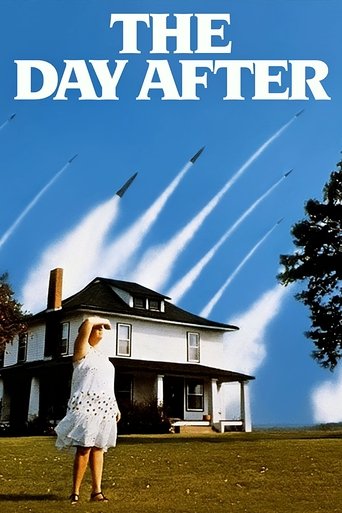
The Day After
1983 · Film · 127 min
Directed by Nicholas Meyer
In the mid-1980s, the U.S. is poised on the brink of nuclear war. This shadow looms over the residents of a small town in Kansas as they continue their daily lives. Dr. Russell Oakes maintains his busy schedule at the hospital, Denise Dahlberg prepares for her upcoming wedding, and Stephen Klein is deep in his graduate studies. When the unthinkable happens and the bombs come down, the town's residents are thrust into the horrors of nuclear winter.
17 positive4 negative44 neutralfrom 65 commenters
Where to watch
No streaming data for this title.
69 comments on Hacker News
We were told, non-stop and repeatedly, that we would probably all die in a nuclear holocaust before we reached adulthood. And yeah, lots of my generation decided that they'd rather spend their few remaining months touring South America rainforests or hiking Nepal than doing the "productive" things that the people likely to blow up the world wanted us to.
And then they didn't blow up the world. Well, crud. What do we do with ourselves now?
I'm not even slightly exaggerating, by the way. About half the popular media was depictions of how the US would blow up Russia, Russia would blow up the US, or what live would be like after the US and Russia blew each other up. Red Dawn. Most movies with Sylvester Stallone. The Day After. Threads. I assure you those weren't kitschy, ironic things we winked at. We generationally kinda reconciled ourselves to the idea we'd never grow old enough to drink. And then, we were labeled "slackers" for not having followed the same traditional routes as previous generations.
I'm hugely sympathetic to Gen Alpha. I get it, kiddos. I see you there, and I understand.
Hey there, early Gen X here. We lived with the existential dread of nuclear war (The Day After traumatized a whole generation), our parents left us on our own with just 3 channels of TV for company because they both had to work, and our sexual awakening turned into a horror movie because of fear of AIDS (a death sentence at the time).
Also, there were no jobs.
> Yeah, what I've learned from films like "Threads" and "The Day After" is that you very much want to die in the first 20ms of a nuclear war. Don't dig a hole to hide in, put your lawn chair on the roof and hope you're close enough to ground zero to get a peaceful and dignified end.
That's all fine and dandy if you only have yourself to think about...
Funny that you mention "The Day After", I watched that movie in high school then went to lunch in a school that overlooks the Kansas City skyline.
No chance that had anything to do with the panic attack I had when Putin put his nuclear troops on high alert after invading Ukraine. No sir, not at all.
Yeah, what I've learned from films like "Threads" and "The Day After" is that you very much want to die in the first 20ms of a nuclear war. Don't dig a hole to hide in, put your lawn chair on the roof and hope you're close enough to ground zero to get a peaceful and dignified end.
The attack scene from the American version, The Day After (1983), is even more harrowing in my opinion. I looked up how the special effects for it were created, even though looking it up usually ruins a movie for me (I have stopped looking up the special effects for movies). The attack/fallout scene from How I Live Now (2013) is also eerie. These are not snuff scenes, that's not what they are about. The movies were made to make people think about the entirety of circumstances surrounding such an attack.
(continuing my previous comment) The fact is, the weather has always caused issues. About 100 years ago in the US North East there was massing flooding and great loss of lives. https://en.wikipedia.org/wiki/Floods_in_the_United_States_(1900%E2%80%931999) https://en.wikipedia.org/wiki/Floods_in_the_United_States_before_1900
California, for another example, seems to flip-flop between big droughts and massive floods every couple hundred years based on slight changes in atmospheric conditions. https://en.wikipedia.org/wiki/Floods_in_California "Geologic evidence indicates that "megafloods" occurred in the California region in the following years A.D.: 212, 440, 603, 1029, c. 1300, 1418, 1605, and 1750. Prior to European settlement, these early floods predominantly affected the indigenous peoples of California."
(And of course then there are West Coast major earthquakes...)
Tens of thousand of years before all that, a mile or two of ice settled over the North East of North America among other other parts and the globe. Imagine the problems of living somewhere the snow stopped melting in summer and just piled up year after year for centuries. Our ancestors somehow made it through that. As well as later catastrophic flooding from breaking ice dams that might have raised sea levels by 10s of meters in a few days wiping out many coastal villages.
Then there were failed harvests from the Little Ice Age. And there was associated social dislocation from other climate change, like the apparent "Sea Peoples" who invaded Egypt and elsewhere.
Back to the present day, we've got all this tech to both reduce emissions (solar etc), and to ameliorate consequences (weather satellites, boats, railroads, 3D printed housing, insulation, LED lights, indoor agriculture, air conditioning, amazing materials, and so on).
As "nucrow" pointed out in a graph they linked to, the annual number of climate-related deaths from 1920-2021 from about 500,000 to about 10,000. Why? Presumably better weather forecasting and improved infrastructure are part of it.
But rather than optimism, some people are forgoing having kids because they are worried about climate change meaning there is no future for the human race. They are spiraling into dysfunctional despair.
I pointed to Reddit "CollapseSupport" previously to be kind because there is a genuine community there of people helping others deal with their fears, and anyone on HN who really is in despair over this climate change topic might find some help there (among other places).
But if you really want to see what ongoing doomsterism and despair looks like, "/r/collapse" is the companion to that other group: https://www.reddit.com/r/collapse/
I find it interesting and educational reading -- including about new things to worry about like post-Covid increased violence. There are many anecdotes there about personal despair and local despair. I have to agree many of them are things I share some concern about. The question is, in a world that has invented social media where people can see the worst stories from around the planet due to for-profit algorithms that promote engagement even if it is toxic to the user, do those selected anecdotes add up to an overwhelming trend?
I saw something similar as far as a zeitgeist of worry starting in the 1970s with Peak Oil fears that grew to a crescendo in the early 2000s (e.g. Michael Ruppert, perhaps contributing to his death), and fought against that despair somewhat then in various online discussions. But who really worries about peak oil now with EVs and cheap solar? Yes, it was good to be concerned about the transition, but humanity invented and deployed solutions (in part due to the concern). The USA always had hundred of years of coal supply -- but it would have caused a lot of ecological damage to use it.
In the 1800s, there was a despairing concern about Peak Whale Oil too, presumably, given declining Whale populations from all the harpooning. https://oilprice.com/Energy/Crude-Oil/What-Can-We-Learn-From-Peak-Whale-Oil.html
I saw another zeitgeist of fear in the 1980s with fear over nuclear war, especially coincidental with the movie "The Day After" and other previous things like the downing of Korean Airlines 007. Sadly, nuclear war is still a very realistic fear, even if such war is ironic, as I suggest in my sig: "The biggest challenge of the 21st century is the irony of technologies of abundance in the hands of those still thinking in terms of scarcity." Odd that the media and most people seem to have mostly stopped worrying about nuclear war over the decades as a day-to-day worry, even though Russia is increasingly rattling the nuclear option a lot.
That is a much more likely apocalypse than climate change, especially since the lives of most US Americans are totally dependent minute-to-minute not so much on the US military's technical prowess as instead on probably-lowly-paid Russian service technicians probably using scrounged parts to maintain a 1970s-era "Dead Hand" computers (which the US tried to sabotage) so they don't launch nuclear missiles accidentally. https://en.wikipedia.org/wiki/Dead_Hand
I would expect that is the sort of issue that Freeman Dyson too might be more concerned about than rising CO2 levels (including as he wrote a peace-exploring book about the nuclear arms race called "Weapons and Hope"). https://www.goodreads.com/book/show/1028642.Weapons_and_Hope "In this book, Professor Dyson explores how national decision-makers think about nuclear war, and how this isn't always well-considered or intelligent thought. He also applies the same criticisms to how leaders in various peace and disarmament movements think about nuclear war. The result's an unflinching assessment of how we think about actually using (or defending ourselves from) the world's still-massive stockpiles of nuclear weapons. (Vance Frickey, 2018)"
Of course, there are always other fears like (more?) engineered plagues. Here is a list of my technology-and-society related fears circa 1999: :-) https://www.kurtz-fernhout.com/oscomak/fears.htm
In any case, as linked above at spiked-online, there is a plausible case that rising CO2 is a good thing. And as I previously linked to, it's quite possible that we have already passed the maximum level of atmospheric warming (although there still might be knock-on effects as systems that are reservoirs of "coolth" like the deep oceans continue to absorb heat until some equilibrium point). That means that any effort to reduce fossil fuel emissions and keep CO2 at current levels may be essentially wasted because it won't affect atmospheric warming and it also harms the greening of the planet and the blooming of deserts. So such money would be better spent on either mitigation or other socially beneficial projects (like, for example, eliminating malaria and/or easily curing it?).
In general, these are the sorts of systems effects that Freeman Dyson was concerned might be missing from the models or related policy. He presumably felt some things that should be better understood before making certain broad policy investments. For example, there is an argument that plants growing faster given more CO2 might be weaker or less nutritious (mentioned in part in the article), so another issue to be explored as a system effect.
Personally, I am all for replacing fossil fuels with decentralized renewables like solar and also energy efficiency including passive-solar homes (and maybe someday fusion power, perhaps even via local-scale "Back to the Future" "Mr. Fusion" household systems). Such innovations produce less local air pollution and water pollution than fossil fuels burning does which otherwise harms and even kills a lot of people via health issues (potentially costing in the hundreds of billions of dollars annually plus many lives as an externality of fossil fuel use). Smog and oil slicks are unpleasant to be around and cause a lot of environmental damage to other creatures (including mercury pollution from burning coal which makes many fish unfit to eat much of). Decentralized electrical power sources help shift political power in a more decentralized way too, which can potentially help shift the overly-hierarchical wealth-concentrated society we live in towards a better balance of meshwork/hierarchy (using Manuel De Landa's terms). Such decentralized power systems also tend to be more resilient, with longer time-scales of stand-alone operation, which makes them better to have around in times of most disasters or war. So, we should move away from fossil fuels for those sorts of reasons, not because of potentially-flawed-or-incomplete doomster academic models.
(A supervolcano eruption would definitely be bad for solar though, and we'd be better off with nukes or geothermal or fusion in such circumstances, or even desperately going back to burning fossil fuels for a few years until the air cleared.)
An almost forgotten TV movie that aired before "The Day After" was "Special Bulletin", about nuclear terrorism in the United States, presented as a series of live news reports, as "War of the Worlds" was by Orson Welles' radio program in the 1930s.
Riveting and disturbing in a way that network TV virtually never was at the time.
Yes, at the time it seemed like something that might happen tomorrow. You had TV movies like "The Day After" and constant discussion of it in school and in the media. It was a real fear.
I found that the scene in The Day After [1] where this comes out was one of the most frightening things I've seen. That and when the missiles leave the silos and you realize you have less than 30 minutes left to live.
1: https://m.imdb.com/title/tt0085404/?ref_=ext_shr_lnk
Whether or not it counts as PTSD, I remember it being a stressful time, causing worry that has persisted through to the present. There were the films, of course; When the Wind Blows and The Day After are films I watched (the former was also available as a graphic novel IIRC). I'm not sure about Threads, but I definitely saw The War Game (https://en.wikipedia.org/wiki/The_War_Game). The scene with firemen trying to put out a firestorm and being suffocated has stuck in my head. The Protect and Survive booklet (https://en.wikipedia.org/wiki/Protect_and_Survive) was around to instruct families in how to construct temporary makeshift shelters against nuclear blast. I recall such planning, including watching a film explaining how long the various Protect and Survive shelters might last at different distances from a blast ("The occupants of this shelter will be fine, for 6 seconds until the blast wave hits..." etc. etc). Military training at school (https://en.wikipedia.org/wiki/Combined_Cadet_Force) also involved, from time to time, lectures from liaison officers who would remind us of the odds against us in terms of land forces, and how long we might hold out before things went nuclear (should the Warsaw Pact have attacked NATO).
And there was a bunch of primetime TV content about the nuclear apocalypse when a large part of Gen X was at an impressionable age.
"Threads" (UK), "The Day After" (US) are two big ones. Two lesser known ones that had a profound impact on me were "Special Bulletin" and an episode of the new Twilight Zone called "A Little Piece and Quiet"[1]
[1] - https://www.youtube.com/watch?v=Or1UX7z8YBM .. this run of the new TZ had many episodes about nuclear destruction
> had a majority of Americans watch films like that before they voted Ronald Regan in for a second term, would they vote for him?
Well they watched "The Day After", 39 million households, during his first term. One of the people watching was an ex-actor who said it was "very effective and left me greatly depressed", who then used his position as commander in chief of the US armed forces to make the Joint Chiefs of Staff watch it, and then that president turned around and managed to get the Intermediate-Range Nuclear Forces Treaty agreed.
One wonders what would have happened had Walter Mondale won in 1984. Would he have been as affected as Reagan? Would he have managed to persuade a traditionally hawkish conservative chiefs of staff? Would he have been able to persuade the Russian leadership?
Ironicaly, it's easier to picture the world ending, than to picture someone pitching the concept of a realistic "end of the world from the laymen perspective" movie.
That being said, I think climate activists need to have their "The Day After" moment, but the problem is that they have to distort science just enough to have a movie where they show _westerners_ taking the blunt of the damage.
Don't get me wrong, adaptating the first chapter of "The Ministry for the Future" would make for an harrowing look, too (*) - but watching 20 million people from India die in heat bulb, is, sadly, simply never going to have the same impact as seeing the house next door explode.
(Also, for those who've read the book: I want to watch the Davos scene on a big screen.)
The Day After famously spooked Ronald Reagan -- a former Hollywood actor who liked to catch movies when he could -- who later screened it for the Joint Chiefs of Staff and asked them if it was really that bad.
Their answer was "nope, it'll be worse, much worse", and that pushed Reagan to reach out to the Soviets and work on de-escalation.
This was a common take, and is the opposite one intended. Both "Threads" and "The Day After" had this problem. A contemporary take:
https://lifeinhellarchives.tumblr.com/image/176779648696
You see? The "Adult Version" is that after a nuclear war everybody dies. But in fact, that had been the received wisdom for many years. These 1980s movies were actually trying to impress upon people that after such a war, there would be survivors who would keeping suffering for a long time.
"Threads" however annoyed me in that everyone seem to regress to a pre-civilization mental state, even losing their grammar. In reality, much of the world (including most of the southern hemisphere) would be untouched and would be sufficient to get the supply chains sort-of working again (at least in a few decades).
Speaking of 1980s nuclear war movies, I'd recommend the US movie Testament. (1983) Everyone who was around remembers the grand spectacle that was The Day After (depicting the aftermath of a nuclear attack on a city), but Testament was, like Threads, a small scale story about a family. The movie is set in a small town too far away from cities to actually be damaged in the initial attack, but as the weeks go on the town begins to run out of supplies (because there is no longer a supply chain), and fallout begins to arrive in the rain, leading to radiation poisoning.
This is the first thing I think about when I see any mention of that infernal social media app.
And the only thing I remember about the film is the scene where a woman is looking on in horror, and there's a closeup of her urinating in her polyester trousers.
In contrast, the big TV film in the States was The Day After. I believe that I was in sixth grade at the time, and I sincerely appreciated the efforts of our Catholic school administration and faculty to get in front of the messaging and buzz, and prepare us kids psychologically and spiritually for the experience.
> I grew up during cold war, USSR collapse, multiple wars in the region. At no point was I (or any of my peers to my knowledge) gravely concerned for our future.
Kids in our day got it through regular media. The cold war had a big influence on music at the time and shows like The Day After (https://en.wikipedia.org/wiki/The_Day_After) were on TV. I was very aware that we could be nuked at any moment, and later, that we were destroying the environment. We had the rest of the world's evils pushed on us by Very Special Episodes and After School Specials. I had plenty of other mundane concerns to worry about too, but concern for our future was always there in the background.
Kids today get it much worse since the message is that it's already too late and we're basically doomed.
> which obviously hits closer to home.
Maybe, but as I said I've watched it in Italy, as Italian, and almost everyone was watching it that night.
Also, I was merely pointing out that before Threads there was this other movie that pioneered the idea of the atomic holocaust.
There's also China Syndrome from 1979, but even though I think it's a better movie than The day after, the premise is different and the threat is the atomic energy industry, not warheads.
I agree.
Threads is more realistic, but The day after literally ignited panic in millions of families (I remember watching it on Television when I was 6, almost any other neighbour household was watching the same thing!)
I would also add the more prosaic Wargames, also from 1983, to the list of movies talking about a "Global Thermonuclear War" and, similarly to what Princeton is doing, simulating "A strange game" where "the only winning move is not to play"
Both are very good and shocking movies. I personally found Threads more grimly realistic, and more relatable. This might be because I've watched Threads only a few years ago, while it's been decades since I've seen The Day After.
This is a very pessimistic (but still quite possible) scenario and hopefully it will not realize. I once per year watch myself the movie "The Day After" (1983) to remind me of the horrible consequences.
If you have not done it until now, here's a link for the full movie: https://www.youtube.com/watch?v=X-phsyn3KQM
Just don't blame me for the miserable tight stomach afterwards... :-/
The film The Day After is worth watching, and it's on youtube: https://youtube.com/watch/?v=Iyy9n8r16hs
Threads (1984), the UK counterpart, is memorable, very bleak, and also worth watching: https://archive.org/details/threads_202007
I recently read a fantastic book on Cold War brinksmanship. It was, "The Bomb: Presidents, Generals, and the Secret History of Nuclear War" by Fred Kaplan, published in 2020.
It's a fantastic book. I couldn't put it down. (Okay, technically, I listened to it. The audio is very good!)
Kaplan agrees that Able Archer is probably the closest we ever got to nuclear war. But, something else interesting happened at this very same time, in Autumn of '83. A made-for-TV movie was released called, "The Day After."
Kaplan argues, based on Reagan's own diaries, that it was this movie that was largely responsible for Reagan's sudden about-face in '84 and beyond. Here's what Reagan wrote the first time he watched it:
> (Monday, October 10, 1983) Columbus day. In the morning at Camp D. I ran the tape of the movie ABC is running on the air Nov. 20. It’s called “The Day After.” It has Lawrence Kansas wiped out in a nuclear war with Russia. It is powerfully done—all $7 mil. worth. It’s very effective & left me greatly depressed. So far they haven’t sold any of the 25 spot ads scheduled & I can see why. Whether it will be of help to the “anti nukes” or not, I cant say. My own reaction was one of our having to do all we can to have a deterrent & to see there is never a nuclear war. Back to W.H."
Almost immediately, Reagan cooled his bellicose rhetoric. In the next few years, he started a friendship with Gorbachev, the new Soviet premier. Together, they finally ended the arms race. We got 30+ years of not needing to worry about nuclear war, all because of a story (maybe). Stories are powerful.
Moral wrongs are typically built from subjective moral frameworks and those frameworks IMO are more interesting than the conclusive wrong/right outcome they may yield.
Example: Getting a populace, which already thinks in extreme terms about the future, to view more extreme content about the future, is probably risky and downright unhealthy for a lot of those who will view & then feel increased stress or anxiety
Counterexample: Allowing the populace to exorcise its fear through an affecting viewing experience could be a really good outcome in terms of creating more careful discourse; see for example _Threads_ or _The Day After_
Personally I have to say I lean toward the counterexample, especially if a variety of filmmakers are making different films about the consequences of given timelines. In this case you get a dilution or diversion of energy through varying psychological perspectives, which is helpful in creating systems of nuanced thought.
You can also do this within a single film and this has become a more common way of handling narrative perspectives in modern cinema.
And more generally I lean toward "here's a good way to go about this process of thinking about X" rather than "should we do this X thing" because you can fill the judgment-vacuum with ideas that people can use, rather than simply creating a massive and risky judgment vacuum by casting perceptions of what may happen.
Interesting Q though, you got me thinking.
Also the US movie "The Day After", and the Soviet movie "Letters from a dead man" come to mind. We discussed those in school in East Germany in the 80's. TL;DR: not much point in "simulating" a nuclear war, it will be the end anyway.
The only movie to give me nightmares and sleepless nights. The Day After had little impact on me but Threads was on a whole different level.
For some reason I also still remember a scene from https://en.wikipedia.org/wiki/Special_Bulletin - the news crew trying to understand why the NEST bomb squad was running away just before cutting out...
> There's also a similar American film that seems to get forgotten
There's also a similar but more famous American film: https://en.wikipedia.org/wiki/The_Day_After
It's pretty similar to the one you describe. It centers on Lawrence, Kansas, which doesn't get nuked, but has to deal with fallout, refugees, insufficient resources, etc.
Yup, The Day After feels like willy nilly optimistic romantic comedy next to Threads, I have same feeling about extremely overrated romantic movie The Shawshank Redemption compared to much more realistic Das Experiment (judging by my military experience which was sort of prison).
You must be young. I was very young when "The Day After" came out, and that friggin' movie gave me nightmares for many, many years. Into my twenties. Every time I heard a jet, I was convinced it was an inbound ICBM. My case may be extreme, but the Cuban Missile crisis was by that time well understood, the immorality of the USG was apparent thanks to Vietnam and Nixon, and classic movies like Wargames and James Bond used the threat of nuclear war constantly. Getting nuked by Russia was a real threat for 40 years. But you realize it's out of your hands, and deal with the stuff in front of you.
(The real question is: what is the path away from nukes, entirely? It seems to me that a world in which any individual can launch nukes is a world with a very short lifetime. This gets worse the fewer human barriers there are to launch. Even if we get past this conflict, we have this fundamental problem which affects democracies and autocracies both.)
Add the 1983 U.S. TV movie The Day After to make the trifecta: https://www.imdb.com/title/tt0085404/
I'm curious, did the Soviets ever produce any of their own counterparts? It'd be comforting right now to know they did.
I had never heard of this film before, but the Wikipedia article leads me to believe it had a profound impact on American society and policymakers,
https://en.wikipedia.org/wiki/The_Day_After
Pretty incredible. Thanks for sharing!
Eerie was living in Topeka in the early 80s when “the day after” was released. For those not familiar with the movie or Kansas, Topeka is just west of Lawrence where the movie was set. Seeing the birds fly from familiar looking land freaked me out.
"In class, I’ve shown students movies from the nuclear age, hoping that Gregory Peck’s stoicism about the death of the world in On the Beach or Charlton Heston’s damnation of all mankind in the final moments of The Planet of the Apes might make them understand some of the smothering fear of living in a world on the edge of instant oblivion. I make them watch The Day After and read Fail-Safe and Warday. To younger people, these films and books now seem like relics from some lost civilization, full of mysterious, apocalyptic texts and angry cinematic gods."
He should have shown them Threads.
Not the type of "conventional warfare" that's common today, but I thought a lot about total nuclear annihilation as East German teenager in the middle to late 80's. And if war had happened around that time, it probably wouldn't be the cliche of Soviet tanks flooding the Fulda Gap, but instead Germany would have been a nuclear wasteland within half an hour of the start of the war. Movies like "The Day After" (US 1983) and "Briefe eines Toten" (SU 1986, don't know the official Russian or English title) didn't exactly help to settle the overwhelming anxiety ;)
Only skimmed the timeline quickly of the video quickly (ticker headlines gave a good indication of events) and the script seems to roughly follow modernized equivalent events of the first hour of the movie The Day After from 1983. (a worthy watch but not really for enjoyment) https://www.youtube.com/watch?v=Iyy9n8r16hs
>When you come to the end of the 90's and the beginning of the 2000's you have movies like Fight Club and Matrix denounce technology as the destroyer of the society or humanity.
No, the late 70s-80s gave us Terminator, Alien, The Day After, War Games, RoboCop, Cyberpunk, and on and on. There was definitely a palpable distrust and fear of technology even back then. Under the shadow of the bomb, you had people coming to terms with more and more of their world being run by big mainframes in far-away office buildings, whose arcane workings you could maybe get a glimpse of through text on a abyssal screen. I actually wrote a short essay exploring this and the notion that people haven't actually become any more comfortable with technology as it really is, only the increasingly friendly interfaces we interact with. I'd post it, but a few months after I wrote it, I realized that the file had become corrupt and that the first weekly back up of it had come a couple days after when that corruption was likely to have happened.
There are some scenes in the movie The Day After showing the mission I believe these plans flyes: https://youtu.be/jlPEBROvR9w?list=FLrpVP7xy6WjESfTl1-XV-hw&t=160 The US used to have one or two airborne at all times during the cold war.
Quits scary.
This is just wishful thinking.
The facts are:
1. The United States has a first-strike policy, and has invested billions of dollars in making sure that it can actually carry it out.
2. It adheres to it on the basis that its command staff believe that there is some moral calculus under which a first-strike is not genocidal or unlawful.
3. A first strike is not even abhorrent to average Americans. Around half of American citizens support a nuclear first strike if it results in saving American lives.
4. There are morons that believe that a nuclear war is winnable. Some of those morons become politicians, while others become generals. As far as I'm aware, there is no anti-moron filter on either occupation, that keeps those people away from positions of power.
You may observe that your moral hangups, and the international-court legality of a first strike has zero bearing on any of those four points. And those four points are what will drive people to act the way they will act.
Let's recap:
* A first strike is not illegal under American law. It is a heavily studied topic, on which hundreds of thinkers, paid by the Pentagon, have produced thousands of documents that argue about when it can be used, and how it can be best used.
* A first strike is not ever going to be an out-of-the-blue-POTUS-woke-up-on-the-wrong-side-of-the-bed event.
* It is going to be a decision that is made in the middle of a geopolitical crisis, after weeks, or months of threats, escalations, and counter-escalations, and the occasional shot, or shell, or conventional missile being fired. It is going to be a dramatic, but possible decision to make in that context.
* Because it is permitted by law, and because it has been argued for so exhaustively, and because the military has deliberately implemented procedures for carrying it out, the people who will be arguing for it will not have the same moral revulsion that you and I hold against it.
* Those people also happen to be convinced that there is such a thing as a winnable nuclear war.
In this context - when a silo operator receives the order to fire, when they know that there's a military and political crisis going on, and people are dying, many of them are going to follow their orders. After, they will have plenty of time to ponder whether or not the International Crimes Court at the Hague is going to hold their decision against them.
What we need is a modern "Day After" moment. It's been a generation and a half since that film. The new crop of armchair generals, politicians, and office holders, who grew up with no memory of war, need to be reminded of its horrors.
If a media mogul who owns a national television station is reading, I emplore you to consider broadcasting that film on the next Fourth of July. Or, alternatively, after the next State of the Union address.
I was twenties. The era government sent everyone the "Protect and Survive" leaflet and showed the public information films, Threads gave everyone nightmares. It stuck with you, unforgettable, people were talking about it for ages after.
The grimmest, bleakest TV ever made. Quite remarkable considering it obviously had a budget of pennies. Yet I'd also highly recommend it.
"The Day After" is a schmaltzy Hollywood feel-good family movie in comparison.
1983. The screaiming height of the nuclear scare. I remember it all to well. A very clear and present danger, a daily threat we lived under, some of us aware, most people probably not really. I saw The Day After in a Copenhagen cinema at what I believe was its European premiere, also exactly 35 years ago one of these days. Going home, my young impressionable self was even more spooked than usual: The thing was real, might happen any time, would presumably be worse than film, worse than imaginable.
To this day, I actually shiver when I read of Able Archer and realize how closely the shit flew past the fan the very same week.
In the '70s, movies like Soylent Green depicted how people thought Earth may turn out: more and more people supported by limited resources, food riots, etc. e.g. China introduced the one child policy to head this off.
In the '80s, movies like War Games and The Day After depicted how people thought Earth may turn out: nuclear war triggered through Mutually Assured Destruction. (Source: I lived through the '80s.)
you get the idea.
I live in a 5 story apartment with two basement floors, exactly as shown in the image. The bottom floor actually has a bomb shelter, in the area rated "200".
I've often wondered, what does "protection" mean if the building has collapsed around us, so we're now 20 feet below ground, with a pile of rubble on top, and no way to get out?
I don't think you should direct your ire towards Hollywood, at least not in any significant way. I don't think it was until "The Day After" (1983) that any movie showed anything like a realistic depiction of the aftermath of a nuclear war, and even that was deliberately downplayed.
It surely wasn't a Hollywood depiction which caused Dorothy Day and others in 1955 to protest the "Operation Alert" drill, saying:
> We will not obey this order to pretend, to evacuate, to hide. In view of the certain knowledge the administration of this country has that there is no defense in atomic warfare, we know this drill to be a military act in a cold war to instill fear, to prepare the collective mind for war. We refuse to cooperate.
This "The Heritage Foundation" report from 1984 titled "The New Case for Civil Defense" also doesn't mention anything about Hollywood depictions. https://www.heritage.org/defense/report/the-new-case-civil-defense
Finally, the NWSS book you cited says "American official policy, or at any rate the implementation of that policy, is based on the assumption that civil defense is useless." Again, I don't think that policy was influenced by Hollywood.
(BTW, it's funny that Teller says "With the use of American automobiles an evacuation could be faster and more effective than is possible in Russia." - I guess he never saw a city trying to evacuate from a hurricane. Or the plans to evaluate NYC should there be a major disaster at Indian Point.)
Instead, NWSS and The Heritage Foundation (and an essay I read by Freeman Dyson) all say the US policy of MAD was a much bigger influence.
(I'm not going to get into a discussion of the validity of MAD. I only want to point out that I disagree with the idea that Hollywood depiction had much of a role.)
>The Day After
Ronald Reagan was only convinced nuclear war was bad after watching this TV movie starring Steve Guttenberg.
https://en.wikipedia.org/wiki/The_Day_After#Effects_on_policymakers
>President Ronald Reagan watched the film several days before its screening, on November 5, 1983. He wrote in his diary that the film was "very effective and left me greatly depressed," and that it changed his mind on the prevailing policy on a "nuclear war".
Hi all - I'm the author (backed by a very capable team) of the YouTube nuclear attack video. I appreciate the commentary and the dialogue about Threads, The Day After, The war Game, Fail Safe and other such movies, all of which inspired us in making our own modest production. Ben Marking.
> President Ronald Reagan watched the film several days before its screening, on November 5, 1983. He wrote in his diary that the film was "very effective and left me greatly depressed," and that it changed his mind on the prevailing policy on a "nuclear war". The film was also screened for the Joint Chiefs of Staff. A government advisor who attended the screening, a friend of [the film's director Nicholas] Meyer's, told him "If you wanted to draw blood, you did it. Those guys sat there like they were turned to stone." Four years later, the Intermediate-Range Nuclear Forces Treaty was signed and in Reagan's memoirs he drew a direct line from the film to the signing. Reagan supposedly later sent Meyer a telegram after the summit, saying, "Don't think your movie didn't have any part of this, because it did." [0]
[0] https://en.wikipedia.org/wiki/The_Day_After#Effects_on_policymakers
There was this great surge of nuclear scare in the early eighties. Threads, The Day After, and on lighter note WarGames are among the movies which came out of that scare.
I lived through those years. I was scared. I went and saw The Day After on what I believe was its first European showing, in Copenhagen a few days after the American TV airing had made a big splash in the news. It didn't tell me anything I didn't know, but I was seriously shaky all the same, going home that night. I'm still sort of incredulous to find us all alive in the 21st century. And at times I wonder - were we all just in silly hysterics back then? But then I read up a bit on things like Operation Able Archer, autumn 1983, and realize how clear and present the danger really was.
I've read enough about Threads to know that I absolutely do not want to see it. Just reading the story in the article makes me queasy. The article calls The Day After "reassuring and sanitized," but from what I remember, that was something of a nightmare.
The movie Testament also came out around this time and it's often brought up in the same context as The Day After and Threads. Watching Testament felt like a gut punch.
I wouldn't tell anyone else not to watch Threads. (How could I? I've never seen it.) But if you are going to watch it, you should brace yourself emotionally. If your idea of a post nuclear apocalypse is driving around in cool cars like Mad Max in the Road Warrior, you probably should watch Threads.
Supposedly the similar "The Day After" convinced the previously hawkish Reagan to advance arms control talks with the USSR, so that isn't the worst idea.
Though Reagan loved movies, while I haven't heard that Trump is a movie buff, so we'll need something equivalent with more appeal to its target. Has anyone tried filming a post-nuclear holocaust reality show?
People don't seem to understand how close to the edge of disaster we still are. The message in movies like Threads and The Day After are quite relevant today, despite how impossible they may seem. While an intentional war may be less likely today, the danger of an accidental one is just as real.
Does anyone else think we need a remake of the 1983 movie "The Day After" ?
"The Americans" [1] had an eponymous episode (S04E09 "The Day After") [2] about the broadcast of "The Day After" [3] on November 20, 1983.
As portrayed in that episode, everybody watched it, everybody talked about it, and it changed how everybody thought about nuclear war.
I don't remember a thing about the TV event in the title of the previouis episode of "The Americans" (S04E08 "The Magic of David Copperfield V: The Statue of Liberty Disappears" [4]), but I sure remember seeing "The Day After" in 1983.
[1] https://en.wikipedia.org/wiki/The_Americans_(2013_TV_series)
[2] http://www.avclub.com/tvclub/theres-got-be-day-after-americans-236632
[3] https://en.wikipedia.org/wiki/The_Day_After
[4] https://en.wikipedia.org/w/index.php?title=Statue_of_Liberty_vanishing_trick
A few years back I started watching Schindler's List and I decided I wanted to watch something a bit less depressing and stumbled onto an evening on Channel 4 that was showing The War Game, The Day After and then Threads.....
Edit: The War Game is worth watching - the BBC refused to show it as "the effect of the film has been judged by the BBC to be too horrifying for the medium of broadcasting":
https://en.wikipedia.org/wiki/The_War_Game
Over 100 million of us watched The Day After when it aired, a TV movie about nuclear war. So not only was it top of mind, the range of media alternatives was so much smaller.
https://en.wikipedia.org/wiki/The_Day_After
I grew up in Canada in the 80s and I remember being very afraid of the possibility of a nuclear war simply because it seemed like it was always about to happen. One thing could go wrong and suddenly we'd be in a nuclear war.
I think that's why "The Day After" scared so many of my friends (and myself). It just seemed like a horror film that could happen.
> no good reason
There's a good reason: to make real the human suffering that can be caused in a quick, momentary decision.
Previous forms of warfare took longer amounts of time to cause immense destruction.
Read the story of Ronald Reagan's response to watching the movie The Day After [1] and you will realize that such representations of the suffering can have a great impact.
> The story only makes sense in signalling that you think that nuclear weapons are pointless.
Absolutely not. You can think that nuclear weapons are important, and still take seriously their immense destructive capacity.
Throughout human history human leaders have caused great suffering at little cost to themselves.
[1] https://en.wikipedia.org/wiki/The_Day_After#Effects_on_policymakers
TV film showing the impact on Lawrence, Kansas, after a US-Soviet nuclear war
The Day After http://www.imdb.com/title/tt0085404/
It is so terrifying that the guy with his finger on the nuclear button had given so little thought to nuclear policy that a movie could change his mind. He should have known everything The Day After had to teach before even taking office.
Another case involving a movie influencing Reagan, US policy and related to nuclear weapons is The Day After:
> President Ronald Reagan watched the film several days before its screening, on November 5, 1983. He wrote in his diary that the film was "very effective and left me greatly depressed," and that it changed his mind on the prevailing policy on a "nuclear war". The film was also screened for the Joint Chiefs of Staff. A government advisor who attended the screening, a friend of Meyer's, told him "If you wanted to draw blood, you did it. Those guys sat there like they were turned to stone." Four years later, the Intermediate-Range Nuclear Forces Treaty was signed and in Reagan's memoirs he drew a direct line from the film to the signing.
https://en.wikipedia.org/wiki/The_Day_After#Effects_on_policymakers
> Global thermonuclear war (Alas Babylon, Mad Max, Fallout),
Pretty poor choice of references here. In terms of movies, "The Day After" is the most viewed movie of all time, and certainly one of the best references for the impact of Global Thermonuclear war and what happens next on an individual level if you even make it. Mad Max is a fiction as best that has about nothing to do with thermonuclear war (it just serves as a background to start the story, but you can't see any of its consequences).
A little shocked the author did not mention it at all.
The scariest film I saw when I was ~10 was The Day After http://www.imdb.com/title/tt0085404/
http://en.m.wikipedia.org/wiki/The_Day_After
This movie was a catalyst in national conversation about nuclear proliferation, and there's evidence that its impact included President Reagan.
It was also broadcast on prime time in an era when that meant a greater number of simultaneous viewers, of course.
When I was a kid I remember watching Threads with my family. I had friends go on and on about how freaky The Day After was, which I never saw until about 2000 or so.
Those kids who talked about being scared by TDA obviously didn't watch Threads at the time. I still shudder thinking about some of the scenes.
I did rewatch it not too long ago and just kind of shrugged. I suppose that's a statement on both how far we've come in terms of actually fearing nuclear annihilation as well as the graphicness of horror movies.
I don't remember hearing about "Countdown to Looking Glass", but the TV movie I remember causing a lot of public reaction was "The Day After":
http://en.wikipedia.org/wiki/The_Day_After
I asked a coworker who was from Russia about what their experience was during the Cold War, and whether or not people were afraid of nuclear war. He said that everyone in Russia just laughed it off, and they knew that nothing would ever happen.
This is in stark contrast to everyone in the US that I knew. We were bombarded with propaganda about how nuclear war could occur at any second. Movies like "The Day After" (which I was too scared to watch), "Red Dawn", etc, just made things worse. It's funny when you look back how suckered in Americans were vs Russians. It was basically like the 1950s Red-Scare all over again, or as some would say, today's war against terrorism.
I was 10 when I saw "The Day After" [1] and "Testament" [2], back-to-back.
I tell people this, and the younger ones never believe me, but I genuinely believed that I would never live to be an adult.
[1] https://en.wikipedia.org/wiki/The_Day_After [2] https://en.wikipedia.org/wiki/Testament_(film)
This has been criticized as inaccurate but it's the #2 best made-for-tv movie (after "the day after")
http://www.youtube.com/watch?v=xflXMZL2stU
Some famous ones I enjoyed are 'Dr Strangelove', 'WarGames', and 'The Day After'.
I also enjoyed the lesser-known 'Miracle Mile' and 'Matinee (1993)'.
Haven't seen 'On the Beach', but it's an early (1959) well-reviewed film on the topic. Haven't seen 'Thirteen Days', but it covers the Cuban missile crisis -- perhaps the closest the world came to using nuclear weapons after Hiroshima and Nagasaki.