 Hacker Cinema
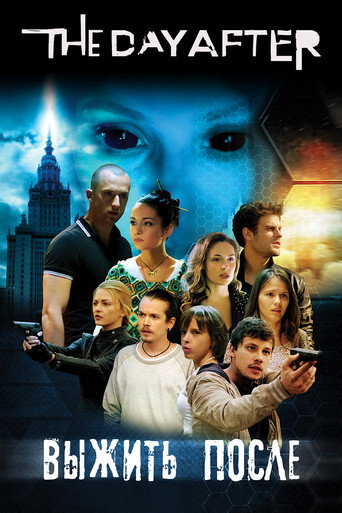
The Day After
Выжить после
2013 · TV series · 48 min episodes · 3 seasons
A drug company, attempting to create a perfect human race, releases a virus which proves to be deadly. People are dying by the thousands, but eleven strangers, who wake up in a bunker with no memory of how they got there, find themselves responsible for determining the future of all mankind.
2 positive2 neutralfrom 4 commenters
Where to watch
No streaming data for this title.



4 comments on Hacker News
But we didn’t blow ourselves back to the stone age in the 50s and 60s. This fate turned out to be not quite as inevitable as “A Canticle” would seem to suggest.
Yet evidence pointing to this outcome was all around us during the Cold War, right up to the late 1980s. Development of new and more potent weapons. Serious accidents or near accidents - one crazy one I remember hearing about was one side almost launching a retaliatory barrage when the radar gave a false positive for an incoming attack. Proxy wars. Opaque succession plans in the USSR, China, North Korea, and Cuba. Sabre-rattling and standoffs all over the world.
In elementary school in the 1970s we didn't have to do "Duck and Cover" but we did have drills involving classes marching in a line down to the basement which had signs marking it as a "Fallout Shelter." Sometimes I still see them. (History: https://www.wgbh.org/news/2018/01/23/local-news/what-do-those-fallout-shelter-signs-actually-mean)
When I got a little older, I can't tell you how unsettling it was to see serious looking people talking on the nightly news about some incident on the North Korean border, or a power struggle in Moscow after Brezhnev died, or how many thousands of ICBMs each side had pointing at each other. How fucked up is it that 15 year old me understood concepts like MIRV (https://armscontrolcenter.org/multiple-independently-targetable-reentry-vehicle-mirv/) or the U.S. maintaining a bunch of B-52s loaded with nukes in the air at all times?
The news we saw and read was reinforced through pop culture that drove home the idea that we would blow ourselves to bits. In high school in the mid-1980s we were assigned Canticle as well as Neville Shute's On The Beach, which follows a similarly depressing narrative (northern hemisphere covered by radiation, southern slowly dying off, what people do as the inevitable gets closer). Red Dawn. Firefox. Reruns of Dr. Strangelove. Or the TV series The Day After.
We couldn't believe it when crowds climbed on the Berlin Wall in November 1989. That's when people were able to rub their eyes and think just maybe we weren't going to kill ourselves.
I as a teen in the 80s, I never believed nuclear war was inevitable, but it was a constant background fear. In the suburbs of Houston, any nighttime lightning-strike waking me up would trigger the thought: "was that a nuclear detonation over the city?"
Those seeking to learn more about the mindset could check out ABC's 'The Day After' miniseries (1983) or the movie 'Miracle Mile' (1988) – which I'd suggest viewing with no other pre-reading other than this recommendation.
Another effective film in the same genre is "The Day After."
https://en.wikipedia.org/wiki/The_Day_After#Effects_on_policymakers
>President Ronald Reagan watched the film more than a month before its screening, on Columbus Day, October 10, 1983.[28] He wrote in his diary that the film was "very effective and left me greatly depressed,"[29][25] and that it changed his mind on the prevailing policy on a "nuclear war".[30] The film was also screened for the Joint Chiefs of Staff. A government advisor who attended the screening, a friend of Meyer's, told him "If you wanted to draw blood, you did it. Those guys sat there like they were turned to stone."[citation needed] Four years later, the Intermediate-Range Nuclear Forces Treaty was signed and in Reagan's memoirs he drew a direct line from the film to the signing.
I remember the ham-fisted "The Day After" miniseries when I was in highschool. It was the biggest TV event since the miniseries "Roots" in the late 70's (watch that and you'll never look at "Reading Rainbow" or Geordi La Forge the same way again). It was a super cheesy depiction of nuclear war and the days that follow.
I was too young for the "duck and cover" drills of the 50's, but my generation (X) knew that global thermonuclear war (heh) had no chance of survival.
Toward the end of the 80's and early 90's, fear of nuclear war tapered off after The Wall came down. In fact, Sagan was harassed by the GOP and Right-wing pundits for claiming that if Saddam burned the oil fields, we would experience a nuclear-winter around the equator.
The 80's were nuts tho: Reagan & Gorby's nuclear standoff was pretty fucking insane in hindsight: mutually assured destruction is in the DNA of the modern right-wing movement.
Jeez, even Sting wrote a #1 hit about it in 1985 using a melodic theme by Prokofiev.
Those were the days?