This is a classic integration / systems type problem. I have a generic "far north" HVAC system (aka killer efficient condensing furnace, mere afterthought of an AC unit) and its connected to an Insteon compatible thermostat via industry standard wiring and protocols (basically residential thermo is 20 mA current loop for heat/fan/cool), and that's connected to misterhouse via the usual insteon RF bridge and controller. Integrating it all is hopeless, like late night infomercials for combination fishing pole/swiss army knife/spark plug wrench gadgets. Its easier to debug industry standard components, also.
I messed around with it some years ago when it was new but haven't permanently implemented anything. I ran into the following problems:
1) UI. When my MiL visits she's at the Asimov-ian technological level where everything I do is at a high enough tech level to be magic, and correspondingly she's scared/intimidated and its all just a non-starter. She still has a round honeywell with a mercury switch at her house and occasionally does the typical woman thing of adjusting it multiple times a day to either 85 or 60 degrees while complaining "it doesn't work". To a lesser extent my wife does the same thing, seeing as they're related I'm not surprised. I've tested it and it works, its just that automatic control even at the simple round honeywell thermostat level is beyond her, pretty much. This will make smart thermostats a hard sell. Magic being interchangeable with Magic, this makes smart thermostats a hard sell to most of the population, why not just put a sticker on the existing thermostat like those stickers that increase cell phone battery life 50% or reduce RF exposure by 100%, or basically the entire audiophile industry in a nutshell, or astrology. I mean a controls engineer KNOWS the bode stability plot analysis of that algorithm is superior, but to the general public its just expensive, much harder to use, astrology. Astrology being cheaper to implement than actual control theory, I guarantee the IoT will be polluted by "smart" things that are actually dumber than "dumb" things, but none the less very well marketed and likely very successful sellers because they'll be cheaper.
2) Improvement is missing. I had some ideas that sucked, but were fun to try. So cycle the ventilation fan on and off at some rate to save energy rather than run all the time. Well that makes the place stuffy and if I wanted a stuffy moldy house I'd have installed a smaller cheaper fan, I'm not paying this kind of mortgage per month to choke or be chilly, etc. I ran into similar problems with messing with temperature control, such that anything I did to alter temperatures MOSTLY just reduced comfort. As far as saving money this was not cheap back then and probably not even now, and I should have spent a couple $$$ on yet more insulation, or even newer windows, or an ever more efficient furnace, etc. The one protocol that was a winner WRT comfort was slightly warmer temps in the morning when getting up and gradual lowering by bedtime. A lot of IoT projects are like this, very techno cool nerdy impressive display of hard work and solved engineering problems, but none the less completely utterly useless in practice. Why, if I spend $300 and a lot of hours, I can turn my nice comfy house into a drafty/stuffy dump, but its cheaper just to spend $100K less on the house if you want to slum it.
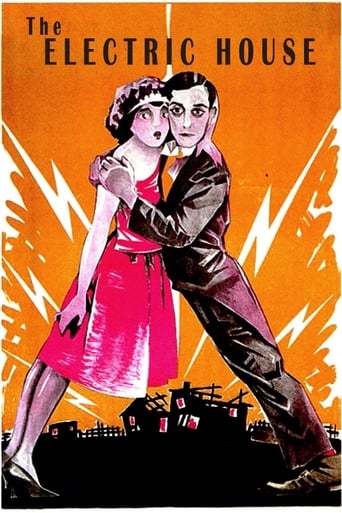
Anyone talking about IoT should be required to watch the black and white (free) Buster Keaton movie from about a century ago titled "electric house". There's nothing new under the sun and back when electrification was a "thing" there were plenty of crazy gadget ideas that could be made fun of (see the movie) but had no long term impact. A century from now, 99%+ of IoT will look to the future like Keaton's "electric house" looks to us. There is another immense insight to "electric house" movie that arguably the biggest impact of electricity to daily life is the microwave oven, which obviously was not predictable. If there is any high impact IoT device in the future, it won't be the 24352th model of thermostat, it'll be something unimaginable today, or at least unimaginable to almost everyone. Aside from the multiple learning aspects, Buster Keaton is hilarious so its worth the time.
 Hacker Cinema






1 comment on Hacker News
This is a classic integration / systems type problem. I have a generic "far north" HVAC system (aka killer efficient condensing furnace, mere afterthought of an AC unit) and its connected to an Insteon compatible thermostat via industry standard wiring and protocols (basically residential thermo is 20 mA current loop for heat/fan/cool), and that's connected to misterhouse via the usual insteon RF bridge and controller. Integrating it all is hopeless, like late night infomercials for combination fishing pole/swiss army knife/spark plug wrench gadgets. Its easier to debug industry standard components, also.
I messed around with it some years ago when it was new but haven't permanently implemented anything. I ran into the following problems:
1) UI. When my MiL visits she's at the Asimov-ian technological level where everything I do is at a high enough tech level to be magic, and correspondingly she's scared/intimidated and its all just a non-starter. She still has a round honeywell with a mercury switch at her house and occasionally does the typical woman thing of adjusting it multiple times a day to either 85 or 60 degrees while complaining "it doesn't work". To a lesser extent my wife does the same thing, seeing as they're related I'm not surprised. I've tested it and it works, its just that automatic control even at the simple round honeywell thermostat level is beyond her, pretty much. This will make smart thermostats a hard sell. Magic being interchangeable with Magic, this makes smart thermostats a hard sell to most of the population, why not just put a sticker on the existing thermostat like those stickers that increase cell phone battery life 50% or reduce RF exposure by 100%, or basically the entire audiophile industry in a nutshell, or astrology. I mean a controls engineer KNOWS the bode stability plot analysis of that algorithm is superior, but to the general public its just expensive, much harder to use, astrology. Astrology being cheaper to implement than actual control theory, I guarantee the IoT will be polluted by "smart" things that are actually dumber than "dumb" things, but none the less very well marketed and likely very successful sellers because they'll be cheaper.
2) Improvement is missing. I had some ideas that sucked, but were fun to try. So cycle the ventilation fan on and off at some rate to save energy rather than run all the time. Well that makes the place stuffy and if I wanted a stuffy moldy house I'd have installed a smaller cheaper fan, I'm not paying this kind of mortgage per month to choke or be chilly, etc. I ran into similar problems with messing with temperature control, such that anything I did to alter temperatures MOSTLY just reduced comfort. As far as saving money this was not cheap back then and probably not even now, and I should have spent a couple $$$ on yet more insulation, or even newer windows, or an ever more efficient furnace, etc. The one protocol that was a winner WRT comfort was slightly warmer temps in the morning when getting up and gradual lowering by bedtime. A lot of IoT projects are like this, very techno cool nerdy impressive display of hard work and solved engineering problems, but none the less completely utterly useless in practice. Why, if I spend $300 and a lot of hours, I can turn my nice comfy house into a drafty/stuffy dump, but its cheaper just to spend $100K less on the house if you want to slum it.
Anyone talking about IoT should be required to watch the black and white (free) Buster Keaton movie from about a century ago titled "electric house". There's nothing new under the sun and back when electrification was a "thing" there were plenty of crazy gadget ideas that could be made fun of (see the movie) but had no long term impact. A century from now, 99%+ of IoT will look to the future like Keaton's "electric house" looks to us. There is another immense insight to "electric house" movie that arguably the biggest impact of electricity to daily life is the microwave oven, which obviously was not predictable. If there is any high impact IoT device in the future, it won't be the 24352th model of thermostat, it'll be something unimaginable today, or at least unimaginable to almost everyone. Aside from the multiple learning aspects, Buster Keaton is hilarious so its worth the time.