 Hacker Cinema
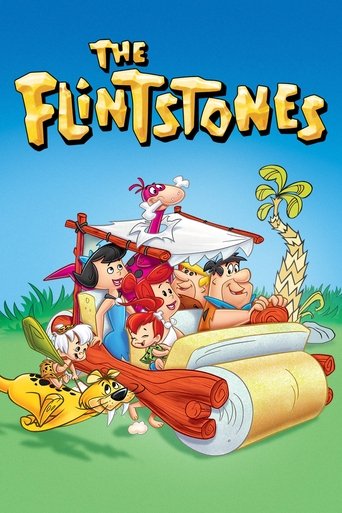
The Flintstones
1960 · TV series · 25 min episodes · 6 seasons
Created by William Hanna, Joseph Barbera
The misadventures of two modern-day Stone Age families, the Flintstones and the Rubbles.
1 positive16 neutralfrom 17 commenters
Where to watch
No streaming data for this title.



17 comments on Hacker News
Somehow, it always triggers my skepticism when supposedly sociobiological or evolutionary anthropological or evolutionary psychological arguments are brought up. My suspicion is that it is far too easy to simply pack in the story you want to have in there. I can think of dozens of objections to your description. For example, in small groups, the social game in terms of status may not be that complex, and the choice for pairings may be very limited.
I'll leave it at that because I don't want to write a novel. But when I look at your description, I don't see any plausibility at all. I only see projections. Like in The Flintstones or in old movies about Stone Age people, who have strangely short haircuts and go hunting the way people go to work today. What I mean is: the social dynamics you're assuming here may be primarily shaped by your experiences in the present and are far from as universal as you believe.
I recall encountering this in the 70's, on a Flintstones episode from the 60's where a scene referenced Mrs. Fred Flintstone and Mrs. Barney Rubble. Confused the heck out of me at a young age.
Did we really need to research this? An early televised documentary series, The Flintstones, made this clear more than 60 years ago.
It sometimes beautifully worked across seasons as in "The Puffy Shirt" (where George becomes a hand model).
I think this was mostly Larry David's work. Jason Alexander once mentioned in an interview that after David left, this "dovetailing" of story lines kind of stopped, and I tend to agree. David continued it (even more pronounced) in "Curb Your Enthusiasm". Even the golf ball twist was kind of repeated - in extreme form and with a baseball - in "Curb".
Side note: another early TV show that often pulled this off to great effect was "The Honeymooners". I think this is the show that had the most influence on Seinfeld. Ed Norton is basically Kramer, Ralph Kramden is basically George, Alice is Elaine, and Alice's mother is Newman (you can also map "The Honeymooners" characters, and even entire plot lines, to "The Flintstones", but that is another story, and AFAIK Jacky Gleason, the creator of "The Honeymooners", considered suing Hanna-Barbera in the 60ies).
Jerry Seinfeld himself once said that we should wait and see if "Seinfeld" is still funny in 50 years like "The Honeymooners" (that was 20 years ago).
"Fawlty Towers" also did this very well.
It's a "problem" nearly as old as America. One of the scapegoats much touted in handbills and pamphlets of the "ills of society" that led to Prohibition in the US was that "fathers spend too much time in the pubs drinking alcohol after work rather than at home raising children".
It was the source of many jokes in sitcoms in the 1960s, too, not just the 80s, including notably what we think of today as a "kid's show" (despite being a primetime show when aired) in that it was a recurring thing in The Flintstones.
The Flintstones were on television, in a prime-time slot, three decades before the Simpsons. Wikipedia lists more North American adult TV shows from before 1990.[1]
The Simpsons are important in the history of animation, but however you look at it they were definitely not the first to explore animation for adults. They weren’t the first in their own country, nor were they first on a regular non-kids schedule on TV, nor were they the first successful case.
[1]: https://en.wikipedia.org/wiki/List_of_adult_animated_television_series_before_1990
Shifting gender roles probably played a part as well.
I'm sure there are sitcom examples from the 50s/60s as well but look at even a show like The Flintstones. The guys are down at the lodge while the women look after the kids. Yes, it's just a cartoon, but that sort of working class lifestyle wasn't fabricated out of whole cloth.
My very limited exposure to such places in recent times--for a time I played in a work softball league at a Knights of Columbus location--was that they were very past their prime.
???
This isn't abandoned art.
> The “Looney Tunes” and “Flintstones” content was licensed to HBO Max from Warner Bros. under an intra-company deal. Those licensing agreements expired at the end of 2022 and HBO Max did not renew them, as it seeks to reduce content expenses.
Warner doesn't seem to be abandoning those episodes.
My father (born in 1921 and a WW2 vet) was a machinist, a trade he actually enjoyed. But he lectured me as a child to know the difference between a “vocation” and an “avocation” using those exact words. Perhaps this was something that was taught to his generation in school since a lot of work back then was in the factories. So, he made it a point to be involved in bowling leagues, men’s clubs, church choir, etc. in his free time, just like many of his friends and coworkers. Just watch a couple of episodes of the Flintstones and you will see what life was like 50+ years ago. This whole concept of having a life and serious interests outside of work has been mostly lost—but it needs to come back for our collective sanity. The book “Bowling Alone” written on this topic a few years ago is worth reading.
Of course, while the men were out having an avocation, the mothers stayed home with the kids. Now, some sharing of those duties needs to happen. But it is really important.
Everything's a composite. Unless there's a writers room book on it (and I don't think there is), anything else is speculation.
In the context of comedy, to be specific, she seemed to be a composite of the Maxwell car and Rochester from the Jack Benny Show mixed with the 1950s sitcom Beulah. The sarcastic Yiddish Brooklynite is a generalized trait that got put on a bunch of characters (Ethel Mertz, the honeymooners, bugs bunny, Frank Nelson, the mother-in-law etc)
Maybe there's a definitive interview in some trade magazine somewhere. It's not as immediately direct as "The Flintstones is The Honeymooners"
The Flintstones was in effect an animated remake of popular live-action TV series The Honeymooners, with the stone-age setting as just an added quirky facade to get easy jokes out of. It was, needless to say, never meant as an actual reference to any actual stone-age.
Compare this to, say, Dinosaurs, which (while in many ways similar to The Flintstones) had actual references to contemporary events and phenomena.
Totally agree, and I also generally find the article poorly written. I would reduce it to the following statements: 1. HBO is not showing the entire Tom and Jerry collection, which is bad because even though some episodes contain offensive stereotypes the show is culturally significant and unavailable elsewhere. 2. HBO streaming has bad UX.
Most of the article seems devoted to 1 and focused on the 'cancel culture' reasons why HBO might not be showing the full catalog while also admitting that there is also a large amount of the catalog not on HBO that is not plausibly part of the several episodes that would be targeted for being cancelled. Seems like the premise of the article kind of falls apart at that point, a little self-refuting.
Having the Jetsons and Flintstones on streaming has been a blast for me as well.
> cartoons were the purview of kids - (the thinking went) no self-respecting adult would watch cartoons ... Simpsons had to pave the way for cartoons being aimed at mature audiences, and not just the Saturday morning kids slot.
This just isn't true - the Flintstones was prime-time back in 1960, shown at 8:30pm, exactly the same slot as the Simpsons. Fred and Wilma were shown in bed together. That was almost thirty years before the Simpsons.
> Bart Simpson says "Hell" in one of the earlier episodes
And Wilma said 'bollocks' in a Flintstones episode!
Website overloaded... here's a cache.
http://webcache.googleusercontent.com/search?q=cache%3Ahttps%3A%2F%2Fweb.law.duke.edu%2Fcspd%2Fpublicdomainday%2F2017%2Fpre-1976
"What books would be entering the public domain if we had the pre-1978 copyright laws?"
Harper Lee, To Kill a Mockingbird John Updike, Rabbit, Run Joy Adamson, Born Free: A Lioness of Two Worlds William L. Shirer, The Rise and Fall of the Third Reich: A History of Nazi Germany Friedrich A. Hayek, The Constitution of Liberty Daniel Bell, The End of Ideology: On the Exhaustion of Political Ideas in the Fifties Arthur M. Schlesinger, Jr., The Politics of Upheaval: The Age of Roosevelt Dr. Seuss, Green Eggs and Ham and One Fish Two Fish Red Fish Blue Fish Scott O’Dell, Island of the Blue Dolphins John Barth, The Sot-Weed Factor Jean-Paul Sartre, Critique de la raison dialectique
"Consider the films and television shows from 1960 that would have become available this year."
The Time Machine Psycho Spartacus Exodus The Apartment Inherit the Wind The Magnificent Seven Ocean’s 11 The Alamo The Andy Griffith Show (first episodes) The Flintstones (first episodes)
Also listed: songs from 1960 (e.g. Elvis's "It's Now or Never"), and copyrighted scientific research from 1960 still behind paywalls (e.g. 1960 papers on the structure of hemoglobin and myoglobin).
> Flintstones was a cartoon, not a documentary.
Go ahead and shatter my illusions, why don't you.
Cars never rolled on stone wheels. Flintstones was a cartoon, not a documentary.
painting by numbers (art by demographic statistics): http://www.amazon.com/Painting-Numbers-Komar-Melamids-Scientific/dp/0520218612
When I was 10, The Flintstones had an episode about this. Fred and Barney gathered statistics about what people wanted in a song, and then composed it. They catered to all subjects, and a punchline was that one of them was "mothers-in-law". The song was terrible; the main message seemed to be that such art lacks integrity (not in an ethical sense, but in a sense of fitting together, being whole, being one thing). Of course, such lack isn't necessary (eg. the Monkees had some great songs), but it is much harder than speaking out of a deeper truth. Perhaps it's like the flow of writing off the top of your head vs. over-editing and getting a patchwork of concepts and mismatched conjugations.
I've always liked the idea of a work being both popular and critically acclaimed (who doesn't?). I do think there's a thrill in doing something that is very cool to yourself; but there is also a thrill in doing something that is truly valuable to people. Both can be aspects of the heroic journey, of serving something greater than oneself: serving an idea, or serving a community.
But I think this may be a little different for art (which Sivers is talking about) and software (which I'm (mainly) talking about).