 Hacker Cinema
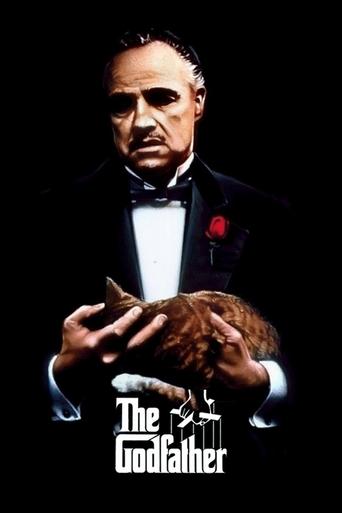
The Godfather
1972 · Film · 175 min
Part of The Godfather Collection
Directed by Francis Ford Coppola
Spanning the years 1945 to 1955, a chronicle of the fictional Italian-American Corleone crime family. When organized crime family patriarch, Vito Corleone barely survives an attempt on his life, his youngest son, Michael steps in to take care of the would-be killers, launching a campaign of bloody revenge.
86 positive10 negative3 mixed151 neutralfrom 250 commenters
Where to watch
No streaming data for this title.
271 comments on Hacker News
I remember when I read the original story by Stephen King, I thought it was one of the best stories ever.
A year later, I saw the movie at a rental store. I had totally forgotten the name of the Stephen King story and rented it only because I knew it had been nominated for the Oscars.
30 minutes in, I said "This seems familiar!" And then "Oh, I bet this will be a great movie." It was.
I think it's worthy of being amongst the top. It has elements that appeal to a broad audience (not boxed into a specific genre). Great story. Great narration. Great cinematography and sound.
The only other movies in the Top 10 that I think could be ranked higher are The Godfather (which for many years was the top ranked), and The Good, The Bad and The Ugly. For both of these movies, I know a lot more people who didn't like them. I only know one person who didn't like The Shawshank Redemption.
Film (and television) seems studiously underrepresented given the presence of authors, playwrights, poets, and musicians. Musicals are also absent.
I'd also suggest that cultural impact plays a strong part in Homer's prominence. The American Homer would probably be older rather than more recent (at least by present reckoning).
Francis Ford Coppola / Mario Puzo, The Godfather; Michael Curtiz, Casablanca; Steven Speilberg; Orson Welles, Citizen Kane; Richard Rodgers and Oscar Hammerstein, Oklahoma!, South Pacific, The Sound of Music, etc., might make my list.
Mostly agree, but I think the modern medium is film/TV, not just American. Also, apparently The Godfather book wasn't very good, but I've seen the movie so many times.
The American medium is film/TV. The Godfather is the great American novel. A story about immigrants moving to America and starting a family business.
> I think in the near future, people will start filtering out movies that have a non-trivial share created by AI.
I'm not _sure_ that's true? "Most people" know that McDonalds don't make the best burgers in their city - probably not even the best burgers in their neighbourhood. But they do make burgers that are reliably the same and for heaps of people "good enough" when things like price and availability and consistency are taken into account. And I don't blame then for that, for those people burger quality is a think that value less then me, and convenience is something they value more than me. They're not "wrong" just different.
Some of us will. I'm more concerned personally with books and music, and go well out of my way to make sure I'm buying then from "real people"(tm). The last few years most of my in cinema movie watching has been at a local cinema that screens classic movies. Recently I've seen a 70mm print of 2001 A Space Odyssey, 35mm prints of Blade Runner and Godfather. Last week we went to see the original Matrix I _know_ I'm not watching much AI generates film.
The funny thing about The Godfather is that the movie made the book possible, in a way.
Paramount optioned the novel while Mario Puzo was still writing it. They heard about an early 60-page draft of the book from a literary scout. Mario Puzo was deep in gambling debt and took the option deal because he was desperate for cash. There's a chance Puzo couldn't have finished the book without the deal, because he got a $12,500 advance and would get another $80k if the movie got made.
Paramount announced the option deal in March 1967, two years before the book was published. After it was published they put the movie into production.
Mario Puzo and Francis Ford Coppola are the credited screenwriters for the movie. Puzo wrote drafts, Coppola revised them. It was Coppola's idea to start the movie with the line "I believe in America", to highlight what he felt was one of the story's core themes. In the book that scene happens a few chapters in.
So yeah, the book was kinda pulpy and schlocky. But it may never have been published without Hollywood backing. And its author was also half-responsible for turning it into a near-universally acclaimed screenplay.
https://en.wikipedia.org/wiki/The_Godfather#Production
Those are great, but The Godfather is my favorite example. The book is, honestly, terrible. The prose is bad. It focuses almost exclusively on the salacious - does it need to tell us that many times about the size of Sonny's cock? - and enjoys the violence a bit too much. None of the minor characters leave any impression at all. The movie, though, is... The Godfather. It transcends it's source, without transposing or changing anything - in fact, I suspect it's far more faithful to its historical setting than the novel - more fully than any adaptation I'm aware of.
Here’s how it applies to the top 10 movies on IMDb
Shawshank redemption: the well liked male protagonist righteously murders his wife for cheating on him
The Godfather: pretty much encapsulates all of my requirements
12 angry men: no women
Original LOTR: Does women characters incredibly well
Pulp fiction: Mia is in there for a few key scenes, no nonsense
The good, the bad and the ugly: self explanatory. Great male characters
Forest gump: Jenny might be the greatest villain ever for her promiscuity
I can go on and on. All these movies have gravitas. You won’t see any movie post 2015 even crack the top 100 (besides Parasite but that isn’t Hollywood) because that’s about when they lost the plot.
I think that it's been happening for a while. Movies in the 70s and 60s tended to have more pause in the dialogue, more silence than movies in early 2000s.
Take a movie like the Godfather, it had a 8.4 seconds average shot length compared to the Departed 3 second average shot length.
I've noticed my parents no longer having the patience for movies with longer average shot length despite having been young during the era when movies were less fast paced.
[1] https://cinemetrics.uchicago.edu/movie/2732f3f8-f0d4-43f7-a0c7-ff5ccce451d0
[2] https://cinemetrics.uchicago.edu/movie/9d17ce68-0d48-45cc-89dd-7cadd53b293d
Hard disagree about declarative "X is Y". It's a failure of weakening attention span. There are plenty of excellent long movies:
- Once Upon a Time in America (1984) 3:49
- Lawrence of Arabia (1962) 3:47
- The Irishman (2019) 3:29
- Malcolm X (1992) 3:22
- The Godfather Part II (1974) 3:22
- The Lord of the Rings: The Return of the King (2003) 3:21
- Schindler's List (1992) 3:15
- Gandhi (1982) 3:11
- The Green Mile (1999) 3:09
- The Deer Hunter (1978) 3:03
- The Lord of the Rings: The Two Towers (2002) 2:59
- The Lord of the Rings: The Fellowship of the Ring (2001) 2:58
- Casino (1995) 2:58
- Braveheart (1995) 2:58
- The Godfather (1972) 2:55
- Django Unchained (2012) 2:45
What I most object to is lazy storytelling for lazy, second-screen audiences lacking in style and subtlety having a robotic, spoon-fed, infantile, unnatural, expository narration quality in every character like it's a commercial for an antacid.
> If there is no objectivity....then you would have no basis to explain why a film is better or worse than another
This is indeed the case. You can consult many film experts and get very different top ten lists. Some critics may hate The Godfather. Some won't get Citizen Kane. Some love a good popcorn fluff movie and find this year's Oscar contenders pretentious.
It becomes a matter of general consensus. And that consensus appears to be that it's a pretty satisfying movie; https://www.rottentomatoes.com/m/project_hail_mary. (High art? No. But that wasn't its goal.)
Exactly my sentiment. Someone else ITT mentioned Everything Everywhere as a thought provoking, good movie. Does anyone actually believe that movie will be discussed in ten years? Because I know The Godfather still will be.
Cultural media output is absolutely in decline, and I think only someone not well-read could think otherwise about literature, and likewise for other media.
It's not now a situation of cream having not yet risen. I don't believe there are myriad hidden gems anymore. Bodies who are meant to discern the cream are coming up empty. The Oscars are full of bad movies now. Pulitzer prizes in literature are awarded to poor works. Hugo and Nebula books are horrendous. We have lost the culture of the literary, and it is very obvious to anyone well read. What's worse is the large majority of people don't even know what well-read is; they have consumed a critical mass of slop sci-fi airport novels and think this is somehow equivalent expertise to absorbing the classics.
Full text: https://scrapsfromtheloft.com/movies/the-godfather-arthur-schlesinger-jr-vogue/
The movie casts a spell far beyond its merits. Warner Brothers would have made it thirty-five years ago as a hundred-minute feature, lively, brilliantly paced, and economical. Now, in the reverent hands of Francis Ford Coppola, it has swelled into an overblown, pretentious, slow, and ultimately tedious three-hour quasi-epic. Gangsters at last have their Greatest Story Ever Told, but minus George Stevens. Inflation does not always assure survival. My guess is that three years from now we will still remember scenes from Raoul Walsh’s The Roaring Twenties (1939) while The Godfather will have become a vague memory.
The core story of Gatsby is better told in the Godfather films. Protagonist desires to find his place in the world and protect his family, first by doing things the socially acceptable ways and then by following a life of crime. In the end, he ends up alone. This is the American answer to a modern problem. Workaholics spend all day (and night) to support their families. Their families feel neglected and the breadwinner ends up alone.
Arguably there are lots of films which could have done with being 4-5 hours long, and were compressed to match conventions and hardware limits for 'movies'.
Lots of novelizations fall into this category. Most decently dense and serious novels cannot be done justice to in 2 hours. The new TV formats have enabled substantial stories to be told well.
The Godfather parts I and II is just one story cut in half in a convenient place. Why not cut it into 4 50 minute eps and an 80 minute finale? (Edit: this substantially underestimates the running time of the first two Godfather movies!)
People are going to pause your thing to go to the toilet anyway. You might as well indicate to them when's a good time to do so.
Obviously there are also quite a few movies where 90 minutes is plenty. Both formats seem needed.
That choice was made long before Scorsese made The Godfather; and so has virtually every other movie made over the past century.
Real artists understand the limits of the medium they're working in and shape their creations to exist within it. So even if there was no artistic or technical merit in the choice to standardize on 24 FPS, the choice to standardize on 24 FPS shaped the media that came after it. Which means it's gained merit it didn't have when it was initially standardized upon.
My opinion is mostly based on old interviews with Coppola when he was asked why he would make Godfather with Paramount and not United Artists. He said Paramount doesn't care about movies, they are bankers and only care about money. They would not interfere at all with his artistic direction. And they didn't.
Now that we have the Ellison, I don't know anymore. His daughter is excellent, but with a different studio. His son has no idea. Maybe it's good, maybe it's bad. We'll see.
My European colleagues are mostly worried about more MAGA nonsense in the media with the Ellisons
> it’s only about 2-3 times a year that anything comes out worth seeing.
This was probably always true, with some randomly amazing years every now and again, like 1972 (The Godfather, Cabaret, Deliverance, What's Up Doc?,...).
IMDB listing shows 470 films released US in 1972. Google says there are ~3,900 IMDB entries for 1972 (why the 4X discrepancy?). The hit ratio was veeeery small even in killer years.
This was inevitable. Technology was bound to catch up. Hollywood actually panicked in the 1960s. But those screens were tiny. Nobody wants to see the Godfather on a cheap 1974 Panasonic.
But TV today is at least 55 inch and in crisp 4k resolution. A modern TV is good enough for most content.
It is not Netflix that killed the movieplex. They were just the first to utilise the new tools. The movie theater became the steam locomotive.
> The Netflix catalog is full of not so good movies, and the video rental shops in the 90s were too.
I subscribed to Netflix for a year or two when the platform became popular, but I quickly realized it resembles those old school rental shops too much. Yes, you could get some popular classics like The Godfather or Goodfellas, but apart from that you were stuck with another crime story or a comedy with Steve Martin or John Candy. Actually, my analogy may not be 100% fortunate, because I still have good memories about watching these comedies as a kid with my dad. Now I wouldn't have time and patience to go through movies of "that" quality. Anyhow, my point is that you were very unlikely to get there anything that wasn't already proved to be popular. Forget about anything more niche / arthouse. Netflix has produced plenty by itself, but how many of those movies are actually any good? I remember a handful of them: Marriage Story, Roma, Don't Look Up and a movie for kids called Okja.
> When they encounter a problem, they should use their superior problem-solving ability to solve it.
This sentence doesn't make sense in the context of human emotions. It's a category error.
Closest approximation: imagine someone asking Reddit, "How do I beat the main boss in the movie The Godfather?"
> I'm seeing the downvotes. I'm sorry folks feel that way. I'm regretting my honesty.
What honesty? We're not at the point of "the Godfather was a good/bad movie", we're at "no, trust, there's a really good movie called the Godfather".
Your honesty means nothing for an issue that isn't about taste or mostly subjectivness. How useful AI is and in what way is a technical discussion where the meat of the subject matter is. You've shared nothing on that front. I am not saying you have to, but like obviously people are going to downvote you - not because they might agree/disagree but because it's contributed nothing different from every other ai-hype man selling a course or something.
This includes movies "streamed or distributed" by Netflix. Like the parent mentioned, Netflix has streamed the Godfather.
If you click through the movies on that list, you will find that almost none of them were actually produced by Netflix.
Movies produced by Netflix are highly likely to be as described, with a small handful of exceptions.
> There is a meme going around from a “Family Guy” episode in which Peter, the animated comedy’s paterfamilias, confesses to his family that he never cared for “The Godfather.” Why not? “It insists upon itself,” he says with a shrug. A lot of recent productions deserve this scorn—literally. It’s gotten so bad that, lately, the highest compliment I can muster for even the best of them is: “Well, at least it’s a movie.”
man never thought I'd see that meme continue to live on, or get cited in the New Yorker
Where did I refuse to watch anything? No amount of this attitude is going to make Casablanca or The Godfather or Pulp Fiction or Infinity War or Star Wars or Fight Club or 2001 or Top Gun be in any framerate other than 24fps.
If they start making films in higher frame rates today, that won’t change that fact. Do you think people are going to stop watching films from the 50s, 60s, 70s, 80s, 90s, and 2000s?
It would take a concerted effort, beginning now, at least an entire generation (30-50 years) to remove or reduce the cultural impact of the 24 frames per second widescreen tradition. No such effort is presently underway, because higher framerates don’t help movies’ visual storytelling, and they may hurt it.
The Hobbit was Peter Jackson’s attempt. It went nowhere.
https://gizmodo.com/the-hobbit-an-unexpected-masterclass-in-why-48-fps-fai-5969817
I would love to see the Chicago Symphony Orchestra play the classical music in "What's Opera, Doc?" and other Looney Tunes classics. Saw them do that with The Godfather and a couple other full-length films which was great.
>>It makes me wonder if people today (especially younger people) would be able to watch a movie like the Godfather? I have doubts.
Last time I watched the movie 'The Irishman' with family, they all seem pretty tuned out by 15 mins.
It does feel like like addiction to reels/tiktok does have its toll. For that matter, due to Twitter exposure, I do have problems reading books.
When I probed ChatGPT a little, it tells me writing with a real pen and paper is now a super power as it lets you move slowly, pause, think etc.
I recently went to the theater with my wife to see the new Karate Kid movie. We discussed it a bit after, and I said it felt a bit rushed. Like, the character goes from being in a Chinese kung fu temple, to being in the US, with a girlfriend - and an enemy - in the first 10 minutes of the movie.
She made a really good point: we're in the TikTok era.
After she said this, it made much more sense. The whole movie felt like "reels" stitched together, with no scene lasting longer than 5 minutes.
It makes me wonder if people today (especially younger people) would be able to watch a movie like the Godfather? I have doubts.
Honestly, I'm terrified of where we are heading as a species.
The current US copyright duration is 70 years after the life of the author. This is absolutely bonkers. 50 years from publication would be a significant improvement.
50 years ago was 1975. If copyright were limited to 50 years, we'd be looking at all of the Beatles works being in the public domain. We'd be midway though Led Zeppelin, and a lot of the best work from Pink Floyd and the Rolling Stones.
Also, Superman, Batman, and Spider-Man. Disney would still profit from the MCU films which they produced in the 2010's, but they couldn't stop you from releasing your own Batman vs Spider-Man story.
The Harry Potter books would still belong to JK Rowling, but the Narnia stories would be available for all.
The Godfather 1 and 2 would be in the public domain, as would be original Star Trek TV show, and we'd be coming up on Star Wars pretty soon.
If there were no copyright protection, these works wouldn't have been created. It is good that Paul McCartney and George Lucas and JK Rowling have profited from their creative output. It would be okay if they only profited for the first 50 years. Nobody is counting on revenue over half a century in the future when they create a work of art today.
This is our culture. It should belong to all of us.
Quibbling about this specific subculture / fashion trend aside, the original post with its pearl-clutching highfalutin language is funny for its naïveté.
Every so-called safe, educated, and cooperative society has a love for the renegade. Pirates and the Wild West. Outlaw bikers and gangsta rap. The Godfather frequently ranks as the best (American) film ever directed. In fact, the United States’ central mythos is built on venerating rules-breaking bad boys who bucked the system. You want to talk other cultures? Cossacks, ronin, bandits of the Water Margin, highwaymen, bushrangers.
Yes, there’s a whole spectrum of cultures and archetypes here, but to decry “this symbology”? Good luck, you’ll have to remove whatever deep-seated part of human psychology that is fascinated by the conventions-breaking wild and free.
This is kind of a cute thing that wanna-be-rebels may enjoy trying on, much like some hipster who buys a leather jacket. But you don't. Believe me. You don't.
But for fun, go pay for a legit ticket to watch a movie like "The Godfather" or "The Irishman." Count the dead bodies.
You’re describing something real; I’m a screenwriter and have worked on studio films where this kind of character arc was encouraged. (I wouldn’t call it a distinct structure because it can be mapped onto a very similar, traditional three-part framework.) It is, however, very much not an artistic decision. The reason for the prevalence of this arc in expensive, family-oriented movies is because studio executives (or worse, the CEs at production companies) are uncomfortable with characters who make bad choices, and think audiences will reject them. Maybe they’re not wrong— but this is a relatively recent development and one of the thousand reasons why movies have become so boring.
More satisfying (in my opinion) arcs tend to follow a psychoanalytic path: a character with some unaddressed pathological issue ends up in a serious crisis. The crisis forces them to acknowledge the issue and change slightly. The difference between a comedy and a tragedy is that in a tragedy, the change happens too late. (An interesting variant in tragedy is that the change happens in time, but unexpectedly turns out for the worse—think of the end of The Godfather.)
Sure, no problem, never bothered by disagreement over art/entertainment. I appreciate the perspective. And sure, I’d not put many of these near the tier of, say, a Godfather or a Passion of Joan of Arc. Only a few anywhere near an Alien, for that matter.
> That’s why the snap at the end of Avengers: Infinity War was spectacle but didn’t have the emotional impact of a single deer being shot at the beginning of Bambi.
God, truth, and all the more effective a comparison for me because I happened to re-watch Bambi within the last week.
Marvel movies rarely achieve even that lesser connection, maybe a half-dozen times in the thirty-whatever movies.
If you think this is dense, try Italy some time. Huge numbers of highly distinct dialects, because until the mid-1800s Italians spoke huge numbers of entirely different languages, complete with their own full literature traditions. During unification the country settled on Florence's language (the language of Dante) as the "official" language: but everyone still proudly speaks their own language. To my knowledge, Italy is regarded as the densest diverse dialect region in Europe.
How different? What Americans call arugula the British call rocket. Because the British word is derived from the French roquette, which is from ruchetta, a word in italian dialects along the French border. But Americans got their word from aruculu in the southern Calabrese dialect, a result of immigration. The Italian word is rucola, from the Latin eruca.
Americans think "Capeesh" is an Italian word because they heard it in The Godfather. But it's not: it's Sicilian, as is much of the film.
Compared to..citizen's kane, godfather, 2001 a space odyssey, basically any of the older "top" movies.
I punched in 1972 and there were some fantastic movies that year (The Godfather, Deliverance, Cabaret, Solaris, Jeremiah Johnson, Aguirre - the Wrath of God, The Last House on the Left, Silent Running, The Heartbreak Kid, Fat City, etc.).
Also tried 1973 — same (The Day of the Jackal, Soylent Green, Westworld, The Wicker Man, Papillon, American Graffiti, The Sting, Serpico, Mean Streets, High Plains Drifter, Don't Look Now, Badlands, The Long Goodbye, Jesus Christ Superstar, The Three Musketeers, Fantastic Planet, etc.).
I think they simply made better movies decades ago.
> These LLMs are polymaths that can spit out content at a super human rate.
Do you mean in theory or currently? Because currently, LLMs make simple errors (eg [1]) and are more capable of spitting out, well, nonsense. I think it's safe to say we're a long way from LLMs producing anything creatively good.
I'll put it this way: you won't be getting The Godfather from LLMs anytime soon but you can probably get an industrial film with generic music that tells you how to safely handle solvents, maybe.
Computers are generally good at doing math but LLMs generally aren't [2] and that really demonstrates the weaknesses in this statistical approach. ChatGPT (as one example) doesn't understand what numbers are or how to multiply them. It relies seeing similar answers to derive a likely answer so it often gets the first and large digits of the answer correct but not the middle. You can't keep scaling the input data to have it see every possible math question. That's just not practical.
Now multiplying two large numbers is a solvable problem. Counting Rs in strawberry is a solvable problem. But statistical LLMs are going to have a massive long tail of these problems. It's really going to take the next generational change to make progress.
[1]: https://www.inc.com/kit-eaton/how-many-rs-in-strawberry-this-ai-cant-tell-you.html
[2]: https://www.reachcapital.com/2024/07/16/why-llms-are-bad-at-math-and-how-they-can-be-better/
This is the plot of "The Freshman", which is an excellent movie. Starring Matthew Broderick, and featuring Marlon Brando parodying himself in The Godfather!
For convenience, I asked ChatGPT to create this table, which summarizes how many times each movie has been mentioned in this conversation so far. It got a few counts wrong (as usual), but it still gives a good sense of the frequency. I hope it can be useful to someone:
| Movie | Number of Mentions | |-------------------------------------------|---------------------| | The Matrix | 9 | | Lord of the Rings Trilogy | 8 | | Pulp Fiction | 8 | | Alien | 7 | | Fight Club | 7 | | Ghostbusters | 6 | | Die Hard | 5 | | Back to the Future | 5 | | Inception | 5 | | Star Wars Trilogy (original) | 5 | | Groundhog Day | 5 | | Terminator 1 & 2 | 5 | | Jurassic Park | 4 | | The Thing | 4 | | The Fifth Element | 4 | | Monty Python and the Holy Grail | 4 | | Ghost in the Shell | 4 | | Interstellar | 4 | | Casablanca | 3 | | Office Space | 3 | | Shawshank Redemption | 3 | | The Godfather Trilogy | 3 | | The Blues Brothers | 3 | | Blade Runner | 3 | | Mad Max: Fury Road | 3 | | Unforgiven | 3 | | Total Recall (1990) | 3 | | The Crow | 3 | | The Princess Bride | 3 | | Akira | 3 | | The Big Lebowski | 3 | | Guardians of the Galaxy | 3 | | American Psycho | 3 | | Indiana Jones Trilogy | 3 | | Kiki’s Delivery Service | 2 | | Ratatouille | 2 | | A Clockwork Orange | 2 | | Mission Impossible (various) | 2 | | Casino Royale | 2 | | Skyfall | 2 | | Ferris Bueller's Day Off | 2 | | Star Trek: The Wrath of Khan | 2 | | Apocalypse Now | 2 | | The Shining | 2 | | Groundhog Day | 2 | | Donnie Darko | 2 | | Dune (2021) | 2 | | Gladiator | 2 | | Predator | 2 | | Seven/Se7en | 2 | | The Dark Knight | 2 | | Snatch | 2 | | Prometheus | 2 | | Schindler’s List | 2 | | The Wolf of Wall Street | 2 | | Dr. Strangelove | 2 | | Silence of the Lambs | 2 | | Kill Bill | 2 | | Real Genius | 2 | | Top Secret! | 2 | | Tenet | 2 | | Tinker Tailor Soldier Spy | 2 | | The Adjustment Bureau | 2 | | The Expanse | 2 | | Pulp Fiction | 2 |
Hunt for Red October
The Outpost
Master and Commander
The Martian
All four Matrix movies
The Godfather Trilogy, best in a single sitting (Connie’s arc is awesome, the cinematography of the third epic; the only problem is how much more of the outside world each of the sequels needs).
Greyhound
A Bridge Too Far (which has changed dramatically as I have learned over the last almost fifty years; I now see it as so subtlety tongue in cheek and cynical).
Draft Day. Possibly the best constructed movie.
- Hair (and listened soundtrack hundreds of times)
- Coffee and Cigarettes
- Before Sunrise (and to less extent - Before Sunset)
- Pulp Fiction
- Clerks, Chasing Amy
- Leon Professional
- Motorcycle Diaries
These are not as interesting since I assume they're on everyone's list, but I must admit I'm rewatching all movies in the series, even those which are considered weak:
- Lotr, Godfather, Indiana Jones, Star Wars, Matrix
> American film editing guides you with a rather heavy hand on where to look on the screen
There are notable exceptions, and I think the most commercially successful US director who largely ignored this advice was Francis Ford Coppola. In the "Godfather" trilogy, nothing is spelled out. You are not guided to anything. If you miss a minor detail in some scene, you are on your own, and you might not be able to follow the plot to the end.
On the subject, I really enjoyed The Offer miniseries about the story behind making The Godfather. It's fiction, not documentary, but really well made.
https://m.imdb.com/title/tt13111040/
In "The Kid Stays In The Picture" (autobiography of Robert Evans, who helped produce The Godfather) he says that Coppola did not initially want to make the film and had to be convinced. He also forced Coppola to make The Godfather longer and pushed back release to do so, in order to tell the fuller story of the family.
I watched the documentary adaptation of his book and it is quite interesting, Paramount helped to pioneer the practice of helping to foster good books for film adaptation - The Godfather being the most notable example.
I am not a Star Wars superfan, but have enjoyed some of the films, particularly the original Star Wars, Empire Strikes Back, and Rogue One.
When I first saw Lucas' revisionist scenes in Mos Eisley back in the 90s or early 2000s, such as the CGI creatures outside the cantina and the Greedo/Han Solo incident inside, it was disillusioning.
Lucas didn't fix flaws in the original film. He jazzed up some scenes that didn't need it. He neutered one of the great flawed heroes of science fiction film. It would be akin to Francis Ford Coppola remaking the scene in The Godfather where Michael Corleone coldly shuts the door on his wife by adding an audio or video edit in which the wife spits on Michael, thereby "justifying" the cold treatment.
Kudos to the teams restoring the original 35mm films, although I fear this article may trigger a heavy-handed response from Disney's legal thugs.
I was pretending to be so in love with The Godfather that I saw this as an objective fact, rather than a matter of opinion.
I was also making an oblique reference to the meme that The Godfather is "the perfect film".
I was trying to be amusing, but apparently I failed spectacularly. I am ashamed.
> Maybe he did. Casablanca is a superior movie.
Wait, you haven't seen The Godfather either???
> I had a film professor who told us that he thought Casablanca should be #1 on AFIs list of the best films.
I'm surprised that the professor never saw The Godfather :)
This is insane. You can use OpenAI's API to tokenise a large text, do a vector search and generate a formal answer using it's chat completion API.
It's in the following 2 links on the OpenAI website:
- https://cookbook.openai.com/examples/question_answering_using_embeddings - https://cookbook.openai.com/examples/embedding_wikipedia_articles_for_search#1-collect-documents
I trained a chatbot on the Godfather script for example and asked Open AI to give the exact response to a dialogue in the film. I'll open-source that too pretty soon if you guys are interested.
> As second or third generation Americans, they aren’t quite homogenized enough to be Americans.
They are as homogenized as they choose to be. I enjoy M. Night Shyamalan‘s cameos, where there will be a random brown guy in a town full of white people and nobody will comment on it. Because that’s what life is like as an Asian in America 99% of the time.
> But as not born in China/India/etc, they are obviously soft decadent Americans.
But they are though. Which is why “Asian” American content is usually so awful to watch as an immigrant. So often it’s about rejecting Asian culture and values in favor of European ones, while complaining about people sometimes making fun of your school lunch or noticing that you look like your parents didn’t fight in the American Revolution. (I’m looking at you Mindy Kaling.)
> It’s like saying the Godfather isn’t valid art because Fellini made movies in Italy.
I’ve never met an Italian American that purports to have some special affinity for The Godfather. They don’t care whether Coppola was Italian nor do they care Brando wasn’t the least bit Italian. It would be silly for a second or third generation Italian American to hold out the distinctiveness of their identity the way you see similarly assimilated Asian Americans do.
In your ignorance, you accidentally captured the scenario that American Born “Asians” find themselves in. As second or third generation Americans, they aren’t quite homogenized enough to be Americans. Bonus points for racist attitudes. But as not born in China/India/etc, they are obviously soft decadent Americans.
It’s like saying the Godfather isn’t valid art because Fellini made movies in Italy. Different world.
The other obvious issue with respect to the PRC in particular is that you cannot export content that violates certain standards in China. Hollywood self-censors to keep the market broad. Other entities such as the NBA do as well.
There's some precedence of pop culture has influenced criminal behavior. But it's usually superficial, by groups that were already engaged in the behavior. Mafia media from The Godfather onwards were reportedly popular with the mob and maybe influenced them to imitate the fashions and manner of speaking depicted on screen (https://www.nytimes.com/2022/03/09/movies/godfather-mafia.html). Hong Kong Triads youth did the same after John Woo's films with the Mark Gor Lau. Wall Street, and probably other financial thrillers to The Wolf of Wall Street and further also influenced brokers' styles, and sometimes behavior (https://slate.com/culture/2007/09/how-wall-street-s-gordon-gekko-inspired-a-generation-of-imitators.html).
You also hear examples of "suburban father tries to make meth because of Breaking Bad" but those are one-off individuals who are probably not of sound judgment.
Got really obsessed with this, need to close the tab now. Some notes:
- In general, play the game as if you are asking an 11 year old, "what do you get when you combine X and Y?" The LLM likes rhymes and similar-sounding syllables, i.e. The Godfather + Goth => Gothfather.
- Some concepts seem to be "weightier" than others; "Dracula" usually becomes "Vampire" and vice-versa, no matter what you combine it with. "Chtulhu" is also difficult to combine with other things; it tends to remain "Cthulhu". "Darth Vader" is good for generating lots of "Darth" things but tends to revert to "Darth Vader" at the slightest provocation. "Santa / Santa Claus / Christmas" is also weighty and tends to cycle. Similarly, the Mario characters all tend to turn into Mario eventually.
- The longer your token gets, the harder it is to get it to combine with other things. "Bumblefrostycatpocalypse" + most things => "Bumblefrostycatpocalypse"
- The LLM knows lots of movie titles, and these are good for generating super long tokens, especially if you can goad it into inserting a colon, i.e. "The Fall of Star Wars: The Flying Crabster"
- Once your token gets too long, the game won't even try to combine it with anything else. I'd like to keep going with "Freddy Mercury vs. Jason + Jedi Mind Trick" but it won't let me.
Finally, a few of my favorite first discoveries: "Super Evil Jackie Chan", "The Best Halloween Costume Ever", "Postpornmodernism"
"go to the mattresses" is a reference to The Godfather book and film, means "go to war" or something like that. The fighters would sleep together in poorly appointed safehouses that would just have a bunch of mattresses on the floor.
> I'm an American in my 40s. I've never seen "glorification of scams" in any mainstream culture
Some very popular movies that come to mind (Some of these may not be intended to be glorifying scams, but to many unsophisticated viewers, they absolutely are):
- The Social Network
- The Wolf of Wall Street
- Uncut Gems
- The Godfather
- Scarface
- Ocean's Eleven (and Twelve and Thirteen)
- Emily the Criminal
- I Care a Lot
- Nine Queens
- Punch-Drunk Love
> I've also never seen any sort of "hyper-masculization" shown in a positive light in mainstream culture
More movies!
- The Godfather (again)
- Pulp Fiction
- Fight Club
- American History X
- Gangster Squad
- Django Unchained
- Expendables
- Every Fast and Furious movie
- (Nearly?) Every Arnold Schwarzenegger movie
> it's common to see masculinity referred to as as "toxic" and equated with negative traits or externalities
I think this is (usually?) a misunderstanding. People refer to toxic masculinity, a set of problematic behaviors some men exhibit as part of attempting to appear "manly" that includes traits such as: homophobia, glorifying unhealthy habits (e.g., drinking like a man, don't cry like a woman, mental health issues depicted as "weakness", etc.) They're not referring to masculinity, itself, as being toxic.
Citation needed; the top X on IMDB has a mix of recent (2014's Interstellar) and older (1972's The Godfather) films in their top ranked films: https://www.imdb.com/chart/top/
Of course, rankings on any platform should be taken with a grain of salt; if you like the film you like it, can't argue with taste or personal preference. Ranking tries to apply an objective fact (a number, an expert's say-so) to an inherently subjective question (did you enjoy it).
We started to get a lot of the classic movies in the 70s (Taxi Driver, Godfather, Star Wars, Halloween, Blazing Saddles, Rocky, Alien, Clockwork Orange, Exorcist, Jaws, Apocalypse Now just to name a few) and the 80s went absolutely wild and - particularly - far more broad. The kids films from the 80s didn't really exist before then (outside of Disney).
In the 50s/60s there were less (but still some of per personal faves) and the dominant genres (Westerns particularly) have been out of fashion for at least 40 years now.
> So yes, a different studio being given the license for the sequel (which is already a very questionable practice that rights holders should be called out for) should strive to mimick the feel of the original game very closely.
I'm just going to have to fundamentally agree to disagree. I would 100% endorse this quote if we were talking about novels or theatrical plays, and maybe 50% if talking about movies (Godfather? Yes. Alien? Nah).
But a game, outside of odd niches like visual novels or 'walking simulators', is a much more open-ended experience, and the expectation of a sequel is not merely to continue the story - that's typically called an 'expansion', a concept that doesn't exist in novels or movies. A sequel is generally expected to innovate, and the longer since the previous title the more innovation is expected.
This is a great suggestion.
And I think a fun twist is to try books where the movies are better as well.
Some examples:
• The Godfather
• Jaws
• The Wizard of Oz
>had to compete with spider-man
Yes, a much more popular IP-based movie.
I understand it's frustrating to accept that the viewing public prefers IP over original movies, but it's just true. Studio movies as audiences expect them (and increasingly TV) are just too big and expensive to be the medium in which we workshop new ideas. You'll often get new ideas from blank-check directors, animation, or indie films, but that's it.
Now, keep in mind, looking back at some of the greatest movies of all time, good movies were always IP-based, it was just less noticeable:
Godfather (book)
Gone With the Wind (book)
Lawrence of Arabia (book)
Wizard of OZ (book)
The Graduate (book)
West Side Story (Musical)
2001 (An expansion of an existing Arthur Clark Story)
I could go on, but you get the point.
Yeah well so did many other great movies for me: Jaws, Godfather, Star Wars, Alien, Its A Wonderful Life, numerous Disney animated features, etc etc but there's many of those that are timeless. But I do imagine as the quantity of content increases it becomes harder for timeless features to break through. Probably doesn't help that the streaming services tend to split the cultural catalog in a way that video stores never had to suffer from.
I assume this is being downvoted because arguments like this are usually either no-true-scotsmanning or borne out of elitism.
However, what is true is that "video games" are so variegated as a medium that it's probably worth splitting it up into multiple mediums, in the same way that television, short film, and feature film are all considered different mediums despite being largely the same in many ways. If The Godfather and Caillou are different mediums, then Red Dead Redemption and Candy Crash can also be different mediums.
You took the time to write out a thoughtful reply so I'll respond, even though this article and thread is long in the past.
I'm not sure what FOSS has to do with any of this, so I'll leave that be. For The Godfather, obviously what counts as Great Art is subjective. I think the idea of greatness can change as the public's norms/values change over time. A lot of people look back at classic movies from the 50s, 60s, 70s, 80s and say "Yea that was a great movie for its time, but measured using today's moral yardstick--yow! Some of that stuff is actually not so good."
If The Godfather was made today, who could say whether the cast and crew would be more diverse? It probably would be, at least the crew. Would that make it any better or worse a film? There's no way to know. Maybe the creative leadership positions, financiers, and distribution companies would be more diverse. Would that make it a better or worse movie? Would The Godfather somehow not have been able to show truth about the human condition if its executive producer was black?
Times have changed. "Ticking DEI checkboxes" as you put it, should not be difficult--or even something a studio has to consciously think about. If you're a business or studio and are up all night sweating bullets about "Oh lord how am I going to tick DEI checkboxes," you're doing something fundamentally very, very, very wrong in your business. Your point about Andor supports this: A studio can easily do this (respect the norms of today) and still make a great movie!
Let's use a less contentious topic: FOSS vs proprietary software. There is a common sentiment I've seen on HN that FOSS is superior to proprietary software, and all else being equal, I agree with that sentiment. However, in reality, not all else is equal. Some proprietary software is just better at solving certain problems than FOSS equivalents – maybe the proprietary software is more reliable or has a better UX or is more regularly maintained or has more features a user wants or differs along a host of other dimensions. Thus, if someone makes a categorical claim that all FOSS software is superior to similar proprietary software, we would regard that comment as propaganda. This doesn't mean that FOSS software is bad or that good FOSS software can't be created or that no one should try to create excellent FOSS software.
This is an analogy or what I mean by "political correctness" (or related concepts like "wokeness" and "social justice warrior"). Great art communicates truth about the human condition in a beautiful way. This is, of course, open to interpretation, yet somehow many people agree that, for example, The Godfather is a great film. Why? I believe the film shows us some truth about the human condition (particularly our ability to descend into evil) through a gripping story with excellent characters, visuals, dialogue, plotting, etc.
When we substitute an arbitrary checklist of criteria a film must meet that have nothing to do with communicating truth about the human condition in a beautiful way, we are engaging in "political correctness," and we have ceased to value art but instead propaganda. For instance, if we were to use the new Academy standards for Oscar-nominated movies, the Godfather would fail – the cast is almost all white, has no LGBT and IIRC includes the n-word. Amadeus, another excellent film (one of the most praised in Oscar history) would certainly fail, since the cast is all white and almost entirely male, as we would expect from a film set in 18th century Vienna. This does not mean great art cannot have diverse casts, LGBT characters or a lack of "problematic" content. For a recent example, the excellent show Andor ticks almost all of the DEI checkboxes – LGBT character(s), diverse cast –, but it also has smart writing, interesting characters, sensible plots, beautiful visuals and a compelling story. As long as the former are subordinated to the latter, a work remains art and not "politically correct" propaganda. At the same time, Oppenheimer ticks almost none of the DEI checkboxes and yet is arguably one of the best films of this century.
> So instead of using a meaningless euphemism, OP should articulate what exact themes, stories, or characters they think lead to a good critic score?
I think this comment betrays exactly what I'm critiquing. Great art can't be shoved in a box like this. Mediocre art has identifiable flaws - maybe it's visually bland or maybe the dialogue is poor or the characters act in inexplicable ways. These all detract from the beauty and truth of the work.
Also “transformative” doesn’t have its everyday meaning in this context:
“The Godfather” film is absolutely a transformative interpretation of Mario Puzo’s book and a fully distinct, valuable work of original art. Paramount still needed to pay Puzo for the right to base it on his words.
Just another Russian cultural casualty caused by the Kremlin's war on Ukraine and The West. It's baffling at times. As Churchill said, Russia "is a riddle, wrapped in a mystery, inside an enigma".
We're used to the Will of The People being something that matters (at the very least it's taken into account) in Western culture.
The more I pay attention to what's been going on these last few years, the more I'm convinced that Russia is simply a Mafia State with Putin as the Don. Might makes right, those at the top protect their interests, warring with each other when necessary, to the detriment of everything else. The people don't matter, and they've been beaten down to the point they just accept this as part of life. It's engrained in their culture now. To quote The Godfather "Killing him was just business".
This can't continue forever. This may not be the end, or the beginning of the end, but we're well past the end of the beginning. Not sure how this gets resolved, but many more Ukrainians and Russians will suffer before something changes. The movie industry is the least of their problems.
Alien vs The Andromeda Strain vs Taking of Pelham One Two Three vs The Godfather vs American Graffiti vs Animal House vs Apocalypse Now vs Tora! Tora! Tora!
Honestly I don't see much connecting "70s-ness" thread between these. You can kind of take a guess at the era by the color tones, or for those movies with a contemporary setting, the style of clothing and cars. But otherwise there is huge range in old movies.
I've got this theory that although technology advances and social mores change with different social standards being imposed on art (e.g. Hayes Code), artistic merit is more or less evenly distributed through time. That is to say, old things are about as likely to be meritorious as new things, there's no general trend of newer = better. However the general public realizing this would be bad for business, new productions don't want to compete with the best of old generations, and so there are efforts to persuade people that old content is unwatchable and a waste of time to even consider. People are strongly encouraged to favor new content over old, for instance by having an averse "eww icky" reaction to black and white movies or even technicolor. Technical developments in film stock, SFX, etc are touted as being extremely meritorious and are heavily emphasized in the promotion of new movies because this is the competitive edge for modern productions.
> America’s favorite holiday, Thanksgiving, enjoys 82% popularity according to a 2023 survey by Statista. Memorial Day comes in second at 77%.
> The three most popular movies of all time on IMDB are The Shawshank Redemption, The Godfather and The Dark Knight. They have ratings of 9.2, 9.2 and 9.0 respectively.
These examples are so orange and apples it’s baffling the authors even came up with them.
You compare the most advanced personal pocket computer of all time with a patriotic holiday (assuming patriotism as an absolute value) or a movie about inmates escaping a prison. Like, really?!
What’s the practical application of this? It makes sense in chess where you have two players using the same rules, so a comparison makes sense. But is Postgres a better database than Redis? Is The Godfather a better film than Lord of the Rings? These questions make no sense. Political candidates can’t get an increased value simply for being less popular.
So is the idea that you use this in a very technical space for, say, ranking jobs in a queue? Or is it intended for an e-commerce site to order by product ratings?
Your children aren't going to resent you because they can't watch a YouTube channel. Nobody has ever resented their parents as an adult because of something like that. My parents didn't let me watch adult-rated movies or play adult-rated games (eg The Godfather, Call of Duty) as a child, while others' parents did. You'd have to be insane to resent them for that. How far do you take this? No rules? "Sorry, no chores in this house: our children will resent us." No boundaries at all?
Your children are more likely to resent you when they grow up incapable of hard work and with no sense of delayed gratification because their parents were terrified of ever imposing any rules or expectations on them for fear of causing "resentment".
No child is going to suffer socially because they don't watch Mr Beast. It's literally one thing. A child might conceivably suffer socially if they're cut off from all leisure activities, but not being able to watch a YouTube channel is so minuscule as to be laughable. I didn't watch Saturday morning cartoons as a child, as my parents didn't like having the TV on in the morning. Did I suffer socially? Not remotely.
That's what I see with my son too (I'm 44, he's now 14). I tried to watch some of the older movies (not alien just yet), and it's all just too slow-paced/boring for him. These movies have a huge and slow buildup, and by that time they already lost the younger generations.
Todays movies and series really go fast into the action, and grab you from start to finish.
I was hoping by the time he gets a little older, he can appreciate the slower pace a bit more, but your comment gives me less hope ;).
Anyway, the 'classics' such as Godfather and Casablanca are also too boring for me :D.
Guess i just don't think your comment has as much relevance as you think it does. Remove the "with ai" and nothing actually changes.
"Please try to make an original movie that meets the standard of The Godfather, without AI" and lets see how well that goes.
Is the human that fails this task also missing the "human element" ?
Please try to make an original movie that meets the standard of The Godfather, with or without AI.
I understand your point but I think it would be easier with AI than without. Many movies are not made to the standard of The Godfather because they don't sell like MCU Movie #53 and if you include more humans in the creation you're more likely to run into the current system's restrictions.
Making a movie as beloved as the Godfather would still be challenging of course.
Please try to make an original movie that meets the standard of, say, The Godfather, with AI.
> Unfortunately it's an area mostly controlled by gangs without a presence of the police or the government.
Just FYI, godfather wasn't a documentary. It was a film based on a book written by some american writer.
How do you claim sexual practices are "similar" today as a generation ago? Christianity has been prescribing missionary sex position for a long time now, and even Islam has guidelines on sexual activity (that covers the first two largest religions of the world). (Remember the line in catholic influenced Godfather where someone says that he can't have oral sex with his wife because she also kisses their kids with the same mouth, and hence his need for prostitutes for oral sex?). Pornography is the next biggest influencer. And if you look at that, oral sex were heavily promoted in the past, and now anal sex is heavily promoted. Now, even movies and television have normalised oral sex in the last 2 decades or so.
The first paragraph of this article is not very convincing. The history of Europe over the past couple centuries is mostly about the rise and fall of industrial-based global empires - the French and British imperial agenda in particular dominated much of the 19th century, often in competition with Russia, and the rise German imperial ambitions in the early 20th century (in particular, I'd say, German plans to move in on the Middle East oil zones where Britain and France had been established for some times) set the stage for World Wars One and Two. With the destruction of Europe at the end of World War II, and the downfall of the Japanese imperial dream in the Pacific, the stage was set for two new great imperial powers to stuggle to divide up the world between them - American vs. the Soviet Union. By 1954 the last remnants of the British and French Empire had mostly been consigned to the dustbins of history, and although remnants persisted for decades afterwards, as in Vietnam, Algeria, etc., it was clear the struggle for control of global resources (such as Middle Eastern oil) now was dominated by Soviet-American conflict (with Vietnam in the 1960s and Afghanistan in the 1980s involving American and Soviet soldiers fighting proxy forces supplied by the opposing side). While there was a lull after the Fall of the Berlin Wall and the dissolution of the Warsaw Pact, the fact that NATO persisted to encroach eastward up towards Russian borders then set the stage for the new outbreak of war between these aging 'great powers' in Ukraine (which is quite like 80's Afghanistan/ 60's Vietam, only in Europe).
Anyone claiming the primary motivation in this record conflict had anything to do with fighting for democracy or promoting socialism should be laughed out of the room. This was all about control of mineral, oil, agricultural and similar resources and, often underappreciated, of the cash flows arising from those resources (aka petrodollar recycling on the American side). The propagandists would like to promote a story of good vs. evil but it's really just a story of two greedy thugs fighting over terriotory, not so different than the organized crime cartels portrayed in The Godfather and similar popular Hollywood movies.
As far as Ukraine today, any informed observer can see that the real prize in this conflict is control of access to the lucrative European energy market, a fight dating back to 2003 or so when Putin broke with Wall Street on petrodollar recycling, instituting his own local oligarchy of oil wealth. If he hadn't done that, this war in Ukraine would be treated the same as the Saudi war on Yemen's separatist tribal groups (who started off fighting for parliamentary democracy, in fact) - the NYT and WaPo would have wagged on about the necessity of suppressing the violent neo-Nazi militias in the region, as they did with 'Al Qaeda in Yemen' as the justification for Saudi military intervention there. This doesn't fit the desired simplistic morality play story, even if it is accurate.
This of brings us to the Italian city-states, though in something of a different light. Here Machiavelli can be seen as the original tutor of the organized crime cartels, and of the rise of the 'stationary bandits' who came to dominate political life in the region.
https://broadstreet.blog/2021/04/05/the-rise-of-the-stationary-bandit/
> "Mancur Olson famously argues that if rulers expect to stay in power for a long time, they will promote economic growth so they have something to steal in the future. These rulers become stationary bandits, which distinguishes them from the roving bandits who simply plunder and maximize short-term gains."
That seems to fit the current political trajectory in the USA over the past decade, with the rise of the robber barons aided by government bailouts and handouts over the past two decades or so. The Iraq War was a profitable adventure for some, the 2008 economic crash and bailouts for others, the Covid CARES act and now the billions being recycled through Ukraine and the boost in oil prices flowing into the trough.
I have gotten more enjoyment out of watching some silent-era movies than modern release movies. Particularly, the 1916 20,000 Leagues is great. In general I don't think there is any real relationship between the age of a movie and the quality of a movie; quality movies are more or less evenly distributed through time. Sometimes film makers strike gold through some fortunate coincidence of inspiration, talent and luck, and most of the time they don't. And yes, that means most old movies aren't good; but most new movies aren't good either.
The passage of time doesn't play a role, because even though individual directors/actors get more experience with age, they also age out of the industry and get replaced with new guys. And besides, it is very often the case that movies get worse as a director ages. Compare The Godfather to anything Francis Ford Coppola has made in the past 30 years. Or Michael Mann's Thief and Manhunter to anything he's done in the past 20. Or Ridley Scott's filmography. There are many examples like this; experience counts for something but old men often lose their edge.
"Artistic" in the sense "more concerned about art" not "having more art in their results" (which can't be measured anyway).
So, like "arthouse movies". An arthouse movie could be much worse done than a mainstream good movie (like, say, the Godfather). The art in the term is not about the level of artistry, but about the approach.
The milestones (from the source code):
//<10 seconds 'A single frame of a film': 100ms, 'It would take light to go around the Earth': 133ms, 'A blink of an eye': 400ms, 'The time it takes light to reach Earth from the moon': 1255ms, 'The fastest Formula 1 pit stop': 1820ms, 'The fastest 1/4 mile drag race time': 3580ms, 'The fastest Rubik\'s cube solve': 4221ms, 'The fastest 40-yard time at the NFL Combine': 4240ms, 'The fastest 1 liter beer chug': 4370ms, 'A skippable Youtube ad': 5000ms, 'A full bull ride': 8000ms, 'The fastest 100m sprint': 9580ms, //10 Seconds 'The Wright Brothers first flight': 12000ms, 'The fastest 200m sprint': 19190ms, 'The fastest 50m freestyle swim lap': 21300ms, 'The Westminster Kennel Club dog agility record': 28440ms, 'A typical television ad': 30000ms, 'The fastest NASCAR lap at Daytona': 40364ms, 'The fastest 400m sprint': 43030ms, 'The fastest NASCAR lap at Talladega': 44270ms, 'The fastest 100m freestyle swim lap': 47050ms, //1 Minute '"Just a minute"': 60000ms, 'The fastest Formula 1 lap at Monaco': 74260ms, 'The fastest Formula 1 lap at Monza': 81046ms, 'The fastest 800m sprint': 100910ms, 'The fastest 200m freestyle swim lap': 102960ms, 'The fastest Kentucky Derby time': 119400ms, 'An NHL penalty box time for slashing, tripping, or holding': 120000ms, 'How long it takes to drive across the Golden Gate Bridge (without traffic)': 135000ms, 'The duration of the "Millenium Force" roller coaster': 140000ms, 'The longest Super Bowl national anthem': 156000ms, 'One round of a boxing match': 180000ms, 'The average song length on Spotify': 183000ms, 'The fastest 1,500m run': 206000ms, 'The song "Never Gonna Give You Up" by Rick Astley': 215000ms, 'The fastest 400m freestyle swim lap': 220140ms, 'The fastest 1 mile run': 223130ms, 'The duration of the "Steel Dragon" roller coaster': 240000ms, 'The duration of "The Beast" roller coaster': 250000ms, 'The song "4:33" by John Cage': 273000ms, 'The longest sky diving freefall': 276000ms, 'The Any% speedrun of Super Mario Bros for NES': 294948ms, //5 Minutes 'An NHL penalty box time for fighting': 300000ms, 'The average duration of a typical sky dive': 330000ms, 'The average time for a drive-thru order': 356800ms, 'The time it takes Jeff Bezos to make $1 million': 402000ms, 'The fastest race car lap around the Nurburgring': 403300ms, 'The time it takes light to reach Earth from the sun': 500000ms, 'The time it takes a rocket ship to reach outer space': 510000ms, 'A typical marching band show': 515000ms, //10 Minutes 'The length of the first space walk': 600000ms, 'The longest a human has held their breath (non-oxygen assisted)': 695000ms, 'The average duration of popular Youtube videos': 702000ms, 'The time it takes an average human to walk 1km': 710000ms, 'The fastest 5K run': 757350ms, 'The average time to bake a pizza': 810000ms, '1% of the entire day': 864000ms, //15 Minutes 'A typical commute in the United States': 960000ms, 'The fastest superbike lap of the Isle of Man TT': 1002778ms, "MLK's \"I Have A Dream\" Speech": 1020000ms, 'An average baseball inning': 1200000ms, 'The song "2112" by Rush': 1233000ms, 'The first angels to appear in the movie "Angels in the Outfield" (1994)': 1275000ms, 'An episode of The Office, Seinfeld, or Rick & Morty': 1320000ms, 'The time it takes to drive the entire Chesapeake Bay Bridge Tunnel': 1380000ms, 'The song "Octavarium" by Dream Theater': 1440000ms, 'A typical Super Bowl halftime show': 1500000ms, 'The fastest 10K run': 1584000ms, 'It takes for Bobby Boucher to get his first game snap in the movie "The Waterboy" (1998)': 1719000ms, //30 Minutes 'The average time to bake a cake': 1950000ms, 'The time it takes until the launch in the movie Apollo 13 (1995)': 2081000ms, 'It takes WALL-E to arrive at the Axiom in the movie "WALL-E" (2008)': 2164000ms, 'The shortest war in history (Anglo-Zanzibar War)': 2280000ms, 'It takes Harry Potter to arrive at Hogwarts in "Harry Potter and the Sorcerer\'s Stone" (2001)': 2381000ms, 'The album "Thriller" by Michael Jackson': 2539000ms, 'The album "Dark Side of the Moon" by Pink Floyd': 2589000ms, 'An episode of Breaking Bad, House, or Firefly': 2640000ms, 'The boot camp sequence in the movie "Full Metal Jacket" (1987)': 2730000ms, 'The album "Abbey Road" by The Beatles': 2823000ms, 'It takes Simba to become an adult in the movie "The Lion King" (1994)': 2849000ms, '10% of a typical work day in the United States': 2880000ms, 'The album "Kid A" by Radiohead': 2996000ms, 'The time limit for the essay portion of the SATs': 3000000ms, 'The time it takes a standard ice cube to melt at room temperature': 3150000ms, '0.01% of an entire year': 3155692ms, 'The album "Fearless" by Taylor Swift': 3221000ms, 'The time it takes for the basketball game to start in the movie "Space Jam"': 3222000ms, 'An episode of Game of Thrones, True Detective, or The Sopranos': 3300000ms, 'It takes Harry and Lloyd arrive in Aspen in the movie "Dumb and Dumber" (1994)': 3394000ms, 'The album "Jagged Little Pill" by Alanis Morissette': 3443000ms, 'The fastest half-marathon': 3451000ms, //1 Hour 'An episode of Top Gear': 3600000ms, 'The inception of Robert Fischer begins in the movie "Inception" (2010)': 3847000ms, 'Riding the longest subway line in NYC from Queens to Inwood': 3900000ms, 'The time it takes Jeff Bezos to make $10 million': 4017600ms, 'It takes before Sean Connery says "Welcome to the Rock" in the movie "The Rock" (1996)': 4022000ms, 'A flight from Syracuse to New York City': 4140000ms, '5% of the entire day': 4320000ms, 'The album "Goodbye Yellow Brick Road" by Elton John': 4580000ms, 'The album "Scenes From A Memory" by Dream Theater': 4626000ms, 'The movie "Primer" (2004)': 4740000ms, 'It takes to fully charge a Tesla (at 440V)': 4788000ms, 'The ferry duration from Long Island, NY to New London, CT': 4800000ms, 'The movie "Toy Story" (1995)': 4860000ms, 'A drive from Syracuse, NY to Rochester, NY (87.5 miles)': 4920000ms, 'The movie "The Lion King" (1994)': 5280000ms, 'The longest State of the Union address': 5280000, //Duplicate time... //1.5 Hours 'The movie "Mony Python and the Holy Grail" (1975)': 5460000ms, 'The movie "Monsters, Inc." (2001)': 5520000ms, 'An average duration of a soccer game': 5700000ms, 'The movie "Reservoir Dogs" (1992)': 5940000ms, 'The longest Innaugural address': 6300000ms, 'A drive from Orlando, FL to Tampa, FL (84.6 miles)': 6660000ms, 'An SR-71 flight from New York City to London': 6896400ms, 'The movie "Alien" (1979)': 7020000ms, //2 Hours //'25% of a typical work day in the United States': 7200000ms, 'The average duration of an NCAA basketball game': 7200000ms, 'The movie "Star Wars: A New Hope" (1977)': 7260000ms, 'The fastest marathon time ever ran': 7299000ms, 'The time it takes to listen to every studio album by Nirvana': 7667000ms, 'The movie "Dogma" (1999)': 7680000ms, 'The average duration of an NBA basketball game': 7860000ms, 'The movie "The Matrix" (1999)': 8160000ms, 'The movie "Fight Club" (1999)': 8340000ms, 'The movie "The Shawshank Redemption" (1994)': 8520000ms, 'The movie "Forrest Gump" (1994)': 8520000ms, 'A drive from New York City to Philadelphia (94.6 miles)': 8520000ms, '10% of the entire day': 8640000ms, 'The movie "Inception" (2010)': 8880000ms, 'The movie "Avengers: Infinity War" (2018)': 8940000ms, 'The movie "Pulp Fiction" (1994)': 9240000ms, 'It takes Voyager 1 to travel 100,000 miles': 9360000ms, 'The movie "Avatar" (2009)': 9720000ms, 'The average duration of an NHL hockey game': 9750000ms, 'The movie "Saving Private Ryan" (1998)': 10140000ms, 'The movie "The Godfather" (1972)': 10500000ms, 'The movie "Lord of the Rings: The Fellowship of the Ring" (2001)': 10680000ms, //3 Hours 'The average duration of an NFL football game': 10800000ms, 'The total time limit of the SATs': 10800000ms, 'The movie "Avengers: Endgame" (2019)': 10860000ms, 'The average duration of an MLB baseball game': 11280000ms, 'The time it takes for a standard ice cube to freeze in a freezer': 11700000ms, 'The movie "Titanic" (1997)': 12600000ms, 'A drive from Boston to New York City (215.9 miles)': 13560000ms, 'Alex Honnold\'s free solo climb of El Capitan': 14160000ms, //4 Hours 'Half of a typical work day in the United States': 14400000ms, 'The flight time from New York City to Los Angeles': 19800000ms, 'The time limit of one session of the Bar exam': 21600000ms, 'It takes Voyager 1 to travel 250,000 miles': 23400000ms, 'The fastest swimmer to cross the English Channel': 24900000ms, //>8 Hours 'A full typical work day in the United States': 28800000ms, '0.1% of an entire year': 31536000ms, 'The time it takes Jeff Bezos to make $100 million': 40173000ms, 'The time it takes to assemble a car': 57600000ms, '1% of an entire year': 315360000ms, 'It takes for the Lōʻihi volcano to rise above the surface of the ocean becoming a new Hawaiian island': Number.MAX_SAFE_INTEGER //285,616 years
I feel like Netflix has been doing some form of this for years. Probably not generating entire scripts using AI, but almost certainly manually using algorithms for what to include.
While the output is "entertaining", it's not like you can compare it to actually good films. Netflix will never make something like The Godfather. What they make is like food without nutrition. That's fine, everybody likes sweets once in a while, but it won't keep you alive.
Of course I can't prove Netflix is doing this, but the argument would still hold true for AI generated content.
Why watch 'The Godfather' trilogy? Or engage in the 'Zepp-a-thon' (listening all Led Zeppelin albums in a row?)
When you are in a good mood you are by definition not affected by 'commit-o-phobia' as good mood is in fact a propellent for commitment, and that's how you find yourself watching a 3 hours movie or reading a 500 pages book .
TBH I find Big Lebowski bit overrated compared to the other greats. It's a nice movie, no doubt, but not in the same league as Strangelove or Goodfellas or Godfather.
Peacetime CEO does not raise her voice. Wartime CEO rarely speaks in a normal tone.
Utter crap. Business people trying to compare themselves to the godfather movies to excuse their asshole behavior. Lessons from the school of Steve Jobs Worship.
Replace "family" with "nation" and you could see how some of these come to be - older nation-states are really collections of various "families" who each may wield immense power compared to a "nuclear" family. And said families have internal policing, etc.
Almost like what "family" would mean in the Godfather movies.
The Godfather movies showed this method of legitimatization well.
What would you count as a pass then? A literal rendering of the cartoon Homer Simpson on top of a still from the actual Godfather film?
An easy example of DALL-E superiority is its ability to combine two different concepts together.
For example, DALL-E performs extremely impressively on prompts in the format of “a still of homer Simpson in The Godfather” (replace character and movie as you wish). with the other two it’s a lot of misses
totally agree. I hate gangster and mafia movies because I think even great director like scorcese fall into the easy of a boy liking bad guys and most of those movies even the famous ones are really dumb. there are two exceptions to this. The Godfather that is probably one of the greatest movie about a family ever shot and carlito's way, that is just a very naive and beautiful movie about love and redemption
Fantastic. I haven't seen Neon Genesis, but this is how I feel about The Godfather. Every few years I rewatch the film, and different aspects of it stand out to me. I agree with you that I think this is one of the hallmarks of something good.
The author makes this point explicitly: “The problem isn’t merely that Michael lacks his father’s warmth, though having it would have helped. It is that Michael wasn’t the founder. As Machiavelli explains, while principality is necessary to found states, republican institutions best preserve them. The perpetuation of states is the hardest challenge in politics—more difficult even than founding.”
One main, if not THE main point of the article is that the film adaptation of The Godfather injected 70’s Watergate cynicism making just such a comparison to US corruption which would have ruined other films but the comparison is made in the guise of sleazy self deception.
"So why does the right, which claims to stand up for virtue, morality, and the American way of life, love this immoral, anti-American film so much?"
I never heard the theory that The Godfather had a left/right divide. Nor have I heard the theory that people like to watch movies with characters who reflect only their aspirational values.
A lot of interesting context and perspective in this piece, but the point is meandering and the reasoning is unconvincing.
The author of this article utterly fails to understand the Godfather. The movie is not condoning the criminal acts depicted. It is explaining how the people depicted come to be the way they are. You can explain something without condoning it. (Duh.)
It's very true. The Godfather and the Godfather II are a direct adaptation of the book. In Godfather II, the movie outlines how Vito Corleone becomes the Godfather and it's all about being poor and Italian and the unfairness of society towards them. In the First movie it's only alluded to how society is so unfair to poor Italians and that crime is the only way for great men to find their destiny.
The movie is about Italian immigrants but it can easily be about any poor social class. If a person doesn't have the opportunities and role models then crime is often the way many people see their best path to greatness and riches.
BTW, the discrimination of immigrants has always been a reality so the book is building on the true facts of how our society functions.
Opening line:
The ostensible premise of The Godfather, the film version of which celebrates its 50th anniversary this year, is that American society is so prejudiced against Italians that extraordinary men such as Vito and Michael Corleone have no choice but to turn to crime.
What? No way, that's not even remotely true.
It is hard to overstate how much Godard changed cinema, even in America. If you don’t believe me check for yourself. Open the best picture nominees between 55’-65’ and watch their trailers. Films like Marty/On the waterfront/12 angry men/To kill a mockingbird/The Caine Mutiny/Sweet smell of success is what movies were like in the late 50s.
The acting/writing was pompous, actors talked like reciting Shakespear. The movies were about heros of impeccable character doing heroic things and there always was a happy ending. Movie shots followed strict guidelines and the creative head of the movie was the producer while the director was akin to a contractor, someone hired to film the scenes.
Starting in the mid 60s there was a radical shift, topping the nominations we have films like Five Easy Pieces, The French Connection, The Godfather, One Flew Over the Cuckoo’s Nest, The Deer Hunter, Dog Day Afternoon, Taxi Driver etc. Actors would act and behave like normal everyday people facing everyday problems. The new Archetype is the Anti-Hero, someone with flaws/vices in their character, someone that viewers can relate to. We see the rise of the director as the auteur, the creative master of a film. Every known filmaking rule is being tested to it’s limits and broken by young experimenting directors.
The catalyst for this change was the French New Wave, a group of young filmmakers tired of the old style of cinema wanting to do films about their own life and experiences. The poster boy for the New Wave was Jean-Luc Godard starting this revolution with his 1960 film Breathless.
There's a line from the movie The Godfather where one of the bosses is talking about selling narcotics:
"For years I used to pay my people extra, so they wouldn't do that sort of thing. But they come to me and say, 'For three or four thousand dollars, we can make fifty thousand.' And that they can't turn down."
So all the intelligence agencies have to start doing what the NSA is already doing, or they'll get left behind. And what DHS is doing and Facebook is doing and Amazon is doing...
I'm worried this timeline is the Radiant Doors one.
Amazon's relationship with IMDB as been very fair.
They have kept their data open and downloadable https://m.imdb.com/interfaces/
They did shutdown the forums. But moderating is every companies nightmare these days.
Their reviews and ratings are world class and very accurate
(There are known issues like nationalism in certain countries, but it's easy to cope)
This is disappointing. But no other company would ever rate their own streaming with accurate ratings like Amazon do.
It must be be disappointing to spend over half a billion $ and end up with the mess they have. They do delete brigadeing like when people downvoted Godfather to get The Dark Knight to 1.
Maybe wait and see?
Or could it simply be “the book is better.”
In my experience of the dozens of books I’ve read which have had movies made of them there are only two in which the book is good and the movie is better or even as good as the book - “The Shining” and “The Godfather”. I find it’s a very rare and hard thing to do.
It's both. I like a story to go somewhere, to have a point. I want it to at least be possible to figure out what the fuck is going on, even if it requires some effort and isn't obvious on a first reading (or viewing in the case of movies). In fact, the best stories are the ones where you have to do some work (The Godfather is my poster child). But if I put in the work, I want it to at least be possible that I could figure it out.
LOTR is mostly like that. Most of the events make sense in the context of the overall arc of the narrative. If you ask, "Why is this scene here?" there is usually an answer.
Except Tom. He appears, puts on the ring, fails to disappear -- which is quite extraordinary! --- and that's it. The end. Toodle-oo. Vanishes entirely from the story without so much as a by-your-leave. Why was he introduced? To this day I have no idea. And that is why Tom bothers me particularly. With Lynch you know what you're getting. Tom seems like a bit of a bait-and-switch.
None that I did not go ahead and read. I read what I had to read, it was a lot, I had a lot of fun, but there's no book I wish I read as a child I didn't actually read. Yeah there's some you don't hear about like...no I did read that one, the Godfather the book, like...plus there's books I read too early, Frankenstein fucked up my mood and like deeply disturbed me for two days. But that was a good memory too, I like the bad moments, good moments meh, good suffering yes, time is made of suffering.
Like watching TV...huge void. Well except hero cartoons, action movies, actually had useful tips now that I'm a Roman Law hero. So May 12, 2012 I was told "you're our hero" by the victims in the spur of the moment after delivering from the criminal, (those are the criteria that must all be met for hero status in the context of Roman Law). He was issuing death threats, later gang mates too, and I realized, "oh I you actually are supposed to wear a mask, the cartoons were right." There's other smart things in there.
Blockbuster carried the latest movies from all the studios. Everything newest and most desirable. They had a smattering of classics and art house and older genre films, but mostly it was about everything latest and greatest.
Netflix streaming seemed like that at first, but better! Now, they have a tiny slice of content. And as a content-producer, they seem willing to throw money at anything B-list.
Meanwhile, the studios became more risk averse as people started preferring to watch at home. Then theaters shut down and studios became more risk averse. And Netflix and Amazon arose and started playing studio games and studios became even more risk averse.
That trajectory of fear is mirrored in the content. The 1970s were known for directorial freedom and risk-taking. The 70s gave us Apocalypse Now, Taxi Driver, The Godfather, Star Wars, Animal House, Annie Hall, Rocky, Halloween, Smokey and the Bandit, Deliverance, MASH, and more - not all high art but all complete gems. Every decade since, we've seen a gradual progression toward samey-ness.
I avoid even comparatively mild stuff, e.g. Godfather or Dark Knight (peeking at IMDB's top movies), and have done so for decades. It's a conscious decision, one I made in my twenties and not in any way related to aesthetics, anxiety, being childish, or mental issues.
I'm not really advocating it. I don't claim it gives superpowers or big benefits (and if anyone claims them, I'd ask for hard scientific evidence), but I can just say that any life decisions differentiate a person, even if by tiny bit. Looking at the whole population, life decisions make people diverse and drive them to bump against each other, which is mostly fun, no?
Does anybody here feel a sense of sadness watching a video of a middle aged man from the mid 90s? I am closer to his age now than I am to myself in age from back then. Every time I watch an old movie (eg. The Godfather), I can't help but see myself in the younger folks then and realizing how old they are now. Makes me want to make the best of my time now.
Do you folks feel that way?
Hopefully they got to see the swans. Like a fairytale, really.
More seriously, what appeals to me about films like that is how 'real life' crime (as far as I can know) is not like a glamourised action movie. It is more haphazard, and contingent on personal decisions and people's character flaws.
For me, the line 'I am sorry I called you an inanimate object. I was upset' is more real than any number of Godfather movies.
I agree with almost everything with the author, except that whole racist aspect. I've always been annoyed how basically all the scandiniavians of the viking era are labeled as nothing but savage pirates. As if they were good for nothing but stealing. There's something very demeaning about that, no matter how much they're romanticized for it these days.
Imagine if in the future all the 20th century Sicilians, or all Italians even, were labeled as mafia men simply because of their ethnicity. Then someone would write how problematic it is that a whole ethnic group is labeled as criminals, not because of how demeaning it is, but because The Godfather is a good movie and some Italian might feel proud for it.
Yeah I didn't get what that meant in the Godfather movie, but I got it when I read the book (which is amazing, so so good, not as good as the movie but still).
It's not an offer if it can't be refused, it's just theft.
The top grossing films of the 1970s? The original Star Wars, Jaws, The Exorcist, Alien, The Godfather? Rocky 2 and Jaws 2 are also on the list so it's not like there weren't any sequels at all, but that group of films really _wasn't_ dominated by remakes and franchise films:
https://www.imdb.com/list/ls026560159/
By comparison, entries for the 2010s include MCU franchise films, Star Wars Sequels, Jurassic World (a sequel), The Lion King (Remake), etc:
https://www.imdb.com/list/ls026040906/
Going year-by-year doesn't really change things very much: https://en.wikipedia.org/wiki/List_of_highest-grossing_films#High-grossing_films_by_year
> the top grossing films of the era (70s) were no better than the MCU of today.
These are the top films, and second place, for 1970-74
70 Love Story, Airport
71 Fiddler on the Roof, Billy Jack
72 The Godfather, The Poseidon Adventure
73 The Exorcist, The Sting
74 The Towering Inferno, Blazing Saddles
I only stopped because I got bored copying and pasting. I'm not convinced the MCU stuff really compares. And I love all that Marvel stuff! Maybe if they could do a decent soundtrack. .
Something like "The Godfather", "Goodfellas" etc. but taking place in Russia during the 1990s.
Actually thousands of movies can be made because you could capture the mob at each and every level ranging from a rotten gym serving as the hub for drug trade up to the Kremlin itself.
Modern videostreaming is such a poison pill. Where the rights come and go arbitrarily. So Netflix decided they were going to do their own content because they couldn't rely on production studios. Since they don't have to pay royalties on their own content the streaming apps intentionally push the homegrown movies and obscure the slightly better 3rd party content. And it was not always like this. In their early streaming days the AAA titles (The Godfather, The Matrix, etc) were front and center. The recommendations engine was actually useful. And there were few competitors so AAA titles would stay on their platform for years.
I've been using their service since 00s when they were shipping DVDs. I barely recognize the same company even though they are wildly successful.
Yes! I recently went on a little trip and the AirBnB host had Netflix. This is the first time I’ve ever used Netflix. And oh my god how do people find anything with it?? I didn’t realize that you could scroll horizontally for about a day. And the categories are… useless. +1 for traditional “action” categories. And the content was mostly straight to DVD B-movies with a few “80s oldies.” I did manage to watch the new Blade Runner there so ok they did have something I could recognize.
And the TV shows were awful. Nothing I’ve never heard of. I couldn’t even find Seinfeld reruns or something normal. And after watching a random selection of them I am so glad we never wasted our money on the service. My wife picked a show (neither of us ever heard of) apparently about a narcissist woman who moves to Paris for work and it was just a low budget list of every “arrogant American visits France” trope and stereotype ever invented.
The experience was very much like visiting my devout Christian friend who has a huge bookshelf full of religious movies I’ve never heard of, and nothing “mainstream popular”. Like when you turn on Netflix you enter an alternate universe where nobody’s ever heard of The Wrath of Khan, The Godfather or Pulp Fiction.
In my opinion you're absolutely right and I'm relatively young. (that is to say I'm born in the 90s and grew up in the 2000s).
One big argument in the thread is that mass culture was always mediocre but I think that's just wrong. If I look at the music I like it's to a large degree electronic, rock, popular music from the 60s to late 80s. Bowie, Daft Punk, Clash, Aphex Twin, dozens more.
Same with videogames. People need to take a look at what was released in a single year like 1998. Banjo Kazooie, Starcraft, Half Life, Metal Gear Solid, Ocarina of Time, etc. They still milk these franchises right now, and they've barely made any new ones since. They used to actually invent new genres of games every year.
No different with movies. My favorite movies like Strangelove, Alien, 2001, Psycho, Godfather, all ordinary mass culture stuff but great. Virtually everything in the cinemas right now is awful in comparison.
And I literally cannot be accused of nostalgia because I wasn't even born. Not just is everything homogenous but it's old. Science fiction now consists of Blade Runner remakes and Dune and Star Wars and Cyberpunk frozen in the aesthetics that are half a century old.
For people who disagree I have basically a simple question. Can they name something that is as new in form to us right now as Blade Runner was back then, or as punk and electronic music were in the 70s and 80s?
I don't think it's too controversial to admit how irrelevant professional film critics have become. Being contradictory may be an attempt to gain some attention. I often see "hot takes" from critics where they diminish a massively acknowledged classic (like The Godfather) and praise what was traditionally considered low brow (Weekend at Bernie's). Film critics have to operate in the same clickbait-y environment like any other columnist. I think this divergence from the audience is just their version of sensationalism.
I don't know about in sync but I think there might have been more common ground in the past. Movies like The Godfather, Jaws, Goodfellas, Pulp Fiction or Shawshank Redemption sometimes feature highly on both critics and the public's favourite movie lists. I doubt many serious film critics are going to be putting any of the Marvel movies in their top 10 of all time yet there are large numbers of people out there who would.
I frequently enjoy "weird" movies that audiences tend not to like. But there have been plenty of movies that audiences and critics both enjoy despite a lack of high-brow or polarizing content. I'm thinking of (e.g.) The Godfather, E.T. the Extra-Terrestrial, The Sound of Music, Contact, Disney's animated Beauty and the Beast, Jurassic Park, Terminator 2, Alien, the original Ghostbusters, most Pixar movies...
I feel like there is something pretty blah about most big-budget movies today, but I don't think that it can be explained by saying that filmmakers are progressively removing polarizing elements. Now that I consider it, most big-budget action movies in the past were blah too. The action movies that first come to mind are the ones that I have enjoyed enough to re-watch, but the 1990s had plenty of blah action movies. Maybe the problem is just too many big-budget action movies.
A lot of people strongly disagree with my comment, but I stand by my opinion. I genuinely like almost all of Nolan's and Coppola's works.
The Godfather is absolutely timeless, and I totally get why people love it so much. I like it too, and feel Interstellar hits like the Godfather in that same class of movies that capture both the anxieties and nihilism of current culture.
Forrest Gump is in the same category as Die Hard and The Godfather, the book is just mediocre but the movie is great.
Sure, but it is a bit like Truffaut's observation that anti-war movies end up being pro-war. Maybe the "point" of the Godfather movies is that being a gangster is bad, but along the way it makes the mafia look really cool.
If you read the book, you will see that Coppola really didn't have to do a lot of adapting for the movie. It's pretty much all there.
My problem with The Godfather is that it makes Italian gangsters look like some chess-playing intellectuals, when in reality they were the crazy low-lifes that you see in Goodfellas.
As an actor, John Cazale. Made 5 movies in his life. All of them nominated for best picture (with three winning.)
The Godfather
The Conversation
The Godfather II
Dog Day Afternoon
The Deer Hunter
It's not a bad book -- but it IS a pulp novel, Puzo would absolutely admit that. The fact that a decent, but by no means extraordinary book, would go on to be the basis for one of the greatest films of all time is such a rarity (Gone with the Wind is probably the only other similar situation and that novel was probably better critically received in its time than The Godfather was, although it has understandably fallen out of favor today), that it is notable.
Adaptations are tricky and although it is very common for a sublime piece of literature to become a mediocre film, and somewhat common for a fantastic book to become a fantastic film -- it is rare for a film and a screenplay that are inarguably among the greatest of all time to come from a book that would likely not be memorable without the film.
Everything about The Godfather should have been a failure. From the casting, to the production, to the monetary situation at the studio, to the lawsuits, to the source material. But it's a near-perfect film. And that sort of anomaly coming out of such chaos (again, Gone with the Wind is probably the closest similarity when it comes to English-language film) is almost as remarkable as the film itself.
no serious critic would place it on a list of 1,000 best novels.
https://www.theguardian.com/books/2009/jan/23/bestbooks-fiction
...
Lush Life by Richard Price
The Godfather by Mario Puzo
V by Thomas Pynchon
...
I don't know why everyone has to crap on that novel every time the movie comes up. Much of the movie is a straight copy from the book, including plenty of word-for-word dialogue reuse. The book does have a couple of subplots that are embarrassingly bad, though--almost as if Puzo felt the need to tack on some halted novellas he had in his drawer.
I haven't read "The Godfather" but the films are truly fantastic. That said there are several other examples of adaptations that outshine the original - "Shawshank Redemption", "Bladerunner", etc. Among recent productions there's many readers who say "Station Eleven" was better than the source material.
The novel "The Godfather" by Mario Puzo was outstanding and should be read in order to fully enjoy the films.
It's in the The Godfather novel (with slightly different wording), not the movie.
Cabaret actually did better than the Godfather in the 1972 academy awards.
https://en.wikipedia.org/wiki/Cabaret_(1972_film)
"The film also brought Minnelli, daughter of Judy Garland and Vincente Minnelli, her own first chance to sing on screen, and she won the Academy Award for Best Actress. With Academy Awards for Best Supporting Actor (Grey), Best Director (Fosse), Best Cinematography, Best Art Direction, Best Sound, Best Original Song Score and Adaptation, and Best Film Editing, Cabaret holds the record for most Oscars earned by a film not honored for Best Picture."
https://en.wikipedia.org/wiki/The_Godfather
"At the 45th Academy Awards, the film won Best Picture, Best Actor (Brando), and Best Adapted Screenplay (for Puzo and Coppola)."
I like both films.
> the two movies (really a single movie, broken into two parts)
Really? How so?
Godfather I tells a single coherent story about a power struggle.
Godfather II tells two stories, but neither of them relates to the story from I except in that they involve the same people at different stages of their lives.
I recently watched The Godfather 1 and 2 for the first time as an adult and was floored by the two movies (really a single movie, broken into two parts). A complete tragedy executed to perfection. The full arc of the tragic downfall of a man, like something out of the Greek tragedies or Shakespeare.
I then made the horrible mistake of watching Godfather 3, which basically seemed to have 90s romantic comedy vibe with Al Pacino not playing Michael Coreleone but simply playing Al Pacino. What then surprised me even more was that the film received pretty favorable reviews at the time. Wow how we can be blinded in the moment!
I would very much hope that Mr. Coppola achieves something grand, especially in the current era of horrible movies, but color me skeptical based upon his later work. I could understand if executives are wary as well.
On a side note, since you mentioned him, Mallick’s recent A Hidden Life is an absolute masterpiece. It may be my favorite movie (need time for it to sink in). But what a powerful depiction of conscience & struggle. One thing I often wonder about: who is the main character, the man or his wife? Whose Hidden Life is really the subject of the movie?
> Is that not the same thing as Dutertes arrest ?
Are these other officials literally paying assassins to kill people on the street extrajudiciously?
If not, any comparison to Duterte is a rather feeble comparison. The context of Duterte's reign is greater than just the words he says in English (Especially since the native tongue of the country is Tagalog).
--------
Lets put this in terms of "The Godfather" if you've seen the movie. If you hear "I'm going to make you an offer you can't refuse" from a mafia boss, it means something completely different than when a normal person says those words.
That's Duterte in a nutshell. The words being spoken and the message it contains are two different things.
If Duterte says something in English, its aimed at the international community. Enough Filipinos will hear the message too (English-fluency is pretty common... but its not universal!). Duterte is saying 'I'm doing what I can to cut back on COVID19' internationally, but I wouldn't really pay attention to it from a domestic perspective.
Exactly. This is one of the (many) problems with the vulgar "homo economicus" view of human beings. Culture and nationality are likewise factors. Moving to another country is difficult. You are moving to an alien culture with an alien language where you will be unfamiliar with a whole host of social realities, some of which may contradict what you believe. That's why immigrants usually create ethnic neighborhoods[0] and it is only their grandchildren onward who are fully assimilated into the adopted nation, usually facilitated through intermarriage which tends to water down ethnic ties.
[0] Tangentially, it is an interesting question how long the ethnic European neighborhoods, nostalgically portrayed in movies like "The Godfather", that began to dissolve around WWII could have lasted. According to one view of what is commonly called "white flight", a major factor was the WASP ruling class' social engineering and ethnic cleansing of them out of existence by dispersing them across the suburbs which hastened their assimilation ("into what?" is itself a question worth pursuing; a WASP-constructed "identity"?). The reason this migration out of the cities coincided with the civil rights movement, according to this view, is that the Great Migration of black sharecroppers from the South was effectively an instrument of mass migration into ethnic neighborhoods. Mass migration always fragments the peoples into which the migration flows. So, given this interpretation, this was not some manifestation of racism, but of disintegrating neighborhoods (the "white guys" throwing rocks in Marquette Park were apparently Lithuanians who felt that their community was threatened by this migration). Many of these neighborhoods were also Catholic, and with falling birth rates among Protestants following the 1930 Lambeth Conference, the idea of Catholics outbreeding them was not something they cared to endure.
Do you think the average user wants to see the thousands of movies on IMDB with one 10-star rating to be shown above The Godfather?
This is already done to a degree on most sites. The author is just describing a better possible way to do it.
I haven't seen many of these so I can't confirm, but from the look of the list there's a lot of generic movies that don't fit the bill here. I know for a fact that The Godfather, being probably my favourite movie of all time, has nothing to do with tech, sales or tbh anything that should be inspiring.
> That said, many will claim that The Godfather movie was better than the book -I never read the book, so I cannot offer an opinion.
I think I tried, lo so many moons ago. And IIRC, I can confirm that yes, The Godfather is one of the few exceptions that proves the rule.
I think we’re talking past each other.
I’m saying yes, we hear lots of people say “the book was better” and in most cases that’s true. However, most people will never have read the books movies based on books were based on, so it’s kind of a pointless Pyrrhic argument.
That said, many will claim that The Godfather movie was better than the book -I never read the book, so I cannot offer an opinion.
But, yes, normally, in order to capture the nuance and details of a book you’d need a multi part series.
What it lacked was subtle details, and pacing.
Watch The Godfather or an episode of The Simpsons, both examples of fitting in an enormous amount of detail without being rushed.
There was a lot of detail missing that could have been there.
As another somewhat old fart, it feels like we don’t see any novel breakout titles take top spot at the box office anymore - titles that come out of nowhere; in addition to the movies you mentioned, Forest Gump, The Godfather, Goodfellas, … etc. It’s all superhero stuff. That’s all people are willing to talk about. It practically dominated the conversation.
Funny (to me) story about the first time I watched the first two Godfather films. I was in high school and home pretty ill. My dad rented both films for me. I was so out of it that I didn't know which family was the Corleones until midway through the 2nd movie.
Maybe I'm just if ignorant about what it takes to make a movie.
But 25 million seems like a lot for a small film that's mainly script and acting.
Horror movies require a ton of special effects which I imagine is where huge budgets start to come into play.
But many of the best movies I've ever seen don't require tons of special effects.
Taxi driver, good will hunting, the godfather, moonlight, etc.
It's possible if the quality is there.
Hollywood's biggest film have always been adaptations of existing material. Some of the most regarded films of all time, like the Wizard of Oz, Gone with the Wind, the Godfather, Lawrence of Arabia, and Chinatown, are themselves merely adaptations of books.
I think I've probably watched 1000+ movies. I've tapered off as I got older (I'm in my 40s now) but at least one movie every 5 days seems like a low bar I would regularly hit.
What the author says is true, I tend to see common patterns and can often predict who's a secret villain by the first act or have a general idea of how the movie will end. At the same time, these clues are what make a movie compelling and provide subtle clues where the movie is going, so shouldn't be discounted as "tropes" or cheap. George RR Martin talks about ignoring fans who have correctly predicted what will later be revealed at the end, saying that instead of retconning or changing course, it's best to keep on and not be influenced by the (correct) predictions. The groundwork is laid and the foreshadowing gives active readers an excuse to engage with the material.
I can also say that many movies overuse tropes (time travel in sci-fi for example) but often, even with movies that are mediocre or bad, there's a gem of an idea. Sometimes it's a premise, sometimes is a character interaction, what have you, but that's what, in my opinion, people who get into this state should be looking for. It's a version of "strongmaning" an argument, but instead applying it to the movie you're watching.
Also, sometimes the pleasure is in seeing how the movie plays out, even if you know the ending beforehand. I've seen quite a few movies multiple times and often enjoy them more on subsequent viewings.
I'm pretty skeptical of the author touching on "Godfather", "Eyes Wide Shut" and "The Hangover" as it sounds like their taste is pretty immature. They touch on this with the mention of "Lost in Translation" being unrelatable but delving deeper, it might be that they like those movies for other more superficial reasons that might not be so predominant later on in their life. I'm also pretty critical of "not being surprised anymore". This means that they're either so cynical and jaded or they're not looking hard enough for movies. It's rare but surprises do happen and the lack of surprise on the author's part points, in my opinion, to an unjustified superiority complex.
A final point: The author touches on it but then abandons it. TV is the new media. TV has the ability to delve much deeper into plot arcs and character development. We're living in a golden age of television where there are some shows that rival and surpass the best movies out there in terms breadth, scope and depth. There will always be a place for movies but I think at this point it's the difference between a short story and a novel. There's only so much you can pack in a two hour limit (or 6 hours if you're part of a trilogy) whereas the 12-24+ hour limit for TV allows you the space to explore in more depth.
[0] https://www.youtube.com/watch?v=CKnXmNHubfs
I was focusing on sci-fi as more of an example. In all other areas of cinema though you had a kind of second "New Wave" in the 70's with films like "Chinatown", "The Godfather" — throw in Wood Allen's films.... My only gripe is how out of control the violence could be in that decade of filmmaking.
Godfather II over Godfather?!?
Godfather II over Godfather?!?
Still, it looks like a worthwhile list to plunder.
I plundered a lot of the movie names dropped by Jerry Harvey in "Z Channel: A Magnificent Obsession." Imagine having such an eye for movies that you could watch "Heaven's Gate"-- considered the flop of flops at the time-- and surmise that it's probably a great movie that got cut poorly.
Even more impressive-- imagine having such credibility that you could convince an audience who yawned through 2.5 hours of "the most boring movie ever" to wade through 3 hours and 40 minutes of a longer cut of the same movie. He basically invented the "director's cut."
No, he was not [great - ] he was typical of a pop culture humorist
You're presenting "great" and "pop cultural humorist" as mutually exclusive terms.
It feels fundamentally incorrect to compare him to writers producing conspicuously deeper and denser stuff.
If you judge him by standards and goals to which he never aspired then I'd agree he comes up awfully short.
Reminds me of the old days when people derided the Beatles and other rock and roll acts because they didn't meet the standards of classical music. Or when people derided e.g. Shigeru Miyamoto because video games didn't measure up to the narrative achievements seen in the best movies.
It's true: The Godfather and Super Mario Brothers are both things that appear on your television screen. Just like Hitchiker's Guide To The Galaxy and Lolita and Finnegan's Wake are all books. Not sure they're trying to be the same thing, though.
I recently watched 'The Godfather' and was struck by the scenes filmed in rural Italy. It appeared exactly as you've described. Even as I watched the film, I knew this way of life was long dead.
'She will make a good American housewife...'
In the USA, two movies are always shown during the holidays. "It's a Wonderful Life" [0] is a Frank Capra classic showing good triumphing over evil. "The Godfather" [1] appeals to America's fascination with crime, revenge, and the mafia. But America's real fascination is with American football. Football games are played and shown nonstop, every day. When they are not playing, there are endless shows that "analyze" them. The "Rose Bowl Parade" [2] is typically shown on New Year's day and features a colorful parade of floats all decorated in flowers. The parade kicks off the "bowl" season.
[0] https://www.imdb.com/title/tt0038650/ [1] https://www.imdb.com/title/tt0068646/ [2] https://tournamentofroses.com/
I like to use the audience score as well. I found it has some pitfalls occasionally, although they can be fun.
Certain movies attract a very narrow and enthusiastic, that will upvote the movie disproportionately (people not interested in the kind of movie will not even vote). A my little pony movie can get as good scores as the Godfather. Maybe it is, who knows.
The dialectic between media and mob is interesting.
"The mob", and, "The mafia" are media terms: no one in the organizations designated called it that, it was "Cosa Nostra" (literally "our thing") internally. Strictly speaking the Mafia solely exists in Sicily.
Likewise for the names of the five families, created by the media after the Joe Valachi hearings; cosa nostra members simply adopted the names for themselves. Internally, different groups under a distinct boss are referred to as "borgata".
Colombo capo Michael Franzese has spoken on the infuence mannerisms and behavior found in The Godfather had an impact on actual guys on the street as they adopted the behaviors and idolized the movies. The Sopranos does a lot to point this out.
It's interesting though that the article leaves out Joe Colombo himself commendeering and editing the script of The Godfather for all references to the word "mafia" and other related offenses which really did happen.
Franzese is also on the record asserting technological change and RICO sentences ended the prominence of the mob.
I dunno man - for a 'high tech' sci-fi movie, there aren't anything resembling modern phones in the Matrix. My 7yo has a hard time understanding pay phones. At least the Godfather is set in the past haha.
>an entire season is not the same thing as being able to view just a single episode.
Even from your own archive?
Originally many people started out with plain paper terminals rather than the spiffy video terminals that would later become common.
Well, sprocket-feed terminals more precisely, where you sit at a floor-standing wide-carriage _printer_ having a full QWERTY/ASCII keyboard, connected to the mainframe using a RS-232 serial COM port cable.
Or remotely dial-up over regular phone lines using external modems compatible with the kind first used for internet dial-up. Modems later found internally as standard equipment on PC's, made to accept a common RJ-11 telephone connector, eliminating the need for the RS-232 cable.
Not unlike a space-age teletype.
Either way, you type to the computer and it types back to you.
When available, as we all know it's been a while and computers still can never be expected to have 100 percent uptime, so time shifting has always been the norm in some way or another. At this point with a dumb terminal you just come back later when the mainframe is not too busy for input, or for output just wait for the printout until it's good and ready.
More effective session management would have to be accomodated by storage of some kind not unlike the punched paper tapes for sending and receciving on some teletypes.
Underneath the terminal you have a big box of the fan-feed computer paper so you fundamentally get an endless record of the communication in its entirety. Otherwise there is nothing. This is the default. Out-of-paper meant no communication and no data.
Pallets and pallets of boxes and boxes of printouts, excessive amounts of trees giving their lives and paper mill pollution up the wazoo (you ever smell that stuff?). But it's worth it, these are not copies, this is the original data, as you received it coming in live over the wire.
Depending on the institution or individual, and the risk of losing this unique output, archival handling procedures may apply.
Upgrading to a VT-102 type video terminal is actually analogous to a desktop PC when it comes to form factor, but the command line is still not from a local processor, and no local disk storage.
Naturally you still get your continuous printout as the screen display scrolls it on by, now possible from a plain serial printer (or from the same old paper terminal) connected to the second COM port on the VT-102 for pass-through printing.
You still use the terminal to operate the command line & display the output from a remote CPU, and with scrolling ability, can roll back to redisplay some recent earlier content. This was not a copy either, it was the same original live data as printed, just redisplayed. Not every terminal had that kind of memory though, and if present, not much.
Then you get _intelligent_ terminals with lots more memory plus local floppy storage, having more than two COM ports, and a simple local OS in ROM to handle these peripherals.
It finally became posible to judiciously save paper like never before, from that point on there has always been a local SAVE command of some kind. That's one of the only main purposes of any mainstream desktop workstation ever since.
You end up with a stack of floppies instead of paper containing the original data from that hardware session.
Interestingly, even today it is sometimes still faster to look something up in your paper records than find it on a disk though.
Anyway the disks simply have digital representation specifically crafted for the storage medium, often in appropriately treated text files.
From that point you could always play back data from a disk to your console screen, and/or one or more of the COM ports which may be connected to other terminals, computers, storage, or printing hardware. When the time is right.
The purpose of putting data into a computer file format to begin with is precisely so this type of communication can be achieved electronically.
And also, so the file or disk can be archived using one of the only non-communication commands in such a pre-DOS desktop environment, the ominous-sounding COPY command.
Well, it's electronic and you need to keep the original completely intact, so no telling how many times you need to run the COPY command to get a reliable archive.
But when one of the things that came across your wires is something like the text of The Godfather, that's an author's original work and it would be most questionable to manufacture copies for people as if it were your own creation, perhaps unfair even if proper attribution is given.
Each user has always been responsible for appropriately respecting the rights owners of any material in their archive, and questioning their own operation enough to avoid things like selling duplicates to just anyone. It's part of the responsibility of having such powerful equipment at their disposal.
Not just for those with dual floppy drives. Takes lots of floppy disks to boot sometimes too. Twenty years ago most PC's already came equipped with two CD drives in addition to a floppy drive, one CD drive was writable for archiving since floppies were not too popular any more.
MP3 sites earlier than Napster arose without question as experimenters compressed and shared their archives using the emerging codec. This was nothing like selling pirated copies of CD's, and was not made available to the general public by any means, just the few technology enthusiasts who had PC's with internet capability.
With progress in hardware and internet performance, there should be more advantage for archival use as time goes by.
Now exponentially more good material is at risk of being lost due to electronic or legislative failures, beyond the pre-existing threats from ordinary disasters like floods or acts of war. There's also the limitations of things like MP3 compression.
There should continuously be improving apps so users can work more effectively than ever with the desired portions out of their own complete digital history.
Meanwhile there is some consensus that operators without your permission are clandestinely eavesdropping to make truly illegal copies of your original complete digital history (along with many others') and extract portions that they my find desirable, sometimes against your own best interest.
You surely need to be entitled to better than this, and in favor of your own preferences instead.
In the USA according to copyright law archiving is not supposed to be impossible.
Nobody has a continuous paper record to fall back on any more.
Any threat to the usefulness of your digital equivalent would seem to be a form of cyberattack now that we have a better idea of how a cyberattack can do damage.
It's always been the same tool with possible uses for good or evil, the desktop workstation.
What you primarily do with it can only be determined by examination of its complete digital history.
From an entertainment law perspective it would seem like the only sensible violation could be if illegal entertainment had actually ocurred, not whether the file was being stored locally or remotely.
If most of the files just sit there almost all the time, with almost no dancing to the computer or anything like that, that's an archival device not an entertainment device.
Even more so when the primary user handling of the files is to maintain them intact against all odds, without ever intentionally using the file contents to achieve the files' own particular underlying purpose, whether entertainment files or not.
What we get today is the anti-hero. The inheritors of the tragedy are movies like Fight Club, The Godfather, etc. Shakespeare used the anti-hero very well: Richard III, Othello, and Macbeth all resonate very strongly with modern audiences.
I'm not entirely sure I'd put Hamlet in that category, and really points up what you're saying. Hamlet is tragic in the Greek sense, a concept we rarely get today. Hamlet's more heroic than anti-heroic: he's got a body count but he's not vicious about it. He at least wants to be a good person -- not just by his own lights but by what he thinks others expect of him. (Unlike the more vicious anti-heroes, who don't see themselves as evil but aren't averse to having other people see them that way.)
Exactly. We didn't have nearly enough superhero films in the 1970s. Just crap like The Godfather, Apocalypse Now and Chinatown.
Please watch or rewatch The Godfather. It is a very good movie.
I dont buy that. I dont miss 9600 Bauds modems, Windows 95 or monochromatic monitors. But some things were better before. Not every current thing is better, give me the Godfather 1,2 and Silence of the Lambs versus all movies made in the last 10 years. Compare the kind of discussions you could have in Usenet (cranks included) or the first blogs to the things you see in Twitter or -shudders- Facebook.No contest there.
>In my opinion, this is no different from saying there's no need to watch new films or TV shows that come out, or even older ones that you haven't seen before. Why do that when you can just watch Seinfeld, Breaking Bad, the Godfather, and 2001: A Space Odyssey?
Indeed, why?
In my opinion, this is no different from saying there's no need to watch new films or TV shows that come out, or even older ones that you haven't seen before. Why do that when you can just watch Seinfeld, Breaking Bad, the Godfather, and 2001: A Space Odyssey? Why check out books you haven't read before when you have [insert childhood favorite]?
There's absolutely nothing wrong with repeatedly returning to old stuff you like. But I don't see how people can be satisfied doing nothing but that. Fantastic new art is being created all the time, and the amount of people creating art is also increasing all the time.
The point of endless digging is to try to find other stuff that you may end up liking as much as, or perhaps even more than, the older stuff. It's not simply to consume for its own sake: it's to discover things you otherwise might be missing out on and would be thankful you found. How can you even know if that'll happen or not if you aren't exposed to lots of new things?
Also, what does it even mean to "endlessly collect" music in the modern day? You just listen to stuff you haven't heard and turn it off if you don't like it and save it to a playlist/favorites list if you do like it. There's no cost to trying albums you haven't heard before, like there was in the past. If you do really want a physical copy for whatever reason, it's easy to listen online first and decide whether or not you should get the physical copy.
This seems akin to lamenting that people are "endlessly collecting" new shows, films, and documentaries by browsing Netflix.
> The documentary mentions Australia
Wow. I'm glad I didn't know that when I was living in Canberra!
It's like The Godfather. Every time Australians think we're out of the empire game, they find a way to drag us back in.
If by positive impact you mean most enjoyable, then:
The Godfather, Mario Puzo (Film good, Novel excellent) Anna Karenin, Leo Tolstoy (Best novelist ever IMO) Rendezvous With Rama Series, Arthur Clarke (Great) Replay, Ken Grimley? (Cool story)
I think it is not possible to compare. The book is an epic experience and a teaching (that also takes time). The film is a good film. I saw it after reading the book. The effect is the same as reading Mario Puzo and after seeing the movie The Godfather (great movie but the book is another story)
I agree with you on principle, but the "wartime/peacetime" vocabulary comes from "The Godfather" - a movie not about war, but the Mafia which I think is a little more useful to compare to business.
> Godfather - Goodfellas - Casino, those are the three must see imo
Provided you are into graphic violence and fat Italian dudes :)
Godfather - Goodfellas - Casino, those are the three must see imo. That and every episode of the Sopranos, but it’ll take you at least a week to binge watch those.
La cosa Nostra made the filmmakers not mention mafia in the movie.
https://www.nytimes.com/1971/03/20/archives/-godfather-film-wont-mention-mafia-protest-gets-mafia-reference-out.html
Not really. The article is only about "The Godfather", not "The Godfather 2" or "The Godfather Trilogy". It only talks about the first film and never claims it's not mentioned in any of the sequels.
Coppola didn't like it on first reading, bu hated is too strong a word. He really liked it on the second close reading.
https://ew.com/books/2019/03/05/the-godfather-book-50th-anniversary-foreword/
https://www.youtube.com/watch?v=Zs5KdzlWYNI
As for the book, it is a GAM, Great American Novel. It's intended to tell a broad story of immigration and assimilation. The movie, being a movie with limited budget and time, has to chop much of that away. Needless to say, I liked the book.
For anyone who hasn't seen the movies-- run, don't walk, to go get "Godfather I" and "Godfather II".
Don't bother with "Godfather III".
The book is great, too.
I just wrote this, in reply to an essay about The Irishman https://jakeseliger.com/2019/12/18/links-lessons-to-unlearn-carbon-capture-and-storage-status-and-signaling-and-more :
“The lonesome Irishman.” On the movie The Irishman; the essay almost makes me want to watch it, but not quite enough, because I feel like I’ve seen enough mob movies. After The Sopranos, Goodfellas, The Godfather, and probably some more, plus reading Diego Gambetta’s Codes of the Underworld: How Criminals Communicate, I think that universe is pretty played out. Killing people is also bad. Many of the things that thrive in the underworld should be legalized, like gambling has been and marijuana is being. If gambling, prostitution, and most non-opioid drugs are legal, there’s not much left for the mob to do, and it will be starved of revenue, because most activities are best done using conventional means and corporate or legal structures.
We've seen gambling move from being illegal to being conducted by the state (lottos) or sanctioned and taxed by it. Marijuana is moving in the same direction. Certain other things, we should probably be seeing move that way too.
I feel like your comments on accessibility kind of speak for themselves, and I don't want to rehash the same technical arguments over again. You're not advocating for a bold, artistic world when you talk about engineering things to pointlessly exclude people. You're just advocating for a smaller world with fewer people in it.
I do want to mention very quickly that on the subject of books and movies, literally every Hollywood movie you can buy ships with subtitles for the deaf, and since ~2015 US law has required that new theaters also include equipment that provides audio descriptions for blind viewers[0]. And I don't know anyone who would seriously claim that the Godfather is lessened as an artistic expression just because deaf people can turn on subtitles.
[0]: https://www.govinfo.gov/content/pkg/FR-2016-12-02/html/2016-28644.htm
>Even "The Godfather" is escapist in the sense that they really are just about their families in the end and aren't really that bad, except to the other gangsters who are worse. They're protecting us.
This is a pretty weird and shallow interpretation of the movie.
I don't dismiss stuff for being "for kids", I love manga and cartoons, hell just this weekend I binged "green eggs and ham", still I'm perfectly aware that almost all of this media has a bad execution, shallow themes and well it is for kids, and if I get a discussion with my friends (specifically about superhero movies) is about how blatant the topics and absurd the topics are.
How about the Bond style spy movies.
The movies where everything gets better by breaking out in song and dance.
The crime dramas where the nice, hard working lawyer gets someone else to confess on the stand while defending his client.
Even "The Godfather" is escapist in the sense that they really are just about their families in the end and aren't really that bad, except to the other gangsters who are worse. They're protecting us.
Same deal for sports. What difference does it make if green team beats yellow team this week?
I think this is really another case of looking down on comics as being "for kids".
Really, if people are going to take down anything purely for being escapist, musicals should be the first to go :)
After reading the comments here, I've started to wonder...
Does elitist mean "Doesn't like the same things I do?"
---
While I wouldn't phrase it the way Scorcese did, I sort of share his opinion. Super hero movies bore me to death in most cases. As do most things created and A/B tested by a committee, i.e. most Disney movies. Despite having all the time in the world, I do not go to the movies any more. There's very little I want to see...
When will there be new movies in the same vein as Pulp Fiction, Tombstone, Donnie Brasco, True Romance, The Godfather, Goodfellas or hell, even the Rocky movies.
/Old man yells at clouds
Why did you exclude the highest grossing film that year from the list? It seems you just selected the movies you thought helped you point.
Movies among the top ten grossing which you left out of the list:
- Star Wars: Episode I – The Phantom Menace
- Tarzan
- Big Daddy
- The Mummy
- Runaway Bride
- The World Is Not Enough
- The Blair Witch Project
https://en.wikipedia.org/wiki/List_of_1999_box_office_number-one_films_in_the_United_States#cite_note-2
I do agree Hollywood is different today, but rehashing ideas is nothing new.
The Godfather was a book. Twelve Angry Men was a play. Ben Hur (1956) was remake of Ben Hur (1925). All the songs in Singing in the Rain was recycled from previous movies. The Lion King was the first Disney animated movie with an original story (and even then people say it was plagiarized from Kimba).
As for TV shows and made-for-streaming, do you exclude this from Hollywood? It is increasingly the same talent writing producing and acting, so it is more a question of format and distribution.
I think the trick is to watch a film you like that is also critically acclaimed. The elements of a film that don't need any education to be followed are screenplay, dialogues and music. Films like "The Godfather" or "Schindler's List" can be appreciated without much knowledge in film, but learning the technical know-how behind some of the shots can double the level of appreciation.
These are usually elements of cinematography like lighting, composition etc or element of direction (framing a shot, blocking the actors etc). Video essays such as "Every Frame a Painting" usually have comparisons where they pick up the same plot device from two different films, one shot normally and the other using the innovation, and delineate the difference between the two.
It makes perfect sense! That's why Transformers is a better movie than the Godfather...
I feel like the majority of good movies came out before 2000. The Dark Knight is an exception.
https://www.imdb.com/search/title/?groups=top_250&sort=user_rating,desc
There are very few good movies coming out anymore. When is the next Pulp Fiction or The Godfather going to come out? It is very hard to get excited for whatever is being released these days. It's just not even comparable/close.
The quality stuff also doesn't get written without copyright. Take Charles Dickens, who rallied against pirating of his works. Luckily he had the protection of British copyright law, so he still had motivation to publish.
Or take the Godfather, a movie that cost $6 million to make in 1972, which was a significant sum. Do you think the studios would have put up the money otherwise?
Yes, our current system optimizes for Marvel comics movies and tabloids, but there's also a significant market for high brow stuff, and those people should be entitled to a fair living from the right to exclusively own their work. Otherwise, some of them simply won't be able to afford to that work and we'll lose it.
Before the advent of copyright, we had wealthy patrons who supported the arts. Beethoven had many patrons who helped him along (I have no doubt that he loved doing it, but perhaps wouldn't have been able to without support). But is this system really better than what we have now? It just means that instead of the market dictating what gets made, a select group of wealthy people do. Doesn't seem like an ideal system either.
Finally, there are things like Patreon, which are a more democratic way to support content creators. But at the end of the day, there's a free-loader problem where I can benefit from your donation, so this system hasn't really taken off. Very few people make a decent living off of patreon and even among those who do, how often can they pay expenses such as editors and the other support staff who help to make great art. At least in the old system, you can get some prestige and bragging rights from being the guy who supports Beethoven. However, there's not much prestige in donating $5/month to your favorite author on Patreon (even though I think it's the right thing to do).
tpolverini says>"Some of us are just computer scientists who like basil."
Well, you can open a restaurant named "Computer Scientists Who Like Basil" but I ain't gonna be one of your customers until I see lines queuing up!8-)
tpolverini says>"respectful"? "bordering on offensive"? "proud"? "it's tough to feel proud of the movie The Godfather", "I grew up in communities where the Italians could proudly go to other restaurants that were more respectful of a 3,000 year old culture."
Heck, that's nuthin'! I grew up in communities where you could proudly go to restaurants serving food that _was_ 3,000 years old, judging by the taste! I'll take Italian-American any day!
Jeez! Lighten up a little bit! The economy runs on entertainment. And if we can't laugh at each other and at ourselves then we're lost. That's the original and cheapest entertainment.
[Later: Hey! Hey! Why the downvote? You guys got no sense of humor? C'mon, help me out here, I'm dyin'!]
As an Italian-American, this explains why every time I go to a Buca di Beppo, I feel like I'm in some kind of merger between a mediocre Italian restaurant and a minstrel show. To those of us who grew up in this culture, it's ridiculous (almost bordering on offensive). Thankfully, I grew up in communities where the Italian's could proudly go to other restaurants that were more respectful of a 3,000 year old culture.
It's tough to feel proud of what Buca di Beppo has done to popularize Italian-American culture in the same way it's tough to feel proud of the movie The Godfather. We aren't all mobsters and we don't all have giant busts of the Pope and cherubs in our houses. Some of us are just computer scientists who like basil.
Except film produced with film. Godfather is supposed to look spectacular since it was film, Star Wars though needs a lot more work.
Nope, the author is right—for many people, it's hard to find a better place for life and work than the Bay Area, and that's why so many people move here.
That's perfectly compatible with you and your friends disliking the Bay Area. For example, it's hard to find a more widely loved movie than the Godfather, yet some people dislike it, and probably argue just like you that people who like the Godfather must do it out of ignorance.
This argument doesn't look very solid here, however. Many people in the Bay Area moved in from cities and countries around the the world. I'd expect them to be less ignorant than average about life in other places. Just today at the public library I met a family from France and another one from Canada. I could myself legally move to and find work in any US state or EU country tomorrow. Yet, here we are.
At some point you need to realize that 1) liking or disliking a place is intensely personal, and 2) you don't need to seek validation for your personal choices even if they diverge from the mainstream.
Plenty of games require significant dedication. Mobas like DOTA and league of legends are immensely competitive, and have deep and intricate metagames. Simulation racing games are at least comparable to motorsport. Kerbal Space Program taught me more about space craft than any class or book.
Ultimately games are no different than any other medium. Like books, you've got your Twilights and you've got your The Old Man and the Sea. Like film you've got your Transformers and you've got The Godfather.
It's odd, I suppose, but as a kid who grew up in America immersed in Hollywood movies ... we also recited movies to each other.
I'm in my 50s and have a friend who has uncles and cousins in the Colombo family of the Mafia. We would crack each other up at work by saying lines from The Godfather during boring meetings.
> See: the way "favours" are portrayed in The Godfather movies, for an image of the American mindset on what owing someone a favour / being in someone's debt is like.
Maybe not that extreme, but yeah, it's too easy to get guilted into something because you've become socially indebted by something large.
It's not even about being able to get out of it, like you mention afterwards with a legal exchange, it's about the exchange being forced to continue out of a mixture of guilt, politeness, and social pressure in general, simply because you don't want to accidentally kill the personal relationship.
> a Kickstarter campaign, bank loan, or VC investment doesn't diminish one's pride in the way that the same support from someone's parents might.
I don't think it's about pride at all. I think it's about face (something most Americans don't even have a word for, but which is very relevant in this case.)
Americans don't want to give face to anyone, ever. They don't want anyone to have social power over them. When an individual loans you money—or, even worse, gifts you money—you're giving them a ton of face in exchange. Americans find that idea horrifying. It's like signing up for indentured servitude, except—since it's a social rather than legal obligation—you can't even get out of it by declaring bankruptcy! (See: the way "favours" are portrayed in The Godfather movies, for an image of the American mindset on what owing someone a favour / being in someone's debt is like.)
Bank loans and VC investments are better precisely because they're legal rather than social obligations, so you can get out of them (or, say, sell them off to someone else along with the business.) And Kickstarter is better because no single individual is responsible for enough of the loan to actually attain much social-obligatory power over you in exchange. You're maybe beholden to your Kickstarter backers as a class, but you aren't scared to talk to any individual one of them for thought of what they might ask of you.
I was just thinking that they recently got some good content added.
These were all added this month: Batman Begins, Clerks, Gran Torino, Million Dollar Baby, No Reservations, Stripes, The Aviator, and The Fellowship of the Ring. The entire Comedians in Cars series is a lot of fun. Heat, The Godfather, Gangs of New York, Casino, and Seven.
Maybe you're bored of all that, but it's not like the films on Netflix are universally terrible.
Go watch the movie The Godfather. Find the part where Don Corleone slaps a crying Johnny Fontaine across the face and yells: "You could be a man!"
Watch this as many times as you need to.
In the nineteenth century, teenagers were trekking across the continent with young wives and children in tow. Look at where we have arrived: mewling man-children.
Go join the Marines.
Mel Brooks features in two Joseph Heller (of Catch-22 fame) books: No laughing matter and From Coney Island to here. It is amazing to read about how Mario Puzo (of The Godfather), Mel Brooks, Joseph Heller, Speed Vogel spent their evenings together, playing cards, eating dinner, watching TV and just ‘shooting some shit’ as friend do. The passages in the book reminded me of impressionist painters gathered in a Parisian cafe talking about where to get cheap turpentine (as depicted in the book ‘Lust for life’). Worth a read! There is also an article where two old friends (Brooks and Heller) meet again:https://www.washingtonpost.com/archive/entertainment/books/1979/03/11/mel-brooks-meets-joseph-heller/1f2e9a54-724f-4bf7-b000-460d1d778d18/?utm_term=.e18d582009f7
Also, in one of the brilliant episodes of Jerry Seinfeld’s Comedians in Cars Getting Coffee, he pays a visit to Mel Brooks and Carl Reiner (with Chinese Take-out food) — I highly recommend watching that to get a glimpse of sharp incisive wit in full action at age 90!
Edit: this link is better http://articles.latimes.com/1998/feb/27/news/ls-23428
Other examples of Amazon self-censoring despite the govt saying they are not considering censoring online content.
* Pixelated nudity in shows like Californication and The Man In The High Castle and films like Watchmen and The Godfather
* The Grand Tour had an episode which involved animal carcasses. All of it was removed.
My $0.02 on this difference between Amazon and Netflix. This is Netflix's primary business, while Video is an afterthought for Amazon compared to the retail business. A boycott of their retail business would be catastrophic, whereas a few people canceling their subscription over self-censorship is a non-issue.
Amazon can also potentially be shaken down for protection money. It would work like this. "Hi, we're from this political party and we're considering making these videos a major issue. Meanwhile, would you consider making a donation to our election campaign?"
Are the movies underwhelming or was Star Wars in the past more amazing because you were younger?
For me there are two big positives to the earlier movies; the original trilogy was amazing because it was something new and it was my introduction into Star Wars.
The prequal trilogy was the movies I grew up with; less amazing than the original trilogy but what I absolutely loved about it was how it managed to give you an idea of the scale of things.
Like when in EP7 the new republic government solar system is instantly destroyed by starkiller base... who cares? Billions of people died in that moment, but none of them were introduced, the movie didnt allow us to develop a bond with them. The prequal trilogy did a better job in building a world around the main characters; they were part of something much bigger.
The new movies lack both; they don't do anything new and they don't build a world around the characters. It feels empty, and I couldn't care less for most of the cast if they make it or not.
Maybe its also the timeframe we live in; every movie needs to be full of action and movies rarely take the time to build up to something grand. I miss the much much much slower approach to movies like The Godfather had.
>I mean Scarface looks pretty terrible by the end of the movie, and people idolize him.
You got the wrong idea. I don't think anyone idolizes Tony. It's a great movie and Tony is a great character and Scarface tells an interesting story, not because the protagonist made himself rich. Same as Godfather, I like it and I like them not because they are rich, but it was because they made interesting choices. Let's talk about Scarlett in Gone with the wind -- was she rich? Was she poor?
Recently, I listened to Shit Town and it gave me an everlasting impression on me. The main character in the story was a very poor man. I liked him -- not because he is poor either, but because he is interesting.
Who cares about whether the character is rich or poor, the character's background is merely a medium to tell the story. Being very rich or poor or desperate is just a convenient choice to get the story flowing because the characters in such extreme circumstances tend to have interesting experiences and choices.
There is a well-known association between the Godfather movies and oranges. For example, Don Vito has an orange slice in his mouth when he dies in the garden. And yes, the fruit stand scene. There are many more examples.
I'm not too familiar with Mario Puzo's novel and use of oranges but it would be fascinating if there was somehow an innate link between the use of oranges in the movies and the origins of the mafia (what this paper is claiming).
Yes, lists are lists. However, the DGA's list is not so different:
1. The Godfather 2. Citizen Kane 3. Lawrence of Arabia 4. 2001: A Space Odyssey 5. Casablanca
2001 falls apart with that impenetrable ending and I rather like 2001. However, I can't watch it nearly as often as any of the other movies on that list. Once a decade maybe.
You're looking at a list from one perspective: AFI's. It's going to be different from the Director's Guild of America's perspective, or BET Television's perspective, Roger Ebert's perspective, or IMDB commenter's perspective, or Teen Vogue's perspective.
I personally think 4 of those 5 movies are way overrated, including Godfather. And I'm sure "But I'm a Cheerleader, Too" is going to be near the top of Teen Vogue's list, but is going to be nowhere near anyone else's list.
We really need to not think of these lists as authoritative. It's just another data point.
> Casablanca is widely remembered as one of the greatest films of all time, coming in at #2 on the AFI’s top 100 list ...
1. CITIZEN KANE (1941) 2. CASABLANCA (1942) 3. THE GODFATHER (1972) 4. GONE WITH THE WIND (1939) 5. LAWRENCE OF ARABIA (1962)
I just don't enjoy CITIZEN KANE anymore. It's like a film school movie. I watched it maybe 10-15 times when I was younger and I just don't enjoy it anymore. Like so what? GONE WITH THE WIND is the pinnacle of Lost Cause propaganda. I enjoyed when I didn't understand it. (I'm sure glad I didn't watch Triumph of the Will when I didn't understand it.) I damn sure don't enjoy GONE WITH THE WIND now that I understand it.
But I can watch CASABLANCA, THE GODFATHER and LAWRENCE OF ARABIA over and over. And this was a good article telling me things I didn't appreciate and still I can go back and watch CASABLANCA again.
Rotten Tomatoes is good and predicting a movie I (or others) like, but not really at "ranking". Zootopia, one of their top movies of 2016 and a 98% rating, is a good movie, but one I'm unlikely to pursue again. The Godfather (with a 99%) rating, is a movie I will pick up on Blu Ray and revisit many times. It's far more than 1% better than Zootopia.
So RT is good at predicting "should I watch this movie I haven't watched before", but bad at predicting more sophisticated habits or preferences. I wouldn't buy the Blu Ray off a RT prediction, but I would rent.
So it becomes a question of what are you trying to accomplish? For some issues up/down is a good way to solve a problem, for others it isn't.
I should have clarified: there's no sampling bias. These are incredibly popular movies. Here are some movies not on Netflix streaming that I've wanted to watch this year: Gladiator. Star Wars IV. Shawshank Redemption. The Wizard of Oz. When Harry Met Sally. The Princess Bride. All Star Trek movies. Goodfellas. Lord of the Rings. Gone with the Wind. All Godfather movies. Monty Python and the Holy Grail. Airplane. American Graffiti. The Usual Suspects. All Jim Carrey movies except a bad one (the Grinch) and one I've never heard of (the Number 23). Toy Story. There's Something About Mary. All Austin Powers movies.
The last time I tried searching for a good movie to watch on Netflix streaming, I gave up after 10 minutes. I'd think of one movie after another after another. Nothing was there. All it could suggest was "related titles," as if that's what I would want.
I'm going to take an unpopular stance here but I must disagree, at least to the extent that whilst details were done relatively well (although no better than, say, Total Recall's recent remake) the photography was not.
Here's a simple example: the chase scene to the water [1] vs [2]. In the first, you have a whopping 3 layers of background, the white water, the dark slum, the city in the back (and perhaps an extra layer of city) giving the scene immensity and depth. Even the proportion in which these layers cut the screen (each increasing in height and implied size with distance) help give further depth. The main character is clearly contrasted (including earlier [3]) and thus easily followed, with the eye naturally falling upon the action.
The drawing is neat and the spirit carries over to the sound: the fight is punctuated by long periods of silence both of the ear and of movement ("Music is the space between the notes." - Debussy - to say nothing of the enormous importance of empty space in both Chinese and Japanese art e.g. [5]).
I'll let you take a look at the movie version and see if you can find an understanding of these elements.
Here's an unrelated example of what I mean by the spirit being done well: [4]. Listen to both the steamroller-like momentum, and the way in which the lower voice emerge from the texture about halfway. It is actually incredibly difficult to play like this reliably despite the relative technical ease of the work, Gilels almost makes it sound like he took one, maybe two breaths only (a subtle change of texture splits the work).
[1] http://www.mangauk.com/gallery/albums/album-19/lg/gits_124.png
[2] http://sm.ign.com/t/ign_nordic/video/g/ghost-in-t/ghost-in-the-shell-water-fight-clip_en8r.640.jpg
[3] http://images.static-bluray.com/reviews/10635_4.jpg - literally framed!
[4] https://www.youtube.com/watch?v=Yu06WnXlPCY
[5] http://www.theartwolf.com/landscapes/hasegawa-tohaku-pine-trees.htm
More examples: https://i.ytimg.com/vi/yHfLyMAHrQE/maxresdefault.jpg
http://thecabot.org/wp-content/uploads/2017/04/the-godfather-1.jpg
https://a.ltrbxd.com/resized/sm/upload/bn/hi/lo/wd/yojimbo-1200-1200-675-675-crop-000000.jpg?k=092168c692
http://moviemezzanine.com/wp-content/uploads/spirited-2.jpg
http://i.imgur.com/DQuW037.jpg
https://i.ytimg.com/vi/K0c2HJ4AO6o/maxresdefault.jpg
This movie is possibly in top-3 list of any gangster movie collection. I rank the Godfather (I & II) as #1 and this movie as #2 in my list.
I also consider this to be Sergio Leone's best movie and one of the must-watch movies by any movie fan.
I know this is touched no in The Godfather II, when the Senator's talking to Michael. Where is whiteness a theme in the first movie?
Whiteness is a theme of The Godfather, particularly the book but also the movie.
The same reason you treat cinema and games the same way. It's not worth destroying all access to The Godfather just because "there's so many other films coming out nowadays"
All kinds of stuff. Disclosure about what the U.S. diplomatic staff knew about corruption and torture in various countries -- and what they really thought about the ruling elites of these places, despite public statements to the contrary; attempts by companies such as Chevron, Lockheed-Martin, and Coca-Cola sought influence in certain countries; how the U.S. arranged to spy on UN officials, etc.
Here's one of my personal favorites (summarized by Reuters):
"You know the movie 'The Godfather'? We've been living it for the last few months," a businessman involved in the dispute was quoted in the cable as telling an official from the U.S. diplomatic mission in Tripoli.
The cable, which was made available to Reuters by a third party, centers on a bottling plant in Tripoli that was shut down for three months. It had been seized by troops loyal to Mutassim Gaddafi, a son of Muammar, who at the time was feuding with one of his brothers, Mohammed. (Another State Department cable suggests a third Gaddafi son, Saadi -- better known as the family's professional soccer player -- may also have been involved in the squabble, though no details of his role are given.)
Eventually, the American diplomatic mission in Tripoli, known then as the U.S. Liaison Office, sent a firm protest to the Libyan government. The document states that around the same time, Mohammed Gaddafi, possibly under pressure from his sister Aisha, a family peacemaker, apparently agreed that shares owned by the Libyan Olympic Committee, which he led, would be sold to a third party.
Shortly afterward, the cable says, Mutassim's men left the Coke plant, ending the family standoff, but not before employees of the plant received threats of bodily harm and a Gaddafi cousin was stuffed in the trunk of a car.
Really, it shouldn't be hard to satisfy your own curiosity on this topic. Unless you think we're better off not knowing about this stuff, that is.
> Not everything can be made on a small budget with innovative story. Some products can, but not majority.
Honest question, have there ever been any attempts to vary the price of content based on cost to produce?
If a studio wants to pump out high quality, low budget teen slasher flicks, why cant they sell at half the price of a CGI blockbuster?
Would those straight-to-dvd or midday movies do better if their value wasn't directly compared to AAA titles? Sure, it may not have been The Godfather, but it was a quarter of the price to see, so I don't feel ripped off.
If a movie uses unknown actors (which to me always feels more immersive than trying to imagine a star as yet another persona...), why does it have to cost me the same as a movie with individual actors paid an order of magnitude more than the previous film's entire budget?
Why do foreign films have to compete with American films at an equal price point (for local tickets)? Would more people choose a random Bollywood flick over the generic rom-com on date night if tickets were half the price at the same theater?
Maybe that's what we're seeing with original programming on things like Netflix?
> the recommendations were better than those I get from Netflix
I can tell you exactly why Netflix makes such poor recommendations, and why almost anyone can do better with modest effort:
Netflix has to give recommendations for you from the 6000 movies that it's currently showing[1]. They can't recommend movies that they don't have. Whereas Taste.io can choose from the entire universe of ~500,000 movies.
An example should make this clear: If you liked The Godfather, it's an easy prediction that you'll like The Godfather: Part II and Part III. Suppose Netflix is currently showing The Godfather, but not the sequels. They cannot recommend the sequels to you. But Taste.io is not bound by that restriction; they can in theory recommend any movie that exists. It's much easier to find matches among 500,000 movies than among 6000.
[1] Netflix has just 6332 movies in the USA as of this date and even less in other countries (eg., 4365 in Canada). Most people are surprised by how few movies Netflix actually has. The Netflix user interface makes it very difficult to get a good impression of the number of movies; you can't just scroll alphabetically through the entire list for example. Source: http://netflixcanadavsusa.blogspot.ca/
It's a common refrain that films based on other stuff are always worse, but I think it's sampling bias. When a movie is based on a mediocre source, people often just don't realize that the movie isn't original. The fact that a movie is "based on" is more likely to be known if the source is good, and reversion to the mean means that these are likely to have movies that aren't as good.
For one example, Forrest Gump is based on a pretty crappy book. It's mildly entertaining but it's pretty wacky and definitely not the amazing classic that the movie was. For another one that turns up a lot, The Godfather is said to be a lot better than the book, although I haven't read it myself. One more, Pirates of the Caribbean, while not exactly deep and meaningful, is a pretty fun movie based on a pretty mediocre amusement park ride.
I will admit that I can't come up with any good movies based on a video game.
Another source of trouble, I think, is that a movie based on something well known can survive on name recognition, so it doesn't have to be good. A Warcraft movie could be good in theory, but they probably haven't bothered.
I am not blindly following it. I think it is sound practical advice given by a titan of engineering.
I have yet to read anything of yours which says why I shouldn't listen to Kent Beck.
For every well respected opinion or technology there is always a group of naysayers. A cadre of individuals who offer nothing of insight in return.
In 1906 John Philip Sousa claimed the phonograph would ruin music. Don't be that guy.
Don't be the guy that says GUI's will never take off, that touchscreen phones will not sell, that the Godfather was a bad movie etc.
You are being contrarian for the sake of it. Kent Beck has a massive canon of work which advances the predictability and success rate of software development. You can challenge bits of it, improve it and contribute.
You are being that guy that makes sweeping generalisations which advance nothing.
What, specifically, do you think needs improved in the OP's article?
The invisible hand of capitalism tends to let crime/manipulative videogames flourish and educational fail. Whats at fault here? Human instict? Marketing? Will censorship result in people not glorifying it?
I believe that games like Yakuza, GTA and movies like the Godfather are symptoms of a greater problem, "nice guys finish last". By imagining your a cold hard thug, you get the feeling of getting what you want, instant gratification, similar to masturbation. The solution isnt to take it away because videogames are practically sedatives, making people far too lazy to buy a gun. I would argue that virtues need to be shown in the positive light they create. As it stands, virtues are an excuse for storylines rather than practice or habit to feel. Difficult/competetive games are interesting in that they reward those who practice regularly. That is a life lessons. Organization can also be taught, as well as trying to see the big picture (cardgames and meta). Playing fair/empathy seems more difficult.
Ive thought a lot about this because I also don't want criminals idolized. But I certainly dont want censorship to be the solution either
I would apply more lenient standards when looking at lists of arts or crafts. Sure, Spike Lee is a professional in the field, and I am not. But many of the films I see in his list, I would consider "boring". This is his personal list of films that contain important teaching moments. And because it is the arts, the list has to be personal.
Knuth leaving out an important CS paper may do grave disservice to a huge chunk of the field (Edit: I mean disservice to the readers who intend to learn from the list). Science and technology builds on prior work. The arts, not so much. If I ignore the lessons taught by "The Godfather", the film I'm making may be weak in some aspects, as judged by some people. If I ignore the lessons taught by Turing's works on computability, my software (or research paper) could potentially be stillborn.
A lot of people write books, in most cases, they aren't worth reading.
The value of a creative market segment isn't measured in the average but the by the maximum. Who cares how many crap movies there are if you're watching The Godfather tonight?
_The Godfather_ movie has a major plot turn on a character's careless open honesty in a business meeting, which other characters exploited ruthlessly.
Plus the absence of internet-enabled devices (phones, etc.) in theaters.
I recall when "The Godfather" and "Rocky" were in first-run theaters for at least a year. The Syufy theaters had a quarter-page print ad for one or more films every single day.
I'm not sure I'm able to visualize this correctly. Let's say we have an array of strings containing the top 20 movies from Rotten Tomatoes:
The Wizard of Oz The Third Man Citizen Kane All About Eve Das Cabinet des Dr. Caligari. (The Cabinet of Dr. Caligari) Modern Times A Hard Day's Night The Godfather E.T. The Extra-Terrestrial Metropolis It Happened One Night Singin' in the Rain Laura The Adventures of Robin Hood Inside Out Repulsion Boyhood North by Northwest King Kong Snow White and the Seven Dwarfs
What would this data structure look like?
While the escapism you're describing is certainly widespread, it's completely reductionist to say it's always about that. Particularly in the most popular editions (The Godfather, The Sopranos, etc), the mafiosos do not enjoy a good life. They are often tragic figures, not successful people. Sure, Tony Soprano may have a lot of money and doesn't take shit from bosses or other idiots, but he's also living with depression and suffers from regular panic attacks. And does anyone envy the life of Scarface?
I think it's actually the opposite; what really makes gangster films successful is not our envy of the "qualities," but the fact that we can relate to their flaws, which eventually destroy them. In good films, in which the characters are not two dimensional "bad" guys but relatable people, we take empathize and take pity on them, even if we understand they have no one to blame but themselves - much like we.
(By the way, if you think all fiction makes ordinary life look muted, I suggest you look into the realism movements. I can recommend Scenes from a Marriage, which has nothing that would look out of place in an ordinary life, yet it's a masterpiece)
I just wanted to point out that plenty of people watch shows and movies that focus on characters they dislike. Personally I only saw snippets of The Sopranos and had no interest in the stories or characters, however I do love the 1st 2 Godfather movies even though I find the characters to be largely horrific.
In Breaking Bad, the motivation actually changes quite a bit over the course of the series.
My meandering point is just to say that millions of people watching a show or movie does not automatically mean they condone the actions of the main characters or admire them in any way.
"Admire" is a bit of a leap. We are blurring the lines between fiction and reality a little. Watching a film or tv program doesn't imply any approval or admiration of the content, it means it is entertaining to watch. People do enjoy the romantic mobster world Mario Puzo created, they don't go out of their way to promote the growth of organized crime syndicates in their towns. Nobody offers to pay protection money... ("...if only Salt Lake City had a crime family I could pay protection to....")
The fiction and its interest is interesting, I mean by the end of The Sopranos, I found myself wanting Tony to not get killed or go to jail but also knowing full well that he was a sociopath. It probably has to do with the writing and how they humanized him. You get to view this very different world and lifestyle and then you see some human properties and some similarities to things you know. The difference is what draws you in, but I could relate in ways to Tony the father and Tony the husband. Maybe it is even more simple, I liked watching the stories and I knew if something happened to Tony, the stories would end.
I enjoyed Sopranos, Breaking Bad, all those Godfather movies and more but in no way do I endorse or encourage that lifestyle or those activities.
Agreed, but nothing really surprised me. It's just some of those start-up pumpers keep ignoring this fundamental truth.
It's not entrepreneur gene, however statistically, it's still the gene from your family tree, it normally takes generations to build the foundation for most people to take risks via education and efforts, and most if not all 'rich' families started from their disadvantaged ancestors.
Rising from poor like what's in Godfather movies is still possible, but very unlikely.
>I think it's possible that human thought can't be simulated on a computer. It's far from obvious that it can, and this point needs justification.
Fair enough.
>Computers can only run Turing complete programs. Human intelligence follows the physical laws of the universe (the mechanism being unknown). Those two substrates are different things; hence it's possible that humans can do things computers can't. Or at least the burden of proof is on the person who posits that they are equivalent.
The Church–Turing thesis directly says that computers can do anything humans can, and it's pretty well accepted.
Physical laws, as far as we can tell, are Turing computable. I think once you accept the materialistic thesis you should agree that computers can in theory simulate humans, and I'm not really too interested in the opinion on this of anyone who rejects the materialistic thesis.
(Penrose has tried to argue that computation depends on QM, but I think he's been largely disproven.)
>We have the facility to use computers to achieve our goals, but AI algorithms don't use us to achieve their goals, to the extent that they have goals.
Why couldn't they? Why couldn't an AI convince someone to do what they want?
>For a concrete task: consider producing a movie that will win an Oscar. In theory this is possible: the Godfather has a very limited number of bits, all of which can fit on a single computer many times over. The bits could just be manufactured it out of thin air. >In practice I suspect a computer would need physical agency in the world to create such a movie. It would need the ability to negotiate with Hollywood producers to raise funding; to make creative decisions to direct people who operate cameras, microphones, lighting, etc.
Assuming it had access to an internet dump, it could download thousands of existing movies, determine what characteristics are likely to win Oscars, and generate voice and picture based on previous videos. Voice can definitely be generated using information already online, and video should be possible to patch together from existing movies and pictures.
>Computers don't yet have physical agency, and I suspect they won't for quite some time, for both technological and non-technological reasons.
See http://slatestarcodex.com/2015/04/07/no-physical-substrate-no-problem/.
About Roko's basilisk: Yudkowsky does not take the idea seriously. See https://www.reddit.com/r/Futurology/comments/2cm2eg/rokos_basilisk/cjjbqqo and https://www.reddit.com/r/xkcd/comments/2myg86/xkcd_1450_aibox_experiment/cm8vn6e.
>As I said, practically speaking, we should be focusing on the bazillions of problems that computing and the special AI that is already here present. In the 50 year time frame, the planet could be destroyed or the population could be decimated for many other reasons.
Do you say we shouldn't worry about climate change because it's in the future?
I think it's possible that human thought can't be simulated on a computer. It's far from obvious that it can, and this point needs justification. A lot of people are taking this for granted in their philosophical arguments.
Computers can only run Turing complete programs. Human intelligence follows the physical laws of the universe (the mechanism being unknown).
Those two substrates are different things; hence it's possible that humans can do things computers can't. Or at least the burden of proof is on the person who posits that they are equivalent.
The converse is not true: humans brains can do everything computers can, in theory and in practice. In theory we because we can compute with ours brains -- though very slowly -- and in practice because we program and control computers. We have the facility to use computers to achieve our goals, but AI algorithms don't use us to achieve their goals, to the extent that they have goals.
For a concrete task: consider producing a movie that will win an Oscar. In theory this is possible: the Godfather has a very limited number of bits, all of which can fit on a single computer many times over. The bits could just be manufactured it out of thin air.
In practice I suspect a computer would need physical agency in the world to create such a movie. It would need the ability to negotiate with Hollywood producers to raise funding; to make creative decisions to direct people who operate cameras, microphones, lighting, etc. Computers don't yet have physical agency, and I suspect they won't for quite some time, for both technological and non-technological reasons.
About simulating the universe: http://rationalwiki.org/wiki/Roko%27s_basilisk
I think this is too stupid to talk about, but it came up on Hacker News, and Yudkowsky is also referenced many times in Bostrom's "Superintelligence". It is an argument about AI that is predicated on it being possible to simulate the universe on a computer. It's almost unbelievable how this is just thrown in there and taken for granted, without justification.
I don't think strong AI is too stupid to talk about, but I believe the burden of proof is on the doomsayers, and I haven't seen arguments that don't rely on misguided and imprecise extrapolation. And I read the book "Superintelligence" to try to understand the arguments better, since people I respect like Musk and Hawking were talking about it.
As I said, practically speaking, we should be focusing on the bazillions of problems that computing and the special AI that is already here present. In the 50 year time frame, the planet could be destroyed or the population could be decimated for many other reasons.
> Perhaps you value novelty... > What might not be "adequate" for you...
It isn't about what he values versus what you value. What the author complains about are well known problems with recommendation engines. Take the naive reco algo - "You just bought a 50 inch Philips TV. You might also like - 50 inch Sony TV, 50 inch LG TV, 50 inch Samsung TV, 50 inch ..." - See the problem ? I already bought my fucking TV, you can't expect me to buy more & more of the same or similar goods.
Then there's the CF algorithm & its variants, with well known problems - namely, they don't actually match content to one's preferences. Typically, one POV dominates across the board due to the sparsity of the matrix, & getting the diversity required for the matrix to fill out takes a long long time and a very large number of people with diverse opinions. You mistakenly give a five star rating to Godfather & you are bombarded with mafia movies for a long time. You attempt to confuse the system by giving Pretty Woman five stars as well. Then the system tries to gamely proceed by suggesting "Those who watched Godfather AND Pretty Woman are more likely to watch - So I married an Axe murderer."
Can't win.
There are auto-complete screenplay software that basically make a composite of the top 100 best selling screenplays & do what in the industry is called a flip. Namely, change male to female, winner to loser, comedy to tragedy etc. These data-driven screenplay software might suggest that if you take the ladies from Thelma & Louise & replace them with grizzly old men, you get Unforgiven.
There are lyric generation software with the same flavor, umpteen loop generators & infinite jukeboxes, content recommendation systems along the same lines - since you just starred this code sample on angular, you will enjoy this github repo on react,...
Hopefully you see the downside.
I watched the Godfather when I was 13, and I thought it was a movie about criminals and not a good one at that. I watched it at 33 and realized it's the best movie about family ever made.
> Its all about hard cash.
Quite. Studios have minimaxed their money making capabilities, and (generally) no longer take 70s style gambles on films like "The Godfather".
This is only exacerbated by the fact that it seems people are prepared to pay for the likes of "Transformers" but the people who claim to want more interesting/niche films aren't prepared to shell out for them, whether because they keep their money in their pockets, torrent them, or whatever.
This dialogue with my son made me proud of my parenting:
Me: "Godfather I?" He: "One of the greatest movies of all time." Me: "Godfather II?" He: "Transcendental. The rare sequel better than the original." Me: "Godfather III?" He: "Never happened. An elaborate hoax."
>How many actors can you say are great ? How many screen-writers write really well ? How long have you not seen a movie as The Godfather ? Extend that to music, too .. How many artists there are, really ? Most music is junk, it sounds exactly the same and you wouldn't be able to make a difference between two tracks (and I have a good musical ear, I mean, I can sometimes recognize a song playing in somone's headphones by its beat). Furthermore, a lot of "artists" look the frigging same. Lyrics ? Where are the Queens ? And I'm not biased.
I'm sorry but this is a load of bull and it's a sentiment that people have been relaying for centuries and it's always ignorant. "This generation's _____ lacks substance but look at ____ and ____ from the past generation and how great it was!"
You can look back on any time period and point out the best of entertainment, just like you can pick out the worst. There was as many awful actors, movies and music when the Godfather was released as there is now, and there is just as much great entertainment being put out right now.
Just because YOU haven't looked past top-40 music and the most popular movies doesn't mean great ones don't exist, and just because YOU only point out the highlights of past entertainment doesn't mean the shitty stuff went away.
This is a ridiculous way of thinking.
>There are enough professional and user reviews, video clips, etc of everything for sale online that anyone can make an informed decision on whether the product is likely to be something they'll enjoy.
Most people have bad taste, or are fan-boys. I didn't like "The Batman Rises". Yes, it's Nolan. The extra (actors) were aweful (some of them were laughing in fighting scenes). The scenes where there was a riot, I've seen extras punch the air, etc. Sometimes, Batman wouldn't even hit somebody for them to fall, or worst, hit someone and someone else falls(scene where he gets attacked by a group at night). This is sloppy. Not to mention that the fighting scenes are basically the guys lining up to get their arse handled to them. Why don't you use your gun and shoot the little bat ?
Just weak.
There are tons of movies that are basically a pump and dump scheme. They go heavy, all the way marketing and amping it before the release... Not to mention include scenes in the trailer that aren't even in the final movie. And then release and try to make a killing the first days, because they probably know people will realize it's a shitty movie.
The rest is DVD's, etc..
How many actors can you say are great ? How many screen-writers write really well ? How long have you not seen a movie as The Godfather ?
Extend that to music, too .. How many artists there are, really ? Most music is junk, it sounds exactly the same and you wouldn't be able to make a difference between two tracks (and I have a good musical ear, I mean, I can sometimes recognize a song playing in somone's headphones by its beat).
Furthermore, a lot of "artists" look the frigging same. Lyrics ? Where are the Queens ? And I'm not biased.
Recently, I watched a video of Miley Cyrus a friend was watching. The video was "Jolene". I was speechless and said "Wow ! This song is great". I mean, the lyrics of it. It's vulnerable, etc. It moved me.
And then I said "My God, this song seems coming straight out from the 70's". The tempo, the style, etc.. I listened to it repeatedly. Until I realized that it actually is a 70's song by Dolly Parton (I didn't know her, sorry).
Point is: Good music isn't bound by time. People still listen to The Stones and watch The Godfather.
How many will still listen to the fad music and movies coming out ?
This is the same with books. Pump and dump. Most books I was reading, I'd skim through and then throw it because it's junk. The point is that it would take me more making sure the content is good before buying it (searching reviews of people who aren't me, possibly biased by the author, fans, haters, affiliates) than actually judging by myself (which is done quickly).
Ok, this is the most idiotic Internet comment I've ever responded to, but here goes. Rappers are more akin to poets than musicians, the way you are using the word musician. The musicians in rap are called producers - they make the backing tracks. The appeal includes: complex technical rhyming, nuanced delivery ('flow'), vignette painting, storytelling, wordplay including numerous puns, double-entendre, and punchlines, some backing tracks are actually epic, or especially funky, i.e. they have merit as music. You apparently disapprove of the subject matter. Would you level the same criticism at movies like Scarface, Goodfellas, or The Godfather for the same reasons?
If I get a certain variety of leukemia, and I'm in a society which hasn't discovered Gleevac yet, I will probably die. That's a pretty awful consequence. Not getting to see the Godfather movies in glorious 1080p is perhaps a lesser tragedy, but all these little things add up. Sure, there are all sorts of "holistic" measurements of society's overall happiness, but I'll come back to the Socratic question: Would you really be happier in 1970, knowing what you're missing from 2013? And again, we're assuming straight up that you're not in some woefully underprivileged demographic that would be seriously screwed by having to live under 1970's mores.
You might want to check the settings on your Blu-ray playback system, because the Godfather Blu-ray is one of the more "filmic" transfers I've seen, preserving the grain of the film print rather than attempting to "clean it up" with digital noise reduction, and it should play back at the original 24fps frame rate on any system that supports it.
I'm not convinced that's the whole story. Even old movies converted to digital fall into the uncanny valley. Try watching bluray Godfather for example. Looks staged.
OT: John Cazale had the most astonishing career of any actor ever. Six years, five movies, five nominees for Best Picture (The Godfather, The Godfather Part II, The Conversation, Dog Day Afternoon, Deer Hunter), three winners. And then he died. Just a remarkable life.
The swearing in The GodFather is an important part of the story. It contributes to the end goal of those who made the film. The bad UI in Dwarf Fortress is not deliberate. It is the result of neglect of that aspect of the game. People who play the game and enjoy it do so despite the UI. I have yet to meet someone who thinks the existing UI makes the game better in any way.
This is just microeconomics: entertainment goods are poor substitutes for each other, and bands like Pink Floyd have monopolies on their own music. When you're in the mood for Pink Floyd, nothing else will do. Similarly, there are many TV shows, but only one Game of Thrones. Many movies, but only one The Godfather.
Bridge engineers and architects are good economic substitutes for each other. You can put out an RFP and get competitive bids back.
So I'm going to send you a continuous stream of 1's saying currently my blueray play is not outputting a 1 from the movie 'The Godfather'
Wink wink.
Certainly.
I find the ancient civilisations, and especially Greece, to be more intellectual, in that the very idea of society, laws, progress etc is under scrutiny and question in a self-reflective way. But even Europe itself was far more intellectual until around the early 20th century.
E.g Compare the top social discourse of early 20th century Vienna or 19th century Paris with today's NYT best-seller list or political pundits. Or compare ancient greek tragedy (which was at the time mass entertainment) to present day mass entertainment (that would be, blockbuster movies at worst and something like Black Swan or Godfather at its best).
From that time on, the emergence of a mass culture (which killed a less extensive but higher quality upper-middle class culture), the prevalence of market values and the blind respect of "experts" (and "progress" as a non-testable goal in itself) killed the intellectual traits I describe above.
How come "The Godfather" is a Horror movie?
Or going to the bathroom, driving their cars, sleeping... For example, I've only seen the Godfather once. My electric toothbrush, on the other hand? I use that every day! Take that Coppola! I think Jobs himself proved that software isn't art, and "hackers" are not artistes. I submit the following conjecture: The complaints about the app store approval process would be nothing compared to the shitstorm if Apple started blocking songs and films from iTunes. Remember, Jobs is the one who, if he had gotten his way, would make all software go through a central committee before you could use it. ¡Viva la Revolución! Also, eff the Beatles. Put on some Wilson Pickett or Motown, or your pick of their better contemporaries.
I see an opportunity here. Is there already a recommendation service around that takes your rating profile into account? Apple has their 'Genius' system, however with respect to movies rentals I think this is lacking a bit: Movies I want to rent are usually movies I only want to see once, not gems like Godfather or Constant Gardener. A personal rating service would have to pose you targeted questions about your movie preferences and drill down into your personal taste.
I wanted to raise a point here, on the Internets (and I'm sure this will get downvoted into oblivion, but since I am a huge movie watcher [self-assessment based on large amounts of cash spent in theatres + Netflix], I will engage in this conversation anyway).
While some movies are transcendent, they are also highly subjective to their viewers tastes. As tastes change, so does the opinion of each generation and, thus, the ratings of those movies. As each generation disappears, why shouldn't the charts change, as that would be a reflection of the fact that each generation is different from the next one?
For example, I didn't think Star Wars was a great movie, even though I am a huge Sci-Fi fan! Most people would find this contradictory, but I can't argue with my tastes: I watched all of the episodes in 2009 and I said: "meh". Now, I am aware that at the time it had revolutionary graphics and it had a great impact on the film industry (which is why I dedicated the time to watch it in the first place). I can appreciate the impact it had in 1977, but in terms of absolute value it brought to me in 2009 - I can't justify the decision to vote for it as one of the top 10 best movies.
I noticed there is a strong bias coming from people who have watched Star Wars decades ago and only remember how awesome that movie made them feel at the time. I understand, I'm the same about the first 2 Terminator movies (since I'm in my late 20s) - there will always be a special place in my heart for them, but, realistically speaking, if I'd rewatch Terminator 1 or 2 right now, I wouldn't be as impressed with them as I was back then.
Obviously, it is unfair to compare movies from the 70s and 80s with the movies of today, but these charts do exactly this when they place The Godfather on 2nd place. Now the problem is that the placement suggests that Godfather 2 will be more enjoyable _today_ than The Avengers. Well, why should that be the case? My personal experience taught me otherwise.
Another example: the parent post mentions "I Love Lucy" as "the best TV comedy of all time", according to the critics. I'm constantly in search of good comedies and I watched the trailer to assess how much enjoyment I might get out it. I have to say - the IMDB trailer shows a primitive comedy and it didn't resonate with me, even though I'm not opposed to watching old comedies (Noises Off (1992) is one of my favorite "old" comedies). So I probably won't watch it, despite the fact that it was so highly acclaimed. Which then makes me wonder: how accurate are the ratings of the "critics"? If they're all in their 40s,50s and 60s (because it takes time to build a reputation as a critic), why would my generation listen to them and expect an accurate assessment of how enjoyable an old movie would be today ?
In conclusion, I'd like to suggest that maybe some movies naturally die out (in terms of rating) as a fact of life, just as old basketball players have to make room for new players, as they simply can't compete with the young ones. Perhaps there is a similar trend with movies, where modern technology coupled with a great plot simply creates a more immersive experience than old movies can, solely with their plot. If it is so, then we shouldn't disregard these charts just because "epic movie X from 100 years ago" ended up as #XXXXX.
Thanks for reading!
P.S.: Parent post should be Zimahl's "The problem with these rankings ... "
Here's a suggestion. Read the story of David, all the way through, continuing into the early years of his son Solomon's reign. Pay special attention to Absalom's rebellion and the aftermath.
Then read "The Godfather" by Mario Puzo. Compare and contrast Solomon with Michael Corleone.
The Godfather movies are also outstanding, maybe better than the books. But they don't resonate the Bible story's theme of generational revenge quite so clearly.
You compare to some of the absolute masterpieces of animation, which might never be surpassed. But Pixars movies are still among the very best in the genre. Its like saying The Godfather is mediocre because it is not Citizen Kane.
That is the key question: how long on each job? I am going to show my age here but I think that it is in general, given no extreme extenuating circumstances, it is not cool to stay less than a year on each job.
I have worked for four bosses on three different occasions each and another two or three bosses on two occasions each. Look out for people and they may look out for you.
As much as possible business should be a win-win situation. I understand that most companies don't put employee's welfare at the top of their priority list, and I believe that we workers are responsible for shepherding our own careers, but all that said it is best "to always make money for your partners" (to steal a line from the Godfather movie).
You're right. I just found the whole article rather poorly thought out when compared to the articles that I usually find posted here and was a little irritated. Could have explained why that concept won't work rather than just abuse.
1. How will you find out people's income? The only way is to let them tell you. The people who report their correct income are the sort who would have bought your DVD at your price anyway. And the people who are the sort to lie to save money would rather get it for free right? There's also the problem of people not wanting to disclose their income to any tom, dick or harry who asks.
2. Any sort of price discrimination is generally a bad idea regardless of the basis of discrimination. A better idea is to push the price per unit down to the point where it's a no-brainer to buy it. (I think it was Lady Gaga who sold her latest album for a buck per copy and generated huge sales volume)
Besides, we don't need some newfangled solution that is so hard to implement. The problem is that the people who produce content like music/movies have gotten into a rut in the way they think. We need a Steam (the software by valve) for movies. Just buy a movie and you own it forever. Lost a hard disk and want to watch The Godfather again? Just login and re-download a h264 rip LEGALLY. Have a blue ray player and a fast internet connection? Download the blue ray disk. So many people already download content. The idea should be to make downloading content from legitimate providers a better experience than piratebay and charge a premium for it. Push down the prices and push up the volumes.
> And here’s something no one has stopped to consider: Maybe making movies is too damn expensive. Or rather, far more expensive than it needs to be.
Hmm. I went to the theatre (first time since a long time as the experience feels antiquated and overpriced) with friends to see Sherlock Holmes, and the opening scene perfectly exemplifies the point: for about ten second you see a shot of the cathedral of Strasbourg. Half of it consists of a CGI explosion. I live there, and to produce this shot, they locked this part of the city for one week.
Ten seconds. One week. A whole team plus equipment. To the other side of the world. Seriously.
When seeing the scene I found that downright shocking, especially given the 10€ hole burning my pocket.
By comparison it takes Turn10 Studios three days[0] locally to gather enough information on a track to subsequently work on for one year. That's a full-length, five kilometer track.
I know this is not the same, and various other things come into play, but I just can't help but have an alarm bell ringing when I see movie production costs. See for yourself (budget in $):
- 2001 and Star Wars: 10 million each - Independence Day: 75 million - Transformers: 150 million - Kill Bill 1+2: 50 million - Jurassic Park: 65 million - King Kong: 200 million - Blues Brothers: 30 million - Fast & Furious: 90 million - The Fellowship of the Ring: 100 million - Harry Potter: ~150 million each - Full Metal Jacket: 15 million - Jarhead: 72 million - Apocalypse Now: 30 million - Black Hawk Down: 90 million - Terminator: 6 million - The Matrix: 60 million - Terminator 2: 100 million - Casino Royale: 100 million - Quantum of Solace: 230 million - Sherlock Holmes: 125 million - The Godfather: 6.5 million
I know those $ do not mean the same across time, but still, you can see going from simple to double produces crap (CS vs QoS), or produces twice the length at arguably the same 'quality' (whatever that means) for a significantly smaller cost (LotR vs HP). I don't see either why F&F costs thrice as much as BB, and almost twice as much as KB.
Bottom line: MAFIAA, please produce non-crap and control your costs instead of blaming piracy.
[0] http://forzamotorsport.net/en-us/underthehood4/
In a sense, Hollywood has died once before: the studio system used to be the only way of doing business in the movies. The breakup of the union between distribution and production lead to the current system of direct investment. http://en.wikipedia.org/wiki/Studio_system
Films have been made with other forms of investment, production, and distribution. While films like The Godfather came out of the present model, there's nothing that indicates to me that the present model is the only one that works. And, indeed, the production The Godfather in particular is one of the early successes of that model, and after 40 years its not surprising if the cracks are starting to show.
At the time of The Godfather's release there was the same mountain of crap in cinemas that there is today. It's easy to look back on "the good old days" and conclude that the quality of modern filmmaking has decreased, but you'll be ignoring all the other junk that made it to the silver screen. Like any medium, 90% of what's produced commercially is garbage, but future generations will enjoy the films of P.T. Anderson, Tarantino, the Coen Brothers, and countless other artists working today and say "they just don't make 'em like they used to."
Also, since Taxi Driver by Martin Scorcese was mentioned, take a look at his latest film Hugo. I think you'll agree it's every bit as good as his earlier work.
> There would be no Godfather without Hollywood. No Apocalypse Now. (also no Taxi Driver, no Star Wars, no Indiana Jones, no MASH or Nashville) In the absence of Hollywood, you get movies like Youth Without Youth and Tetro - two wonderful oddities, but you'd be hard pressed to make the case for them against Coppola's early masterpieces.
Those movies you mentioned were a result of being within/outside Hollywood, not a function of Hollywood's existence.
I love FFC. I'm a current UCLA film student - Coppola's alma mater. One thing to think about: UCLA has always been the "indy, intellectual" film school. It's our rep, internally and (to an extent) externally. When Coppola left UCLA to work in Hollywood, he was branded a sell-out by his fellow students.
One thing to think about w/ this whole "crush Hollywood" thing is this: most of your favorite movies (assuming you've got a boner for the New Hollywood period like I do) were a result of an aging, out-of-touch entertainment monopoly making desperate, reactionary moves to save itself. The old system didn't work, the people in charge had no idea how to fix it, so they went crazy taking risks on young directors. FFC, Scorsese, Spielberg, Altman, de Palma, Lucas - all the really top-drawer American filmmakers, honestly - were a result of this period of blind desperation.
There would be no Godfather without Hollywood. No Apocalypse Now. (also no Taxi Driver, no Star Wars, no Indiana Jones, no MASH or Nashville) In the absence of Hollywood, you get movies like Youth Without Youth and Tetro - two wonderful oddities, but you'd be hard pressed to make the case for them against Coppola's early masterpieces.
The beautiful and horrible thing about Hollywood is that it's a system designed to throw huge stacks of cash at storytelling problems. It's fucking absurd, because money has never been capable of solving those kinds of problems - practice and gut instinct are what create good stories. But when strong storytellers are placed in an environment which supplies nearly unlimited resources, totally amazing things happen. Yes, we can all point to Heaven's Gate, New York New York, and Coppola's own One From the Heart, but flops like those are the inevitable flip side of the system I've just described: talented people can abuse unlimited resources just like anybody else.
I guess what I'm saying is: I'd be seriously depressed if Hollywood were to vanish. Yeah, it produces a lot of shit, but its high water marks have never really been replicated by any other mode of production.
You are probably right. But until somebody shows me a table comparing OCSE countries, I keep thinking the writer of the article has watched too many movies of the Godfather.
Their relationship with Facebook probably influenced (compelled?) them to sign onto this.
Indeed, one could imagine a potential copyright infringement complaint leveled at Zygna by Paramount, claiming that "Mafia Wars" borrows too heavily from the "Godfather" films. Completely frivolous, indeed, but possibly threatening enough to Zygna's daily operations for them to heed warnings about these bills.
I think you raising "hackers" with this is the perfect way to describe the situation. Goldman are hackers in the same sense the main stream media refers to crackers as hackers, not hackers in the creative sense used by this community.
Futures markets have a purpose, in food and energy for example, but GS along with others has been manipulating them in dodgy ways. Ditto for this article and aluminum. They helped Greece cook the books to enter the eurozone, and then insured against Greek default knowing there would be bailouts. They recommended to various customers to invest in all sorts of CDOs while at the same time betting against them having internally decided they were going to fail. There is absolutely no doubt in my mind that there should be numerous prosecutions in relation to GS but incompetence in public officials with a generous sprinkling of corruption makes this unlikely.
I'm a big fan of America but I've never understood the romanticism around the mafia (the Godfather films and the Sopranos TV series for example). If I had friends in the mafia I would disown them, and I'd seriously rather die than join it. While GS is perhaps not as bad directly, indirectly the consequences of their actions have been and are enormously immoral. I recommend you challenge your friends on these issues firmly, send them a link to Salman Khan's story[1] and tell them to put their (no doubt considerable) talents to better use: doesn't have to be a non-profit either. Even if they decide not to leave they should be made aware that there is social sanction associated with being linked to, if not directly involved in, the vortex of corruption surrounding that company.
[1]http://en.wikipedia.org/wiki/Salman_Khan_(educator)
Reminds me of a story about Mario Puzzo:
When he signed the contract for The Godfather to be made into a movie the royalties he'd receive were to come from the net income of the movie, not the gross. Due to the accounting practices described in the article the film hardly made any money on paper (it grossed a lot but had exaggerated expenses). Already wealthy, Puzzo bet his royalties (a fraction of what he expected) on a roulette spin and walked away. The moral is to always get a percentage of the gross, not the net.
Think twitter would have gone as viral if it was called "smsdispatch.com" or "sms.com".
It wouldn't have.
Names fit a particular purpose. What is good for one purpose (selling to the corporate market for example) then "sms.com" might be worth the money. Another situation, maybe not.
Naming and branding is important because based on psychological principles and things that have been around forever it is important. (Sorry that I don't have time to point to the underpinnings of the research and basis for this statement.)
Ev's argument is also like saying the name of a movie is less important. You can always find isolated cases where the name wasn't that important like "the social network" and counter it with movie names like "goodfellas" "godfather" "rocky" the list is endless.
As John Gotti Jr. said to the interviewer on 60 minutes "la cosa nostra" like the way that rolls off your tongue? The fact is people do like cool names.
I'm not convinced. The show is pretty good, the books less so, for reasons I wrote about in detail here: http://jseliger.com/2011/04/17/people-like-a-game-of-thrones-the-novel-i-mean .
I suspect this is a case of The Godfather and other book-to-movie adaptations I can't recall off the top of my head: the adaptation transcends its source material.
Good catch. The Godfather (imdb: 2, 3); Shawshank Redemption (imdb: 1); The dark knight (imdb: 1) are not available on instant watch. The blog post says "All the IMDB 250 that are available on Netflix Instant.", not "IMDb Top 250 available on Netflix Instant" as the HN post (which I interpreted as all 250 movies).
Karate Kid :)
Now serios:
The Godfather: makes you feel everything is possible
A Good Year: feel-good movie, but I think it really shows why we really struggle. I mean what's the point in having millions if you don't know what to do with them.
Plenty of films with that rating. Just a few off the top of my head:
http://www.rottentomatoes.com/m/citizen_kane/
http://www.rottentomatoes.com/m/godfather/
http://www.rottentomatoes.com/m/chinatown/
(Note: I haven't seen The Social Network and I don't mean to imply that it is comparable to the iconic movies I have listed above. That said, the more reviews I see trickling in, the more it seems like it.)
So many times! With really great movies, they get better every time I watch them. It's A Wonderful Life, The Third Man, Casablanca, and The Godfather, to name a few. Of course I want to see them again. They may not change, but I see new things and understand them more completely every time I watch them. Like all great art, good movies deserve multiple viewings. I love rereading good books for the same reason. I can't imagine only looking at a statue like the Laocoön just once, why would I feel different about a film?
Aren't they suppose to compare this year with some of the other years
Of course not. That would be mindful. This is a mindless nostalgia piece, right out of central casting.
The fun thing to do when one of these articles arrives on the radar is to see which cherry-picked "classics" are being name-checked:
"The Godfather," "Jurassic Park," "Casablanca," "Gone with the Wind," "My Fair Lady" and "The Matrix,"
These lists are always carefully constructed. In this case we have two extremely popular classics from the 1930s, generally regarded as among the best films ever made. That's to establish your street cred as someone who has actually seen some great movies. Then one film each from the 60s, 70s, early 90s, and late 90s, to ensure that every one of your readers over the age of thirty has something to be nostalgic about, and that they believe that the author is sufficiently "hip". (No sense in listing too many films from the 2000s; twentysomethings don't read newspapers.)
Then I got as far as this line:
Where once there was "Robin Hood: Prince of Thieves," there is now "Robin Hood," prince of duds.
This line is a dead giveaway, because "Prince of Thieves" was not a good movie, let alone among the best Robin Hood movies; it was redeemed only by the presence of Alan Rickman. Why, then, is the movie praised here? Because the writer really needed to write a cute sentence, reality be damned.
That's about all you need to read. The rest just wrote itself. It can read itself as well.
Yeah, but he is wrong. Nothing compares to a good method actor. Look at some of the most brilliant and memorable roles in movies and they were not done with merely "a strong voice and superb diction." Say Al Pacino in scarface or Marlon Brando in the godfather, these people became the character (and both had really bad diction, btw).
I think his instructions are for average actors, who think they are Marlon Brando and do a bad Brando impersonation when acting. These are the actors that drive directors crazy, so directors always tell them to keep it simple.
This is cool, but I think virtually all rating systems suffer from the same basic problem: there's no way to turn it up to 11.
Take movies, for example. They are usually rated on a four-star scale. And yet, a three-star movie is a clear success. Few movies can realistically aspire to more than three stars. Even many four-star movies are really just trying desperately to avoid two-star land. Francis Ford Coppola was sure he was going to be fired any day from The Godfather. The production crew and actors on Star Wars thought it was practically a joke. Please, God, let Star Wars not be a B movie, they must have been thinking.
When you say ★★★ out of ★★★★, you make it look like it wasn't good enough: 75%. Movies really should be rated on a three-star scale: ★★★ out of ★★★; ★★★ = A = 100%. Anything else is gravy.
So, rate tea on a three-star scale. Three stars means "excellent tea, no clear way to make it better". ★★★½ means "Whoa, there is something better than ★★★!" ★★★★ means "This is The Godfather of tea! This tea makes me an offer I can't refuse."
I appreciate your stance, but you completely missed my point.
The point was that users aren't exactly rational. Sure, they won't need a new OS, but Windows 7 is good, and on that merit alone people, especially with old XP machines, will switch.
While I don't like to argue with analgies, it is fitting here.
The example I made was the Sopranos. When the creator set out to write the show, he was told it would fail, as people didn't need another mafia show. After all, the Godfather came out in the 70s and there have been multiple similarly themed shows/movies since.
In summary, the only thing I was trying to point out, is that when people like something, they will get it. Regardless of whether they need it or not. For yet another easy example, people don't need a new ipod every 6 months, yet they continue to sell.
I love how every idea is a CamelCased name ...
MovieMeetup–when a movie in your queue is delivered, your FB friends are notified and invited to come over (if they bring popcorn).
TweetFlix–when your movie is delivered, "Joe is gonna watch The Godfather soon" is posted to your Twitter. (totally useless, I know)
This problem has already been solved in various forms.
Social features may not be worth it if you want the best content. The guy who made delicious purposely didn't include "community" features like ratings or comments. http://simon.incutio.com/notes/2006/summit/schachter.txt
Or from the recent dark knight/godfather episode on IMDB..
"...in these types of situations their cognition or cooperation failed because the members of the crowd were too conscious of the opinions of others and began to emulate each other and conform rather than think differently." - http://news.cnet.com/8301-13515_3-10000650-26.html
Even Dawkins weighed in on this back in 1997 - http://www.simonyi.ox.ac.uk/dawkins/WorldOfDawkins-archive/Dawkins/Work/Articles/1997-11-16trialbyjury.shtml
I think what we need is an adsense for content.
My point is you don't. The system is still working fine. If Godfather sank to #300, then there would be something to fix. Even with all of the shenanigans of Dark Knight fans, the result on Godfather's rankings is a minuscule blip that could be explained by chance and should have no effect on whether someone thinks Godfather is a movie worth watching.
Sorry for the poison of my comment, but it is annoying not to be able to, at the least, hide articles.
Your idea, and the way the ranking engine currently works, leads to the problem they're having on IMDB where people are strategically rating a movie (Shawshank Redemption) to punish another movie (The Godfather).
I don't want to be forced to up-vote other stories I don't particularly care for in order to punish one story. It feels like voting in a US or Canadian election, where you vote for the other party to punish the current party. But what if the other parties are just as bad as the current one? What if they're worse but you still want a way to punish the current party?
It seems like in this case we have a temporal error. A popular movie generated buzz now and skewed a result that people pronounce loosely as of all time.
Batman might be the best movie out recently but in 2 years time, it will be a dim and fading memory while the Godfather will retain its appeal as it has already proven that it can.
IMDB just needs a temporal filter to keep the latest trend from skewing the universal result.
I don't see why it wouldn't be possible to build into the system some of the same logic that obviously makes it clear to everyone that there is a problem with these votes.
A computer might not be able to appreciate the goodness of The Godfather, but it can be taught that a movie that has consistently been voted great for decades, does not suddenly fall out of favor in a month.
It is fine for "FanBoys" to push Dark Knight into number one. But downvoting Godfather to put your movie into the #1 spot is plainly wrong.
I think that the problem is similar to the eternal September problem. I'm sure that the people who had been voting and contributing to the ratings on IMDB had been involved on the site for a while. Now, there's a big influx of people on IMDB that are voting for their favorite movie. I bet that many of the people who are voting Dark Knight up have never seen the Godfather or Shawshank.
Same thing happened to my wife in film school. She went to film school because she loved the classics of the 30's - 50's. She was stunned to find out that the kids she was going to school with thought that Austin Powers was the best film ever.
The flaw in the system isn't that The Godfather was bumped down. The flaw is that people are rating the Godfather down to the point at which it changed its ranking with respect to other movies.
And you're right, it's not a major flaw for a movie ranking system. But let's suppose something similar to the IMDB system(which would be an approval/range voting system) is used in an election, and the first place gets President, the second choice getting Veep. With an election, you don't have real-time rankings like IMDB, but you have something similar--polls. And that's even worse, since there's a few points of inaccuracy. Strategically worded polls could change the results of an election.
This mob mentality, brought on by a significant event (in this case, the release of The Dark Knight), causes a total breakdown in a system that is otherwise fairly accurate, useful, and trustworthy.
I wouldn't call this a "total breakdown in the system". I would call it a minor blip. I mean, ultimately the system recommends what movies to watch. If someone isn't going to watch the Godfather now that it's ranked #3 instead of #1, then the person is flawed, not the system.
Otherwise, this was an interesting post. I have been astonished that TDK is #1. Didn't realize people were also downvoting other movies to keep it there.