Here is the full list of the 551 movies and TV shows being removed: https://www.playstation.com/en-us/legal/psvideocontent/
Top movies include Apocalypse Now, The Deer Hunter, The Graduate, Moonlight, Manchester by the Sea, Room, Silver Linings Playbook, Terminator 2: Judgment Day and Pan's Labyrinth.
I'm here to make somebody feel old: The Graduate (1967) came out almost 60 years ago. I wonder how long the norms portrayed in that film persisted or have evolved since then.
Banshees of Insherin is one of the funniest things I’ve ever seen. The understatedness is critical to the humor and story; it’s a juxtaposition of boring people in a boring town and the batshit plots that develop.
Other recent greats are maybe Poor Things, Challengers, and Conclave.
You wouldn’t mistake any for Shawshank, but that’s ok, it’s 30 years later. Shawshank is also qualitatively different from great movies in the mid 1960’s, like Dr. Strangelove or The Graduate.
I just thought of a perfect example: The Graduate. Many people like that uncertain ending—although they eloped, the camera keeps rolling, and we see them shift from initial happiness to confusion. A beautiful, simple ending is certainly nice, but an ending like this is far more unforgettable.
"American Graffiti"; when I was growing up they were going back before I was born too. I don't mind though because, for example, that film is excellent (and is that filmmakers best film ;-)).
Seriously though I have been musing as to how the children of a generation get to define their parent's generation, more or less wrest if from them, in film, etc. Sometimes (often) they take a fairly dim view of the world they grew up in, a dim view of their parents. (And maybe now I am channelling a film like "The Graduate", for example.)
Without plastic modern consumerist society as we now experience it wouldn't be possible, as such, that party-goer from the movie The Graduate was very correct in the assumptions he made towards the end of the 1960s.
Which is to say, are you sure that the current powers that be are ready to withstand the backlash of their political constituencies once that consumerist policy is actively reversed?
I understand it's frustrating to accept that the viewing public prefers IP over original movies, but it's just true. Studio movies as audiences expect them (and increasingly TV) are just too big and expensive to be the medium in which we workshop new ideas. You'll often get new ideas from blank-check directors, animation, or indie films, but that's it.
Now, keep in mind, looking back at some of the greatest movies of all time, good movies were always IP-based, it was just less noticeable:
Godfather (book)
Gone With the Wind (book)
Lawrence of Arabia (book)
Wizard of OZ (book)
The Graduate (book)
West Side Story (Musical)
2001 (An expansion of an existing Arthur Clark Story)
In fact plenty of the movies you and I have probably already seen ("Easy Rider", "2001: A Space Odyssey", "The Graduate" for example). So perhaps even before I began going through the list I may have seen 20% or so.
But there are also a lot of early films from the 1930's I had not seen, and plenty of foreign films. In fact, now that I'm working through the 1970's, "foreign films" is more or less the rule.
Sadly the foreign films are the ones hardest to find both on Netflix and at the local library.
Here are some of my favorite movies: The Graduate, Taxi Driver, The Fearless Vampire Killers, Badlands, Mars Attacks, The Grand Budapest Hotel.
Most of them don't really satisfy this formula, except for trivial points like the protagonists wants something and the protagonist has changed or if you're deliberately trying to fit them by being extremely vague.
The reason is that there are many different types of stories and these can have very different internal structure. For example, Space Opera in science fiction is often just a fight of good vs. evil set at many different interesting locations. Of course, some protagonist should develop, hence change, and it's good to have some kind of unexpected plot twist, but these are trivialities.
As vanderZwan said, I was not being snarky. This was a funny reference (which led another commenter deemed worthy of "HN Gold"—if such a thing existed) to the popular movie The Graduate. I'm sorry if it came across as snark to those unfamiliar with the quote. Based on the upvotes (currently 30, never negative), I'd say most folks got it.
Just to be clear, I had the exact same confusion that 0xTJ had about the referent of "them" in the sentence. If 0xTJ hadn't commented already, I might have made a similar comment myself! I see the title has been changed, although honestly I find the new title rather opaque.
Reminds me of the film "The Graduate". Benjamin's dad was trying to get him in to a career "plastics" where Ben might have some freedom / financial freedom.
Ben had no interest in it and instead by rejecting it is heading for a far less desirable outcome, even from Ben's point of view.
I'm often curious about the audio approach used in a bunch of 1960s films where multiple people are talking over each other. It's very deliberate, but I don't know the terminology. The Graduate is an example, I think in the party scenes near the beginning. In that example, it seems intended to convey the feeling of being overwhelmed. But there are films and TV where it's less about being overwhelmed and more about an immersive experience, to conjour a bustling environment like being at a busy family meal. I think M * A * S * H did it occasionally in the surgery scenes.
I always find it very noticeable when it I see it. There's something jarring about it, the experience is somehow very different from a real multiparty conversation, possibly because it's impossible (for me) to focus my attention on any one speaker. That may be deliberate, of course, although often these scenes include key information in the overlapping dialogues.
As a kid, probably 12-13, I was a guest member of ETF Computer Club, Dejan Ristanovic and another friend would take me with them to the movies, I remember watching Graduate /w Dustin Hoffman with them. Unforgettable.
Probably main reason and inspiration that I became a programmer.
If he was born here in the US, he would be a billionaire. Exceptional talent and wonderful man.
I deleted my rather cynical post, about how we can "age out" of frontline programming, and will replace it with this rather sunnier treatise:
Open source work.
I was a manager for over 25 years. I'm a really good manager. I could probably be an ideal CTO.
But I don't love it. I love writing code.
As my management track progressed, I found my technical work deprecating. It did teach me to be a lot more "strategic," and "architectural" in my approach, but I found that I was sitting down and banging out code less and less.
To make things worse, I kept reading about how the tools and techniques were progressing to levels far beyond what I had learned.
I didn't have a "shower clause" in my employment contract (where the employer insists that they own the ideas that you come up with in the shower before work), so I was free to write software in an extracurricular manner, as long as I didn't use employer time and/or resources to do so.
So I started to do open source. In the beginning (about 25 years ago), there wasn't a good infrastructure for shared configuration management, so most of the work I did was published "after the fact" (otherwise known as "deliverable"). I would make the source available, "on the side."
Nowadays, with things like GitHub, GitLab and BitBucket, you can actually run a distributed collaborative open-source (or closed-source) project, with the process open. It also works great for single-engineer projects.
The result, these days, is that I have a GIGANTIC portfolio. Hundreds of thousands of lines of crafted, artisanal, small-batch, single-source code, in dozens of repos. I like to use the MIT license for my work.
I tend to design architectures; not apps, and some of the designs I've done have lasted decades (although with many changes along the way).
I found a need in an underserved community, and designed an ecosystem to help them meet their needs. For free. It's now becoming the global standard (but for a small demographic).
If you can find a need that usually can't afford your level of skill, you can find a home. It can be quite challenging, but that which does not kill us makes us stronger. It taught me to plan for the future, and for limited resource pools and budgets. It taught me to support my work, and do work that can be supported and passed on to others.
Ironically, my open-source tech work informed my "day job," as well.
Open source work.
In the movie "The Graduate," the equivalent of the "OK Boomer" (in those days), lectures a young Dustin Hoffman with "One word: 'Plastics.'"
https://www.youtube.com/watch?v=PSxihhBzCjk
So this "OK Boomer" says "Open Source." It worked for me.
I've spent the last couple of years "reinventing" myself to be a line programmer again.
When a product succeeds wildly (like Jira has) its creators make a ton of money. That's good. But what should they do with the money?
Is it smart to roll the money back into the product by adding new features? We all know the advantages of that approach. But it obviously causes feature bloat and complexity bloat, especially when backward compatibility is the prime directive. That's the curse of the customer base.
For most of the last generation we've been able to ride Moore's Law and the rest of the cost curve plunge. It simply didn't matter if each feature we dreamed up took more cycles / RAM / disk / network. We could count on the resources being there. That set us free to try to do more and more complex things. But Moore's law only helps indirectly with managing complexity. For hackers it makes possible stuff like "Show Definition..." in the IDE.
This complexity bloat afflicted Microsoft Windows back in the XP / Vista days. It afflicts what I'm working on now.
What else could successful product creators do with their money?
* Obviously, return some of it to their investors.
* Invest it in new complementary products.
* Use it to finance big organization-wide pushes to refactor to improve performance.
* Reduce prices and drive more widespread adoption.
The movie industry is an interesting model. They put together a team to make a movie, then disband it. When they have a big hit the participants with residuals rake it in. They then invest in more movies (some of them are atrocious sequels, but many are good new stuff.) Imagine if they did what we hackers do now. _The Graduate_ would be on version 17, and the guy would saying "I have one word for you, son: cloud computing" instead of "I have one word for you, son: plastics." The only reason anybody would buy a ticket would be tradition.
We hackers should look at Jira carefully. Is its bloat what we're doing to OUR users?
We can certainly dish out the bloat and complexity. Can we take it? Jira makes us confront that.
Finding movies is easy. I just googled "Avengers Endgame" and it told me it's available instantly for $5 from Google Play, Youtube, Vudu, and Amazon. I googled "The Graduate" and it told me it's available for $4 on various platforms and free on Netflix with a subscription. I google "Seinfeld" and it told me it's availabe on Hulu and TBS with a subscription.
I would much rather pick and choose which entertainment I actually want to pay for than pay a large monthly fee for everything. It saves me money.
If you’re interested in the history of stuff like this be sure to look into Beaver and Krause (https://en.m.wikipedia.org/wiki/Beaver_%26_Krause). If you recognize the THX sound then you’ll also probably recognize the last 30 seconds of Spaced (https://youtu.be/2xKO3KAtDZ0). They started off as early Moog salesmen showing off equipment and ended up introducing many famous musicians like George Harrison, the Doors, and the Byrds to electronic music. They also scored for movies such as The Graduate, In Cold Blood, Point Blank and Rosemary's Baby. True pioneers in the space and good music to boot.
Modern color treatment in film totally drives me crazy, independent of what it does to CGI.
It seems like every film coming out of Hollywood these days is processed exactly the same way:
* Crank down the low end so half the frame is solid inky black.
* Pick one or two key colors, and jack up their saturation.
* Desaturate everything else.
In other words, make the entire movie look like an over-dramatic poster for it. Throw any sense of naturalism or unique look out the door. Once you notice it, you see it everywhere. Here's the top live action movies of 2016:
Rogue One
Cyan and olive: http://www.ramascreen.com/wp-content/uploads/2016/04/Rogue-One-A-Star-Wars-Story15.jpg
Captain America: Civil War
Yellow and red: http://cdn3-www.superherohype.com/assets/uploads/gallery/civil-war-trailer-2-screenshots/cwttss03.jpg
Why they felt the need to make Cap's lip rosy red is beyond me. Even better is this shot:
This is a daylight shot. Look at how the characters are all squinting. Look at the big white fluffly clouds that should be diffusing the light and softening shadows. And yet, magically, all of the shadows are jet black and almost all of the color is gone.
The light is clearly diffuse, if you look at the shadows on the ground, and yet there is this deep black everywhere. Deadpool took the look further by only picking one color (red, Deadpool's outfit color) for the entire film.
Lest you think this is just an issue with superhero movies, let's ignore those and look at the other top non-superhero movies of 2016:
It also suffers strongly from the "It's a period movie so we're going to sepia tone everything so hard it looks like you're watching the movie through an aquarium full of pee" effect.
Blacks, grays and neon cyan, just like Rogue One. Look how unnatural his skin tone is! They wanted to jack up yellow to complement their primary blue so much that the poor dude has jaundice:
I'll give this one some credit for varying it up a bit. Also, dramatic spotlit stage lighting is a logical part of the movie's look. But it's still prey to the same cliched look in places:
Ectoplasm green and spooky violet were the key colors for the whole film. Secondary colors tend to come across as magical or eerie to viewers since they're different from the safe and familiary primary colors. Of course, jacking up magenta doesn't do flattering things to skin:
Also, what color is Melissa McCarthy's coat? Is it actually black? Who fucking knows.
Central Intelligence
The traditional comedy look is brightly-lit and saturated, so Central Intelligence didn't fare quite as poorly as the above. Whenever they had a chance to dim the lights, though, they revert to the same cliched look as well:
Jesus, we get it, colorist. They're in the wet jungle. We don't need to be physically assaulted with the colors blue and green to figure that out.
...You get the idea.
Go back and watch a movie from before 2000 and you'll quickly realize how much more pleasant to look at most of them where, and how much more variety there was in look. Compare Alien to The Graduate. But it seems like ever since the rise of digital coloring and superhero movies, Hollywood has decided every single fucking movie needs to look like a comic book page, whether it needs it or not.
One recent movie I really liked that bucked this trend was Her. It was heavily colorized, but in a way that stood out. In shots like these, even though there's a strong color cast and a lot of dark, there's still always some color and detail in the shadows:
Most people are terrible at predicting the future in this way. Some of the most accurate predictions sound like (or are) jokes at the time, like when JK Rowling was writing her first book as basically a "welfare mom." She did a lot of the writing while her baby napped at some eatery owned by friends/relatives. She would make jokes to the effect of "When my book gets famous, it will put your place on the map!" That basically all came true, from the book being famous to it making the place she wrote it famous too.
But when you go back historically, predictions of what life would be like "now" all left out the world changing invention of computers and internet.
There is a scene in the movie "The Graduate" where he is at a party and everyone is telling him what he should go into as his career because it will be big in the future. One person tells him "Plastics!" This was a joke at the time, a ridiculous statement. Years later, the plastics industry used that bit in a TV commercial.
If you really, sincerely believe "The Future is all about X industry," you aren't telling people that on the internet. You are quietly behind the scenes buying more shares in X or getting training to work in X or otherwise trying to make sure you are the firstest with the mostest in X.
I learned about that from the commentary on a LaserDisc of (I think) "The Graduate". The dick film professor mentioned the reel change circles and then said something like "now that I told you that you will always be conscious of it (hehe)".
It seems every generation discovers the same new problems of every generation before it. And as each earlier generation matures, it describes the new generation disparagingly.
This article described the movie The Graduate, which everyone felt described a generation coming of age in the 60s. Pick other movies and books for other times.
Take it far enough back and you have this quote
"Our youth now love luxury. They have bad manners, contempt for authority, they show disrespect for their elders and love chatter in place of exercise; they no longer rise when elders enter the room; they contradict their parents, chatter before company, gobble up their food and tyrannize their teachers."
which sounds contemporary but dates back centuries (often attributed to Socrates, but not likely that old). It sounds contemporary in every time.
I conclude things aren't suddenly getting worse -- http://joshuaspodek.com/arent-suddenly-worse -- which makes my life better.
I know this isn't traditional HN fair, but when I see a movie that's highly relevant to my profession compared to Citizen Kane and The Graduate, my ears perk up. Thought yours might, too.
You remind me of the scene from "The Graduate" where everyone is trying to tell Dustin Hoffman what to do with his life and someone says "Plastics. That's where the future lies." (Or something along those lines.) If I recall correctly, that bit was used (much, much later) in a commercial for plastics. I didn't know until later, from an older acquaintance commenting on it, that the scene was humorous and the suggestion of "Plastics" was viewed as a rather ridiculous thing to include at the time the film came out.
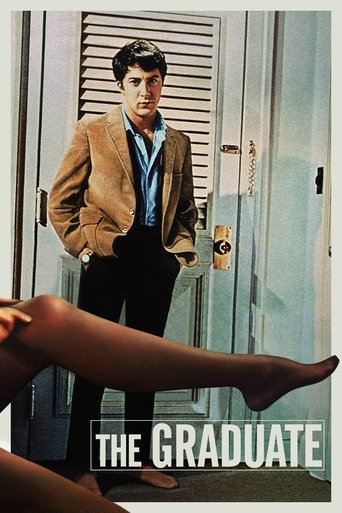
 Hacker Cinema
27 comments on Hacker News
Here is the full list of the 551 movies and TV shows being removed: https://www.playstation.com/en-us/legal/psvideocontent/
Top movies include Apocalypse Now, The Deer Hunter, The Graduate, Moonlight, Manchester by the Sea, Room, Silver Linings Playbook, Terminator 2: Judgment Day and Pan's Labyrinth.
I'm here to make somebody feel old: The Graduate (1967) came out almost 60 years ago. I wonder how long the norms portrayed in that film persisted or have evolved since then.
Banshees of Insherin is one of the funniest things I’ve ever seen. The understatedness is critical to the humor and story; it’s a juxtaposition of boring people in a boring town and the batshit plots that develop.
Other recent greats are maybe Poor Things, Challengers, and Conclave.
You wouldn’t mistake any for Shawshank, but that’s ok, it’s 30 years later. Shawshank is also qualitatively different from great movies in the mid 1960’s, like Dr. Strangelove or The Graduate.
> American TV and movies
I just thought of a perfect example: The Graduate. Many people like that uncertain ending—although they eloped, the camera keeps rolling, and we see them shift from initial happiness to confusion. A beautiful, simple ending is certainly nice, but an ending like this is far more unforgettable.
"American Graffiti"; when I was growing up they were going back before I was born too. I don't mind though because, for example, that film is excellent (and is that filmmakers best film ;-)).
Seriously though I have been musing as to how the children of a generation get to define their parent's generation, more or less wrest if from them, in film, etc. Sometimes (often) they take a fairly dim view of the world they grew up in, a dim view of their parents. (And maybe now I am channelling a film like "The Graduate", for example.)
Without plastic modern consumerist society as we now experience it wouldn't be possible, as such, that party-goer from the movie The Graduate was very correct in the assumptions he made towards the end of the 1960s.
Which is to say, are you sure that the current powers that be are ready to withstand the backlash of their political constituencies once that consumerist policy is actively reversed?
> I don't think you can understand the 1960s
I think the same of "The Graduate (1967)" - https://www.youtube.com/watch?v=6cKafIqhEvk
Note - this is not a movie she is in.
>had to compete with spider-man
Yes, a much more popular IP-based movie.
I understand it's frustrating to accept that the viewing public prefers IP over original movies, but it's just true. Studio movies as audiences expect them (and increasingly TV) are just too big and expensive to be the medium in which we workshop new ideas. You'll often get new ideas from blank-check directors, animation, or indie films, but that's it.
Now, keep in mind, looking back at some of the greatest movies of all time, good movies were always IP-based, it was just less noticeable:
Godfather (book)
Gone With the Wind (book)
Lawrence of Arabia (book)
Wizard of OZ (book)
The Graduate (book)
West Side Story (Musical)
2001 (An expansion of an existing Arthur Clark Story)
I could go on, but you get the point.
Clip from The Graduate, which is a fantastic film, for those unfamiliar with the reference.
https://www.youtube.com/watch?v=eMtLdE5Zq-8
I'm going to guess about 80%. I haven't counted.
In fact plenty of the movies you and I have probably already seen ("Easy Rider", "2001: A Space Odyssey", "The Graduate" for example). So perhaps even before I began going through the list I may have seen 20% or so.
But there are also a lot of early films from the 1930's I had not seen, and plenty of foreign films. In fact, now that I'm working through the 1970's, "foreign films" is more or less the rule.
Sadly the foreign films are the ones hardest to find both on Netflix and at the local library.
Here are some of my favorite movies: The Graduate, Taxi Driver, The Fearless Vampire Killers, Badlands, Mars Attacks, The Grand Budapest Hotel.
Most of them don't really satisfy this formula, except for trivial points like the protagonists wants something and the protagonist has changed or if you're deliberately trying to fit them by being extremely vague.
The reason is that there are many different types of stories and these can have very different internal structure. For example, Space Opera in science fiction is often just a fight of good vs. evil set at many different interesting locations. Of course, some protagonist should develop, hence change, and it's good to have some kind of unexpected plot twist, but these are trivialities.
As vanderZwan said, I was not being snarky. This was a funny reference (which led another commenter deemed worthy of "HN Gold"—if such a thing existed) to the popular movie The Graduate. I'm sorry if it came across as snark to those unfamiliar with the quote. Based on the upvotes (currently 30, never negative), I'd say most folks got it.
Just to be clear, I had the exact same confusion that 0xTJ had about the referent of "them" in the sentence. If 0xTJ hadn't commented already, I might have made a similar comment myself! I see the title has been changed, although honestly I find the new title rather opaque.
Reminds me of the film "The Graduate". Benjamin's dad was trying to get him in to a career "plastics" where Ben might have some freedom / financial freedom.
Ben had no interest in it and instead by rejecting it is heading for a far less desirable outcome, even from Ben's point of view.
You believe it's not practical to navigate without a GPS?
Watch an old movie-- like the Graduate, or the funny comedy it's a Mad, Mad, Mad, Mad world, people had maps and asked for directions at gas stations.
I'm often curious about the audio approach used in a bunch of 1960s films where multiple people are talking over each other. It's very deliberate, but I don't know the terminology. The Graduate is an example, I think in the party scenes near the beginning. In that example, it seems intended to convey the feeling of being overwhelmed. But there are films and TV where it's less about being overwhelmed and more about an immersive experience, to conjour a bustling environment like being at a busy family meal. I think M * A * S * H did it occasionally in the surgery scenes.
I always find it very noticeable when it I see it. There's something jarring about it, the experience is somehow very different from a real multiparty conversation, possibly because it's impossible (for me) to focus my attention on any one speaker. That may be deliberate, of course, although often these scenes include key information in the overlapping dialogues.
It's a technique I never see in modern film/TV.
I remember this movie was a gold mine but, man, seeing Buck Henry play himself pitching a sequel to "The Graduate" is hilarious.
As a kid, probably 12-13, I was a guest member of ETF Computer Club, Dejan Ristanovic and another friend would take me with them to the movies, I remember watching Graduate /w Dustin Hoffman with them. Unforgettable. Probably main reason and inspiration that I became a programmer. If he was born here in the US, he would be a billionaire. Exceptional talent and wonderful man.
I deleted my rather cynical post, about how we can "age out" of frontline programming, and will replace it with this rather sunnier treatise:
Open source work.
I was a manager for over 25 years. I'm a really good manager. I could probably be an ideal CTO.
But I don't love it. I love writing code.
As my management track progressed, I found my technical work deprecating. It did teach me to be a lot more "strategic," and "architectural" in my approach, but I found that I was sitting down and banging out code less and less.
To make things worse, I kept reading about how the tools and techniques were progressing to levels far beyond what I had learned.
I didn't have a "shower clause" in my employment contract (where the employer insists that they own the ideas that you come up with in the shower before work), so I was free to write software in an extracurricular manner, as long as I didn't use employer time and/or resources to do so.
So I started to do open source. In the beginning (about 25 years ago), there wasn't a good infrastructure for shared configuration management, so most of the work I did was published "after the fact" (otherwise known as "deliverable"). I would make the source available, "on the side."
Nowadays, with things like GitHub, GitLab and BitBucket, you can actually run a distributed collaborative open-source (or closed-source) project, with the process open. It also works great for single-engineer projects.
The result, these days, is that I have a GIGANTIC portfolio. Hundreds of thousands of lines of crafted, artisanal, small-batch, single-source code, in dozens of repos. I like to use the MIT license for my work.
I tend to design architectures; not apps, and some of the designs I've done have lasted decades (although with many changes along the way).
I found a need in an underserved community, and designed an ecosystem to help them meet their needs. For free. It's now becoming the global standard (but for a small demographic).
If you can find a need that usually can't afford your level of skill, you can find a home. It can be quite challenging, but that which does not kill us makes us stronger. It taught me to plan for the future, and for limited resource pools and budgets. It taught me to support my work, and do work that can be supported and passed on to others.
Ironically, my open-source tech work informed my "day job," as well.
Open source work.
In the movie "The Graduate," the equivalent of the "OK Boomer" (in those days), lectures a young Dustin Hoffman with "One word: 'Plastics.'"
https://www.youtube.com/watch?v=PSxihhBzCjk
So this "OK Boomer" says "Open Source." It worked for me.
I've spent the last couple of years "reinventing" myself to be a line programmer again.
It makes me happy.
The meta question suggested by this article:
When a product succeeds wildly (like Jira has) its creators make a ton of money. That's good. But what should they do with the money?
Is it smart to roll the money back into the product by adding new features? We all know the advantages of that approach. But it obviously causes feature bloat and complexity bloat, especially when backward compatibility is the prime directive. That's the curse of the customer base.
For most of the last generation we've been able to ride Moore's Law and the rest of the cost curve plunge. It simply didn't matter if each feature we dreamed up took more cycles / RAM / disk / network. We could count on the resources being there. That set us free to try to do more and more complex things. But Moore's law only helps indirectly with managing complexity. For hackers it makes possible stuff like "Show Definition..." in the IDE.
This complexity bloat afflicted Microsoft Windows back in the XP / Vista days. It afflicts what I'm working on now.
What else could successful product creators do with their money?
* Obviously, return some of it to their investors.
* Invest it in new complementary products.
* Use it to finance big organization-wide pushes to refactor to improve performance.
* Reduce prices and drive more widespread adoption.
The movie industry is an interesting model. They put together a team to make a movie, then disband it. When they have a big hit the participants with residuals rake it in. They then invest in more movies (some of them are atrocious sequels, but many are good new stuff.) Imagine if they did what we hackers do now. _The Graduate_ would be on version 17, and the guy would saying "I have one word for you, son: cloud computing" instead of "I have one word for you, son: plastics." The only reason anybody would buy a ticket would be tradition.
We hackers should look at Jira carefully. Is its bloat what we're doing to OUR users?
We can certainly dish out the bloat and complexity. Can we take it? Jira makes us confront that.
Finding movies is easy. I just googled "Avengers Endgame" and it told me it's available instantly for $5 from Google Play, Youtube, Vudu, and Amazon. I googled "The Graduate" and it told me it's available for $4 on various platforms and free on Netflix with a subscription. I google "Seinfeld" and it told me it's availabe on Hulu and TBS with a subscription.
I would much rather pick and choose which entertainment I actually want to pay for than pay a large monthly fee for everything. It saves me money.
If you’re interested in the history of stuff like this be sure to look into Beaver and Krause (https://en.m.wikipedia.org/wiki/Beaver_%26_Krause). If you recognize the THX sound then you’ll also probably recognize the last 30 seconds of Spaced (https://youtu.be/2xKO3KAtDZ0). They started off as early Moog salesmen showing off equipment and ended up introducing many famous musicians like George Harrison, the Doors, and the Byrds to electronic music. They also scored for movies such as The Graduate, In Cold Blood, Point Blank and Rosemary's Baby. True pioneers in the space and good music to boot.
Modern color treatment in film totally drives me crazy, independent of what it does to CGI.
It seems like every film coming out of Hollywood these days is processed exactly the same way:
* Crank down the low end so half the frame is solid inky black.
* Pick one or two key colors, and jack up their saturation.
* Desaturate everything else.
In other words, make the entire movie look like an over-dramatic poster for it. Throw any sense of naturalism or unique look out the door. Once you notice it, you see it everywhere. Here's the top live action movies of 2016:
Rogue One
Cyan and olive: http://www.ramascreen.com/wp-content/uploads/2016/04/Rogue-One-A-Star-Wars-Story15.jpg
Captain America: Civil War
Yellow and red: http://cdn3-www.superherohype.com/assets/uploads/gallery/civil-war-trailer-2-screenshots/cwttss03.jpg
Why they felt the need to make Cap's lip rosy red is beyond me. Even better is this shot:
http://www.theglobaldispatch.com/wp-content/uploads/2015/11/Captain-America-Civil-War-cast-photo-Renner-Johansson-Evans-Sebastian-Stan.jpg
This is a daylight shot. Look at how the characters are all squinting. Look at the big white fluffly clouds that should be diffusing the light and softening shadows. And yet, magically, all of the shadows are jet black and almost all of the color is gone.
The Jungle Book
Green and red (to draw attention to Mowgli):
https://www.moviedeskback.com/wp-content/uploads/2016/02/The_Jungle_Book_HD_Screencaps-23.png
Deadpool
Another daylight shot with nonsensical shading:
http://turntherightcorner.com/wp-content/uploads/2015/12/Deadpool-Movie-Screenshot-Brianna-Hildebrand-Negasonic-Teenage-Warhead-Texting.jpg
The light is clearly diffuse, if you look at the shadows on the ground, and yet there is this deep black everywhere. Deadpool took the look further by only picking one color (red, Deadpool's outfit color) for the entire film.
Lest you think this is just an issue with superhero movies, let's ignore those and look at the other top non-superhero movies of 2016:
Fantastic Beasts and Where to Find Them
More of the same:
http://harrypotterfanzone.com/wp-content/2016/09/fantastic-beasts-trailer-screenshot75.png
It also suffers strongly from the "It's a period movie so we're going to sepia tone everything so hard it looks like you're watching the movie through an aquarium full of pee" effect.
Hidden Figures
https://www.themarysue.com/wp-content/uploads/2016/11/hiddenfigures.jpg
More of the period movie sepia along with an improbably jacked up complementary cyan.
Star Trek Beyond
If the past is warm, the future must be cool:
http://www.ramascreen.com/wp-content/uploads/2015/12/Star-Trek-Beyond2.jpg
Blacks, grays and neon cyan, just like Rogue One. Look how unnatural his skin tone is! They wanted to jack up yellow to complement their primary blue so much that the poor dude has jaundice:
http://cdn.wegotthiscovered.com/wp-content/uploads/2016/05/star-trek-beyond-trailer-cover.jpg
La La Land
I'll give this one some credit for varying it up a bit. Also, dramatic spotlit stage lighting is a logical part of the movie's look. But it's still prey to the same cliched look in places:
http://henrymollman.com/content/images/2017/01/Screenshot-from-2017-01-18-22-36-49-1.png
Ghostbusters
Ectoplasm green and spooky violet were the key colors for the whole film. Secondary colors tend to come across as magical or eerie to viewers since they're different from the safe and familiary primary colors. Of course, jacking up magenta doesn't do flattering things to skin:
http://www.ramascreen.com/wp-content/uploads/2016/03/Ghostbusters2.jpg
Also, what color is Melissa McCarthy's coat? Is it actually black? Who fucking knows.
Central Intelligence
The traditional comedy look is brightly-lit and saturated, so Central Intelligence didn't fare quite as poorly as the above. Whenever they had a chance to dim the lights, though, they revert to the same cliched look as well:
https://i2.wp.com/doblu.com/wp-content/uploads/2016/09/centralintelligence2944.jpg
The Legend of Tarzan
http://images3.static-bluray.com/reviews/14209_5.jpg
Jesus, we get it, colorist. They're in the wet jungle. We don't need to be physically assaulted with the colors blue and green to figure that out.
...You get the idea.
Go back and watch a movie from before 2000 and you'll quickly realize how much more pleasant to look at most of them where, and how much more variety there was in look. Compare Alien to The Graduate. But it seems like ever since the rise of digital coloring and superhero movies, Hollywood has decided every single fucking movie needs to look like a comic book page, whether it needs it or not.
One recent movie I really liked that bucked this trend was Her. It was heavily colorized, but in a way that stood out. In shots like these, even though there's a strong color cast and a lot of dark, there's still always some color and detail in the shadows:
https://i1.wp.com/turntherightcorner.com/wp-content/uploads/2013/12/Her-Movie-2013-Screenshot-Theodore-Apartment.jpg
https://3kpnuxym9k04c8ilz2quku1czd-wpengine.netdna-ssl.com/wp-content/uploads/2014/02/her-screenshot-14.jpg
Most people are terrible at predicting the future in this way. Some of the most accurate predictions sound like (or are) jokes at the time, like when JK Rowling was writing her first book as basically a "welfare mom." She did a lot of the writing while her baby napped at some eatery owned by friends/relatives. She would make jokes to the effect of "When my book gets famous, it will put your place on the map!" That basically all came true, from the book being famous to it making the place she wrote it famous too.
But when you go back historically, predictions of what life would be like "now" all left out the world changing invention of computers and internet.
There is a scene in the movie "The Graduate" where he is at a party and everyone is telling him what he should go into as his career because it will be big in the future. One person tells him "Plastics!" This was a joke at the time, a ridiculous statement. Years later, the plastics industry used that bit in a TV commercial.
If you really, sincerely believe "The Future is all about X industry," you aren't telling people that on the internet. You are quietly behind the scenes buying more shares in X or getting training to work in X or otherwise trying to make sure you are the firstest with the mostest in X.
I learned about that from the commentary on a LaserDisc of (I think) "The Graduate". The dick film professor mentioned the reel change circles and then said something like "now that I told you that you will always be conscious of it (hehe)".
It seems every generation discovers the same new problems of every generation before it. And as each earlier generation matures, it describes the new generation disparagingly.
This article described the movie The Graduate, which everyone felt described a generation coming of age in the 60s. Pick other movies and books for other times.
Take it far enough back and you have this quote
"Our youth now love luxury. They have bad manners, contempt for authority, they show disrespect for their elders and love chatter in place of exercise; they no longer rise when elders enter the room; they contradict their parents, chatter before company, gobble up their food and tyrannize their teachers."
which sounds contemporary but dates back centuries (often attributed to Socrates, but not likely that old). It sounds contemporary in every time.
I conclude things aren't suddenly getting worse -- http://joshuaspodek.com/arent-suddenly-worse -- which makes my life better.
I know this isn't traditional HN fair, but when I see a movie that's highly relevant to my profession compared to Citizen Kane and The Graduate, my ears perk up. Thought yours might, too.
You remind me of the scene from "The Graduate" where everyone is trying to tell Dustin Hoffman what to do with his life and someone says "Plastics. That's where the future lies." (Or something along those lines.) If I recall correctly, that bit was used (much, much later) in a commercial for plastics. I didn't know until later, from an older acquaintance commenting on it, that the scene was humorous and the suggestion of "Plastics" was viewed as a rather ridiculous thing to include at the time the film came out.