> You MIGHT find some isolated instance where someone objects to this movie. However, they'll be in an extreme minority.
Really? Take a look at the reception of recent comparable movies - The Dictator (Larry Charles, 2012), The Interview, Jojo Rabbit. All of which, to a greater or lesser extent, have been overshadowed by controversy about their portrayal of these topics, often including claims that some movie is either promoting hateful attitudes or "trivializing" and implicitly minimizing past atrocities by the vey act of portraying them via satire and ridicule. The contrast with how The Great Dictator was received historically could hardly be any clearer!
It is said that Franklin D. Roosevelt encouraged Chaplin to make the The Great Dictator. Indeed, around the time the film was made, the two men shared political views on a lot of things. When Churchill and FDR saw a pre-release private screening of the film, they liked it. (Incidentally, Chamberlain had vowed to ban it in England for fear of angering the actual dictator.) FDR even invited Chaplin to read this very speech on his inauguration in 1941.
Ironically, this is the film that made Americans turn against him. Later that year, he was subpoenaed by a congressional committee investigating pro-war propaganda (this was a few months before the US entered the war.)
In the following years, Chaplin was extremely vilified by the Americans mainly for his pro-Soviet and communist views (or rather, for his refusal to be anti-Communist).
This led to politically-motivated prosecutions, and culminated in him being exiled from the US when the president Harry Truman(!) canceled his re-entry permit while away on family vacation.
(Chaplin was never an American citizen, despite living in the country for over 40 years.)
There’s a recent good book review summarizing this: https://www.newyorker.com/magazine/2023/11/20/charlie-chaplin-vs-america-scott-eyman-book-review
Anyone looking to get into silent film, I'd strongly recommend comedies (including, and perhaps especially, Chaplin and Keaton) as a good starting point. I've gotten to the point that I can truly enjoy a lot of silent dramas, but IMO the comedies are far more approachable for a modern audience. Good gateway drug.
Just off the more famous films (The Great Dictator and Modern Times and maybe City Lights for Chaplin, or The General for Keaton, say) I'd recommend The Kid for Chaplin, and Sherlock, Jr. for Keaton. And of course both made numerous short films, in addition to their features. Though the very-famous ones are all great, too—I especially love City Lights, personally.
Been meaning to check out Harold Lloyd (responsible for one of the most enduring and imitated images in Hollowood, the guy hanging on the clock on the side of a building, featured in Safety Last) but haven't made it to him yet. I bet he "reads" pretty well to a modern viewer, too.
[EDIT] Some beginner drama recommendations, for those who feel ready:
Metropolis (duh... though it's a bit on the long side, maybe skip if you can't tolerate longer movies, and it's maybe a bit belabored for modern sensibilities)
The Passion of Joan of Arc (just... damn. This is a perfect movie.)
L'Âge D'or (The Golden Age—but, uh, maybe just if you appreciate things a bit more art house)
Le Voyage dans la Lune (A Trip to the Moon—it's short, and, if one plays with various accompanying soundtrack options, including some more modern ones, one may find it transcendently good)
M (yes Fritz Lang made this very short list twice, because fuck you this movie is amazing, this is maybe the most modern-feeling of this whole bunch)
Um fascists.
Without them you don't get a movie like the great dictator which sets the tone for contemporary films like the producers and in turn leads to things like don't look up.
The world is ridiculous and satire is an often times an equal and opposite reaction to that absurdity.
What an amazing moment. I've seen some of Chaplin's earliest films, and his development from there to the Great Dictator is astounding.
If you want to understand the Chaplin phenomenon - mostly forgotten now, but a leading star of his time - watch some of his earliest films. His wit and ability, all physical (well before talkies), is a joy and genius to behold.
"In his 1964 autobiography, Chaplin stated that he could not have made the film if he had known about the true extent of the horrors of the Nazi concentration camps at that time." https://en.wikipedia.org/wiki/The_Great_Dictator
The Thin Man (1934), It Happened One Night (1934), Dodworth (1936), Fury (1936), The Awful Truth (1937), Grand Illusion (1937), You Only Live Once (1937), Wizard of Oz (1939), Only Angels Have Wings (1939), The Great Dictator (1940), His Girl Friday (1940), Philadelphia Story (1940), Rebecca (1940), The Maltese Falcon (1940), Citizen Kane (1941), A Woman’s Face (1941), The Magnificent Ambersons (1942), The Ox-Bow Incident (1943), Casablanca (1943), Double Indemnity (1944), Mildred Pierce (1945), It’s a Wonderful Life (1946), The Best Years of Our Lives (1946), Great Expectations (1946), The Big Sleep (1946), The Red Shoes (1948), A Letter to Three Wives (1949), Sunset Boulevard (1950), All About Eve (1950), A Place In The Sun (1951), High Noon (1952), Roman Holiday (1953), The Wages of Fear (1953). (I slipped two French films in.)
Almost anything by Hawks during those years. Or Hitchcock. Almost anything with Bogart. Or Grant. Or by Wilder.
Tons of noir films skirted the rules.
Look, I’m not a fan of the Hays code but some of those movies were to me better because of what they had to imply.
This is after the Hays code but as an example I recently watched the original 3:10 to Yuma and the remake. I hated the remake. What appeals to me about Elmore Leonard stories is that despite being about bad guys, they have a degree of charm to them (Out of Sight, Justified, Jackie Brown, Get Shorty,etc). The remake took all of the charm out of the original and replaced it with graphic violence and cruelty.
Say what you will about the Hays Code, but I would hardly consider Gone With the Wind, The Great Dictator, Casablanca, It's a Wonderful Life, Sunset Boulevard, The Ten Commandments, The Bridge on the River Kwai, Ben-Hur, Spartacus, Psycho, West Side Story, Lawrence of Arabia, To Kill a Mockingbird, Paths of Glory, It's a Mad, Mad, Mad, Mad World, Mary Poppins, The Sound of Music, or, you know, Citizen Kane to be especially "crappy" movies.
The Great Dictator is one of the few films with obvious value beyond entertainment, because it's a vaccine against Triumph of the Will. Triumph of the Will is a skillfully made propaganda film, and if you have no awareness of how it works then it would be easy to leave with positive feelings about the Nazis, even if only subconsciously. But once you've seen The Great Dictator it becomes a joke. E.g. the low camera angles don't make Hitler look powerful, they just remind you of the extending chair scene. His exaggerated gestures no longer project confidence, and instead make you think of slapstick routines.
John Cleese's silly walk had the same effect on the goose-stepping scenes. It's art that makes people more rational, by transforming emotional manipulation tricks into comedy. It's beneficial even if you don't agree with all of the politics of it (e.g. Chaplin's call for open borders).
Chaplin fought against sound in movies on a similar basis.
Not an absolute rejection, but a concern that it took focus away from other parts of the story-telling and wasn't necessary.
He supposedly sabotaged attempts to add speech to Gold Rush (1925) after the actors pushed for it.
City Lights (1931) was basically his ode to silent movies, famous for its endless retakes of the initial meeting with the blind flower girl [1], while he tried to figure out how she could mistake the Tramp for a rich man without words. In the end the solution was simple, and both funny and provided motivation for the Tramps desire to help her: The Tramp walks through the car of a rich man to avoid passing a police office, and so when he stands before her she has just heard him slam the car door. He accidentally knocks the flower he's purchased out of her hand and realises she can't see that he has picked it up. As he hands her his money, the owner of the car comes and drives off and the girl thought he had left without his change, and he didn't want to break the illusion and so walks off without money he badly needed for himself.
It's one of my favourite movies because it masterfully made his point that you can tell a complex story without it feeling like you're missing something because you can't hear dialogue.
He added speech in his next movie - Modern Times - but his character still didn't speak dialogue (but did sing).
It was first with The Dictator (1940) that Chaplin himself spoke on screen: Finally he had something where the speech added clear value by conveying more than he knew how to convey with just pictures.
In the same way I think we will see more and more movies eventually come out in 3D as the industry gets enough experience with it to see where it adds clear value and leave it low key other places, rather than add it to make a spectacle of it.
I think one of the first to do it well was Prometheus. A friend saw the 2D version and afterwards told me elated that it felt like it was made as a 2D movie - no weird camera work solely to make 3D effects stand out etc.. Meanwhile I'd seen it in 3D and been blown away at how good it looked in 3D. The effects were clear and beautiful but not in your face. Crucially they didn't alter the visual language noticeably.
It's an amusing little experiment but there are a number of possible factors the person running it didn't consider that, I think, are more likely than his actual conclusions.
First, there is the possibility that Casablanca is not actually a very good movie. The author of this article claims that Casablanca is "the most famous movie in the history of film." That may have been correct a generation or two ago, but in the decades since Star Wars, I think "the most famous movie" is Star Wars.
I would agree that Casablanca is a very famous movie, and a fun movie, but having seen it in the theater, I didn't think it was actually a great movie. It is a relatively small story, and lightweight, and trivializes its period and events. It's relatively low in drama, and it relies heavily on the (at the time) star power of its leads, and aside from some clever catch-phrases, it is talky and the dialogue does drag.
Just talking movies of the 1940s, I would argue that Citizen Kane (1940), The Great Dictator (1940), The Third Man (1949), The Big Sleep (1946), Rope (1948), and Miracle on 34th Street (1947) are all better movies, more artfully filmed and more memorable, although perhaps some are more kitschy and Corny than Casablanca.
Certainly, one could expect that people reading the screenplay "slush pile" for agencies ought to be familiar enough with the history of film to recognize the story of Casablanca or at least some of the catch-phrases. But I think the "gatekeepers" are actually often the most junior, least knowledgeable folks in the industry.
Wow, I must be really bored today to write all that... eating my lunch and I can't be bothered to do anything but read Hacker News : P
I had the good fortune of reading his autobiography. I highly recommend it. It explains the events described in this article (eg the ostracization; allegations of being a communist; attacks on his character; the affairs; seizure of his wealth by the government and the fact that he had to stay away from the country that he loved and called his home for majority of his life). I truly walked away feeling deeply pained and felt sorry for him -- here was a man born into extreme poverty (the scene in one of his movies where the tramp eats a shoe due to extreme hunger, was a part of Chaplin's childhood). His mother went insane (became catatonic) due to hunger. As a small boy he saw his mother being taken away by the police and put into an asylum. And this person, spent his entire life making people laugh.
He was born to make us laugh. I think instead of focussing on his shortcomings and marriages, it is far more important to focus and discuss his craft.
The lookup Hanna speech [1] at the end of the great dictator is must read / listen. One of the best monologues in movie history. Tell me if this speech doesn't move you!
Actually most critics are singing its praises. Even the hardcore art house high nosed critics are.
Some of the praise is just because they use the dictators name, willingly. This is actually rather new. Political Correctness dictates you don't. Yes we all knew Chaplin's "The Great Dictator" was about Hitler, but he didn't use the name. Most studios won't do this, its rather bold and new to do that. The only people who really have are SNL, and South Park -esque shows. Not internationally screening studio movies.
As David Edelstein said, "Its a low brow comedy, a political bold, low brow comedy. Laugh and have fun."
Hitler (Adenoid Hynckel) falls off a vehicle and arrested and humiliated by his own men in classic Charlie Chaplin style. It's a great hilarious movie but there's no dignity in it and there's certainly an empowerment fantasy involved.
> On the other hand this movie just seems needless, tasteless and unlike say Charlie Chaplin's "The Great Dictator", serves not to be properly satyrical, but rather just as a disgusting empowerment fantasy.
On the one hand I'm always against censorship in all forms.
On the other hand this movie just seems needless, tasteless and unlike say Charlie Chaplin's "The Great Dictator", serves not to be properly satyrical, but rather just as a disgusting empowerment fantasy.
That said, I think its well within the theaters right not to show it, but I'm internally divided on the issue.
How is this different from somebody discovering for the first time Wikipedia and becoming all defensive, that there is an article on him, that they are using a picture of him and that he didn't approve that one personally. As far as I can see, they put in the bot-about a clear line that it was a Wiki based bot.
Especially since the comments were so nonsensical one could even argue that the bot was intended to persiflage the nonsensical Tweets by pseudo-celebrities. To bring the argument to its final destination: People responding to the fake bot, are similar to those, who were watching Chaplin's The Great Dictator and wondering why Hitler movies were showing in cinemas across the USA.
These days, the commonly accepted wisdom is that movies were always as bad as they are now, and anyone who says otherwise is just idealizing the past. I offer the following evidence that the quality of movies is not constant over time:
1939: Mr. Smith Goes To Washington, Gone With The Wind, The Wizard Of Oz, Stagecoach, Ninotchka, Wuthering Heights
1940: Rebecca, Fantasia, His Girl Friday, The Grapes of Wrath, The Philadelphia Story, The Great Dictator
1941: Citizen Kane, The Maltese Falcon, The Lady Eve, Sullivan's Travels
Rather than relying on personal taste, I took these from various 'top 100' lists. I haven't seen all of them myself, but the ones I have seen are a mile apart from anything released this year, or any recent year.
I don't know what to say... this is a very emotive subject on both sides and I have conflicting forces pulling me in both directions. But for something that is stunning beyond compare, is the equal of any and all great things ever said, I can recommend few things with more passion than Charlie Chaplin's Great Dictator[0]. It's a film that sums up the genius of the man, and the power of film. But, more importantly, it speaks of the nobility of the human heart... I'll let him say it better than I could ever hope to. He apparently regretted making the film as it was made before he was aware of the full horror and attrocity of the concentration camps... but it's a beautiful and timeless piece of cinematography that inspires me.
[0] - His closing speech: http://www.youtube.com/watch?v=QcvjoWOwnn4
Thank You to all men and women everywhere who fight for liberty... however that may be.
 Hacker Cinema
24 comments on Hacker News
"They live" was a cult classic, and great fun if you were a Roddy Piper fan.
Other entertaining films =3
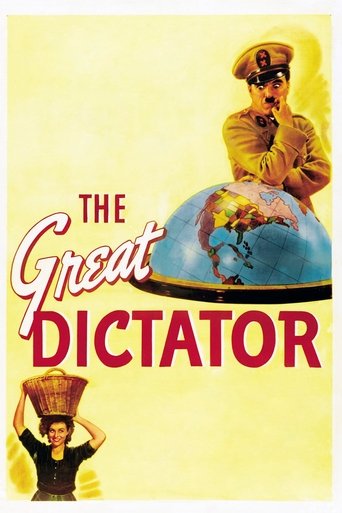
"The Great Dictator" (Charlie Chaplin, 1940)
https://archive.org/details/the-great-dictator-disc-01-title-2
"Day the Earth Stood Still" (1951)
https://archive.org/details/day-the-earth-stood-still-1951
"Invasion Of The Body Snatchers" (1956)
https://archive.org/details/invasionofthebodysnatchers1956_201911/
"The Man in the White Suit" (1951)
https://archive.org/details/the-man-in-the-white-suit_202105
"The Twilight Zone" (1959)
https://archive.org/details/the-twilight-zone-1959-s-01-e-00-original-pilot/The+Twilight+Zone+1959+S01E12+What+You+Need.mp4
https://archive.org/details/the-twilight-zone-1959-s-01-e-00-original-pilot/The+Twilight+Zone+1959+S01E25+People+Are+Alike+All+Over.mp4
https://archive.org/details/the-twilight-zone-1959-s-03-e-15-a-quality-of-mercy/The+Twilight+Zone+1959+S03E24+To+Serve+Man.mp4
https://archive.org/details/the-twilight-zone-1959-s-03-e-15-a-quality-of-mercy/The+Twilight+Zone+1959+S03E28+The+Little+People.mp4
That's true, the winners of the last world war also turned out to be brutes poisoned with greed, who treat men like cattle and cannon fodder.
What I find amusing is the possibility that Hitler watched the film, The Great Dictator. Supposedly he watched it twice! He must have been furious.
Look at all those top non-American films on that list:
1. Once Upon a Time in America
2. One Flew Over the Cuckoo's Nest
3. The Great Dictator
4. Lord of the Rings
5. Chinatown
If there's one thing you can't associate Charlie Chaplin or Jack Nicholson with, it's Hollywood.
Number 9 on your list is famous non-Hollywood filmmaker Alfred Hitchcock.
M by Fritz Lang, 1931. It does have a soundtrack but very minimal. Music is an essential part of this movie. Metropolis.
1 o’clock in the morning with Charlie Chaplin. Also his: the Gold Rush, the Kid, the Great Dictator.
> You MIGHT find some isolated instance where someone objects to this movie. However, they'll be in an extreme minority.
Really? Take a look at the reception of recent comparable movies - The Dictator (Larry Charles, 2012), The Interview, Jojo Rabbit. All of which, to a greater or lesser extent, have been overshadowed by controversy about their portrayal of these topics, often including claims that some movie is either promoting hateful attitudes or "trivializing" and implicitly minimizing past atrocities by the vey act of portraying them via satire and ridicule. The contrast with how The Great Dictator was received historically could hardly be any clearer!
It is said that Franklin D. Roosevelt encouraged Chaplin to make the The Great Dictator. Indeed, around the time the film was made, the two men shared political views on a lot of things. When Churchill and FDR saw a pre-release private screening of the film, they liked it. (Incidentally, Chamberlain had vowed to ban it in England for fear of angering the actual dictator.) FDR even invited Chaplin to read this very speech on his inauguration in 1941.
Ironically, this is the film that made Americans turn against him. Later that year, he was subpoenaed by a congressional committee investigating pro-war propaganda (this was a few months before the US entered the war.)
In the following years, Chaplin was extremely vilified by the Americans mainly for his pro-Soviet and communist views (or rather, for his refusal to be anti-Communist). This led to politically-motivated prosecutions, and culminated in him being exiled from the US when the president Harry Truman(!) canceled his re-entry permit while away on family vacation. (Chaplin was never an American citizen, despite living in the country for over 40 years.)
There’s a recent good book review summarizing this: https://www.newyorker.com/magazine/2023/11/20/charlie-chaplin-vs-america-scott-eyman-book-review
Anyone looking to get into silent film, I'd strongly recommend comedies (including, and perhaps especially, Chaplin and Keaton) as a good starting point. I've gotten to the point that I can truly enjoy a lot of silent dramas, but IMO the comedies are far more approachable for a modern audience. Good gateway drug.
Just off the more famous films (The Great Dictator and Modern Times and maybe City Lights for Chaplin, or The General for Keaton, say) I'd recommend The Kid for Chaplin, and Sherlock, Jr. for Keaton. And of course both made numerous short films, in addition to their features. Though the very-famous ones are all great, too—I especially love City Lights, personally.
Been meaning to check out Harold Lloyd (responsible for one of the most enduring and imitated images in Hollowood, the guy hanging on the clock on the side of a building, featured in Safety Last) but haven't made it to him yet. I bet he "reads" pretty well to a modern viewer, too.
[EDIT] Some beginner drama recommendations, for those who feel ready:
Metropolis (duh... though it's a bit on the long side, maybe skip if you can't tolerate longer movies, and it's maybe a bit belabored for modern sensibilities)
The Passion of Joan of Arc (just... damn. This is a perfect movie.)
L'Âge D'or (The Golden Age—but, uh, maybe just if you appreciate things a bit more art house)
Le Voyage dans la Lune (A Trip to the Moon—it's short, and, if one plays with various accompanying soundtrack options, including some more modern ones, one may find it transcendently good)
M (yes Fritz Lang made this very short list twice, because fuck you this movie is amazing, this is maybe the most modern-feeling of this whole bunch)
i like the treatment "Great Dictator" gets in the "Iron Sky" movie.
Um fascists. Without them you don't get a movie like the great dictator which sets the tone for contemporary films like the producers and in turn leads to things like don't look up.
The world is ridiculous and satire is an often times an equal and opposite reaction to that absurdity.
What an amazing moment. I've seen some of Chaplin's earliest films, and his development from there to the Great Dictator is astounding.
If you want to understand the Chaplin phenomenon - mostly forgotten now, but a leading star of his time - watch some of his earliest films. His wit and ability, all physical (well before talkies), is a joy and genius to behold.
"In his 1964 autobiography, Chaplin stated that he could not have made the film if he had known about the true extent of the horrors of the Nazi concentration camps at that time." https://en.wikipedia.org/wiki/The_Great_Dictator
I’ll play:
The Thin Man (1934), It Happened One Night (1934), Dodworth (1936), Fury (1936), The Awful Truth (1937), Grand Illusion (1937), You Only Live Once (1937), Wizard of Oz (1939), Only Angels Have Wings (1939), The Great Dictator (1940), His Girl Friday (1940), Philadelphia Story (1940), Rebecca (1940), The Maltese Falcon (1940), Citizen Kane (1941), A Woman’s Face (1941), The Magnificent Ambersons (1942), The Ox-Bow Incident (1943), Casablanca (1943), Double Indemnity (1944), Mildred Pierce (1945), It’s a Wonderful Life (1946), The Best Years of Our Lives (1946), Great Expectations (1946), The Big Sleep (1946), The Red Shoes (1948), A Letter to Three Wives (1949), Sunset Boulevard (1950), All About Eve (1950), A Place In The Sun (1951), High Noon (1952), Roman Holiday (1953), The Wages of Fear (1953). (I slipped two French films in.)
Almost anything by Hawks during those years. Or Hitchcock. Almost anything with Bogart. Or Grant. Or by Wilder.
Tons of noir films skirted the rules.
Look, I’m not a fan of the Hays code but some of those movies were to me better because of what they had to imply.
This is after the Hays code but as an example I recently watched the original 3:10 to Yuma and the remake. I hated the remake. What appeals to me about Elmore Leonard stories is that despite being about bad guys, they have a degree of charm to them (Out of Sight, Justified, Jackie Brown, Get Shorty,etc). The remake took all of the charm out of the original and replaced it with graphic violence and cruelty.
Say what you will about the Hays Code, but I would hardly consider Gone With the Wind, The Great Dictator, Casablanca, It's a Wonderful Life, Sunset Boulevard, The Ten Commandments, The Bridge on the River Kwai, Ben-Hur, Spartacus, Psycho, West Side Story, Lawrence of Arabia, To Kill a Mockingbird, Paths of Glory, It's a Mad, Mad, Mad, Mad World, Mary Poppins, The Sound of Music, or, you know, Citizen Kane to be especially "crappy" movies.
The Great Dictator is one of the few films with obvious value beyond entertainment, because it's a vaccine against Triumph of the Will. Triumph of the Will is a skillfully made propaganda film, and if you have no awareness of how it works then it would be easy to leave with positive feelings about the Nazis, even if only subconsciously. But once you've seen The Great Dictator it becomes a joke. E.g. the low camera angles don't make Hitler look powerful, they just remind you of the extending chair scene. His exaggerated gestures no longer project confidence, and instead make you think of slapstick routines.
John Cleese's silly walk had the same effect on the goose-stepping scenes. It's art that makes people more rational, by transforming emotional manipulation tricks into comedy. It's beneficial even if you don't agree with all of the politics of it (e.g. Chaplin's call for open borders).
Chaplin fought against sound in movies on a similar basis.
Not an absolute rejection, but a concern that it took focus away from other parts of the story-telling and wasn't necessary.
He supposedly sabotaged attempts to add speech to Gold Rush (1925) after the actors pushed for it.
City Lights (1931) was basically his ode to silent movies, famous for its endless retakes of the initial meeting with the blind flower girl [1], while he tried to figure out how she could mistake the Tramp for a rich man without words. In the end the solution was simple, and both funny and provided motivation for the Tramps desire to help her: The Tramp walks through the car of a rich man to avoid passing a police office, and so when he stands before her she has just heard him slam the car door. He accidentally knocks the flower he's purchased out of her hand and realises she can't see that he has picked it up. As he hands her his money, the owner of the car comes and drives off and the girl thought he had left without his change, and he didn't want to break the illusion and so walks off without money he badly needed for himself.
It's one of my favourite movies because it masterfully made his point that you can tell a complex story without it feeling like you're missing something because you can't hear dialogue.
He added speech in his next movie - Modern Times - but his character still didn't speak dialogue (but did sing).
It was first with The Dictator (1940) that Chaplin himself spoke on screen: Finally he had something where the speech added clear value by conveying more than he knew how to convey with just pictures.
In the same way I think we will see more and more movies eventually come out in 3D as the industry gets enough experience with it to see where it adds clear value and leave it low key other places, rather than add it to make a spectacle of it.
I think one of the first to do it well was Prometheus. A friend saw the 2D version and afterwards told me elated that it felt like it was made as a 2D movie - no weird camera work solely to make 3D effects stand out etc.. Meanwhile I'd seen it in 3D and been blown away at how good it looked in 3D. The effects were clear and beautiful but not in your face. Crucially they didn't alter the visual language noticeably.
[1] http://www.tcm.com/mediaroom/video/378808/City-Lights-Movie-Clip-Wait-For-Your-Change-.html
It's an amusing little experiment but there are a number of possible factors the person running it didn't consider that, I think, are more likely than his actual conclusions.
First, there is the possibility that Casablanca is not actually a very good movie. The author of this article claims that Casablanca is "the most famous movie in the history of film." That may have been correct a generation or two ago, but in the decades since Star Wars, I think "the most famous movie" is Star Wars.
I would agree that Casablanca is a very famous movie, and a fun movie, but having seen it in the theater, I didn't think it was actually a great movie. It is a relatively small story, and lightweight, and trivializes its period and events. It's relatively low in drama, and it relies heavily on the (at the time) star power of its leads, and aside from some clever catch-phrases, it is talky and the dialogue does drag.
Just talking movies of the 1940s, I would argue that Citizen Kane (1940), The Great Dictator (1940), The Third Man (1949), The Big Sleep (1946), Rope (1948), and Miracle on 34th Street (1947) are all better movies, more artfully filmed and more memorable, although perhaps some are more kitschy and Corny than Casablanca.
Certainly, one could expect that people reading the screenplay "slush pile" for agencies ought to be familiar enough with the history of film to recognize the story of Casablanca or at least some of the catch-phrases. But I think the "gatekeepers" are actually often the most junior, least knowledgeable folks in the industry.
Wow, I must be really bored today to write all that... eating my lunch and I can't be bothered to do anything but read Hacker News : P
I had the good fortune of reading his autobiography. I highly recommend it. It explains the events described in this article (eg the ostracization; allegations of being a communist; attacks on his character; the affairs; seizure of his wealth by the government and the fact that he had to stay away from the country that he loved and called his home for majority of his life). I truly walked away feeling deeply pained and felt sorry for him -- here was a man born into extreme poverty (the scene in one of his movies where the tramp eats a shoe due to extreme hunger, was a part of Chaplin's childhood). His mother went insane (became catatonic) due to hunger. As a small boy he saw his mother being taken away by the police and put into an asylum. And this person, spent his entire life making people laugh.
He was born to make us laugh. I think instead of focussing on his shortcomings and marriages, it is far more important to focus and discuss his craft.
The lookup Hanna speech [1] at the end of the great dictator is must read / listen. One of the best monologues in movie history. Tell me if this speech doesn't move you!
[1] http://www.americanrhetoric.com/MovieSpeeches/moviespeechthegreatdictator.html (added link)
Actually most critics are singing its praises. Even the hardcore art house high nosed critics are.
Some of the praise is just because they use the dictators name, willingly. This is actually rather new. Political Correctness dictates you don't. Yes we all knew Chaplin's "The Great Dictator" was about Hitler, but he didn't use the name. Most studios won't do this, its rather bold and new to do that. The only people who really have are SNL, and South Park -esque shows. Not internationally screening studio movies.
As David Edelstein said, "Its a low brow comedy, a political bold, low brow comedy. Laugh and have fun."
Hitler (Adenoid Hynckel) falls off a vehicle and arrested and humiliated by his own men in classic Charlie Chaplin style. It's a great hilarious movie but there's no dignity in it and there's certainly an empowerment fantasy involved.
Maybe you should rewatch The Great Dictator.
> On the other hand this movie just seems needless, tasteless and unlike say Charlie Chaplin's "The Great Dictator", serves not to be properly satyrical, but rather just as a disgusting empowerment fantasy.
Based on what?
On the one hand I'm always against censorship in all forms.
On the other hand this movie just seems needless, tasteless and unlike say Charlie Chaplin's "The Great Dictator", serves not to be properly satyrical, but rather just as a disgusting empowerment fantasy.
That said, I think its well within the theaters right not to show it, but I'm internally divided on the issue.
How is this different from somebody discovering for the first time Wikipedia and becoming all defensive, that there is an article on him, that they are using a picture of him and that he didn't approve that one personally. As far as I can see, they put in the bot-about a clear line that it was a Wiki based bot.
Especially since the comments were so nonsensical one could even argue that the bot was intended to persiflage the nonsensical Tweets by pseudo-celebrities. To bring the argument to its final destination: People responding to the fake bot, are similar to those, who were watching Chaplin's The Great Dictator and wondering why Hitler movies were showing in cinemas across the USA.
These days, the commonly accepted wisdom is that movies were always as bad as they are now, and anyone who says otherwise is just idealizing the past. I offer the following evidence that the quality of movies is not constant over time:
1939: Mr. Smith Goes To Washington, Gone With The Wind, The Wizard Of Oz, Stagecoach, Ninotchka, Wuthering Heights
1940: Rebecca, Fantasia, His Girl Friday, The Grapes of Wrath, The Philadelphia Story, The Great Dictator
1941: Citizen Kane, The Maltese Falcon, The Lady Eve, Sullivan's Travels
Rather than relying on personal taste, I took these from various 'top 100' lists. I haven't seen all of them myself, but the ones I have seen are a mile apart from anything released this year, or any recent year.
I don't know what to say... this is a very emotive subject on both sides and I have conflicting forces pulling me in both directions. But for something that is stunning beyond compare, is the equal of any and all great things ever said, I can recommend few things with more passion than Charlie Chaplin's Great Dictator[0]. It's a film that sums up the genius of the man, and the power of film. But, more importantly, it speaks of the nobility of the human heart... I'll let him say it better than I could ever hope to. He apparently regretted making the film as it was made before he was aware of the full horror and attrocity of the concentration camps... but it's a beautiful and timeless piece of cinematography that inspires me.
[0] - His closing speech: http://www.youtube.com/watch?v=QcvjoWOwnn4
Thank You to all men and women everywhere who fight for liberty... however that may be.