 Hacker Cinema
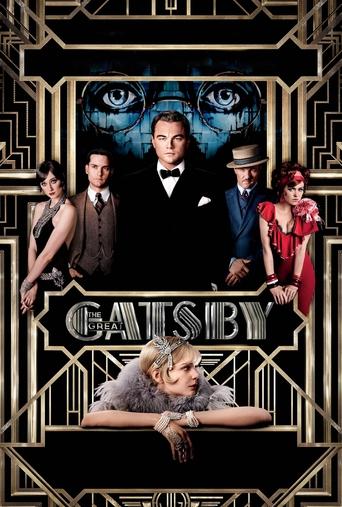
The Great Gatsby
2013 · Film · 143 min
Directed by Baz Luhrmann
Nick Carraway arrives in New York in 1922, an era of loose morals, glittering jazz and bootleg kings. Chasing his own American Dream, Nick encounters the mysterious millionaire Gatsby and his bewitching cousin Daisy. Soon, Nick is drawn into the captivating world of the super-rich, their illusions, loves and deceits. Bearing witness to this new world, Nick pens a tale of impossible love, incorruptible dreams and unforgettable tragedy -- mirroring our own times and struggles.
2 positive5 negative1 mixed15 neutralfrom 23 commenters
Where to watch
No streaming data for this title.
24 comments on Hacker News
This is not specific to Silicon Valley. It's human nature.
People take the "vibe" from a work and assume the vibe is the meaning. Look at how things like Fight Club, The Punisher, and Wall Street are viewed in the general culture.
The Great Gatsby is a famous cautionary tale of the danger and pointlessness of unchecked pursuit of wealth. It's studied widely in US high schools. When the movie came out, all over the US people held "Gatsby Parties" which were 1920s themed parties focuses on ostentatious displaces of wealth.
No matter how profound and important the message, most people won't look beyond the vibe.
> It’s also probably been read by the majority of Americans, or at least the story is well-known.
Read by, yes. Story well-known, I doubt. What is the story of The Great Gatsby, in a few words? (But then again, what is the story of the Iliad, anyway? Something about the wrath of Achilles, right?) [I should clarify: to answer that the Iliad is about "the Trojan war" or "Achilles dragging the body of Hector" seems insufficient to me in the same way it would be insufficient to say that Gatsby is about "a guy who throws parties" or "a murder in a swimming pool."]
Twain is the obvious "American Homer" not just because his name pops immediately to mind, but also because his two best-known works (Tom Sawyer and Huckleberry Finn) stand in the same relation to each other as the Iliad and Odyssey: a minor character in one becomes the protagonist of the other. As someone above already commented, too, both works are episodic and have given us many pop-culture images: I dare say only Tom's painting of the fence is proverbial, but the cave adventure, the feud, attending one's own funeral, and probably several more episodes are embedded in American pop culture to the same extent as the Cyclops, Circe, and the Lotus-Eaters. Gatsby is a great novel, but what has it given to our collective unconscious? The green light and... beautiful shirts?
What does it say that there have been three adequate film adaptations of Gatsby, while there have been (as far as I know) none at all of Tom Sawyer, Huckleberry Finn, the Iliad, or the Odyssey?
(Side note: About 15 years ago I read Fitzgerald's The Beautiful and Damned and thought it was very good and inventive; I recommend it. These days Wikipedia tells me that "many Fitzgerald scholars typically consider The Beautiful and Damned to be among the author's weaker novels," so maybe something excellent is waiting for me if I ever get around to reading This Side of Paradise or Tender is the Night.)
Tangentially, if you enjoy The Great Gatsby, you might also enjoy All The King's Men, which is a work of fiction that I think similarly richly described a swath of the American experience.
As for Gatsby, I think it's a great piece of fiction that invites a lot of readings, and everyone's invited to that ownership of the text. I think you can come away with the deeply shallow understanding of "the twenties were cool," and still be enriched by Fitzgerald's writing style.
I don't think anyone has made a good film adaptation of Gatsby and I don't know if anyone will, as long as it's adapted literally. The imagery and iconography of wealthy 1920s America eats so much of anything that tries to adapt it, that they tend to come out feeling shallow, and the writing is so dense that dialogue feels stilted and weird spoken out loud. You'd either need to, in my opinion, lean heavily into both, or abandon both, to make a good adaptation (leaning into both immediately feels like a Wes Anderson movie to me).
I think the best adaptation would be to do something like Jobs, where they just take a few scenes from the book and create a movie out of that.
When parts of the general public enjoy a character that the author intended to be bad, there's often a lot going on under the surface that outside critics don't realise. This results in articles that are hilariously wrong from the perspective of readers who are more familiar with the movement.
Consider Patrick Bateman. There are at least six things going on with Bateman memes: aesthetic appreciation for the movie and/or character, comedic irony, intentional contrarianism to annoy the sort of people who write articles about how much they hate Patrick Bateman, an obscure in joke, following the format without understanding the underlying work, and genuine unironic belief that he's a good guy.
If you are not familiar with the type of people who make memes about Patrick Bateman or name sandwiches after the Great Gatsby, you might misread them as misreading the work.
Today, we tend to see The Great Gatsby as a work of historical literature, as it gives a window into the Roaring Twenties. However, F. Scott Fitzgerald did not set out to depict the past; he was depicting his own present. Similarly, Proust's literature is seen as a window into the French high-society of the Belle Epoque, a society in which Proust lived.
Which works today do you think future generations will see as the classics of the 2010s and 2020s? Such may not even necessarily be works of literature; they could be other storytelling mediums, such as film.
This is a big part of why I couldn’t watch the Great Gatsby film with Leonardo DiCaprio.
> Who is saying this, and what is their point of reference?
That's an interesting question. The people who most commonly say this are not WASPs and probably were a rival of the WASPs at the time WASPs ran the country. My personal view of this is that prior to Kennedy, the WASPs were more insular and more elitist and actively discriminated. This is based on reading various things. I will give some examples. The Ivies probably all had a Jew quota. We know Harvard certainly did and from what I remember they instituted it in the 1920s when the Jewish population of the school was as high as 25% at that time. I believe I saw recently that even Stanford admitted to having one as recently as the 50s. In fact, Leland Stanford had made some derogatory comments about the Chinese in his constituency which is not so WASPy now. I know also that you find a number of powerful WASPs during the time of WWII were neutral or even slightly in favor of Hitler but not all of them maybe not even most but some definitely were. There is also a history of "white shoe" law firms that were made up of all WASPs that did not allow Jews in. I think books like the Great Gatsby kind of comment on them as well.
It's not surprising to me that two different members of the Roosevelt family were presidents. WASPs also implemented anti-miscegenation laws. As well, the immigration system allegedly preferred white protestants over others. This motivated the 1965 immigration Act (look at background of who sponsored it, I think this is significant in that time)
Kennedy was the first Irish and Catholic president. Post Kennedy I think what you are talking about is how they are now. I am not trying to argue they are evil, much less so relatively speaking. What I am trying to say is kind of nuanced.
I think very implicitly, they are kind of the group everyone thinks of when we think of elitism in the US right? You usually find institutions they founded apologizing for things WASPs did ages ago. Law suits at elite schools seem to imply that admissions policies are displaying nepotism of old family scion WASPs who are undeserving into the schools at the expense of others. You see movies where the antagonists are WASPy elites like in Meet the Parents or Scent of a Woman.
The bizarre thing about it is that more and more stories are coming out of Asians with super rich families who gave large donations to the schools and their children are being accepted in spite of the lawsuits and the public apologies for the previous nepotism and quotas. Even situations like with Jared Kushner's father who made a large donation just before Jared was accepted at Harvard. But there are disproportionately high numbers of Jews and Asians in the schools and this is said to be a result of hard work and not nepotism. One or two stories do not prove anything of course but likewise I would not say that everything WASPs did was undeserved.
This isn't to say that there aren't undeserving WASPs in high positions or very talented minorities but no one is perfect. What I am saying is that I see a setup here where elitism, discrimination, and nepotism were shunned when done by one group but humans being humans, the new elite who surpassed the old does the same things. I am not very optimistic about it either. I predict things will become very tribal.
Recently I read the Great Gatsby and I wanted to look online to see how accurate the movie was to the book and if it was worth watching. There was a couple of blog posts, but I realized there was no go-to platform for viewing a film's accuracy to the book it was based on, as far as I could find. So, I made NovFilm.
NovFilm allows users to rate a film's accuracy to a book and discuss what they thought of both of them, and point out similarities and differences. The "Faithfulness Score" is the average of all the rating of a film's tendency to stick to its source material.
Tell me what you think!
The author, is at best misguided, or worse lying.
yes, "CGI" movies are dire. Not because of the CGI, but because they lack story and vision.
Let us look at the main thrust of the argument: CGI movies feel fake.
This is patently false. Did you know that the Great Gatsby(2013) has a fucktonne of CGI in it? https://www.redsharknews.com/post-vfx/item/859-the-great-gatsby-stunning-vfx-cgi-breakdown
same with wolf of all street: https://youtu.be/2D7MqlNWUEs?t=137
more modern version: https://www.youtube.com/watch?v=9HzQKsgNt70
CGI is there for set extensions, and is really common. Its often cheaper to do a virtual set extension, than it is to build it for real.
In short, the author is pining for the "good old days" which were never there. Yes, there are some standout films that look great from the last 60 years. But we are forgetting the sheer amount of dross.
Of _course_ lawrence of arabia is gorgeous, its shot in technicolor with a fucking massive budget. Its an adventure movie, like jumanji its going to have bright colours.
Dune is dystopian rebel movies, about complex and grubby power struggles. Just as it always rains when the main character is sad, or there is a storm when things go wrong, colour is a tool to signpost emotion.
The author is a typical film theory fan, all talk and no experience.
TLDR: the author is comparing the cream of 50 years of film to generic movies of today. Asserting things that are demonstrably untrue, as 95% of all big budget films have digital set extensions and other CGI elements.
> things are starting to enter the public domain again is already a big win for culture.
Is it? It's interesting for a handful or iconic works, and it'd be interesting if copyright terms were significantly shorter, but right now, as a culture, we've mostly lost interest in things entering the public domain. We still got a Great Gatsby movie, but it was already a $2 paperback, and I assume people aren't that eager to publish fan fiction for it.
> I imagine companies like Disney would lobby pretty hard against shortening copyright.
That, and in a world with shortening copyright, they wouldn't have pushed so hard on promoting Mickey Mouse, and with Star Wars coming up on 50 years old, maybe they wouldn't have invested in the Star Wars universe when randos could make their own movies and theme park lands.
Some of this IP is more recognized and loved because of long copyright terms.
The Hollywood ending defines them and probably always has, so far from recent. It's been a standard for everyone to take the piss out of as long as I've known of movies!
It's one reason I miss a healthy British film industry - sure those mostly ended happily, but rarely so cheesy, except some from the 1940s. Yet there was a decent proportion of surprise unhappy, cynical, tired and non-endings too. A twist would sometimes be something you actually didn't see coming, rather than a "surprise" set up from the start and regularly telegraphed like a five year old keeping a secret. :)
It's not that I dislike superheroes. Well, didn't used to. The whole Marvel universe thing started off well enough. I enjoyed Wolverine, Iron Man, Deadpool 1 plenty, and some others. I really like roast lamb and mint, but getting it for 2 in 3 meals would cure me by boredom within weeks. Maybe it's just too large a proportion of the canon. Except it infects all genres... Wolf of Wall Street? Great Gatsby? Chernobyl? Superhero movies - in style, in script, in camera work, and in tropes used. Now that's putting lamb and mint in with my choc cake and just spoiling every meal.
Chernobyl was the surprise disappointment. It didn't need to deviate so far from reality - the affected were dangerously radioactive too? Not in our universe's physics. Nor be quite so McCarthy child's comic book (and wildly inaccurate) in representing the Soviets. That kind-of suited Stranger Things, though even there it was rather overblown, or Bruce Willis' Red, but not here. Legasov was the superhero - except he didn't actually tear down the whole Soviet system in court, nor get arrested by the KGB after the show trial. The plant manager (I forget the name) was the absurdist villain, missing only a white cat. Do as I say or I will throw you into the reactor Mr Stark. Oh wait, that was Serbina in the helicopter.
Chernobyl was clearly set in a comic book universe. It would still have been bloody good, and well made without any of that bullshit. The attention to scenic correctness and actors resembling the real people was remarkable. Spoiling the plot for a ha'p'orth of reality then.
Suffice to say, I don't think we're going to agree, but it's been a fun back and forth. :)
> I don't think "one flew over the cuckoo's nest" romanticizes mental illness, for me it is about demonizing institutionalization.
Intent is one thing, effect is another. One Flew Over the Cuckoo's Nest, the book and movie, broke ground upon its release, but one of its secondary effects was to establish the mid-20th-century mental hospital as a gothic setting, akin to the ancient stone manors of old, full of terrible secrets -- not to mention bizarre characters -- that are ripe for literary exploration. Today it's been almost completely tropified, especially since in the current era Great Literature is by definition introspectively psychological. An easy way to establish that your play or movie is "arty" is to set it in such an institution. One of the weirdest instances of this was in The Great Gatsby (2013), which wholly took place in a mental hospital (the plot of the novel being Nick's recollections to his psychiatrist) and implied that Nick admired Gatsby almost to the point of a crush and was so devastated by his death as to need psychiatric attention.
I do recommend you read One Flew Over the Cuckoo's Nest, the novel. It is written from the perspective of Chief Bromden, and his mental illness helps intensify the themes of subtle control, exercised by tyrannical people and institutions, with specific delusions he has that make him sensitive to that control.
The book is by definition a classic. The movie is not my favorite of Baz Luhrmann's. What's this got to do with Roma?
Speaking of Great Gatsby, I did enjoy Burning.
The Princess Bride... now that’s a classic.
One thing I've been struck by with movies and films like the Wolf of Wall Street, the film Wall Street, Fight Club, or even the Great Gatsby is how many people end up coming away with the exact opposite message of the movie. They end up idolizing the vapid, shallow lifestyle that the movie is critiquing, because even though the film is critiquing that it can't help but also make it glamorous. Michael Douglas has said that he has had people come up to him and tell him that Gordon Gekko inspired them to get into finance, so it's not surprising that Belfort is now inspiring a new generation.
I love the Great Gatsby and I was surprised that there was a second level of understanding that comes from how it changed through the versions. There is an early version of The Great Gatsby in print called "Trimalchio: An Early Version of 'The Great Gatsby'", which includes some interesting changes.
One of my favorite lines that made it into the recent movie but is not in the regular print version:
I'm only 32… I might still be a great man if I could only forget that I once lost Daisy. But my life, old sport, my life has got to be like this… It's got to keep going up.
3D was a big part of Baz Luhrmann's The Great Gatsby. It made me wish Moulin Rouge had been done in 3D.
I think using 3D effectively is hard, and most films being made don't have a good reason to use it. It also makes my eyes feel a little uncomfortable, so I'm not crazy about it getting widespread use. Most filmmakers don't have the visual sense (and budget/tech crew) of Baz Luhrman or James Cameron.
The Wizard of Oz was a really masterful tech demo for color, because color was a pivotal part of the story. 3D's problem is that it has been totally driven by technologists and financiers rather than storytellers. If the first big 3D film were The Great Gatsby rather than Avatar I think we'd have a very different sense of what 3D is. Although The Wizard of Oz may be unique in the way the tech manages to serve the story just as much as the story serves the tech.
I'm a little partial to The Great Gatsby. F. Scott Fitzgerald writes as though painting through the forrest with a brush made of wind.
I've never seen the movie, and I don't intend to; the writing in this book takes the imagination on a ride like I've never felt before or since
I read the Great Gatsby out of my own volition (well prior to the movie coming out) and I didn't really like it.
I think there are a couple of factors here. This is a popularity contest, which means it's mass-market by default. If you listed the "favorite artists" or "favorite songs" from Facebook, it would be similarly easily accessible pop music that can be played on the radio when children are in the room. The average person is going to like a lot of easily accessible books and a few outliers in specific genres. So while you might get 95% of people liking Harry Potter, you gets 15% liking the Mistborn series and maybe 12% liking Snow Crash and 4% liking The Martian. There is likely a long tail that Facebook won't show you.
So people like pop literature, which means pop literature is going to be written so the mass market can read and enjoy it. I've read quite a few books where I've said "I liked it up until..." or "I like it but this part annoys me". I can't say the same about Harry Potter or The Hunger Games. They're inoffensive and appeal to everyone (or at least the 95%).
Social factors also play into it, such as the appearance of The Holy Bible so high in the list. Is the Bible actually so many people's favorite book? No, of course not. That would be like saying my favorite book is Learn Python the Hard Way. It's a textbook, really, something to study and learn from. But it's a way to easily identify with a group. If you want people to know you're serious about your religion, you say the Bible is your favorite book. Another social aspect, The Great Gatsby is known at The Great American Novel and also a popular movie recently. Did this many people read it? No. They watched the movie or they heard it's a great book so they "like" it in order to appear smart and well-read. Nobody likes Hamlet as a book. No one. Because it's not a book. But you were probably forced to read it like one in high school, and it's one of the few books you've ever read, so let put it on the list too. In fact, I would say most of these books are on there because they're the some of the only books the 95% have ever read.
I agree with you on this - I actually believe that the main issue is timing. Let's take The Great Gatsby as a quick example:
Google shows the US release date as May 1 2013 in cinemas, with the DVD release on August 27 2013 - nearly 4 months after it's first out. By this time people will have been downloading a version of the film for at least a couple of months.
Very few cinemas will still be screening the film after 3 months, so where does one go to see it in that period? The easy answer is to the internet.
I believe that people will pay, and Spotify has huge success in releasing albums either early, at the same time or very shortly after physical release. Whilst this wouldn't be possible with films due to the fact that there isn't much of a secondary market (bands now taking the attitude that albums are a support to merch/shows), there is a need to rethink how quickly people can get access to films. If an HD rip is available after 2 months then perhaps iTunes should be ready to release the film at a higher price point (as they already do for some early digital releases) for those who are willing to pay the extra.
When we started working on Filmgrain, what became clear was that it wasn't so much that the popularity told you if the movie was good or bad, it was that it worked remarkably well at highlighting the movies people care about right now. I know many of us watch critic reviews to see if a movie is any good before going, but I don't think this is the norm. Many people just get excited about a movie and then go see it.
The other cool thing that Filmgrain captures that's different from quality is insight into what people liked about a movie afterwords. For example, people were divided on if Great Gatsby was good or not, but people couldn't stop tweeting about the soundtrack. I'd have never known how much people cared if it wasn't for this feed and it's this type of meta information we want to bring forward, as we can.
I thought her allusion to the Star Trek:TNG's episode of "The Game" was especially adroit. In a futuristic world where you have an unimaginable array of tech toys, such as the holodeck, why would visors be appealing? Well, it wasn't the greatest TNG episode, but I guess even in a Trek future, people will value the immediacy of such eyes-only technology. Just think about how phones have revolutionized thhe way we non-interact with each other in physical space.
Last night I saw the "Great Gatsby" and thought, like the book, it captured the timelessness of the story in that it would not feel any different in a modern setting, despite being written 80 years ago. But I kept thinking..."this is just like today, except no one is checking their phones"
Kind of funny that people are talking about Fitzgerald and the rights to make money off of "Gatsby". He obviously intended to make a living off of the book but it didnt sell well. He was paid less than $2,000 for the book and sold the movie rights for $16,666...which is roughly $200K in today's money.
http://www.marketplace.org/topics/life/money-behind-great-gatsby-fitzgerald-adaptations
Too bad the book never got the recognition it deserved in his lifetime.
> Why is the Hobbit being filmed in 3D?
Because Peter Jackson wanted to film it in 3D.
From the point of view of filmmakers, stereoscopic 3D is something new to be explored, like color, or before that, sound, or before that, editing.
Avatar and Hugo are two solid examples of 3D done right. I hear that The Great Gatsby will be another great example, as well as The Hobbit, which will be the first major 3D studio release filmed at 48 fps (which makes the stereoscopic effect much easier to watch).
My own company, Fohr, among other things deals with some major issues affecting live-action 3D. (To date, the best 3D is being done by computer-generated animation films. This is because each element in the scene can have it's stereoscopic parameters adjusted independently. When live footage is captured, though, this is far more difficult to accomplish.)
Bottom line: filmmakers are embracing 3D because they like it, and because they want to help pioneer the storytelling devices that make for good 3D.