 Hacker Cinema
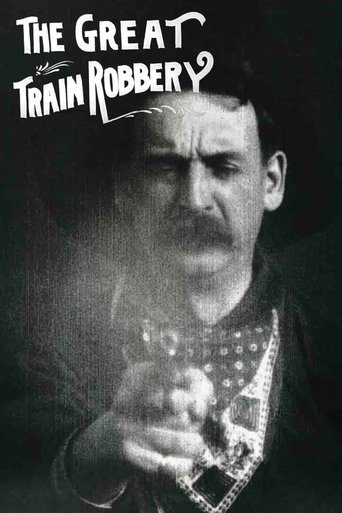
The Great Train Robbery
1903 · Film · short · 12 min
Directed by Edwin S. Porter
After the train station clerk is assaulted and left bound and gagged, then the departing train and its passengers robbed, a posse goes in hot pursuit of the fleeing bandits.
1 positive8 neutralfrom 9 commenters
Where to watch
No streaming data for this title.
9 comments on Hacker News
> I called it years ago, but I didn’t expect how people would love to play the same story and watch the same movie over and over again
How many years ago? because movies have been remade since the beginning of motion pictures - the great train Robbery was in the early 1900s.
The Great Train Robbery (1903) ends with one of the bandits pointing a pistol at the camera and shooting. Apparently, this also disturbed audiences so deeply that they got up and ran out of the movie theater. This is more of an urban legend than anything, as mentioned in the article, but it goes to show the emotional power of new technology.
It reminds you of Clarke's third law, "Any sufficiently advanced technology is indistinguishable from magic." I still remember the ominous feeling of receiving an unsolicited, location-based mobile notification from Google requesting a review immediately after leaving a local restaurant. Digital surveillance works by some unseen "magic" to most users, which is more dread than horror, like a hacker posting your IP and location out of nowhere just to freak you out.
From The Great Train Robbery (movie):
Judge: "Now, on the matter of motive, we ask you: Why did you conceive, plan and execute this dastardly and scandalous crime?"
Edward Pierce: "I wanted the money."
I saw this when it was doing the rounds as a meme a while back and wasn't convinced then - it seems very improbable that people could sleep like that. AFP claims that this is false [0] and interestingly they link to a copy of the original photo [1] which is captioned as actors for the film the great train robbery (although it confusingly talks about it being a re-enactment).
The only sources given for this in the original article are two from literature - and if you read them they're not actually describing what the article claims.
Wikipedia of course mentions it, but the source is this very article. This was added on the 2nd November 2020.
[0] https://factcheck.afp.com/false-claim-circulates-online-hangover-term-derived-historic-practice-sleeping-rope
[1] https://www.gettyimages.co.uk/detail/news-photo/dublin-ireland-original-caption-reads-theyre-really-hung-news-photo/517359152#/131979dublin-irelandoriginal-caption-reads-theyre-really-hung-over-picture-id517359152
Michael Crichton's novel references a British train robbery from Victorian times:
https://en.wikipedia.org/wiki/Great_Gold_Robbery
The 1903 movie referenced is a separate dramatisation of a US robbery:
https://en.wikipedia.org/wiki/The_Great_Train_Robbery_(1903_film)
Which in itself is a reference to a 1903 silent film The Great Train Robbery, widely considered to be the first of what we'd now recognize as an action film, and the first western.
Film restoration, though it doesn't technically fall under "restoration".
I run a site [0] that has a lot of old and indie films. Some of these are really great, but terrible quality, because they are very old with very few copies in existence.
Proper restoration is a crazy time consuming process, and often requires you have access to some of the analog sources, and the machines to read them.
But... What if instead of a full restoration, you focus instead on just making it watchable? Allow some quality loss to trick the human eye into seeing what is important?
The best result so far is on The Great Train Robbery [1], and I have a brief breakdown of the process over here [2]. (I also put together a soundtrack for it, using a MIDI synth).
However... Currently the process is _slow_.
Restoring a full-length feature film, like I'm trying with the Blancheville Monster, will take months, despite it running in parallel to cover as many frames as the CPU/RAM combo can handle. (The Great Train Robbery took about 2 weeks).
Anything I can do to speed up the process is helpful. Unfortunately, the most time-consuming step (up to 20 seconds a frame, but usually around 1-2sec), is also the most important and I don't think I can optimise it. (The simplify step that uses k-means clustering).
The process is also not perfect yet. There is still too much quality loss. It's watchable, easily, but could still be better.
[0] https://sixteenmm.org
[1] https://sixteenmm.org/s/thegreattrainrobbery_2020
[2] https://sixteenmm.org/blog/20200318-Filmscope%20Progress
That's predating the talkie era.
Yes, early films were shot square-on into the set, as one would film a stage production. That changed with The Great Train Robbery, which introduced a very large number of the set of camera techniques used in film since: long shots, close-ups, tracking, panning, dolly, cross-cutting, and other methods. All in 1903, by Edwin S. Porter.
All that was well established by the time talkies started becoming widespread, particularly with sound-on-film in the 1930s.
https://en.m.wikipedia.org/wiki/The_Great_Train_Robbery_(1903_film)
https://en.m.wikipedia.org/wiki/Sound_film
Avatar and TDK historic points in film. AKA Dancing with Smurfs, and The Movie With More Plot Holes Than The Titanic. Hum, I beg to disagree.
Overall, I got a good laugh from the list. Seriously, this list should be called "things white US kids (of my age, granted) like". Rather than a history of cinema, it belongs more in the "comedy generated by computer" genre. Exhibit one: City Lights isn't there. Exhibit two: Modern Times isn't there. No Le Voyage dans la Lune, no Man With Camera, no Great Train Robbery, Rashomon isn't cool enough to make the list, Vertigo is too weird, and Battleship Potemkin is, like, too commie, you know. The final straws would be Independence Day and It's a Wonderful Life making the list.
I mean, On the Waterfront looks like it's very good (I haven't seen it), but, but, it was released in the same year than motherfucking Seven Samurai!