 Hacker Cinema
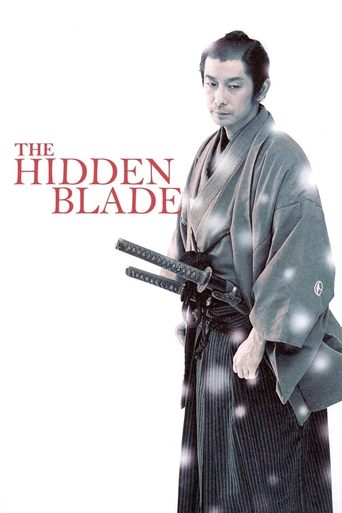
The Hidden Blade
隠し剣 鬼の爪
2004 · Film · 132 min
Part of Samurai Trilogy (Yoji Yamada) Collection
Directed by Yoji Yamada
Set in 19th Century Japan a young samurai who finds himself in love with a farm girl leaves his home to begin a new life. He has to take stock of his new life when he is put to the test and ordered to kill a traitor who just happens to be his dearest friend.
1 positivefrom 1 commenter
Where to watch
No streaming data for this title.
2 comments on Hacker News
I understand the sunk cost fallacy, but I agree that I'm not sure this is the greatest example of it.
Or maybe I relate to films in a completely different way from anyone else.
For example, gaping plot holes or impossible character motivations often turn me off. But I love apparent inconsistencies that are fully explained by the end.
I basically want filmmakers to convince me they put more thought into their film in the months of making it than I could in the hours of watching it.
Or... some of my favorite films are a slow burn that suddenly clicks into an intense ending that surprises you by raising the intensity far above the setup. The Third Man, Hara-kiri, M, Oldboy, The Hidden Blade.
By either of these criteria, it can be incredibly difficult to know whether a movie is good or terrible in the beginning. The extreme best and worst could begin very similarly, but they'll end in completely different places.
A bit like if Croesus and Solon were just film critics.
> We aren't winning by unsavory sales, legal, or marketing tactics.
Online distribution of content is pushing inexorably towards battles over hit exclusives. Some would consider that anti-consumer, and an unsavory tactic, though admittedly it doesn't fall cleanly in the sales, legal, or marketing arena. It's a little of all three.
I'm also worried about what's happening behind the scenes to push the service away from DVDs.
I used to have a video store around the corner that had a massive library of indie and foreign films. I have eclectic tastes in film, or at least don't just want the latest hits, so I rented there frequently. It's been driven out of business by online streaming. That was supposed to be ok, because, Chris Anderson, said, Netflix would stock even deeper content.
Unfortunately, Netflix doesn't have the time or inclination to fight the licensing battles required for streaming rights on anything approaching a deep DVD library. As negotiations over blockbusters and fights with Amazon over exclusives dominate the time of their lawyers, it's going to be even rarer to find gems from the long tail on the site.
Already we end up with Academy Award winners and nominees that are conspicuously absent. The 80 of 86 films on Spike Lee's "essential films" list that are unavailable. Giant holes in the catalog for major directors, like Hitchcock. Netflix has The Lady Vanishes and nothing else. That's one of over fifty films, many of which are classics, some of the best films of all time. (That one is fine but probably not his best or most noteworthy.)
To make it worse, Reed Hastings seems to hate physical discs, even though licensing for them is automatic, so he keeps trying to spin off or kill that service. So over the last year, the number of scratched discs I've received in the mail has increased, and most of the DVDs I request are on "very long wait," often dropping out of the collection entirely.
So now, even with their DVD service, pivotal noir films, like The Glass Key with Alan Ladd and Veronica Lake, or The Blue Lamp, which won the BAFTA for best British film in 1949, Netflix just doesn't know these exist. Yoji Yamada's "The Hidden Blade," one of the best samurai dramas of all time, just not there. There's basically nothing available by legendary Taiwanese wu xia director King Hu.
Sure, the Internet is the future, and shipping bits is phenomenally cheaper than shipping plastic. But there are different legal regimes here, and sometimes law trumps technology. The first sale doctrine allows DVD rentals without costly rights negotiations. So consumers get access to more content. Content owners argued for a few decades that rental stores were driving them out of business, it didn't happen.
Netflix isn't an archive, but it did knock a few of them out of business. It has a huge number of titles, but when you go through the list of really important films, it's 90% holes.
I understand they're chasing a dream to foster streaming of content. Along the way they've killed something that I don't think we can easily get back.