 Hacker Cinema
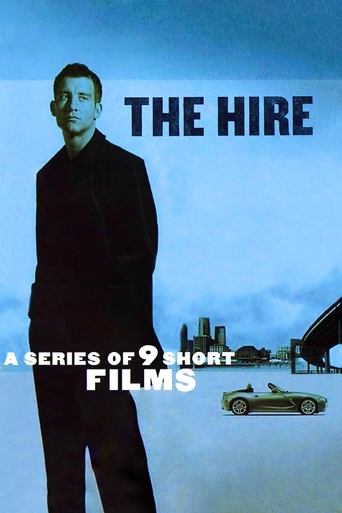
The Hire
2001 · TV series · 10 min episodes · 3 seasons
Created by David Fincher
BMW Films presents "The Hire", a series of nine short films produced for the Internet in 2001 and 2002, with a ninth short film following in 2016. A form of branded content, all nine short films feature popular filmmakers from across the globe, star Clive Owen as the "Driver", and highlight the performance aspects of various BMW automobiles.
2 positive1 neutralfrom 3 commenters
Where to watch
No streaming data for this title.

3 comments on Hacker News
I totally get why this rfs was posted. SOPA is pretty egregious, and the YCombinator folks went beyond complaining and decided to do something about it. There's nothing more positive than funding startups to create the better world you envision.
I certainly appreciate that they didn't gloss over the fact that SOPA's potential damage to civil liberties and the world economy was what raised their awareness of the viability of startups in this space. People should publicly stand up for causes they believe in.
I've been looking into this space for a while with plans of disruption. I see a lot of posts on here from people who work in the industry talking about how expensive it is to create high-quality video. As an independent filmmaker and entrepreneur, I only somewhat agree (on the price of hiring indie filmmakers: http://crewtide.com/2011/11/03/price-of-video-narrative-vs-videography/). There are a number of things that make Hollywood productions so expensive, like name actors or car crashes/explosions. But another big one is location, location, location. Hollywood production studios are expensive because they can create any location you can imagine. Crowdsource to award-winning independent filmmakers (as my startup will do) and each of them will shoot in whatever amazing-looking locations they know they can shoot in for free.
sanjiallblue writes as if every independent film shoot uses non-professional cast and crew -- that is ridiculous. In my recent shoot (we're releasing a six-episode thriller-romance web series around Valentine's Day) the only conflict was that one of our leads got into a play with the American Repertory Theater. I'm interviewing 20 independent filmmakers for my blog this month and all of them are full-time filmmakers -- some have day jobs shooting for local TV stations or editing for production studios, but most are full-time freelancers doing commercials, corporate work, music videos, and their own shorts and features.
By the way, brands are beating Y Combinator to the punch. Who has funded television since it began? Brands, and they're starting to skip tv and the exorbitant price of advertising there and create their own content. Since BMW's The Hire series early last decade, plenty of other brands have jumped on board creating their own mini TV shows (http://crewtide.com/2011/10/14/branded-entertainment-examples/). You should really read these guys take on it: http://www.reelseo.com/every-brand-will-be-a-studio/. ReelSEO always has the latest news & best commentary on this industry.
Right now BMW, Kmart, YouTube, Netflix, and Hulu are still going to Hollywood to get their content produced, and they're paying through the nose. Kmart spent $100,000 per 8-mninute episode of a low-budget web series by going to Hollywood; an indie filmmaker could have made that for 1/10th the price with an all-professional crew.
Reputation is the primary means whereby creators of nearly all the content I consume on a daily basis are remunerated. Blog posts? Tech books? I doubt very much that there are many people who do either for the money directly earned through ad or book sales.
Now, I agree that this model doesn't work for, say, big-budget action movies and for many (maybe, as you say, most[1]) other media types.
But, these people working for "free" have always been a big part of the press; I don't think that writing has ever paid particularly well, except for a few at the very top.
Edit: There is a corporate equivalent to this that dominates the trade magazine industry. Corporations write something very much like a press release advertising their new product, and send it off to a writer for the magazine, who publishes it, perhaps with a few changes, as if it were a story. Hell, speaking of high-budget action flicks, BMW did something similar a while back; they released a series of short action films[2] that featured their vehicles. Being something of a fan of action films myself, I rather enjoyed them, even though they were obviously commercials.
[1] Thinking more on what "more media" is, I'm starting to come around to your position. Now, I certainly spend /more time/ consuming media like blog posts or technical books where the author was primarily remunerated in terms of an increased reputation compared to media produced for the money.
However, even if you say I spend 100 hours reading tech books or blog posts for every 1 hour I spend watching big-budget action flicks, that one hour of action movie probably took more human hours to produce than the 100 hours of tech book or blog post. Of course, if you measure the the cost of production divided by the number of people watching it, then it's possible that the flashy action movie was actually cheaper to produce than the tech book, I mean, per human hour spent watching the thing.
[2]http://en.wikipedia.org/wiki/The_Hire
It's so quiet. Too quiet. If I had one, I'd only drive it with the stereo blasting engine noises from BMW's old "The Hire" series of short films.