 Hacker Cinema
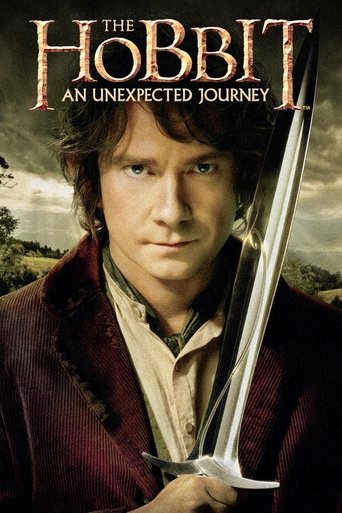
The Hobbit: An Unexpected Journey
2012 · Film · 169 min
Part of The Hobbit Collection
Directed by Peter Jackson
Bilbo Baggins, a hobbit enjoying his quiet life, is swept into an epic quest by Gandalf the Grey and thirteen dwarves who seek to reclaim their mountain home from Smaug, the dragon.
30 positive149 negative13 mixed75 neutralfrom 267 commenters
Where to watch
No streaming data for this title.
310 comments on Hacker News
Given that New Zealand actually changed its laws to prevent unionisation in order to ensure The Hobbit was made there, I think unions are definitely a factor.
I have no idea how strong the unions related to film are in the UK. It varies a lot between industries.
The problem with the 48fps release of The Hobbit is it was only available in 3D (and digital). I don't like 3D, not least because it gives me a headache after about 30 minutes, so watching a 3 hour film was not enjoyable at all (I hadn't internalised the sunken cost fallacy at the time; I shouldn't have stayed for the whole thing).
IMAX shows that 3D is completely unnecessary. Gravity is the only 3D film worth seeing, but even that never made me hold on to my seat like the helicopter scene at the beginning of The Dark Knight Rises. Not a great film, but I was able to see it in IMAX.
One format I'd really love to see for real is Doug Trumbull's Showscan. It uses 70mm film at 60fps. I kinda wish Nolan had picked up on that instead of IMAX. The flicker at a proper 70mm IMAX screen is really noticeable for me.
> wonder why they didn't do the Hobbit as well
Because it should've been done as just one movie. Someone got greedy and decided to split it up into three movies, and it was such a drag watching all of them - and I say this as a huge LotR fan who enjoyed all the extended LotR cuts.
The other big issue was the frame rate of the movie, 48FPS was a risky move and didn't really translate well to the big screen, it felt like everything was sped up and was hyper realistic.
The CGI was also bad and hasn't aged well, like if you watch LotR now it still looks pretty good, whereas the the monsters in the Hobbit look like some 3D printed figurines covered in oil, or have an uncanny valley effect.
In fact there was so much wrong with the movie that it's easier to just list the good things (which, for me, was the music).
It was designed as a bad movie by people who didn’t realize their idea was terrible. It was hardly organized, as Peter Jackson had to come in late in the game and against his will to try saving the franchise.
PJ defined the product that was LOTR against the objectives pursued by studio. Then that same entity got their true wishes with the Hobbit.
It’s not that the Hobbit sucked as much as LOTR was the exception that proved the studio rule.
Also, a thousand geniuses can’t change the trajectory of an idiot boss.
Creators create, studios iterate.
See also: Star Wars, Star Trek
Bad movies, for example the Hobbit after the LoTR always amaze me as a human endeavor. So many smart people working together, organized, talented, funded, etc., can still make a really awful movie. It's so interesting.
> I remember when The Hobbit came out at 48 fps and people were complaining about how the increased clarity made it look obviously fake, like watching a filmed play instead of a movie.
Curiously I can already get in this mindset with 24fps videos and much, much prefer the clarity of motion 48fps offers. All the complaining annoyed me, honestly. It reminds me of people complaining about "not being able to see things in dark scenes" which completely hampers the filmmakers ability to exploit high dynamic range.
Tbf, in both cases the consumer hardware can play a role in making this look bad.
Yeah, that's pretty much it. They standardized on 24 back when sound on film took over Hollywood, and we now have a century of film shot at that speed. It's what "the movies" look like. There have been a few attempts to introduce higher frame rates, like Peter Jackson's The Hobbit and James Cameron's Avatar, both at 48 fps, but audiences by and large don't seem to like the higher frame rates. It doesn’t help that we have nearly a century of NTSC TV at ~60 fps[1], and our cultural memory equates these frame rates with live tv or the "soaps," not the prestige of movies.
[1]Technically 29.97fps but the interlacing gives 59.94 fields per second.
I think familiarity is a major factor, but the lower frame-rate and slower shutter speed also creates motion blur, which makes it easier to make the film look realistic since the details get blurred away. I remember when The Hobbit came out at 48 fps and people were complaining about how the increased clarity made it look obviously fake, like watching a filmed play instead of a movie.
Well ... it looks more like a midget-man than a hobbit. But what exactly is a hobbit? In the movie "The Lord of the Rings: The Fellowship of the Ring" from 2001, the hobbits shown pissed me off. When they started to jump on the bed, I started to root for Sauron. It got much better in the movie "The Hobbit: An Unexpected Journey" from 2012 but even then they look mostly just like midget humans, with a bit of an elfish touch (and I hated the elves in the movie from 2001; the depiction was just lame). The only hobbit-like entity I liked was Gollum.
So how does a hobbit really look like? "Tolkien presented hobbits as a variety of humanity, or close relatives thereof".
So based on this, while Tove's pictures look more like a parody, I don't really see it as intrinsically wrong. It's just less of a "standard" depiction - Tolkien could have assumed hobbits to be anything but midget-humans, but they are mostly midgets with stronger feet.
> I've not seen Rings of Power and I don't plan to
i say this as a die hard Tolkien fan, having read (most of) HOME: i enjoyed Rings of Power quite a lot and i'd recommend it to anyone who enjoys the extended world of middle earth. the casting is great, i actually did enjoy the picking at the question of orcish morality, and because amazon was willing to throw millions at it, it looks fantastic for a tv show.
it doesn't follow canon (some weird squashing of timelines re: ringmaking, the akallabeth etc) which seems to upset a lot of geeks. however, one thing to keep in mind when interacting with extended works based on Middle Earth is that Tolkien didn't necessarily set out to codify everything perfectly (and what was there was definitely the result of his obsession and great care for the world he built). one of his stated desires in writing LOTR was to establish a modern mythology that other people could write/create within, so the fiction could take a life of its own. maybe he wouldn't always like the ways people built on his work, but that's the risk he took when he explicitly set out to invent a mythology for others to interact with.
we're still going to ignore the hobbit movie trilogy, though.
The LOTR movies are great movies, but are pretty poor adaptations. I don't mind changes which were necessary due to the medium (e.g. cutting Tom Bombadil, which just would bloat the movie without adding anything crucial to the story). But Jackson went beyond that and made changes (for example, having Faramir give in to the temptation of the Ring for a time) because he disagreed with Tolkien's story (that specific change was explained in terms of Faramir's character in the book "doesn't work with the way we are trying to portray the Ring"). That's crossing a line, imo.
The Hobbit movies, on the other hand, are both bad adaptations and bad movies. Truly awful stuff.
The Hobbit movies had nothing to do with the books.
Never mind the battles and action scenes, just any scenes with normal movement of the camera.
There is a lot of panning in the initial scenes of The Hobbit (opening scene is the fall of Erebor). I watched that movie initially with the new higher frequency, and everything was soooo smooth. When I rewatched it, every single time I have to experience the terrible, terrible choppy, hard-to-see-anything lower frequency transformations and I cry. This is the 12st century, and the movies can't even pan across some landscape smoothly?
In that first viewing I saw everything in those caves, it was so easy. Oh how I miss that.
I was a huge fan of the high-framerate Hobbit films. It made the huge battles much easier to follow and I felt like I picked up a lot more of the details. Such a shame it never had a retail release.
"Instead, people first observe that government, academia, and corporate workplaces disproportionately use serif faces — or are trained to use them — and only then infer that serifs must mean professionalism and authority."
This is an aside, but many people would benefit from appreciating what is observed here, because it impacts an enormous numbers of preferences and perceptions people hold.
A good example is 24 FPS in cinema, which we generally attribute to high quality movies, baked in our value system via a technical/financial limit imposed a century ago. If a movie is presented any higher it gets mentally mapped with soap operas and low quality sitcoms, and it is disorienting to people. The Hobbit tried upping to 48FPS and it was described as "resembling low-budget video like American daytime soap operas rather than cinematic film". Higher quality TV dramas shoot at 24 FPS, intentionally forcing the 3:2 pulldown for TV presentation to signal "no, compare me to a movie not those other TV shows".
There are many areas in our life where we're judging things by this signalling criteria, and not by any real objective measure, yet people will often invent objective measures to assuage themselves that their values aren't so easily manipulated. Bring up 24FPS being a baked in limitation rather than some pinnacle of film making and many will start contriving why no, they actually prefer it because... It's all just noise.
>It was always just a compromise between film cost and smoothness.
I think the criticisms of The Hobbit when it came out in 48fps showed that it's not just that.
easy... because 24fps has that dream like feel to it.. second you go past that it starts to look like people on a stage and you loose the illusion... i couldn't watch the hobbit because of it
movies above 24fps won't become a thing, it looks terrible and should be left for documentaries and sports
No, Newline was its own division of WB, but during the financial bubble bursting, and shortly after Golden Compass lost $100M they gutted it and drastically reduced their scope of operations. It's still technically its own division but now it's more of a sock puppet.
The Hobbit for instance is a WB production, not Newline.
Apparently sometime shortly before they got the axe they paid Susanna Clarke a 7 figure sum to option Jonathan Strange and Mr Norrell. I don't know a whole lot about options but 7 figures sounds like about 8-16x what people usually do especially for a 3 year old book by an unknown author. IIRC, that's more than Andy Weir got for The Martian. And more than Lev Grossman is worth today, and he got five seasons out of three books.
That option expired unused and BBC One and Cuba Pictures made it into a very good miniseries. Does feel a bit like a pattern of financial exuberence.
I have the opposite reaction in many cases. When we switched to 4k Blu-ray, I found it difficult to get immersed in many movies because they mostly looked like I was watching the shooting of a movie. Everything looked like a newsroom. Increases in fidelity don't make things more real, they uncover bad acting. My preference was to watch 720p24 movies on a plasma TV (or theatres back in those days)--I wasn't looking for a VR-like experience, rather a visual book reading. Another really weird one was The Hobbit at 48fps.
Expectations change, now 1080p24 seems better--but I suspect this has a lot to do with compression. Even with 4k a typical level of compression on streaming platforms takes away the texture and feeling of a scene.
Is getting something like this wrong why e.g. The Hobbit looked so damn weird? I didn't have a strong opinion on higher FPS films, and was even kinda excited about it, until I watched that in theaters. Not only did it have (to me, just a tiny bit of) the oft-complained-about "soap opera" effect due to the association of higher frame rates with cheap shot-on-video content—the main problem was that any time a character was moving it felt wrong, like a manually-cranked silent film playing back at inconsistent speeds. Often it looked like characters were moving at speed-walking rates when their affect and gait were calm and casual. Totally bizarre and ruined any amount of enjoyment I may have gotten out of it (other quality issues aside). That's not something I've noticed in other higher FPS content (the "soap opera" effect, yes; things looking subtly sped-up or slowed-down, no).
[EDIT] I mean, IIRC that was 48fps, not 60, so you'd think they'd get the shutter timing right, but man, something was wrong with it.
I wouldn't call it "fetishizing" though; not all of them anyway.
Motion blur happens with real vision, so anything without blur would look odd. There's cinematic exaggeration, of course.
24 FPS is indeed entirely artificial, but I wouldn't call it a fetish: if you've grown with 24 FPS movies, a higher frame rate will paradoxically look artificial! It's not a snobby thing, maybe it's an "uncanny valley" thing? To me higher frame rates (as in how The Hobbit was released) make the actors look fake, almost like automatons or puppets. I know it makes no objective sense, but at the same time it's not a fetishization. I also cannot get used to it, it doesn't go away as I get immersed in the movie (it doesn't help that The Hobbit is trash, of course, but that's a tangent).
Grain, I'd argue, is the true fetish. There's no grain in real life (unless you have a visual impairment). You forget fast about the lack of grain if you're immersed in the movie. I like grain, but it's 100% an esthetic preference, i.e. a fetish.
To add, when it comes to video games sometimes people go "baww but 24 fps is enough for film". However, pause a film and you'll see a lot of smearing, not unlike cartoon animation frames I suppose, but in a video game every frame is discrete so low framerate becomes visually a lot more apparent.
I think it was The Hobbit that had a 60 fps version, and people just... weren't having it. It's technologically superior I'm sure (as would higher frame rates be), but it just becomes too "real" then. IIRC they also had to really update their make-up game because on higher frame rates and / or resolutions people can see everything.
Mind you, watching older TV shows nowadays is interesting; I think they were able to scan the original film for e.g. the X Files and make a HD or 4K version of it, and unlike back in the day, nowadays you can make out all the fine details of the actor's skin and the like. Part high definition, part watching it on a 4K screen instead of a CRT TV.
What makes it uneasy is not only upscaling but they are generating new frames to make it 60fps. 60fps by itself feels fake (check some footage of The Hobbit that tried 48fps). It feels like video games.
It's kinda funny to aim for 60fps because modern video productions will often have 60fps footage that's too sharp and clean. So they heavily post process the videos. You add the film grain and lower the fps to 30 or even 24 (cinema) so it looks much more natural.
The question is if this is just habitual / taste thing. We most likely wouldn't prefer 24fps if the movie industry started with 50fps.
As someone who worked a lot in realistic VFX I concur with the observation that nearly no game is doing tone mapping right and my guess to why that is always has been the fact that doing it right is just very complex.
There are many, many things artists need to do correctly, many of which have no idea of the whole pipeline. Let's say someone creates a scene with a tree in it. What is the correct brightness, saturation and gamma of that trees texture? And if that isn't correct, how could the lighting artist correctly set the light? And if the texture and the light is wrong the correct tone lmap will look like shit.
My experience is that you need to do everything right for a good tonemap to look realistically, and that means working like a scientist and having an idea of the underlying physical formulae and the way it has been implemented digitally. And that is sadly something not many productions appear to pull off. But if you pull it off everything pops into place.
The added complication with games is of course that you can't just oprimize the light for one money shot, it needs to look good from all directions. And that means it is hard to make it look as good as a film shot, because that risks making it look like crap from other directions which studios aren't willing to risk.
The dragon in The Hobbit isn't just about the tonemapping, it is at least as much (if not more so) a lighting issue. But the two can influence each other in a bad way.
It didn't use anywhere near as much as the hobbit, but lots of things are enhanced. I have a similar problem with Avengers/Marvel which just doesn't look great to me. Avatar did look very good though. The main problem I have with CGI is if the story isn't there, which for me is definitely the case with most Avengers movies which are just a mess.
The parts of the Hobbit movies that have actual sets, locations and people in costume looks really good. The problem is that the CGI is just too much in most places.
I think the main trick is that they set out to make the best and most impressive movie(s) they could with every tool available -- practical effects, old-school camera angle tricks to make the hobbits look small, hordes of extras and well-crafted props, as well as groundbreaking CGI.
Same with Jurassic Park, come to think about it -- there's famously more animatronic dinosaurs in that movie than CGI.
As opposed to relying on one shiny new tool to take care of everything. I think with The Hobbit they got over-enamoured with the notion that you can do anything with CGI.
More recently, Andor is a good example with its mix of CGI and massive sets; The Mandalorian is a bad example with its over-reliance on the "Volume" LED stage.
Whether or not you enjoy the stories, the action scenes and visuals in the sequels were groundbreaking use of CGI in action films. Around the same time the LotR trilogy came out which did something similar.
I rewatched the first one the other day and for the most part the visuals and CGI have held up over time, barely any "oh man this is bad CGI lmao" moments. Which somehow got worse with later films, e.g. the Hobbit having a lot of "this is obviously cgi lmao what is this".
"no i will be watching 24fps films for the remainder of my life, which may be 40 more years. if all new films went up 1fps per year i would still go out to the movies in 20 years and be like “wtf is this crap?”"
The Hobbit looked great at 48fps. Higher FPS failed only because reactionary people as yourself irrationally rejected it because "it looks weird!".
You need to understand that 24fps is a compromise chosen to save film. It is the bare minimum frame rate to have smooth motion under most but not all circumstances. It really hurts action films because anything moving too fast has excessive motion blur.
Where did I refuse to watch anything? No amount of this attitude is going to make Casablanca or The Godfather or Pulp Fiction or Infinity War or Star Wars or Fight Club or 2001 or Top Gun be in any framerate other than 24fps.
If they start making films in higher frame rates today, that won’t change that fact. Do you think people are going to stop watching films from the 50s, 60s, 70s, 80s, 90s, and 2000s?
It would take a concerted effort, beginning now, at least an entire generation (30-50 years) to remove or reduce the cultural impact of the 24 frames per second widescreen tradition. No such effort is presently underway, because higher framerates don’t help movies’ visual storytelling, and they may hurt it.
The Hobbit was Peter Jackson’s attempt. It went nowhere.
https://gizmodo.com/the-hobbit-an-unexpected-masterclass-in-why-48-fps-fai-5969817
> The problem is that it just doesn't work on modern, fast displays.
I'm very confused by this. From what I've seen it's been getting a lot better (since transitioning from CRTs). At least for television, frame-rate matching is becoming more of a thing. Higher frame rates really help. Calling everything fps for simplicity; 120 divides evenly by 24, 30, and 60. Lower values wont match and cause issues.
Similarly, (maybe back in the 90s?) projectors in theaters would double-expose each frame to reduce the flicker in between frames. With digital, they no longer have to advance the film between frames.
> smooth motion like credits at certain speeds are extremely uncomfortable to look at at these frame rates.
I think scrolling credits are the most difficult use case: white on black with hard text and no blur. DLP projectors (common 10+ years ago) drive me nuts displaying R G and B separately.
Outside of credits, cinematographers and other filmmakers do think about these things. I remember hearing a cinematographer talk about working on space documentaries in Imax. If you panned too quickly, the white spaceship over a black star field could jump multiple feet each frame. Sure films shot today are optimized for the theater, but the technology gap between theater and home is nowhere near as crazy as CRT vs acetate.
> Frame size is different from the other parameters, as it is solely a physical practicality.
I'm still struggling to see how its that different. Widescreen meant a lower effective resolution (it didn't have to--it started with Cinerama and Cinemascope), but was adopted for cost and aesthetic reasons.
> If some technology somewhere else in the stack causes a change…and soon all content aligns on the format, and the majority of home TV sets will be shaped to fit the majority content it can receive.
And the industry and audiences are really attached to 24fps. Like you say, home televisions adopted film's aspect ratio and I've also seen them adopt much better support for 24fps.
As kind of an aside, I wonder if the motion blur is what people are attached to more than the actual frame rate. I assume you're talking about frame rates higher than 30? Sure, we have faster films and brighter lights, but exposure time is really short. I saw the Hobbit in theaters in both high frame rate and 24fps and the 24fps one looked weird to me, too--I meant to look it up, but I assume they just dropped frames making the blur odd.
Have you given Season 2 a try? IMO it’s much improved and overall very entertaining, including to many Tolkien fans. I take it over the Hobbit films any day.
The market hasn't really shown that. It has shown that viewers are indifferent to FAKE 3-D movies, which is what studios troweled out as fast as they could... ruining a major opportunity.
Most people have seen maybe three real 3-D movies from among: the Avatars, a Pixar movie, Hugo, The Hobbit, the Transformers one where they tore up Chicago, and... yeah, I'm hard-pressed to name another movie right now that was shot in 3-D... oh, and Drive Angry. Which no one saw.
The vast majority of movies offered in "3-D" were post-processed junk.
>I don’t usually watch movies on this, but when I do, I set it to 4K 120 Hz mode. The 120 Hz is nice as it is divisible by both 24 fps and 30 fps, which are common framerates for movies, although The Hobbit running at 48 Hz would benefit from Variable Refresh Rate (which does work).
This is naive speculation lacking empirical support. Most movies are released at 23.976 fps, which would necessitate at least one double frame being presented per minute at refresh rates which are multiples of 24 fps. Also there is no 48 fps version of The Hobbit currently available on home media.
LOTR was a work of passion , The Hobbit was a mess.
With The Hobit , there was a change in directors (originally Guillermo del Toro) and lots of studio meddling (eg pushing for 3 movies when the original is a 200 pages book, inclusion of LOTR actors for wider appeal).
I think Peter Jackson was brought in to try to salvage what he could.
Fullmetal Alchemist and its movie are both excellent, though, even though they it's vastly different from the source (and of course, the more faithful adaption in Fullmetal Alchemist: Brotherhood).
I think the Lord of the Rings trilogy is also quite good, even though it does stray quite a bit from the books, omissions aside.
It's really hard to make good media and I haven't found any reliable indicators hinting at whether an adaptation will be good or not. I found The Hobbit trilogy to be laborious despite having Peter Jackson at the helm of it as well. Though in that case, maybe the source material itself is the issue.
The Hobbit films were shot in native 3D, and 48hz. It's a shame we can't get the high frame rate version at home, more of a shame we can't get Avatar The Way of Water at 48. The hobbit could've worked as 2 films, but 3 was stretching it too far.
Also showing tomorrow in London (sold out) and again in 2 weeks at the wonderful Prince Charles Cinema [0]
Later in August they have a 21 hour (1260 minute) session of LOTR+Hobbit [1]
[0] https://princecharlescinema.com/film/24580801/the-lord-of-the-rings-trilogy-extended-editions/
[1] https://princecharlescinema.com/film/30981057/middle-earth-marathon-the-hobbit-the-lord-of-the-rings/
>A lower frame rate is not the goal.
>If films were commonly shot and released at 120FPS, then we'd see videophiles clamoring to get the hardware in-place in their homes to support that framerate.
I'm not sure that's actually the consensus opinion. Some of the complaints about frame interpolation are about specific kinds of artifacting, but many are of "the soap opera effect", and those same complaints were levied against The Hobbit, which was actually filmed at a higher frame rate.
Frame rate and shutter speed are entangled fundamentally.
Frame rates put a cap on shutter speeds. At 24 fps, the fastest you can go is 1/24s. At 120 fps, the fastest you can go is 1/120s.
Start first with the aesthetic aspect of motion blur.
Most film is shot relative to a rotary shutter [1], with a 180 shutter being the norm, which is effectively half the frame rate. This is essential to the look of cinema today. Anything longer feels streaky and prone to feeling a bit drunk (see open shutter films by Dante Spinotti etc) and anything shorter feels like it becomes too sharp and soap opera like (see the first hobbit).
The second hobbit film went to great lengths to make the motion blur feel more like 24fps motion blur. At 48fps you have to shoot open shutter (1/48s) to match 24fps style motion blur. Any higher than 48fps and you cannot match the 24fps look.
Now this is a purely subjective choice, as is 24fps today ,given we don’t rely on optical audio track,, but it’s ingrained in people for the past 100 years. It’s the cinematic look.
Then there’s the practical aspects.
Firstly is lighting. Increasing frame rate puts a cap on shutter open time. That’s significantly more light that’s needed for every shot. This greatly increases the complexity of films where we’re already using massively high power lights. That means a ton more heat and expenditure.
Then there’s the heat of the cameras. Filming is brutal on cameras. As you increase frame rate, you increase the load significantly, leading to potentially much shorter shooting times.
Beyond that, there’s the expenditure of more frames in general. Doubling frame rates also doubles cost for storage, and the cost of post effects.
And for what benefit really? As much as I like some aspects of 48fps, audiences have pretty universally panned any shifts away from 24fps as unnatural.
[1] https://en.wikipedia.org/wiki/Rotary_disc_shutter
> Nobody else has 4k 3D HDR with HFR
Sadly that content basically doesn't exist outside of computer games.
I got myself a 240 Hz OLED HDR monitor and I wanted to see Gemini Man in 120 fps, but it turns out that this is unobtainable by the public. The only other HFR movie I'm aware of is the Hobbit series, but they're only 48 fps.
It's a bit weird to me that I have an ordinary consumer camera that can capture 120 fps or 8K at 60 fps, but that content fidelity exists only in YouTube or Vimeo.
Same here, regarding movies- we preferentially watch films under two hours, ideally 90-100 minutes, because that both fits between our child's bedtime and ours, and it's a better economy of time for a story in that format, rather than an indulgent marathon.
I doubt I will ever watch Heat again, unless over a couple days, and unless my child wants to I won't watch the Lord of the Rings again (and especially not The Hobbit movies; that was largely a waste of time, though I will gladly read The Hobbit at least once more before I die).
Mad Max: Fury Road (Black & Chrome version) I watched for the third time recently, but over two days.
Engaging conversation, though? I recently had the luxury of time and privilege of talking for three hours straight with a well-read college student. Not being a high school teacher anymore I'm out of touch with young-adult perspectives, and I have so many follow-up questions now.
I always laugh at the size of Smaug's gold hoard in the Hobbit movie. Unleashing even a fraction of it would make all the gold in Middle Earth worthless.
In the Hobbit movie, Smaug's gold hoard was so vast that if it actually went into circulation, gold would be cheaper than iron. The citizens would be making roof tiles and plumbing out of it.
(Although iron ore is plentiful, it is expensive to refine and smelt.)
Even the relatively few Spanish gold ships hauling gold to the Old World resulted in massive inflation, not wealth.
> The Hobbit was recorded at 48fps, not 60.
True, but it doesn't really change the point.
TLDR; gamers hating motion blur are not hating motion blur. They hate the way its implemented. It's far from the real thing.
The actual misunderstand here is that you are comparing apples to oranges. Motion blur for games is just as good and well-placed as it is for movies.
But only if it is actual true 3D motion blur that mirrors what happens in the real world (as in the parent article of this discussion).
In practice almost all games only blur the camera which blurs everything which leads to gamers then complaining about motion blur (and some even getting motion sickness/headaches).
Simple example: an object moves left accross the frame and the player tracks it while they're strafing fast to the right. Real motion blur means the object has almost zero blur since the player is tracking it (keeping it approx. in his FOV's center) while the BG is heavily blurred because of the strafing move the player is making.
When you only have camera blur, everything, including the tracked object is heavily blurred. That's what most games do and what gamers rightfully hate. But it is not the motion blur you see in film. Some games seem to do better now, I think this is called 'per pixel motion blur' in the games context (but I may be wrong).
> Exactly. The game has no idea what is and isn't moving in my FoV because it doesn't know what I'm looking at [...]
That is valid point if you had true motion blur and wanted to make this even better in a gaming context. See above.
I used to own and play around the FOVE VR headset (their SDK was absolutely terrible at the time and Windows-only, unfortunately, I sold it to a uni eventually) [1].
It had eye tracking. And that is indeed what you'd need to do the motion blur "better" for games where a player tracks fast moving objects accross the frame. Because you will have a slight discrepancy between the tracking of the eyes and the tracking of the look-at direction from motor latency and under-/overshoot.
I.e. calculate the difference in movement of eyes against final transform of geometry (including camera) to calculate how much motion blur you actually need.
For lack of eye-tracking hardware: I wonder if the game could guess what you're looking at and compensate the look-at vector with that to simulate fake eye tracking and get motion blur that is better received by some people.
That is the theory. In practice most games just do the "motion blur" wrong for starters. See above.
[1] https://en.wikipedia.org/wiki/Fove
> So please Apple, give it a Lord of the Rings treatment. Or even Hobbit. Pretty please!
The hobbit, imo, was the harbinger of high budget films rewritten for modern audiences into unrecognizable disasters.
Forget the books for a moment. The film is a brainless action film.
Most of the criticisms I made are film criticisms that could be levied against any bad or middling movie.
- The film is a vacuum for intricacy and coherence.
- The characters are one-dimensional, unchanging, and don't matter.
- The stakes might be huge, but they carry no emotional weight. Like most superhero films these days.
These are deficiencies in storytelling.
If we contrast Lynch's Dune with Villeneuve's, we might find similar analogies in contrasting "Jurassic Park" versus "Jurassic World", Peter Jackson's "Lord of the Rings" versus Peter Jackson's "The Hobbit", or "Independence Day" versus whatever the hell "Independence Day 2" was.
Each of these latter films promised more, but they turned out to be empty and soulless. More box checking than composition, more visual spectacle than substance. The same is true of Villeneuve's Dune as a film.
I don't need a film adaptation to be faithful. I just need it to be a good movie. I'd be totally fine if the film made a wild departure from its source material, so long as it used that liberty to deliver something impressive. That would honestly mean more to me than a fully "by the books" rendition.
Villeneuve's Dune was just lazy.
On this topic, is there a definitive fan edit for The Hobbit? That’s also too dragged out over 3 movies.
Unfortunately I think it's extremely difficult for any writer today to really capture Tolkien's view of Middle-Earth, because Tolkien's sensibilities were so different from those of today. I get the idea of making things more accessible, but if you destroy the essence of the thing in the process, have you really gained anything?
For example, I do not think the Peter Jackson movies, despite the monumental effort that went into them and Jackson's genuine interest in the material, actually capture what Tolkien was trying to capture. I have written about this here:
http://blog.peterdonis.com/opinions/tolkiens-ring.html
I have not even tried to watch the TV series (I didn't even watch Jackson's The Hobbit movies), because it just looks like an even worse job of capturing Tolkien's viewpoint.
Back in the day, I watched The Hobbit first in 3D 48 fps, and I hated it. Sure, it got less bad throughout the movie, but I just couldn't get used to it at all.
I then rewatched the movie (also in theaters) in 2D 24 fps and it was infinitely better.
I have the same with YouTube videos. I can't stand 60 fps videos (except for gaming content); it causes headaches for me. If it's something I really want to watch, I'll download the 24 fps version and watch it offline (YouTube has it on their servers, but only serves it to certain clients or something).
I know other people who just can't see a difference, or rather, they don't notice it much. I feel like I can spot a 60 fps YouTube video in about 2-3 seconds (usually I pause then to check and reconsider whether I really want to watch it). I also tend to notice 30 fps videos (compared to 24), although they don't really bother me.
Considering that I've always been the only one at movie nights to notice when the TV's frame interpolation setting is on, I guess I'm an outlier.
I watched The Hobbit in the cinema in HFR.
It looked like absolute soap opera crap. And the worst thing was that I could _easily_ tell when the actors were carrying light prop weapons compared to the real thing.
At 24 fps your eye can't tell, but at 60fps you see the tiny wobble that the foam(?) prop weapons have and it's really jarring. Same with other practical effects, they're easier to hide in the ye olde 24 fps version.
Watching movies in 60fps is the same as when porn moved to 4k. You see every little flaw in great detail that used to be hidden by worse technology. Everyone needs to step up their game in areas where it wasn't needed before.
I firmly believe most people complaining about the Hobbit in 48 FPS just don’t like change.
It’s not worse. In fact it’s so vastly better. Watching a 3 hour movie in 3D without getting a headache from 24 FPS judder (“magic”) was a revelation.
But different bad.
> We have anecdotal evidence (the fact that everyone hated The Hobbit) that 48 frames per second isn't.
Maybe, or maybe we just haven't adapted to 48fps yet. Something I heard a lot about The Hobbit was that the outdoor scenes looked great whereas the indoor seens looked like film sets - which, well, they were film sets, and making a set that looks "natural" will require new techniques. Everyone hates early stereo mixes (e.g. The Beatles), not because stereo sound inherently sounds bad but because production takes time to adapt to new technology.
> The best example of this was The Hobbit when presented at the original, director's intention 48FPS. People were so conditioned to movies being a blurring mess at 24FPS that a frequent complaint about the Hobbit was that it had the purported "soap opera effect".
The reason I didn't like the Hobbit was because they went overboard on CGI. They had to make Orlando Bloom (Legolas) appear younger than he was in the Lord of the Rings which was released a decade before.
There's a point at which these things balance out and work. I'm not sure that 120 frames per second is high enough, but it's much closer. We have anecdotal evidence (the fact that everyone hated The Hobbit) that 48 frames per second isn't.
One of the rules of cinema and shooting at low frame rate is to use "180 degree shutter" (a term that comes from the spinning shutters used in old film cameras), or in other words a shutter that is open for half as long as the frame rate. i.e.: If you're filming at 24 frames per second, use a 1/48th second shutter speed.
The reason for this is that 24 FPS @ 1/48" exposure film adds enough motion blur to each exposure that any movement that occurs over a small number of frames is naturally smeared by a consequence of the exposure time, but anything that is relatively steady across frames tends to look crisp. If you shoot at 24 FPS @ 1/1000", you end up with something that looks like a fast flipbook of static pictures. 24 FPS just isn't fast enough, and people can see that each individual frame doesn't contain movement.
Anecdotally, 120FPS @ 1/1000" on a 120Hz display doesn't exhibit this same problem, at least to me or people I've shown it to, although some people will notice it "feels fast".
48 FPS @ 1/96" seems to be the worst of both worlds: Too fast a shutter for motion blur to compensate nicely, too slow a frame rate to to make it look seamless, so it ends up in the uncanny valley where people know there's something missing, but not what.
The frame interpolation feature that people seem to hate is almost directly designed to fall into this horrible territory.
This is an odd take.
Firstly: No one on the mass market actually knows what 3:2 pulldown is, so it's hard for people to see it as an indicator of 'quality' -- most of HN, a technical audience, probably doesn't know what it is either: For reference, it's when a 24 frame per second film is converted to 29.97 frames by by interlacing 4 frames together to create 5 frames. That and a tiny bit of a slowdown gets you to 29.97, which is the NTSC frame rate.
Secondly: Why do people in traditionally PAL regions also hate the soap opera effect? Again, for reference, PAL regions ran at 25 frames per second and so got away with a 4% speedup and a 2:2 pulldown that has no real frame-blurring effect.
Thirdly: Generally, I prefer higher frame rate content: I have a 144Hz monitor, and prefer content as close to that as I can, but I still hate watching The Hobbit -- a lot of this has to do with motion blur: 48 frame per second content is not fast enough to get away with appearing seamless, and not slow enough that the per-frame motion blur you get with 24 frame per second 180 degree shutter hides the stuttering.
"It makes everything look like a cheap soap opera to me"
This is nothing more than conditioning. "Quality" TV shows "film" at 24 fps despite the fact that they were going to be viewed at 30/60. They did this because even though 3:2 pulldown incontestably is a dirty, ugly hack that reduced quality, people were conditioned to think that if something went through that hack, it's quality. If it didn't, it can't be quality.
So when people talk about the "soap opera" effect, what they usually mean is concise and clear.
The best example of this was The Hobbit when presented at the original, director's intention 48FPS. People were so conditioned to movies being a blurring mess at 24FPS that a frequent complaint about the Hobbit was that it had the purported "soap opera effect".
It's even worse in theaters. The screen is HUGE. Panning motions are so bad they often give me motion sickness.
There was one movie that they showed at 48fps - I think it was The Hobbit? I've forgotten. That was amazing. Blissful. My eyes have never been so happy.
Even if I forgot the plot already.
Even in LOTR there are some wobbly sections outside the big story beats, when you re-watch it now. It's a good book to film adaptation of difficult material though.
I passed on The Hobbit.
AMC by me did all 3 LOTR films in 3 nights just before the hobbit came out. I enjoyed it a lot but by god by the time the 3rd movie ended I was done, and then I still had to sit through another 45 minutes of endings.
(Best movies ever)
I don’t think it’s “film purists”. I remember seeing the Hobbit at a time where I knew basically nothing about common film framerates and thinking it looked really weird. I also remember the first time my family got a motion-smoothing TV and I tried to watch a DVD of The Matrix, and about 2 minutes in (when Trinity is fighing the cops) I (a college student who regularly watched 360p rips of movies on my laptop) blurted out “why does it look like garbage?!”
Some of the interpolated frames do indeed look odd, but that is much preferable to the horrible sideways judder when watching 24fps content on a modern OLED tv with near-instant pixel response.
I wonder if new display tech is contributing to this becoming ever worse of an experience? With the tv snapping to the new frames practically instantly and then waiting for 50ms with no visible changes, motion blur baked into the movie can no longer hide the judder effectively.
I haven't seen The Hobbit in cinema, so I can't comment on that experience. Maybe they just did it wrong somehow, which would be a shame.
I think it’s very subjective as I personally find injected frames makes things look “odd”.
It’s also worth mentioning that Peter Jackson’s The Hobbit was shot at double FPS (48 if I recall correctly), and was regarded by many as looking “off”. Based on the fact Hollywood has not made any high FPS movies since, it seems that it was generally regarded as a failed experiment.
If you like books, just stick with the books. If you like movies more, I'd only recommend watching LotR; The Hobbit movie was a too-liberally-interpreted stretch of filler into three films. If I had to watch any adaptation again, it'd be the Rankin & Bass animation. I've read the book at least five times and will probably read it a few more before I expire.
If Tolkien's world is all-absorbing and you're more forgiving than I am, by all means enjoy watching The Hobbit, and I'd say start there for the chronology, and so you end of a high note quality-wise.
That wasn't the issue. The Hobbit was shot at 48 FPS in true 3-D. While it might have seemed "too clear," it was a truly remarkable movie experience that set a new standard of quality that we should get used to. It was higher-quality motion.
I hate the fake interpolated frame rates on recent TVs. But if we started legitimately shooting at 48 FPS, I think we'd get over the "video"-ness of it.
Last movie I saw in theaters was The Revenant in 2015, and before that ... maybe the first Hobbit? Agreed that current movies suck, mostly Marvel crap and rehashes ... Local to me we have: Taylor swift movie, a new Saw movie, a new Exorcist movie, a new Paw Patrol movie. Lame.
The hobbit had a 1/96 shutter, which is what made it feel like a TV show. The actual fps barely had an effect on its look.
I think 48 fps gains more detail but makes things look cheaper. The Hobbit looked like a BBC TV show compared to LOTR. That said, I don't pay enough attention to film these days so maybe people have gotten better at it and I'm watching 48 fps all the time.
Interesting that you go to the movies for the quality.
My home cinema setup is literately just a high end OLED TV from 2019 configured to my tastes. But even with just that as my basis of comparison, I can barely stand how bad the sound and image quality of the best movie theater is around my place.
The blurryness of normal cinema is something I have a personal distaste for. I appreciated the Hobbit because they genuinely had an improvement there. But still, any action sequence in a movie is a blurry mess. Speed Racer also did something well in that regard. I play games at 170Hz, I dislike having my vision downgraded by 80 years of age just to enjoy a movie. Of course, this is largely not the fault of the movie theater. Movies also look blurry on my TV, just less so due to settings. I just have more choice of high quality content at home.
But by far the worst offender is sound. It seems the only thing movie theaters are trying to achieve when it comes to sound is booming bass registering on sismographs on the opposite side of the planet. There's instant distortion whenever the scene is not quiet. Highs are just horrible in general. And movie composers and sound designers seem to know this as they use highs sparingly, resulting in often jarringly unrealistic sound. And everything sounding bombastic even when it doesn't make sense thematically.
That sounds like the sort of cope the show creators would come up with to shield their egos. It's not the creators fault, it's the audiences' fault for hating new things or something... I disregard these narratives. Blaming the audience is pure cope.
I knew some LOTR superfans who were upset with the first three Peter Jackson movies only being about a thousand hours long and omitting various plots and characters.. but these people were a minority and most loved the new thing. And then when Jackson made the hobbit movies the reception was very different. The audience didn't change, his new movies just weren't up to the same standard they expected. And if the show is getting hate, I think it's fair to assume that's because the show isn't good either. Maybe it would get better reviews if it were original IP and didn't have Jackson's first three LOTR movies casting a shadow on it, but blaming the fans for this isn't right.
> for better or worse
Can't be worse than The Hobbit and the Rings of Power films.
I mean I agree that the Hobbit films are drivel but the LOTR trilogy is just amazing. It has a twinge of 90s affect that you have to ignore (similar to how the original Star Wars trilogy has a 60s-pulp-adventure feel that is rather dated now). And there are a bunch of discrete problems (the ghosts, the "cool legolas moves", too much slow motion) that we roll our eyes at. But otherwise they work, overall, and very much deliver on the premise. The information is delivered differently than the books but it gets at the heart of the universe anyway... imo.
> It seems pretty inevitable that there will eventually be a TV series style live action LOTR— in theory that should give the breathing room necessary for the story to unfold over 30-50 hours rather than 8-9.
Great, so it will for LotR the same as what was done in the films for The Hobbit.
If you are doing LotR in more than double the runtime of the LotR extended editions (which are 11h36m), I am…beyond skeptical.
Jackson's LotR is probably about as good as you could get mass-market movies made at the time; the Hobbit, of course, was about as bad as you could get at the time (likely if it had been compressed back down to one or at most two movies, it might be salvageable: so much so that various competing "cuts" now exist, search "hobbit cut").
More and more I come to realize that the things we argued about so much at the time are actually pretty good; especially removing Bombadil - because there's no way that would have worked correctly. The elves barely worked some of the time; Bombadil would have failed utterly.
Older developer here (I started my career by writing 3D graphics software in the mid-80's).
I recently spent a number of years in semi-retirement, concentrating on my photography [0] and filmmaking [1] and thinking I was done with (and too old for) software development.
Professional software development had lost its lure for me as the CG and VFX industry had grown into a massive factory-like industry. Though I had worked on some satisfying projects -- writing the animation code used in "Jurassic Park", leading the R&D team for "Final Fantasy: The Spirits Within", working on "The Hobbit" movies -- I had lost the desire to write software.
Then about a year ago a friend asked me to teach him some Common Lisp online. So I wrote some tutorials and as we did our sessions [2] I got increasingly enthusiastic about developing for fun, especially if I could use the tool of my choice (Common Lisp) for the domain of my choice (computer graphics). So I started a new 3D graphics project and made it open source [3]. Even started a blog about the journey [4].
Although I don't consider myself to be up on the latest buzzwords and web architectures and the only scrum I'm familiar with is from my rugby-playing days, I have found -- rediscovered -- the pleasure of designing and implementing software. Surprisingly (to me at least), I don't feel over the hill. Yes, I probably can't do the marathon programming sessions I used to do, and all-nighters are a thing of the past, but I don't find my mind being any less sharp than it used to be.
[0] https://www.kardanphotography.com
[1] https://vimeo.com/kavehkardan
[2] https://www.youtube.com/playlist?list=PLTA6M4yZF0MzsMlNL0N67tIU12OLQ-R5K
[3] https://github.com/kaveh808/kons-9
[4] https://medium.com/@kaveh808/once-more-into-the-breach-a-new-common-lisp-3d-graphics-project-d401bfa083d
For story lines, those are huge parts of the show... Probably at least half the screen time, I'm guessing.
Anyway, I'm just talking about the visual depiction of the orcs. Compared to the LotR movies and Hobbit trilogy, they're utterly fantastic in this show; exactly what Tolkein himself probably would have imagined. The costuming there was just superb.
> Peter Jackson would disagree. If you can't get it done in a single "getting longer" movie runtime, just make it into 3.
That's how we got The Hobbit series, which were getting a bit too thin/stretched IMHO. LoTR as three worked, maybe Hobbit as two could have been better (was a love triangle really needed?)
They hate it because it looks like shit. I'm not against higher frame rates; I saw the Hobbit in 3-D 48 FPS and it was the coolest movie-going experience I've had.
But FAKE frames? Trash.
Thank you for writing that. I loved the LoTR films and as you say they felt real and natural whereas I've only seen about 15 minutes of the recent Hobbit and I couldn't watch any more. I couldn't put my finger on it, but I just couldn't get into how it looked.
You can see this with the Lord of the Rings (Fellowship of the Ring, Two Towers and Return of the King).
The Hobbit is much newer but doesn't look so great in comparison. Sure it has some amazing special effects but the cinematic footage doesn't compare as well next to the older films
If you check those ratings you will see that they are bimodal: Either decent, or the lowest rating possible, because the reviewer loathes some specific choice. The most hated choice by far is that the cast is diverse, very contrasted to the original films and the books. Think about how no women talk to each other in the original film trilogy, and how there's a large overlap between evil humans and non-white humans in the books.
Unless you hate the recent push for diversity, you will probably like it. I loved the scenarios and music, and really liked Galadriel's acting. I was only taken aback by the apparent slow pacing (but other people might perceive it differently). 8/10, would recommend. For reference, I'd rate LOTR 9/10 and the Hobbit film trilogy 5/10.
A higher framerate increases the chance of experiencing "uncanny valley", because it starts to look too real, but clearly isn't. For example, you see more subtlety in actors' motions (the movements that prove "they are a real living human" to your lifelong-trained eye), and it also makes the animatronic or computer-generated characters/elements that much more distracting (they much more obvious when compared to the observable organic properties of living actors).
The more granularity you are provided, the more accurately you can discern the natural or unnatural properties of the things you're looking at. The movement of a lifeless prop goes from "oh wow that was creepy" to "oh that is a piece of plastic with some paint on it". Our ability to discern what things are is pretty strong.
When everything is rendered down to (or shot at) 24fps, the film gains a slightly more dreamlike or fantastical feel. This supports the ability to suspend disbelief, because your imagination fills in the rest, and the aforementioned granularity is not there to betray how much fake stuff there is on set.
Increasing the framerate is not an objective improvement, because the factors I mention are factual, and will not be considered an improvement for all types of films. The more the film experience matches reality, the more glaring any deviation from that becomes, thus breaking the suspension of disbelief.
Put more frankly, when I watch a film, I do not want to see how the sausage is made. I want to be "tricked" into believing what I'm seeing is plausible, and high frame-rate (alongside super-high resolution) is a factor that makes that less likely to succeed.
Like, high frame rate is fine if I'm watching, say, a documentary. It will look utterly stupid and uncanny-valley-triggering when I watch some sci-fi space adventure with tons of computer-generated elements. It was horrible watching The Hobbit at 48fps, and made it WAY harder to see it as a fantasy world. It looked more like "these are actors walking around on a set", and I couldn't shake that perception for the entire film. Again, this is demonstrably not an "objective improvement", it basically sabotaged the experience for me.
Extensive experience in computer graphics development and production.
MIT mathematics degree.
CAREER HIGHLIGHTS
- Developed 3D animation software used to animate the dinosaurs in “Jurassic Park”. - Software R&D lead for CGI feature “Final Fantasy: The Spirits Within”. - Senior Software Developer on “The Hobbit” films.
INFO
Location: Honolulu, HI Remote: Yes Willing to relocate: Possibly Technologies: 3D Graphics & Production, VFX, Software Development, Common Lisp Résumé/CV: Upon request LinkedIn: https://www.linkedin.com/in/kaveh-kardan/
Many films use CGI in places, but this one interests me to think about because (as far as I am aware) it is completely real-time, rather than post-processed, letting physics itself do some of the heavy work.
It also is probably a breath of fresh air for actors. Anecdotally (I'm heavily paraphrasing) I remember Ian McKellen, while returning for The Hobbit, to have complained that it is rather hard to emotionally put yourself into a character amidst a hall of green screens. This makes sense -- in Lord of the Rings, even forced perspective with a moving camera [0] was practical effects!
It was interesting to see that this bit of trivia I remembered from a Star Wars show has appeared in a few other bits of media since (without me realising as I watched them!); I wonder in three more years if it will be yet more prevalent.
[0] https://youtu.be/QWMFpxkGO_s "How Lord of the Rings used forced perspective shots with a moving camera"
Extensive experience in computer graphics development and production.
MIT mathematics degree
CAREER HIGHLIGHTS
- Developed 3D animation software used to animate the dinosaurs in “Jurassic Park”. - Software R&D lead for CGI feature “Final Fantasy: The Spirits Within”. - Senior Software Developer on “The Hobbit” films.
INFO
Location: Honolulu, HI Remote: Yes Willing to relocate: Possibly Technologies: 3D Graphics & Production, VFX, Software Development, Common Lisp Résumé/CV: Upon request Email: my user id at gmail
The problem is, like 24fps is that film grain makes things feel "filmic".
The hobbit doesn't feel like a film in 60fps. it feels like a play, or something from TV.
Now. to your point, that motion smoothing stops this, its not strictly true. There are still artefacts that happen because its film. this then becomes the marker for "film".
> The meaning of art is up to the viewer, not the artist.
yes, but the delivery is key. your point about imax doesn't really add up. Unless you are printing out IMAX prints (which most people don't) they you'll at least do a technical grade for the IMAX to make it look like the version that the DoP/director agreed.
The House of Dragons chose to make it look like that. Mainly because I suspect the director was trying to chase the fashion for removing colour from everything. Grading, like most things is prone to fashions, and pushing against "what came before" is par for the course. Some people do it well, others are shite.
It gives a movie texture. Compare Lord of the Rings vs. The Hobbit. Even bad (for todays standard) CGI fits perfectly vs. the clean fake looking one.
Just for fun, I used ffmpeg's `minterpolate` (https://ffmpeg.org/ffmpeg-filters.html#minterpolate) feature to raise the framerate of my Mad Max 2 Road Warrior DVD from 24 to 100 fps. The results were interesting.
If you pause the video and step through one frame at a time, it's very clear which frames are from the original film and which frames were conjured by the algorithm. There's no AI involved, so the algorithm doesn't really understand background from foreground, and objects in the artificial frames are distorted and unnatural. But at 100 fps you don't notice this, or at least I didn't, and motion seemed very smooth and fluid.
The soap opera effect definitely held. It didn't feel like watching a classic movie from 1982, it felt much more like watching a contemporary reality TV program. There was definitely a sense of realism, but the realism was not that you're witnessing an actual post-apocalyptic society clinging to survival. It was realistic in the sense that you felt like you're on a film set, and if you could just peek outside the frame you'd see George Miller and the camera and microphone operators with the lighting and rigging and make-up and costume departments hanging around the catering truck.
A lot of people felt that HFR ruined Peter Jackson's The Hobbit series (or was one of the many contributing factors) because it broke the pretense of fantasy. In my experience raising the frame rate did the same for The Road Warrior. Those outlandish costumes looked even sillier at 100 fps, but man those stunts are incredible! You do get a visceral sense of just how dangerous a lot of those stunts are. It's a miracle that nobody was killed.
My personal opinion is that in the “old days” when people were experimenting with HFR (The Hobbit?) there was actually a visual loss simply because exposing the frame for less time let in less light which led to a slightly flatter colours and lower dynamic range.
Now that we can do HFR in software, we’re not bound by that limitation.
I might be wrong though: I’m not in the movie industry, I just enjoy them.
Interpolation doesn’t change shutter angle which is what causes motion blur to have a specific aesthetic look, so when interpolated it looks wrong for the frame rate.
You’re right in that it doesn’t change the amount of blur, I’m not sure why the person you’re replying to thinks that. But it does change the aesthetic of the blur.
Perhaps they’re thinking of the issue with the Hobbit where the higher frame rate at a given shutter angle (180 let’s say) that shortened the blur compared to a traditional 24 fps film.
They adjusted this for the second hobbit film to leave the shutter open longer (not a 360 shutter, but something like a 270) to bring back some of that feeling.
My big problem with the high frame rate in the hobbit was the slack of camera stability -- I think whatever image stabilization solution they used performed very poorly for that film -- not sure what went wrong but always hypothesized it was related to the higher capture rate.
It felt like the camera was always bouncing and moving around randomly in a way I found very displeasing...
I couldn't agree more.
LotR and the MCU have shown that when you respect the source material, you get incredible movies which are popular and long lasting. For some reason, Hollywood still thinks they can hire directors and writers who want to put their own spin on things and disrespect both the material and the audience and make adaptions like iRobot and Foundation (among many others) which are simply horrible. Even Steve Jackson fell down this hole with (to me) nearly unwatchable Hobbit trilogy.
It's not about the adaption per se - you always need to make drastic changes to transform one medium into another - it's about understanding what makes the source material great. Instead you have directors who pride themselves on having never read or seen the original. It boggles my brain.
Sometimes it works - think BladeRunner or Children of Men - but for more popular stuff, the first thing producers should do is hire a group of fanboys/fangirls to educate them on what makes a particularly loved story great and what changes would not only be unwelcome, but insulting.
Jackson's vision wasn't exceptionally far from Tolkein's vision.
Possibly true for the LoTR movies, decidedly less so for the Hobbit movies.
I think it's a great idea, there's far too many businesses that exploit employees by labelling them contractors.
Of course, idea and execution are two very different things.
In NZ, it's often found in courier companies and telecommunications, where you're an owner-operator! Except you have to do what the company you work for says, when they say, and you have to provide all your own equipment, and of course, pay for your own sick leave, accident insurance and holiday pay. And no you can't work for a competitor, are you nuts?
At one point our tax department started cracking down on this, then stopped, I'm not sure why. But it needs to be done.
And let's not even discuss the infamous Hobbit law, where a right leaning government passed legislation under urgency to make all film industry employees contractors, with no rights to unionise, to keep Peter Jackson (he can get the Sir back when he redeems himself in my mind) and Warner Brothers happy after Jackson's Weta Studios lost an Employment Court case brought by a "contractor" who they very vigorously treated as an employee.
I realise I'm in the minority, but I had the opposite reaction watching The Hobbit in 48fps. It looked no more like a set with costumes than other films do, but I was no longer unpleasantly distracted by any fast movement or panning.
As far as I'm concerned, everything should be shot and delivered at 120.
Because 60fps and 24fps don't look alike and video shot at a very high frame rate can look off to an audience.
Remember also that typically a 1/2 rule is followed where the exposure of each frame is half the time of its display. So for each of the 1/24s intervals, an exposure is made for 1/48s. A shorter exposure would have less motion blur but look jittery. A longer exposure would look too buttery. People are extremely used to 1/48s exposures displayed for 1/24s (or similar).
48fps video in the Hobbit movies was very negatively perceived. It looked too much like a video game.
I know what you mean about the panning. If you've never looked into it, film shutter angles are an interesting topic. Conventionally, the shutter is open for 50% of the frame. At 24fps, that does create a noticeable judder, but also makes movement less blurry. You can reduce or increase the angle, but it's a trade-off either way at 24fps.
48+fps makes motion both a lot smoother and less blurry, however for me, it makes their costumes look a lot more like... costumes. For example when I watched The Hobbit in 48fps, it felt more like a LOTR themed fancy dress party than a film.
I suspect, in time, most people will get used to high frame rates as it becomes more common and learn to suspend disbelief the same way they do at low frame rates. Objectively, it looks fantastic.
Respectfully disagree.
At the very least from what I recall there are sections of songs and poems which made my eyes glaze over and just skip.
I think one of the best things the LotR films did was to distill the story down into its best parts. The hobbit kinda did the opposite which is why they were, as enjoyable films, comparative failures.
I had a similar experience, doing my first 3D graphics development on Symbolics Lisp Machines back in the 80's [1], and then spending my career developing 3D CG code in Fortran, C, and C++, missing the Lisp experience the whole time.
Some of the milestones along the way: - Developed 3D animation software used to animate the dinosaurs in “Jurassic Park”. - Software R&D lead for CGI feature “Final Fantasy: The Spirits Within”. - Senior Software Developer on “The Hobbit” films.
Now I have returned to Common Lisp with a new open source 3D system [2], and it feels really good. As I deliberate over innumerable design decisions, the one thing I have told myself I will not consider changing is the choice of language. New, popular, hot, trendy languages (Clojure, Julia) may monopolize the conversation, but I am content with what Common Lisp allows me to do.
[1]: https://kaveh808.medium.com/late-night-lisp-machine-hacking-d22a0e2d83fa [2]: https://github.com/kaveh808/kons-9
I should re-read the Norvig paper...
This is funny in some ways. You have all these people insist that it is bad and the people in comments you always have a contingent that like it.
I didn't watch it so I have no opinion so far. But, I also hear people say "Netflix is a wasteland of unfinished shows" but I still like a lot of shows and movies on Netflix.
In a way, these people portray it as so shitty that when I do watch these shows I enjoy them. To these naysayers high expectation was met with disappointment. For their readers who watch it anyways, low expectations are met with enjoyable mediocrity.
I don't care how much money is spent on it, does it entertain me? Can I turn off my brain for a few hours and watch this? That's my low bar.
This is based on tolkein's work, these stories are obviously not written by him. The audience is also basically every prime subscriber not a nice audience of fantasy book readers tokein wrote for. The culture and social dynamics have also changed a lot since the early 2000s movies.
I mean, I was shocked when people were hating the hobbit, it was in some ways better than at least "the two towers".
The majority of Netflix series produced in Europe are actually a pleasant surprise in that regard. When to comes to writing and acting as well as production, and yes, sound mixing.
I consider myself a fantasy and sci-fi nerd, binge read the Lord of The Rings, starting with the Hobbit, between Christmas Eve and when the first movie came out. Read the Simarilion. Loved the LotR triology. Like the Hobbit, ehich already strechted the source material a lot, but in a way that could be justified as a lead up to LotR. I did not manage to dare whatching the Amazon series, and propably never will. Thr LotR films, The Expense and the Star Wars series and first two triologies are the last movie ftanchises I still get immersion and suspenson of disbelieve from, I'm not taking any risks eith LotR.
Compare it to the first to episodes of Game of Thrones, House of Dragon, Breaking Bad, Firefly or any number other good shows.
Its also not really a good slow burn either. If you want to see that done expertly check out True Detective Season 1. That story draws you in.
And this episodes were very long and all the story lines are slow.
- A Story: Galadriel wanders around without doing much in the first episodes and swims around not doing much in the second episode. She has basically 1 expression, her motivation is the most basic revenge story plot ever and its totally clear that she is right and everybody else is dumb. The scene of going to Valinor standing on boat in full armor looked dumb and it was totally clear she would not go, but I guess show runners wanted to drop a couple million on special effect.
- B Story: Hartfoots mostly slice of life and some interaction with a mysterious wizard that amount to nothing so far. Kind of cute but not interesting and totally different tone then everything else. Including with slap stick humor.
- C Story: Basic Elf-Human love story with neither of the characters being very interesting and they have little chemistry. Also evil is rising, but I don't really care about those characters so I don't really care, for now its just random orcs. Nothing to connect to, no large conflict or the other characters. This is even worse then the love-story the added to the hobbit.
- D Story: Elron goes to the dwarfs and we get lots of exposition about (mostly nonsensical) backstory that is required for the current plot to make sense and some character setups for the dwarfs. Honestly maybe the most interesting part of the first 2 episodes, but not actually that interesting.
The tournament/birth sequence in the first episode of House of Dragon had more interesting character moments, character development, story progression then all of the Rings of Power had in the first 2h.
Or compare it with the story that happen in the first 2h of Lord of the Rings (~10h) total vs Rings of Power (10h).
The Hobbit fan edits are actually quite enjoyable movies. Of course, they all remove that huge amount of extra material, so...
I've been telling people to forget the Peter Jackson movies exist (LotR and Hobbit). This is a different vision of Tolkien's world, and trying to compare them is apples to oranges. If you go into it with just the expectation of it being high fantasy with high production values, I think your average viewer would enjoy it.
That is exactly what I was terrified of. I just watched the first episode a couple hours ago. It's pretty good. Not as good as the trilogy, but heaps better than the hobbit.
You haven't seen the silent Wizard of Oz.
https://www.imdb.com/title/tt0016544
or the 1929 Ben Hur. Yes, the sea battle and chariot race in the 1929 version were great, but the rest needed a remake.
The remakes after the 1959 version were all "what were they thinking" pointless.
Jackson's "Lord of the Rings" remake was much better than the earlier animated version.
Jackson's "Hobbit" trilogy was just unwatchable. It seems like after the huge success of LotR, everyone around Jackson said nothing but "yes sir, yes sir, three bags full sir!"
I agree with you that the Legendarium is worthy of respect and that it's even sacred to a degree. I also found the Hobbit movies disappointing. That said:
> Amazon's upcoming show does away with the Elvish languages
This is not accurate.
> In the first of five planned seasons for The Rings of Power, the show makes heavy use of Elvish, Dwarvish, and Orcish, in addition to English flavored with British and Irish palettes.
https://www.inverse.com/entertainment/amazon-lord-of-the-rings-rings-of-power-dialect-coach-leith-mcpherson
The show has a dialect coach: https://wegotthiscovered.com/movies/the-rings-of-power-dialect-coach-explains-the-difference-between-elvish-and-orcish-languages/
> the established appearance of the universe.
Is this about the brown-skinned male Elf and the brown-skinned and beardless female Dwarf? This horse has been beaten to death and back on YouTube and Reddit, and the consensus is that it's fine and faithful to the texts.
That only works for original content by JRR Tolkien. If other authors write that cintent, and not just adapting it for TV or cinema, it will the same mess as the Dune prequels. The Hobbit was great, I love it both the movies and the book, but even there you saw the less then stellar content and story arch around Gandalf that was only hinted at in the book. Now image the whole story arch is like that...
Well, the trouble with American Gods is they streeeetched the original material so much that I stopped watching somewhere at the beginning of the 2nd season.
Felt like the Hobbit - if you cut off 2/3 of it it may be a great movie but as it is it's a bore.
I thought this was funny
> • wrote 3D animation software used in “Jurassic Park” • software R&D lead on “Final Fantasy: The Spirits Within” movie • senior software developer on “The Hobbit” films
> But I don't consider myself an expert
Looks like a cool project though!
> People reacted kinda strongly to The Hobbit being 48fps for having a “soap opera” look, and I think nobody has really bothered to try again since then.
Ang Lee has done a couple of HFR films since, but neither was a box office success. I’ve read that Avatar: The Way of Water (which Cameron previously said would not be released in HFR) will be released in 48fps, which would AFAIK be the first big-budget HFR release since the Hobbit trilogy.
It wasn't the worst thing I've seen on Netflix, but I never watched any of the original anime. Kind of like never reading the book before watching the Hobbit. Your opinion of that movie is much different from those that had.
I didn't see the Hobbit movies, but the fact that they had to leave anything out of a 474 minute adaptation of a book that was 300 pages long is mind-boggling to me.
The Hobbit movies were some of the worst films ever made, which doesn't help your point.
Having Jackson even nominally involved in the project would be a pretty terrible sign for me, after the Hobbit fiasco (which in turn colored my appraisal of ROTK and, in particular, the extended LOTR editions).
As for the writer's room on this show, it looks solid to me:
* Jason Cahill wrote a bunch of episodes for The Sopranos
* Justin Doble wrote 4 episodes in S1 and S2 of Stranger Things, and those are the only two good seasons of Stranger Things
* Gennifer Hutchison won a WGA award for her work on Breaking Bad, which is one of the best shows ever to air
* Bryan Cogman wrote 11(!) episodes of Game of Thrones
* Stephany Folsom was a writer on Toy Story 4 and Thor: Ragnarak
The two show-runners (JD Payne and Patrick McKay) are people I'm not familiar with, but so was DB Weiss before Game of Thrones.
Except for Sean Bean, I didn't know any of the GOT actors either; they're all famous for GOT now. The Amazon LOTR show could be a debacle, but it won't be because they chintzed out on actors.
Beorn was in the 1st Hobbit briefly, but he could have more screen time! I forgot about one character that never saw the light of day in any film(cartoon or movie) Tom Bombodil, he was a strange character even for Tolkien's universe and was rumored to be a demi-god. I would rather see stories about him than what amazon is sending out.
> there are so many interesting tales Tolkien wrote that have not seen the screen
Beorn! Completely left out of the Hobbit movies https://lotr.fandom.com/wiki/Beorn
This will make last 2 seasons of GoT seem like War and Peace. That trailer.. Read books probably 5-6 times, read Silmarillion(!), watched the movies probably 10 times, even watched Hobbit twice(that was painful). Only tattoos I have are in Cirth.. I could have easily dumped thousands of bucks on merchandise and other crap together with my kids over the years if it looked even remotely decent.
I am not subscribing to prime or watching this garbage.
I had read LOTR just before the movies came out and I think Jackson did a pretty good job, although the books have a different feel with all the walking bits and the songs etc.
I agree 100% about The Hobbit though, the movie was pretty decent, but really feels very different to the book. I think this is expected though as they extended a pretty small book to an entire trilogy of films and adapted what is essentially a children's story for a far wider audience.
Considering how awful the Hobbit movies were I can't see how this could be worse.
In any case, after the horror that was Wheel of Time, I'm not watching any Amazon fantasy shows unless they get glowing reviews (from real critics, not tech news commentators).
I am not so sure that your statement is obviously true. One of the issues with The Hobbit films is that they stretched one relatively short book into three movies...this time around, it looks like they're stretching some apocrypha from the appendix of a book into an 8-episode TV show. Feels like a fairly similar effort to wring blood from a stone.
Come on, it's really unlikely this show will be worse than the Hobbit movie.
> but given that every LOTR fan is going to want to watch this series even if it sucks
Citation needed. I'm a big fan of LOTR, but I didn't even bother with the last Hobbit movie. And I expect this series to be even worse than that.
> I think this underestimates the huge job of publishing Tolkien's manuscripts. HoME was published from 1983 to 1996 and spans 12 volumes and some 5400 pages, and still doesn't contain everything!
I passed on that too. Mostly because I thought it will be a jumble of inconsistent stories. Or not what Tolkien would have wanted anyway.
But it was at least published before the movies... and the 9 hour Hobbit movie that should have been 90 minutes... and before a series that has nothing to do with LoTR.
While this new one, I bet it's a soul less professionally written work. Kinda like the Dune "sequels".
While I think the hobbit movies were very bad, I've never agreed with this take. Mostly the movies pull details out of the lord of the rings appendixes and fill in gaps in the plot of the hobbit that would honestly be quite strange in a modern film. Gandalf just screwing off for no apparent reason for half the film would be confusing and weird (honestly it was in the book too, but it's too whimsical to be a bother). And a lot of people complained about Legolas being there but other people would complain if he wasn't, or if he was just a no name member of the mob like the elves were in the book.
There's nothing inherently wrong with an adapted version of the hobbit that fits in better to lord of the rings imo, it's just that this particular try at it was a disaster.
> After all, could you really, badly, critic a 30’s movie because it is not shoot in HD?
1930s films did "shoot in HD". Most films were either 16mm or 35mm, both of which have more than enough fidelity to represent video at 1080p or higher without loss of quality. Here's a copy of Wizard of Oz on 4K UHD: https://www.amazon.com/Wizard-Oz-Limited-Anniversary-Collection/dp/B07WT62PPT
A more realistic take is could you criticize 1920s films for not shooting with sound, and the answer is yes, absolutely. Films went from almost entirely silent to almost entirely talkies in roughly 3 years because of massive, unprecedented, and immediate commercial pressure to do so. Audiences ate up even mediocre talkies and shunned silent works now considered classics. The only reason colour film adoption wasn't similarly fast was because of Technicolor's monopoly.
Flash forward to the 1990s, where cinema as a medium was very sophisticated. Now look at blockbusters beginning to use CG rather than animatronics. The airplane in Air Force One. Jar Jar Binks in Phantom Menace. Hell, take the 1997 re-releases of the Star Wars trilogy which inexplicably added garbage like CG Jabba the Hutt. The purple stuff in The Langoliers. Even going back to Lord of the Rings, even going back to the Hobbit, even going back to "early" Marvel films there are tons of moments where CG is jarring. The Polar Express -- an excellent and heartwarming Zemeckis film -- is mostly known because no one likes the dead-eye CG. Yes, absolutely, technical barriers have affected peoples enjoyment of film and still do!
In video games the most obvious period of time that is conspicuously a donut hole is the Playstation 1 / early 3D era. The PS1s 3d games featured really quite nauseating affine texture warping due to a lack of hardware correction support. Here's one video of many talking about this: https://www.youtube.com/watch?v=x8TO-nrUtSI Early 3d controls are atrocious -- the "tank controls" of Resident Evil are famous for this -- because controllers initially didn't have analogue sticks and when they did, they didn't yet have basic paradigms around how to best use them. The Nintendo 64 was built around analogue control, which is why Mario 64 works so well, and yet it has a completely rotten camera system because there's only a single analogue stick and the c-buttons aren't a good substitute. And that's the PS1/N64. If you go back to the earlier era of 3D, especially on the Super Nintendo, you find low framerate, awkward controlling messes with flat polygon shading. Try playing an unmodified copy of StarFox or Stunt Race FX, I dare you.
No one is saying to throw Casablanca out with the bathwater, just as no one is going to throw Super Mario Bros, out with the bathwater. I'm not saying that technical issues mean we should never play old games or watch old movies. I'm saying that it shouldn't be surprising that people do count technical issues as part of the reason why they prefer newer stuff.
I also think the article misses widely when it pretends that "old ways" of making games don't exist today. Games are made in now-dead genres, with now-dead mechanics, all the time. They have commercial budgets at least as large as they ever did and large, warm communities. In many cases, the original teams working on games in the 1980s and 1990s still make games. I can't find an example in the article where you can't find similar games to play today.
The article mentions that isometric games would be anathema today. Disco Elysium is one of the most acclaimed games of the last few years. Wasteland has two recent sequels, both well liked. Hades is also one of the most acclaimed games of the last few years. Age of Empires IV retains a basically isometric perspective for an RTS. Diablo Immortal just launched and Diablo 4 is coming. Huh?
The article mentions unnamed youngsters not liking the real-ish time mechanics of Titanic Adventure Out of Time, or the difficulty of the puzzles, feeling that they're too punishing. I doubt it. Majora's Mask (1999) is considered an excellent Zelda because of its time mechanics. Dead Rising (2006) was one of the first major hits of the HD era of video games and it's on a fixed timer. Final Fantasy XIII-3 (2013) uses a similar mechanic, and while the game is often criticized for being terribly written nonsense, it's not because of the mechanic.
Or if not the time mechanic, then needing to take notes? Hollow Knight is maybe the most critically acclaimed indie game of all time and most people play it with a fan wiki open, to say nothing of From Software (Dark Souls, Elden Ring) suddenly becoming the apex of prestige developer. Point and click adventures are still quite popular: The Return of the Obra Dinn is widely considered among the best games of the 2010s.
The article claims unnamed gamers today are reacting negatively to the visual choices of the new Monkey Island. This just seems entirely untrue. The reaction across the internet, including on gaming forums, reddit, and here, was overwhelmingly positive. A few people said "okay, this style reminds me a bit of the not-great LucasArts Singapore modernizations of the first few Monkey Islands". This does not presage a great backlash against the game, it's just people shooting from the hip, the vast majority of anyone who cares to comment is excited even if they have concerns about the visuals. And anyway, 99% of the people commenting are greybeards like the rest of us, not young people.
Overall I can't find much here that resonates with me.
I saw The Hobbit in a theater playing at 60fps in 3D and several people in the theater laughed at points in the film that were not supposed to be funny just because how odd certain things looked. Although I personally enjoyed the unique presentation it kind of made me realize that 60fps would never take off.
That is really one of the best examples there is for this particular topic.
Same director, same setting and lore, presumably a lot of the same people worked on both sets of films. And yet for many people the Hobbit trilogy falls flat. The CGI often seems at fault here; for me the immersion was lost in the larger battle scenes, where the LOTR trilogy rarely interrupted the suspension of disbelieve.
I think another great example is Jackson’s LotR vs. The Hobbit films. The first trilogy was way more immersive, primarily because of the different balance of practical and special effects.
I don't think we need a shift back to practical FX or 2d animation in general. Only for those situations CGI can't handle yet.
What we need is good stories and unambitious effects that support those stories.
The author touched on several key problems:
* Color Grading:
> Notice the color differences. Every movie now takes place as if it were in The Matrix, appearing in deep greens or blues or in gray shades, like the complex colors of the world have been bleached out.
* Shadows:
> In the 2021 Dune, it is a monochrome chunk, despite the billowing fabric around the character. In the 1962 Lawrence of Arabia, the shadow of the fabric is actually see-through. It has dimensionality, thinness and thickness. Because it’s a real shadow.
* Over-ambition:
> how could the same filmmaker go from making a movie as good as The Fellowship of the Ring in 2001 to a movie as bad as The Hobbit in 2012? It’s not budgetary. The Fellowship cost 93 million to make, while The Hobbit cost 180 million.
Jurassic Park (1993) was so good and stands the test of time because the primitive CGI was hidden by night-time darkness. The filmmakers knew what was achievable and believable relative to the technology of the time.
If in 2022 you make a movie with flat colors, fake shadows, and 3D characters (like Maz Kanata in Star Wars) who need to interact in scenes with human characters, then yeah: it's going to be bad.
Modern movies fail because they're too ambitious. The battle of the five armies in The Hobbit was too ambitious: our technology can't make it look as good as live action yet.
The answer is to make movies we can make with a mix of practical + CGI, and wait for the technology to catch up. And to fix the damn color grading. Songs used to sound good. Movies used to look good.
Agreed. But The Hobbit was a very rushed film. Rushed CGI can be worse than other crafts when rushed. More time + more money could have achieved better results. That being said, practical FX will always be superior because you don't have to spend extra effort making lights and materials look real.
One of the most damning comparisons to me are the orcs in the LOTR movies vs. the ones in the Hobbit movies, the former being practical make-up and the latter being almost entirely CGI. It's night and day, the LOTR orcs are a million times more believable and look like real organic living things, whereas the Hobbit movies end up looking like sterile video game cutscenes at times
While I agree with his premise, the author's entire argument is: <amazing old film> is better than <terrible new film>, so CGI is bad.
- Is there any reason to believe that the Lord of the Rings trilogy used less CGI than the Hobbit trilogy?
- Same for the Matrix trilogy vs Matrix Revolutions?
- The CGI in the newer Star Wars films is actually fantastic. It was everything else that was a letdown and caused it to be an inferior product over the originals.
What we really should be blaming is the paint-by-numbers formula for film production used by all big studios nowadays. There are no original properties, no risks taken. Using practical effects vs CGI isn't going to change this fact or dramatically make a bad movie good.
Spoiler: Its almost always an artistic choice. However, In some rare cases, its to make up for shit cameras: I'm looking at you RED/Hobbit trilogy. But nowadays its a choice to give the film a certain feel.
There was a while when all action movies were graded to look teal and blue: http://theabyssgazes.blogspot.com/2010/03/teal-and-orange-hollywood-please-stop.html However when cheaper cameras, better grading tools seeped into the masses, that style was felt to have been played out.
DI, the stage where the colour "grade" is tweaked, crafted and perfected is now an integral part of the edit/VFX stage. Colour is used to push emotion, just like sound and music design.
The bit about LUTs is mostly distraction. LUTs are normally used as a reference, to make sure that all the footage has roughly the same colour (important when you have different cameras for different scenes) They are static colour offsets, so are great for techincal colouring, but not overly useful for making an artistic grade.
TLDR: Its a fashion, just like the pricks who removed the obvious on/off indicators from slider buttons.
EDIT: If you want to see some interesting grading, look up "day for night" https://noamkroll.com/color-grading-tutorial-creating-a-day-for-night-look/ where they take normal footage and make it look like it was shot at night
When I watched The Hobbit in high frame rate (HFR) it was jarring for the first 10 minutes, but after that I really enjoyed the look, and wished it would become the new standard.
Unfortunately the list of HFR movies remains rather short, with each grand new attempt at popularising HFR having failed: https://en.wikipedia.org/wiki/List_of_films_with_high_frame_rates
I feel that way about the Hobbit trilogy which should have been at most 1 long movie.
But LOTR was ground breaking on many levels and will probably never be surpassed in my lifetime. Amazon is making a LOTR TV series that I thoroughly expect I'll hate every second of but I'd love to be wrong, though my faith in the film industry is exceedingly low.
Example: the fellowship is fleeing the Balrog in the Mines of Moria. Gandalf makes his stand and is whipped by the Balrog, and falls to the edge of the precipice. The Balrog’s whip coils up from below, wraps his ankle, and drags him down to the depths as he cries, “Fly, you fools!”
Unless you’re Peter Jackson, in which case Gandalf (a) falls on his own accord, with no whip around his ankle, and (b) whispers, which sounds nice on camera, but wouldn’t be heard by his fellowship.
The movie is chock-full of this bullshit. Now, I’m not upset that Jackson deviated from the book, although I do notice — I’ve been reading LOTR since I was 9, and did research on Tolkien in graduate school. My problem is that many of his changes make things worse.
Yes, he got some things right, but the consistency of his flaws just grates on me. Faramir, for instance: in the book he does the right thing, and lets Frodo and Sam leave unhindered. This is in clear contrast to his brother, and an important illustration of one of Tolkien’s core beliefs: the evil is a choice, not determined fate or destiny.
In the movie, though, Faramir succumbs to the ring initially and leads the hobbits around for 15 minutes. I’m convinced that Jackson made this choice, and many others, only to pad runtime. He did the same thing to even worse effect in The Hobbit.
And yet with all that padding, he left out The Scouring of the Shire, one of the most important parts of the book. Screw Tom Bombadil: he was fun, and his immunity to the ring is a great moment, but the story can live without him. Leaving out the Scouring though is an awful choice; it’s a lovely and concise illustration and recap of most of the books themes, and shows the character’s growth in a clear light.
The 24Hz/fps thing is a legacy from original film where it was the sweet spot that created the effect of a moving image without too much flicker, unfortunately you seem to be one of those people who are sensitive to this frame rate.
The argument is that the general populous are used to the 'film look' of 24fps, that anything else diminishes the impact of watching a film. Films that have tried high fps (The Hobbit for example) received negative reviews for picture quality; people just didn't like it.
Also, when increasing the framerate, you should try to stick to a multiple of 24 (i.e. 48, 72, 96) to prevent judder when the shot is panning a scene.
Hey. It's only hard because most movies are still a blurry 24 FPS mess. Look what happened to the Hobbit movies. I had a friend complaining more FPS suck because he was able to see makeup and everything else wrong with the movie. That's why certain directors don't want any advancements in this area. It will make their job a lot harder than it is now
> Limited series should provide more screentime than a movie.
Yeah, like they did for The Hobbit.
Just remember they made 3 movies from The Hobbit
I plan on seeing it soon but I was hoping to see the Hobbit... a single book turned into 3 movies. Trilogies seem to be where it's at.
Taking a deep book and turning it into a single movie seems to not work. Enders game: I'm looking at you.
The best stories frequently break the principle. There is a ton of worldbuilding done in even simple-reading stories like the Hobbit, that are largely irrelevant to the greater whole, but serve to give the reader a better perspective.
Mindlessly following Chekhov's Gun, in my opinion, will always result in pulp fiction. Whether it's TV or novels, or movies. If you've stripped a story down to the bare basics, all you're left with is predictability that gives the reader an easy ride.
Not to say that's always a terrible thing. After a stressful day, pulp fiction can be the perfect way to relax. Most people have something mindless that they enjoy.
But it is incredibly rare that you end up with something truly great if you religiously follow the principle.
We will definitely have digitally-created stars as a separate medium. We have for a long time had animated characters who don't speak. They still involve intensive human direction to create them, but they don't have human form or human voice. They're still plenty entertaining.
They get to do things that humans can't do. They can entertain in entirely novel ways. Using them as a substitute for human actors is kinda the faster-horses-not-cars of movies.
We use CGI characters for inhuman effects, but I think it's often not very effective. I don't care for most superhero movies because I don't really care about watching CGIs punch CGIs harder than human actors could do. There aren't any stakes; there's no dramatic risk. I'd rather watch a martial arts movie, which is limited by what humans are capable of.
That's still something we're learning. Part of what made the Lord of the Rings films more interesting than the Hobbit follow-ons was that the latter used more practical effects. New Zealand was a big star in LotR; Hobbit used more CGI backgrounds. Audiences felt the sense of place.
We'll improve the tech so that it seems even more realistic. The new technology used in The Mandalorian is really exciting (though I'd be curious to see how it played on a big screen). But it was at its best when it made up very real-world seeming worlds, while animation uses digital worlds in totally unrealistic and even more exciting ways.
So I'm expecting that we'll continue to have practical effects in the best movies starring humans, and continue to have human stars. But we're still waiting for the first mega-hit CGI star who can do whatever magic it is Robert Downey Jr. does. When they can catch that, RDJ may well be out of a job -- not replaced, but the entire enterprise gone.
Well said. I don't think you need to refer to HFR to explain why The Hobbit films look "fake". It's hard to imagine this clip (at 24 fps) looking any worse in HFR: https://www.youtube.com/watch?v=LCswVszTEx0
What content is available over 60fps? I don't think they ever released The Hobbit in 48fps, and that's the only movie I'm aware of that was filmed with higher fps.
Is this just for games?
My understanding is that he directed the Hobbit movies after Guillermo del Toro was removed, and the studio wanted him to start filming immediately. Fellowship had tons of pre-production time, The Hobbit movies had virtually none.
Compare the Hobbit and Lotr movies. Simple things as having CGI orcs will mess up the feeling. It is not about money mainly.
Yeah because they had to throw that scene in and they had no music for it. If I remember correctly it was 2 minutes of movie means 2 weeks of sound work. Or something like that. And the hobbit was plagued with issues from the very start. I still like the soundtrack from the hobbit but it didn’t follow the leitmotif as much. When listening to it while working I have no idea where in the story the music belongs to. That is different with Lord of the Rings.
You can generalize this to signals by introducing noise to get higher resolutions from ADCs[1]. Human vision does this too[3], there was a really interesting theory that the reason 48 FPS in the Hobbit looked so bad was due to it falling right near the line Nyquist and the brain being unable to distinguish from a sequence of pictures(24FPS) or continuous frames(60FPS)[2].
[1] http://imajeenyus.com/electronics/20120908_improving_adc_resolution/index.shtml
[2] https://accidentalscientist.com/2014/12/why-movies-look-weird-at-48fps-and-games-are-better-at-60fps-and-the-uncanny-valley.html
[3] https://en.wikipedia.org/wiki/Ocular_tremor
No, you have no such guarantee that a union candidate will be any more experienced than a non-union candidate. Using Hollywood and IATSE(The Editors Guild) as an example, some requirements in order to be considered for membership are:
>"Editors must demonstrate 175 days of non-union work experience within the last three years, prior to the date of application." and
">Colorists must demonstrate 100 days of non-union work experience within the last two years, prior to the date of application."[1]
Each of those is less than 3 months a year. I have many friends in that Union as well as SAG that have other pursuits but always make sure to do the minimum number of hours in order to maintain Union status in order to maintain the benefits. The only guarantee you have is that a union candidate has more hours that a non-union candidate working on union movie productions.
>"... as an employee I know a movie using non union labor is not going to run as smoothly."
Do you have any evidence that movie production in countries without unions runs less smoothly? For instance New Zealand’s uniquely non-unionized film industry has produced many blockbusters - the "Lord of the Rings Trilogy" and "The Hobbit Trilogy" being good examples. Is there any evidence that actual "boots on the ground" movie production ran any less smoothly? Would the latter trilogy have even been attempted had the former trilogy been so problematic as a result of it being non-union labor?
[1] https://www.editorsguild.com/Join/Join-West-Coast
I think the 'looks like a render' effect is multiple factors; there's some distortion and the like due to distance and heat (you can sorta tell it's on a very long zoom?), high frame rate and high resolution. I think a lot of people aren't yet used to high frame rate video. I mean movies were 23 frames per second for a long time, and the reactions to 60fps films was... averse. The Hobbit was one of the first that tried that I believe, and it seriously messed with the suspension of disbelief.
edit: another comment mentions it may be 120 frames per second footage.
Exactly, its like binge watching a television show instead of piecemeal. You don't have the cliffhangers since you don't have to wait a week or a year to find out what happens next. A key tool to build suspense is rendered useless.
On the other hand, splitting a book that wasn't meant to be serial can make certain sections feel meaningless - they aren't meant to be taken separately. A perfect example is the movie adaptation of the Hobbit: you had two movies that felt unresolved and one movie that just dropped you in right before the climax of the book.
I wish we would switch to higher FPS video already. Youtube at least supports 60FPS which is watchable, but most feature films are stuck at 24. I remember a while The Hobbit[0] tried to move the bar to 48FPS but it didn't catch on.
[0]: https://en.wikipedia.org/wiki/The_Hobbit:_An_Unexpected_Journey#High_frame_rate
WAIT! Is this the reason why the 48 fps Hobbit movie looked so weird with jumping frames and whatnot?
Not that I'm aware of. The only high FPS movie I know of is Billy Lynn's Long Halftime Walk by Ang Lee, it is shot at 120fps. The Hobbit is shot at 48fps.
No, I'm not. The frame interpolation is actually pretty good, and approximates high framerate relatively well. It is the high framerate itself which causes this effect, however. I've seen two movies in theater at high framerate that were shot as such (The Hobbit and another I'm forgetting), as well as the ability to watch high framerate content on YouTube, and it is absolutely the high framerate that is jarring in cinematic content.
The Hobbit films had a troubled production and were terribly rushed. Here's the first video in a small YouTube series on it:
https://www.youtube.com/watch?v=uTRUQ-RKfUs
The Hobbit movies were a travesty. But The Lord Of The Rings movies made excellent use of miniature models, full size sets, make-up and costumes, and great locations. They come from a period where CGI was much more limited, and the artists behind it weren't trying to do everything with it. When you use CGI for everything, like in The Hobbit movies, you lose connection with reality and it is jarring no matter how detailed it is.
The Hobbit movies are far more egregious in their use of bad CGI than the original trilogy. That river scene is one of the worst offenders in modern movie history for me.
What kills me the most about the movies, especially the Hobbit ones, is the CGI. I watched 2 of the 3 Hobbit films this past fall and the CGI is so jarring and dated. Worse, it's heavily used and just ruins the experience for me.
For example, when they're going down the river and being pursued from the shore... come on, nearly everything in that scene is CGI and screams "we were hoping to make a theme park ride, here's the trailer!", honestly I could have lived without that scene entirely.
I did not watch any of them when they first came out though, perhaps they were better at the time but watching them now they almost feel The 10th Kingdom quality.
Time Warner has the Harry Potter license, Nolan's Batman movies and Joker, The Hobbit, Lego Movie, Wonder Woman, and all of Turner Communications, including CNN & Adult Swim / Cartoon Network.
I don't agree with the "it's not cinema" line, but I do agree with "It isn't the cinema of human beings trying to convey emotional, psychological experiences to another human being."
I've watched almost all Marvel and DC movies, and I quite enjoy them. They're a creative endeavor and they're pretty cool. But I sometimes side with Ian McKellen griping about greenscreens on The Hobbit set. Getting your emotions out to a blank space with no feedback must be quite a challenge.
Longer form than EFaP, but Lindsay Ellis has some great film/TV analysis videos. She's usually more focused on writing than anything else, though. Here's a postmortem she did on the Hobbit films, which was recently nominated for a Hugo award:
https://www.youtube.com/watch?v=uTRUQ-RKfUs
Other solid works by her include a postmortem on the last season of Game of Thrones and an analysis of themes in Michael Bay's Transformers. (I know that last one sounds weird, but it's really well done.)
I don't really agree. I think motion smoothing is a gimmick. Like 3d and curved TVs before it. It gave another metric (besides size) for manufacturers to compete on - 60hz, 120hz, 240hz etc.
Motion smoothing just doesn't look better, especially when it is poorly implemented (the norm) - the motion tends to speed up and slow down, which is worse than the judder it is supposed to fix.
Even properly sourced hi frame rate material looks bad - I saw the Hobbit in HFR and it was difficult to watch the seemingly fake production - my mind could no longer be tricked because there was so much detail in each second for it to reason with. Nevermind the extra lengths that Peter Jackson had to go through to properly light the film, and the extra detail needed in the set work, costumes and makeup.
Change my mind!
> No one accused Disney of using cliff hangers to scam them.
Well, yes and no. When it comes to movies in general and movie adaptations of books in particular, like recently the Hobbit, number one complaint I heard (and expressed myself at times) is that they're so desperate for money that it's pathetic, stringing a short book for three movies ending in a way that ensures people will have to go to the cinema not just to continue watching, but also to rewatch the old movies upon release of the new one.
From what I can tell, the sentiment for now is that it's pathetic, not abusive.
> constrains the viable range of camera work
That's a feature ;)
Around 40 frames a second, the stroboscopic effect evaporates. To me it is:
(1) immediately obvious, and
(2) awful
I was a film major. However, almost all of my friends and family members also think it is awful, though they never can put their finger on it. Once on Facebook a friend solicited advice on how to get it off her TV. Several of her friends replied, most saying they don't know how to turn it off but that they hate it too.
Every now and then I meet someone who welcomes these higher frame rates. Due to my immediate and visceral reaction, I do not understand them. I wonder whether they are looking at the picture and liking it more, or if they are enamored with the higher number and their logical brain overrides everything. After all, 60 > 24.
The most common explanation is that the preference is purely conditioned. Expensive movies were shot at 24, while cheap TV was shot at 60. So we got hooked on 24. (TV actually was shot at 30 frames per second, but each frame was split into 60 alternating fields, and the overall movement was 60 Hz.) I'm unconvinced. I think it could be nature not nurture.
A clue is at dance clubs. Often they have strobe lights. The effect of moving under the light of a strobe is heightened coolness (a more scientific explanation was unavailable at the time of this comment). Although I can't explain it, I'm not the only one who thinks it. There's something about it.
Odd that the most common words people use to describe higher frame rates --- which are supposed to be more realistic --- is that it looks "phony" or "fake." For example, we all remember the Hobbit exhibited in 48 frames per second. People said the sets looked less real.
Whatever it is, I think the thinking that 60 is greater than 24 is narrow-minded, because the point of movies is not slavish miming of superficial attributes of experience. Why watch a movie when you can just walk around and experience 360 degrees of 3-D high-definition video, with surround sound, and where the "acting" and "plot" are always totally realistic?
I think movies are a distillation of reality. Reality is distilled, edited, attenuated. The point is to focus your attention on some aspect thereof. A parallel can be found in the photography of Ansel Adams, for example. He captured landscape scenes where the real-life dynamic range was twice that of the photographic paper he printed it down on. Distillation. And while it is more pleasant in some ways to stand at Yosemite at take it in for yourself, with the sun in your face and the fresh air and everything, in another way it is more pleasant to look at his photographs, distilled down to 5 f-stops so you don't have to squint. And I haven't even mentioned yet that they are in black and white.
Again, it is like listening to a record of a band. In real life at a concert the dynamic range of the sound with the drum set and everything is louder than that of the record. Yet for that very reason, listening to the record can be more pleasant and you can notice certain things more easily.
As a movie nerd I was interested by the bit about the broadcast being in 120hz. This is... unusual for most visual content.
Where video games strictly benefit from a higher framerate, adding more frames does weird things to movies and television. As you may know, most movies are shot at 24 frames per second, which is low considering humans can see far more fps than that.
This lower FPS means movies are actually impressionist paintings of reality. The framerate blurs what is being filmed so it looks less like a set and more like what we've been trained to think of as a movie.
Movies that experiment with high framerate like Billy Lynn's Long Halftime Walk (120 fps) find it makes selling the fiction harder. Viewers can see the cracks in everything a lot easier. This is one reason people disliked Peter Jackson's 48 FPS version of The Hobbit. Instead of seeing a group of dwarves, high frame rates made them look like a bunch of guys in funny costumes.
All this is to say it's interesting they are making high frame rate a part of their video future when its future within movies and TV is undecided.
That would be nice, but is it really coming? The first hobbit movie was a big introduction to hfr movies and the reviews were very negative. There hasn't been much interest in 60fps movies since then.
I don't think audiences want HFR movies. It's fine in sports and gaming but you pretty much have to upend the entire movie industry to get HFR not looking like crap. The more frames you're shooting per second the more light you need to use on set to capture the movement.The more light you use the more you see make-up and how bad some costumes actually look IRL.
Look at Peter Jackson's The Hobbit movies or Ang Lee's Billy Lynn.
I hate 120Hz, especially TVs that try to add in the missing frames giving you the soap opera effect. Even The Hobbit films in HFR (and I think those were 60fps?) looked weird and unnatural. It was like being on the set where you could just tell how fake it was.
I always disable motion smoothing on 120Hz TVs. I think high frame rates are really only good for video games and live sports. For fictional cinema/tv, it just looks weird and unnatural.
As eager as I would be for a Foundation TV show, I think about Dune and what an abomination that was. Similarly, I loved The Hobbit, but Jackson's trilogy was all but unrecognizable. With few exceptions (GoT, for example), multi-volume novels are made well.
I don't think there's anything inherently wrong with taking a sparsely plotted novel (like The Hobbit or Foundation, both of which have a lot of details happen off-stage and sometimes bafflingly so) and fleshing out the details.
The problem with the Hobbit movies is just that they did that very badly.
10 hours for each book seems excessive, especially since most of the actual events in the Foundation novels happen "off-screen" and are only revealed through conversations by the characters.
10 hours is the equivalent of the entire Hobbit trilogy of movies, for a book that is much shorter - and we all know how that turned out.
Not enough editing is a problem that happens in other media too. The Hobbit film trilogy (why?), Twin Peaks The Return, and Robert Jordan novels come to mind. Often kicks in when people don't have anyone with enough authority to tell famous artists "this scene sucks, cut it".
Netflix is a double-edged sword. You no longer need to fill time for a format, so you can murder your darlings to your heart's content. On the other hand, there's such a tiny incentive to make a show shorter, that there aren't enough voices telling directors to cut the dead weight.
I believe Kubrick would have loved the challenge of exploiting HFR. NASA cameras for Barry Lyndon and all that...
The Hobbit films were a terrible choice to introduce the tech to a mainstream audience for any number of reasons, the heavy dependence on makeup and other “artifice” for the production not least.
I saw the Hobbit movies at 48fps and it was not good. There is something about our brains that makes us reject higher frame rate footage as being... subjectively unappealing.
A casual perusal of the reviews of the Hobbit HFR films, reveals that most people agree with this assessment.
I don't think anyone who paid extra to go and see one of the HFR showings could be labeled as "stuck in the past", but at this point I am definitely not going to advocate for 60fps in the future. Not because I am resistant to new formats but because I like movies that I watch to be "good" and higher frame rate presentations (whether by frame interpolation or by original photography) seem to be less good.
The line from the old Hobbit movie of "you're the burglar, go in there and burgle something" was quaint enough that I still remember it from my childhood.
The minor fascination with noun-er & noun was probably why.
> the longer ones (which includes all of the last few seasons) click in at 1 hour and 29 minutes, some of which are based on short stories, not novels.
What matters is how much content there is in the episode. People have gotten the idea from Peter Jackson's awful, awful Hobbit movies that pages of source material are a restriction on how much movie you can make. But the problem there was that the movies were terrible, not that The Hobbit was shorter than a three-book series. Shrek is a 90 minute movie based off of a children's book of just 1,150 words. Nobody ever complained about the quality of Shrek.
But realism was achievable and was achieved not that long later; Lord of the Rings is still a very good movie, you can start to see the CGI is a bit dated but for a long time, e.g. Gollum's character was the benchmark - worse, the Hobbit movies couldn't even top it, despite being made over ten years later.
> It's a controlled environment with purpose-built demos for folks under NDA
Magic Leap pulled a similar stunt with The Information around the same time last year [1]. Seems like they found a more pliant journalist in The Rolling Stone.
"In March of last year, it released a video online titled “Just Another Day in the Office at Magic Leap.” Shot from the perspective of one of its employees working at his desk, all appears normal until robots start falling from the ceiling and converging on the worker, who picks up a toy gun and starts blasting his enemies into tangled lumps of virtual metal. The video, viewed 3.4 million times on YouTube, was meant to demonstrate a game people were playing with Magic Leap’s headset. It had been used for more than a year to recruit employees to South Florida. 'This is a game we’re playing around the office right now,' Magic Leap wrote in the description of the video.
But no such game existed at the time, according to two former employees with direct knowledge. The video was not actually filmed using any Magic Leap technology. It was made by New Zealand-based special effects company Weta Workshop, which has worked on movies like 'Mad Max: Fury Road' and 'The Hobbit,' the employees said. One of them called it an 'aspirational conceptual' video. The employees said some at the company felt the video misled the public.
...
In addition to the bulky demo connected to a computer, Mr. Abovitz showed The Information a prototype of the compact device it intends to build. It looked as if somebody fastened electronics to every inch of a pair of wire-framed glasses. It had a multi-layered, flat lens. He would not turn the device on, but assured a reporter that it worked just as well as the larger, helmet-like device. Mr. Abovitz would not discuss details of the technology, repeatedly responding to probing questions with the phrase 'Squirrels and Sea Monkeys.'"
I think Magic Leap is another Theranos. A second, independently-developed HoloLens makes for a respectable incremental business. But that nugget of truth has been leveraged to a $6 billion hallucination. Maintaining that hallucination could have forced management to lie to investors, to the public and to their employees.
[1] https://www.theinformation.com/the-reality-behind-magic-leap
One of my favorite eye related articles talks about The Hobbit and why 48FPS looks so bad to some people: http://accidentalscientist.com/2014/12/why-movies-look-weird-at-48fps-and-games-are-better-at-60fps-and-the-uncanny-valley.html
It turns out our eyes vibrate a bit(~80HZ) to get a higher information density by injecting noise, increasing sampling above the discrete quantization[1]. His theory is that 48FPS ends up being really close to the nyquist limit and wreaks all sorts of havok on how we process the film.
[1] https://electronics.stackexchange.com/questions/69748/using-noise-to-increase-effective-resolution-of-adc
He did OK, but they were overlong, inconsistent, poorly paced, full of one-dimensional characters and set-piece battle scenes with deus ex machina outcomes, and so. much. exposition. You couldn't do a better job serving the books with more editing, but you could make three better movies by getting each (with the possible exception of Fellowship, which is a strong movie that just starts a little slow) down under 100 minutes.
But that's not a problem for a TV series, which is why GoT --- despite being categorically worse source material! --- is in the aggregate stronger than the LoTR films, even if you leave out the execrable Hobbit movies.
For what it's worth, there are some fan cuts of the Hobbit movies that remove all the superfluous stuff and make it much closer to the book. Worth looking up.
Ditto. The Hobbit as a book was "OK" but if it was all Tolkien ever wrote, you'd probably never have heard of him. The films were overpadded and filled with the worst of the current excess of movie CGI action sequences. Like you, I never bothered with the third.
Tolkien did, however, create a very detailed and very rich world. There's plenty of backdrop there on which to write new stories whether or not they hew to anything specific that's already been written in that universe. On the other hand, there are plenty of rich worlds that authors have built over time. And most of them don't carry the baggage and weight of expectations that anything associated with Tolkien inevitably would.
ADDED: As noted elsewhere, the rights to other Tolkien works would have to be obtained.
I'm pretty sure that Christopher Tolkien still owns the rights to The Silmarilion and has not sold off movie rights yet. That's why the hobbit movies didn't reference it. He was not a fan of the movies.
There are definitely a good number of fantasy series that could be adapted to television. just like GOT the vast majority of them aren't household names. GOT certainly wasn't until it became popular on HBO.
LOTR, is there even enough content in the three books for a multiple season show? deviation becomes very difficult because the stories are widely known and all sorts of cliques exist around what is what. While the LOTR movies did good work with the books there is always the danger for Amazon that we would end up with a LOTR meeting a Hobbit style treatment so that it moves so far from the books that fans of the source material tune it out.
rehash, the fact they want to use a known story such as LOTR shows they are concerned only about money and not a good show. They are approaching it from the wrong angle
"I've had enough Tolkien stories represented in film"
I don't know - that was pretty much my reaction to the Hobbit movies - which were pretty dreadful. I didn't even bother seeing the 3rd one.
As much as I love The Lord of the Rings trilogy, I don't think I'd like to see Amazon take this on. In my mind, the Peter Jackson movies (not including the Hobbit series) were done so well they kind of put the definitive stamp on the Tolkien epic for me. I guess Amazon could mine some of the extensive Middle Earth history but there are so many other fantasy and scifi master pieces that have not been successfully adapted. Dune and Foundation come to mind or, for more adult fare, something like Kushiel's Legacy. How about bringing China Mieville's Bas-Lag and New Crobuzon to life on the small screen? I think Amazon should take a bigger risk than a LOTR retread.
The 48fps version of the Hobbit was jarring for a number of reasons. I'd be interested in seeing a movie with more real actors and sets at a high frame rate, just to have a better point of comparison.
I mean 60fps movies - like when I went to see The Hobbit in theatres. I like it too, don't get me wrong, but it takes some getting used to and gives a different feeling. Like a painting versus a photograph.
But yes motion interpolation is awful.
I, on the other hand, having grown up with mostly playing games at 60 FPS (the PS2 ran the games I played at 60 FPS, back when console games prioritized gameplay over looking pretty in screenshots), and have moved on the 144 FPS on PC, find the 24 FPS used in cinemas to feel agonizingly choppy. Especially when there’s a big sweeping paniramic shot. It sometimes takes me out of the experience. I really liked the 48 FPS when watching the hobbit movies.
I got a chuckle out of the Hobbit movie, where Smaug's gold treasure was so enormous the dwarves would be rendered penniless if they tried to spend it :-)
There is precedent. When the Spanish extracted all that gold and silver from South America and shipped it back to Spain, all they got was inflation.
One day people might realize that a single sentence or paragraph in a book can span a lifetime. There were three Hobbit films and still much was left out from the book. It is nonsensical to judge an adaptation based on the length of the source -- judge the adaptation on how well it adapts a story from one medium into another.
I don't think I've ever managed to see a 48 fps movie. The only one worth watching was The Hobbit and the showing I caught wasn't 48 fps.
Wikipedia makes it seem like IMAX HD died way back in 92 as soon as it was introduced?
> any cinema that can do 3D can do 48FPS, at least.
You'll have to explain to me why they weren't showing The Hobbit in 48fps then. You sometimes had to go to a different country to see it in 48fps.
I see. I remember seeing Hobbit movies for the first time and they looked slightly different from other movies. But to me it seemed like a better quality so I didn't complain.
Though, I heard some people say that scenes in old LOTR movies looked more realistic. This was mostly because Hobbit used more CGI though, for example orcs in Hobbit movies were all CGI but before in LOTR they had real actors to play orcs.
You neglect to mention the fact that we are so used to seeing 24 fps that anything above it doesn't look like a movie.
Why do home videos have that "home video" look? The biggest reason is the 60 fps frame rate - it just doesn't feel cinematic. Even the 48 fps of the Hobbit films felt too "lifelike" and not cinematic enough.
A lot of prominent directors, as you've mentioned, say they'd like to move towards a world with higher frame rates. But that'll be a bitter pill to swallow for a viewing public that unconsciously believes "cinema" means 24 fps.
3D in particular is very difficult to watch at frame rates as low as 24 fps - a big reason it makes so many people nauseous, and a big reason so many directors are saying we need higher frame rates.
High resolution may not be a huge positive but it is definitely not a negative. There's nothing inherently cinematic or better about low resolution like there is about 24 fps, and if excessive sharpness feels jarring in a scene, the cinematographer can elect to use a lens with a softer focus.
And the strobing effect you mention - unless we're talking 3D (where motion blur feels wrong), a low shutter rate and consequent good amount of motion blur easily avoid strobing.
> My complaint about the 48fps (after going in hyped to see this Spiffy New Format) was that everyone looked like they were speed-walking all the time,
I saw all the Hobbit movies in 24fps, and—especially (at least, this is where it first really stuck firmly I in my mind as wrong) in the underground scenes in the first, but also in parts of the other two—had a similar impression.
I think it had to do with some other element of cinematography particular to that film series, though it's quite plausible that 48fps exacerbated it.
It's not a requirement, just a specification of minimum bit rate.
Most movies are still presented at 24fps because higher frame rates apparently look different. The Hobbit was released in 60 fps and the reception by critics was mixed. Personally I don't see it but I'm no expert.
60fps is not yet good. The Hobbit at 48fps did not look as good as 24fps and Billy Lynn's long Halftime Walk at 120fps 3D was one of the worst looking films I've ever seen.
I do believe someone will crack this nut (as Cameron did with 3D). But it's going to take the right project and very creative filmmaking techniques. Personally, I think the first one that works will be a sci-fi in a sterile setting, so the HFR will work with the narrative, not be a distraction.
To some extent this analogy works for me, but I'd argue 24FPS can still be a legitimate artistic decision - it can lend a film a more 'dream' like quality, for want of a better description, that the hyper-realism of high frame rate recording can lose. I think this was a large part of the reason so many people didn't like the "feel" of the Hobbit when it was screened in some cinemas at 48FPS. Rather than just assume that more is better, hopefully the future will see frame rate as just one more artistic choice in the same way focal length or aperture is used today to convey different feelings or effects.
The warm sound of vinyl on the other hand is just poor sound quality masquerading as something desirable.
My complaint about the 48fps (after going in hyped to see this Spiffy New Format) was that everyone looked like they were speed-walking all the time, which was really distracting. It was like a sped-up silent film. Nothing else I've seen in higher framerates has had that problem, though—just The Hobbit.
All 3 hobbit movies where released in the high frame rate format (albeit 48 frames not 60) and the general complaint was that they felt "soap opera"ry due to the way people felt about them. https://www.forbes.com/sites/johnarcher/2014/12/16/hate-the-hobbit-in-high-frame-rate-you-just-need-to-see-it-again/#74fb2c875f83 Is a decent commentary on the issue
I think you mean the Hobbit, which was mentioned in parent comment. People didn't like it because they are so used to blurry low frame rate movies. If all movies were filmed like that, people would quickly get used to it. Soon they wouldn't be able to stand 24 fps. It's objectively worse.
Similarly footage shot with digital cameras is often modified to look more like film. There's no objective reason for it most of the time, people are just used to the artifacts of film. Anything else "looks weird". Now stuff like lens flare, shaky cameras, etc, are added to shots made entirely in CG!
I can get past that stuff because it doesn't make the quality that much worse, but low fps definitely does. What's the point of having super high resolution 4k display, if the scenes displayed on it are incredibly blurry from a low frame rate?
Definitely interesting. Regarding the human eye, it varies greatly from person to person how well they see. However it's not even only about the eye itself, but also how well suited & trained [1] your brain is to interpreting the signals.
I personally have always had perfect vision, and have always been able to notice even fairly subtle differences in resolution. My brother also has perfect vision in the classic 20/20 sense, but has to inspect closely to tell apart even 720p & 1080p movies. Our ability to notice differences in bitrate is even more far apart. [2] It's not even only about picture quality, but also about refresh rates. I can tell the difference between 100 Hz & 144 Hz, and I'll even notice bad frame pacing on an otherwise stable framerate. At the same time I have a friend who didn't notice anything different about the 48 fps variant of The Hobbit compared to other 24 fps movies.
It probably has a lot to do with what we spend our time doing. In that I've spent most of my life hunting for better picture quality & higher frame rates. Compared to the average person I must've spent an unbelivable amount of time thinking about & observing picture quality & frame rate. Thus I have probably developed a skill for this.
--
[1] The training can be an implicit side-effect of other activities.
[2] Interestingly this is for video bitrate. The reverse is true for audio bitrate. My brother being a lifelong audiophile claims to hear the difference between even 320 kbps MP3 & FLAC.
I have an acquaintance working on a similar project, a CG film titled "White Tiger Legend". He's been a VFX artist on many films you've seen (LOTR and the Hobbit movies, Avatar, the Matrix trilogy, &c), and has been plugging away at this the entire time I've known him.
It's very much a passion project for him, much like "Nova Seed" seems to be for DiLiberto. He isn't working entirely alone (he's got actors — though as a Kung Fu black belt, he's doing most of the motion capture for the fight scenes himself — voice talent, a composer for the score, &c), but it's very much his vision, and his baby.
This kind of thing takes discipline and dedication of a sort most of us can't even imagine, let alone execute.
I've not seen many 3D movies, but those I did see were very flat. Like cardboard cut outs. I saw some of the hobbit in 3D and it looked weird. There is no volume to the characters...
I re-read 'The Hobbit', which made me marvel again at such a delightful, thoughtful story, the world and characters that Tolkien wrought, and the morals of self-discovery and self-sacrifice... and sad for what the movie(s) could have been instead of what they were.
New Zealand even changed labour laws to ensure The Hobbit would be filmed there. https://www.theguardian.com/business/2010/oct/31/warner-bros-new-zealand-hobbit-film
HFR and 8k require rewriting the rules of set design, makeup, lighting and post-production for non-documentary work as they expose the artificiality of fictional narrative. Rather than feeling like you're in the movie, you feel like you're on the set, seeing all the fake backdrops, cables, and acne. HD (and 4k) had similar issues, but not to the extent that HFR and 8k does. Although both HFR and high resolutions do work extremely well for sports and nature documentaries where suspension of disbelief is unnecessary, at the moment both are worse for narrative filmmaking using current techniques.
The Hobbit (shot 48fps 5k 3D)had mixed results using HFR. The scenes shot on location with less CGI looked awful (like low budget early 80s BBC mid day dramas) while the green-screen, heavy CG scenes felt like being in a video game (in mostly a good way). Billy Lynn's Long Halftime Walk (shot at 120fps 4k 3D) looked absolutely horrible, like early HDCam home movies. It was impossible to get swept up into the movie and made an ok script and good acting feel much worse than it actually was.
I do believe someone will crack the code on HFR, but it will first require the right source material (The Hobbit and Billy Lynn's Long Walk Home were not it). I suggest utopian sci-fi or something set in a sterile environment. But even beyond that they have to figure out the lighting, makeup and set-design (and the extra burden HFR and 8k puts on post-production, especially for CGI/VFX).
One element that actually helps make a film feel cinematic is a slight softness to the image. The best looking digital cinema uses on camera filters and/or post-process to help achieve this look that comes naturally from film shot at 24fps.
Younger audiences who've grown up on HD and HFR video games are less bothered by the differences, but audiences usually don't really know what they want until they see it (one reason that early audience feedback is poison to the process).
background note: 20years experience working in production and post-production
How do you know what another person would complain about? I've seen the Hobbit films in both 24 and 48 FPS, and the higher frame rate looked better. Period. I also don't watch soap operas or sports, so I have no aversion to a technically superior image.
Gravity was spectacular in 3D, but I have a much larger list of films (many of which aren't great) that have immersive and not distracting 3D. Off the top of my head:
Life of Pi
Pretty much every Marvel movie
The new Star Trek films
Star Wars: Episode VII
The Martian
The Hobbit films
How to Train Your Dragon and sequel
Finding Dory
The LEGO Movie
Eh, I'm going to question her ability to identify the difference between a Strad and non-Strad based on this double blind study[1]. There's a lot of fetishism in the community on the Strad, probably to the joy of Christie's auctioneers worldwide. "The old growth trees in the region can't be sourced anymore". "no, it's the varnish. Your resonance is affected by both the chemical composition of the mix as well as the way it aged with the wood".
I'd imagine if 5 of the best sawyers with 5 of the best luthiers and sound engineers in the world all sat down together with the goal of replicating the Strad's sound with 100% accuracy I'm confident the 'unique' sound of the Strad could be replicated. It might take a lot of time and maybe a few hundred k in equipment (a dozen condenser mics placed strategically at a variety of places within the room and near the instrument itself, some vibration analysis equipment on the equipment, etc), but eventually the sawyer will choose the right wood, the engineer would perform acoustic analysis and tell the luthier "ok, that 43 micron chisel shave you just took just did __, 22 more and we match the F# perfectly on the G string".
I think it's very similar to the whole audiophile thing, where at least some of it is placebo. Those $30 monster cables aren't transmitting with any more signal fidelity than your $5 ones (assuming equal gauge copper, proper ohmic termination, blah blah), and I can sit down and prove it to anyone with $400 worth of spec-ans from the 1980s.
Now the "different" vs "better" -- I love my record player but when audiophiles say 'it sounds better' than the raw mix-down digital masters, in terms of the amount of audible audio content objectively this isn't the case. (Edit: See [4]) It sounds different from what you're used to. You like the 'warmth' that a belt drive record through a 1950s speaker produces. You like the hisses and crackles and pops. It's an emotional connection you have. When I was playing guitar with my crappy band, I'd run my digital content through a Tascam quarter inch tape deck just to get that hiss in the tracks before we sent it down for mastering (we didn't have those fancy plug-ins to do it for us then).
The same thing happened with film.[2] TV is generally shot at 30fps, film at 24fps[3]. When the FPS rate increased with the advent of more modern technology and higher sampling rates, people would claim that cinema didn't look 'cinematic'. The motion blur of the analog film experience we grew up with (well, those of us over 25) is something we mentally associated with the experience of going to the cinema. You saw a bunch of people comment on this with the Hobbit being distributed and shown at theatres at 48 FPS. "It just doesn't look right".
--
[1]http://www.thestrad.com/blind-tested-soloists-unable-to-tell-stradivarius-violins-from-modern-instruments/
[2] I'm sorry I don't have a source on this study, but the phenomenon was pretty widespread. Cinema isn't something I've delved too far into but the cinematographer forums have thousands (literally) of threads on FPS discussion.
[3] That's just historically how things broke down -- 24 was a convenient number to match up with actual seconds due to it's easy factorability, so you could get half a second at 12 frames, a quarter at 6, etc. This made it easy back in the day when post-processing involved actually involving cutting nitrate-based film and sound syncing to the video involved physically matching the snap of the clapper on your audio track to the visual of the actual frame of when the hinge closed.
RE: 30 fps, I'm not sure, but I'd guess it had to do with the fact that we're at 60 hertz in the US so you could interlace half a frame a cycle (ie. trigger on the peak of every AC cycle to update the set of horizontal lines modulo two, so the electron gun presumably only had to hit half the lines within that time constraint) Other parts of the world operate at 50hz, which is why I'd imagine you have the PAL standard and 25 fps in those locales. (Pure speculation though, someone who's knows for sure, jump in.)
[4] Operating under the assumption that that they were pressed from the same master source.. I'm limited only to the records I bought which were from bands with too small of a budget to afford two separate masters. (I.e., That mid-90s emo 200 run EP by Knapsack didn't have two masters, hell on tour they were lucky to have a floor to crash on.) Still, poster beneath me makes a very valid point that should be taken into consideration (Though I'm sure you're already aware of whether or not the band had a separate master DAT/master plate made if you like the band enough to care about the nuanced differences between two masters.)
It has a lightheartedness and desire to be fun that I just don't see anymore. I don't know if filmmakers (directors, writers, and actors alike) feel the need to be serious in order to be taken seriously, or if they are just afraid of putting themselves out there in that way.
A good recent example is The Hobbit. It should have been a lighthearted adventure (like the book), but was instead dragged out into a overwrought, heavy, 10 hour bore.
In contrast, while not an adventure, I really enjoyed Stranger Things because it just went for solid entertainment, not trying to make statements or be deep or whatever. And since Spielberg won't make movies like that anymore...
Maybe if filmmakers realized that the Oscars are a joke and not having one puts you in as fine a company as having one (Hitchcock, anyone?).
I think they are making a big mistake tying high frame rate to 3D. The only way to see the Hobbit films in HFR was the 3D versions. But HFR all by itself gives an almost 3D realism to film, something I noticed when I saw Douglas Trumbull' Showscan demo at 60fps in the 1980s. I have friends who would enjoy the HFR clarity but who don't have stereo vision and won't pay extra for uncomfortable glasses that do nothing for them, just to see a film in HFR. It looks like some theaters will have Lee's film in 2D HFR, due to technical limitations, so maybe that will give them some audience feedback on whether HFR can stand alone. I'm also suspicious of the gain in quality going from 60fps to 120fps. I saw a demo of HFR at Siggraph a few years back and the change from 24fps to 48fps was very clear. Going to 60fps was less of an improvement, but for fast action scenes it was noticeable. I'm not sure that 120fps will be worth the extra expense, but I'm interested in seeing it.
After the hobbit's special effects were shown up at 48fps, reviewers blamed the high framerate for the unreal effect. Few screens were assigned to the HFR versions of the sequels. Hopefully this movie will make higher framerate movies more popular.
It is a bit unusual for Hollywood to get laws passed in their favour in foreign countries - http://www.theguardian.com/business/2010/oct/31/warner-bros-new-zealand-hobbit-film
To be fair the landscape of NZ was highly suitable to the filming of a Movie like the Hobbit. There were far better reasons for them to be filming there than the Dotcom case. Enough better reasons that it's reasonable to conclude the timing in the case was coincidental.
I suspect that it's also not unusual for Hollywood to sweeten the pot when they want to film somewhere with donations of various types.
The connection between the case and those films is extremely tenuous.
for NZ, the USA based companies signed a deal to film several multi million dollars movies there on the same week the NZ feds agreed to press charges and arrest Kim Dotcom. including the hobbit, which also donated a renovated international airport to the country (hobbit themed no less)
if you want to think the US industry most interested in the copyright law there moving all that money at the right time is just a coincidence, suit yourself.
If New Zealand is kowtowing to the US, ask yourself why. In politics generally people don't do favors for others for free.
Here's another possible angle: Hollywood might actually be contributing favorably to New Zealand's economy, either directly or indirectly (e.g. through increasing tourism), when it films movies like Avatar, LOTR and The Hobbit. See, for instance http://www.forbes.com/sites/carolpinchefsky/2012/12/14/the-impact-economic-and-otherwise-of-lord-of-the-ringsthe-hobbit-on-new-zealand/. In 2014, the screen industry revenue was NZ$3 billion (see http://www.stats.govt.nz/browse_for_stats/industry_sectors/film_and_television/ScreenIndustrySurvey_HOTP13-14.aspx).
This guy was directly undermining Hollywood's business, which meant it could also undermine New Zealand's movie industry, implying it was also in New Zealand's interests to bring him to justice.
Yes! I didn't mind the HFR Hobbit movies at all, but I can't stand the interpolated HFR that comes out of smart TVs. Once you start to notice the artifacts (often distortion or weird juddering in the background,) it becomes much less enjoyable to watch than the standard uninterpolated 24fps content. I look forward to a future of real HFR content, not fake interpolated crap.
And of course, smart TV HFR butchers hand-drawn animation.
at least it's not HFR. I was never able to achieve immersion in the hobbit movies, because I felt like I was watching people on a stage.
It's nice to see a piece on this subject that's friendly, non-technical, and non-judgmental.
That said, there are two reasons I never watch movies with frame interpolation on: One is the old artistry argument, that the movie was shot and cut at 24 fps and anything else is a distortion of how it was intended to be seen, but the other is one I don't see much: Most interpolation algorithms are highly inconsistent.
I think I would be considerably less distracted by frame interpolation if it didn't tend to fail completely on fast motion. It's less noticeable in dialog-heavy films than in thrillers, for sure, but even a character gesticulating as they speak can trip up the most advanced 240hz interpolators, throwing a few immersion-breaking frames of judder into the otherwise silky-smooth movement.
I don't think this is really a solvable problem (outside of exotic computer vision systems, at least) – at 24 frames per second, there's often simply not enough visual information to go on. For now, only the unmatched power of your own visual cortex can fill in those gaps.
On the flip side, I quite enjoyed the aesthetic of The Hobbit in 48fps. Produced and mastered at that frame rate, it looked great.
> a lot of The Hobbit's issues were in the writing rather than direction, sure, a better director may have made it "less bad" but overall given the same script you'll get a similarly flawed set of films.
I don't disagree with this, but I think if GdT had directed, he would also have had a lot of influence over the script and general direction the movie went in. He's not just a hired gun.
Sadly, we'll never know for sure... TT
I'd argue that a lot of The Hobbit's issues were in the writing rather than direction, sure, a better director may have made it "less bad" but overall given the same script you'll get a similarly flawed set of films.
I will say I actually enjoyed the LOTR's prequel content in The hobbit movies (e.g. meeting at Riverdale, battle at Dol Guldur, etc). It was the terrible love subplot, family issues (Legolas daddy issues), newly constructed bad guys that made no sense (Azog, et al), the final battle's numerous plot holes, and the movie's overall pace (LOTRs left a lot of "breathing room" in the plot, it had a good set of beats between high pace and low pace content, The Hobbit was high octane all of the time, it was exhausting).
> thinly-veiled amusement-park ride that the Hobbit movie ended up turning into under Jackson's tutelage.
If it were only that... let's not forget the major changes in the story and the reintroduction of LOTR characters who had nothing to do with the story in the first place. It does not make any sense at all if you have ever read the book.
At least the LOTR movies kind of followed the story, but the Hobbit is just something else altogether.
I dream about what might have resulted if studio politics hadn't driven Guillermo del Toro away from directing the Hobbit...
Whether or not it would have worked, who knows, but it almost certainly would have been something far, far, better than the thinly-veiled amusement-park ride that the Hobbit movie ended up turning into under Jackson's tutelage.
[Yeah there are lots of "what ifs" in the world, but for a while, a GdT Hobbit actually seemed like it was going to happen...]
He would have hated them, that's for sure. And let's not even talk about the ridiculous mess that the Hobbit movies are.
Movies can have amazing music tracks - "The Lord of the Rings" and "The Hobbit" being my favourite there. But as you say, that music was written for a very different purpose.
One of the Showscan demonstration theaters was in a Chucky-Cheese Pizza restaurant in Northern Virginia, in the 80s. I went to see the demo film and was amazed. I've been a fan of high frame rate ever since. Sadly, Hollywood seems uninterested. I saw the first two Hobbit films in HFR and liked it. I believe James Cameron wants to use it for the next Avatar film. I hope they release an HFR version that is NOT in 3D. That wasn't done for the Hobbit and I think that was a mistake.
>on the low end of quality and capability
Uhh? It shoots in 5k.
>Most big-name movies of the last few years that were shot digitally were shot on Arri Alexa.
Movies like The Hobbit?
http://www.slrlounge.com/arri-vs-red-dominated-2014-academy-awards/
(I'm assuming you know more about this than I do, just curious how this fits in with what I'm reading online)
Maybe, maybe not - it may also depend on the movie being made. I thought the Hobbit was kinda tacky compared to LotR, it seemed to have a much smaller budget, especially in the CGI and extras/makeup department.
But, I'll give it the benefit of the doubt for now - 3D was kinda crappy too at first, but some years later the movie makers have improved the technique to make it far less annoying. It's become more than just a gimmick now.
My experience of The Hobbit was that the 24fps version felt like being in Middle Earth, and the 48fps felt like being on the film set - which strictly speaking was the more realistic experience, but far less satisfying.
Well to be fair, the Hobbit is not even in the top 100 best movies of the last ten years. Not exactly a sterling example of modern film making.
> Someone sounds a little jaded.
I will admit, while not a horror story, I did have the latest Hobbit movie on my mind. I think I could cut 1/3 from from the latest movie and not impact the story. If anything, probably bring it inline with the book.
The worst I can say about most HFR video I've seen is that it looked bit soap-opera like, which I get is a conditioned thing.
The Hobbit in particular, however, looked like it was playing back at 1.2x normal speed. I hated it. Kept expecting Buster Keaton to show up.
I wouldn't mind more movies shot in HFR, from what I've seen of it in general. It seems fine. Nice, even. I would prefer they not start doing whatever The Hobbit did.
Movies at 48fps look fine to me, great even. There's something to be said for the cinematographic effect low framerate+motion blur, and there's a long history of chemical and digital post-processing techniques that take advantage of motion blur.
However, what works to the favor of The Grand Budapest Hotel doesn't necessarily have a place in The Hobbit. Higher framerate is useful for enhancing the visual acuity of battle scenes and for immersion. These are not the primary goals of all movies, though.
As graphics technology improves, I think we'll start to see some games opt to render at lower framerates. Probably not games that require split-second reaction times or any first-person games where the camera moves violently (for instance, Starcraft, Counterstrike). Games aiming for a more artistic impression, such as puzzle games (Portal, The Witness), RPGs (The Elder Scrolls), adventure games (Brothers), however, might choose to initially render at an extremely high framerate, say 240fps, and then use that data to generate true motion blur at something like 30fps.
We might eventually see movies shift to such a system, where they are recorded at very high framerates and arithmetically stitched together into something more traditional. This would stand to benefit remastering efforts 50 years after the initial production when better technology becomes available. But cinema has always been slow to adopt new technology: sound, color, digital, etc.
If you're not Hobbit-ed out, check out the Tolkien Edit. Some cool guy edited all three films into one 4 1/2 hour epic. Big improvement.
https://tolkieneditor.wordpress.com/
Just recently I rewatched the first 3 Jurassic Park movies and found they aged really well. You never have the feeling that there's to much CGI because they striked an awesome balance between CGI, animatronics and sceneography (especially the first movie, but the other two are still above average imho). On the other hand, many of my friends agree that The Hobbit already looked bad when it came out.
The only weird thing about Jurassic Park 2 was the overuse of the T-Rex head. But the rest never feels "Hollywoodky".
Seeing the changes and the trailer, I have little hope for Jurassic World to be a movie where you can immerse deeply and forget that you're watching a movie.
I always thought that the whole LOTR/Hobbit thing could to well as a modern TV series; like Game of Thrones, House of Cards or Breaking Bad -- movie-like quality but much longer, so there's possibility to tell a much bigger story and zoom in on many details which each can tell a story on their own. I for one liked how the LOTR extensions had more time for some quiet moments, and song. Maybe they'll do a longer TV-Show-like edit.
Although with the Hobbit they stretched it in really tedious and annoying ways, not adding much interesting to the story, just dumb action and and annoying characters. So now people want it to be shorter.
Situation matters sometimes, but you can perceive the difference between 30 fps and 60 fps. Military and commercial aerospace flight simulators learned this early on and they MUST hold 60 fps or pilots get sick.
High end digital televisions and cinema are having a hard time jumping to 60 fps which for many reasons would simplify things since the rest of the consumer electronics works at that, but traditional cinema is locked at 24 fps. There are various stories around you should be able to find that when cinema experiments with 60 fps (or even 48 fps), or compare televisions that can automatically upscale the framerate, consumers complain that it looks "cheap" because the quality matches what they see on YouTube or their home video camera or the evening news. People have been conditioned to accept 24 fps as high quality cinematic so they think it looks "cheap" when in reality they are getting more fidelity. (You should be able to find old reviews of The Hobbit and people comparing it to the evening news.)
To your original point though, in this case, people were able to distinguish the different frame rates. The difference necessarily register as frame rate to people, or paradoxically, necessarily even better.
BUilding on this, I saw the Hobbit the first time in 48, and the second time in 24fps.
The panning around at the beginning of the movie was HORRIBLE in 24fps. Visually displeasing. The HFR effect disappeared for me after a few minutes and I could enjoy the film for what it was.
Maybe I'm in the minority here, but I thought HFR dramatically improved the Hobbit films. The first 5 minutes of each movie felt very odd, as if everyone was moving in fast motion without actually moving any faster (sorry, that's the best way I can describe it), but after those first 5 minutes, the movie looked completely natural and amazing. Especially the 3D, it looked so good that I want every single 3D movie to be produced in HFR now, and I lament the fact that there's no way to get HFR at home.
As for feeling like a play, I guess I didn't pay attention to the background characters much because I never noticed any of this nonsense mumbling that you're talking about.
I brought a friend to watch The Hobbit in HFR. He very much a care less and very non technical person. After the show he asked me why the movie not look like a movie but TV video. He said the mountains looked plain, not as grand like in LOTR.
I think that you are spot-on regarding how The Hobbit comes off more as a play than a movie.
Another important issue is the unwitting association we have built up that inversely correlates frame rate and production quality. The movie tradition started as soon as video technology became just barely capable of supporting the medium. The enormous cost of moving beyond that ancient standard has kept movies at 24Hz for more than a human lifetime. Later, cheaper, consumer-orientated ed tech targeted getting the best quality out of 59.97Hz television displays, so of course they used all 59.97Hz available to them.
Because of this quirk of history, we've had a frame rate & quality dichotomy with movies on one side (very high quality & 24hz) and soap operas/TV sport/live action reporting/home movies (low to abysmal production quality and 60Hz) on the other for the entire life of everyone.
When MotionFlow frame rate upscaling TVs first came to market, I randomly polled people I found looking at them at BestBuy about what they thought. Even when watching super-expensive Hollywood productions, the most common response was that it "looked like a high school play." It was ludicrous to look at the enormous scenes, world-shaking special effects and top-bill actors on the screens and say "Yep. High school production." But, people did. And, they couldn't explain why. I think the lifetime spent unconsciously building up a mental model that high frame rate leads to low quality is probably a major factor in people's reaction to 48&60Hz movies.
Most serious FPS gamers swear by screens that have a higher update rate than 60hz.
In the past this was achieved by setting your CRT to a low resolution and upping the refresh rate. More recently you can get TN LCD panels that offer 120 or 144hz update rates.
Moving the mouse in small quick circles on a 144hz screen compared to a 60hz screen is a very different experience. On a 60hz screen you can see distinct points in the circle where the cursor gets drawn. With 144hz you can still see the same effect if you go fast enough, but it is way smoother.
This makes a huge difference for being able to perceive fast paced movements in twitch style games and is the reason there has been a shift to these monitors across every competitive shooter.
My thoughts on this is that this behavior is similar to signal sampling theorems. Specifically the Nyquist theorem talks about how you have to sample at at least 2x the max frequency of a signal to accurately represent the frequency. For signal generation this means that you have to generate a signal at at least twice the rate of the max frequency you want to display. If you want to accurately reconstruct the shape of that signal you need 10x the max frequency (for example two samples in one period of a sine wave makes it look like a sawtooth wave, ten samples makes it look like a sine wave).
So, if you're moving your mouse cursor quickly on a screen or playing a game with fast paced model movement even if your eyes can only really sample at something like 50-100hz the ideal monitor frequency might be 1000hz. There's a lot of complexity throughout the system before we can get anything close to this (game engines being able to run at that high of a framerate, video interfaces with enough bandwidth to drive that high of a framerate, monitor technology being able to switch the crystals that fast, etc.).
Yes, 48fps movies typically look less cinematic, but I think this is a flaw in movie making technology and not of the framerate. The fight scenes in the hobbit sometimes look fake because you can start to tell how they aren't actually beating up the other person. This detail is lost at 24fps and is why they have been able to use these techniques.
I don't even think it was that. I think enough theater chains opted out, Sony assumed more would follow, and they realized a limited release didn't make financial sense. Sony knows the threat against theaters was bullshit. The theaters didn't have much to lose, there's other movies they can put on that screen, and this didn't even look like a good movie anyway. Maybe they just saw an opportunity to put The Hobbit on another screen and used this as an excuse.
SPOILER ALERT
The science was basically non-existing: controlling a distant device with gravitational waves? Which can only be controlled whenever it is in a specific room? Which stores the information transmitted and repeats it endlessly (otherwise, how is the daughter able to gather all information transmitted)? How long does he spend inside the black hole transmitting what must be like lots of information in morse code, by slowly pulling gravitational waves? Looks to me like several hours / days? What is the time dilation of getting into a black hole if getting into a planet gives you a 1 hour to 7 years ratio? Getting inside / outside a black hole, unharmed? What part of this is current physics domain?
More strange facts: the device in the black hole was supposedly man-made ("we are they"), by the men of the future. But the men of the future can only exist if this particular crisis is overcome. And this crisis can only be overcome if this device is in the black-hole. Granted that the man of the future controls the five dimensions, and thus time, but we currently do not, so we can not in any way survive this crisis. Which means the men of the future will never be, so they can not build the device to survive the crisis.
Just the very simple facts are maybe according to the current scientific knowledge (time dilation, gravity effects, I can even accept a worm-hole), but most of the movie is just an exercise on futility with a very high dose of emotions. Boring, slow and not enjoyable at all. The fact that they are pretending that this is a science-based movie makes it insulting. If you want to do a Hobbit, do it and I'll have a good time, but do not pretend it is based on any established science.
Gravity was orders of magnitude better.
Some reviewers seem to have that opinion, but many, many people use the high-frame-rate-simulators on their home TVs. I've seen the first two Hobbit movies in 48 fps and wish everything was there or higher. Hell, there are projects like SVP [1] to get video smoothed on your computer. People LIKE higher frame rates.
[1] http://www.svp-team.com/
This is not true. The Hobbit demonstration showed why 24fps is superior for Hollywood storytelling and movies will likely stay that way, possibly for decades.
Mostly, yes, but the trend (set by the Hobbit movies) is heading towards higher frame rates (60 and beyond). I can imagine the connectors and graphics cards are racing to get that kind of performance at those resolutions again.
The Hobbit was 48fps; I bet most people either didn't notice, or thought it looked better.
I, and everyone in my family, thought it looked terrible at 48fps and in 3D—like a mid-80s BBC soap opera. I didn't see the 2D version, so maybe the film itself just sucked even in 2D.
There's a very good chance that the last 3D movie you saw was depth-ified in post process. Shooting in 3D is expensive and requires more editing, calibration etc, so people don't like doing it.
This is just flat out wrong. "Depthifying" things in post produces better 3D, full stop, because a single 3D depth works poorly across the entire image.
Every. Single. Animated. Film. uses multiple 3D depths in the same shot, which is what "depthifying" allows you to do, and that's a huge reason why animated films have the best 3D currently. If you just shoot 3D in-camera, you're forced to choose a particular 3D depth and the results, in most shots, are sub-par.
BTW, my information comes from talking with actual 3D supervisors in Hollywood (where I lived) and the cml-3d list, which is where the people who actually do this shit for a living hang out and talk about the 3D releases as they come out, the techniques they used, and why. If you're curious about the craft, you could do worse than signing up for the mailing list and listening in on the conversations happening there.
>enough of this "24fps looks better" nonsense. We can make adaptive frame rates if need be.
I don't even understand the 24fps logic, as all it causes is tearing and motion blur. We need better framerates, but across the board, not just in action spots, as 48/60 give smoother motion overall. The Hobbit was 48fps; I bet most people either didn't notice, or thought it looked better. Certainly, there was no appreciable motion blur or tearing in a film that would have been full of it at 24.
>2) Brighter projectors - don't know why this isn't the case already.
Already done, along with more reflective screens, but yes, still needs improvement.
>3) Actually shot in stereo. There's a very good chance that the last 3D movie you saw was depth-ified in post process. Shooting in 3D is expensive and requires more editing, calibration etc, so people don't like doing it.
Yep. This is the main problem. Having movies shot in 2D and made 3D in postproduction is like shooting in black and white and having a 6 year old colour them in with crayons. Native 3D shooting is easier than it was thanks to James Cameron et al but still requires more investment in skills, equipment, time, calibration, etc, and better ongoing reviewing and monitoring during production. Some people just don't like to spend money where they should, but still ant to reap the benefits.
There’s a particular conundrum that makes 3D difficult, and that’s the frame rate. Broadcast TV (which we perceive as smooth and life-like) is 60 half-resolution frames per second—standard film is 24fps, 2.5 times less temporal information. Walter Murch makes a pretty strong case in his book In the Blink of an Eye that your brain actively works to fill in the difference, effectively imagining the rest in the same way it does while listening to a storyteller. This is what makes 24fps such a compelling frame rate for fiction, and why 60fps feels “too real,” — at higher rates of motion there’s no longer a need for imagination, and the “man behind the curtain” is revealed.
Unfortunately, in 3D, the temporal limitations of 24fps become apparent, perhaps again because the visuals start to become real enough that your brain no longer works as hard to synthesize reality. But now if you increase the frame rate, you end up with the first problem again, and maybe even worse—when watching The Hobbit in 48fps 3D, I was painfully aware of every camera movement, no longer feeling like a passive observer hovering in the air. It’s clear that if 3D really is the way things are from here on, many new techniques are needed, from the styles of acting and lighting designs to the way the camera moves and scenes are edited.
I’d guess one compromise would be splitting the difference, 3D projected at 36fps—something tells me that won’t come to pass though, and so maybe indeed 3D never will work…
> We didn't evolve to blend a series of 30 static images per second into seamless motion, but we cope with that so well that no-one actually thinks about it.
While this is mostly true, 30fps is not good enough to the point that no one notices. For example, even with the relatively little gaming I do, I notice when the fps falls to 30. In movies, the Hobbit was shot at 48 fps, and viewers complained that it felt to life like (this is likely just a way of saying 'more lifelike than I am used to').
Film is rendered usually at 24fps or if you see the Hobbit it is HFR at 48 fps.
> a lot of shots in The Hobbit were not improved by the 48fps presentation
But a few were. Outdoor pans, landscapes, busy scenes. There's a market shot in the beginning with about 8 mini-scenes in the frame, and you can look at any part of the film and see it far more clearly / less blurring than if it were filmed with any lesser tech.
The shots that didn't work: indoor shots where you could see caked on makeup... it's because no one, literally no one, seems to understand how much less lighting and makeup to use with an HFR camera.
This is a craft problem. We probably won't get widespread HFR until it gets cheap and widespread enough that some people are growing up experimenting with it.
There are some noises about higher framerate movie production; The Hobbit was the first, and it was not well received. Motion at 30fps and higher looks very different than motion at 24fps, and part of the resistance to HFR is simply unfamiliarity; however, a lot of shots in The Hobbit were not improved by the 48fps presentation; I think that we won't get good results until film projection is dead, and directors and DPs can present at arbitrary frame rates -- there's no reason that, given a digital projection, a movie couldn't use 48 (or 60!) for certain sequences, while retaining 24 (or 30) for others. It would add another technique for directors to use, just as video has.
The Hobbit [1] is the only movie I can think of that is shot at a higher frame rate, it being shot at 48 fps.
[1] http://www.fastcocreate.com/1682085/will-the-hobbit-start-a-48-fps-movie-revolution
Me too. I thought about it a bunch when Abrash and Carmack were discussing VR early this year, and while thinking about 48fps movies. Really, I've wanted higher refresh rates ever since the switch to LCDs, and VFR displays would make smooth, high-refresh video much easier.
Since it's unlikely I'll ever be able to get into VFR display tech professionally, for the benefit of anyone working in the industry, here are my thoughts on the subject from February (focused more on video and movies):
Feb. 21, 2013 -------------
INTRO:
In the modern digital age of LCD, LED, plasma, and DLP displays, there's not much need for refresh rates to be all that high, or even constant. In the days of CRTs it was necessary to have a constantly refreshing signal coming from the video source in order to drive the electron beam across the screen and refresh the image in the phosphors without visible flicker. With film, it was much easier to run projectors and cameras at a constant rate due to their mechanical nature (and probable lack of a standard for indicating when to switch frame rates).
PROPOSAL:
I propose the development of a complete variable frame rate video chain, from camera, through production, encoding and distribution, and an HDMI/DVI-like video interface, to display devices. My primary focus of thought thus far has been on the video interface and display devices.
APPLICATIONS:
Cinema: Recently, The Hobbit was released at 24fps in some theaters, 48fps in others. As more directors want to experiment with 48fps cinema, why not remove the restriction to a fixed frame rate entirely? Initially, with widespread device support, directors and cinematographers could switch between 24fps and 48fps on a scene by scene basis. Eventually though, why not allow the frame rate to be varied continuously on a per-frame basis? Special effect sequences could be presented at 120fps, with either a gradual or an abrupt transition down to 24fps or even lower as desired for emotional or psychological effect. Variable frame rate displays would also allow mixing of NTSC, PAL, and film content without the delay of switching video signal refresh rates or using nasty time stretching or pulldown techniques. Video cameras and encoding systems could be developed that automatically adjust frame rate based on the amount of movement detected (to some extent this already exists in video codecs).
Gaming: Video games would also benefit from variable frame rate displays. No longer would gamers and game developers have to choose between a tear-free but delayed game using vertical sync, and a low-latency experience at high frame rate but with tearing. In a VFR display, the frame would be sent to the display when the game is ready, rather than the other way around. The content should be in control, not the device. This way a game could still remain artifact free if the frame rate drops, without the lag induced by waiting for the vertical blanking region before swapping buffers.
Mobile: Finally, variable frame rate devices could use much less power for signal processing and transmission; this would be especially desirable in battery-powered devices. A tablet running a word processor on an external display only needs to send an update to the screen once or twice per second to flash the cursor, saving the power that would be used for reading from video RAM and driving the display interface.
AREAS OF STUDY:
A very incomplete list of some of the considerations that must be made when developing a VFR technology suite follows:
The clock rate of an individual frame on the video display interface must be determined. Should devices negotiate an optimum clock rate upon connection and use that rate for all frames transmitted? Or should they adjust their pixel clock rate based on the current frame rate? Using the maximum possible pixel clock supported by the devices and the copper (or fiber or RF spectra) connecting them would reduce transmission-induced latency but might increase power consumption slightly.
A signaling method would need to be devised. Should the display interface protocol be verbose, with the video source announcing frame rates or frame times in advance to the display device? Or should the video card just start scanning out pixels whenever it wants to, and the display just has to deal with it?
Buffering techniques in the display would need to be considered. Should the LCD (or other) panel be updated as the pixels come in, or should a full frame be buffered first? How quickly could a buffered frame be shifted into the display panel? Given the fact that gamers can adapt to and extract greater temporal information from a higher framerate signal with tearing on a fixed rate display, there may be some benefit to scanning out the rows of an image as they arrive (the top row would be displayed a full 16ms sooner than it would otherwise).
Software would need a method of informing the video card that it's done drawing a frame. To a large extent this already exists in the form of the buffer swap call, but in a variable refresh rate system, there would be less need for double buffering to prevent artifacts. The application could draw to the scanout framebuffer as it pleases, tell the video card to send a scan to the display, then wait for the video card to notify it that the scan is done. Double buffering would still be used in games and applications that don't want to wait for one frame to finish scanning before drawing the next.
FURTHER THOUGHTS:
It would be interesting to go beyond VFR and create a display standard that can update selected regions of the screen (AKA dirty rectangles). For example, a video card could send a hypothetical "Start Scan" packet to the display device that contains the location and size of the region being updated, then stream raw pixel data that the display device fills into the updated region. For that matter, the updated region needn't be rectangular.
What about variable resolution display updates as well? This seems to make less sense in discrete pixel digital displays, but might find application when displaying low-DPI content in a subset area of a high-DPI/"retina" display.
It seems that a VFR display chain is a lot like double or triple buffering was back in the CRT days, but one of the buffers has been moved into the display device itself.
There were plenty of complaints from some film critics, which is a particular audience, but I don't think you can take that and say most people didn't like the high frame rate version of The Hobbit.
I'll grant that maybe the immersiveness will somehow lead to useful applications. The therapeautic example given by arrrgh above, for instance. I still don't see good examples of general applications, but I'm probably coming across as moving the goal posts and I don't want to be an unhelpful stick in the mud so I think I'm going to resign the thread shortly. But I have greatly appreciated the replies I've gotten.
I don't think immersiveness is necessarily a desirable property in entertainment. Movies, for instance, seem to be less immersive when they're more realistic (the Hobbit movie, for instance). There is something eerie about daytime soaps that arises partly out of their higher framerate. McLuhan did say something to the effect of movies being a "cool" media, meaning you could be absorbed into them. This characteristic seems to be inverse to higher detail. If I were to make a bald-faced guess, I would mumble something about higher sensory refinement taking processing away from appreciating the other aspects of the art. I don't think it's impossible that the fidelity we have today for film is essentially perfect as far as our perception and enjoyment goes--that is, after all, the case for music. This might sound like a controversial opinion here, amongst people who have inherent appreciation for the technical, but amongst our families I bet it will sound more plausible.
Anyway, thanks.
The system has to meaningfully improve on watching a movie to matter. Yet, most people did not like the frame rate improvement in the Hobbit movie because it made the film too lifelike, ruining the cinematic experience. Higher resolution is not automatically more desirable. The same fact underlies lots of movements in music (lo-fi, punk, black metal, etc).
submitter: any particular reason for this link? The Hobbit movies aren't due until mid December.
The advantage of shooting on film with a lower budget is that it forces the director and dp to plan everything out as much as possible. There isn't room in the budget for very many takes and none for reshoots. You can't just shoot until it's right, you better rehearse and have your shit together or your burn through film like crazy.
And I personally don't think the magic of film will ever be matched. The magic is in the organic process. But I do believe cameras will reach look that isn't video or film, but something all together different.
The Hobbit was a step in that direction, but imho, not the right project for that ultra sharp look (and they need to relearn how to light so it doesn't feel like a BBC soap opera from 1996). I want to see a sci-fi movie shot at 6K and 60fps, use the tech to compliment the story. Star Trek or Star Wars maybe, but even better if it's not something that is already in our collective consciousness, something completely new.
Really? The most recent:
"The Hobbit: An Unexpected Journey" Customers who have shopped Movies & TV might like to know that "The Hobbit: An Unexpected Journey" is now available for pre-order on DVD, DVD/Blu-ray combo and 3D/DVD/Blu-ray combo. "The Hobbit: An Unexpected Journey" will be released March 19, 2013.
....
I'm sure there is a setting that I can use to make these stop, but I'm far too lazy to do it.
> How much shovelware do I have to take before I am allowed to skip one?
Before you skip one? As much as suits your preference, of course!
But in this case, you took pride in offending other people, some of them with more information than you (e.g. they watched the movie). And you appear to be engaged in a protracted (3-comment) campaign to defend your analysis of the movie. It should be obvious that this campaign is doomed to failure, given that you explicitly admit ignorance of the actual subject matter. How much shovelware do you have to take before you successfully persuade other HN commenters of your analysis of the shovelware? Probably all of it.
I only mention all this as a suggestion on how to better enjoy your time commenting on fora, and how to help others to better enjoy their time. Just a suggestion, YMMV.
Maybe off-topic: I wasn't very impressed with the LOTR movie adaptation either, and I'm not bothering to see The Hobbit. But, you know, whatever. The books are available any time I want to re-read them. No big need to attempt to offend passers-by with my disdain.
I thought that most scenes in The Hobbit 48 fps were fine, but a few scenes /seemed to be playing in fast forward/. Especially in the opening scenes, Bilbo was walking through his hobbit-hole at faster than natural speeds. I have a distinct memory of feeling like the speed of motion was out of sync with the sound.
This effect was only apparent in a few scenes in the film, but I'm pretty sure it was real, as I watched the film twice, once at each speed, and only noticed it in 48 fps. It almost seemed like the producers didn't film certain scenes at 48fps natively, and sped up their 24 fps film to double speed instead. Did anyone notice similar artifacts?
The frame rate was the least of The Hobbit's problem. If the movie had been good, I don't think anyone would be discussing this. When a movie's opening half hour is as utterly dull as the scene at Bilbo's house, what else can the audience do but take the time to closely examine every little detail of makeup and lighting.
Disclosure: I'm a cinematographer. Prior to seeing the film, I was excited because I had read interviews with PJ about how HFR makes 3D so much better and cleaner. Looking back now, I don't know why I was fooled into thinking that there is something wrong with 3D. The supposed benefit of HFR is that it reduces headaches for people who get them from 3D. I don't get these headaches so there was nothing wrong with 3D for me before. Is it worth shooting all 3D films in HFR for the percentage of people who get headaches from 3D?
Regarding what you said about the "old guard" effect: It would be interesting to see some polls of audiences who have seen both versions. Unlike you, my non-film friends didn't have polarized reactions, they just thought it seemed different. The question I'm getting to is: Will the public fall in love with HFR enough for an industry shift in the way films are shot, despite the fact that many of the people in the film industry feel that the look of HFR cheapens the story?
All that aside, it's pretty interesting that we've gotten to the point where when single big films like "Avatar" and "The Hobbit" come out, it spurs conversations about huge industry shifts.
From now on, frame rate will be just like aspect ratio: another choice for the filmmaker. Some movies will still be in 24fps, some will be 48fps (or some other value), and eventually some will probably be variable from scene to scene.
As for the Hobbit, I think HFR could certainly have used a better "ambassador" film. Maybe James Cameron (who has also talked about 48fps from time to time) will do a better job of it in his next movie.
"To the objective, cynical observer, 3D TV has always come across as a fad fabricated by TV makers and Hollywood to sell more TVs and Blu-ray discs."
I'm perhaps a subjective observer, working in the entertainment biz, though I consider myself cynical enough to pass similar judgment. 3D has been a fantastic way to build sizable margin into box office ticket prices, and presumably, the same logic compelled studios and electronics manufacturers to push 3D technology into the home: to keep the home video revenue stream alive for a few more, gloriously lucrative years.
Now I'll remove my cynic's cap. I think 3D is a very interesting piece of technology. I can count on five fingers the number of movies I've seen that make truly good use of 3D. Nonetheless, those that do seem to do it well. Say what you will about Dances With Aliens, errr, Avatar. But the use of 3D in that picture was pretty freaking cool. Same with (some) of the 3D in The Hobbit. When used to convey a sense of depth and scale, especially in wide shots over vertical landscapes, 3D can really bring a sense of majestic proportion to a big-budget film.
Does that mean I want to invest in a 3D TV for my home? No. The calculus that went into most consumers' purchases of 3D TVs was essentially "Eh, might as well." It was a hedge against the possibility that the future really would be all about 3D. If faced with a new TV purchase, some folks figured they might as well spring for the model with all the latest bells and whistles. If 3D ended up going nowhere, well, at least the TV could still play 2D at high def. There just weren't enough of these people to bankroll the 3D revolution, and/or enough people who could be convinced that a revolution was actually forthcoming.
As a consumer, as a production professional, and as a fanboy, I bear no animus toward 3D. I just think it will end up as another tool in the filmmaker's arsenal, rather than the Next Great Leap that Hollywood wanted people to think it was.
3D tv would be amazing if two things happen:
- We no longer need glasses
- The FPS is increased to provide smooth a smooth viewing experience. Without a smoother 3D experience, people will still feel fatigued eyes when the motion is going too fast.
Here is a bit more info about 3D and FPS in Hobbit. http://www.fastcocreate.com/1682085/will-the-hobbit-start-a-48-fps-movie-revolution
This is very good. As much as I like the movies for movies, I've always been uncomfortable with the Galadriel scene and the portrayal of the ring as necessarily evil. Reading this, he put words to those gut feelings. Even so, I plan to see the Hobbit, if I can get my act together. Sometimes it's ok to disconnect movies from the source literature; in fact, you must in order to be able to enjoy it.
I was greatly peeved at how many times Jackson expanded a 1- or 2-sentence mention in the book into major scenes. See Radagast and the stone giants for prime examples.
I think a PJ-style movie adaptation of The Hobbit would have fared well as a 3-hour theatrical cut, plus some extras for the Super Deluxe Director's Extended Blu-Ray Edition.
And why the hell didn't Bilbo's actual finding of the Ring from The Hobbit match the scene from the first LoTR film? Can't Jackson follow his own freakin' canon?
Cartoon physics meets gratuitous story changes. The Jackson films have gone downhill from Fellowship (which wasn't too bad) to the unwatchable Hobbit film.
> The giants were in the book
Yes. But the giants were in the book for all of one paragraph.
The Hobbit is a much lighter work than LotR, and it was aimed at a younger audience, and so can sustain a lot more whimsy and silliness.
IMHO the Radagast stuff worked well enought, and the giants a lot less so, mainly since the movie was too long and there's no good reason why they were there at all. They didn't add to any plotline, or tie up with anything else.
While I enjoyed the Hobbit movie, I was annoyed by the Jabba the Hut scene, and some of the slapstick that was lifted right out of Laurel and Hardy movies.
I think people hating on The Hobbit were just mad they ran out of popcorn before the third act. It's a valid criticism that the film does run a little long to not have a definite conclusion.
I'm in the minority; I enjoyed The Hobbit even fully aware it suffered from First Film Syndrome. (Just had a thought: Peter Jackson should film Dune next, so he can annoy two posthumous estates.)
I didn't know there were 3 films, so I was so annoyed at the ending that I went back and read The Hobbit. And you know what? The movie is actually a pretty good adaptation.
somewhat <SPOILER ALERT>:
The battle of five armies, which will show up in the last movie is likely to be much more epic than the book, based on Jackson's renditions of other battles of Middle Earth.
</SPOILER ALERT>
I would go one step further: Peter Jackson's adaptation has been nothing short of fantastic. He's been pretty faithful to the LoTR story, but his movies have sparked interest in Tolkein's universe among those who would have never known about it otherwise. None of my friends would even consider reading the Hobbit or LoTR, but they've all seen and enjoyed the movies. (A tiny minority even tried reading the book). Now, its something that we enjoy talking about over many afternoons
I think you're being too hard on Christopher Tolkien. The first time I read through The Silmarillion I was disappointed by how much it resembled a history text book...then I realized: it is a history text book. This interview just cements what I had already suspected: much as the history of the real world is mostly mundane, punctuated by a few good "stories", the same is true of Tolkien's works. Surely, when you see the Mona Lisa your eyes are drawn to the face and slight smile, but da Vinci still had to paint the background for it to be the painting it is. In some regards, this is the difference between art and pop culture. Once you get past the surface, pop culture is typically hollow.
All that said, I think the original movies are artistic masterpieces (haven't seen the Hobbit yet, so I can't comment)...just masterpieces of a different sort, in a different medium.
Unlike The Matrix, The Hobbit was created knowing it would be the first of a trilogy (early in production, a two-part series). As such, it spends all of its frames laying the groundwork for the next film. One reviewer, I forget who, described the experience as "all foreplay with no sex", which I agree with. That said, still a rousing ride and a lot of fun. I enjoyed it, particularly the Thorin/Bilbo story that concluded near the end.
I had somehow managed to never read or see any of the Tolkien books or related films, until going to see The Hobbit a few weeks ago. I greatly enjoyed the movie, and have thus far greatly enjoyed reading the book (about 2/3 of the way through now).
I suppose I can understand how he feels though, as he is probably closer to the original material than anyone else alive today.
I find it hard to have sympathy for Christopher Tolkien, who hasn't exactly been a model steward of his father's imagination. I'm reminded a lot of Brian Herbert, who really hit left field with the posthumous Dune stuff.
Given some of his actions, calling the film franchise an "evisceration" is the pot calling the kettle black. Yes, let's film a 16-hour word-for-word rendition of each book, because that will work on film. I've liked everything Jackson has done, and I think his work can coexist with the source material without issue.
I'm in the minority; I enjoyed The Hobbit even fully aware it suffered from First Film Syndrome. (Just had a thought: Peter Jackson should film Dune next, so he can annoy two posthumous estates.)
> Invited to meet Peter Jackson, the Tolkien family preferred not to. Why? "They eviscerated the book by making it an action movie for young people aged 15 to 25," Christopher says regretfully. "And it seems that The Hobbit will be the same kind of film."
no, hobbit is worse. the first episode of hobbit was a 3 hour long trailer with zero substance.
All due to piracy? If you look at the 10 top grossing films of 2012, we have: 3 comic book movies (The Avengers, The Dark Knight Rises, and The Amazing Spiderman) where the characters have already had several movies, 3 movies that are either the 3rd or 4th in an original series (Madagascar, Ice Age, and MiB), and 4 based on books (Twilight, Skyfall, The Hobbit, and Hunger Games). Maybe people are tired of rehashes of the same IP over and over again, especially when they spread one story over several movies, just to get more money out of you? (I'm looking at you, The Hobbit)
My favourites, not in order:
Cabin in the Woods
Looper
The Hobbit
House at the End of the Street
Can't remember much else really. Also seen Twilight but I'd only really recommend that as a date movie.
American Reunion is good fan service if you grew up with the series.
The Hobbit is a technical marvel in HFR (everyone who says otherwise is wrong).
Life Of Pi is another technical marvel—possibly the best visuals I have ever seen.
Side by Side is an informative documentary about the rise of digital filmmaking and its cultural and technical effects (positive and negative), with polarizing opinions from tons of Hollywood folks big and small.
To Rome With Love was this year's Woody Allen entry, if that's your thing.
The Master is a shallow and empty script, but has two great performances and looks great projected in 70mm.
Salmon Fishing in the Yemen is a downright pleasant movie that no one saw, wherein Ewan McGregor shows that he can do a convincing Scottish accent.
Lockout was a no-holds-barred "dumb action flick" that was surprisingly fun, mostly because of Guy Pearce's performance.
The Dark Night Rises and Skyfall are the two standout movies of the year. I haven't seen The Hobbit yet, but I presume that this would also make the year's short list.
Moonrise Kingdom was the best. The Hobbit was great.
Looper was good, but the ending wasn't logically consistent I think.
Since no one has mentioned it, I would recommend Dredd. It was a good movie going experience. Don't know it would make good viewing outside a cinema, though.
Cloud Atlas was interesting, but not as insightful as it was made out to be.
These are some of the movies that I watched and liked in 2012:
The Grey
Prometheus
The Avengers
The Dark Knight Rises
Skyfall
The Hobbit
And these are some of the good ones I would like to watch:
Argo
Lincoln
Looper
Life of Pi
Zero Dark Thirty
Is it possible that the uncanniness of the more mundane in The Hobbit magnifies our affinity for the more fantastical? I don't doubt The Hobbit has improved on the technology and its applications to film. However, if the mundane is relatively more uncanny than in other films, perhaps a more modest improvement is benefiting from comparison to a lower baseline. That is, maybe the lows are slightly lower, and the highs are only slightly higher.
I don't find your objective fact objective at all, especially if the alternative is what I saw in The Hobbit, or 90% of what is implemented in 3D movies.
Sure... And if I display the exact same frame twice in a row at 48fps I get 24fps.
So anything that 24fps can do, 48fps can do too.
I'm not sure what your point is. If a film maker frame doubled 24fps and projected it using a HFR system nobody would regard it as HFR.
And I don't buy the crazy idea that someone using 24fps during an entire movie would someone be the achievement of some visual art perfection.
This is wrong, wrong and wrong.
I didn't say that.
Also I have to laugh quite a bit at you describing a movie called "The hobbit" which shows dragon, trolls, elfes, magicians, etc. as "trying to reproduce reality".
I didn't say this either.
This is exactly what watching The Hobbit in HFR felt like to me. It was something of a cross between a play and a video game. There were some scene that felt more cinematic, but especially scenes without much camera movement felt like watching actors on a set.
Like the author, this pretty much ruined the movie for me, but I'm not prepared to totally write off HFR. I think directors will just need to learn how to properly adjust filming techniques to keep HFR feeling like a movie, similarly to how they had to learn to incorporate green screens without having an obvious separation between the actors and the CGI (which a lot of directors still get wrong).
The assertion that new movies exist and are watched because they are higher tier than older movies seems completely ridiculous. There are movies made before the 70s with absolutely amazing cinematography on beautifully detailed film stock; "Lawrence of Arabia" comes to mind as one that stands up quite well, perhaps with the exception of modern pacing. Do you really think people watch "The Hangover," "The Hobbit," or "The Avengers" because they are higher tier entertainment or more realistic than "Lawrence of Arabia?" I'd also counter that "The Bicycle Thief" feels more heartbreakingly realistic than anything I've seen recently from a major studio. Of course there's no multi-million dollar ad campaign/media blitz or major studio release for it.
Waa waa waa. I saw the HFR 3D version of The Hobbit by choice. Yes, for the first few minutes my brain was thinking "what am I seeing????" but then I forgot to think about how I was watching an HFR 3D movie and just started to enjoy the story, the acting, the visuals, the humor -- you know, the actual movie.
I believe Jackson is onto something here, and I bet in a few years HFR 3D will be the gold standard of movie presentation in theaters. We may begin to see HFR take off in the home theater, but that's a less certain prospect. In terms of cinema, though, this is the future. And goofs like this article writer can protest all they want but audiences are used to the frame rates of games and it's only natural to wonder "why can I play Halo at 60+ fps and then I have to watch a movie at 24fps?" 24fps is a relic of a bygone age. Kids won't have the nostalgia factor here to cloud their judgement.
I think you'll be far more likely to see a split, in the same way today we have films shot in CinemaScope (2.35:1) and widescreen (1.85:1). The complement, rather than replace, one another.
48 FPS is probably analogous to 3D, rather than talkies. When the talkies came along there was a rapid transition: the big five studios were exclusively shooting talkies about two years after the Jazz Singer was released. Whereas 3D is more prevalent today, but some film-makers choose not to use it. There is not quite the same demand by the audience.
I mentioned this earlier, but I'd love to see a screening of The Hobbit with 24fps for dialog and 48fps for action.
I think in general, more realism is a challenge for the director. I've seen many HD movies and television shows where it feels like I'm really on the set, rather than really in the place the movie is set in.
Anyway, I haven't seen the Hobbit or any HFR movie. But I do think that while extra realism in the filming process will ultimately be a boon to the art form, currently there are a lot of challenges. The realism just makes me feel like I'm on a set with a bunch of costumed actors and props rather than in the film's universe with its characters.
Realism currently makes the suspension of disbelief harder rather than easier. But when they finally figure out how to overcome that, watch out, because it will be awesome.
My experience is the opposite of the author’s. The only really different thing I noticed while watching The Hobbit in 3D at 48fps was that panning shots weren’t distractingly jittery. The film was enjoyable and didn’t feel fake or unconvincing. I can only guess that, being younger than Vincent, my familiarity with 2D is simply less ingrained than his.
I saw it at the weekend, and I guess I am in a minority judging by reviews, but I honestly didn't think the HFR was that bad. (Maybe my opinion will change when I re-watch in 2d?)
Firstly, I normally come away from a 3D film with my eyes feeling extremely strained, but the Hobbit was the first film where this wasn't the case, which was a refreshing change.
There were a couple scenes, particularly at the start, that somehow felt weird as described in the article thanks to the HFR, but to say it stopped people laughing at the jokes seems pretty extreme, that wasn't the case with the audience I was sat in.
In other scenes, the benefits were clear: Panning landscape style shots were judder free. You could actually see what was happening in action scenes, rather than the usual mess of blur. (Made worse in many films by their insistence on making things more "exciting" by going into shaky-cam mode)
Ultimately, I think what we will settle on is a variable frame rate set-up, where talking heads, indoor scenes with little action can be shown in 24fps to prevent the "soap opera" look that people hate, and action/high motion scenes can reap the benefits of 48fps.
Certainly captures a lot of my experience with The Hobbit. I saw it in HD/HFR, and I'm planning on going back to see it in 2D just so I can enjoy the Movie. I was distracted, and distressed at the experience - my entire "suspension of disbelief" was never engaged, and I constantly felt like I was watching a TV Show - one exception being where the Orcs where chasing everyone down inside the mountain, when I felt like I was watching a video game.
Like the OP, I applaud Peter Jackson's experiment - without courage like this, you won't be able to advance the technology of the art. But, in this case, it just didn't work for me. I'm interesting in hearing what other's thought.
Example public dashboards that some users have made so far:
5by5 podcasts: https://www.dashzen.com/p/Q/n9jot Latest in Paleo: https://www.dashzen.com/p/Q/0Yia6 Tech Companies' Facebook Likes: https://www.dashzen.com/p/Q/8zPx1 Tech News: https://www.dashzen.com/p/Q/LBQVi Presidential Election Polls: https://www.dashzen.com/p/D/WIYyX The Hobbit Movie: https://www.dashzen.com/p/F/iud6H
> Higher frame rates would help a lot with the blur. I think Peter Jackson made a mistake shooting The Hobbit at 48 FPS for the entire movie. He should have shot most of it at the traditional 24 FPS but used 48 or 72 for fast motion shots. Hopefully his blunder won't poison high FPS forever in the minds of filmgoers.
You can't shoot parts of a film at 24FPS, and parts at 48FPS - the 48FPS parts would be transformed down to 24FPS and would appear to be in "slow motion".
Jackson, for what it's worth, is sticking to his guns re: 48FPS and believes that part of the dislike is because it's "change".
Higher frame rates would help a lot with the blur. I think Peter Jackson made a mistake shooting The Hobbit at 48 FPS for the entire movie. He should have shot most of it at the traditional 24 FPS but used 48 or 72 for fast motion shots. Hopefully his blunder won't poison high FPS forever in the minds of filmgoers.
I've seen several Showscan films, and I loved them.
I think the biggest problem is acting. 24fps lays a veneer of "movie look" over all performances. With higher framerates, actors can no longer count on that.
They have to sell it much more, like in a theatre, but with large screen closeups projected on a 20 meter screen.
In a way, it's a new challenge actors never had before. It will be interesting to see whether there are indeed performance differences among the Hobbit actors.
Yes, because the cost of buying the digital projectors was offset by an agreement with the studios to pay the same amount for "digital" prints as they currently do for film prints, with the extra cost going towards the cost of the digital projectors themselves.
At some point in the future, when everything is all digital and the projectors have been paid for, I do expect the costs of digital prints to go down, but probably not to actual cost, since (a) the precedent was established, and (b) filmmakers are constantly pressuring for better equipment.
For example, The Hobbit is being shot at 48 fps. Not all digital projectors in use in theaters today can play back 3D material at that frame rate. The ability of the theaters to upgrade their projectors is made possible, in part, because the digital "prints" cost well above their actual cost.
A very good question though, and the answer frustrates pretty much all low budget filmmakers. :)
> The filmmaker said that when he begins shooting the "Avatar" sequel in about 18 months, he will be shooting at a higher frame rate, though he has yet to decide if that will be 48 fps or 60 fps. He said George Lucas was "gung-ho" to make the conversion, and also called Peter Jackson one of his allies. Jackson, he said, had at one point been heavily weighing shooting "The Hobbit" at 48 fps.
Awesome!
It's finally happening. The 24 fps speed is a relic from the stone age of cinema, back when technology simply could not cope with higher frame rates. So all they could do was shoot at 24.
Then something odd happened. Everyone was shooting at 24, including the grand masters of the art. All the procedures, techniques, all the clever things they devised, took that frame rate as a given. They were not simply shooting AT 24 fps, they were shooting FOR 24 fps.
Thus the "film look", which is the way a motion picture looks if it's shot at 24 fps using the standard cinema techniques. From a technical limitation, it became a cultural given. Because Bunuel and Eisenstein and Bergman all shot at 24 fps, everyone simply assumed this is how cinema is supposed to look like. Higher speed video ended up being seen as "cheaper looking, made for TV".
But it's exclusively a habit, a purely conventional thing, imposed by culture.
I remember thinking a while ago that, what it would take to break the mold is a few big names in cinema to start purposefully shoot at higher frame rates, and at the same time try and figure out new ways to express the same things at the new speed. Some geniuses need to reinvent the art to break free from the old stereotype.
Cameron filming at 48 or even (please, please, please) at 60 fps cannot do the same things that Cecil DeMille did at 24. Or, rather, is free to not do the same things, because the lower frame rate is limiting in many ways.
And now finally it happens. This is great. I hope 24 fps finds its true place - in the history books. It's time to move on.
The official website says that there have already been several feature films shot with their cameras. http://www.red.com/experience
It also says that "The Hobbit" is being filmed with a Red camera.