 Hacker Cinema
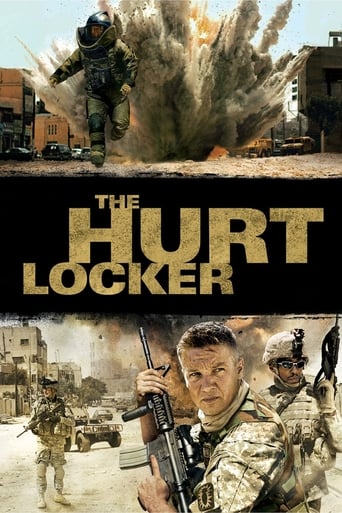
The Hurt Locker
2008 · Film · 131 min
Directed by Kathryn Bigelow
During the Iraq War, a Sergeant recently assigned to an army bomb squad is put at odds with his squad mates due to his maverick way of handling his work.
11 positive4 negative26 neutralfrom 41 commenters
Where to watch
No streaming data for this title.
46 comments on Hacker News
The first time i saw this concept of the 'double-tap' - to target first-responders to the scene of an earlier strike - was in the movie,' The Hurt Locker' - where it was employed by some ISIS-tier insurgents using a VBIED disguised as an ambulance. Presumably this was intended to show the level of depravity of the terrorists. First time actually seeing this employed in the real world was last year when Israel did a double tap that killed multiple journalists working for reuters, AP, Al Jazeera, Middle East Eye and Quds News Network plus paramedics and medical staff *at a hospital*. - https://en.wikipedia.org/wiki/2025_Nasser_Hospital_strikes
Now finding out this is essentially SOP for Israel and the United States (eg: the triple-tap strike at the Iranian girl's school where parents rushing to save their kids from the collapsed school were hit in the second and third strike), I wonder if the terrorists learnt this tactic from the US coalition or vice-versa.
You're looking for story-driven movies and setting the bar at Shawshank, which is IMDB's all-time most popular movie, so that's kind of a tall order.
You're also rattling off three movies that have almost nothing to do with each other. Banshees of Inisherin in particular isn't a crowd-pleasing movie. To stick with Martin McDonagh, check out In Bruges or Three Billboards. I didn't like American Sniper either (it's Temu Hurt Locker), but sticking with Clint Eastwood, check out Gran Torino.
My top top pick is actually a youtube channel that does movie essays: https://www.youtube.com/@filmjoy
They are terrifically well researched with a bunch of easter eggs and production backstory and are put together in a high production value, thoughtful way.
They really made me love and appreciate film much more.
I think it's the same way as musicians appreciating music, right?
Non-musicians might say learning more about music theory, makes some music seem less magical in a 'knowing how it was done' sort of way.
But like a musician actively listening, watching film from a more critical viewpoint/lens is really fantastic. You start to think about things like 'who was the cinematographer?', 'Who did the music and score?' and enjoying finding things like how a certain director has a certain motif.
As for the film list:
- The lord of the rings trilogy, is I assume mandatory watching for all at this point.
- The Matrix trilogy, supplemented by the movie essay here: https://www.youtube.com/watch?v=M0VnYcMHuDc
- Whiplash (2014) A J.K simmons masterpiece
- Sicario (2015) Cinematographer Roger Deakins doing some amazing work alongside Denis Villeneuve.
- Blade Runner 2049 sort of an obvious choice but beautifully made, better than the original in all ways except maybe soundtrack. The original Vangelis Blade Runner music is sort of genre defining.
- Black Hawk Down (2001) Absolutely stellar cast some of whom in their first role or wouldn't have their breakout role until several movies later. Possibly one of the most well paced movies, it's extremely clear and coherent throughout. It's also tidy self and self contained, no one said lets make 10 sequels and a cinematic universe. Dealt with the morals and psychology of war that would be further touched on in Jarhead (2005) another great movie.
- The Hurt Locker (2008) If Jarhead is a claustrophobic look at how useless and powerless an average infantry soldier can feel during war, The Hurt Locker is a study of a soldier addicted to it. Through a lens of up close nihilism.
- The silence of the lambs (1991) Hannibal Lecter / Anthony Hopkins with a bunch of scenes that are so good they are studied in film schools. Genre best horror-thriller.
there's a really good scene in the movie https://www.themoviedb.org/movie/12162-the-hurt-locker about this.
This entire article seems like agenda-driven BS. I can totally believe that government entities have sought and occasionally succeeded at influencing some media and entertainment messages but I don't see any proof of a vast conspiracy. There's much simpler explanations for all of it. People like hero stories. Studios would be making heroic soldiers without any prompting. And there's no shortage of successful movies about how bad war sucks. Hurt Locker springs to mind as something commercially and critically successful as an authentic portrait of war being hell.
> "You can't compress noise." Well, humans can't tell the difference between two snippets of white noise.
new codecs (decoders?) have something called Film Grain Synthesis. i think you have to encode the content before this is applied at the source?
i'm not sure this actually madebit into the AV1 standard or encoders yet.
tried encoding Hurt Locker a few years ago and the film grain added to it really put the hurt on x264/handbrake. the final file size was nearly as big as the original content. back then the same amount of cpu burning could have probably found a full btc :D
related: https://news.ycombinator.com/item?id=17536727
This is neat! I was fairly surprised when a few that were instantly in my mind were actually correct - Back to the Future, and Wizard of Oz, Ghost Busters, Big Lebowski, to name a few.
And I don't think its simply because of the likelihood of guessing a popular movie, as many of the titles I've never heard of. Although some are a giveaway by their content and focusing on an obvious subject - Ghost Busters has clear ghosts; Hurt Locker has a bunch of bomb-disposal guys. Others like Edward Sissorhands, have no giveaways but just embody the style; I'd love to see the descriptions provided to the AI
> I didn't go, but the photos of the architecture from the different countries were beautiful.
Apparently, the American pavilion was not among them:
Now that the US Pavilion has been open for several days, its reviews, to be generous, are mixed. Visitors, after a two-hour wait, enjoy the upbeat attitude of the student “ambassadors” who greet them in Mandarin — but few are impressed by the three films that constitute the US Pavilion’s content. (One reporter noted that the price for the three shorts, about $23 million, is more than the production costs of the Oscar-winning film, The Hurt Locker.) The “American people’s” sole walk-on are brief vignettes that flicker on the screen and then are gone. Chinese visitors are reported to have remarked, especially after the hype and long wait, “We expected more from America.” Visitors exit the theater into a large hall dedicated to fawning over the 60-odd corporate sponsors whose names and brands are the only aspects of American life and culture to which the pavilion accords recognition.
https://www.huffpost.com/entry/an-epic-failure-of-planni_b_561697
You're mostly right in everything, except that 'the Deep State' is not that deep and is not that much part of the state - most US propaganda is actually pretty transparently done by the corporate sector. We call it PR and marketing now, but it is exactly propaganda, used to great effectiveness everywhere in the world. Teb other major leg of US propaganda is the entertainment industry, which is also extremely effective at selling grand narratives, and has a very favorable lens from which it always presents the US and its allies, whether it be in gaming, mass market films, or even critical darlings (see the fawning reception the extremely pro-American, pro-militaristic 'The Hurt Locker' got everywhere in the critical press).
How is it an example of "shining at its best" when the Soviets made far more sacrifices during WWII only to be robbed of the credit in pretty much all western popular accounts. Yes, they were more brutal to those they defeated in many instances, but that doesn't diminish their military contribution.
The US government doesn't engage in direct censorship like the Chinese government but it does have some power, in practice, to shape its portrayal in the media. The Pentagon pulled production assistance from The Hurt Locker because it didn't like certain aspects of how the military was portrayed[1], as is their right of course. Most films cannot afford this luxury. The relationship between the state and the press is also closer than many think, particularly when it comes to briefings from the intelligence community.
Social media companies like Twitter and Facebook admittedly do a pretty good job of allowing a wide range of views to be expressed, although this comes at the price of allowing massive amounts of disinformation as well.
>try to find something similar on PRC's pointless war in Vietnam which they lost.
How about this one? https://en.wikipedia.org/wiki/Youth_(2017_film)
[1] https://www.latimes.com/archives/la-xpm-2010-feb-25-la-et-hurt-locker26-2010feb26-story.html
bomb guys are EOD SW, they made a movie about them a while back, Hurt Locker.
https://en.wikipedia.org/wiki/Explosive_Ordnance_Disposal_Badge
Stuff gets deep quickly. Like movies like “The Hurt Locker”? Well say hello to Sackler family opioid money. It’s interesting to see how deep in pop society opioid money made it.
Also Memento was a $9 million dollar movie, even in 2000 that wasn't a lot of money.
What we're missing these days are what myself and my buddy, who's a film buff and writer, are the 10-30 million dollar films. Well written, competent director and director of photography, a reasonable cast of most likely newbies but they can act, and a decent plot/story....Memento, Donnie Darko, The Hurt Locker. Jeez the Hurt Locker was just a 15 million dollar movie, but it's pretty decent (I've watched it five times).
- Jarhead: showing the boredom and uselessness of war
- Hurt Locker: showing the lack of clear morality (good guy/bad guy) in war
- American Sniper: showing the lasting psychological damage that war can inflict on the individual soldier.
Even though some of these movies depict individual heroism in war, none of them would be allowed in China (without heavy editing) because they are at their heart, critical of the entire endevour.
Agree with your general point, but I think you're generalizing a bit too much. There's plenty of movies that aren't Top Gun-level propaganda. The Hurt Locker, Jarhead, all the ones commented below.
You’re like the main character in Hurt Locker at the end of the movie. He has come home from deployment and is standing in a supermarket. The mundane, everyday reality of First World civilian life seems meaningless in contrast.
So he goes back for another deployment. Another deployment in a pointless and meaningless war, yet another racket that has everything to do with the interests of the powerful and nothing to do with sentimental crap like serving your country. But he feels that it is meaningful.
“War is a racket”
I didn't say it was both, but here goes. One caveat is that this is a very US/UK-centric response, and it might not resonate with worldviews of people from other places with different cultures and histories.
1) It's stupid because he's making an extremely opinionated comment without understanding the thing he's commenting on.
The push for diversity is not a push to remove white, "Oxbridge" (upper-crust) men from media. It's to recognize that media isn't anywhere close to being a meritocracy, and there are barriers for poor, minority, and/or female talent that didn't exist for people like Terry Gilliam.
The industry is growing, and there's space for Terry Gilliam, lots of other white men, and also people from other backgrounds. As we've seen with The Hurt Locker, Black Panther, Broad City, and other movies/TV, women/minorities can make very profitable and prestigious work. A true media meritocracy would be more diverse than what we're seeing right now.
2) Whether it's offensive depends on the person. Some people are offended by it because it implies that black lesbians are given things in society only because of their minority status.
People on that side of the issue would say that either A) that isn't happening, or B) it is (and should be) happening because black lesbians also have fewer opportunities than non-minorities and face discrimination.
it's like that scene from the movie Hurt Locker https://www.youtube.com/watch?v=L1OOI6m4b7c where he's trying to decide which cereal from so many choices. Old fashion family arranged marriages make so much sense to me now. JUST PICK SOMEONE!
"How d’you rearrange them into what you DO like?"
Are you allowed to combine multiple movies? If so them I'm off to combine "Howards End" and "The Hurt Locker" into something more to my taste....
I'm in the apparent minority of people who thought "The Hurt Locker" was an awful movie.
Generation Kill is unwatchable, in the sense that you'd rather see the characters die at the hands of Freddy Kruger or Jason Voorhees, than bother to care about, oh, i dunno, a plot line or whether it's based on real journalism?
Same goes for The Hurt Locker, among others. So many, are simple emotional pandering, set against a dubious backdrop, without dealing with the premise of the backdrop. American Sniper simply feels like an effort to influence, even with Clint Eastwood's involvement (or perhaps even more so, with it).
Live from Baghdad is a shade too early, and the wrong Iraq war, but captures the joke-like atmosphere of the post-hoc rationale for even going to war in the region.
Similar era war movie, but different conflict, is Restrepo, which is a documentary. And, unfortunately, maybe it's accurate enough to be completely unflattering. No one appearing on screen is particularly charismatic or inspiring, and so too the story it tells is uneventful, no surprises.
But these jingoistic movies suck because very nearly all movies in general mostly suck. Everything seems like long-form, substance-lacking music videos, or student exercises in cinematography and digital effects editing. Oh well. Keep waiting for any good movie, but don't hold your breath. They are few and far between, since the advent of digital production techniques.
It's just how things are now. Now that all footage makes it make it past the film-developer-chemical bath, it's easy to undo, and selectively retry. It's too easy to make a movie, so it's very easy to make meaningless movies.
Considering Kathryn Bigelow, the director of 'the Hurt Locker', also did 'Zero Dark Thirty' in many respects, the non plus ultra C.I.A control and influence over hollywood, the 'Hurt Locker's' critical position is dubious. In fact it's worth noting that the C.I.A is so good at this that they are not beyond putting ostensibly damaging material or arguments in their films in order to refute them at a more fundamental level, or coming around to devour them more completely in some other film. As paranoid and wacky as it sounds, the general project of propaganda is a totality spread across the cultural field...
Finally it's worth noting that with the advent of widespread piracy, we have been forced to pay for our films / entertainment in other ways. A pirated movie still delivers its ideological payload, whether or not it's corporate interest determining the cars that feature in the 'Fast and Furious' franchise or the military industrial complex permitting a flock of Ospreys to feature prominently in a scene ...
As well as Three Kings and Hurt Locker mentioned elsewhere, there's also Jarhead. All great movies.
There was also Green Zone, which was OK.
A relevant scene from The Hurt Locker: https://www.youtube.com/watch?v=3PgbNQU3cYo
In this scene, the character has just returned from a tour in Iraq defusing IEDs. The movie portrays him as a total pro in the battlefield, but stunned and anxious as he returns to civilian life. Great movie not just about war, but about the psychology of war and purpose.
Edit: here's a better dissection – http://www.cinemablography.org/supermarket-scene.html
>Did he specify which films were added in the second revision?
Lee revamped the list to include eight movies by five female directors, bringing the total to 95.
The Piano– Jane Campion (1993)
Daughters of the Dust– Julie Dash (1991)
The Hurt Locker– Kathryn Bigelow (2008)
Sugar Cane Alley – Euzhan Palcy (1983)
The Seduction of Mimi– Lina Wertmuller (1972)
Love and Anarchy – Lina Wertmuller (1973)
Swept Away – Lina Wertmuller (1974)
Seven Beauties – Lina Wertmuller (1975)
http://www.openculture.com/2014/11/spike-lees-list-of-95-essential-movies.html
I guess I was thinking about using photos in things like forum posts. Movies is a different matter - members of the general public routinely pay for movies. Members of the general public don't routinely pay for photos in a forum post - this is not where photographers get their income stream from. Hence hard to prove damages.
And even then, the MPAA, despite it's considerable legal power and ability to get laws altered, still has a difficult time getting damages out of people. "In 2011, for example, the producers for Hurt Locker sued almost 25,000 BitTorrent users—and almost all the claims were voluntarily dismissed by the studio, because it was taking too long to track down all of the defendants via their IP addresses."[1]. That's not difficult for the reasons I said, but it's still difficult, and that's talking about a violently litigious entity with very deep pockets. A regular company or a freelancer is going to have an even more difficult time.
[1]http://www.motherjones.com/politics/2014/02/bittorrent-illegal-downloads-ip-address-lawsuit
Warning: spoilers ahead
Homeland was pretty subversive in its first season, I mean, up until Brody decided not to blow himself and the rest of the high-ranking officials up in that bunker it was a pretty bleak affair: a decorated US marine, now a politician, who decides to kill the VP of the United States and a couple of other generals, you don't usually get that in block-busters. Afterwards, and especially starting with season 2, it did indeed become a propaganda thingie.
Otherwise you're completely spot on. As a film junkie it really bothers me that our generation doesn't have its "Apocalypse Now", "The Deer Hunter" or "Rambo I - First Blood" (whose director has just been interviewed in the latest Cahiers du Cinema issue), it's all white-washed, depressing propaganda. There are a few exceptions here and there (De Palma's "Redacted", Bigelow's "The Hurt Locker", partially), but otherwise we're treated not as adults, but as kids who need to be told "nice" stories about what's really happening around us.
As a coder who get shocked every time those running lines and "ACCESS GRANTED" pop-ups appear as that guy just break into the bank account and other phony stuff, I have to say that it did not started in here at all.
Hollywood has been faking it all the way, from ridicules gun-shots scenes, bombs explosions, cars that keep driving after getting smashed and street-kids who can shot and kill in one hand.
It is simply that code, software and hacking is closer to us than the other examples, so we care about it that it will look real.
Also, how would you show an owned server? a prompt that reads:
# root
This means nothing to the masses.
[1] - regarding bombing scenes, I think is one of those rare directors who don't fake it, rather make it looks as realistic as possible, see Hurt Locker and Zero Dark Thirty as examples.
[a] http://www.imdb.com/title/tt0887912/?ref_=nm_flmg_dr_3
[b] http://www.imdb.com/title/tt1790885/?ref_=nm_flmg_dr_1
Swedes evidently think "too much of a good thing can be wonderful": they have had a Minister of Gender Equality since the 50's (http://en.wikipedia.org/wiki/Minister_for_Gender_Equality_(Sweden)) and there are efforts to introduce a gender-neutral pronoun (http://www.slate.com/articles/double_x/doublex/2012/04/hen_sweden_s_new_gender_neutral_pronoun_causes_controversy_.html, although this has been tried in English, too). In the Global Gender Gap Report 2012, Sweden is named as a world leader in gender equality (http://www.weforum.org/reports/global-gender-gap-report-2012), etc. etc. I mean, the country even has an official gender equality webpage in English (http://sweden.se/society/gender-equality-in-sweden/). It seems they can't go any further. And then this.
Even Jezebel (http://jezebel.com/sweden-introduces-new-movie-rating-system-based-on-the-1459696241) has to admit the "test" is not perfect:
"Sure, the Bechdel test is imperfect (Kathryn Bigelow's The Hurt Locker doesn't pass, for instance, but you could hardly argue that a female-helmed war movie doesn't empower at least one woman), but that doesn't make it useless as a starting line for sniffing out broad trends in gender bias. And that's what we're talking about here. Trends. Analysis. Examination. Critical thought. Information. I'm sure there are plenty of people who consider themselves scrupulously egalitarian who never even noticed that there are only like THREE WOMEN IN ALL OF MIDDLE EARTH."
I understand that this is just a thing introduced by a a few movie theaters, i.e. it's not the law or anything (yet). Yet, that's what riles me most: as librarians are the first to defend any censorship, movie professionals should push back on any arbitrary limitation on what can be shown. Some examples of movies that fail the test are given, e.g. LOTHR Trilogy, Pulp Fiction, Pacific Rim, etc. However, the test would also exclude many art films such as Tarkovski's Stalker and Solaris. How about movies with only a single female lead that don't quite fit the purpose of the test, e.g. Bergman's Through a Glass Darkly? How to handle movies with no dialog, or experimental movies such as Eraserhead? One can easily see that this sort of simplistic testing can have little artistic or practical merit.
Full Metal Jacket.
• Three Kings.
• In The Valley of Elah.
Good Morning Vietnam.
A Few Good Men.
Platoon.
• Jarhead.
Casualties Of War.
• The Men Who Stare At Goats.
The Deer Hunter.
The Thin Red Line.
• Syriana.
• The Green Zone.
• Stop Loss.
Also, • HBO's "Generation Kill".
(•'d relatively recent movies)
I don't think "The Hurt Locker" was particularly critical of the military and didn't count it. Also not counting documentaries like "Restrepo".
I hereby dispute the idea that the DOD has made it impossible for big-budget Hollywood movies to criticize the US military, and suggest instead that the bias Hollywood in favor of the military is responding to customer preferences and not leading it. Given what I presume to be America's default position of "supporting our troops", I'm struck by how many films Hollywood produce that challenge that default.
Remember also that Hollywood confronts at least two vectors of consumer preference in marketing films: first, Americans (in the large) have a (typical) diffuse nationalistic home-team support for our overseas adventures, and, more importantly, there's a less-political less-issue-oriented reverence expected for the sacrifices made by the young people we send into combat which is especially intense during times when large numbers of people are serving in combat zones. In other words, it's especially tricky to criticize the military during active conflicts.
Also, Three Kings is a fantastic movie.
Both of those sites that you cited are terrible, filled with conspiracy theories and shrill rhetoric. Unfortunately more and more people on HN seem to be citing them.
Anyway:
> Do you recall any big American movie in the last decade (or even more) that painted America's military in a non-positive light?
The Bourne series. Though that was about the CIA.
Safe House, also CIA.
Avatar, as someone else mentioned, analogously painted the US military in a bad light.
Full Metal Jacket certainly shows some of the more brutish and shameful sides of the US military.
> I do remember The Hurt Locker, and a whole list of other movies, Iron Man and Captain America
So are you upset that these movies didn't pause to lecture the audience about the horrors of American imperialism? Are you upset that they don't serve your particular political agenda?
> To me, truly the most amazing thing about this is that pretty much no-one knows about this!
The people who don't know don't care. This information is readily available. And even some of the people who do know don't care (like me).
I was made aware of how much propaganda there is in Western movies by a comment here on HN:
"The major exception here is the Department of Defense, which has an ‘open’ but barely publicized relationship with Tinsel Town, whereby, in exchange for advice, men and invaluable equipment, such as aircraft carriers and helicopters, the Pentagon routinely demands flattering script alterations."
http://www.globalresearch.ca/lights-camera-covert-action-the-deep-politics-of-hollywood/11921
http://original.antiwar.com/sean-a-mcelwee/2013/04/28/propaganda-and-censorship-the-hollywood-industrial-complex/
Do you recall any big American movie in the last decade (or even more) that painted America's military in a non-positive light? I don't. I do remember Zero Dark Thirty (if you watch carefully you'll see how they basically say that torture works great in getting prisoners to hand over information), I do remember The Hurt Locker, and a whole list of other movies, Iron Man and Captain America being the latest examples (Iron Man originally used to be about fighting communism, now it is about fighting terrorism).
Hollywood output is a very valuable export to the world in this way of framing America's image in the world, and I'm betting America is becoming even more aware of this and will put even more resources to this effort in coming time.
To me, truly the most amazing thing about this is that pretty much no-one knows about this! Tell someone that there's a lot of American propaganda in Western movies and they'll take you for a conspiracy nut.
The thing is, if you're not doing some sort of incredibly bloated production, you don't need 10,000 people to make a movie. Most movies are NOT Lord of the Rings.
For instance, one of the best critically received movies of the last decade was probably No Country For Old Men. Budget? $25 million. Made back well over triple that at the US box office alone.
The King's Speech? $15 million, made over $135 million
Argo? $44 million, and that had lots of expensive location shoots in the middle east
The Hurt Locker? $15 million
Slumdog Millionaire? $15 million
Crash? $6.5 million
Million Dollar Baby? $30 million
All movies that did very well at the box office, and were made for $25 million or less (with one exception). They also all won the Best Picture oscar. So there is PLENTY of evidence that you can make a great movie without getting anywhere near a 9-figure price tag.
Of course, for "indie" films, you can go well under that. "Clerks" cost about as much a new car. The original Texas Chainsaw Massacre was barely over $100k....the first Saw movie was made for just over $1m and grossed 100 times that.
Well this is the hard problem. To make it convenient and sensible for people to buy/watch movies officially, make it possible to show it off to their friends (Like I have a paid subscription), may be adopt SAAS or provide rented streaming in such a way that people say "we have an official access to hurt locker" or something.
If it costs $10 a ticket to watch on a big screen, spend gasoline, travel some distance physically, it can surely cost 1/10th (or less) of that amount per movie and yet return similar profits (by volumes) to the artist. People really don't care about the middlemen.
Just a few ideas, but obviously the solution is hard. Yet I believe that teaching manners to people, i.e. annoying the consumers is suicidal.
Oh, I agree that people were trying to see the movie hurt locker in much the same way that I try to see (and treasure, trust me!) Game of Thrones off the torrents.
I don't have any rationale other than the fact that I don't want to pay the $876 that HBO + Cable will cost me. I also like to have it with me while travelling, and the streaming solutions from HBO, good as they are, just aren't great on an airplane / hotel in some other country.
I'm not "putting middlemen" in their place - I just want cool content in the format that is convenient for me for what I consider to be a reasonable cost to me. I do make it a absolute habit of purchasing the DVDs when they come out, to try and make my conscience a little lighter.
But, I _never_ kid myself that the artists behind GoT wanted to "connect with me directly." They wanted to get paid the same as I do at my job.
But you agree that people were trying to see the movie 'Hurt Locker' or treasure it? And obviously there was no official way of acquiring the content - a place which works nicely and is priced correctly.
We've seen this, argued over and over again for past fifteen years. Justifying stealing is different from putting middlemen to their place. Teaching consumers manners, penalizing them is not the right way.
One can understand this, or wait to understand this the hard way.
I always find it interesting to see if I can find the logic in the arguments that people make to justify stealing other people's property.
I really doubt that the artist behind "Hurt Locker" were trying to "connect with us directly" when people ripped off their movie on the torrents.
No, it's not legal. But only non-MPAA-affiliated films are the subject of torrent lawsuits. The MPAA gave up that tactic a while ago. Movies like The Expendables and The Hurt Locker aren't MPAA-affiliated. Those lawsuits are being pushed by independent lawyers trying to get rich quick through mass settlements. Of course, that doesn't prevent them from suing in the future.
http://www.imdb.com/title/tt0887912/trivia?tab=gf&item=gf0939143
I was really surprised when I originally read this in the "Goofs" list for the Hurt Locker.
"wising up to the antics of the recording and motion picture industries"
Neither the RIAA or the MPAA are involved in the bittorrent lawsuits. The big lawsuit that really kicked it off was over The Hurt Locker, which isn't an MPAA-affiliated movie. It was kick-started by a lawyer named Thomas Dunlap, who worked out the idea with Uwe Boll for his shitty movies. The RIAA stopped going after file-sharers when its lead attorney, Donald Verrilli, was appointed by Obama to be Solicitor General. That alone was more than they wanted.
All of these mass lawsuits are the idea of small, sometimes desperate lawyers, not content providers or publishers. Most of the lawsuits, including the one in this article, are over porn downloads; porn is obviously not an MPAA endpoint.
> (btw that illegal torrent u suggest is still going to take hours to download)
I think you need to double-check your math. I just found a Bluray rip of the Hurt Locker on a torrent site that is 3.78 GB. Using my 24 Mbps fiber connection ($55/month, in America), it would take:
3.78 GB * (1024 MB/GB) * (8 MB/Mb) * (1 s/24 Mb) * (1 min/60 s) = 21.5 mins
Hardly the "hours" that you suggested. And considering that the ads for a typical movie will run for much longer than 21.5 mins, I'd say it's not that long at all.
It doesn't take hours to find stuff on line that is worth watching.
Just use Google: http://www.google.dk/search?aq=f&ix=hca&sourceid=chrome&ie=UTF-8&q=hurt+locker+torrent
Or some similar search engine.
This is a rather technical decision in a content piracy lawsuit. Distributors of The Hurt Locker and other films have accused BitTorrent filesharers of copyright infringement, and added a long list of potential defendants ('Does 1-1000,' as in 'John/Jane Doe') based on IP addresses.
A large number of people have filed motions to have themselves dismissed from the case or for protective orders that would prevent their future involvement, on a variety of legal grounds. These have been denied by the court, on the basis that the filers have yet to be named as defendants; although it's possible that that will happen in the future should the IP addresses in the plaintiff's complaint match up with the ISP customer accounts of the filers, the court decided that pre-emptive dismissal hearings would likely result in a colossal waste of time.
Most of the material in the linked opinion is civil procedure legalese that will only be of interest to lawyers. On pages 14-16, however, the court considers BitTorrent's method of operation, and specifically the plaintiff's claim that the nature of seeding is such that any downloader of a specific file via BitTorrent is by definition engaged in sharing that file for as long as the BitTorrent client remains connected to the network and the file has not been deleted. If I understand the court correctly, previous attempts to join large numbers of defendants this way failed because the plaintiffs were claiming that multiple copyrights were being infringed by all defendants - who reasonably argued that such a shotgun approach risked penalizing individuals for all possible crimes committed by everyone in a group. It was unreasonable for plaintiffs in those cases to join defendants en masse by pointing to the availability of multiple torrents of copyrighted works, because there was no basis to think that every defendant would necessarily have downloaded the same movies, and thus they could not be said to be acting in concert.
Here, by contrast, there's a good chance that people who downloaded a torrent for a specific movie went ahead and downloaded the movie, and if they were ever a seed peer, then they must by definition have been acting in concert with other seed peers to infringe upon the plaintiff's copyright. On that basis, the judge rejected the procedural argument for dropping defendants from the case at this stage and refused to guarantee immunity from future joinder. So the case will go ahead for the time being, and seems as if it will be based on a realistic description of how BitTorrent actually functions which is well understood by the presiding judge - a small victory for the plaintiffs.
IANAL, plus I have only read it through once - so some or all of the above may turn out to be incorrect. Don't construe anything I say as legal advice! Also, I'm highlighting the particular issue that interests me, so don't mistake this for a comprehensive summary either. In fact, don't read any of the above, and if you did read it just forget about it :-)
I went to torrentfreak to double check the Hurt Locker numbers, because I could have sworn they were going after 'tens of thousands.'
http://torrentfreak.com/piracy-will-earn-hurt-locker-more-th...
Looks like this 5,000 for Hurt Locker was just the first batch, with more to come. I was surprised to see that 'thousands' of people are still downloading the movie. Somebody should tell those people :/.
I guess I'm glad I stopped running a TOR exit node. Ran one for a while, and always expected to eventually get a DMCA letter. Never did. Looks like these guys really don't care if the Does are innocent or not, they just need the money.
this ($1500 vs $20 cost of a new movie) is of similar scale.
The examples cited are all (with 1 exception, The Hurt Locker) all of the straight-to-video $5 bargain bin variety. 50 x $5 = $250. Compared to $1500 (let alone $2500) that's quite a bit different.
What is great about this movie review, for me, isn't the exact point-by-point analysis that the author makes, but the fact that author is noted futurist Ray Kurzweil. It would be like having Colin Powell review the Hurt Locker - its just kind of cool.