 Hacker Cinema
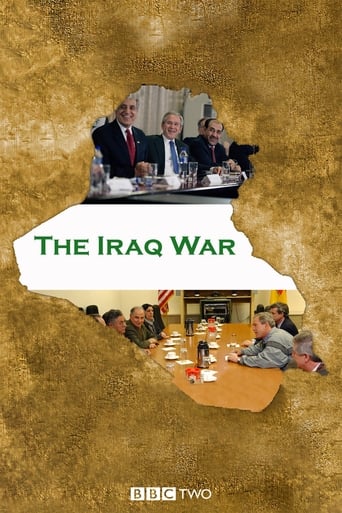
The Iraq War
2013 · TV series · documentary · 1 season
Top US, European and Iraqi leaders - political and military - tell the inside story of their private talks, phone calls, deals and clashes. Former members of Saddam Hussein's regime tell - for the first time on television - just what he said to them as the threat of war grew. Over three episodes, the series gets the insiders to tell what happened at crucial moments on the road to war following 9/11, the first year after the invasion as Iraq's liberation became a US occupation and Iraq's descent into civil war.
2 neutralfrom 2 commenters
Where to watch
No streaming data for this title.


2 comments on Hacker News
Can you cite any of the reasons that led them to think Iraq had WMDs? Any of the documents they used?
Because this is pretty easy to search
>In December 2002, Bush declared, "We do not know whether or not [Iraq] has a nuclear weapon." That was not what the National Intelligence Estimate said. As Tenet would later testify, "We said that Saddam did not have a nuclear weapon and probably would have been unable to make one until 2007 to 2009." Bush did know whether or not Iraq had a nuclear weapon — and lied and said he didn’t know to hype the threat.
>On CNN in September 2002, Condoleezza Rice claimed that aluminum tubes purchased by Iraq were "only really suited for nuclear weapons programs." This was precisely the opposite of what nuclear experts at the Energy Department were saying; they argue that not only was it very possible the tubes were for nonnuclear purposes but that it was very likely they were too
>In August 2002, Dick Cheney declared, "Simply stated, there's no doubt that Saddam Hussein now has weapons of mass destruction." But as Corn notes, at that time there was "no confirmed intelligence at this point establishing that Saddam had revived a major WMD operation." Gen. Anthony Zinni, who had heard the same intelligence and attended Cheney’s speech, would later say in a documentary, "It was a total shock. I couldn't believe the vice president was saying this, you know?
The americans lied and it led to a million lost lives and ruined the future of an entire generation. I guess it's different from the current situation and no one actually cares but I think it's important to not forget how vile the 2003 invasion was. Yes we don't have to bring it up (I didnt) in every conversation but we don't have to whitewash the events either
https://www.vox.com/2016/7/9/12123022/george-w-bush-lies-iraq-war
He's right on most of the stuff he says in that article actually. Let's have a quick breakdown:
- Electronic publishing will not surpass traditional newspapers: newspapers may now be found online, but the majority of substantial content out there is still produced the out fashioned way by old fashioned reporters. Bloggers have done a pretty decent job of covering stories which are too niche for the mainstream presses (Engadget, TechCrunch etc), but have not come even remotely close to challenging traditional media. I saw a PBS documentary on the Iraq War which mentioned that traditional newspapers are both profitable and account for about 80% of new stories, with talking heads on TV mostly taking their cues from papers.
- multimedia software replaces teachers: I'd like to see someone try and argue he was wrong on this one.
- computers replace books - well, it hasn't happened yet, and it seems it won't happen until computers start to resemble books so much that there isn't any practical difference anymore. The Kindle, E-Ink, etc are all trying to make computers more like books, since no one likes reading off a screen, so I'll give him this point too.
- 'ocean of uneditted data': wikipedia and google have made a huge difference here, so he's wrong on this point
- digital networks change governance: Now that I think about it, isn't it a bit ironic that the rise of blogs, distributed networks, open discussion forums etc all took place during one of the most orwellian administrations ever? Unseen levels of secrecy, scandals too numerous to mention, a disasterous war, erosion of civil liberties, increased surveillance... one of the hubris around electronic governance made an once of difference.
- cyberbusiness: partially right on this one. The internet is great for some kinds of business and quite horrible at others.
- Online communities cannot replace real human ones: again, completely right on this one. While online communities are better than nothing, they pale in comparison with real human ones. There's a very good reason why startup hubs are as relevant as ever and YCombinator and its clones demand that you move to their location in order to partipate.
OVerall, a pretty good record of predictions and I suspect a lot of them will continue to hold for a very long time.