 Hacker Cinema
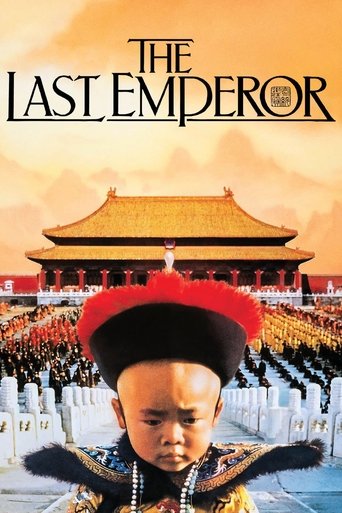
The Last Emperor
1987 · Film · 163 min
Directed by Bernardo Bertolucci
A dramatic history of Pu Yi, the last of the Emperors of China, from his lofty birth and brief reign in the Forbidden City, the object of worship by half a billion people; through his abdication, his decline and dissolute lifestyle; his exploitation by the invading Japanese, and finally to his obscure existence as just another peasant worker in the People's Republic.
1 positive1 neutralfrom 2 commenters
Where to watch
No streaming data for this title.

4 comments on Hacker News
I had the experience at uni in the 1980s of seeing the film The Last Emperor, which at one point includes a bit where a Time Magazine photographer is present. I realised that this probably meant that Time had run an item on the (then newly-crowned Japanese puppet) emperor Puyi of Manchukuo (occupied China).
So I headed to the campus library, serials room, which had bound volumes of Time along with many other publications, and shelf-scanned the appropriate date ranges around 1934 until I found the edition with the story. Read that, which was insightful (a question I'd had was whether or not Puyi was seen at the time as a puppet, and yes, he very much was).
I am fearful that this experience could not be replicated today, and that those stacks may well have been cleared.
First: there's a hell of a lot of wisdom about reading and how to approach it in Mortimer Adler's How To Read a Book. That's a perennial favourite of both HN and myself. In particular it addresses the question of how to read different types of books and for different purposes. In detail. In particular, Adler repeatedly stresses the notion of reading as an inquiry, in the sense that you are asking questions of the book and the author. If those questions are rewarded, all the better. If they're not ... you might be better of spending time elsewhere.
<https://archive.org/details/howtoreadbook0000adle_y9v4>
I've referenced it nearly 30 times on HN: <https://hn.algolia.com/?dateRange=all&page=0&prefix=false&query=by%3Adredmorbius%20%22how%20to%20read%20a%20book%22&sort=byPopularity&type=comment>
Disclaimer: I'm only about halfway through it myself, though the book is on my e-reader ;-)
On filters, I disagree with Burkeman, it is filter failure, and Burkeman is himself failing to define what sorts of filters are needed.
In the context of the "haystack-sized piles of needles", it's useful to consider the question how many needles do I need?, and to simply select a sufficient (and not excessive) number. This does presume that the stacks are of equivalent quality, which can pose a slight challenge, though factors such as reputation and some occasional broad sampling usually address this.
In particular, though, in an environment with a surfeit of signals and records, what is needed are cheap, fast, no-regret rejection tools. I've noted this a few times in earlier comments, e.g.: <https://news.ycombinator.com/item?id=22208255> and <https://news.ycombinator.com/item?id=31254795>.
In the physical world, our senses and mental capabilities provide us with this: we're tuned to a limited set of stimuli (sight, sound, smell, taste, various touch, proprioception, and inner-state senses such as hunger, thirst, and need to void bowels or bladder). There's a heck of a lot of other signals the Universe provides, we are utterly blind to them for the most part, and our lack of capacity to sense these largely doesn't bother us. Even within our extant sense channels, we can only detect so much: visible light, but not radio or x-rays, the audible spectrum but not infra- or ultra-sonic frequencies, some smells with great sensitivity (petrichor, mercaptin) others not at all (water, carbon monoxide), etc.
In the world of data one of the most effective and unbiased rejection methods is random sampling. We usually think of this in terms of data selected, but it could as readily be expressed as data rejected. The reason statisticians sample randomly is because measurement is expensive, and quite often a highly accurate impression of a phenomenon can be gathered from only a few tens or hundreds of individual examples if those themselves are selected without bias or are otherwise representative.
For texts and readings, much depends on why you're reading something. If it's simply for entertainment, then the requisite question is "am I being entertained". If it's for information, then the question broadens, but I'd suggest:
- Is this actually informative? Is it telling me something I don't already know (rather than reinforcing biases or existing beliefs)? Is it accurate? Is the information durable?
- Is this useful? Can I use the information, and will it change a future action or decision of mine? Does it put the past in a more comprehensible light?
- If a skill, is the skill taught useful and durable? I and many others have often noted that the base set of Unix / Linux shell tools and editors provides a highly useful and durable skillset, one I first began acquiring 30 to 40 years ago, and still use daily. I've seen many other technical skillsets, including expensive training or books (some at an employers' cost, some at my own), come and go over that same time.
- How does this fit with an existing worldview or structure? I've begun specifically cultivating a few of my own ontologies and sense-making structures, and find that these provide useful lenses for assimilating and testing new information. Occasionally I'll find other authors have anticipated my own notions, and the force with which that realisation hits is profound. It's also a strong validation that I'm likely on a useful path, or at least one that others had previously found worth pursuing.
As for the first time I realised that there was in fact far more information than I could reasonably access, it was at a library. On entering uni, I remember my first visit to the main campus library, literally a tower of books, holding several million volumes (and part of an even larger collection across other libraries both on campus and at other campuses). What I did instead was to treat the collection as a resource, something to ask questions of, with a few (small) sections explored in detail, many others skipped entirely, and some sampled from selectively. A particular memory was of seeing the film The Last Emperor, a biography of Puyi, the last emperor of China, and largely a Japanese puppet. One scene of the film featured a Time Magazine photographer, and the thought occurred that there was probably a story from that time. I tracked this down and read the story, published in the 1930s, from a copy dating to that time. The experience of "oh, I can track that down" has stuck with me. And yes, losing on-campus access to academic stacks was an absolutely wrenching experience for me, moderated now through the Internet Archive, Project Gutenberg, Library Genesis, ZLibrary, and other resources.
And yes, if something's not worth reading, it's not worth reading, as noted in an exchange I had on HN itself over the past day or so.
Watching the film The Last Emperor I noted the scene in which a TIME photographer was present for the Emperor's coronation (as a Japanese puppet). The thought occurred that this quite probably was an actual occurrence, and that there should be an article corresponding to the story. My uni library had a collection of back issues, and sure enough, I found the article and read it ... an interesting corroboration, counterpoint, and expansion to what was shown in the film (remarkably true to life as best as I could tell).
I watched some ' extraordinary lives' documentaries with modern day video footage
1. Stalin's Daughter : https://www.amazon.com/Stalins-Daughter-Svetlana-Alliluyeva/dp/B078GVQ6ZF/
2. Last emperor of China Puyi: https://www.youtube.com/watch?v=4KnlcJk2w4E
Crazy ups and downs.